
Has your vehicle been acting up lately? Are there signs your car needs a tune up?
In a way, cars and people are a lot alike. We both operate well when we take in the right “fuel.” We both have early warning signs when something isn’t right. And problems can easily grow if we continue to ignore those warning signs.
Check ups and tune ups are very similar; both are designed to test from every angle, and make suggestions as to how to proceed. Once you discover there’s a problem, no matter how small, you can use that data to make minor repairs. And hopefully, that can help prevent bigger problems down the road.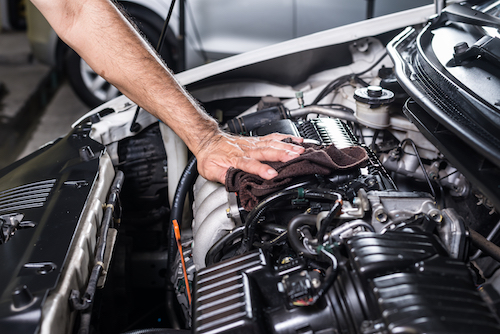
You know when it’s time for a tune up in one of two ways.
1. Your car starts giving hints it’s time for a tune up. It vibrates, squeals, shakes, hesitates, misfires, stalls, fails an emissions test, or has trouble starting.
2. Your car hits a mileage marker. While older makes and models would require tune ups every 10,000 miles or so, today’s technology allows vehicles to travel much further before a tune up is needed. Check with your manufacturer’s guidelines to determine what’s best for your vehicle.
When you bring your vehicle in, the mechanic on duty should talk with you about your car’s condition. Just like a doctor should never start testing without a few questions first, a mechanic shouldn’t start with routine maintenance without talking to you about performance.
You can help even more by noting your car’s behavior a few days before your appointment. In some cases, you may have overlooked a warning sign, simply because you’ve grown accustomed to the noise. Use your phone’s note feature to keep track of any issues, or keep a pen and paper handy and write down any concerns. This will give you critical information that can help your mechanic get to the root of the problem.
What should you watch for?
Warning lights
Yes, those pesky little lights that crowd your dashboard are there for a reason. When they light up, they are signaling something is wrong (if nothing more than a tripwire gone bad.) In modern cars, you’ll have warning lights for small things, such as a tail light burning out, to more complex problems, such as transmission failure. Every warning light is designed to light up and give you plenty of time to get the problem fixed. Pay attention to these warning lights, and get your car analyzed as quickly as you can. It can be the difference between paying a small amount for a small problem, and a costly problem from an emergency situation.
Poor gas mileage
Do you track your gas mileage each time you fill-up? It can be a great indicator when something starts to go wrong. When your car starts losing efficiency, it can be from a variety of causes. Maybe your tire pressure is waning. Maybe it’s an air filter that’s clogged. Or something more. When you track your mileage, you can use it as a baseline, so you have advanced warning of when something goes wrong.
Starting problems
People have all kinds of reasons for slowing down and taking more time to get out the door in the morning. Your car doesn’t. When running correctly, it should always start without hesitation. If it doesn’t, it’s a warning signal that something isn’t right. If you have to turn the key more than once for it to fire up, or it won’t stay running, you have a problem. It could be a sign of a weakening battery, or a sign of something more.
Stalling
Have you ever sat at a stoplight and had your car stop working? Or maybe you try to accelerate, and your engine sputters out? This can be a sign of bigger problems with your engine, which could be dangerous as you’re out on the road. If your engine can’t provide reliable performance, it can leave you in precarious situations. You never want to be sitting by the side of a busy road, wondering what’s wrong with your car.
Regular maintenance
There are certain car maintenance items you do continuously just by owning a car. You fill it with fuel when it runs empty. You replace the motor oil on a regular basis. You add in a new air filter when you’re changing the oil. These simple tasks can sometimes reveal other problems. Is your air filter clogging more between changes? A clogged air filter can impact both fuel economy and acceleration.
Rough shifting
Even if your car is an automatic, it still shifts into gear as you accelerate and slow down. There’s a smoothness to it; if you hear it and it clunks, it’s not as efficient as it should be. Pay attention to the noises as you speed up and slow down. Do you have trouble when you try and put it into reverse? All of this is a sign your transmission needs a little attention. The gears in your car rely on transmission fluid, filters, and screens to operate properly. If these aren’t properly maintained, they can impact the way your car drives.
Noises
Those squeaks, bangs, squeals, and pings are trying to tell you something. It’s your job to listen to where they are coming from. Your brakes should be quiet, for example, without making noise as you press down on the pedal and come to a stop. When they start to squeal, they are telling you something is wrong. Brake pads, rotors, and brake fluid all wear and eventually need replacing.
Of course, that isn’t the only part that will start to make noise. It may be a worn belt, low fluid, or a noise from a failing part. Turn down the radio and listen; what do you hear? How would you describe it? Where do you think it’s coming from? When does it occur? The more information you can provide, the faster it will be to diagnose the problem, and get to the root cause.
Start with your owners manual
Do you know the signs your car needs a tune up? Do you pay attention to what your vehicle is trying to tell you? The best place to start is by reading your owner’s manual. How often should you get a tune up? What are the manufacturer’s guidelines? If you don’t have it handy, you can always Google it and find it.
Then pay attention to your car’s warning signs. And bring your car in today for a tune up; we’ll help you keep it in top shape for years to come.
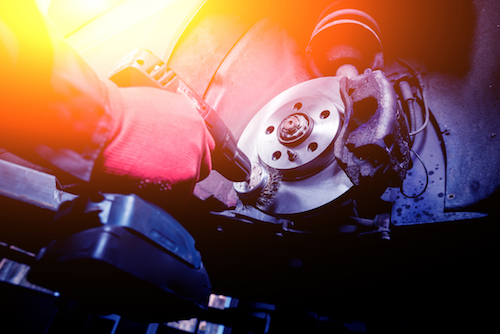
 We know we need to take care of our cars, but it just seems too hard to remember to do it. We generally accept that there are many things in life that require regular maintenance, but we just may not have applied it to our vehicles yet.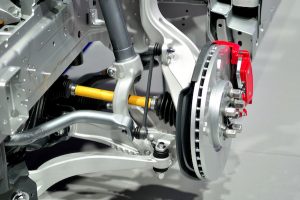
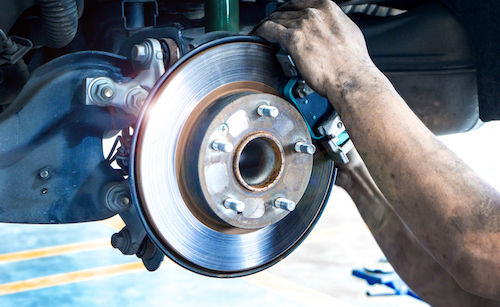
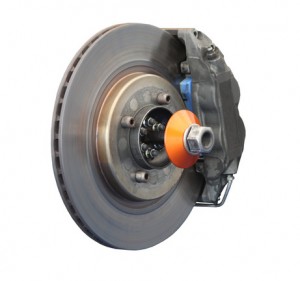 Disc brakes are called disc brakes because of the big metal disc or rotor that spins with the wheel. The brake pads rub against the rotor to slow the vehicle. In technical terms, the motion energy of the moving vehicle is transferred into heat energy by the brakes. The job of the rotor is to absorb that heat and dissipate it into the atmosphere. To do that effectively, the rotor needs a certain amount of mass ( measured by the thickness of the rotor) and a good surface to mate with the brake pads. Let’s talk about those two things.
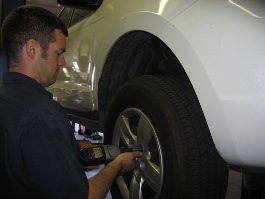 You can make the tires on your vehicle last longer with a regular tire rotation and balancing.
 Have you ever stopped to think how amazing it is that auto makers have been able to consistently build more powerful engines in vehicles that get better fuel economy while at the same time meeting increasing environmental standards. One of the little miracles that helps make this happen is the Exhaust Gas Recirculation Valve or EGR Valve.
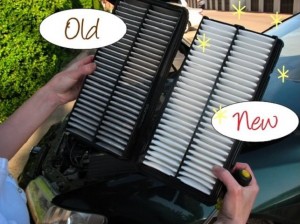 Today we want to talk about your engine air filter. That’s the filter that cleans the air before it’s burned in your engine. Many people wonder how often they should change their engine air filter. The simple answer is ” when it’s dirty”. That’s a function of how much air has passed through the filter, so your vehicle manufacturer will recommend a mileage interval for replacing the air filter. But it’s not hard to imagine that how dirty the air is will greatly affect how quickly the filter gets filled.