
 Driving down the road or around town, we’ve all heard a car or truck that sounds like it needs a new muffler. But there’s more to the exhaust system than just the muffler. The exhaust system has three main functions:
- Safely get hot exhaust gas from the engine out the tailpipe.
- Treat the exhaust to remove harmful pollutants.
- Muffle the engine noise.
Exhaust gas is poisonous. Drivers don’t want it getting into their passenger compartments. Most of us know that carbon monoxide can be deadly. That’s why you should never run your engine in a closed garage. If you have a leak somewhere in the exhaust system, exhaust could get into the passenger cabin and make you sick or even kill you.
If you smell exhaust in the vehicle, roll down your windows and get it inspected at Express Car Care in Denver. You may smell or see exhaust coming from the engine compartment or under the vehicle if you have a leak. Sometimes the sound from an exhaust leak is loud and obvious. Sometimes it’s a ticking sound when you start the engine that goes away as you drive. That could be a small crack or a bad fitting that leaks when it’s cold but seals up when the metal heats and expands.
Then there are the environmental issues to consider. Exhaust gas contains a number of pollutants and particulates. The catalytic converter scrubs some of those harmful substances. Diesel vehicles have systems that deal with soot. Catalytic converters eventually wear out and need to be replaced. They’re expensive, so you want to help them last as long as possible by keeping the fuel system clean and replacing your air filter. These components need to be tested for proper functioning with an emissions test from time to time. Then there’s the muffler.
The beauty of getting a new muffler is that you can suit your own taste. Some drivers want whisper quiet, some like a little rumble, and others like a roar. Give us a call and let us know how we can help.
 All engines have either a timing belt or a timing chain to synchronize the opening and closing of the intake and exhaust valves. This keeps the engine running smoothly and efficiently. If the timing is off, it may not even run at all. Timing belts need to be replaced on schedule. A broken or slipping timing belt could cause extensive engine damage.
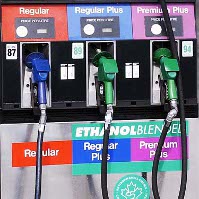 High gas prices have hit most of our budgets in the Denver area. If increased fuel costs are consuming a bigger portion of your budget, you may be tempted to skimp in some other areas – like scheduled maintenance at Express Car Care.
 Denver drivers who are old enough have probably heard the term “fan belt”. Back in the day, the radiator fan in your vehicle was turned by a belt driven by the engine. There are still belt driven fans, although most are now driven by the serpentine belt. But most vehicles now have electric fans that draw fresh air across the radiator to cool it.
 Question: How do I know when I should get my tires rotated and balanced?
 Question: Why isn’t my air conditioner blowing cold air?
 Question: What is the benefit of winter tires?
 In today’s Express Car Care auto care blog, we are focusing on battery maintenance. Eventually your car battery will fail and you will need to replace it. In fact, 70% of batteries don’t even make it four years. There are some things drivers can do, however, to make their battery last a little bit longer.
 Our vehicle is a very important part of our life and when it breaks down drivers need to get it back on the road as soon as possible – with the problem fixed right the first time.
 The PCV valve is a small, inexpensive part that does a big job for Denver and our environment here. PCV stands for Positive Crankcase Ventilation. The crankcase is the bottom area of the engine that holds the oil. When the engine’s running, fuel is burned to generate power. Most of the exhaust from combustion goes out through the exhaust system. But some exhaust blows by the pistons and goes into the lower engine, or crankcase.