
The purpose of a muffler is revealed in its name. To muffle means to cover or wrap up to quiet or hide the sound. A muffler, therefore, is designed to reduce sound, and it does it quite well. But what is a muffler and why is it attached to your vehicle? Is it a required auto part? Can you get by without one? Let’s dive in and find out.
What is a muffler?
A muffler is responsible for muffling the sound created by the engine inside a vehicle. The process of starting and running an engine takes a lot of power. The result is a series of pulses and vibrations that reverberate throughout the exhaust system. These pulses continue over and over again for as long as your car is operating. Without a muffler in place, you’re going to hear it inside and out of your vehicle. In fact, if you feel like your car is getting noisier the more you drive it, it could be a sign your muffler is no longer doing its job.
How does a muffler work?
As a car’s engine turns over and continues to run, it releases harmful emissions into the combustion chamber. These contain things like carbon dioxide, carbon monoxide, hydrocarbons, and nitrogen oxides.
As a safety factor, cars are built with exhaust systems to disperse these dangerous gases away from the vehicle. One of the key components of the exhaust system is the muffler.
A muffler contains various tubes, channels, and holes that direct gases and exhaust where it’s supposed to go.
As exhaust gases are created, they feed into an inlet area to capture both the gases and noise. It moves to a resonator that acts as an echo chamber to reduce the overall noise volume. This then feeds into a series of metal tubes, also known as the perforated tubes, which are responsible for the output noise. How loud or quiet your car is will be determined by these perforated tubes. Finally, the remaining exhaust gas and noise are released from the outlet.
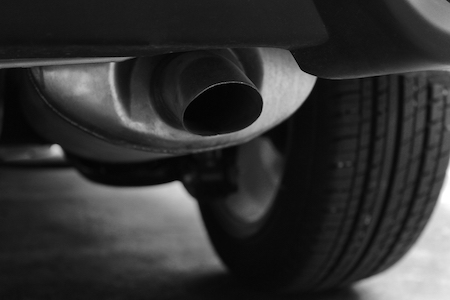 A muffler isn’t designed to reduce the noise. Instead, it combines the sound waves inside a closed chamber, and makes them cancel one another out.
It also has the task of releasing toxic gases a safe distance from the vehicle. Without a muffler, you risk these noxious gases moving easily into the passenger cabin where they could hurt anyone inside the car.
A muffler can also improve the overall performance of your vehicle. A car’s engine can generate more power if it can quickly move exhaust gases away from the system. The faster the process, the better your car will operate.
Does every car have a muffler? In short, yes. It’s designed for safety and performance, which creates a better performing car.
What happens if you remove the muffler?
Have you ever heard a car rumbling as it drives by? Have you sat at a stoplight near a car that was so loud, you wonder how it’s operating? The owner may have removed the muffler.
Car owners remove the muffler to give it a louder sound. Instead of a quiet drive, you’ll be noticed as you move into view. And for some drivers, that’s what they are looking for.
When you remove the muffler, you’re also taking away performance. Without the muffler, the exhaust system no longer has a place to reduce the vibrating sound waves. Instead of dissipating it within the system, it releases it out into the environment, along with some of the noxious gasses produced internally.
Is it illegal? In many cases, yes. It depends on your local community. Many cities, counties, and states have created noise laws. If caught, the driver might face a penalty.
Driving without a muffler won’t damage the engine or other internal parts. The exhaust system still works, it just doesn’t dissipate it out in a controlled way. But you will have to be careful. Depending on how your exhaust system works, it can leak exhaust fumes up and into the passenger cabin. Keeping your windows closed may put you at risk of inhaling the fumes.
Your muffler may need replacing
While a muffler isn’t a part that needs replacing regularly, there are still signs to watch for that may indicate yours is failing.
Noise is your first indicator of a potential problem. Is your car louder when you start it up? Does the engine seem to have more noise while operating? A loud rattle or rumbling sound is the most common sign of a muffler problem.
You should also check underneath your car periodically and inspect the exhaust system. Do you see any damage to the system itself? Is rust present? Pay particular attention to the muffler itself, as well as the heat shield.
Because of its location, the exhaust system will wear down over time. Heat, debris, chemicals from winter driving, moisture, and more will all impact how well the system handles. When you notice a problem, it could be an indicator to even more damage inside. What’s visible is almost always an indication of further damage within the system.
How well is your muffler working?
While a muffler’s primary role is to reduce sound, it also plays an important part in the overall operation of your exhaust system. If it isn’t working at its best, you’ll notice a decrease in how well your car performs.
An engine generates maximum performance when all systems work well. It will go faster, be more efficient, and be a safer car to drive. If exhaust gases have no place to go, it can slow down your engine. It can make your car noisier, and make you the talk of your neighborhood.
While you may be more susceptible to ticketing from your local police force, an even bigger concern is safety. While a car technically doesn’t need a muffler, it depends on how well your exhaust system is operating. Where are those noxious gases going? If they are entering the inside of your vehicle in any way, you’re putting your passengers at risk.
How safe is your vehicle?
 A driver who uses his or her ears has a leg up on those who don’t. Noises, in addition to helping us to be aware of traffic, can also give us clues to potential problems in our vehicles. One noise to pay special attention to is growling.
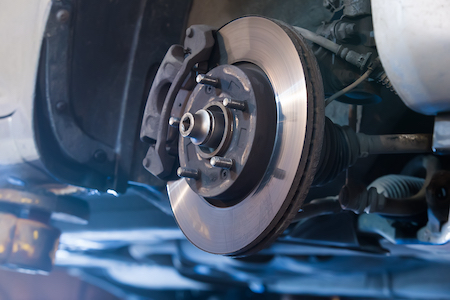 ABS icon lights up
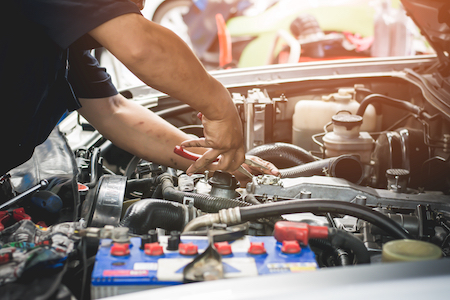 This is just one of the many reasons why it’s important to develop a relationship with a local mechanic. If you bring your car in regularly, the people on staff get to know your vehicle. They make suggestions to keep it running well, they keep notes on items to watch for, and understand the history of a problem just by seeing it over time. You can also develop a rapport with the staff, learning ways to communicate potential problems, in a language you both understand.
 The three most common types of gasoline are:
 The wheel is the structure surrounded and protected by the tire. The wheel has a center cap that sits in the middle, with a center bore in the back. They have lug holes where bolts are used to keep everything in place. You also have spokes, which connect the center of the wheel with the outer rim of the wheel. This is where the decorative part of your wheel exists. Finally, wheels also have an outer lip, a valve stem, and the barrel. Together, they create a wheel that holds up under all kinds of pressure.
 Your radiator hoses carry coolant between your engine and radiator. It’s an important job. If a radiator hose fails, you could lose your engine coolant which might lead to overheating and very expensive engine damage, so you always want to make sure you have good hoses.
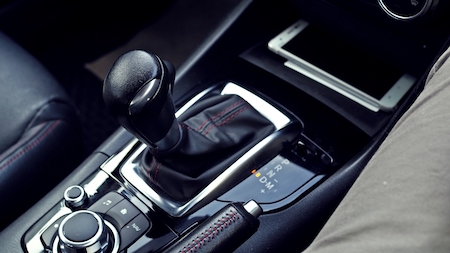 A manual transmission relies on you to operate the clutch and shift as needed.
 The rack is linear rather than round. It’s long and flat with prongs on one side. The rack is attached to the steering column by a series of tie rods.
 If you’ve put money into repairing it before small fixes turn into larger problems, it might be worth fixing a few car dings, or even repainting your car. It can make you feel happier when you walk up to your car in the parking lot, and drive it on the city roads. It can even add to the value, becoming something someone else wants to drive rather than an eyesore they hide from their friends.