
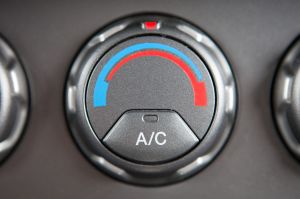
 Let’s talk about air conditioning service and repair issues today. Most of us in Denver don’t give our air conditioning a second thought – just as long as it’s making cold air. But it’s a complex and expensive system that we should think more about before it starts blowing out hot air.
The refrigerant in the air conditioner contains a special oil that lubricates and cools the A/C parts. When enough refrigerant leaks out, your air conditioner still makes cold air, but the parts don’t have enough oil to protect them and they wear out faster than they should. That’s why it’s so important to service the air conditioner as recommended by your service center.
Replacing old refrigerant has another benefit: refrigerant tends to gather moisture and become corrosive. That causes leaks in the system which can be expensive to repair. Fresh refrigerant protects the air conditioning components and keeps the system operating at peak efficiency so it doesn’t have to work as hard to keep you cool.
Even with regular service, A/C parts can just wear out. Normal wear and tear eventually affects all moving parts.
Addressing early problems can save on more extensive repairs down the road. For instance, a common failure is the clutch that turns the compressor on and off. If you can take care of a bad A/C clutch when it first starts having problems, you may be able to save the compressor. But if you wait too long you’ll have to replace them both.
Check your owner’s manual or ask your service adviser for service recommendations. And if you are hearing strange sounds when your air conditioning turns on, or if it just isn’t as cold as it used to be, have us give it the once over and see what it will take to keep you cool.
 Express Car Care Question: I was driving down the freeway in Denver and smoke started coming out of my car. I pulled over and called my husband. I had to be towed to my mechanic. He said my car had overheated. What can I do to prevent this from happening in the future?
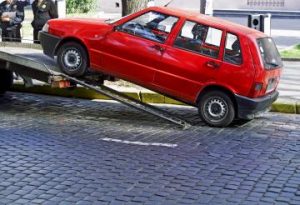 The axle assemblies in your vehicle transfer power out to the drive wheels. On the rear-wheel drive vehicle, there is an axle shaft that goes from the differential in the center of the axle to each of the rear wheels. On the front-wheel drive vehicle, the axle shafts go from the transmission to each front-wheel. All-wheel drive vehicles have axle shafts connected to all four wheels.
 Question: When should I replace my windshield wipers?
 After a recent experience of driving on hazardous roads with dangerous drivers I think it’s a good idea to share this article from AAA written by J. Skyler McKinley
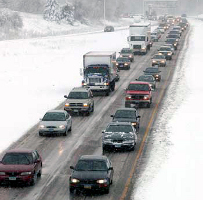 As you all can imagine, if most of your driving is done on smooth highways and roads, your car’s suspension will last a lot longer. But I’m sure you know that most roads and highways are anything but smooth, they’re usually extremely rough, especially with all the road construction that is taking place. As drivers, we are always trying to avoid potholes and other hazards in the road. These conditions can wreak havoc on your car’s suspension.
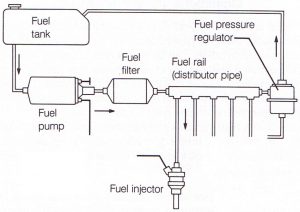 I’d like to give our friends in Denver a quick overview of the fuel system. It starts with the fuel pump. The fuel pump is located inside the tank and pumps the fuel out to the engine. Somewhere along the way is a fuel filter, it has the job of filtering out dirt before it gets to the engine.
 A lot of gas is wasted by Denver vehicles with dirty fuel delivery systems. Let’s start at the tank. The gas tank gathers tiny amounts of dirt, rust and sediment over the years of driving around. That’s why there’s a fuel filter to clean the fuel after it leaves the tank. A dirty filter will rob the engine of the clean gas it needs to run efficiently.
 Let me tell you about an experience that took place at a well-established Italian restaurant that had changed hands a few months ago. The previous owners were an Italian couple that used old family recipes and fresh ingredients to make their pasta and sauces from scratch. They enjoyed stellar reviews for decades.