
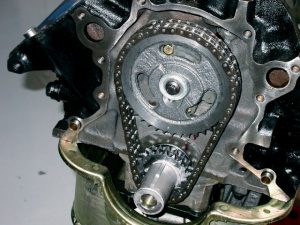
 As your engine runs, the intake valves need to open up to allow air into the engine. They remain closed while the air and fuel is compressed and ignited, powering the piston. Then the exhaust valves open to release the exhaust. This all has to be timed very precisely. It is the job of the timing belt or chain to make sure all of this is synced up properly.
Timing belts are made of a very tough compound that can last for a long time. Timing chains are made of metal and last for a very long time as well. If your vehicle has a timing belt, your vehicle’s owner’s manual has a schedule for replacing the belt. If your vehicle has a timing chain, there may not be a specified schedule for replacing it, but that doesn’t mean that the timing chain system is indestructible and never needs attention.
For example, the chain runs on sprockets on the crankshaft and the camshafts. A broken tooth on a sprocket can cause the chain to slip. When timing is off, even a little, your engine won’t run at all and could even be severely damaged. There is also a tensioner that keeps appropriate pressure on the timing chain. This keeps the chain tight while allowing it to absorb pulsations from the engine. The tensioner can wear out. There are also guide rails that keep the chain on the proper path that can become worn.
The bottom line is that at some time, one or more of the timing chain system components will become worn to the point that they are no longer performing within specifications. Your service adviser can help you with recommendations for when timing chain components should be replaced on your vehicle and for signs of timing chain system wear.
Since timing chains and dozens of other parts, are lubricated by engine oil, smart drivers stay on top of regular oil changes to prolong their life. Always use a high quality oil filter and oil of the recommended type and grade.
 The power steering system in your vehicle is made up of several components that can cause problems after years of use. Some of these problems might be easy to catch as soon as they begin, but others might be less obvious, forcing you to have major parts replaced.
 The cooling system in an engine has five components: the radiator, the radiator cap, the hoses, the thermostat and the water pump. The water pump is literally the heart of the system. Just as your own heart keeps your blood circulating through your body, the water pump keeps coolant circulating through your engine.
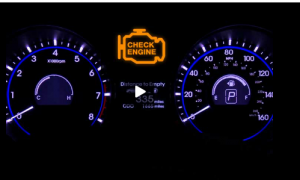 How long have you been enjoying the romantic glow of your Check Engine Light? Hey, it isn’t there to create ambiance in your vehicle; it’s a warning that says something is wrong.
 Springtime is the perfect time to go through a vehicle maintenance checklist and get your car ready for the months ahead. We’ve put this one together so you know what should be checked out.
 Good news! The days when drivers had to change their spark plugs every couple of years has ended. Back in the day, spark plugs really did wear out that often. Now, a couple of things are different…
 For most people buying tires can be a big deal, so play it safe and consult with your friendly and knowledgeable tire professional about the proper size, type and grade for your driving needs. He can help you balance load requirements, performance, durability and cost.
 Question: How do I know when I need a wheel alignment?
 No matter how well they’re made, vehicles will have design or manufacturing problems. And when the government thinks a problem is really serious, they require the manufacturer of the vehicle to issue a recall notice and to repair the vehicle at no charge to the owner. The manufacturer has to try to contact everyone who owns that type of vehicle so they can get the recall work done.
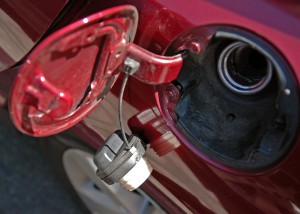 Hello Denver drivers. Today’s Express Car Care auto care post is focusing on your fuel filter. Is it time for a new fuel filter?