

• Home
  • Denver Auto Repair Services | Express Car Care
    • Full Service Oil Change
    • Expert Mechanics
      • Expert Honda Mechanics
      • Expert Toyota Mechanics
      • Expert Subaru Mechanics
    • Automatic Transmission
    • Fuel System Cleaning
    • Radiator Flush Service
    • Wiper Blades
    • Air Filter
    • Cabin Air Filter
    • Gearbox Service
    • Brake Repair
    • Clutch Repair
    • CV Boots
    • Tune-Up
    • Steering & Suspension
    • Tires
  • Auto Diagnostic
  • Contact Us
    • About Us
  • Shop Specials
  • Testimonials
  • Blog
  • 303-691-2760

Express Car Care of Denver

"Denver's Best Auto Repair and Quick Lube"

  • Brake Service
  • Car Maintenance
    • Heating-Air Conditioning
    • Suspension
    • Transmission
    • Engine
    • Tires
  • Oil Change
  • Tips & Tricks

Most Stolen Item?

May 27, 2019 by Denver Express Car Care

What do you think is the most stolen item from vehicles?

Is it:  (A) Stereo  (B) Wheels  (C) Airbags  (D) DVD System

Well, if you said stereo – you used to be right.  But now airbags have surpassed stereos as the most stolen item – approximately 50,000 a year are stolen nationally in the United States.  New airbags cost about $1,000 but stolen airbags are sold on the black market for $50 to $200.  Stolen airbags are finding their way into vehicles that have been involved in an accident.    Of course, the danger to the consumer of having a stolen airbag installed is that you can never be sure what may have previously affected them and if they will work correctly when you need them.

There have been reports that 1 in 25 airbag replacements are either stolen or salvaged airbags – or no airbag is installed at all.

That is definitely a part that you don’t want to take a chance with, so we recommend the following guidelines:

  • Use a reputable collision repair center that employs ASE certified mechanics.
  • Inspect the invoice to ensure that the repair shops purchased the airbag from a manufacturer, or dealer.
  • If you can inspect the airbag prior to installation, it should be packaged in a sealed container from the manufacturer or dealer.

You will see the SRS ( Supplemental Restraint System) light come on when you first start your vehicle.  This tells you that the airbag system is activated,  If you don’t see the SRS light, there is a problem with the airbag system.  Have the system checked right away and don’t let yourself become an injured victim.

Filed Under: Tips & Tricks Tagged With: Most Stolen Item?

Used Vehicle Inspection

March 4, 2019 by Denver Express Car Care

It’s always exciting to get a new car – even when it’s used.  But it can also feel like you’re going out on a limb a bit when you’re buying a used vehicle.  I mean, people have a lot of reasons for selling their vehicles.  Maybe they just wanted a new car, or maybe there was something that they personally  didn’t like about the car.  But then again,  maybe there was something wrong with it or maybe there’s something really wrong with it.

It’s a great idea to order a report from a vehicle history service.  This can uncover title problems and may reveal any serious accidents or flood damage as well as any recall notices for the vehicle.  Maintenance and repair records are a plus, but most sellers don’t have them.

Of course the best idea is to get a professional to perform a used vehicle inspection.  The inspection will go much deeper than just how good the vehicle looks and drives.  You’ll get a feel for the vehicle’s overall condition, the status of major safety systems and an indication of how well it has been maintained.  You’ll get a good idea of any work that needs to be done – and that will help you determine an appropriate value for the vehicle and whether or not it’s worth purchasing.

It’s pretty easy to see how a used vehicle inspection is worth the cost.  If problems are uncovered, you can either steer clear of the vehicle or bargain for a better price.  If everything is OK, you’ll have a plan for addressing any routine services that should be done, as well as a whole lot of peace of mind.

It’s easy to fall in love with a vehicle – just don’t let your excitement cloud your judgment.  Bring the car in and have us perform a used vehicle inspection so that you’ll know if you’re getting a peach, or a lemon.

Filed Under: Denver Auto Repair, Tips & Tricks Tagged With: Used Vehicle Inspection

Safe Towing Guide

February 4, 2019 by Denver Express Car Care

Let’s talk about safe towing for drivers.  Too often many drivers will just slap a trailer on the hitch and take off.  But there are safety considerations to protect your tow vehicle, comply with Colorado laws and limit your liability.
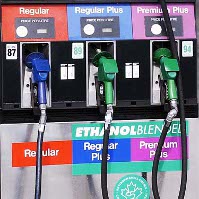
First of all, know your tow vehicle.  Your options will affect the tow rating, so you need to carefully read the towing section of your manufacturer’s owner’s manual to know how much your vehicle can tow.

Next, you need to know the weight limits of your trailer hitch.  It will have a maximum tongue limit and an overall limit.

Third, know your hitch type:  a weight-distributing hitch may be required by your manufacturer for certain trailer weights.

And fourth, know the towing laws for the areas in which you’ll be towing, as they may have stricter equipment requirements.

Your owner’s manual will also give you some help in determining how to calculate how much weight you can tow.  It’s more complicated than the maximum weight the marketing guys trumpet.  There are two codes drivers can find on the driver’s side door.  One is GVWR- or Gross Vehicle Weight Rating.  This is the maximum weight of the tow vehicle, including passengers and cargo.

The other is GCWR – or Gross Combined Weight Rating.  This is the combined weight of the vehicle, passengers, cargo and loaded trailer.

Every locality requires safety chains and they also have regulations for when trailer brakes are required in Colorado.  The tires on your vehicle and trailer should be in good condition and have the proper load rating.  Your suspension should be inspected to make sure it can handle the load.  Also your transmission may need additional fluid cooling, so check with your Express Car Care service adviser about adding a transmission cooler and/or performing maintenance.

Carefully follow your vehicle’s towing guidelines to maximize your safety, protect your vehicle from damage and protect yourself from liability.

A quick note on your trailer:  wheel bearings on trailers are often neglected by drivers.  They need to be serviced on schedule to avoid failure.  This is especially important for trailers that are driven through water.

If this safe towing guide has made you aware of any services you might need on your vehicle, come and see us at Express Car Care in Denver, we can help.


Filed Under: Tips & Tricks Tagged With: Safe Towing Guide

How To Save Gas

December 24, 2018 by Denver Express Car Care

High gas prices have hit most of our budgets in the Denver area.  If increased fuel costs are consuming a bigger portion of your budget, you may be tempted to skimp in some other areas – like scheduled maintenance at Express Car Care.

According to news reports and industry studies, you’re not alone.  Nine out of ten personal vehicles on the road have at least one maintenance or repair item that hasn’t been done.  Some of these items are serious safety concerns, others are just more likely to affect the cost of operating your vehicle.

In this area, we can take a lesson from professional vehicle owners:  fleet owners and operators like trucking companies and delivery services.  Because their livelihood depends on it, they have gotten scheduled maintenance down to a science.  And the last thing they skimp on is regular maintenance.

Why is that?  Well, for one thing, they know that routine maintenance prevents expensive repairs and costly breakdowns.  They also know that a well-maintained vehicle uses less fuel.  For them, even a small decrease in fuel economy may mean a drop in profits.

Here are some Express Car Care services that could potentially help you save gas.  Fuel system cleaning, transmission service, differential service, oil change.  Ring any bells?  Is there at least one thing on the list that hasn’t been done for your vehicle?

Let’s suppose you chose to spend $150 and get caught up on some of these services and that they combine to improve your fuel economy by 15%.  What would that mean for your pocketbook?

The average personal vehicle is driven about 12,000 miles a year.  If you get 20 miles per gallon in your vehicle, over the course of one year you would pay for the $150 worth of service and save and additional $165 if gas is at $3.50.  If gas is $4.50, you’d save $255, and you’d rack up savings of $345 if gas is $5.50.

From this you can see that the more fuel cost, the more it pays to take care of your vehicle.  Some of us drive trucks for work or recreation – or want a large SUV for family needs.  A 15% improvement in fuel economy can generate huge savings – $660 a year if gas is $4.50 a gallon.

So catch up on those services you’ve been neglecting.  Talk with your service adviser about your vehicle’s needs.  Get a couple done now and a couple next time.  Chances are you’ll save a lot of money on fuel this year – and a lot more on repairs in the years to come.

Filed Under: Tips & Tricks Tagged With: How to Save Gas

Multi-Tasking

July 23, 2018 by Denver Express Car Care

When asked, most people think they are good at multi-tasking.  Scientific studies, however reveal that only around 2% of the population can truly demonstrate the capacity to effectively multi-task.  For the rest of us who are not so biologically wired, no amount of practice can increase our effectiveness at multi-tasking.  Turns out, multi-tasking is almost a superpower.  Think of fighter pilots:  capable of maintaining their orientation in three dimensional space and performing specific and highly complicated functions while accessing life threatening situations and coming up with an appropriate response.  Admit it – you can’t do that.

Yet when it comes to driving, we seem to think we are very capable of safely operating a motor vehicle with a myriad of distractions.  Seventy-seven percent of young adults feel somewhat confident that they can safely text and drive while fifty-five percent claim it’s easy to text and drive.  Can they possibly be right?  Let’s look at some statistics.

Nearly 23% of all accidents in the United States involve cell phones.  Every day, 11 people are killed and over 900 are injured in texting related accidents.  In fact, texting while driving is six times more likely to cause an accident than driving intoxicated.  Just think back – have you had your own experiences?  How many “near misses” have you had as a pedestrian or in a vehicle that have involved a driver with a cell phone in their hand?

There are three types of driving distractions:

  • Visual (eyes off the road)
  • Manual (reaching for something or manipulating an object)
  • Cognitive ( mind off the task of driving)

Of course, texting or using a cell phone involves all three.  Eating, applying make-up, arguing and working on-board features like the stereo and navigation system are all very real distractions.  You may be interested to know that hands-free cell calls are not substantially safer than using a hand held phone.  Any time you glance away from the road (like looking at a text or incoming phone call) your eyes are off task for at least 5 seconds.  At 55 miles per hour (88 kilometers per hour), you will cover the length of a football field in that time.  Would you ever consent to strapping on a blindfold and driving off down the road for that distance?

So what do you do?  First, accept the fact that you are not part of the 2% of all the people on the planet who can truly multi-task (if you are one of the lucky one you would know by now because your performance does not degrade no matter how many additional tasks are added).  Next, don’t EVER drive distracted.  Incoming text – it will wait for later.  Juicy hamburger, eat it in the parking lot.  No exceptions, ever.

Filed Under: Tips & Tricks Tagged With: Multi-tasking

Tire Pressure Monitoring System

June 25, 2018 by Denver Express Car Care

All new cars and light trucks in Denver since 2008 have come equipped with a tire pressure monitoring system, or TPMS.  The tire pressure monitoring system detects when a tire becomes under-inflated and lights up a warning light on the dashboard.
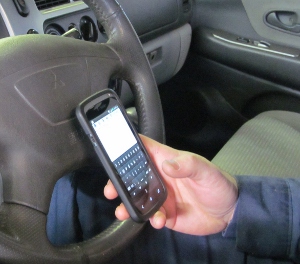
So what’s the big deal for drivers?  Well, underinflated tires can be a real safety concern.  First of all, they don’t handle properly and that can lead to an accident.  Second, underinflated tires can overheat and cause the tire to come apart, which could also lead to an accident.

Government regulations requiring TPMS systems aim to reduce accidents in Colorado and save lives, a very worthy goal.  There are also positive environmental effects because underinflated tires are fuel wasters – they lose 1 percent of their fuel economy for every 3 pounds of pressure below ideal.  So proper tire inflation can save you a tank of gas a year.  Your tires will also last longer so you won’t have to replace them as often.

There are two kinds of TPMS systems.  So called, direct systems have a battery powered sensor in each wheel that measures tire pressure.  The sensor sends a signal to a receiver that illuminates the warning light if pressure is low on a tire.

Indirect systems use a computer program to detect underinflation by measuring wheel rotation speeds and other data.

Drivers will have to replace TPMS parts as they wear out.  Obviously, the batteries in the sensors will run out someday.  Road salt and grime can damage sensors too.  The system needs to be reset when you rotate or change your tires.

Because the TPMS system is so important to your safety, you should make the repairs when they are needed.  Also remember, a tire pressure monitoring system is no substitute for regularly checking your tire pressure – at least once a month is recommended.

Filed Under: Tips & Tricks, Tires Tagged With: Tire Pressure Monitoring System

Diesel Vehicles?

May 14, 2018 by Denver Express Car Care

Let’s talk about some of the myths out there about diesel powered vehicles.

  1. Diesel Vehicles Burn Dirty – This was true years ago.  Since 2006, however, U.S. diesel vehicles have been required by law to use ultra-low sulfur diesel or USLD.  Modern diesels are soot-free and have a smaller carbon footprint.
  2. Diesels Are Sluggish – Not anymore.  They are as fast off the line as similar gasoline-powered cars.  If your idea of fun is to spend an afternoon test driving new cars, go take a spin in a diesel BMW or Porsche.
  3. Diesel Vehicles Are Loud – Back in the day, you could hear a diesel motor from a mile away.  Today’s diesels run quiet.
  4. Diesels Have a Bad Resale Value – Actually, diesel vehicles have a lower depreciation rate.

Another often overlooked benefit is lower risk of fire.  Diesel fuel is less flammable and won’t explode like gasoline.

Diesel engines require parts that are heavier and stronger.  At Express Car Care, we occasionally service diesel cars and trucks with over 300,000 miles/ 500,000 kilometers.  The heavy duty parts make diesel vehicles a little more expensive new, but due to the extra burliness, diesel engines last a lot longer.  This is one of the reasons Cummins diesels inspire such a loyal following.

Cons?  Cold weather starting.  Diesel engines can be hard to fire up when the temperature drops.  However, an engine block heater can solve this problem.  Talk to your knowledgeable service adviser for more information.

If you are in the market for a new vehicle that’s easy on fuel, you might want to explore your diesel options.  You can save money and may qualify for a tax credit if you buy a clean diesel vehicle.  Of course, diesels require regular maintenance just like any other vehicle and the services are usually a little more costly due to the nature of the engines.  But the extra cost is offset by the better fuel economy and longer engine life.

Bottom line?  The diesel vehicles on Denver roads today are not your grandfather’s diesel.

Filed Under: Tips & Tricks Tagged With: Diesel Vehicles

Do Not Disturb

February 19, 2018 by Denver Express Car Care

After a recent experience of driving on hazardous roads with dangerous drivers I think it’s a good idea to share this article from AAA written by J. Skyler McKinley
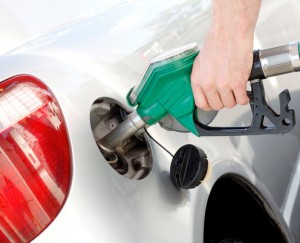
Motorists across the country agree: Distracted driving is dangerous driving.  In fact, according to the AAA Foundation for Traffic Safety’s 2016 Traffic Safety Culture Index, more than 80 percent of drivers say that texting or e-mailing while driving is a serious threat to safety.  Still, more than 40 percent report having read a text or e-mail while driving in the past 30 days.

The reason for this “do as I say, not as I do” attitude may be rooted in human biology.  A 2014 study from the University of Connecticut’s Center for Internet and Technology Addiction found that the brain releases dopamine, a neurochemical associated with pleasure, at the sound of an incoming text, e-mail, or social media notification.  Simply put:  It’s difficult to avoid glancing at your phone while driving, in part, because your brain is chemically conditioned to do just that – no matter the risks.

And the risks are significant.  A recent National Highway Traffic Safety Administration report estimates that distraction contributes to 16 percent of all fatal crashes – around 5,000 deaths every year.  With that terrible toll in mind, tech companies are making it more difficult to use their products while behind the wheel.

Take Apple’s iPhone, for example.  In the device’s latest operating system update, iOS 11, Apple included a Do Not Disturb While Driving mode.  With this feature enabled, iPhones detect when your car is in motion.  The app mutes incoming phone calls, notifications, and text messages; and users can configure their device to respond to text messages with a preset, polite response letting friends and family know that they’re driving.  For both iPhone and Android users, the DriveSafe Mode app, available in both Google Play Store and the iPhone App Store, allows parents to create an account to notify them when a teen driver is not using DriveSafe Mode.  The app automatically silences your phone, and prevents use of the keyboard, while driving.

Filed Under: Tips & Tricks Tagged With: Do Not Disturb

Fuel Saving Tip

December 23, 2017 by Denver Express Car Care

A lot of gas is wasted by Denver vehicles with dirty fuel delivery systems.  Let’s start at the tank.  The gas tank gathers tiny amounts of dirt, rust and sediment over the years of driving around.  That’s why there’s a fuel filter to clean the fuel after it leaves the tank.  A dirty filter will rob the engine of the clean gas it needs to run efficiently.
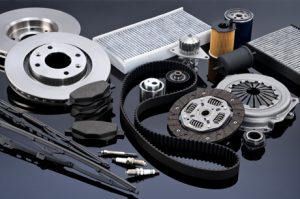
The fuel intake components get coated with gum and varnish over time.  This results in fuel being delivered inefficiently and some of that gunk getting into the engine.  A fuel system service will leave your intake as clean as a whistle.

The big fuel thief is dirty fuel injectors.  They deliver fuel to the engine at a specified pressure and in a particular spray pattern.  When they’re clogged, the fuel doesn’t get atomized the way it’s supposed to and doesn’t get burned as efficiently.

See your owner’s manual or ask your friendly and knowledgeable service adviser when a fuel system cleaning is recommended.

Filed Under: Tips & Tricks Tagged With: Fuel Saving Tip

Quality Replacement Parts

December 11, 2017 by Denver Express Car Care

Let me tell you about an experience that took place at a well-established Italian restaurant that had changed hands a few months ago.  The previous owners were an Italian couple  that used old family recipes and fresh ingredients to make their pasta and sauces from scratch. They enjoyed stellar reviews for decades.

The new owners decided to take a different approach.  The cooks followed the same recipes, but were required to used bagged salads, canned sauces and vegetables, frozen meat and boxed pasta.  Needless to say, there was a night to day difference between the before and after dining experience – and their online reviews reflected the decline.  Same chefs – same recipes but not quality ingredients.

Now think of this same principle in relation to auto repair.  You can imagine how important high quality replacement parts are for vehicle repairs.  The parts need to deliver the performance you expect right from the beginning as well as over the long haul.  We feature quality NAPA auto parts and because they meet or exceed the original manufacturer specifications, they will fit and function as they should.

It’s very important for a business to stand behind its work and unfortunately rather uncommon these days, but we do everything that we can to stand behind ours.  We employ highly trained service technicians and equip them with the diagnostic and repair tools they need to keep your vehicle in tip-top shape.  And NAPA Auto Parts helps us deliver on our promises to you with high quality replacement parts that help your vehicle run safely and efficiently.

Skilled technicians and quality replacement parts is the perfect recipe for motoring satisfaction.

Filed Under: Tips & Tricks Tagged With: Quality Replacement Parts

  • « Previous Page
  • 1
  • …
  • 8
  • 9
  • 10
  • 11
  • 12
  • …
  • 16
  • Next Page »

Express Car Care
4200 E. Evans Ave. Denver, CO (map)
Phone: (303) 691-2760
Located just southeast of the Colorado Light Rail station

Follow Us Today!

  • Facebook
  • RSS

Shop Hours

Monday: 8:00AM – 5:00PM
Tuesday: 8:00AM – 5:00PM
Wednesday: 8:00AM – 5:00PM
Thursday: 8:00AM – 5:00PM
Friday: 8:00AM – 5:00PM
Saturday: Closed – A note from the owner
Sunday: Closed

Last car oil change time  – 5:00PM

Click for the BBB Business Review of this Auto Repair & Service in Denver CO

Recent Articles

Winter Car Prep Tips for Denver

Denver winters can bring freezing temperatures, snow, ice, and rapid weather changes. A little preparation before the first major storm can help your vehicle start reliably, handle winter roads, and … [Read More...]

  • Tire Rotation: When to Do It—and the Signs You Shouldn’t Ignore
  • Which Oil Is Right for Your Car?
  • Stop Burning Money at the Pump
  • Differential Service: Why It’s Crucial for Your Car’s Longevity and Performance
  • How to Catch a Transmission Problem Before It Leaves You Stranded

Search Our Site

Brakes Service

How to Keep Your Brakes Quiet, Responsive, and Safe

Everything You Need To Know About Replacing Your Brake Pads

How to Know If It’s Time to Replace Your Brake Rotors

Oil Change

Top Benefits of Getting Regular Oil Changes in Denver

Oil Change Specials in Denver: Save Money and Keep Your Car Running Right

Why Regular Oil Changes Are Crucial for Denver Drivers

Suspension

How to Know If Your Car Needs Suspension Repair in Denver’s Bumpy Roads

A Guide To Understanding Bushings on a Car

Tips for Preventing Wear and Tear on Your Car’s Suspension

Transmission Service

How to Catch a Transmission Problem Before It Leaves You Stranded

How Often Should You Service Your Transmission in Denver?

Transmission Trouble? Common Signs and When to Visit Our Denver Shop

Engine Service

Stop Burning Money at the Pump

Everything You Should Know About Your Vehicle’s Timing Belt

Is Your Car Hesitating During Acceleration?

Auto Tips & Tricks

Winter Car Prep Tips for Denver

How to Deal With Car Noises That Only Happen When You Turn

Top 5 Maintenance Tips for High-Mileage Vehicles

"Denvers Best Auto Repair and Quick Lube" - Copyright © 2026 - 4200 E. Evans Ave. Denver, CO 303-691-2760