• Home
  • Denver Auto Repair Services
    • Full Service Oil Change
    • Expert Mechanics
      • Expert Honda Mechanics
      • Expert Toyota Mechanics
      • Expert Subaru Mechanics
    • Automatic Transmission
    • Fuel System Cleaning
    • Radiator Flush Service
    • Wiper Blades
    • Air Filter
    • Cabin Air Filter
    • Gearbox Service
    • Brake Repair
    • Clutch Repair
    • CV Boots
    • Tune-Up
    • Steering & Suspension
    • Tires
  • Auto Diagnostic
  • Contact Us
    • About Us
  • Shop Specials
  • Testimonials
  • Blog
  • 303-691-2760

Express Car Care of Denver

"Denver's Best Auto Repair and Quick Lube"

  • Brake Service
  • Car Maintenance
    • Heating-Air Conditioning
    • Suspension
    • Transmission
    • Engine
    • Tires
  • Oil Change
  • Tips & Tricks

Car Fuel Pump Repair Will Get You Going Again

May 7, 2024 by Denver Express Car Care

When you slide in behind the wheel, you have a million things going through your mind. What’s for dinner. When to pick up the kids. How to plan for tomorrow’s meeting at work. The phone calls you need to make. 

But then, you turn the key, and the engine sputters. You know your car well – this is not how it normally behaves. Something’s off. 

So you turn the key with a fresh mind, all thoughts on the problem at hand. What’s wrong? You start taking notes. Maybe you hear it trying to start – could it be the starter? It hesitates – could it be the battery? The fuel pump isn’t something most drivers turn to in this situation. But it’s a real possibility. 

Let’s look at a fuel pump

The average fuel pump can last up to 200,000 miles or more. It isn’t something you’ll be replacing regularly, which is why it’s the last thing drivers turn to when considering what’s wrong with their car. 

Of course, that can be influenced by a variety of things. Driving habits, fuel quality, maintenance – it all impacts the health of your car. Things do go wrong. 

A fuel pump is a crucial component in a vehicle’s fuel system. Its primary function is to deliver fuel from the fuel tank to the engine. It has to do this at the correct pressure and volume to ensure optional engine performance. How does it do this?

The fuel pump draws fuel from the tank and pushes it through the fuel lines to the engine. This process ensures a consistent and adequate supply of fuel to the engine’s fuel injectors or carburetor. From there, it maintains the required pressure in the fuel lines, which is essential for the proper atomization of fuel by the fuel injectors. If the pressure is too low, the engine may not run efficiently or may not start at all.

Car Fuel Pump Repair Will Get You Going Again

By providing a steady supply of fuel, the fuel pump ensures that the air-fuel mixture in the engine is appropriate for combustion. This mixture is necessary for the engine to produce power.

In short, no fuel pump, no fuel, no going anywhere. Your car needs a fuel pump for operation. Therefore it’s important to maintain it throughout your car’s life, and to repair it as needed. 

What can go wrong with a fuel pump?

If your fuel pump has problems, you’ll notice it in performance. A faulty fuel pump will show up in one way or another. Typically, we find drivers notice it by:

Wear and tear

A fuel pump is built from multiple parts. At any point in time, one or more of those parts can wear down and cause a performance issue. 

Electrical issues

Problems with the electrical connections or wiring to the fuel pump can cause intermittent or complete failure. This includes issues like blown fuses, faulty relays, or damaged wiring.

Clogged fuel filter

A clogged fuel filter can restrict fuel flow to the pump, causing it to work harder than necessary and potentially leading to premature failure.

Contaminated fuel

Dirt, debris, or water in the fuel can damage the fuel pump. Contaminants can cause wear on the pump’s internal components or block the fuel intake.

Fuel sediment

Over time, sediment can accumulate at the bottom of the fuel tank. If the fuel level is frequently low, this sediment can be drawn into the fuel pump, causing damage or blockages.

Overheating

The fuel pump relies on fuel in the tank to keep it cool. Running the vehicle on a low fuel level consistently can cause the pump to overheat and wear out more quickly.

Faulty pressure regulator

The fuel pressure regulator ensures the fuel pump delivers fuel at the correct pressure. If the regulator malfunctions, it can cause the pump to work inefficiently or fail.

Internal leaks

Internal leaks within the pump can reduce its ability to generate the necessary pressure, leading to poor engine performance and eventual pump failure.

Damage

Physical damage to the fuel pump, such as from an impact or accident, can impair its function.

Some issues can take longer to show up than others. But when you notice it, it’s important to address the issues quickly. Fast action prevents issues from growing and becoming bigger problems down the road. 

Are there things you can do to maintain your fuel pump over time?

Yes. Thousands of parts come together to create your car. Each part has a purpose, a reason for being placed somewhere within your vehicle. If you care for your car and regularly maintain it, you’re more likely to catch small issues before they escalate. For a fuel pump, that means:

Regularly replacing the fuel filter

A clean fuel filter prevents contaminants from reaching the fuel pump. Replace the fuel filter according to your vehicle manufacturer’s recommended schedule, usually every 20,000 to 40,000 miles.

Use high-quality fuel

Fill up with high-quality gasoline from reputable stations to reduce the risk of contaminants entering your fuel system. Avoid using fuel from older, lesser-known stations where the fuel quality might be compromised.

Avoid letting the fuel tank dropping below a quarter full

Running the vehicle with a low fuel level can cause the fuel pump to overheat since the fuel helps cool the pump. Keeping the tank at least a quarter full ensures the pump remains submerged and cool.

Avoid contaminants

Be cautious when filling up to avoid dirt, debris, or water entering the fuel tank. Make sure the gas cap is always secured tightly to prevent contaminants from getting in.

Regular maintenance 

Stick to your vehicle’s maintenance schedule, which includes checking and replacing various components that can affect the fuel pump, such as fuel injectors, fuel pressure regulators, and the entire fuel system.

Practice good driving

Avoid aggressive driving habits such as rapid acceleration and hard braking, which can put additional stress on the fuel pump.

Keep a watchful eye out

Pay attention to any signs of fuel pump issues, such as difficulty starting, engine sputtering, stalling, or unusual noises. Early detection and repair can prevent further damage.

Fuel pump repair as needed

Notice an issue? Schedule an inspection. The quicker you bring your vehicle in, the faster we can fix the problem and get you back on the road again. 

It’s the best way to ensure the longest life possible from your car. 

Filed Under: Engine Tagged With: Car Fuel Pump Repair

Decoding Common Signs of Transmission Problems Before They Escalate

May 3, 2024 by Denver Express Car Care

When you get into your car, you expect it to go. You’ve got a busy day ahead, with lots to think about on your drive into work. 

But what if your car doesn’t go? 

Picture this: You cruise onto the highway, and your engine starts racing. You can hear the transmission isn’t shifting gears. It whines and grinds, but no movement. You know something is wrong. You pull over to the side of the road … it’s going to be a long day. 

Transmission problems can be the most stressful, expensive repair issues to deal with. 

But the good news is you don’t have to wait for transmission problems to escalate before you take action. Warning signs start to appear long before problems occur. Let’s cover a few of them so you can start taking action now. 

Ignoring Maintenance

One of the most common reasons transmissions fail for all vehicles is not following manufacturers’ maintenance recommendations when caring for the engine and transmission. They push the mileage when scheduling fluid and filter changes. They push off maintenance until they “have more time.” 

Here in Colorado, that can be dangerous, especially if you enjoy our outdoor lifestyle. You frequently head up into the hills for skiing, hiking, and biking. You tow campers and boats for a weekend of play. These harsh conditions are taking a toll on your vehicle’s inner-workings. Without proper fluid levels, it no longer lubricates properly. Without clean filters, your vehicle won’t cool properly, leading to overheating, failure, and a host of other mechanical issues.  

Decoding Common Signs of Transmission Problems Before They Escalate

Fluid Leaks

The second most common way your transmission will warn you of pending issues is through a transmission leak. Transmission fluid leaks can occur at various points in the transmission system, including seals, gaskets, or cooler lines. Leaks lead to low fluid, burnt fluid, overheating, and eventual damage that will no longer be repairable by just adding fluid. 

A transmission fluid leak is usually red, ranging from light pink to a brownish color, depending on its age. If you notice this color leaking from your car and pooling underneath the front of your car, it’s likely a transmission leak. Identifying the source of the leak and repairing it promptly is crucial to maintaining proper transmission function and preventing fluid loss, which can lead to overheating and damage. If it isn’t caught early, it can lead to needing a replacement or rebuilt transmission. 

Strange Noises

Vehicle noises differ depending on where the problem lies. But if you hear anything out of the ordinary, pay attention. Can you describe it as humming, buzzing, whining, or clunking? Those are the most common ways people describe transmission problems. With hundreds of parts inside the transmission system, even one loose bearing can throw the entire system off. Each sound signals a different potential issue:

  • Grinding noises typically occur when there’s a problem with the gears, such as worn synchros or teeth. These sounds often indicate that the transmission is having difficulty synchronizing the gears, which can lead to further damage if not addressed.
  • Whining or humming noises might indicate low transmission fluid or a worn-out bearing. Both scenarios can lead to serious transmission issues if left unattended.
  • Clunking sounds when shifting gears could be a sign of worn-out or damaged transmission mounts, which can cause the transmission to shift unexpectedly and result in further damage to surrounding components.

Only  a thorough inspection of the system can isolate where the noise is coming from and point to where the problem originates. Trust your mechanic to get to the root of the problem. 

Warning Lights

Thank goodness for modern cars. Their technological advancements have done wonders helping you solve issues before they escalate and turn into bigger problems. Depending on your make and model, you may have 20 to 30 dashboard lights ready and waiting to alert you to potential problems. Don’t ignore them – they light up for a reason. 

Dashboard warning lights such as the Check Engine Light or Transmission Temperature Light are designed to alert you to potential issues with the transmission system. The Check Engine Light is one of the most common lights to illuminate; it can signal many different issues in your car. Bringing your car in early for an inspection means we’ll catch the problem before it escalates, potentially saving you money on more severe problems. 

Slipping Gears

Do you hear the engine revving higher than it should when driving down the road? Does it lack power or sound like it’s slipping gears? People often describe this in many ways, yet you’ll know when it feels like your car is clunking as you speed up and slow down. 

Transmission slipping occurs when the transmission fails to maintain a consistent gear, resulting in the engine revving higher than usual without a corresponding increase in vehicle speed. This can be caused by many things, including worn-out clutch bands, clutch packs, or torque converters. You can prevent slipping transmission by maintaining your fluid levels and ensuring you don’t have any leaks. When you find a problem, get it fixed immediately. 

Burning Smell

A burning smell is never a good sign. In most cases, a burning smell comes from overheated transmission fluid, or leaking fluid. Low fluid levels cause excessive friction which exacerbates the situation. Ignoring this smell could lead to severe transmission damage or failure.

Solenoid Issues

Solenoids in cars perform many different functions, from helping start the engine to assisting in shifting gears. They control upshifting and downshifting while you drive. If solenoids are damaged or wear down, it can damage your transmission, cause shifting problems, leading to diagnostic codes showing up in your vehicle’s computer. 

A car’s computer sends 100s, if not 1000s, of signals to the solenoids a second, telling your vehicle how much pressure it needs, when to shift, how fast to shift. This level of action eventually wears parts down, causing you to notice it in the way your car shifts and moves. It may be as simple as replacing the solenoid if it has become defective. 

Do you Have Transmission Problems? 

From the moment you notice a first sign of a problem, your best course of action is to schedule an inspection. It’s the easiest way to stop issues early before they rise in significance and escalate to a more costly problem. 

Have a transmission issue? Let’s chat. Give us a call, and we can schedule a time to inspect your car, find the issue, and make the repair. It’s the best way to get you on the road again. It’s the best way to bring peace of mind to your drive. 

Filed Under: Transmission Tagged With: Transmission Problems

Insider Tips and Tricks for Improving Average Fuel Economy

April 28, 2024 by Denver Express Car Care

While the headlines say gas prices are stable, you might shudder every time you pull into the gas station. The national average gas price is $3.59, and if you dream of road-tripping anywhere outside of Colorado, you can expect to spend a fair amount of gasoline to keep your car filled. 

Rather than paying the price at the pump, you might dream of making your car more fuel efficient. Is there an easy way to improve fuel economy? Are there tips and tricks that can save you money every time you pull into the pumps?

What Fuel Efficiency Means

Fuel efficiency refers to how effectively a vehicle utilizes fuel to propel itself and perform its intended functions. Sounds easy enough. But there are a lot of nuances to it.

High fuel efficiency means a vehicle can travel longer distances using less fuel, while low fuel efficiency indicates that more fuel is required to cover the same distance. But there isn’t a “right” or “wrong” guideline to follow. If you drive a large SUV, moving from 10 to 12 MPG might seem like a massive improvement. If you’re already seeing 35 MPG or more, a one or two MPG bump might not seem like much. 

Fuel economy is in the eye of the beholder. 

Still, you know there are benefits. More fuel-efficient vehicles require less frequent refueling, resulting in lower fuel expenses over time. Vehicles with higher fuel efficiency produce fewer emissions per mile traveled, contributing to reduced air pollution and greenhouse gas emissions. Using fuel more efficiently reduces the consumption of finite resources such as oil and gas, promoting sustainability. All are worthy reasons for wanting to improve fuel economy. 

Insider Tips and Tricks for Improving Average Fuel Economy

5 Easy Tips For Fuel Economy Improvement 

What if we told you that better fuel economy isn’t all about maintenance items for your vehicle? There are things you can do just with your daily driving techniques that wind up saving you money at the pump. 

Obey Speed Limits

Driving at higher speeds increases air resistance, leading to greater fuel consumption. Obeying speed limits not only improves safety but also helps maintain optimal fuel efficiency. Keep an eye on speed limits and avoid excessive speeding, especially on highways where aerodynamic drag can significantly impact fuel economy.

Drive Evenly

Smooth acceleration and braking can improve fuel economy by reducing the energy required to move the vehicle. Avoid sudden accelerations and hard braking, as these behaviors waste fuel by increasing engine workload. Instead, accelerate gradually, maintain a steady speed, and anticipate traffic flow to drive more evenly and efficiently.

Pay Attention To Aerodynamics

Aerodynamic drag is a major factor affecting fuel economy, especially at higher speeds. Keep windows closed while driving on highways to minimize drag. Roof racks or carriers should also be removed when not in use to reduce aerodynamic resistance. You can improve fuel efficiency and reduce fuel consumption by paying attention to aerodynamics.

Buy Good Quality Gas

Using high-quality gasoline can contribute to better engine performance and fuel efficiency. Look for reputable gas stations that offer top-tier gasoline, which contains detergents and additives that help keep the engine clean and maintain optimal fuel system performance. While the upfront cost may be slightly higher, the long-term benefits in terms of improved fuel economy and engine longevity can outweigh the expense.

Keep At Least Half a Tank

Maintaining at least half a tank of fuel can prevent fuel pump problems and ensure optimal engine performance. Running on a near-empty tank can cause the fuel pump to overheat, potentially leading to premature wear and failure. By keeping the tank at least halfway full, you not only ensure the reliability of your vehicle but also help maintain consistent fuel efficiency.

5 Easy Tricks To Keep Your Car Primed For Better Fuel Economy

Okay, those are easy tips that can show real benefits in your fuel economy. Of course, the condition of your car does matter. Keep it in good working condition, and you will see a difference in your monthly fuel bills. Don’t worry; it doesn’t take a lot of work to keep it in good working condition. Start with these:

Check Tire Pressure Regularly 

Proper tire inflation is essential for optimal fuel economy. Check your tire pressure at least once a month and before long trips, using a tire pressure gauge. Inflate tires to the recommended pressure specified in your vehicle’s owner’s manual or on the tire placard typically located inside the driver’s door frame. Underinflated tires increase rolling resistance, leading to decreased fuel efficiency.

Engine Tune Up

Regular engine tune-ups help maintain engine efficiency and fuel economy. Follow the manufacturer’s recommended maintenance schedule for tune-up intervals, which typically include checks and adjustments to ignition timing, spark plugs, and other engine components. A well-tuned engine operates more efficiently, resulting in improved fuel economy.

Air Filter Replacement

A clean air filter is vital for efficient engine performance and fuel economy. Check and replace the air filter according to the manufacturer’s recommendations or if it appears dirty or clogged. A dirty air filter restricts airflow to the engine, leading to decreased fuel efficiency and increased fuel consumption. Regular air filter replacement ensures optimal engine combustion and fuel economy.

Use Correct Motor Oil

Using the manufacturer-recommended grade of motor oil can improve engine efficiency and fuel economy. Refer to your vehicle owner’s manual to determine your engine’s correct viscosity and type of motor oil. High-quality motor oil reduces friction and wear on engine components, promoting smoother operation and better fuel efficiency.

Maintain the Exhaust System

A well-maintained exhaust system is essential for optimal engine performance and fuel economy. Inspect the exhaust system regularly for leaks, damage, or rust, and repair or replace components as needed. A faulty exhaust system can lead to decreased fuel efficiency and increased emissions. By ensuring the exhaust system is in good condition, you can help maintain fuel economy and reduce environmental impact.

Thinking of Improving Your Car’s Fuel Economy?

Improving your car’s fuel economy isn’t just about saving money at the pump—it’s also about responsible vehicle ownership and environmental stewardship. But then you know that, don’t you? That’s why you’re here!

Proper maintenance and efficient driving habits can lead to significant savings on fuel expenses over time. By keeping your vehicle in good condition and driving it responsibly, you can maximize fuel efficiency and minimize fuel costs.

Every drop of fuel saved translates to reduced emissions and a smaller carbon footprint. By maintaining your vehicle and driving it efficiently, you contribute to cleaner air and a healthier environment for everyone.

Regular maintenance not only improves fuel economy but also helps extend the life of your vehicle. By addressing issues promptly and following recommended maintenance schedules, you can avoid costly repairs and keep your car running smoothly for years to come.

All are perfect reasons for getting more in tune with your vehicle. 

Need a little help? That’s why we’re here. Stop by or give us a call – we’ll help you take care of your car for life. 

Filed Under: Car Maintenance, Tips & Tricks Tagged With: Improving Fuel Economy

Under the Hood: Demystifying the Inner Workings of a Modern Engine 

April 24, 2024 by Denver Express Car Care

Have you ever peeked under the hood of your car and wondered how it all came together? What do those hoses do? Just how powerful is the engine? 

Of course, all that wondering probably starts with the desire to keep your car in as good condition as possible. It’s how you’ll spend years with your car, relying on it as it gets you through your days. 

Let’s take a peek under the hood, and discover what you truly need to know. 

What You Need To Know About The Engine Block

The engine block is essentially the foundation of an internal combustion engine. It’s the large metal structure that contains the cylinders, where the pistons move up and down during the combustion process. Think of it as the “body” of the engine, housing various critical components and providing structural support for the entire assembly.

The engine block contains the cylinders where combustion occurs. These cylinders are where the fuel-air mixture is ignited by the spark plugs, producing the power needed to move the vehicle. It helps dissipate the immense heat generated during combustion. It’s designed to efficiently transfer this heat away from the cylinders to prevent overheating, ensuring optimal operating conditions for the engine.

Since the engine block bears the brunt of the internal forces and pressures generated by combustion, it needs to be strong and durable. Typically made from materials like cast iron or aluminum, engine blocks are engineered to withstand these extreme conditions over the lifespan of the vehicle. 

Within the engine block, there are passages for circulating oil and coolant. These fluids are essential for lubricating moving parts, reducing friction, and maintaining optimal operating temperatures. 

Under the Hood: Demystifying the Inner Workings of a Modern Engine 

Even just within these few paragraphs, it’s easy to understand why the engine is vitally important to your vehicle. While the engine block itself doesn’t require regular maintenance, it’s essential to maintain the coolant and oil levels at the recommended levels. Neglecting these fluids can lead to overheating and engine damage.

You should also be aware of signs indicating potential issues with the engine block, such as coolant leaks, oil leaks, or overheating. Any unusual noises or vibrations coming from the engine compartment should be promptly inspected by a qualified mechanic.

What You Need To Know About The Intake and Exhaust Manifolds

What makes it important?

The intake and exhaust manifolds play crucial roles in the engine’s operation, ensuring efficient air intake and exhaust gas expulsion.

The intake manifold is a system of passages and chambers that distribute air to the engine’s cylinders. It connects the air filter and throttle body to the intake ports of the cylinder head. It regulates the flow of air into the engine, optimizing air/fuel mixture for combustion. It also helps to distribute air evenly among the cylinders, ensuring balanced performance and fuel efficiency.

While the intake manifold typically doesn’t require frequent maintenance, you should be aware of the importance of clean air filters. A clogged air filter can restrict airflow to the engine, reducing performance and fuel efficiency. Regular inspection and replacement of air filters according to the manufacturer’s recommendations are essential for optimal engine performance.

The exhaust manifold is a system of pipes that collects exhaust gasses from the engine’s cylinders and routes them to the exhaust system for expulsion. It plays a critical role in removing combustion by-products from the engine and expelling them safely away from the vehicle. It also helps to maintain back pressure in the exhaust system, which can affect engine performance and emissions.

Exhaust leaks can pose safety hazards due to the release of harmful gasses and can also lead to failed emissions tests. If you notice any of the signs of a failing exhaust manifold, such as exhaust leaks, increased exhaust noise, or reduced engine performance, prompt inspection and repair are necessary to ensure safe and efficient operation of the vehicle.

What You Need To Know About The Crankshaft

Crankshaft – it’s a funny word that’s actually fundamental to the inner workings of an internal combustion engine. 

The crankshaft is a long, cylindrical shaft with offset “crank throws” or journals. It is located within the engine block and is connected to the pistons via connecting rods. As the pistons move up and down within the cylinders during the combustion process, they transmit their linear motion to the crankshaft through the connecting rods. The offset journals on the crankshaft convert this linear motion into rotational motion, which is then transmitted to the transmission and ultimately to the wheels of the vehicle.

The crankshaft is crucial for converting the reciprocating motion of the pistons into usable rotational motion, which powers the vehicle. It serves as the primary component of the engine’s rotating assembly and is responsible for synchronizing the movement of the pistons to ensure smooth engine operation. The crankshaft must be precisely balanced to minimize vibration and reduce stress on other engine components.

While the crankshaft itself typically doesn’t require regular maintenance, you should be aware of the importance of maintaining proper engine oil levels and using high-quality lubricants. Adequate lubrication reduces friction and prevents premature wear on the crankshaft bearings. Watch for any signs of potential issues, such as knocking or rattling noises coming from the engine, particularly during acceleration or deceleration. These symptoms could indicate worn bearings or other crankshaft-related problems that require inspection and repair by a qualified mechanic.

You can do your part to keep it healthy. Aggressive driving, frequent stop-and-go traffic, or towing heavy loads can put additional stress on the crankshaft and other engine components. Avoiding excessive revving and maintaining steady speeds can help prolong the life of the crankshaft and ensure reliable engine performance. 

What You Need To Know About The Ignition System

The ignition system is one of the more common systems that drivers pay attention to. Maybe it’s because the ignition system plays a critical role in starting the engine and maintaining smooth and efficient operation. Without ignition, you won’t go anywhere. 

The ignition system’s primary function is to generate and deliver a high-voltage electrical spark to the combustion chambers at precisely the right moment to ignite the air-fuel mixture. In modern vehicles, the ignition system is typically controlled by the engine control unit (ECU), which uses input from various sensors to determine the optimal ignition timing for efficient combustion.

The ignition system ensures that the air-fuel mixture is ignited at the correct time and in the right cylinder sequence to maximize power output, fuel efficiency, and emissions performance. A properly functioning ignition system is essential for reliable engine performance, especially during cold starts and under various driving conditions.

To take care of it requires a few tasks. 

Check spark plugs to ensure they aren’t damaged or worn, as this will lead to misfires, rough idling, and reduced engine performance. While modern vehicles have electronic ignition systems that automatically adjust ignition timing, older vehicles with distributor-based systems may require occasional timing adjustments. If you notice difficulty starting the engine, engine misfires, rough idling, or decreased fuel efficiency, it might be a sign of an ignition problem. 

It’s Time To Care About What’s Under The Hood

You love your car. You hope to keep it for many years to come. 

How do you ensure that happens? Spend some time under the hood. 

We suggest creating a vehicle maintenance schedule. Regular tasks like oil changes, filter replacements, and component inspections can prevent problems and extend your vehicle’s lifespan. Check your owner’s manual for the recommended maintenance intervals. Or rely on us for periodic inspections and regular maintenance. 

Having a trusted friend in auto repair ensures you keep an eye on all of the thousands of parts that create your vehicle. It’s a great way to keep your car on the road for many years to come.

Filed Under: Engine Tagged With: Under the Hood

Understanding the Science Behind Noisy Brake Repairs

April 21, 2024 by Denver Express Car Care

It’s embarrassing. It’s worrisome. It’s painful. It’s frustrating. 

No matter what words you use to describe it, when your car brakes are acting up, you’ll know it. 

While some people ignore it, (doesn’t that drive you crazy?) that’s not your style. You want to get to the heart of the problem. You want those brakes fixed fast. 

But what does it really mean? Did you know different brake noises mean different things? It doesn’t just happen – it’s designed that way. 

Because when you’re in need of noisy brake repairs, it’s easier if you know what the problem is from the start. That way you can get to the heart of the issue, get the problem solved, and get back on the road. 

Why Did Manufacturers Design Cars to Make Different Noises when Brakes are Having Problems?

Wouldn’t it be great if manufacturers crafted a car to alert you to problems before they escalated in size? They did! As technicians dove deep into the world of car manufacturing, they discovered ways to create a well-crafted vehicle with warning signals … if you pay attention. 

Take the brakes as an example. Each piece is joined and comes together in such a way as it starts to make noises if it loses its “connection.” By making distinct sounds like squealing or grinding, cars alert drivers early on if there’s an issue with the brakes. This early warning can prevent more serious damage to the braking system and reduce the risk of brake failure while driving.

Understanding the Science Behind Noisy Brake Repairs

These noises grab the driver’s attention. You’ve heard them; they’re annoying at best. For those who pay attention, it serves as a warning, keeping them aware of their vehicle’s braking system condition and reminding them to check it regularly. Ultimately, they provide audible warnings that serve as safety precautions to prevent accidents. (That grinding noise you occasionally hear indicates severely worn brake pads, giving you a chance to fix the issue quickly, preventing the brakes from failing unexpectedly while you’re out driving.)

Some of it is also regulated, designed to make the road a safer place. It’s give and take between rule makers and manufacturers, creating both safety and customer satisfaction. 

The Main Brake Noises You Should Pay Attention To

Some might say car brakes make noises all day, every day. That may very well be true. Every time you push on the brake pedal, you might hear a variety of noises. Some become commonplace – that’s your vehicle in action. 

Those aren’t the brake noises we’re talking about. 

Instead, we’re more concerned with the noises that “suddenly appear”. 

Squealing or Squeaking

Squealing or squeaking noises typically indicate that the brake pads have worn down to a level where they need to be replaced. Brake pads have built-in wear indicators that emit a high-pitched squeal when they become too thin. Ignoring these warning sounds can lead to more serious problems and potential safety hazards.

When you hear squealing or squeaking noises from your brakes, it means that the brake pads are reaching the end of their lifespan and may soon become ineffective at stopping your vehicle safely. Continuing to drive with worn brake pads can lead to damage to other brake components, such as the brake rotors, which can be more expensive to repair or replace.

It’s essential to address squealing or squeaking brakes as soon as possible. While some minor squealing may not immediately indicate a critical issue, it’s still a signal that your brake pads are wearing down and need attention. As soon as you notice these noises, it’s a good idea to have your brakes inspected by a qualified mechanic. They can determine the extent of the wear on your brake pads and recommend whether they need to be replaced or if there are any other underlying issues with your brake system that need to be addressed.

Grinding or Growling

Grinding or growling typically indicates severe wear or damage to the brake pads and possibly other brake components. It’s important to watch for these sounds because they often suggest that your brake pads have worn down completely, allowing the metal backing plate of the brake pad to grind against the brake rotor. Ignoring these warning signs can lead to further damage to your vehicle’s brake system and compromise your safety on the road.

When you hear grinding or growling noises from your brakes, it means that your brake pads are no longer providing adequate friction to stop your vehicle effectively. Instead, the metal-on-metal contact between the brake pad backing plate and the rotor is causing significant damage to both components. This can result in increased stopping distances, reduced braking performance, and potential loss of control of the vehicle in emergency braking situations.

Grinding or growling noises from your brakes should be addressed immediately. Continuing to drive with worn brake pads can lead to further damage to the brake rotors, calipers, and other brake components, resulting in more costly repairs. Additionally, driving with compromised brakes poses a serious safety risk to you, your passengers, and others on the road.

Clicking or Clunking

Clicking or clunking noises typically indicate loose brake components or worn-out suspension parts, both of which can compromise the safety and performance of your vehicle. It’s essential to watch for these sounds because they can signify underlying issues that need to be addressed promptly to prevent further damage and ensure your safety on the road.

When you hear clicking or clunking noises from your brakes, it means that there may be loose or damaged components within the brake system or the suspension system. Loose brake pads, caliper bolts, or brake hardware can cause clicking or clunking sounds when the brakes are applied or released. Similarly, worn-out suspension parts such as ball joints, control arms, or sway bar links can also produce these noises, especially when driving over bumps or uneven surfaces.

Clicking or clunking noises from your brakes should not be ignored, as they can indicate potential safety hazards. Loose or damaged brake components can affect the effectiveness of your brakes, leading to reduced stopping power and longer braking distances. Worn-out suspension parts can affect the stability and handling of your vehicle, increasing the risk of loss of control, especially in emergency situations.

Get Your Noisy Brakes Fixed Today

Paying attention to the sounds your car’s brakes make is crucial for your safety on the road. Whether it’s squealing, grinding, or clicking, these noises are not just annoyances—they’re your car’s way of telling you that something may be wrong. By addressing brake noises promptly and getting them inspected by a qualified mechanic, you can prevent further damage to your vehicle and ensure that your brakes are in top condition.

Remember, your brakes are one of the most critical safety features of your car, and regular maintenance is essential to keep them functioning properly. Don’t wait until it’s too late—take action at the first sign of trouble. By staying proactive and taking care of your brakes, you can enjoy peace of mind knowing that you’re driving safely and responsibly.

Filed Under: Brake Repair, Brake Service Tagged With: Noisy Brake Repairs

Wired for Success: Understanding the Role of Vehicle Wiring in Auto Repair Diagnosis

April 17, 2024 by Denver Express Car Care

The lights blink on and off. The radio has a life of its own. Is it your car’s battery? Or is it something more? 

It may be your vehicle’s wiring, something only auto repair can fix. 

But this isn’t a job you can leave to just anyone. There are a few rules to get the job done right. 

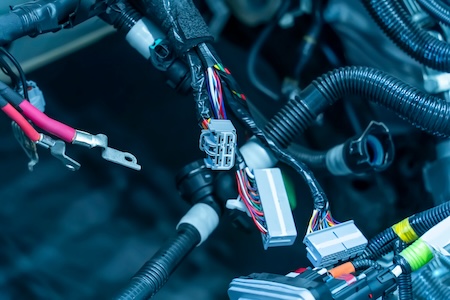
Electrical wiring problems can be a frustrating task. Every circuit needs a power source. All circuits require continuity. Most electrical devices need a minimum voltage in order to function. If any one piece is off, you’ll have electrical problems. 

What does that mean? Where do you begin? 

What Role Vehicle Wiring Plays to the Overall Health and Functionality of your Car

Have you ever wondered what makes your car tick, beyond the roar of the engine and the spin of the wheels? Picture this: beneath the sleek exterior lies a complex network of wires, each serving a crucial role in automotive performance. From powering your headlights to ensuring your brakes respond swiftly, vehicle wiring is essential behind the scenes. But just how important is it to the overall health and functionality of your car? 

Vehicle wiring is a necessary system of your car, connecting all its parts and ensuring they work together smoothly. Think of it as the electric lifeline that powers everything from your engine to your lights and entertainment systems. Without it, your car wouldn’t be able to do much at all!

Wired for Success: Understanding the Role of Vehicle Wiring in Auto Repair Diagnosis

Modern cars have lots of fancy electronics that control things like how the engine runs and when your airbags deploy. Wiring helps these electronic control units talk to each other and to sensors all over the car. It’s like a big conversation happening under the hood, making sure everything runs just right.

Safety is a big deal in cars, and wiring is a big part of that too. It helps make sure your airbags inflate when they need to, and your brakes work properly to stop you safely. So, having good wiring means your car can keep you safe on the road.

When something goes wrong with your car, figuring out what’s causing the problem can be a real puzzle. That’s where vehicle wiring comes in handy again. Mechanics use wiring diagrams and special tools to trace electrical problems back to their source. It’s like following a map to find a hidden treasure – but instead of gold, they find the solution to your car troubles!

And with all the cool new gadgets in cars these days, like sensors that help you park and systems that keep you from drifting out of your lane, wiring is more important than ever. It’s what makes all these high-tech features work together seamlessly, making your driving experience safer and more convenient.

Corrosion – The Biggest Reason For Failure

Corrosion stands out as the top culprit behind many vehicle wiring failures. Like rusting in metal, this process occurs when moisture and other environmental factors gradually eat away at the wires and their protective coatings. Over time, this corrosion weakens connections, interrupts electrical flow, and can even lead to shorts or complete failures in the system.

Despite manufacturers’ efforts to shield wiring from the elements, corrosion remains a persistent threat, especially in regions with harsh climates or frequent exposure to salt (such as right here in the Rockies, where temperature fluctuations are part of our norm). Even small amounts of moisture can seep into wiring harnesses and wreak havoc over time.

Corrosion affects more than just the exterior of wires; it can also penetrate connectors, terminals, and other components, compromising their conductivity and leading to intermittent or permanent electrical issues. Additionally, corrosion-induced resistance can cause electrical circuits to overheat, potentially leading to fires or further damage to surrounding components.

How to Maintain Vehicle Wiring Over Time

Keeping your car’s wiring in good shape doesn’t have to be complicated. First off, give it a visual check every now and then. Look out for any signs of damage, like frayed wires or spots where the covering is worn away. Keep an eye out for rust or corrosion, especially if you live in places where it’s wet or salty.

Next up, think about protecting your wiring from the elements. A little bit of grease on connectors can help keep moisture out, and using covers or sleeves for exposed wires can add an extra layer of defense. Make sure seals and grommets are doing their job to keep water away.

Watch out for heat, too. Parking in the shade helps keep your engine bay cooler, and try not to overload your electrical system with too many gadgets that could heat things up.

Keep your car clean, especially underneath. Road grime and salt can speed up corrosion, so give your car a rinse regularly. Just be gentle around the wiring – too much pressure can force water where it shouldn’t go.

When you take your car in for maintenance, ask your mechanic to give the wiring a once-over. They’ve got the tools to spot any problems early on, which can save you a lot of trouble later.

And if you notice anything weird – like lights flickering or strange smells – don’t ignore it. It could be a sign that something’s up with your wiring, and it’s better to deal with it sooner rather than later.

Finally, if you’re adding any new gadgets to your car, make sure you do it right. Follow the instructions carefully and make sure everything’s connected securely. A sloppy job can lead to shorts and even fires.

By following these simple tips, you can help keep your car’s wiring happy and healthy for years to come. It’s just a little bit of TLC that can save you a whole lot of hassle down the road!

Schedule Auto Repair Now to Avoid Vehicle Wiring Troubles

A little attention to your vehicle’s wiring can go a long way in preventing headaches down the road. By staying vigilant, protecting against the elements, and addressing issues promptly, you can keep your car running smoothly and avoid costly repairs. 

Remember, scheduling regular maintenance with a trusted mechanic is key to catching potential wiring troubles early. So, why wait? Take proactive steps today to safeguard your car’s wiring and enjoy worry-free driving tomorrow.

How can we help? 

Filed Under: Car Maintenance Tagged With: Vehicle Wiring Auto Repair

Understanding the Impact of Tire Pressure on Fuel Economy

April 10, 2024 by Denver Express Car Care

Have you ever wondered why car manufacturers list a range for fuel economy? Can it really make a difference how and where you drive? 

Car manufacturers will tell you they list a range for fuel economy to provide consumers with an understanding of the potential fuel efficiency their vehicle may achieve under different conditions. Many factors can influence a vehicle’s fuel economy, including driving habits, terrain, weather conditions, and traffic patterns. For instance, a car might achieve better fuel economy when driven on highways at steady speeds compared to city driving with frequent stops and starts. By providing a range rather than a single number, manufacturers aim to give consumers a more realistic expectation of what they might experience regarding fuel efficiency.

Yes, you can save on fuel economy just by paying attention to how you drive. But it’s also important to understand that your vehicle plays a part in this.  

Tires Play a Significant Role in Fuel Economy

At first glance, you might be wondering how tires impact your fuel economy. 

Tires may seem firm, but they are flexible as they connect with the road. Let’s talk about rolling resistance. When a tire rolls, it flexes and deforms slightly, which consumes energy. Tires designed with low rolling resistance minimize this energy loss, resulting in improved fuel efficiency. Tires with lower rolling resistance require less energy to keep them moving forward.

Understanding the Impact of Tire Pressure on Fuel Economy

This is determined by the design of the tire. Tread patterns, tire compounds, and construction materials all influence how efficiently a tire moves along the road surface. Manufacturers develop tires specifically to reduce rolling resistance, enhancing fuel economy without sacrificing other important performance attributes like traction and handling.

Does tire size play an essential part in this process? You bet. Larger tires generally have higher rolling resistance compared to smaller ones. They have more surface area in contact with the road, which increases friction and energy loss. But don’t think that merely reducing your tire size will impact fuel economy. Choosing tires that are appropriately sized for the vehicle is essential to contribute to better fuel economy.

Maintenance matters as well. Regular tire maintenance, including rotation, alignment, and balancing, can also impact fuel economy. Properly maintained tires ensure even wear and optimal performance, reducing rolling resistance and maximizing fuel efficiency.

What can you do on a regular basis? Monitor tire pressure. Proper tire inflation is crucial for fuel economy. Underinflated tires increase rolling resistance, requiring more energy to move the vehicle. Overinflated tires can lead to reduced traction and uneven wear. Maintaining the recommended tire pressure specified by the vehicle manufacturer helps optimize fuel efficiency.

It really does make a difference. 

One Tire Is Flat … Now What?

Have you ever been in a situation where one tire has lower pressure than the others? It’s not flat; it just doesn’t match the others. Does it matter? 

In short, yes. If one tire is noticeably flatter than the others, it can have several negative impacts on fuel economy:

Remember that rolling resistance we talked about earlier? A significantly underinflated tire will have higher rolling resistance compared to properly inflated tires. As a result, the vehicle’s engine will need to work harder to overcome the increased friction between the flat tire and the road surface. This extra effort translates to higher fuel consumption and decreased fuel economy.

A flatter tire can create uneven drag, especially at higher speeds. This imbalance can cause the vehicle to pull to one side, requiring additional steering corrections to maintain a straight path. These corrections lead to increased aerodynamic drag, further reducing fuel efficiency.

Driving with one flat tire puts additional strain on the vehicle’s drivetrain components, including the engine, transmission, and differential. This strain can decrease overall mechanical efficiency, resulting in higher fuel consumption.

The more you drive on unbalanced tire pressure, the worse it gets. Continued driving on a significantly underinflated tire can cause uneven tire wear patterns, leading to premature tire wear. As the tire wears unevenly, it becomes less efficient at maintaining traction and stability, further impacting fuel economy.

All of which can lead to safety issues. Driving with a flat tire compromises vehicle handling and stability, increasing the risk of accidents or loss of control. In addition to the safety implications, sudden maneuvers to compensate for handling issues can lead to increased fuel consumption.

How to Maintain Tires and Improve Fuel Economy

Keeping a vehicle in good working condition has many benefits – that’s why you’re reading this. You understand that tire pressure has many benefits, one of them being improved fuel efficiency. 

It starts with properly maintaining your tires. 

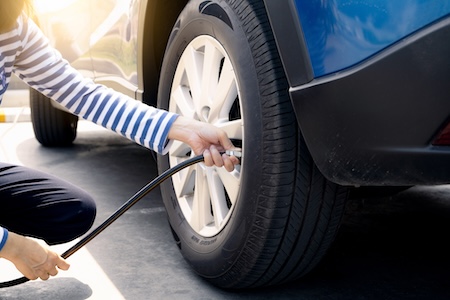
While many cars today have a dashboard icon to alert you to improper tire pressure, it’s still something you should check regularly. Use a tire pressure gauge to check the pressure in all tires, including the spare, at least once a month and before long trips. Inflate tires to the recommended pressure specified by the vehicle manufacturer, which can usually be found in the owner’s manual, on a sticker inside the driver’s door, or on the inside of the fuel filler flap.

Misaligned tires can cause uneven wear and increase rolling resistance, leading to decreased fuel economy. Have your vehicle’s wheel alignment checked periodically, especially after hitting potholes or curbs, or if you notice uneven tire wear.

This also means rotating the tires. Rotating tires helps ensure even wear, extends tire life, and optimizes fuel economy. Follow the rotation pattern recommended by the vehicle manufacturer, typically every 5,000 to 7,500 miles, or as specified in the owner’s manual.

Unbalanced tires can cause vibrations and uneven wear, affecting fuel economy and ride comfort. Have your tires balanced whenever you install new tires, replace a tire, or notice vibrations while driving.

Think your tires might be worn out? Worn-out tires have reduced traction, which can impact fuel economy and safety, especially in wet or slippery conditions. Use a tread depth gauge to measure tire tread depth regularly and replace tires when the tread depth reaches 2/32 of an inch or lower.

We also recommend keeping your car clean inside and out. Clean tires regularly to remove dirt, grime, and road debris. Accumulated debris can add weight to the wheels and increase rolling resistance, reducing fuel efficiency. Overloading your vehicle can put excessive strain on tires, leading to increased wear and decreased fuel economy. 

Is Your Vehicle Ready To Go? 

When was the last time you checked tire pressure? If you have any further questions, we’re here to provide the answers. 

Whether you’re debating on purchasing new tires, or have a problem keeping your tires properly inflated, we can help. Keeping your car running well doesn’t have to be complicated. Just a little TLC and regular maintenance will help ensure the longest life possible.  

Filed Under: Car Maintenance Tagged With: tire pressure

Harmonizing Brake Pad Composition for Durability and Performance

April 7, 2024 by Denver Express Car Care

There are so many things we rely on in our daily lives. 

We rely on our friends to be there when we need a helping hand. We rely on our homes to keep us safe and warm. We rely on good food and water for our survival. 

Some things you know and value – you’re grateful for them every day. But what about other things you might take for granted? How about your car?

You hop in every morning, knowing it will get you around town. You turn the key and expect it to work. Until it doesn’t …

What does this have to do with your car’s brake pads? Good question. Brake pads probably aren’t something you think of routinely. They work, and work … until they don’t. 

And living here in Colorado, the last place you want your brakes to fail is coming home from a day of skiing, or driving your kids home from school. A lot is riding on your brakes. 

Brake Pads – The Simple Version

If you pick up a car magazine, you can get into the nitty-gritty details of what brake pads are and how they fit into the entire brake system. But all you probably care about is that they work. 

Without brake pads, your car wouldn’t stop – isn’t that all you really need to know? If you can’t stop, it puts your passengers in danger. If you can’t stop, you might wreck your car, cause injury to yourself and others, and have a lot to deal with in the coming days and weeks. 

Harmonizing Brake Pad Composition for Durability and Performance

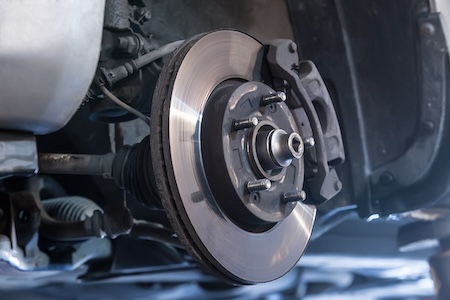
So you might say your brake pads are your protectors, keeping you safe as you drive. Inside each wheel, there’s a shiny metal disk called a brake rotor. When you step on the brake pedal, you’re sending a message to the brake pads saying, “Time to work!”

The brake pads squeeze tight against the brake rotors, creating friction that slows down the rotation of the wheels. This gives you control to slow down at will, ultimately bringing your car to a stop. 

Of course, brake pads are the key to this process. They come in different types, each with its own strengths. Some are designed for durability, while others are crafted for performance. But no matter which type you install, they all have the same job: helping you slow down and stop smoothly and safely whenever needed. 

Brake Pad Composition

Your car isn’t a one-size-fits-all product. It’s designed to provide benefits and options depending on what you’re looking for in a vehicle. 

Likewise, each vehicle part has numerous options and possibilities. You can select replacement parts based on your goals and desires. 

Brake pads may be designed for stopping power, but you have a selection to choose from based on how you drive. 

The key ingredient in brake pads is a prediction material that comes in contact with the brake rotor to create friction and slow down the vehicle. This friction material can be:

  • Organic – made from materials like rubber, glass, and Kevlar. Organic brake pads are quieter and produce less dust, but typically wear out faster than other materials. 
  • Semi-metallic – crafted from a mix of metal fibers, like steel. They offer better heat dissipation and durability, but may produce more noise and dust. 
  • Ceramic – composed of ceramic fibers, bonding agents, and fillers. They provide excellent performance, low noise, and minimal dust. They are the most costly brake pads on the market. 

In general, manufacturers design a vehicle with a specific brake pad material in mind. They install a brake pad to meet specific performance, durability, and noise requirements for different vehicles and driving conditions. 

How Do You Choose Brake Pads? 

Need new brake pads? One of the biggest warning signs is a grinding, squealing noise. You can’t miss it. Worse, you can’t ignore it – it won’t let you. It keeps squealing, getting louder, until you replace your brake pads. 

But which brake pads do you choose? Choosing the right brake pads for your vehicle means considering several factors for optimal performance, safety, and durability. 

Consider your car. Yes, the best place to start is by referring to your owner’s manual. Your car’s manufacturer built your vehicle; they’ll make recommendations on what they consider to be the best replacement parts when it’s time for repair. 

Consider your driving habits. Are you a daily commuter, a weekend warrior, or someone who enjoys spirited driving? Also, consider the typical driving conditions you encounter, such as city streets, highways, or mountainous terrain.

Understand the different types of brake pads. Remember the different types we talked about earlier? Organic, semi-metallic, and ceramic brake pads each have their own braking performance, noise level, dust generation, and longevity characteristics. One of them may be designed more for how you drive your car. 

Consider performance requirements. Nobody knows how you drive quite the way you do. If you have specific performance requirements, such as improved stopping power, reduced noise, or better heat dissipation, look for brake pads that meet those needs. This is where working with a trusted mechanic can be beneficial – they’ll help you select the right parts to suit your driving performance. High-performance brake pads may offer better performance but could come with trade-offs like increased noise or wear. They’ll help you decide. 

Evaluate longevity and maintenance. What means more to you, durability or performance? Consider how long you expect the brake pads to last and how much maintenance you’re willing to perform. Some brake pads may require more frequent replacement but offer better performance, while others may last longer but sacrifice performance.

Seek professional advice. We’ll say it again: your best course of action is to find a trusted mechanic you can rely on for advice. It makes every repair job a little easier, knowing you’ll receive sound advice. 

Which Brake Pad Is For You – Durability or Performance?

So what’s your goal? What do you hope to accomplish? Do you know you need new brake pads, or are you simply upgrading for performance? 

You’ve chosen a good place to start. Whether it’s optimizing stopping power, reducing noise and dust, or enhancing longevity, the right combination of materials plays a crucial role in ensuring safe and reliable braking. 

Want more help? We can help.  Stop by or give us a call today.

Filed Under: Brake Repair, Brake Service Tagged With: Brake Pad Durability And Performance

Transmission Maintenance Myths: Separating Fact from Fiction to Ensure Longevity and Reliability

April 3, 2024 by Denver Express Car Care

Cars are amazing, aren’t they? They get you where you’re going, and you usually don’t think much about them. Fill them up with gas, and they run.  

Newer models run like never before. Parts and systems are designed to last tens of thousands of miles. With the right amount of maintenance, you might not have to think about some of the systems at all. 

Take the transmission system, for example. A transmission system enables the vehicle to change gears, which gives you the ability to achieve different speeds. It regulates the distribution of power from the engine to each of the wheels. It’s a delicate balance of controlling the optimal range of RPMs (revolutions per minute) while providing the necessary torque (rotational force)to make the wheels move forward. 

Whether you have an automatic or a manual transmission (there aren’t many manual cars left on the road), a car can’t operate without it. 

Still, many drivers don’t fully understand the transmission system, or how to maintain it over time. They may believe one of the many myths drivers fall for, putting their cars in jeopardy of having significant transmission problems. 

Have you fallen for one of these transmission maintenance myths?

Myth #1: Transmission fluid lasts forever

While transmission fluid isn’t something you’ll have to replace routinely like motor oil, it is something that might need to be changed a time or two during its lifetime. 

Transmission Maintenance Myths: Separating Fact from Fiction to Ensure Longevity and Reliability

Traditional or conventional automatic transmission fluids typically need to be replaced every 30,000 to 60,000 miles. Some older vehicles may require more frequent changes. Newer synthetic transmission fluids often last longer and can normally go up to 100,000 miles or more before needing replacement. However, it’s essential to consult the vehicle’s manual for specific recommendations.

It’s crucial to follow the manufacturer’s recommended maintenance schedule outlined in the vehicle’s manual. They may specify both a mileage interval and a time interval (e.g., every 3 years), whichever comes first. The way you drive matters too. Heavy towing, frequent stop-and-go driving, or driving in extreme temperatures can accelerate transmission fluid degradation, necessitating more frequent changes.

Myth #2: Using additives can fix transmission problems

Transmission problems can be costly. That’s why there will always be companies that jump in offering options. Like transmission additives. They’ll make promises like:

  • Restores smooth shifting
  • Stops leaks
  • Fixes transmission slipping

Transmission fluid has several vital roles. 

  • It acts as a hydraulic fluid to allow shifting
  • It protects gears and bearings against wear and tear
  • It adds friction to ensure smooth, consistent shifting
  • It manages heat buildup

These additives promise to fix potential problems, but tests continually show transmission performance can become worse over time. They might work for a short time period, but they don’t continue to work well, and can even cause more damage to the transmission. That’s why most vehicle and transmission manufacturers warn against using them. 

If you have transmission problems, visit your mechanic to have the problem fixed rather than wasting money on a short-term fix. 

Myth #3: Flushes are always necessary

Transmission fluid flushes are one of those services that might be necessary … and might not. A lot of it depends on your car and the way you drive. 

Start by checking with your owner’s manual. Manufacturers will have guidelines for when transmission fluid should be replaced and how often. 

There are two approaches: a flush and a change. Flushing involves flushing the system with a cleaning solution, effectively flushing out old fluides with any accumulated contaminants. A flush will remove larger portions of the old fluid, as well as debris and contaminants from within the system. However, flushes may do more harm than good. 

A transmission flush involves forcefully pushing cleaning solutions through the transmission to remove contaminants. This process can dislodge debris and cause it to circulate throughout the transmission, potentially causing damage to sensitive components. The high-pressure nature of transmission flushes can damage seals and gaskets within the transmission, leading to leaks and other issues.

If the transmission is already experiencing issues such as slipping or rough shifting, a flush may not solve the underlying problem and could even exacerbate it.

This is why many mechanics recommend transmission changes rather than a flush. A transmission fluid change involves draining the old transmission fluid from the transmission pan and refilling it with new fluid. The technician will typically remove the transmission pan to access the fluid, drain it, replace the transmission filter (if applicable), and refill the transmission with new fluid.

Myth #4: Transmission problems mean it needs to be replaced 

Here’s the thing: transmission problems can manifest in dozens of ways. This is why it’s a good idea to keep your eyes and ears open for possible problems so you can spot them before minor issues become significant. Like most things, transmission problems start small, but can escalate quickly. 

Where does it start? Often, it might show up as a patch of red liquid underneath your car. This is a sign of a transmission fluid leak. 

Or maybe it manifests as a funny noise – humming, buzzing, grinding, or whirring. Maybe you’ll start to notice difficulty shifting, or slipping out of gear. 

Don’t assume the worst – these aren’t signs your transmission needs replacing. Instead, it’s an indication there’s an issue with your car. A technician can assess the problem, pinpoint what’s causing it, and provide you with the necessary solution. Remember, it’s always better to catch a problem early to avoid more serious problems down the road. 

Skip the Myths – Find a Transmission Service Technician you can Trust

It’s easy to fall prey to misinformation and myths that could potentially harm your vehicle. Rather than getting caught up in misconceptions, the key to ensuring the health and longevity of your transmission lies in finding a transmission service technician you can trust. 

A reputable transmission service technician has the knowledge and experience to diagnose transmission issues accurately and recommend appropriate maintenance or repairs.

Instead of relying on hearsay or questionable advice, a trusted technician will provide professional recommendations based on the specific needs of your vehicle, taking into account factors such as mileage, driving habits, and the condition of the transmission.

By choosing a trustworthy technician, you can rest assured that your transmission will receive quality service and workmanship, whether it’s a routine fluid change or a more complex repair. A reliable technician values honesty and transparency, providing clear explanations of the work that needs to be done and offering transparent pricing without hidden fees or unnecessary upsells. 

Ultimately, working with a transmission service technician you can trust provides peace of mind, knowing that your vehicle is in capable hands and that maintenance and repairs are being performed to the highest standards.

Can we offer you advice on your transmission? 

Filed Under: Transmission Tagged With: Transmission Maintenance Myths

Safety Assurance: Rest Easy Knowing Your Vehicle Has Passed Our Inspection

March 28, 2024 by Denver Express Car Care

Would your vehicle pass a safety inspection? Aren’t sure? Maybe that’s an indicator it’s time to schedule one today. 

While some states have safety testing requirements, Colorado isn’t one of them. Colorado requires a VIN verification, with only a few counties needing smog tests – Adams, Arapahoe, Denver, Larimer, and Weld. 

But that doesn’t mean a safety test isn’t necessary. Wouldn’t it be better to find a problem before your car leaves you stranded on the side of the road? 

While that thought might be unnerving on your way to or from work, imagine it out on the open road where you can travel miles before seeing another car. It puts you at risk. 

Because Colorado doesn’t require it, it’s up to you to schedule it on a regular basis. We recommend to our customers that safety inspections are important:

  • Before purchasing a used vehicle – If you’re considering buying a used vehicle, it’s wise to have it inspected by a mechanic to ensure it’s in good condition and meets safety standards.
  • After an accident – If your vehicle has been involved in an accident, even a minor one, it’s essential to have it inspected for any hidden damage that could affect its safety.
  • Before a long trip – If you’re planning a long road trip or will be driving under demanding conditions, such as in extreme weather or over rough terrain, it’s a good idea to have a safety inspection to ensure your vehicle can handle the journey safely.
  • Regular maintenance – Even if your vehicle seems to be running fine, it’s still important to schedule regular maintenance inspections with one of our mechanics. These inspections can catch potential issues early and prevent them from becoming more significant problems down the road.
  • When noticing any changes – If you notice any unusual noises, vibrations, or changes in how your vehicle handles or performs, it’s a good idea to have it inspected by a mechanic promptly. Ignoring these signs could lead to more significant safety issues.

It’s better to be proactive and address potential issues early rather than wait for them to become significant problems. 

Safety Assurance: Rest Easy Knowing Your Vehicle Has Passed Our Inspection

What should be included in a safety inspection? 

The key to any good safety inspection is to ensure the vehicle is performing at its optimal level. It means checking each of the major systems and determining if they meet safety guidelines. 

Brakes

For a car’s brake system, a mechanic will check the thickness of the brake pads to ensure they are within safe limits. A mechanic can alert you to how many miles may be left so you can track as you drive. They will also inspect brake rotors for signs of wear, warping, or scoring. Calipers will be checked for proper operation and to see if there are any signs of leakage. 

Brake lines will be inspected for leaks, corrosion, or damage. They will ensure all connections are secure and free from determination. Brake fluid lives will be inspected and topped off, as needed. It should be clean and free of contamination. Low fluid levels may indicate a leak; a mechanic will look for any indication of a problem. 

Tires

One of the biggest issues with tires is becoming over or underinflated. This happens frequently with our ever-changing driving conditions. Heat and cold can impact greatly. This means it’s important to check tire pressure using a gauge regularly, sticking with manufacturer’s recommended specifications. 

Proper tire pressure affects handling, fuel efficiency, and tire wear. In a safety inspection, a mechanic will inspect tires for signs of damage, such as cuts, bulges, or uneven wear patterns. They’ll also measure tread depth across the tire to ensure it meets requirements and provides adequate traction. If they notice anything, they’ll work with you to ensure your car is safe before heading back on the road. 

Lights

It’s difficult to check a car’s lights by yourself. A mechanic makes light checks a part of their safety inspection. They start by ensuring headlights, taillights, and brake lights are functioning correctly, including turn signals and hazard lights. They’ll check alignment and brightness of headlights for proper illumination. They’ll replace any burnt-out bulbs. 

They’ll also inspect reflectors for damage or missing parts, as they help contribute to nighttime visibility. 

Steering and suspension

It’s difficult to drive a car with steering and suspension issues. So, a mechanic will ensure the suspension system is working well. They’ll check shocks, struts, control arms, and bushings for signs of wear or leakage. They’ll test for excessive bounce or play in the suspension system. 

They’ll also check tie rods and steering linkage for wear, looseness, or damage. Proper alignment and responsiveness are important to keep your car on the road. 

Exhaust system

This is the one system that is checked regularly as a part of the Colorado smog test. It will alert you to any potential problems before you can renew your license. But if you bring it in for a full safety inspection, we’ll check it again, repairing or replacing components as necessary to maintain proper exhaust flow and reduce noise pollution. 

Fluid levels

As a driver, you might be aware of the need to replace engine oil frequently. But what about all the other fluids your car needs to thrive? 

Fluids like coolant, transmission fluid, and brake fluid. Windshield washer fluid is a necessity after one of our big storms. A safety inspection checks them off one by one to ensure everything is topped off and performing well. 

Safety features

Cars today are designed safer than ever before. But that doesn’t mean you shouldn’t check each safety feature from time to time. 

Are safety belts, including retractors and buckles, working well? Do they latch securely and retract smoothly? Are airbags functioning correctly? Do windshield wipers streak or leave a residue? They may seem like little things, but they can make a difference when driving safely.

Electrical system

We’ll test the alternator output and starter motor operation to ensure they are functioning correctly and maintain proper electrical system performance. Then it’s time to check battery terminals for corrosion and ensure they are secure. Testing battery voltage will ensure it’s operating well. 

Undercarriage

Before the safety inspection is through, we’ll glance at the undercarriage, too. We’ll inspect the vehicle frame for signs of damage, rust, or corrosion, paying close attention to areas prone to rust, such as wheel wells and underbody seams. 

Then, it’s time to check fuel lines for leaks and damage. Drivetrain components are also examined for leaks or damage. All connections should be secure and free from corrosion.  

Safety inspection completed – feel safe as you drive away

You want to drive your car, not worry about how well it operates. A safety inspection gives you the knowledge it’s in good working condition. 

If you haven’t scheduled an inspection lately, maybe it’s time for a change. It allows you to drive with the peace of mind, knowing everything is operating well. 

How can we help you? 

Filed Under: Car Maintenance Tagged With: Vehicle Safety Inspection

  • « Previous Page
  • 1
  • …
  • 15
  • 16
  • 17
  • 18
  • 19
  • …
  • 103
  • Next Page »

Express Car Care
4200 E. Evans Ave. Denver, CO (map)
Phone: (303) 691-2760
Located just southeast of the Colorado Light Rail station

Follow Us Today!

  • Facebook
  • RSS

Shop Hours

Monday: 8:00AM – 5:00PM
Tuesday: 8:00AM – 5:00PM
Wednesday: 8:00AM – 5:00PM
Thursday: 8:00AM – 5:00PM
Friday: 8:00AM – 5:00PM
Saturday: Closed – A note from the owner
Sunday: Closed

Last car oil change time  – 5:00PM

Click for the BBB Business Review of this Auto Repair & Service in Denver CO

Recent Articles

Tire Rotation: When to Do It—and the Signs You Shouldn’t Ignore

Tire rotation is one of the simplest ways to help your tires wear evenly, last longer, and keep your vehicle handling predictably. It is easy to put off, but a consistent rotation schedule can save … [Read More...]

  • Which Oil Is Right for Your Car?
  • Stop Burning Money at the Pump
  • Differential Service: Why It’s Crucial for Your Car’s Longevity and Performance
  • How to Catch a Transmission Problem Before It Leaves You Stranded
  • Why You Shouldn’t Wait to Address a Small Exhaust Leak

Search Our Site

Brakes Service

How to Keep Your Brakes Quiet, Responsive, and Safe

Everything You Need To Know About Replacing Your Brake Pads

How to Know If It’s Time to Replace Your Brake Rotors

Oil Change

Top Benefits of Getting Regular Oil Changes in Denver

Oil Change Specials in Denver: Save Money and Keep Your Car Running Right

Why Regular Oil Changes Are Crucial for Denver Drivers

Suspension

How to Know If Your Car Needs Suspension Repair in Denver’s Bumpy Roads

A Guide To Understanding Bushings on a Car

Tips for Preventing Wear and Tear on Your Car’s Suspension

Transmission Service

How to Catch a Transmission Problem Before It Leaves You Stranded

How Often Should You Service Your Transmission in Denver?

Transmission Trouble? Common Signs and When to Visit Our Denver Shop

Engine Service

Stop Burning Money at the Pump

Everything You Should Know About Your Vehicle’s Timing Belt

Is Your Car Hesitating During Acceleration?

Auto Tips & Tricks

How to Deal With Car Noises That Only Happen When You Turn

Top 5 Maintenance Tips for High-Mileage Vehicles

Why Tire Pressure Matters More Than You Think

"Denvers Best Auto Repair and Quick Lube" - Copyright © 2026 - 4200 E. Evans Ave. Denver, CO 303-691-2760