• Home
  • Denver Auto Repair Services
    • Full Service Oil Change
    • Expert Mechanics
      • Expert Honda Mechanics
      • Expert Toyota Mechanics
      • Expert Subaru Mechanics
    • Automatic Transmission
    • Fuel System Cleaning
    • Radiator Flush Service
    • Wiper Blades
    • Air Filter
    • Cabin Air Filter
    • Gearbox Service
    • Brake Repair
    • Clutch Repair
    • CV Boots
    • Tune-Up
    • Steering & Suspension
    • Tires
  • Auto Diagnostic
  • Contact Us
    • About Us
  • Shop Specials
  • Testimonials
  • Blog
  • 303-691-2760

Express Car Care of Denver

"Denver's Best Auto Repair and Quick Lube"

  • Brake Service
  • Car Maintenance
    • Heating-Air Conditioning
    • Suspension
    • Transmission
    • Engine
    • Tires
  • Oil Change
  • Tips & Tricks

Help! I Mixed Antifreeze. Now What?

August 14, 2022 by Denver Express Car Care

Antifreeze is also known as engine coolant. It’s a colored liquid that is mixed with water and added to your car’s engine to help regulate the temperature under extreme heat. As the temperature outside changes between hot and cold, antifreeze is pumped throughout the engine block to help maintain an even temperature. 

Antifreeze does more than regular temperature. It’s also designed to keep the engine block safe and operating well. By maintaining it properly, you’ll prevent corrosion from occurring within the system itself. 

Yet don’t be fooled into thinking antifreeze is antifreeze. Pick up a bottle and they all are the same. There are different types of antifreeze, and mixing them could be dangerous for your car. 

Have you mixed antifreeze? Now what? There are a few things to know if you’ve grabbed the wrong bottle and filled up the reserve with the wrong substance. 

How antifreeze works

Some substances, like motor oil, can be added directly into the reservoir as is. Antifreeze needs to be mixed with water, usually in a 50/50 ratio, before being added to the reservoir inside the engine. 

Antifreeze is made up of a base chemical called ethylene glycol. It has a much lower freezing point than water. When the antifreeze mixture is added into the engine block, it is pumped around the engine by the water pump. As it passes through hot components of the engine, it absorbs the heat as the liquid is transferred into the radiator. The temperature of the antifreeze is then cooled by the cold air supply that rushes through the radiator as the car drives along. If it has trouble keeping up, an internal fan turns on to control the air movement. After passing through the radiator, antifreeze moves back into the engine where the process begins once again. 

Help! I Mixed Antifreeze. Now What?
a

Types of antifreeze

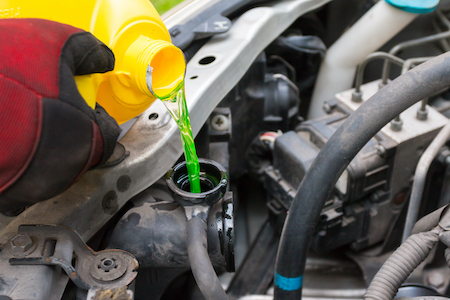
There are two major types of antifreeze. One is a green coolant, the other is an orange color. You can find less common types that may be blue, pink, or gold. To ensure you add what’s best for your car’s engine, ready your owner’s manual and follow manufacturer’s guidelines. The easiest way to identify your car’s antifreeze is by color. Yet checking with specifications ensures you purchase what’s best for your vehicle. 

Green antifreeze uses an inorganic additive technology, also known as IAT. Phosphates and silicates are mixed in with the ethylene glycol to help protect the metals that exist within the vehicle’s cooling system from being corroded. 

Orange antifreeze uses an organic acid technology, or OAT. They are created for today’s newer models that have more nylon and aluminum parts in them.  The organic acids are designed to prevent corrosion. OAT antifreeze promises full cooling coverage up to 150,000 miles or so, but it doesn’t consistently deliver. It’s best to keep an eye on it and have it inspected from time to time to ensure it’s operating well. 

While less common, other colors of antifreeze such as blue, pink, or gold exist and deliver cooling qualities to other types of cars and trucks. The difference is in the additives they use within the antifreeze mixture itself. 

Antifreeze is antifreeze … Or is it?

If you search online, you’ll find people on both sides of the issue. Some say you can mix antifreeze without an issue. Others tell you it’s a big problem. Which is true?

Mixing antifreeze is a bad idea and can cause serious damage to the engine block. What can happen depends on what types you mix together, as each mixture provides different qualities to your vehicle. If the chemical composition is the same but the brand is different, no harm will come to your vehicle. 

The most common mixup is with the green and orange antifreeze. When green and orange mix, they form a thick coagulant that gums up and sticks inside the system. The damage can happen swiftly. It shortens the lifespan of the coolant and starts impacting the engine block almost immediately. If it continues to operate, it risks damaging the entire cooling system. It can cause problems with the radiator, water jackets, heater core, and in severe cases, the head gasket. 

How often does a car need new antifreeze?

Antifreeze isn’t a fluid you add and change out frequently, like you do motor oil. It’s a good idea to have antifreeze levels checked periodically. You can do so at the start of summer and winter, when antifreeze will be put under more extreme stress. You can also do so if you’re heading out for a road trip, to ensure everything in your vehicle is working well. 

Your car’s owner manual will provide precise information on when and where to have antifreeze levels checked and changed. 

It’s usually when you’re on a road trip or outside of your normal routine where you might be tempted to use whatever you can find. If your car is overheating and you’re tempted to add more antifreeze, before risking adding the wrong liquid, you can add distilled water instead. The most common composition of coolant is made from 50 percent antifreeze and 50 percent water. A car will never run with 100 percent antifreeze. Adding water will reduce the freezing point, but it can get you safely to a mechanic where the entire system can be evaluated. 

A coolant flush 

Coolant flushes are necessary when you start noticing an issue with your vehicle’s function, status, and performance. You may notice you car is in need of a flush if it:

  • Overheats – this is a sign of excessive heat in the engine. The engine doesn’t have the proper heat balance that coolant provides. 
  • Ages – if you’ve been driving for more than five years without an issue, it may be time to check the condition of the coolant and flush it out to remove debris and other contaminants. 
  • Warning signals – the check engine light is a clear indicator that something is wrong internally. 

Mixed antifreeze is a problem

If you’ve accidentally mixed antifreeze types, your best course of action is to bring it in and assess the damage. A coolant flush can remove the current mixture and allow you to start fresh with a clean mixture recommended by your vehicle’s manufacturer. 

It allows your car to continue operating well. 

Have you ever mixed antifreeze before?

Filed Under: Car Maintenance Tagged With: Mixed Antifreeze

What It Costs If You Neglect Car Maintenance

August 10, 2022 by Denver Express Car Care

What are the most neglected car maintenance items? According to one survey, they include:

  • Wheels out of alignment
  • Skipping out on regular oil changes
  • Letting tires wear out and going bald
  • Missing the check engine light
  • Ignoring sluggish brakes that just don’t feel right

Of course, as busy people, we have our reasons:

  • We’re too busy to take the car in … maybe later
  • Money is a problem … waiting until next payday looks better
  • The repair isn’t that urgent … What’re a few more weeks going to do?
  • The repair will take how long … I can’t live without a car for that long!

Do you see yourself in any of the situations above? We’ve all been there a time or two. 

But waiting to fix a car maintenance item is never good for your vehicle. It turns a simple, inexpensive issue into a full-blown problem. What started out as low-key – scheduling an oil change – turns into an expensive endeavor – a blown head gasket. 

If you thought an oil change was expensive, wait until you deal with a head gasket replacement. 

Oil changes, by far, are the most neglected car maintenance item for car owners. A few thousand miles can slip by quickly when you’re busy and have a lot on your plate. Manufacturers give a window of several thousand miles for scheduling an oil change, and many people press the limits. 

Yet neglecting an oil change can increase buildup and friction within the engine compartment. Over time, that wastes gasoline, decreases fuel efficiency, and risks blockage deep in the system. When that happens, friction builds, heat accumulates, and various engine components break down. 

What It Costs If You Neglect Car Maintenance

You may think you’re saving money by pushing the timeframe between oil changes, but what you’re really doing is increasing the likelihood of a bigger problem down the road. 

Ignoring car maintenance comes at a price. Let’s look at the costs of not taking care of your vehicle:

It impacts the life of your vehicle

Today’s vehicles are made up of more than 10,000 components, all acting together to create an efficient machine that gets you to where you’re going. Fluids, filters, belts, hoses, parts, systems, and individual components all will wear down over time. Some need replacing frequently. Others may last the life of your vehicle. Yet each part is dependent on the quality of another. If one isn’t feeding the systems correctly, it puts added stress onto that part. 

The standard vehicle today has an average life of about 12 years, and is expected to keep running up to 200,000 miles. On average, a car will start costing you more money the older it gets and the more mileage you put on. One of the ways to counter that is through regular inspections, ensuring individual parts are in good working condition before they have a chance to impact others within the system. 

It increases the cost of future repairs

Studies consistently show that cars on the road today operate with 

  • Low or dirty engine oil
  • Low or contaminated brake fluid
  • Dirty air filters
  • Low coolant
  • Old windshield wipers and low washer fluid
  • Old  

These basic items might not seem like a big deal, but simple, low cost items can quickly add up. 

Oil changes – if you go months without changing the oil, you may end up by the side of the road, having to tow your vehicle in because it no longer runs. Upon further inspection, the mechanic discovers the engine has seized. Your options are replacing the engine, or buying a new car. That’s a big deal considering today’s average new car price is $47,148. Compare that to an oil change every 5,000 miles or so at a fraction of the cost. 

Brake maintenance – brake pads have a built in mechanism to warn you of potential problems. When they start squealing, it’s an indicator that the brake pad is nearing its end-life, and needs changing soon. If you ignore the problem, the metal from the brake pad wears into the metal of the brake rotor. It continues to burn through the rotor and down into the ventilating fins. Instead of a simple brake pad replacement, you’ll be looking at thousands of dollars to fix multiple problems within the brake system. 

Belts and hoses – these components can last a long time. But when they do start wearing out, you’ll hear squealing noises indicating a potential problem. If belts don’t have proper tension, it’s like having no belt at all. Many cars operate with a single serpentine belt. If it quits working correctly, it impacts the water pump, which quits circulating coolant throughout the engine, which stops the alternator, shuts down power steering, and shuts down your air conditioner. Fixing the belt is easy and a fairly straightforward process, depending on your vehicle. Replacing multiple systems is a costly experience that can quickly run into thousands of dollars. Timing belts can also be expensive if they slip or break, sending a piston into an open valve. If this happens, it can cause the engine to self-destruct. The cost of a timing belt is far less than dealing with a non-operational vehicle that needs a new engine. 

Fluids and filters – these are simple routine maintenance items that are often spotted during regular inspections. When you schedule visits with a mechanic you can trust, they will help you keep your car in good physical condition, replacing parts and filling up fluids before further damage can be done.  

It reduces risk 

If you’ve ever been stranded on the side of the road, you understand risk. 

Where were you heading? You might be late for a meeting at work. You might miss a flight if you were heading to the airport. 

Now what? You may be facing towing expenses. You may have to deal with a mechanic who doesn’t have your best interests at heart. 

Nobody likes facing repair bills. But neglecting car maintenance items only puts off the inevitable. 

If you’ve been neglecting scheduling a visit, wait no more. 

Call us today, and we’ll inspect your vehicle. We’ll help you make the best decisions for the future of your vehicle. And help you bring it back to the best condition possible. 

Filed Under: Car Maintenance

Yes, The Type of Fuel You Put Into Your Car Matters

August 7, 2022 by Denver Express Car Care

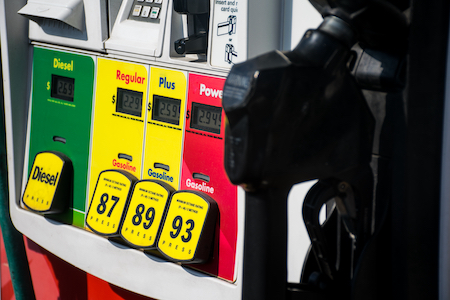
When you pull up to fill your car up with gas, you usually have a choice of several types of fuel. You make a selection – regular, plus, premium – and let the fuel flow into your tank. You hop into your car and move on your way. 

But have you ever stopped to think about the type of fuel you use and what it does for your vehicle? Does fuel type matter? 

From the moment we buy a car, we put fuel into the tank without thinking much about it. You’re programmed to select a fuel grade, fill it up, and head out into your day. Yet most of us think little about it. What goes into the fuel before you put it into the tank?

Fuel is made up of chemicals designed to keep your car running smoothly. Of course, every fuel manufacturer interprets what that means in a different way. While your owner’s manual dictates the right type of fuel needed to keep your car operational, you might be wondering: What’s the difference? 

Gasoline is manufactured from crude oil. Crude oil undergoes a variety of refinery processes before it ends up at your local gas station. Additives include aromatic compounds, detergents, isoparaffins, and other additives required by the EPA.

Gasoline is typically sold by octane ratings. The theory states that higher octane should result in more power to the engine, while decreasing the likelihood of unburnt fuel running through the system and exiting the exhaust. 

Regular octane ratings start at 87 for regular, 88 to 90 for a mid-grade fuel, and 91 to 94 for premium. This rating helps manufacturers measure the ability to resist “knocking” during combustion. Under certain conditions, the fuel/air mixture can ignite early. This is called pre-ignition, and often makes a knocking sound similar to a percolator.

Yes, The Type of Fuel You Put Into Your Car Matters

 In other words, octane controls the ability of the fuel not to detonate early before it has a chance to mix with the air supply and spark as it ignites. Octane measures gasoline’s resistance to pre-ignition. Higher octane provides less likelihood of detonation. 

Why some cars need higher octane

Some cars are built with higher output. They use a higher compression rate to produce more power. They compress the fuel/air mixture more, creating excess heat. This can allow pre-ignition to occur. These cars need the higher octane fuel to ensure gasoline doesn’t ignite early. 

If you drive a car that requires premium gas, it will say so in the owner’s manual. It’s always a good idea to stick with the fuel source recommended by your car’s manufacturer. But it won’t kill your engine, or cause immediate damage if you fill up with a lower grade fuel. It can harm your engine over time, but occasionally filling up with a lower grade won’t damage it immediately. But it can speed up wear and tear. 

What fuel is recommended

When you first purchase a vehicle, getting to know your car is a good idea. The owner’s manual will recommend what type of fuel you should use in your car, what octane level your vehicle will operate best at. 

Regular fuel is recommended for engines that don’t have a high compression rate. It doesn’t rely on turbocharging to force air into the fuel/air mixture. The fuel/air ratio remains relatively stable throughout the engine consumption process, and a higher octane isn’t required to keep the mix from detonating prematurely. Regular fuel will contain additives and detergents to help clean and lubricate the engine, keeping it in good working condition without leaving deposits on the various engine parts. 

Premium fuel is recommended or required for engines with a high compression ratio, or come with a turbocharger. When the higher compression or turbocharge kicks in, it forces more air into the engine to help pull more energy from the detonation process. Without the higher octane fuel mixture, it can become unstable and prone to premature detonation. Premium fuel was created for stability as the fuel/air mixture changes with the uptick of air. Some manufacturers also provide more detergents and octane additives to ensure engines remain clean, lubricated, and offer you optimal performance. 

What about upgrading the type of fuel?

If premium gasoline improves the performance of vehicles that need it, what about other cars? It’s natural to assume that what is good for performance with one vehicle will help with others too. 

A non-turbocharged vehicle is designed to operate on regular fuel. When you fill up with regular fuel, the engine gets the recommended octane rating, ensuring the engine receives the proper fuel. If you put in premium instead, it will offer a higher octane. While this isn’t bad and won’t hurt the engine, it doesn’t offer any benefit. It will cost you because you’ll be paying more at the fueling station. 

Gas at high altitude 

Here in Denver, we drive at a higher elevation on a daily basis. Head up into the high country, and you add even more stress to your vehicle. 

Gas stations try to compensate for this in some cases by selling lower octane fuel. They deem that with thinner air, it lowers a car’s compression ratio, which in turn makes a lower octane fuel acceptable. While that may work for older cars, with newer fuel-injected engines, they detect the lower air levels and adjust accordingly. They expect the fuel as recommended, and make the necessary changes accordingly. 

As you drive here in Denver, stick with manufacturers’ guidelines and choose the level of octane recommended. Even if you take a road trip to lower altitudes, select the octane level closest to what is listed in your owner’s manual. 

What type of fuel does your car use?

What fuel your car runs on does matter. 

To keep your vehicle in good working condition, check to see what octane your car’s manufacturer recommends. Then select a high quality gasoline that feeds your car’s engine with high quality gasoline every time you fuel up. 

Your car will thank you for it down the road. 

Filed Under: Engine Tagged With: Type of Fuel

A Guide To Regenerative Braking Systems

August 4, 2022 by Denver Express Car Care

Regenerative braking systems are included in most hybrid and electric cars. You’ll even find regenerative braking on some gas-powered vehicles. It converts the kinetic energy your car creates and turns it into electrical power. It’s more efficient than the process used by gas-powered vehicles. 

When you tap on the brake pedal, the kinetic energy of the car’s forward motion converts into heat as the brake pads connect with the rotors in a disc or drum. That heat dissipates into the air and away from the vehicle, instead of being used more efficiently. 

A regenerative braking system captures that heat and uses it for better efficiency. 

How a regenerative braking system works

Let’s dive a little deeper into how a regenerative braking system works. 

Traditional brakes on a gas or diesel-powered vehicle work through hydraulics. When you touch the brake pedal, hydraulic fluid moves brake calipers to connect brake pads with the rotors. This decreases the rotational spin of the wheel, gradually slowing it down until it comes to a stop. Drum brakes work a bit differently, but the overall principle is the same. 

With either drum or disc system, it involves transferring kinetic energy back into the environment. It takes the friction that causes heat within the braking system and moves it away from the vehicle. 

When you move to hybrid or electric motors, the braking system works a bit differently. As you press down on the brake pedal, the generator increases power, causing more resistance, slowing the vehicle until it stops. This process causes electrical current to flow back to the battery pack, where it continues to power the system. This is why regenerative braking works well in urban settings, because it continually recharges the system with stop-and-go traffic. Each stop at a traffic signal or in heavy traffic situations gives you an added boost when you accelerate again, which actually improves gas mileage and efficiency. 

A Guide To Regenerative Braking Systems

Regenerative braking extends battery life

Because kinetic energy builds as regenerative brakes are used, it helps keep the battery charged and ready to power the accessories used throughout the vehicle. For an electric vehicle, it can help preserve battery life, allowing your vehicle to travel further between power fill-ups. On all vehicles, it reduces wear and tear on the overall braking system, extending the life of the various brake parts. 

If you haven’t experienced regenerative brakes before, it takes a bit to get used to the feeling. The added friction can cause more slowing as you move your foot from the brake to the accelerator. Drivers often say it feels more like an on/off switch – now you have power, now you don’t. It makes it feel a bit jumpier during transitions, and takes a bit to get a feel for creating smooth transitions.  

In hybrids and newer systems, manufacturers are working to improve the feel of the transition. Some models only use one pedal for all movement. 

Brake checks and replacement are still required

One of the reasons people move towards newer technology is the idea of lowering the amount of maintenance required on the vehicle. 

Today’s electric technology requires little or no maintenance for the battery, motor, and other electronic parts. There are fewer fluids to check and refill, too, such as motor oil that needs replacing every 5,000 miles or so. 

With regenerative braking systems, the friction doesn’t wear on the components the way a traditional system does. It significantly reduces brake wear. 

That said, brakes are still a safety feature that needs to be checked from time to time. Reports show that brake rotors and pads can last 100,000 miles or more. 

Regenerative braking systems still use physical brakes. That means they mirror traditional brake construction, with rubber, fluids, and metal all being impacted over time. And that means they can suffer many problems found with conventional brakes, and still need maintenance over time. 

Electric vehicles might not use motor oil, but they still need brake fluid to function. And no matter how well cared for your vehicle is, brake fluid degrades over time. Especially if you’re not pumping the brakes at regular intervals. If you work from home more and your vehicle sits in the garage for days, it can impact brake’s health. 

Traditional brake maintenance revolved around worn out parts. Manufacturers had specific guidelines for replacing things like brake pads, rotors, and drums. They built safety features to warn you when things were wearing down to decrease the risks associated with brake failure. 

Because regenerative brakes utilize different energy for braking, the components might not wear down as fast. But it is important to pay attention to brake fluid replacement, changing it  based on mileage and timing. Even if you work from home and don’t take it on the road daily, fluid can still be compromised and degrade over time. 

That’s why many elective vehicles include frequent brake fluid check-ups and replacement, often once every two years.  

Another problem can be rust build-up, unless your car is specifically designed with carbon-ceramic brakes or other systems that are non-metallic. A little bit of surface rust won’t impact performance. But if it’s unchecked for too long, it can break through and cause more extensive problems. Detailing the brakes, especially after extended downtime, is a good idea to ensure they are working well and haven’t seized. 

Proper maintenance – the key to any vehicle’s long life

Whether you drive a gasoline, diesel, hybrid, or electric vehicle, ensuring a long life starts with proper maintenance. 

Instead of waiting for a problem to arise, regular inspections will allow the problem to be fixed early, meaning you’ll spend less time facing bigger issues down the road. 

Regenerative brakes are the future of the automotive industry. They work better, last longer, and provide your vehicle with added safety features. 

Yes, regenerative braking is more manageable in urban environments where they get a boost every time you use them. Just keep the process mild, without pouncing on the brakes to ensure the longest life possible. 

Do you have any experience with a regenerative braking system? 

Filed Under: Brake Service Tagged With: Regenerative Braking Systems

Is It Time To Change Your Spark Plugs?

July 28, 2022 by Denver Express Car Care

How often do you jump into your car in the morning, turn the key, and drive away to start your day without a problem? With a well-maintained vehicle, that describes almost every day. 

Yet there comes a time when you turn the key and it doesn’t feel right. Maybe it takes a while for the engine to turn over. Or maybe you hear no sound at all. 

What is it?

While most immediately think it might be the battery, (it’s a good guess and is worth checking out,) it could also be your spark plugs. While you don’t have to change your spark plugs the way you do motor oil or an air filter, spark plugs can and do wear out over time. 

What are spark plugs?

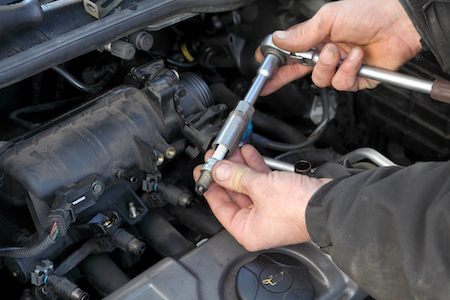
A spark plug is a small device that plugs into the cylinder head in the engine, providing the spark for combustion between the battery and the spark plug. 

The spark plug sits at the top of the cylinder head. The piston moves down into the cylinder, taking in fuel and air. As it moves back up, it compresses the fuel and air, allowing the spark plug to spark and ignite the mixture. This gives the vehicle energy as it pushes back down, clearing out exhaust as it finishes its cycle. The process starts all over again. 

Is It Time To Change Your Spark Plugs?

A four-cylinder car will have four pistons and four spark plugs. A six-cylinder vehicle will have six. This little tool is a reliable component that keeps on working through thousands of rotations every single time you take your car out on the road. For example, in a four-cylinder 2.0-liter engine, spark plugs will fire 200 times per minute while sitting and idling. 

Different types of spark plugs

Like other parts of your car, there are different types of spark plugs available depending on the type of engine your car has. Choosing is based on several things: how many cylinders your engine has as well as performance. 

You’ll find spark plugs at all price points, with the cheaper ones, in general, providing a shorter life span. Manufacturers will recommend which type of spark plug to use, so it’s a good idea to check your owner’s manual. Different spark plug types include:

  • Copper – this has been around for decades and is the most common and economical. They also have the shortest life span of about 30,000 miles. 
  • Iridium – provides a long life, which is also reflected in the cost. These are performance driven, so if your vehicle’s manufacturer recommends them, sticking with them will ensure your car remains in top working condition. 
  • Platinum – one of the newer additions to the market, a platinum spark plug will typically last as long as 100,000 before needing replacement. They run hotter and reduce carbon buildup in your engine. 
  • Double platinum – these are common in cars with “wasted spark ignition systems” where two spark plugs fire at once. This increases wear and tear on the spark plugs, and will be replaced more often than other types. 

When should you replace your spark plugs

If you check with your owner’s manual, the manufacturer will recommend how often you should replace the spark plugs. Use that as a guide for general upkeep and maintenance. However, your vehicle does provide other warning signs if the spark plugs start wearing down. 

Check engine light – this frequent dashboard light can signal a variety of problems inside the engine compartment. If a plug starts to fail, it will send a warning signal through the check engine light. If a spark plug doesn’t provide proper ignition, it can cause the engine to misfire. A misfiring spark can also generate rough idling, uneven power while accelerating, and a greater chance of exhaust emissions. 

Trouble starting – the spark plugs provide one of the most important jobs when you first start your car. Without the initial spark, the engine wouldn’t receive enough power to turn over and stay operational. As spark plugs wear down, they have a harder time creating that spark that powers the engine. If the engine cranks over but has difficulty trying to turn it on, it could be a problem with the spark plugs. If there’s no power at all, it’s most likely the battery. 

Rough idle – when you start to notice the engine knocking, rattling, or pinging, the spark plugs may be to blame. 

Acceleration issues – driving is something we do often enough that we have certain handling and performance expectations. If it suddenly isn’t as responsive as it once was, it’s a sign of a part wearing down to the point of eventual failure. Spark plugs can cause your vehicle to feel sluggish when you press on the gas pedal, giving you a feeling of unresponsiveness. You’ll feel like you’re stepping on the pedal harder trying to make the car go. 

Filling up at the gas station more – as spark plugs continue to wear down, it will increase fuel consumption. Spark plugs will no longer burn fuel effectively, meaning you’ll need more fuel to accomplish the same process. According to the National Institute for Automotive Service Excellence, a bad spark plugs can decrease fuel economy by up to 30 percent.

What happens if you wait too long to change your spark plugs

Can you keep putting off spark plug maintenance or replacement? Drivers do it all the time. 

But those little warning signs will continue to grow. 

It’ll take longer for the engine to turn over while you turn the key as the spark plugs have more trouble catching a spark. 

You’ll be pulling into the filling station more frequently, watching your gas efficiency plummet as more gas is needed to keep the vehicle running. 

You’ll hear more noises coming from the engine compartment as it has trouble keeping the entire system running the way that it should. 

The more stress is put on the engine compartment, the more it impacts other parts and components. What could have been an easy maintenance issue – changing the spark plugs – can accelerate into a more expensive fix. 

What’s the easiest way to keep repair costs low and keep your car in good working condition? Maintain your car on a schedule, and bring it in at the first sign of a change. 

It’s the best way to keep your car running well, there for you, whenever you decide to head out for a drive.

Filed Under: Engine Tagged With: Change Your Spark Plugs

How To Keep Your Car’s Air Conditioner In Top Shape As The Heat Climbs

July 24, 2022 by Denver Express Car Care

Summertime here in the Rockies has started to feel like endless days in the 90s and 100s, as heat settles across the land with little relief. You’re using your air conditioner like never before …

But what about inside your car? There are rumors out there that running the air conditioner makes your gas mileage fall. If you use your AC frequently, it will impact the overall health of your car. 

Are those myths? How do you keep your car’s air conditioner in top shape even as the heat continues to climb?

Using your air conditioner when you first get in the car

Getting into a hot vehicle is never fun. It’s hot, stifling and can take a lot out of you. Yet pre-cooling your vehicle isn’t the answer. Instead of turning on the AC and letting it idle until cool, put the fan on high and open the back windows for 20 seconds allowing the hot air to flow out the back. The air conditioner is powered by an engine in operation. It puts added stress on the system when you idle, trying to get the car cooled before you move. Give your AC unit the support it needs and start driving before you turn it to full speed. 

How To Keep Your Car’s Air Conditioner In Top Shape As The Heat Climbs

Schedule regular maintenance at the start of each season

When you establish a relationship with a reputable mechanic, you can feel comfortable bringing the car in for sound advice. We recommend scheduling seasonal visits twice a year to get your car ready for summer and winter driving. This will allow us to ensure every component and system is in optimal condition, ready to work hard for you as we have record-breaking events. For the air conditioner, it ensures your antifreeze is topped off, and that the appropriate coolant is being used within the system. 

Change the AC filter as needed

Your owner’s manual is filled with important facts and information about how best to operate your vehicle. The more familiar you are with it, the more you can use it to schedule regular maintenance items and stay ahead of your car failing at inopportune times. Most AC filters last around 30,000 miles. The AC filter is typically located behind the glove box, and is something easy to change. If it’s been a while, changing it out will help increase airflow, reduce unpleasant odors, as well as reduce dust from settling into the interior of your car. 

What to do when you notice odors

Any sign of odor or a strange smell is reason to be concerned. It can be annoying at best, dangerous at worst, and something you should act on immediately. There are a few odors that might suggest urgent issues:

  • A must smell could mean mold entering the cooling system’s evaporator. Try running the heater for a while to dry out the evaporator core and see if it disappears. 
  • A sweet smell may signal an antifreeze leak. It’s time to bring it in for professional evaluation. 
  • A gas smell coming from the AC unit could be an indicator of a gas leak. It could be something as simple as an unsecured gas cap, or a sign of a bigger hazard. 

Keep inducts clean

There’s a reason it’s a good idea to keep your car clean during the summer and winter. If you allow buildup of water, snow, and dirt at the base of the windshield, it can impact the inducts. Moisture can sit there and build, blocking airflow and possibly causing mold or other pollutants to settle in. As these contaminants continue to grow, it enters through the air conditioner every time you use it. Keep this area clean by washing it regularly. 

Run your AC periodically on defrost mode

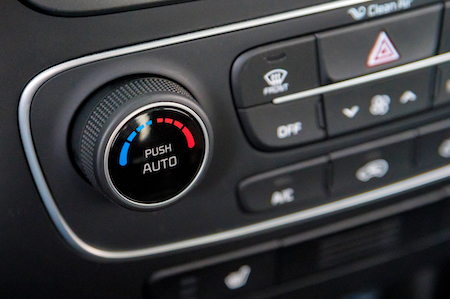
When you turn the defrost mode on in the winter, have you noticed it kicks the air conditioner into gear? That’s because when the system is in defrost position, the AC compressor turns on. This draws outside air in and sends it through the AC evaporator to remove moisture from the air supply before sending it back to the heater core. By turning the defrost system on periodically throughout the summer, you’re allowing the system to run at maximum fan speed and coolness setting, helping clean out moisture and preventing mildew. What works to remove moisture from your windows during cold winter months also works well keeping your inside air supply cool, dry, and comfortable in the summer months. 

Don’t leave the air conditioner on recirculation

While the most common AC buttons are to adjust temperature and fan speed, you’ll also see switches to move from fresh air to recirculation. Fresh air allows outside air to flow in. Recirculation continuously recirculates air throughout the inside cabin. While you may wish to recirculate when you’re behind a smelly diesel truck, move back to fresh air when you can as it provides more circulation throughout the inner cabin. Recirculation pulls air from the front and re-cools it. That makes the air flowing towards the back warmer as it’s recirculated back up front. With a full car and passengers in the back as well as the front, a constant input of fresh air will give you the best results. 

What are the most common air conditioner issues?

Like many other systems in your car, the air conditioner components wear down over time. Common issues can be:

  • Refrigerant leaks
  • Cracked or broken cooling fans
  • Condenser and compressor malfunctions 

A refrigerant leak is easy to spot. It’s a fluorescent yellow-green color that’s easy to detect as it leaves traces underneath your car. 

Cooling fans can slow down or stop altogether for a variety of reasons. It can blow a fuse, have an electrical short, or be cracked by hitting debris on the road. 

A broken condenser can be caused by a damaged part, component failure, or debris moving in through the grill and damaging the part. 

In all cases, the faster you act, the less damage may occur. 

Whether you’re performing preventative maintenance, ensuring your air conditioner is running well, or you have a problem with your system and it’s not keeping you cool, schedule an appointment today to get your AC system back in good working condition. 

And stay cool no matter how long this current heat wave lasts this summer. 

Filed Under: Heating-Air Conditioning Tagged With: Keep Air Conditioner In Top Shape

Ensuring Your Car’s Safety Features Are Well Maintained

July 21, 2022 by Denver Express Car Care

Are you an old car enthusiast? There’s something nostalgic about glancing into an old car, imagining all the places it’s seen in its lifetime. 

But glance inside a vehicle made in the 50s or 60s, and you’re also likely to see something missing: Safety features. 

Car safety features have advanced since cars were first introduced in the market. In the 1930s, new safety improvements included all-steel bodies and hydraulic brakes. The 1950s brought on seat belts and padded dashboards. The 1990s made airbags standard equipment. 

Today we take many modern day safety features for granted. When was the last time you thought much about airbag functionality? 

But it goes beyond that too. Every single system inside your vehicle has been adapted with your safety in mind. Brake advancement, improved suspension, even emissions standards have been designed to make your driving experience safer while creating a better world as well. 

Yet every single one of these safety features needs to be well maintained in order to function well when you need it most. 

Ensuring Your Car’s Safety Features Are Well Maintained

What are some of the most important safety features?

Airbags

What started out as a simple safety feature to protect the driver has become a huge part of every vehicle’s overall safety strategy. Most new cars today will have a minimum of six airbags in place. Newer vehicles work to improve functionality, and offer as many as ten airbags or more. 

While they aren’t perfect, they do more good than harm. The IIHS found that front airbags reduce driver fatality by 29 percent, and front-seat passenger fatalities by 32 percent. 

While they are an excellent feature to have in case of an accident, things can go wrong over the years. Airbags are sometimes subjected to manufacturing defects, which can cause lack or improper deployment. Manufacturers are required to issue recall alerts as soon as they notice a problem. Fix it quickly if you hear of a problem. 

With airbags in multiple places throughout the vehicle, the technology is also becoming more sophisticated to measure the weight and position of the seat. These systems are designed to adjust deployment to minimize injury. 

The suspension system

The suspension includes the steering, wheels, tires, shock absorbers, struts, and many other components linking it all together. While a vehicle may come out of the factory with a tight suspension, everyday driving can start to whittle away at how all the pieces fit together. Every bump, dip, and uneven surface you drive on has the potential to damage the suspension system:

  • Broken springs
  • Damaged struts
  • Leaks in the shock absorbers
  • Wheel alignment issues
  • Uneven tread wear

 While some of this is beyond your control, some are avoidable. This is where regular maintenance comes into play. 

Start by getting familiar with your owner’s manual. It will establish guidelines for how often different components need replacing, or systems need to be repaired. Schedule maintenance items regularly, and be proactive in how often you seek regular maintenance visits. You can do things like:

  • Have the wheels aligned
  • Rotate tires regularly
  • Change out fluids timely
  • Maintain proper tire pressure

Regular service is the key to prevention. 

The braking system

The brakes are one of the most important safety features on your vehicle. Without them working effectively, you put yourself, other passengers, and those around you at risk. 

The braking system is exposed to a significant amount of friction and heat. Every time you step on the brake pedal, it adds energy through the brake pads and rotors, eventually onto the wheel itself. Common issues include:

  • Worn brake pads
  • Worn rotors and calipers
  • Leaking or low brake fluid 

Aggressive driving habits will exacerbate these conditions. Ignoring a good maintenance schedule will also allow repair work to go unchecked longer, potentially putting more of the brake system at risk. To keep them in good working condition:

  • Have the brake system inspected once a year or every 12,000 miles. This gives a mechanic the chance to look at brake pads and rotors, and ensure it’s all working well. 
  • Replace brake fluid every 25,000 miles or so.
  • Bleed brake lines as needed to remove air and dirt. 

In modern day vehicles, antilock brakes (ABS) also aid in emergency situations. If you remember your instructor at driving school teaching you to pump the brakes during an emergency stop, ABS handles that process for you. It electronically pumps the brakes when it detects the wheels not responding as they should in an emergency. Electronics can do so more rapidly than you can, providing more assurance of coming to a complete stop. It is crucial to have this inspected regularly, to ensure it’s functioning properly and will respond in the event of an emergency. 

Electronic stability control

In addition to ABS, electronic stability control (EBS) was enacted in 2012 to help keep the vehicle moving in the direction you’re steering. It’s a more complex system relying on both ABS and traction control for results. 

The EBS sensors also measure sideways motion and steering angle to ensure stability. If something happens to your vehicle and the sensor senses the vehicle isn’t moving in the direction of your steering inputs, it uses every tool possible to return the car to its intended position. While it’s not foolproof, it does a pretty good job of keeping your vehicle under control in most situations. If this isn’t working correctly, your vehicle is at greater risk. 

Is it working the way it should? Diagnostics can help determine if something is wrong with the control system, and make adjustments as necessary. 

Are your car’s safety features well maintained?

The easiest way to ensure they are is to schedule a maintenance inspection today. Through diagnostics and inspection, we can determine where problems may lie, and ensure every system is in good working condition. We can help put a schedule together for better understanding on repair and replacement expectations, giving you a chance to add them into your budget. 

How can we help you keep your car well maintained? 

Filed Under: Tips & Tricks

Catalytic Converter Theft – What It Means To Your Car

July 18, 2022 by Denver Express Car Care

Have you heard talk in the media about catalytic converters lately? It’s not a lifestyle piece about what they do for your car. Chances are they’re talking about catalytic converters because of their increasing theft rate. 

A recent study shows as of June 2022, there have been more than 26,000 thefts this year, an increase of more than 33 percent from this time last year. 

Catalytic converters are an expensive part that are easily removed and stolen. What does a catalytic converter do for your car, and why are they being stolen? Read on. We have the answers you’ll need to keep your catalytic converter safe. 

What is a catalytic converter

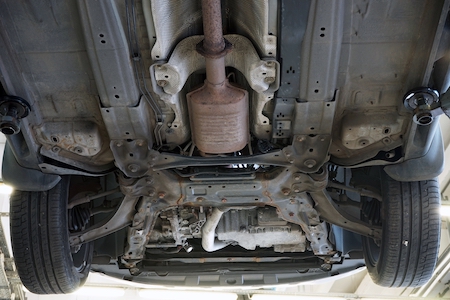
A catalytic converter is part of your vehicle’s exhaust system. While they come in different shapes and sizes, they are usually about the size of a loaf of bread. You’ll find the catalytic converter in the exhaust system located somewhere between the engine and the muffler. They need high heat to function, so they’ll be located as close to the engine as possible. 

The catalytic converter’s job is to convert harmful exhaust pollutants into something less harmful. Through a chemical reaction, toxic hydrocarbons, carbon, monoxide, and nitrogen oxides are converted into carbon dioxide, nitrogen, and water vapor. Though not perfect, the EPA still commends the use of catalytic converters as one of the top inventions so far in the quest to make our air supply cleaner.

Catalytic Converter Theft - What It Means To Your Car

 Why is catalytic converter theft on the rise

People steal catalytic converters for money. They contain three metals that aid in production of the chemical reaction needed to make pollutants less toxic: platinum, palladium, and rhodium. 

The prices of each of these metals have risen steadily over the past decade to make them valuable enough for thieves to take. Platinum, for example, was just above $100 an ounce, moving to an all-time high of over $2,000 an ounce in 2008. It’s settled to around $1,000 today, which still leaves a heavy profit margin to anyone taking it for profit. Because of the value, junkyards are more actively collecting catalytic converters, and have even gone so far as to advertise “mail-in” campaigns making it easy to profit with few questions asked. 

States around the US are now passing laws to make catalytic converter purchases traceable, and require proof of ownership when people try to sell them. Without the anonymity protection, it should help reduce theft. But until then, it’s important to know how to protect yours, and what to do if it’s stolen. 

Can you drive a car if the catalytic converter has been stolen?

As a general rule, you can drive a car without a catalytic converter. It’s the catalytic converter’s job to lower emission levels and toxic fumes being released into the environment. But it won’t hurt the engine if it’s not in place. 

That said, it’s illegal to drive without a catalytic converter in place. That means you’ll fail an emissions test if you don’t have one in place. 

You’ll also notice a difference in the way your car performs. 

Without a catalytic converter, the oxygen sensors will not operate within the designed range. That sends engine fault codes to diagnostics, engine performance will suffer. Diagnostics will receive a signal from the sensors to change the oxygen mixture to try and reduce emissions. You’ll likely see the check engine light with trouble code P0420. 

You’ll notice a reduction in power every time you take your vehicle out on the road for a drive. Without the proper fuel and oxygen mixture, the engine will sputter as it tries to operate. You’ll notice this hesitation each time you take it out. 

Your fuel economy will also be compromised, causing you to pull into the gas station more often. Because it impacts the fuel/oxygen mixture, it will push more fuel into the engine trying to accomplish the same action with new requirements. This results in more emissions production and less fuel efficiency. 

The exhaust noise will also be louder and raspier without it. 

Your car will definitely alert you to the problem. 

How to prevent your catalytic converter from being stolen

While the good news is states across the US are putting laws into place to thwart criminal activity, it hasn’t stopped thefts from occurring. It’s harder to instill new laws onto older parts and technology, so it may take a while for rules and policies to catch up. 

Until that time, there are things you can do to protect your catalytic converter and reduce the risks of having it stolen. 

Catalytic converter replacement can typically cost thousands of dollars, depending on the vehicle. Some high performance vehicles may even have two catalytic converters in place, increasing the replacement cost. 

Luckily, there are things you can do to help protect your car’s catalytic converter. 

  • Park indoors if possible. If you have a garage, use it. It’s the easiest way to deter criminals from destructive behavior. 
  • Park in a well-lit area. Thieves are less likely to work on a vehicle in a well-lit area, in view of anyone who passes by. A well-lit area with abundant traffic around the location pushes any would-be thief to another location. 
  • Look for video surveillance. Some places make it well known the area is watched. Thieves want anonymity. If they know they might be observed and recorded, they’ll look for easier targets. 
  • Consider getting your catalytic converter etched. Many police departments and some auto shops are now etching your license plate number onto the catalytic converter. This will tie any purchase back to the particular theft, and help stop more thefts in the future. 
  • Have anti-theft devices in place. You can have installed shields that make it more challenging to steal. While not a perfect plan, with little evidence of how effective these are, if you live in a higher crime area, this may be worth trying. 

Have you ever had your catalytic converter stolen?

Filed Under: Denver Auto Repair, Tips & Tricks Tagged With: Catalytic Converter

Does Your Car Still Use a Muffler?

July 14, 2022 by Denver Express Car Care

I was surprised by the question: Does a car still use a muffler?

And yet it makes sense. Years ago, it was common to see commercials on television touting muffler repair and replacement. Cars weren’t as sturdy. Owners anticipated having to replace parts of the exhaust system every few years. 

Today, however, that has changed. Most modern vehicles have a stainless-steel or aluminized-steel exhaust system designed to last for a lifetime. 

What is a muffler?

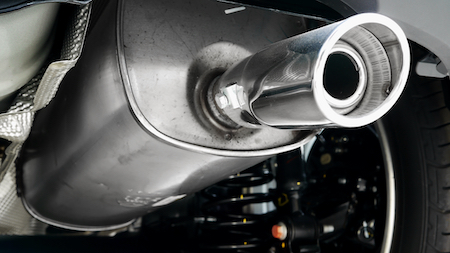
A muffler is designed to muffle the sound created by a rumbling engine. Engines operate with a lot of power. That energy creates continuous pulsating sounds that reverberate through the exhaust valves. It creates thousands of pulses per minute, which could create a very noisy environment without the muffler in place. 

A muffler is designed as a noise canceler. If you were to open a muffler up, you would see a series of tubes, baffles, and chambers all working to reflect the sound waves as they move in from the engine. They are reflected back and forth in such a way to decrease and cancel each other out. 

Mufflers are created differently. Some are designed for quiet, reducing the noise to a minimum. Others are created with lower tones and different zounds. If you hear a growling noise from some vehicles, it’s the way the muffler was designed. 

Does Your Car Still Use a Muffler?

Why mufflers grow noisier with age

When you drive a vehicle off the showroom lot, it’s a solid machine that works at optimal performance. From there, every bump in the road or slamming on the brakes starts wearing on the various components. This doesn’t happen all at once. Unless you’re in an accident, it happens slowly over time. 

This is normal. 

Over time, the engine starts to wear down. Even if you bring your car in regularly, various parts continue to wear down. Belts can wear and extend. Joints can wiggle loose. Efficiency can degrade. 

As the pieces no longer fit together quite as tightly, you’ll notice it in performance. You may hear noises you’ve never heard before. 

Every noise you hear is an indicator of something not working quite the way it was designed. It might not impact your car … at first. But over time, it can start causing damage within the system. 

Oil is one of the most important foundations for an engine’s good health. While there may be some debate on whether to change it out every 3,000, 5,000, or even 7,000 miles or more, err on the side of changing it more. Oil is a lubricator that keeps your engine cool and working well. As oil degrades, it won’t perform well, which causes the engine to have to work harder for performance. 

This is where problems begin. 

A muffler takes that noise and muffles the sound. More sound means more work. And because a muffler degrades over time too, you get the two components countering each other. 

Common muffler problems 

 The most common muffler problem is rust. As water trickles through the exhaust system, it causes condensation to build within the system. As some of it accumulates, it causes rust over time. 

Moisture can accumulate from other resources too. During our snowy winter months, ice and snow can build up underneath your vehicle. Rain can splash up during the rainy summer months. This can also build up over time and cause rust, especially along joint and connection lines. 

Another common problem exists when holes or loose parts exist within the exhaust system. This happens over time. Hitting a bump or a pothole causes friction in connections. Every rock kicked up as you drive can ping the muffler. While you might not see damage the first month after you purchase a vehicle, or even after the first year, damage accumulates over time. It’s the constant wear and tear that eventually causes a problem. And if a crack exists in the muffler or tailpipe, it needs to be replaced. 

How to know your muffler needs replacing

Like other parts on your vehicle, there are telltale signs a muffler gives you, signaling it isn’t working properly. 

The easiest is by producing more noise. Since a muffler’s main objective is to remove noise, you’ll notice if it’s no longer performing optimally. When a muffler is damaged, it can’t provide noise reduction. You’ll hear it every time you start your car and drive. It won’t be something you can ignore, as it will only worsen over time. 

The engine can also misfire. A misfire shows up as a sudden loss of speed, yet the engine recovers quickly and moves on. It feels like it stumbles, catches, and recovers. This happens as exhaust moves through the system, it catches in the muffler without moving smoothly through the system. This catch causes it to hesitate, showing up as a misfire. 

You can also notice it in your fuel economy. And with prices rising as high as they are today, you’ll feel it in your wallet. A good exhaust system is essential to a vehicle’s performance level. The muffler can easily be the starting point to losing efficiency. A crack or leak in the muffler allows exhaust to flow where it shouldn’t be. This cuts back on performance, requiring more fuel to get the job done. This means the fuel you put in will have to work harder for the same results. You’ll be filling up more often as you move through your weeks.

You might also hear a rattle if the problem stems from loose parts. A loose connection, a damaged part, or a small crack can allow different pieces to rub together, bang together as you hit a bump, or rattle as the car vibrates and moves. 

How to fix a bad car muffler

Unfortunately, the only way to fix a bad car muffler is replacement. If it has a minor hole, a mechanic may be able to use adhesive material to patch and bond to the muffler’s surface. But beyond that, it’s better to replace the entire muffler. It’s the best way to ensure it works correctly with your system, providing both safety and fuel efficiency. 

When was the last time you had your car’s muffler inspected? 

Filed Under: Car Maintenance Tagged With: Car Muffler

Gas Saving Tips For Your Summer Travels

July 10, 2022 by Denver Express Car Care

How fuel efficient your car was even a few short months ago wasn’t that big of a deal. When gas prices were low, a swing of 5 to 10 miles per gallon barely registered in your mind. 

Yet now, gas prices are rising … drastically. You notice it every time you pull into a gas station and fill up your tank. It’s difficult watching your final cost rise significantly upward, knowing there isn’t much you can do. Gas saving tips you read online never really amount to much … Do companies really think trading your car in for an electric car will save you money? Not when the average price of a car just rose beyond $47,000?

If your summer plans include road tripping, you want real gas saving tips you can use right now, with the car sitting in your driveway. Luckily, there are many things you can do that won’t break the bank. 

Let’s start with the reasons why your car’s losing fuel efficiency

Sure, you can save a little bit of money by tracking gas prices with your favorite app, but that amounts to a few cents each fill up. The same applies to paying with cash. 

Gas is an important part of keeping your vehicle fully operational. Have you ever purchased cheap gas and noticed your car ran rougher as it moved through the system?

The quality of gas is equally important. We suggest finding a reliable source that’s convenient for your lifestyle. Then use that source every time you fuel up. Do they have a loyalty program? This is the time to use it. 

Depending on where you go on your summer road trip, you can sometimes find the same source along your drive. Many consumers use Costco for gas as well as other lifestyle choices. You can map out the best places to stop based on where a servicing station is convenient. It also works well if you need to pick up a few food items when arriving at your final destination. 

Gas Saving Tips For Your Summer Travels

While you can save some cash this way, it won’t make a huge dent in your fuel bill. This is when it comes time to ensure your car is in top condition, to ensure it’s using fuel as efficiently as possible. 

Air filter

An engine needs both fuel and air to power the engine. Without the proper air supply, it won’t operate correctly. If the engine isn’t taking in enough air, it compensates for it by adding more fuel to the mixture. It will take more fuel to travel at the same speed. 

This is why it’s vital to ensure the air filter is clean and capable of allowing a proper air stream into the engine. Clogged air filters are especially common in older cars that still rely on carburetors. While most manufacturers recommend replacing your air filter every 15,000 to 30,000 miles, it’s a good idea to check it regularly and replace it as you notice changes. 

Fuel filter

A fuel filter blocks contaminants in the fuel supply, preventing them from traveling throughout the engine where they can cause harm. One of the biggest places contaminants can hamper fuel efficiency is by damaging fuel injectors. It can also lower fuel pressure, which further compromises your engine. 

As your car ages, manufacturers suggest replacing a fuel filter every two years or 30,000 miles, whichever comes first. Check with your owner’s manual to follow recommendations. If you suspect a dirty fuel filter, bringing it in and letting a mechanic inspect it will ensure all parts of your fuel system are working as designed. 

Fuel injectors

One of the most common reasons for a drop in fuel efficiency is a dirty fuel injector. Fuel injectors are tiny nozzles that spray fuel into the engine cylinder. This spray system must work precisely to mix with the air supply at the right time. Without it firing properly, it disrupts the fueling process. 

When fuel injectors become dirty or clogged, the fuel spray is anything but precise. In some cases, the fuel injectors can be cleaned. Other times they may need replacing to ensure a proper spray pattern. Fixing the problem early will prevent it from escalating and damaging other parts of your vehicle.  

Oxygen sensors

Today’s modern cars use an oxygen sensor to measure how lean or rich the exhaust gasses are as they exit the engine. These sensors register the results, then send a message to the computer system to adjust the amount of fuel that enters the engine. 

When an oxygen sensor is dirty, it can lead to an inefficient amount of fuel entering the engine. Some estimate that fuel economy can be lowered by as much as 40 percent. 

A faulty oxygen sensor is one of the more common reasons the check engine light will illuminate on your dashboard. It’s a good idea to bring your vehicle in anytime a light illuminates. A faulty oxygen sensor is an easy, affordable fix, and will help keep your fuel economy in check. 

Tires

Low tire pressure can be a common occurrence as you drive on scorching hot roads. It’s also a common cause of lowering your fuel efficiency. Underinflated tires have more roll resistance with the road. It creates drag as you drive and lower the fuel economy over time. 

 Luckily, it’s also one of the easiest to fix. Pay attention to the dashboard. If it illuminates low tire pressure, inspect your tires for any signs of weakness. You should also check your tire pressure and fill it up with air as needed. Because tires can have a major impact on safety, especially as you road trip, it’s essential to pay attention to this throughout your trip. 

Alignment

No matter how well you drive, you can’t avoid potholes, bumps, and other road hazards all the time. Each bump impacts your wheel alignment, and if it no longer sits straight, it’s costing you money at the pump. 

Just like low tire pressure, a poorly aligned wheel creates resistance as it travels down the road. This continual pull hurts fuel economy too. 

Now’s the time for a little TLC – before your road trip

With both your safety and fuel efficiency at stake, scheduling a maintenance visit before your next road trip just makes sense. You’ll stop any potential repairs from escalating, and ensure your vehicle is as efficient as possible. 

It’s the best gas saving tips we can give. 

Filed Under: Car Maintenance, Tips & Tricks

  • « Previous Page
  • 1
  • …
  • 31
  • 32
  • 33
  • 34
  • 35
  • …
  • 103
  • Next Page »

Express Car Care
4200 E. Evans Ave. Denver, CO (map)
Phone: (303) 691-2760
Located just southeast of the Colorado Light Rail station

Follow Us Today!

  • Facebook
  • RSS

Shop Hours

Monday: 8:00AM – 5:00PM
Tuesday: 8:00AM – 5:00PM
Wednesday: 8:00AM – 5:00PM
Thursday: 8:00AM – 5:00PM
Friday: 8:00AM – 5:00PM
Saturday: Closed – A note from the owner
Sunday: Closed

Last car oil change time  – 5:00PM

Click for the BBB Business Review of this Auto Repair & Service in Denver CO

Recent Articles

Tire Rotation: When to Do It—and the Signs You Shouldn’t Ignore

Tire rotation is one of the simplest ways to help your tires wear evenly, last longer, and keep your vehicle handling predictably. It is easy to put off, but a consistent rotation schedule can save … [Read More...]

  • Which Oil Is Right for Your Car?
  • Stop Burning Money at the Pump
  • Differential Service: Why It’s Crucial for Your Car’s Longevity and Performance
  • How to Catch a Transmission Problem Before It Leaves You Stranded
  • Why You Shouldn’t Wait to Address a Small Exhaust Leak

Search Our Site

Brakes Service

How to Keep Your Brakes Quiet, Responsive, and Safe

Everything You Need To Know About Replacing Your Brake Pads

How to Know If It’s Time to Replace Your Brake Rotors

Oil Change

Top Benefits of Getting Regular Oil Changes in Denver

Oil Change Specials in Denver: Save Money and Keep Your Car Running Right

Why Regular Oil Changes Are Crucial for Denver Drivers

Suspension

How to Know If Your Car Needs Suspension Repair in Denver’s Bumpy Roads

A Guide To Understanding Bushings on a Car

Tips for Preventing Wear and Tear on Your Car’s Suspension

Transmission Service

How to Catch a Transmission Problem Before It Leaves You Stranded

How Often Should You Service Your Transmission in Denver?

Transmission Trouble? Common Signs and When to Visit Our Denver Shop

Engine Service

Stop Burning Money at the Pump

Everything You Should Know About Your Vehicle’s Timing Belt

Is Your Car Hesitating During Acceleration?

Auto Tips & Tricks

How to Deal With Car Noises That Only Happen When You Turn

Top 5 Maintenance Tips for High-Mileage Vehicles

Why Tire Pressure Matters More Than You Think

"Denvers Best Auto Repair and Quick Lube" - Copyright © 2026 - 4200 E. Evans Ave. Denver, CO 303-691-2760