• Home
  • Denver Auto Repair Services
    • Full Service Oil Change
    • Expert Mechanics
      • Expert Honda Mechanics
      • Expert Toyota Mechanics
      • Expert Subaru Mechanics
    • Automatic Transmission
    • Fuel System Cleaning
    • Radiator Flush Service
    • Wiper Blades
    • Air Filter
    • Cabin Air Filter
    • Gearbox Service
    • Brake Repair
    • Clutch Repair
    • CV Boots
    • Tune-Up
    • Steering & Suspension
    • Tires
  • Auto Diagnostic
  • Contact Us
    • About Us
  • Shop Specials
  • Testimonials
  • Blog
  • 303-691-2760

Express Car Care of Denver

"Denver's Best Auto Repair and Quick Lube"

  • Brake Service
  • Car Maintenance
    • Heating-Air Conditioning
    • Suspension
    • Transmission
    • Engine
    • Tires
  • Oil Change
  • Tips & Tricks

Why Your Brake Pads May Be Wearing Unevenly

October 28, 2022 by Denver Express Car Care

What’s one of the most important systems on your vehicle? “Brakes” should be at the top of the list. 

Imagine driving through town without working brakes. Think about coming home from a day of skiing, tapping on the brake pedal, and nothing happens. Yep, the brake system is critical. 

Yet much of the brake system is hidden from view. You trust it’s there working and doing its job. You can see the tires, noticing if they’re flat or bald. You can tap the brake pedal and feel the pressure. But what about the rest of the system?

Brake pads are crucial for overall operation. Their uniform thickness controls how they operate. If your brakes aren’t performing as well as they should, it may stem from brake pads wearing unevenly. 

What are brake pads

The original braking system was nothing more than a block of wood. When a driver wanted to slow the car, they pushed a lever that moved a wooden block against the wheels. The friction was enough to slow and stop the car. 

However, that system quickly failed as cars became faster. Brakes got more sophisticated as our technology increased. Here’s how brake pads work.

Why Your Brake Pads May Be Wearing Unevenly

When you want to slow down, press the brake pedal down. This activates a cylinder that allows brake fluid to move through hoses and down to the calipers. The calipers engage your brake pads. This action causes the brake pads to apply pressure to the rotors located at each wheel. This friction is just what is needed to gain control over each wheel, slowing it down until it comes to a complete stop. Take your foot off the brake pedal, and the entire system sets up by reversing the process. 

It’s the brake pads that regulate slowing and stopping. Without brake pads, your car wouldn’t have the same level of control. If they don’t work correctly, you won’t have restraint.

Why brake pads wear unevenly 

Brake pads operate through friction. This friction occurs every time you press down on the brake pedal, causing the caliper to push the brake pad against the rotor. Rotors are fast-moving metal discs that push back against the brake pad to slow the vehicle. 

Brake pads are powerful components when you compare their size to the job they perform. No more than a few inches in width and length, their solid core is built tough to stand up to a lot of pressure. Each wheel has its own brake pad. It’s normal for front brake pads to wear at different rates than rear brake pads because the front brakes take more force from moving down the road. In theory, the brake pads work in pairs – each pair should wear in the same increments. If the left front brake pad wears differently than the right front brake pad, you have a problem.  

What causes brake pads to wear unevenly

There are several reasons brake pads wear down differently on each side. 

Guide pins – guide pins are metal pins that give the brake caliper flexibility to move back and forth with the wheels. These pins are in constant action, taking the abuse from the impact of the road. Over time, they can become dirty and corroded, which reduces their ability to move freely from side to side. When this happens, the caliper can stick in one position. It no longer is flush with the brake pad, meaning it creates small spaces between the two materials. Left unchecked and unrepaired, it impacts the functionality of the brake pad. 

Calipers – calipers push the brake pads against the rotors. If the caliper doesn’t engage properly, it can wear down the brake pads unevenly. This usually happens if the caliper doesn’t get enough pressure to the piston, or once engaged, it isn’t released in a timely manner. If the piston fires but won’t go back in, it’s a problem for the brake pads.

Rotors – rotors are small metal disks at the center of each wheel. They are more exposed than other parts, and are often subject to damage from debris on the road. Like brake pads, they are created with specific dimensions to fit snugly into the braking system. Debris can sometimes lodge between the brake pad, creating an uneven surface area. Over time, this causes deep grooves in the surface of the brake pads, and can eventually warp the rotors. 

Misalignment – sometimes, when new brake pads are installed, they are misaligned. This causes uneven wear right from the start. You should start noticing this after a few weeks or months of wear, depending on how much you drive.  

Brake lines – every time you press down on the brake pedal, brake fluid flows through the system to control the braking power. If these brake lines are clogged or damaged, they won’t provide the right brake fluid level. This means pressure will move from the caliper to the brake pad at different quantities, putting varying amounts of pressure onto the rotor as you slow and stop.  

It’s your brake pads – schedule an inspection

For most vehicles, car manufacturers recommend that you check and replace brake pads about every 50,000 miles. Of course, it depends on the make and model; your owner’s manual can provide more guidance. 

While it’s a good idea to keep mileage in mind for scheduling maintenance visits, you should also pay attention to what your car is telling you. If you notice any signs of braking problems, it’s important to get the system checked out. It’s the surest way to keep you safe. 

Brake pads have built-in sensors that alert you when they need replacing. However, with uneven brake wear, you might not reach that point before you start noticing problems. Take note of what happens when you brake, and convey that to your mechanic. They will be able to thoroughly inspect the system and make corrections, as needed. 

Visit us today for a full inspection to ensure your entire braking system works well. 

Filed Under: Brake Repair, Brake Service Tagged With: Brake Pads Wearing Unevenly

Why Won’t My Car Start?

October 24, 2022 by Denver Express Car Care

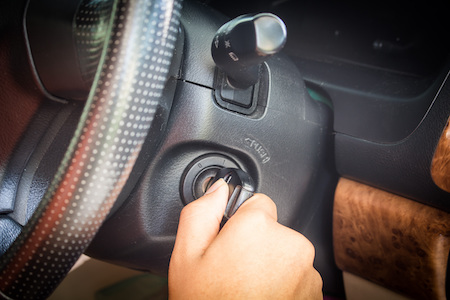
Nothing can be more frustrating than heading out to your car, turning the key, and nothing happening. 

“Why won’t my car start?”

With meetings, errands, or your regularly scheduled driving put on hold, a lot races through your mind. What can it be? What is the problem? 

Depending on where you are, it may also be a logistical issue. How will you get home? What about your car?

Most people don’t carry a mechanical toolbox in their vehicle. When your car won’t start, it can bring on a pretty helpless feeling. 

Before you give up and call for help, there are a few things you can do to look for the root cause of the problem. 

The first check is to ensure your steering wheel isn’t locked. You can fix this common issue simply by turning the steering wheel from side to side while turning the key as well. If the steering wheel lock was blocking the ignition from fully turning in the starting position, this will fix the problem. 

An empty gas tank will also prevent your car from starting. When was the last time you filled up? If you were low on fuel the last time you drove, or if your gas gauge has a default or is broken, your tank could be low on fuel. 

Your car still won’t start? 

You turn the key, and the engine won’t crank

When you turn the key to start your car engine, several parts are set into motion. The starter motor comes to life, and the engine comes to life as the spark plugs fire. Turning the key starts the engine turning over, which includes turning the crankshaft, which moves the pistons in the cylinder. This starts the engine cycle. Air and fuel are combined and pushed into the cylinders, where it’s compressed to fire off the spark plugs. This starts the combustion process. 

Why Won’t My Car Start?

When you turn the key and the engine won’t crank, it could cause several problems within this system. 

Car battery – a dead car battery is one of the easiest to detect. When you turn the key to start the ignition process, if nothing turns on – lights, dashboard icons, or music from the radio – it means your battery is dead. This is a good reason to carry a set of jumper cables with you. Find another car nearby and use the jumper cables to jump-start your vehicle. This is a short-term solution – you’ll need to replace the battery soon. But this will give you a chance to get to safety, and decide what battery to buy. 

Battery corrosion – as a battery ages, it can corrode. If enough corrosion accumulates, it could prevent your vehicle from starting. It might even prevent you from jumping your vehicle. Check the battery for corrosion and wipe it down if necessary. With the connection clean, try the key again. 

You turn the key, and you hear clicking

When you hear a clicking sound as you turn the key, but the engine won’t turn over, it could mean a problem with the electrical system. The starter is responsible for the engine cranking over. If the proper connections aren’t made, you’ll need a new starter. With today’s modern vehicles, starters can last a long time. Check your owner’s manual for guidelines on how often your vehicle needs a starter motor replaced. 

You turn the key and it cranks, but it won’t turn over

This can be especially frustrating. You turn the key and hear it almost start. You turn the key again, hoping to catch a break. This happens if:

The fuel filter is clogged – a clogged fuel filter prevents gasoline from reaching your engine. Without the proper levels of fuel, the engine won’t turn on. This occurs from buildup over time. As you hear the car sputter to life, it’s a sign a bigger problem is looming. Check your owner’s manual for how much life you can expect from an oil filter. If you’re reaching its lifespan, it’s a good idea to change it before it causes a problem. 

The fuel pump fails – this could be something as simple as a relay or switch that no longer works. This is simple to check before replacing the fuel pump. If the fuel pump is damaged or fails, it’s time for a full replacement. 

The timing belt is bad – a timing belt ensures the valves inside the engine open and close properly so that the valves and pistons never meet. This is a delicate balance of synchronicity to ensure the engine is stable as it operates. A timing belt is one of the most critical maintenance items. A bad timing belt can cause catastrophic engine damage, and require extensive engine repair or even replacement. Most car manufacturers recommend replacing timing belts according to mileage – pay attention to your manufacturer’s suggestions, as they can help you avoid major repairs. 

You turn the key and the engine won’t turn over, but accessories work

When the dome light turns on and other accessories in your car still work, it’s a sign your battery is still providing energy, so the ignition system is at fault. The ignition system transforms the battery’s voltage into an electrical spark. If this switch is damaged or bad, it means there’s not enough power to complete the process. 

When your car won’t start – take action immediately

As you read through this list, you’ll find one of them resonates with your current situation, Use this to guide you to safety. Once you’re home or in a location where you can further assess your situation, the key is ensuring that whatever was wrong won’t happen again. 

It’s time to fully diagnose the issue and repair it. 

Replacing it sooner will ensure you get safely back on the road without further issues, whether it’s a battery, an ignition problem, or a timing belt issue. 

How can we help you? What questions can we answer? We’re here to help keep your vehicle healthy and on the road. Give us a call today. 

Filed Under: Denver Auto Repair Tagged With: Why Won’t Car Start

Find a Trustworthy Mechanic to Ensure Safe Auto Repair Parts

October 21, 2022 by Denver Express Car Care

You can order anything online anymore. But is it a good idea? How often have you received something in the mail that doesn’t meet your expectations? 

If it’s a low quality shirt, you may only get a few wears before it falls apart. Other than looking bad, it doesn’t impact your health. 

Not so with auto parts. If you install faulty brake pads, or motor oil that’s compromised, it can cause your car to fail. And if you’re sailing down the highway, that can be dangerous at best. 

Mechanics may be a dime a dozen. You can find them on almost any street corner. But what sets a trustworthy mechanic apart from a crooked mechanic? How can you ensure the auto parts installed are safe, and the work is top-notch? 

Building a professional relationship with a good mechanic can provide peace of mind every time you drive. You’ll know that when you visit, the work will be done efficiently, auto repair parts will be in good working condition, and you’ll drive away with a car you can trust. 

Find a Trustworthy Mechanic to Ensure Safe Auto Repair Parts

But how do you know you’ve found a good mechanic? What should you look for to ensure they are trustworthy? 

The key is starting early before you need a significant repair. Start small to test out the service. You can ask your friends or coworkers for referrals. Or check online with BBB or other review sites that can lead you to good services. Be aware that good reviews can be bought with a good PR and social media team, so it’s wise to do your due diligence in many ways before you select a mechanic. 

We have a few other ways to help you find trustworthy garages in your community. 

Easy to connect with

A reputable mechanic will always make it easy to do business with them. They will create a website with phone numbers and addresses prominently displayed. They will have someone answering the phones during normal business hours. They will return your calls promptly. Because they want to form a relationship with their customers, they will connect with you throughout the repair process to ensure you understand your options, helping you make the right decision to suit your needs. 

Ask for estimates and options

The most trustworthy garages will keep you informed every step of the way. They’ll start by inspecting the car based on your comments and input, and then pinpoint where the problem is. They’ll contact you to explain the situation, and give you options for fixing it. They’ll give you their assessment and input, but will allow you to finalize the decision. Their job is to provide a vehicle back to you that’s fixed and drivable, or to alert you to where the potential problems still lie. 

Trust your instincts

A first impression is everything. For a garage, you can tell just by walking in how reputable they will be. Does someone greet you when you come in? Do they ask questions and listen to your answers? Are they more concerned with prices than they are with ensuring your satisfaction? This is another reason it’s a good idea to start with small tasks and build trust. It’s much easier dealing with a less-than-reputable service station for an oil change than dealing with the aftereffects of a much bigger problem. 

Scams come in all shapes and sizes. If a garage only desires cash, it will show up in the way they treat you as a customer. Reputable companies understand that while you may only need an inexpensive service today, if they build a relationship with you, you’ll bring your car back repeatedly. They work to help you create a safe, drivable vehicle, and will be there to help keep it that way for years to come. 

Service agreement

Every garage will produce a service agreement before they begin work on your vehicle. This may give you an estimate of work needed to be done. In some cases, this may be verbal and over the phone. If they had to perform diagnostics to get to the root cause, they may be able to describe damages and work to be done over the phone. You can still get a copy of this agreement to keep on file. They should be willing to put their work in writing, and answer any of your questions after reading the contract. 

You’ll most likely be required to pay for your car in full when you pick it up. Most reputable mechanics will take several payment methods, including credit cards. If you have questions about payment, ask at the time you drop your car off, not when you’re trying to pick it up. This will give you more of an opportunity to be ready when service is complete. 

Safe auto parts

A reputable mechanic will have connections to get the most trustworthy auto parts available to fix your car. It may seem like something you don’t have to think twice about, but cheap, unreliable auto parts are a major scam. Cheap aftermarket parts are produced in many ways, often showing up at the installation end of some mechanics. If a garage cares about price only, they may use the cheapest parts they can find. That puts you in danger of having repeat repair bills in shorter periods of time. 

If you have a relationship with a trustworthy mechanic, you’ll understand where they get their parts, and be able to rely on their work to keep you safe as you drive away. Yes, potential problems happen frequently. But if you start with high-quality parts from trusted resources, your chances drop of short-term problems. 

You should also be able to see the old parts, and have the mechanic show you where the problem is. This can alert you to a mechanic who either didn’t change the parts they promised, or didn’t do the work as requested. 

Find a trustworthy mechanic who treats you with integrity

It should go without saying, but whenever you form a relationship with a service you intend to use for years, you should feel that they treat you well, and approach each interaction with integrity. 

Of course, people can have bad days. But it shows up in the way they handle any situation. If they make a mistake, they’re willing to fix it. They never use scare tactics to get you to say: Yes. And you know you can get a straightforward answer just by asking. 

Have you found a trustworthy mechanic you can rely on?

Filed Under: Denver Auto Repair Tagged With: Trustworthy Mechanic

Car Maintenance After An Accident

October 18, 2022 by Denver Express Car Care

We buy new vehicles for many reasons:

  • We want something newer, something we can rely on
  • We want more features, upgrades that provide more convenience
  • We want something larger for a growing family

When people shop for a new car, their reasons are varied. But one thing always tops every new car shopper’s list: Safety first.

We don’t plan on getting into an accident. Yet statistics show it happens all too frequently. 

  • 6 million cars are involved in an accident every year
  • 3 million people are injured in car accidents every year

And when it happens to you, you scramble to solve the: What’s next?

Cars today are expensive. Depending on age and severity of the accident will determine the next step you take with your car. 

Can you still drive it? Will it be totaled? Is it still safe to drive? 

No matter how much damage your car sustains in an accident, it’s important to let a trained mechanic analyze every system. This ensures that a hidden problem won’t grow into a bigger hazard down the road. It catches major and minor issues that may have been jarred loose in the crash. 

Here are a few things that need checking out.

Hidden body damage

After a collision, even if you can’t see any damage from a quick visual check, there might be critical parts and components affected by the accident. For example, plastic bumpers utilize multiple sensors essential for safely operating your vehicle. 

Car Maintenance After An Accident

Accidents can jar loose critical components as the various systems sway and move. Your vehicle may seem to operate without issue as you drive away from the altercation. Yet even minor issues can quickly escalate, and risk increasing repair bills as the damage grows in severity. 

Schedule an inspection with an experienced, trained mechanic to thoroughly examine the entire vehicle, and find and correct these problems. It’s the best way to ensure your safety after recovering from the accident. 

Diagnostic codes

Just because your dashboard lights haven’t illuminated, doesn’t mean these diagnostic systems weren’t impacted in the crash. They might not light up the icons on your dashboard, but if the sensors are readjusted, they won’t alert you to potential problems while driving. 

A reputable mechanic will run a thorough diagnostic scan to detect trouble codes that may have been triggered by the accident. Even hitting a pothole or curb can cause damage that might remain invisible to you, but can be picked up through diagnostics. They’ll hook a data link to the onboard system, run the engine, and preview live data as it tests the circuits. 

Sensors and assistance programs

Today’s modern vehicles use sensors for many different operations. Sensors to help you while you’re driving. Sensors to help you navigate parking.   

Cars use highly tuned computerized programs to ensure your safety at all times. Many of the systems work without you giving them much thought. These sophisticated systems include sensors, cameras, and radar that constantly monitors your car. 

Yet a single jolt can be enough to knock any number of the sensors loose. A tap to your bumper could throw a camera angle out of alignment. A bump to the side can create a problem with airbag deployment. The trouble is, you’ll never know until you need them the most. 

Suddenly, your car may start acting up. It pulls to the left when you’re driving down the highway. The brakes seem jumpy even though they were recently replaced. 

It might not be a part at all. It might be a sensor out of alignment. A complete sensor check should occur even with minor damage from an accident. It might not be apparent just by looking at your car, but the only way to know for sure is for a trained professional to perform an inspection. 

Drivability

If you’ve ever hit a pothole and felt something isn’t quite right, you know how vulnerable your vehicle can be. Even small bumps in the road can shake loose parts and components, making your vehicle shake, rattle, and roll in ways it never did before. 

The first rule after an accident is to listen to every noise your car makes. If you notice handling issues, smell a strange scent, or see a change in the performance, it’s time to schedule an inspection. 

You can see damage to a wheel or tire. It’s visible. It’s apparent. Maybe the tire goes flat, or the wheel is dented. 

You can’t see damage to the undercarriage or the suspension system. Some of the issues may occur deep within the components. Small fluctuations can have a significant impact on the way a car drives. You might not notice it until it puts your safety at risk. 

Wheel damage

You can see when a tire is flat or a wheel is dented, but you can’t see how it’s connected to the vehicle. At a minimum, a thorough wheel check will allow a mechanic to balance and align the wheels. Even everyday driving can impact alignment. 

When a vehicle drives unevenly, the steering wheel feels a bit shaky, or you notice vibrations that impact comfort, it’s most likely the alignment that’s affected. Wheel alignment is a simple task that will allow a mechanic to give the entire suspension system a once-over, and ensure everything is working well. 

Headlights and taillights

Headlights and taillights should all be inspected regularly, especially after an accident. It’s easy to notice if they’ve been crushed or broken. What’s more difficult is seeing if they’re misaligned. You should also check out the blinkers. Driving with misguided or failed headlights or taillights could lead to an even more serious accident if not properly addressed. 

Have an accident? Car maintenance is essential to get back on the road

Your first step after any accident is to ensure the safety of you, your passengers, and anyone else involved. The second step should be to contact the authorities, including police and insurance agents. 

If your car is still drivable and you drive it away, don’t assume everything is okay. The only way to be sure every system is still working well is to schedule an inspection with a trained mechanic. It’s the best way to ensure every system is working well, and keep everyone safe inside your car as you continue to drive. 

How can we help you ensure your car is safe and secure?

Filed Under: Car Maintenance Tagged With: Car Maintenance After An Accident

Better Fuel Efficiency in Winter Driving

October 14, 2022 by Denver Express Car Care

Does it seem that prices are rising higher each day, and your budget is struggling to keep up? Every time you pull into the gas station, the bill takes a bigger bite out of your bank account. 

You’re not imagining it. According to the US Bureau of Labor Statistics, gasoline prices have risen more than 60 percent in just one year. 

That adds up as you’re spending more time in your car once again. If you’ve been dreading the winter months, knowing you’ll spend even more hours in your vehicle, it’s time to do what you can for better fuel efficiency. 

Ice, snow, and cold weather can do more than impact the functionality of your car; it affects your fuel efficiency too. According to the Office of Energy Efficiency and Renewable Energy and the US Environmental Protection Agency, your gas mileage falls as much as 15 percent when the temperatures drop to 20°F or lower when compared to sunshine days in the heart of the summer. 

Luckily, there are easy ways to gain better fuel efficiency, and they won’t cost much on your part. A little bit of action now before the temperatures fall can make all the difference. 

Change your motor oil

Motor oil is a lubricant to keep all the parts in your car’s engine compartment running smoothly. When you start your vehicle, motor oil rotates through the various parts, bringing them to life and keeping them fully operational. 

Motor oil can thicken and become more viscous in cold winter months. While your engine is attempting to operate as usual, the motor oil is a bit more sluggish, meaning it works harder to get all the parts fully lubricated, preventing friction and protecting the transmission, axles, and other components from resisting. 

Better Fuel Efficiency in Winter Driving

Mechanics understand this, and often recommend and use different products at different times of the year. This is one more good reason to schedule an oil change now in the fall, before the snowflakes start to fly. Ensure you have fresh, clean motor oil ready to help you get better gas mileage all winter long. 

Decrease idle time

How often have you headed out to your car early to let it “warm up” before you head into work? Many drivers assume it’s to help the car run better, when what it truly does is make the car warmer inside the passenger cabin. While your vehicle may need to sit a few seconds after starting it to let the motor oil circulate, anything more than 30 seconds is wasteful. What’s better for your vehicle is to spend the first five to ten minutes driving slowly, without putting pressure on the systems. 

This also applies to other errands around town. As you’re waiting for kids to finish school, or for other family members to run in and pick things up, consider turning your car off if it’ll be more than a few minutes. Idling means you’re burning more fuel, which worsens your fuel efficiency. 

Combine your errands

While your car’s dashboard doesn’t show how hot the engine gets under normal working conditions, manufacturers state that the average temperature for a car or truck engine ranges from 195 to 220 degrees Fahrenheit. If the outside temperature hovers in the 60s or 70s, it takes a shorter time period to bring the engine up to temperature than if it’s hovering near zero. 

That puts more stress on the engine as it has to work harder to bring it up to temperature. Instead of repeating this process multiple times during the day, consider consolidating your trips instead. Once the temperature has reached its ideal limit, it takes time to fall back down to outdoor temperature. For your in-and-out errands, this means the engine won’t have to fully warm up each time. As an added bonus, this can help with efficiency too, giving you more time to do the truly essential things in your life. 

Adjust for winter gas blends

When you head to the gas station, you probably don’t give much thought to what gasoline is flowing into your car. You choose regular or premium based on your vehicle’s needs, and drive away. Federal law requires different fuel mixes based on what time of year it is. The Clean Air Act requires using oxygenated gasoline in areas where wintertime carbon monoxide levels exceed federal air quality standards. Without oxygenated fuel, carbon monoxide emissions tend to increase in the cold weather, decreasing your fuel efficiency. 

While this may increase your frustration with winter driving, there is little you can do about it. Be aware of how it impacts the engine, and find ways to shorten your drive time to use less fuel overall. 

Battery performance wanes

Most car battery manufacturers state you’ll get three to seven years of life from the battery. Of course, this is dependent on many things, including how you drive your car as well as the surrounding environment. 

As a car battery begins to age, its performance can be compromised when under stress. Cold weather is just one of those stressors that can take its toll. That means the battery will have to work harder staying charged, while you attempt to operate more electrical parts such as window defrosters, seat warmers, and windshield wipers, trying to stay safe and warm.

If you know your battery is reaching the end of its life, at a minimum, have it checked and inspected before the cold settles in. A good mechanic can help you make an informed decision about the best time to replace your car battery and help you avoid walking out to a dead battery on a bitterly cold morning. 

 Worried about cold weather driving? Wondering how to get better fuel efficiency as gas prices continue to rise? 

Get started by having a thorough inspection to ensure your car is in good working condition. This ensures you replace parts before they leave you stranded, and make decisions about upgrading components without having to do it in emergency situations. 

How can we help you get better fuel efficiency this year? 

Filed Under: Car Maintenance Tagged With: Better Fuel Efficiency

Does Winter Weather Really Affect Gas Mileage?

October 10, 2022 by Denver Express Car Care

Here in Colorado, the temperatures can drop suddenly. It may be in the 70s in the middle of the day, but deep in the night, it can become quite frigid. 

While that may cause you to turn on your indoor heating system to stay warm, it may also find you stopping at the gas station more often with your car. Is it your imagination, or does winter weather really affect gas mileage? According to the Office of Energy Efficiency and Renewable Energy and the US Environmental Protection Agency, it’s not all in your mind. 

Using conventional gasoline, gas mileage will be approximately 15 percent lower at 20°F than it will be at 77°F. For your 3 to 4 mile trip running errands, it can lower as much as 24 percent in the heart of the winter. 

Don’t think your hybrid is more efficient; winter weather is actually harder on efficiency. Fuel economy can drop 30 to 35 percent when the temperatures start falling. 

What impacts your gas mileage in the winter months?

While you can’t pinpoint lower gas mileage to any one behavior, there are a variety of contributing factors that make your car less efficient. They include items both internal and external to your car. 

Does Winter Weather Really Affect Gas Mileage?

Road conditions

Does it seem like it takes twice as long to get to work on bad weather roads? That contributes to more gas used as you make your way down the street. You’ll also be fighting sleet, slush, and snow, which can impact the friction in the way your car handles. 

More idling

Those icy roads cause everyone on the road to slow down. Slower traffic means more idling, which reduces fuel economy. While you might not be able to avoid more idling on the highway, you can avoid idling in your driveway, and as you move throughout your errands. While it might be chilly, resist the urge to allow your car to idle your car to warm it up and keep it warm. An idling car does nothing to warm up the tires or the drivetrain – it’s for your personal satisfaction only. Even in the coldest temperatures, you can start out on your journey after turning the car on – just keep the speeds low to moderate, and don’t push the car until it warms up. Watch the temperature gauge for a good resource to know more about how well your car is handling. 

Lower tire pressure

A 10 degree change in outside temperature will equate to a 1 psi change in tire pressure. If your dashboard icon goes off more frequently in the winter months, alerting you to a tire pressure problem, this is why. Fuel economy decreases about a half-percent for every 1 psi drop in tire pressure. Keep your eye on the pressure gauge, and get your tires tested and filled frequently in the winter. 

More tire resistance

Even when your tires are properly filled, cold weather allows them to perform differently than in the heat of the summer. That’s because tires are flexible, changing shape as they perform while you drive. Sidewalls can bulge; the tread flattens as it connects with the road. But with ice and snow creating uneven patches, it impacts the shape and performance of the tires. This constant rotation combined with changing wear patterns impacts your drive … and your gas mileage. Cold, hard rubber will never perform in the same way as when it does at a more moderate temperature. 

Lower engine temperature

When your car sits in the garage or in a parking spot, the engine settles in at “room” temperature. It adjusts to the airflow around it. As the temperatures dive, the “room” temperatures change, allowing all of the engine components to cool down. To warm it back up as you turn the key, the engine calls upon a richer fuel/air mixture to engage the various parts and start the entire system working. 

Thicker motor oil

Engine oil is designed to operate no matter what temperature it is outside, but it will thicken as it cools. It takes significantly more energy to overcome the drag caused by warming up cold lubricants. Using a synthetic motor oil can help address this problem, since its viscosity is created to better handle extreme temperatures. It pays to have your motor oil changed as we move into autumn, to ensure your car is well prepared for the cooler driving conditions. 

More electrical loads

In colder temperatures, you use more of your electrical accessories:

  • Lights as the daylight hours are at a minimum, and you illuminate the road in cloudy, snowy conditions. 
  • Rear window defogger to help keep the back window clear.
  • Heater warming up the inside of your car. 
  • Heated seats and mirrors make your drive safer and more comfortable. 
  • Windshield washer pump keeps your windows clean as you combat winter driving conditions. 

Winter grades of gasoline

Winter grades of gasoline have less energy when compared to the summer grades. Because gasoline doesn’t vaporize as easily at colder temperatures, gas manufacturers compensate for this by changing their formulas, creating one for cold-weather efficiency. While they may help gas evaporate easier, it reduces the combustion efficiency. 

How can you improve gas mileage in winter months?

After reading what impacts your car’s gas mileage during the winter months, it’s easy to see and build a strategy that will improve efficiency during the coldest months of the year. 

Combine your trips. Instead of running different errands each day of the week, create an “errand day” to get all of your running around completed at one time. This gives your engine a chance to warm up and stay warm as you run around town. 

Keep an eye on your tire pressure, stopping to fill them whenever they drop. 

Choose a warm place for your car. This may mean cleaning the garage, or pulling into a parking garage at night. 

Reduce time spent idling. Can you avoid the busiest parts of the day? Be prepared to leave rather than allowing your car to idle for several minutes to warm up. Warming the car is for your comfort, not your car’s. 

Clean out your car. While you should always have a winter emergency kit, leave excess personal items at home as increased weight causes further drag on the car. If you have bike racks and other accessories you won’t be using for several months, now is a good time to remove them. 

Here in Colorado, winter weather is a part of our daily lives. When the worst weather impacts us, knowing these few gas mileage tips will help you make the most of your fuel economy. 

Haven’t had your oil changed, or a winter weather inspection yet? Set up your appointment today, to ensure your vehicle is ready for the worst days. 

Filed Under: Car Maintenance Tagged With: Gas Mileage

What Car Maintenance Items Should You Do After Buying a Used Car

October 7, 2022 by Denver Express Car Care

There are many reasons a used car is the perfect vehicle to suit your needs. 

  • Maybe you’re finding a first car for your son or daughter. 
  • Maybe you want a reliable second car for odd jobs you have around the house.
  • Maybe you’re looking for reliable transportation without the high cost of a new car.

Over 43 million used cars were sold in the US in 2021. Whether you buy it from a dealer, a used car lot, or a private seller in your own community, it’s good to get to know your used car before you rely on it to get you where you’re going. 

It’s easy to assume that the previous owner cared for the car well. But in truth, you can never be sure they handled maintenance issues the way you would. 

To give your new-to-you vehicle the best chance at a long life, why not give it a little car maintenance? 

What Car Maintenance Items Should You Do After Buying a Used Car

Car maintenance after buying a new car is the perfect way to ensure everything works well and is in the best shape possible. 

Where do you begin?

Start with your owner’s manual

Most drivers spend little time with their vehicle’s owner’s manual. That’s a mistake. 

Not all cars are the same. They are created using different parts and systems, each requiring different levels of maintenance. By opening up your owner’s manual, you can start learning how the designers built your car, and what recommendations they make for regular maintenance. Manufacturers know best. 

As you scan the manual, start making a list of areas you wish to check out. You can use your car’s mileage as a guide for follow-up on parts and systems. Here’s a list of potential maintenance items you may wish to consider:

  • Motor oil and oil filter replacement
  • Check and top off all fluids inside the vehicle
  • Replace spark plugs 
  • Replace coolant
  • Check brake fluid
  • Rotate and balance tires
  • Check the tire pressure regularly, especially before long trips
  • Ensure the spare tire is in good shape

This is your starting point. If you have any other questions after reading your manual, be sure to bring them up with a mechanic on your next scheduled visit. 

Get those fluids changed

Now that you know your vehicle a little better, your first step should be to replace as many serviceable fluids as possible. Because you don’t know how well the previous driver treated the vehicle, it’s best to start out with a car that’s as well cared for and up to date as possible. 

If the previous owner gave you a maintenance log with receipts for fluid changes, you may choose to skip this step. Otherwise, this is an important step for after-purchase maintenance for all secondhand vehicles. 

We listed many of the standard fluids to change out above: motor oil, coolant or antifreeze, and possibly a brake fluid flush. 

Depending on what you intend to do with the vehicle, you might choose to replace the transmission fluid, or change out the differential gear oil if you’ll be hauling heavy loads. 

This is about creating a vehicle you can trust for many years to come. 

Replace filters

For most drivers, replacing filters means starting with the oil filter. Most likely, the mechanic will suggest that when they change out the motor oil. 

It’s also a good idea to replace the engine’s air filter. The air filter helps keep harmful contaminants from entering the engine, and ensures only clean air, without debris, reaches the engine’s main components. If this becomes clogged, it can set off a host of problems throughout your car. 

There’s one more filter that many people forget or ignore: the cabin air filter. This affects the air supply that enters the passenger compartment. This air filter is usually underneath the dashboard, and helps filter out pollen, dust, and debris, so it doesn’t build up in your vehicle’s heating and cooling system. A new air filter will give you cleaner air to breathe and better performance too. 

Don’t forget to check the tires

There’s nothing a little elbow grease can’t hide. If the previous owner cleaned the tires well enough, you may overlook key problem areas that suggest your tires need replacing. Because a blow-out can impact your safety, it’s a good idea to have them thoroughly inspected before you start driving. 

Where do you start? Check the tread wear; it’s easy to do. Most tires start with a tire tread of around 10/32”. The soft rubber starts to wear away as you add mileage to the vehicle. This is what gives your tires traction in all kinds of handling situations. Most states regulate tires unsafe to drive when they reach 2/32”, but is that really safe? 

While a mechanic will use a gauge to check tread depth, you can do a simple test yourself. Take a penny and slip it into the tire tread as a depth gauge. If you can see the top of Lincoln’s head, it’s time to replace your tires. The top of Lincoln’s head to the penny edge is roughly 2/32”. 

You should also check sidewalls for cracks. If something appears to stand out, it’s better to get it inspected before heading out on the open road. Getting the wheels balanced and aligned will also ensure even wear on your tires in the coming weeks.   

Finding a mechanic you can trust

Mechanics are a lot like doctors; if you can find one you can trust, you’ll be assured your car is in good condition throughout the year. 

If you didn’t get an inspection before you finalized your used car purchase, it’s not too late now that you own it. In fact, it’s the perfect time to ensure it’s in great condition, so that it will be reliable and provide you with safety and security for as long as you drive the car. 

Have a question about your new-to-you used car? We can help. 

Filed Under: Car Maintenance Tagged With: Maintenance Items After Buying a Used Car

These Are The Signs of a Bad Fuel Pump

October 4, 2022 by Denver Express Car Care

Without fuel, your car won’t operate. That’s easy to understand.

Yet understanding how fuel helps cars operate is a bit more complicated. A fuel pump’s primary task is to move fuel from the gas tank to other parts of the fuel system. If any part of that system starts to fuel, it stops your car in its tracks. 

But how do you diagnose it as a bad fuel pump and not some other problem within the car?

What is a fuel pump?

How does the fuel delivery system work inside your car? With a fuel tank, metal piping, and a variety of other components, gasoline moves from the tank to the engine, providing a source of energy. 

A fuel pump is either a mechanical or electrical mechanism that moves fuel from the gas tank through a fuel filter to a fuel rail. From there, fuel is distributed to fuel injectors and sprayed into each engine cylinder’s combustion chamber. If you have an older car with a carburetor, the fuel is pumped there. 

An electric fuel pump is located inside the fuel tank, which clicks into action when you start the car. By turning the key, you instruct the pump to pressurize the fuel and push it through the piping. A second electrical or engine-driven pump is designed to boost fuel pressure. This high pressure releases fuel to the fuel injectors. 

This system is very reliable. When it works well, your car will start easily every time. Fuel pumps aren’t part of a regular routine maintenance schedule like changing out motor oil or air filters. Most fuel pumps should last 100,000 miles or more. 

These Are The Signs of a Bad Fuel Pump

Bad fuel pump symptoms

Like most parts built into modern cars, it rarely dies without warning signs. If you pay attention to sounds, noises, and actions, you’ll pick up on the fact that a part is wearing down. Bad fuel pump symptoms include:

Your car won’t stay running

You start your car up like normal, but it dies shortly after. You try it again, and it operates properly. While you might forget about it if it happens once, if it is a bad fuel pump, this will start occurring with more frequency. 

Your car sputters as you step on the gas

If you’ve ever felt your car hesitate when you step on the gas pedal, you know the feeling I’m referring to. You expect your car to move forward like it always does. But it hesitates, sputters, as if the gas isn’t making its way into the system. It may only be a few seconds before it returns to normal. If you start feeling this with frequency, it might be a bad fuel pump. 

Your car dies for no reason at all

This often occurs at inopportune times. Maybe you’re pulling a heavy load up the mountains. Or cruising up a hill on your way home from work. Suddenly, your car goes from on to off, without energy keeping your car operational. If the fuel pump can’t keep an appropriate level of fuel running through the engine, it won’t have the energy necessary to stay operational. You’ve probably got a bad fuel pump. 

Your car simply won’t start

Depending on what happens to the fuel pump as it’s failing, it may stop working altogether. When this happens, you’re stuck. 

You notice decreased fuel efficiency 

If you notice you’re filling up more at the gas station, it can be one of many issues. If your car suddenly requires more fuel to operate effectively, it may be a sign of a bad fuel pump. It’s best to get your car checked out by a mechanic to find the problem before it grows into a bigger issue. 

Your check engine light comes on

This is a fail-safe for many parts within the engine compartment. If the sensor senses something isn’t working right, it illuminates on the dashboard to alert you to a potential problem. It’s time to bring your car in for a diagnostics test to pinpoint where the problem is. 

Why fuel pumps fail

Your car has over 10,000 parts that make it run efficiently as you drive it down the road. When even one part is off its game, it can impact dozens more down the line. Because fuel pumps are designed to last 100,000 miles or more, a problem is usually reactionary to something else failing. It can be:

Pump issues – the pump itself contains multiple parts that allow it to pressurize as it operates. It has a series of pressure and relief valves to ensure fuel is moved efficiently throughout the system. If any one of these parts fails, it can reduce output pressure, stopping or recirculating fuel back into the tank, leaving the engine without proper levels. 

Fuel problems – your car requires a certain quality level of fuel to make it operate well. Paying attention to the octane level is the first step. Also pay attention to where you fuel up. Poor quality service stations can give you less than stellar fuel sources that allow sludge to build up in your tank. 

https://denverexpresscare.com/understanding-your-cars-fuel-system

Clogged fuel filter

When was the last time you changed the fuel filter? If not replaced at regular intervals, it can restrict fuel flow and cause the fuel pump to fail. Reduced fuel flow can put pressure on other areas of the system, which can result in a variety of deficiencies, including overheating. 

Damaged fuel line

How many rough roads are on your way to and from work? That pothole may have done more damage than you thought. If a fuel line has a dent or pinches the fuel source, it can lead to reduced fuel supply circulating throughout the system. If the fuel pump doesn’t receive a steady stream of fuel, it can cause fuel pump failure. 

Age

As you move closer to the 100,000 mark, it’s a cumulative effect for every part of your car. While you may not be able to pinpoint any one potential problem, at some point, your fuel pump may just wear out. 

Your fuel pump is sending you a warning sign. Are you listening? 

A bad fuel pump can wreak havoc in many ways. Get your fuel pump fixed today. 

Filed Under: Car Maintenance Tagged With: Bad Fuel Pump

When Your Car’s Heater Isn’t Working Right

September 28, 2022 by Denver Express Car Care

Cold, winter mornings have a way of creeping up on you each year. The days grow shorter. You wake up and start your day before the sun rises. As you rush to your car, your thoughts drift over your day ahead: meetings, a deadline for a project, a few phone calls you need to make. You don’t think much about how cold your car is; it’ll warm up quickly. 

But it doesn’t. A few miles down the road, you start noticing how cold it is. Your car’s heater isn’t working right, and it’s blowing cold air all around you. You notice a few snowflakes starting to fall, and you shiver in response. 

Now what? 

How a car’s heating system works

Your car’s heating system includes a few basic components: heater core, blower fan, heater control valve, heater hoses, the ventilation system, and control panel located inside the car. 

Heat is created by the engine, and needs someplace to go. Most of that is filtered out through the exhaust system, with the rest remaining in the engine, transferred to the coolant. 

When your vehicle reaches operating temperature, the thermostat opens up and allows coolant to circulate throughout the system. It removes any heat from the engine, sending it into the radiator and the heater core. From there, it distributes the heat into your cabin. You control the temperature, ensuring the passenger section is as warm or cool as you desire. 

When Your Car’s Heater Isn’t Working Right

For the heater to work properly, the cooling system needs to be in good working condition. That means the correct mix of coolant and water, with proper coolant levels and no leaks in the system. The thermostat should open and close at the proper temperature levels, with the water pump circulating coolant through the engine, radiator, and heating core as needed. If this system works well, your heater will be there to provide conditioned air at the levels you desire. 

When your car heater isn’t working, there’s something wrong in the system. 

Low coolant levels

One of the first things to check is also one of the most common reasons for a heater to stop working. If the coolant levels are low within the system, it can’t circulate properly through the system. In optimal working conditions, coolant levels won’t change. If there is a leak, it can occur anywhere within the system: cracked coolant tank, broken gasket, faulty hose, etc. 

If the heater doesn’t warm up and start blowing heated air within ten minutes, the coolant might be too low to circulate through the heater core. While you may feel it inside the cabin with little to no heat, your car’s engine feels it in different ways. Without proper coolant levels, the engine might overheat, which is an expensive repair to fix. 

Coolant isn’t like other fluids. It won’t evaporate, and adding more into the system won’t fix the problem. You’ll have to find the root cause and fix the problem at the source.  

Malfunctioning thermostat

Your car’s thermostat is a valve that opens and closes to regulate coolant flow into the engine and radiator. While it’s a simplistic device, it’s vital to keeping your engine running at the proper temperature. 

A malfunctioning thermostat is often stuck in the open or closed position. If it’s stuck in the open position, it allows too much coolant to flow, preventing the car from reaching optimal operating temperature. A thermostat stuck in the closed position won’t allow coolant to circulate, which stops the heat from flowing properly throughout the system. Both will be noticeable by decreased performance. 

Faulty heater core

The heater core works similarly to the radiator. While the radiator dissipates heat to the surrounding air, the heater core sends heat into the passenger cabin by a blower fan. 

The heater core uses a maze of narrow tubes and fins for proper circulation. If any one of these is blocked or damaged, it reduces the coolant level or flow through the engine’s cooling system. A faulty heater core and low coolant levels often are interchangeable, with one impacting the other. Two easy ways to tell if your heater core has been compromised include windows that easily fog up, or a sweet-smelling scent lingering inside your car. Both are signs you should schedule a maintenance visit soon. 

Faulty blower fan

When you turn up the heat on the dashboard panel inside your car, the heater core captures warm air from the coolant and transfers it into the cabin as a warm air supply. The blower fan makes it possible for ventilation of the warm air from the heater core, pushing it out through the vents. If the blower fan isn’t working, there will be no way to transfer the warmed air supply out through the vents. 

The blower fan can malfunction for a variety of reasons. It could be a blown fuse, or damage to the internal components of the blower fan. If you barely feel a breeze no matter how high you turn up the heat, chances are it’s a problem with the blower fan. 

Other problems

Of course, the above are some of the most popular reasons why your car’s heating system might not be working. But cars today are built with more than 10,000 parts. If a wire frays, a hose cracks, a part breaks, or fluid stops flowing, it will cause problems throughout the system. 

The only way to get to the root of the problem is with a thorough diagnostics test. 

Get cozy once again – schedule a maintenance visit today

Colorado weather is unpredictable at best. While it might be sunny and warm enough for the windows to be rolled down today, the snow could be flying by the time you rise for work tomorrow. 

It’s hard to enjoy the ride in, or be stuck in traffic if you’re shivering inside a cold car. A heating system not operating correctly is a sign of a bigger problem. 

An inspection will help locate the problem, allowing mechanics to get to the broken or faulty piece quickly, and have you back on the road in no time. 

Have you ever experienced a car heater not operating correctly?

Filed Under: Heating-Air Conditioning Tagged With: Car Heater Isn’t Working Right

After Buying a Used Car – Fix These Used Car Problems

September 24, 2022 by Denver Express Car Care

So you’ve bought a new-to-you car. You’re happy with your purchase. You researched the make and model, and scoured over the “for sale” section for weeks. After hours of searching and negotiating, the used car is yours. Now what? 

The price of used cars is skyrocketing all across America. A recent study found that the average used car price was $29,011, up 39 percent from just a year before. 

With prices rising, you may bid quickly on a used car, trying to secure its purchase. That also puts you at a greater risk of investing in a used car that may have problems. 

With a fast purchase process, how do you know? After buying a used car, your best course of action is to take it in for a thorough inspection. It’s a great way to get to know your used car a little better, and have a better understanding of its condition. 

Taking your car in for a maintenance inspection

When you purchase a used car, your first thought might be to take it out on the open road and see how it drives. It’s new to you, appears to run well, and you’re excited about having reliable transportation. 

Yet before you park it in the garage and return to daily living, take some time to ensure you made a sound purchase. Schedule a maintenance inspection with one of our mechanics. 

A good place to start is with an oil change. This will help you develop a pattern with your car, and start you on the road to success. Vehicles need fresh oil every 5,000 miles or so to ensure they operate well. This will also put you in charge of what type of oil your car uses, and ensure quality throughout.

After Buying a Used Car - Fix These Used Car Problems

From there, by alerting a mechanic that you’re the new owner, they will be able to move through the car carefully, evaluating different systems for safety and security. 

A diagnostic test will ensure the technology is working well. This is one of the easiest ways to ensure every system operates at its best levels. 

Fluid checks are a great place to start

A mechanic may also test each fluid level to ensure they are in good condition. If you don’t know when they were last changed, it’s a good way to move forward. Other fluids to check include:

Coolant – coolant (also known as antifreeze) plays an important role in keeping your engine at operating temperature. Check with your owner’s manual for more details, but in general, manufacturers recommend flushing and replacing your coolant every one to two years. Some models use extended life antifreeze, which may last up to five years. 

Brake fluid – brake fluid is important to the overall health of your brake system. It’s also one of the most commonly overlooked fluids for replacement. Over time, brake fluid becomes contaminated with particles that compromise the fluid. This reduces the stopping power of the car, which puts you and your passengers at risk. A mechanic can evaluate the risk inside your brake system, and help you make the right call. It is typically replaced every two years or so, depending on the make and model of your car. 

Transmission fluid – does your car’s make or model have a history of transmission problems? Why not start it out right and replace the transmission fluid now. Fluid replacement is necessary around 60,000 miles for most vehicles. But if you aren’t sure of how the car was handled by the previous owner, it’s a good idea to replace it now. A higher mileage used car is the perfect candidate for a transmission fluid replacement. It prevents future breakdowns on the road. 

Used car problems – fix them early

When you invest in a used car, you hope to have a reliable car for years to come. Initial maintenance checks are a great way to ensure it doesn’t leave you stranded by the side of the road. 

What’s the most critical system on a vehicle? Arguably, many would state the braking system ranks high on the list. Imagine coming home from a day of skiing and the braking system stops working. Yep, it’s easy to see how vital brakes can be. 

That’s reason enough to let a professional mechanic look at the braking system of your new used car. 

Start with the obvious – the tires. If the seller shined them up, defects may be a bit hidden. A mechanic knows what to look for, and will spot potential problems. They will check the date the tires were manufactured, and inspect them for signs of damage. If they’ve been sitting for a while without moving, they may have cracks on the sidewalls. A mechanic can pick up on these nuances and give you a better idea of what to watch for. 

From there, they will test brake pads, brake rotors, and ensure the hydraulics are working well. They can alert you to how much brake pad is left, to give you a better idea of when they’ll need replacing in the future. 

Mileage – it tells a lot

Every part of your car has a lifespan. The more mileage on your vehicle, the more parts will need replacing. 

With a new car, every part starts at the beginning. They wear down as you operate under normal driving conditions. 

But with a used car, you have no idea how the previous owner maintained the vehicle. Were they proactive? Or did they wait for maintenance problems to surface? 

When you invest in a used car, you’re choosing your starting point. You receive the vehicle as is, but you’re in control of how well it operates in the future. 

If you want your used car to last for years to come, the best course of action is to err on the side of maintenance, and choose to invest in repair work now. 

A full inspection will help you determine what parts to replace now, and give you a schedule of what to replace in the future. Having a professional mechanic on your side will create a routine that allows your used car to be in the best shape possible, now and well into the future. 

Did you recently buy a used car? Congratulations!

Let us help you get the longest life possible from your purchase. Schedule your used car inspection today.

Filed Under: Car Maintenance, Denver Auto Repair Tagged With: Used Car Problems

  • « Previous Page
  • 1
  • …
  • 29
  • 30
  • 31
  • 32
  • 33
  • …
  • 103
  • Next Page »

Express Car Care
4200 E. Evans Ave. Denver, CO (map)
Phone: (303) 691-2760
Located just southeast of the Colorado Light Rail station

Follow Us Today!

  • Facebook
  • RSS

Shop Hours

Monday: 8:00AM – 5:00PM
Tuesday: 8:00AM – 5:00PM
Wednesday: 8:00AM – 5:00PM
Thursday: 8:00AM – 5:00PM
Friday: 8:00AM – 5:00PM
Saturday: Closed – A note from the owner
Sunday: Closed

Last car oil change time  – 5:00PM

Click for the BBB Business Review of this Auto Repair & Service in Denver CO

Recent Articles

Tire Rotation: When to Do It—and the Signs You Shouldn’t Ignore

Tire rotation is one of the simplest ways to help your tires wear evenly, last longer, and keep your vehicle handling predictably. It is easy to put off, but a consistent rotation schedule can save … [Read More...]

  • Which Oil Is Right for Your Car?
  • Stop Burning Money at the Pump
  • Differential Service: Why It’s Crucial for Your Car’s Longevity and Performance
  • How to Catch a Transmission Problem Before It Leaves You Stranded
  • Why You Shouldn’t Wait to Address a Small Exhaust Leak

Search Our Site

Brakes Service

How to Keep Your Brakes Quiet, Responsive, and Safe

Everything You Need To Know About Replacing Your Brake Pads

How to Know If It’s Time to Replace Your Brake Rotors

Oil Change

Top Benefits of Getting Regular Oil Changes in Denver

Oil Change Specials in Denver: Save Money and Keep Your Car Running Right

Why Regular Oil Changes Are Crucial for Denver Drivers

Suspension

How to Know If Your Car Needs Suspension Repair in Denver’s Bumpy Roads

A Guide To Understanding Bushings on a Car

Tips for Preventing Wear and Tear on Your Car’s Suspension

Transmission Service

How to Catch a Transmission Problem Before It Leaves You Stranded

How Often Should You Service Your Transmission in Denver?

Transmission Trouble? Common Signs and When to Visit Our Denver Shop

Engine Service

Stop Burning Money at the Pump

Everything You Should Know About Your Vehicle’s Timing Belt

Is Your Car Hesitating During Acceleration?

Auto Tips & Tricks

How to Deal With Car Noises That Only Happen When You Turn

Top 5 Maintenance Tips for High-Mileage Vehicles

Why Tire Pressure Matters More Than You Think

"Denvers Best Auto Repair and Quick Lube" - Copyright © 2026 - 4200 E. Evans Ave. Denver, CO 303-691-2760