• Home
  • Denver Auto Repair Services
    • Full Service Oil Change
    • Expert Mechanics
      • Expert Honda Mechanics
      • Expert Toyota Mechanics
      • Expert Subaru Mechanics
    • Automatic Transmission
    • Fuel System Cleaning
    • Radiator Flush Service
    • Wiper Blades
    • Air Filter
    • Cabin Air Filter
    • Gearbox Service
    • Brake Repair
    • Clutch Repair
    • CV Boots
    • Tune-Up
    • Steering & Suspension
    • Tires
  • Auto Diagnostic
  • Contact Us
    • About Us
  • Shop Specials
  • Testimonials
  • Blog
  • 303-691-2760

Express Car Care of Denver

"Denver's Best Auto Repair and Quick Lube"

  • Brake Service
  • Car Maintenance
    • Heating-Air Conditioning
    • Suspension
    • Transmission
    • Engine
    • Tires
  • Oil Change
  • Tips & Tricks

If You Drive On Worn Brakes …

August 28, 2021 by Denver Express Car Care

Imagine coming home after a day of skiing. You’re tired. Traffic is heavy. You’re doing your best to keep your eyes on the road. Suddenly, someone cuts in front of you. You slam on the brakes. Nothing happens …

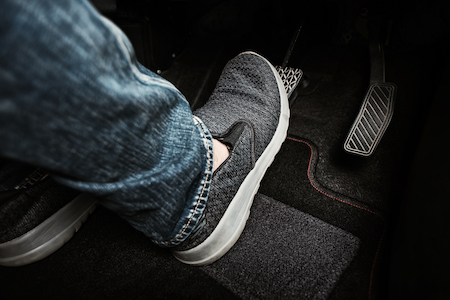
Or maybe you’re driving through the neighborhood. Your mind is on a problem at work, stopping by the grocery store on the way home, your plans for the weekend. A ball rolls in front of you. A child runs out from behind a car. You stomp on the brake pedal. Nothing happens …

Wild stories? Not in the least. As you read each of them, you probably felt just how real each of them could be. 

At the bottom of each is a problem with the car. When you drive on worn brakes, you might lose control. You might not be able to control your vehicle as intended. And in each of the cases mentioned above, it can lead to scary, disastrous results. 

Driving on worn brakes will lead to expensive repair bills and replacement of other car components. Brake pads are crucial to the brake system, but they aren’t the only part. When you allow one part to deteriorate, it leads to damage in other parts of the car. Brake pads may not be the only part that can impact your drive, but they are the most noticeable as they begin to wear down. 

How can you tell if your brake pads are worn?

With all major components and systems of your car, there are built in warning systems to alert you to potential problems before they occur. Watch for these things, sure signs your brakes are worn down. 

what-if-youre-stressed-about-car-repairs

Noise – Brake pads have a built in noise indicator to alert you to when the pad is wearing down. You can’t ignore the screeching sound worn brake pads make. This isn’t something that’ll go away. It continues to get worse the more worn the brake pads become. It does give you ample time to connect with your mechanic and get your car in for servicing. 

Vibrations – Sometimes you can feel the problem. If damage to the brake pads has impacted the rotors, you’ll feel a slight vibration every time you press down on the brake pedal. Full connection between the various components isn’t taking place, and you’re at risk of not being able to stop effectively when pressing down on the brakes. 

Soft pedal – Instead of feeling a vibration when you press down on the brake pedal, it might take more pressure to accomplish the same brake function. People often define worn down brakes as acting like a sponge – there’s little resistance as you apply pressure to the brake pedal. That lack of tension is a sign your brakes need replacing. 

Slow response – Over time, your brake system might not respond in the same manner as it did when you first purchased your vehicle. Pay attention to the changes. If you notice you’re having to push down farther on the brake pedal, it takes you longer to come to a complete stop at a traffic light, or you have narrow misses because of a longer stopping range, it’s time to bring your vehicle in for inspection. 

What happens when you drive on worn brakes

You’ve determined your brake pads are worn. You know you have a problem that needs to be fixed. But you have places to go, things to do. Maybe next week …

What can happen if you continue to drive on worn brakes? 

You might damage the brake rotors and calipers

While brake pads might be the most common repair item on a vehicle’s brake system, there are many other components that make it function. If your brake pads continue to wear down, they will eventually impact other components of your vehicle. 

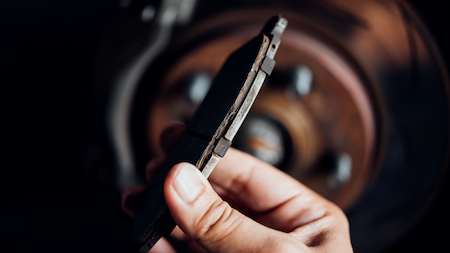
As the brake pads wear past the wear mark, they may not have enough material left to get the job done. That can impact the brake rotors, damaging them as well. As you brake, the brake pads press against the brake rotors to slow and stop your car. If the pads are excessively worn, this produces a metal on metal grind, which damages the rotors. 

This can also cause excessive heat, especially if you’re driving long distances or applying your brakes more than usual, such as coming down from the mountains. Worn pads squeezing the rotor can also warp and crack it. Brake rotors are designed to last longer than brake pads, but not if they are damaged in the process. 

It can wear down your tires

Another component that can be impacted by worn down brakes are your tires. 

As you drive on worn out brake pads, it takes more energy to bring your vehicle to a stop. That means you’re more likely to slam on the brakes more frequently as you avoid potentially harmful situations. 

Excessive braking will cause your tires to wear out faster due to the higher impact of jolting to a stop. They may need more balancing, or possibly have uneven tire wear. 

Don’t ignore potential brake problems

Having your brakes checked regularly should be considered routine maintenance. Don’t ignore them. If you put off a warning sign today, it will lead to further damage and higher repair bills in the near future. 

Your brakes are one of the most important safety components of your vehicle. Have a professional check it out and repair it as quickly as possible at the first sign of a brake issue. 

With today’s vehicles, technology can alert you to problems long before they grow. If you notice the brake light on your dashboard illuminate, use that as an indicator it’s time to make an appointment. 

You should also pay attention to your drive. Even if you don’t notice a vibration in your brake pedal, or a noise when you step on the brake pedal, as a regular driver, you can feel when something is wrong. 

If your car pulls to one side or the other as you brake, it’s an indication of a problem. If you hear a strange sound, smell an out of the ordinary odor, or see fluid underneath your vehicle as you pull away, those are all good indicators of an issue with your car. 

Let one of our trained mechanics inspect it and find out what’s wrong. 

We’ll have you on the road again in no time, safely. 

Filed Under: Brake Repair, Brake Service Tagged With: Drive On Worn Brakes

Are You Properly Towing Your Trailer? If Not, It Might Be Impacting Your Brakes and Suspension

August 25, 2021 by Denver Express Car Care

You don’t have to look any further than your local highway to know Coloradans love taking vacations. Trucks and SUVs are towing trailers, heading out into the high country to take advantage of all Colorado has to offer. 

But did you know that towing a trailer has a huge impact on your brakes and suspension? If you aren’t aware of proper towing know-how, you could be putting a lot at risk. Improper towing could damage your car’s brakes, suspension, tires, transmission, and even impact your alignment. Your fun trip to the middle of nowhere could turn into one giant headache if you’re not adequately prepared. 

Are you properly towing your trailer? Are your brakes and suspension at risk? Here are a few questions to keep in mind. 

How much can your vehicle really tow?

You have a truck. You just bought a trailer. What could go wrong?

Quite a lot if the two aren’t properly paired. It’s important to understand how much your vehicle can tow before you purchase a trailer. If the trailer is too large for your vehicle, it can damage the suspension, transmission, even your engine. 

Your vehicle comes with a towing capacity. The conventional towing capacity is regarded as how much it can pull with a frame-mounted hitch. Fifth wheel towing capacity would be mounted directly in the bed of your truck. Check with the owner’s manual to find out how much weight your vehicle can handle. This is the maximum weight it can pull without damaging the vehicle. Keep in mind that if you add other items to the trailer after you purchase it, it will add to the weight capacity. Make sure you stay within limits to ensure safety precautions. 

Do you have the proper equipment?

Have you changed vehicles? Upgraded the trailer? Have a different combination than what you started with years before? 

Are You Properly Towing Your Trailer

Not all equipment works in every situation. Towing requires four main pieces of equipment: a hitch, a receiver, a drawbar, and a hitch ball. Each of these parts work together to keep your vehicle and your trailer properly connected. 

The hitch attaches directly to your vehicle and provides the connection between the vehicle and the trailer. A hitch class 1 tows up to 2,000 pounds, class 2 up to 3,500 pounds, class 3 up to 8,000 pounds, and class ⅘ up to 18,000 pounds. Hitches must be married up to the right vehicle to ensure proper towing capacity. 

The receiver is the base for all other elements, and is appropriately sized depending on the different load sizes. 

The drawbar is a tube that threads between the receiver and the hitch ball. You can buy an adjustable height to ensure you create a level plane no matter what load you’re towing. 

The hitch ball comes in multiple sizes and is designed for varying amounts of weight. 

These items are not interchangeable. You have to have the proper equipment as you move from towing your boat, to your trailer, to a mini-camper. Always ensure you have the proper equipment to remain safe at all times. 

Have you thought about all of the details? 

You have a truck or an SUV. You’ve purchased a new trailer. You’re about to head out on the open road. What could go wrong? 

A lot if you’re not diligent about the details. Safety checks are mandatory to ensure your vehicle stays safe. 

When you’re towing, you should ensure you have trailer lights to assure other drivers know what you’re doing. Do they operate correctly? Do they mimic your taillights and respond correctly to what you signal from your vehicle? 

Have you used extra support chains to provide additional support connecting your vehicle to the trailer? This can prevent your trailer from careening into another vehicle if something should go wrong with the hitch. 

Have you secured your load? Are all doors shut and properly locked? Is everything secured so it won’t fly out when you hit highway speeds? 

Have you checked the laws for where you’re going? Different states have different rules. If you are spending time in a location, you may be required to match those laws with your own setup. Paying attention before you leave can prevent headaches down the road. 

Check your tires regularly – all of them. If they aren’t properly inflated and in good working condition, they can become a danger out on the open road. This includes the trailer tires. A check up before you leave will ensure you don’t have tire troubles later. Look for worn spots, improper wheel alignment, or tires that simply aren’t up for the job you’re about to undertake. 

Is it time to invest in additional performance options? 

Chances are if you’re investing in a vehicle and trailer, this will be more than a one-time event. Think clearly about your long-term expectations, and find performance options that can help you stay safer. 

For example, you can find a lot of additional parts that can make a difference in the way your vehicle moves and operates. How about a set of helper springs that help absorb the shock as your vehicle moves. They can assist with adding extra support to the springs and shocks, cushioning the action with every bump you hit in the road. 

Or maybe an enhanced exhaust system to help release back pressure from the engine. This can help the engine breathe easier, which can be important especially if you’re heading into the Rocky Mountains. 

No matter what you decide, the key to staying safe is to ensure they are all properly maintained for as long as they are in use. 

Are you ready to go? 

Before you head out on your next great adventure, ensure both your vehicle and trailer are in excellent shape. 

Existing brake problems will only be exacerbated by towing a heavy load. 

Worn tires or improper wheel alignment can spell disaster as you weave around curvy roads. 

And the added weight can quickly impact your suspension, putting you more at risk of collision. 

The best way to prevent all that is through regular maintenance. If you’ll be towing a trailer in the near future, let us know. We’ll check your vehicle out thoroughly to ensure it’s ready for the job. 

And have fun on your next vacation!

Filed Under: Brake Service, Suspension Tagged With: brakes and suspension, towing your trailer

You Can’t Drive Without Your Car’s Serpentine Belt

August 21, 2021 by Denver Express Car Care

Driving your car is something most of us take for granted. When we head out of the house in the morning, we have meetings and appointments on our minds, not car maintenance. 

Your car may create alternative plans. If the heater isn’t producing hot air, or your brakes are squeaking as you apply pressure, you might be able to drive for a bit, enough to allow you to make an appointment and bring your car in. But a serpentine belt is a vital component of your vehicle. If it breaks, it can leave you stuck away from home. 

What is a serpentine belt?

The serpentine belt is a rubber belt that circulates and brings power to various components of your vehicle. You might also hear it referred to as a fan belt or an accessory belt. That’s because the serpentine belt is designed to bring power to the engine accessories – the alternator, power steering pump, air conditioning compressor, and in some cases, the water pump. 

While using one long belt is both an efficient and reliable way of powering the various components underneath the hood, relying on your car’s serpentine belt for a variety of tasks can also put you at greater risk. If the serpentine belt breaks, everything stops working. 

If your water pump no longer works, the air conditioning quits blowing, it impacts what’s happening underneath the hood. The battery eventually dies, and the engine will overheat. It can damage all of the major components controlled by the parts connected to the belt. 

You Can’t Drive Without Your Car’s Serpentine Belt

If it breaks, your risk quickly grows. But if you have it checked periodically and have it replaced before it has a chance to break, you’ll thwart potential problems before they occur. 

What happens when the serpentine belt breaks?

The serpentine belt doesn’t just break without warning. Instead, it slowly wears out over time. It can be contaminated or damaged through normal wear and tear. This can slow down the movement, which means the belt is no longer spinning at proper speed. That decreases power to the electrical system, which can impact a variety of accessories, from a loss in power steering, to a decrease in cooled air flowing through the system. 

A broken serpentine can stop the water pump, which circulates coolant through the cooling system, which in turn keeps the engine from overheating. While this may not cause an immediate problem, the more you drive it, the more damage done internally to your engine compartment. 

A broken belt also may prevent power from moving the alternator, decreasing the power to the vehicle’s eclectic system. If the battery can’t recharge, the headlights will dim, the radio won’t work, until eventually, the battery dies too. 

Luckily, a serpentine belt doesn’t give out without a few warning signs. Like other parts on your vehicle, if you notice it’s not working well, bringing it in for an inspection is your best way of preventing larger problems down the road. 

Watch for:

Lack of cooled air from the air conditioner – lack of cooled air can be attributed to various problems. Since the serpentine belt controls the functions of the air conditioner, a lack of cool air may be a sign it’s broken. 

Squealing sounds – as the rubber belt slips and loosens from the various components, it can make a distinct squealing sound. This can also happen if it misaligns, requiring a simple adjustment to get it back on track. 

Whining sounds – the serpentine belt moves and angles in many different directions as it wraps around the various components. As the belt wears, the tension can change, which changes the speed of the belt. That can cause it to rub up against components it’s not meant to connect with, creating a whining sound. If you ignore the sound, it can continue to wear down the various parts, causing you more repair bills in the long run. 

No power steering – if you suddenly have trouble steering, with turns and adjustments needing considerable arm strength, it could be a sign of a bad serpentine belt. This could also be a sign of low power steering fluid, so it’s important to bring your car in quickly to ensure it’s in proper working condition. 

Overheating engine – if the serpentine belt is broken, it won’t activate the water pump, which helps keep the engine cool. The longer you drive without proper cooling function, the greater damage your engine will experience. 

Visible cracks in the serpentine belt – the serpentine belt is easy to see if you pop the hood and glance into the engine compartment. If you notice visible cracks anywhere on the belt, it’s time to schedule an appointment to have it replaced. 

Dead battery – a dead battery can be caused by many issues, including a serpentine belt that is no longer driving power. If your battery suddenly dies, ensure the serpentine belt is still attached. Without the alternator’s charge, the battery eventually stops working, which will impact the various accessories throughout your vehicle. 

How much will it cost to replace a serpentine belt?

Cost is almost always one of the first questions a car owner asks. When budgets are tight, it’s easy to push maintenance visits as far apart as possible, hoping to push repair bills to the next paycheck. 

The serpentine belt is one of the less expensive replacements you can make. If it just needs readjustment, you’ll pay for labor costs. The belt itself won’t break the bank. 

Compare that to allowing your car to operate with a broken serpentine belt, where damage starts occurring with various components underneath the hood. If the water pump isn’t working, and allows the engine to overheat, your repair bills will rise exponentially. 

To keep your vehicle in good repair, schedule maintenance visits periodically for a mechanic to inspect underneath the hood, and make suggestions for keeping it performing well. 

Is your serpentine belt working well?

Filed Under: Car Maintenance

What If You’re Stressed About Car Repairs

August 18, 2021 by Denver Express Car Care

Driving here in Colorado is something most of us take for granted. While we have a public transportation system, to rely on it for everything you do, for all the places you go, in many cases, it just doesn’t make sense. 

Could you use it to take the kids to school, run to the grocery store, pick up your dry cleaning, and go to your next meeting? Of course. But most of us don’t. 

Instead, we choose to own an automobile, keep it tucked away in the garage, and pull it out each day as we need it. If it’s new, there might not be much to worry about. But as it ages, you might find yourself stressed about car repairs. 

Will your vehicle be there when you need it?

Will it leave you stranded by the side of the road? 

If this sounds all too familiar, you might be dreading the day when you hear an unusual sound, or something doesn’t feel quite right when you turn the key and pull out of your parking spot. The anxiety kicks in, and you start to think about all the possibilities. 

What if something’s wrong?

Where stress from thinking about car repairs comes from

Driving itself has turned into a very stressful experience. Traffic has increased by leaps and bounds over the past few years. Add in road construction and obstacles along the way. 

Driver tension? Yep, that’s at an all-time high too. Road rage is everywhere. 

No wonder you feel stressed every time you sit behind the wheel. 

Now add in a little worry about how well your vehicle is functioning. Will it get you where you’re going? Will that clunking noise turn into something more? And where are you going to find the money to pay for whatever the problem is? 

Stress!

You know this isn’t how to drive a car. The more stress you’re under, the more you miss. And that can leave you, your passengers, and those around you at risk. 

What If You’re Stressed About Car Repairs

Of course, knowing you’re stressed and pushing it aside are two different things. You can practice deep breathing whenever you feel yourself building tension. You can do a few stretches to relieve tension. And you can get to know your car a little better. 

Get to know your car

How well do you know your car? Beyond sitting behind the wheel, knowing how to turn it on, and how to change radio stations, do you really know how your vehicle operates?

When was the last time you looked under the hood? Do you know how various systems work to keep you safe? 

Once upon a time, kids learned a lot about how cars operate in school. You might have taken driver’s ed when you were turning sixteen, but how much did you learn about the car? 

And if that was years ago, a lot has changed in recent years. Your car is no longer all about mechanics alone; there’s a lot of technology that helps your car operate. 

While you don’t have to go back to school to learn how it all works, you can spend a little time getting familiar with your car. Take your owner’s manual out and flip through the pages. Pop the hood and take a look inside. Ask questions every time you bring your car in for a maintenance item. Do a little research before you schedule a repair. Even a basic understanding can help lower stress levels, and make you feel more in tune with how your car operates. 

Thinking about it may prevent action

We’re busier now than ever. You have places to go, people to see, things to do. You don’t have time for a problem with your car. 

When you hear a strange noise, that can start your mind whirling about how you may soon be juggling schedules to fit everything in. You just can’t handle a car repair right now. Ignoring it might solve the problem. Yet in your heart, you know it won’t. 

Or maybe you’ve had a bad experience in the past. You’ve taken your car into a repair shop, and on a scale of one to ten, you’d give it a minus ten. You were taken advantage of, and even worse, it didn’t fix the problem. Who would want to experience that again? It’s better to ignore the problem. 

Then there are the stories you read online. Maybe it’s an investigative piece about the auto industry. Or about unscrupulous behavior in a segment on a news show. Consumer beware!

Why should you bring your vehicle in when chances are you’ll only have problems coming out? 

It’s time to focus on prevention

The problem with minor car issues is they quickly escalate to significant vehicle problems if you don’t take care of them when they’re small. 

The average vehicle on the road has over 10,000 parts. They are all carefully connected and controlled to make your vehicle run efficiently. One part out of place, one small piece not doing its job will impact all other components in some way. Replace that one part, and your car will return to good working condition again. 

That’s why routine maintenance is so important. Mechanics are trained to look for the little things. They can listen to the sounds a car makes, pop the hood and look underneath, or ask you a few questions to help pinpoint where the problem could be. 

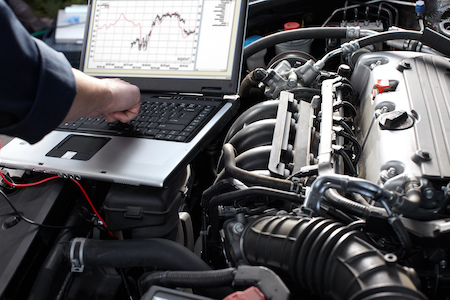
They can also run a complete diagnostic test to test the technology that makes your vehicle run. Today’s vehicles are complicated pieces of machinery. Today’s mechanics are trained in a variety of things to ensure they can get to the bottom of what’s wrong. 

The oil change you schedule every 3,000 to 5,000 miles matters. 

The tires you rotate on a regular basis. 

The brake pads you replace at the first sign of wearing down. 

All of that is about good maintenance on your vehicle. It’s what ensures it works well for you every time you climb behind the wheel. 

There’s no reason to feel stressed about car repairs. Learn more about the process, and it can reduce your anxiety. Replace the little things frequently, and they won’t escalate to major repairs. 

And more importantly, it will never leave you stranded on the side of the road. 

Because your car will continue to be in its best condition for as long as you own your car. 

Filed Under: Denver Auto Repair Tagged With: Stressed About Car Repairs

Radiator Problems Your Car May Face 

August 14, 2021 by Denver Express Car Care

What does your car’s radiator do? If you’re like most drivers, you may have a vague idea, but you could never point it out if you looked underneath the hood. 

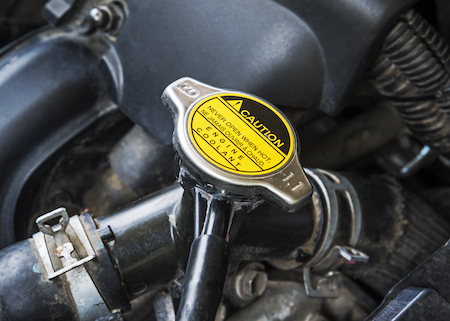
A car radiator is a heat exchanger used to lower the antifreeze temperature as it circulates in your engine. A radiator contains a series of narrow tubes that are designed to disperse heat rapidly, which helps keep the operating temperature of your engine in check. 

In addition to the narrow tubes that allow antifreeze to flow, it also has a cooling fan that draws in cool air at the front of the vehicle. This is what helps prevent the engine from overheating. 

A radiator is considered to be one of the main pieces of equipment in your vehicle’s cooling system. It’s placed at the front of the engine, where it can take in airflow, which allows circulation for the cooling process. It received a continuous supply of antifreeze, which flows through the engine to keep all parts moving and at the right temperature. 

Hot antifreeze moves in while cooled antifreeze moves out. It uses a pump to ensure the proper flow through the system, and is designed to discharge at the appropriate speed. That sums up the entire movement of coolant … as long as the radiator is doing its job. 

If any piece of the coolant system isn’t working, it can cause problems. 

Common car radiator problems 

Just like other parts of your car, the radiator can experience problems if any one piece isn’t working at its optimal level. A regular maintenance schedule is key to keeping it performing at its best. While radiators don’t fail often, the results can be extreme. If the engine overheats, you may well be looking at an entire engine replacement. 

Radiator Problems Your Car May Face 

How do you know if you have a problem? Like other systems on your car, before radiator problems escalate, it will give off warning signs. 

Leaking coolant – While a radiator leak can be caused by several issues, corrosion surrounding the radiator, hoses, and other components is one of the most common. It can be caused by rust, holes or cracks in the hoses, general deterioration, excessive pressure on the system, and more. Luckily, antifreeze/coolant has a distinctive fluid that’s easy to notice if it leaks. Watch for a sticky, bright-colored liquid. Coolant is usually thought of as a green color, but in the past, manufacturers have made it yellow, pink, red, blue, and green. It depends on the brand you use. Without proper levels of coolant, your engine will run hot, until it eventually fails. Getting it checked and fixed is vital to keep your car running. 

Malfunctioning thermostat and water pump – A radiator works hand in hand with the thermostat and water pump. If any one of these components stops working, your engine is at risk of running hot. When the water pump malfunctions, the coolant won’t circulate as it should. And if the thermostat goes bad, the system won’t know when to release proper flow of coolant, which can quickly cause the vehicle to overheat. It may stick closed and not release enough, or stick open and not allow your vehicle to reach proper temperature. Bot of these items can put your radiator at risk. 

Rust in the radiator – In order for a radiator to operate, it sees a constant flow of liquids and electricity through the system’s metal components. This continuous flow creates the perfect environment for oxidation, rust, and other corrosion to build. When voltage clears a path through the coolant, damage can cause internal rusting, pitting, or flaking inside the cooling system. Rusting eventually leads to cracks and holes, which allow leaking to occur. While rusting in the radiator is common, rusting on the outside can also occur in colder climates where road salt and other winter agents make their way inside your engine compartment. It’s best to inspect underneath the hood regularly to ensure you don’t have a problem. If you notice your antifreeze has turned a brown or reddish color, it’s an indicator it’s been contaminated with rust. 

Sludge build-up – Like other fluids inside your vehicle, as coolant ages, it can see a build-up of mineral deposits and other debris. As it accumulates and thickens, it can clog up the radiator, making it difficult to distribute coolant properly throughout the system. Sometimes you can notice this by seeing a reduction in heat into the interior cabin. 

Overheating – The radiator, water pump, and thermostat all work together to keep your cooling system running. If one component fails, it can cause problems with your cooling system. You may also find yourself in a situation where you’re sitting in traffic or idling, and the temperature spikes. This could be a result of a failing radiator fan. Modern cars also have an electric fan that draws air into the radiator to ensure it stays cool while you’re idling or moving at a low speed. If this fan breaks, overheating can occur, especially if idling for a while. 

Air in the cooling system – A radiator is sealed to ensure maximum flow throughout the cooling system. If air suddenly gets into the system, it can create pockets that will ultimately restrict proper flow of fluid. In most cases, air gets into the system during the radiator flushing process. 

Can you repair a radiator, or do you have to replace it?

The cooling system accounts for a large amount of the breakdowns on the road, with overheating one of the most common. Luckily, many of the problems associated with the cooling system can be fixed if caught early enough. The key is in detecting the problem early before it destroys the engine. 

When you notice your vehicle in the first stages of overheating, it’s important to bring it to a mechanic quickly for a thorough inspection. If they diagnose the problem early, they can tell you exactly where the problem lies. It may be something as simple as fixing a leaky hose. 

Some parts of the cooling system will cost more to repair than others. But if you fix the problem component, it won’t have a chance to escalate to other areas, causing more components to break during the process. A leaky radiator hose will cost less than replacing a water pump. 

By allowing a mechanic to check the system early, you’ll save more in potential repair bills, and be back on the road without worries. 

Filed Under: Car Maintenance, Engine

Think Twice Before Changing Brake Pads At Home

August 11, 2021 by Denver Express Car Care

We’re all looking for easy ways to save money these days. Everywhere you look, prices seem to be rising. 

If you can take on a few DIY projects at home, why not? 

But some jobs are better left to the experts. Your car’s brake pads may be one of them. If you do a quick search online, you’ll find a ton of sites telling you it’s an easy job. They even provide step by step instructions to help you along. 

Before tackling this project, ask yourself a question: Is saving a few bucks worth it if it adds risk every time I drive my car?

Changing brake pads at home may be an option if you’re well equipped with the needed tools, and have the knowledge to complete the job safely and risk-free. If not, it might be better left to the experts. Here are a few things to think about before you tackle this job. 

Do I have the right tools for the job?

This may seem like an obvious question. You wouldn’t take on a job if you didn’t have the right tools. But it’s easy to start a project without realizing all of the tools you’ll need. Typically, you’ll need:

  • Floor jack
  • Jack stands
  • Brake tools
  • Replacement brake pads
  • Replacement rotors if necessary
  • Brake grease
  • Socket wrench
  • Tire iron
  • Specific instructions for your vehicle make and model

Whew! That’s a lot of tools for this one job. 

This isn’t something you want to sidestep in any way. Today’s vehicles weigh anywhere from 1 to 2 tons. One mistake can cost you everything, so it’s a good thing to put safety at the top of your list. 

Think Twice Before Changing Brake Pads At Home

How complicated can changing the brake pads be?

A lot of savvy drivers have thought this project is easier than it is. But unless you have auto repair experience, it can be a lot more difficult than you think. 

Today’s vehicles aren’t simple; they are sophisticated technology with every piece intricately designed to work together with the parts around them. Not only can a lot of things go wrong if you aren’t familiar with the process, but you can skip over glaring problems that are causing other issues without realizing it. 

If you hear a grinding noise while pressing on the brake pedal, you might assume it’s your brake pads. Yet after analysis, it might be a problem with your rotors. Are you prepared to notice the difference as you pull the brake system apart? 

Depending on the vehicle you drive, you might also have to understand two separate systems. Cars with rear drum brakes maybe a little more complicated due to the additional parts and connections. 

How safe do I want my vehicle to be?

Kind of a trick question, right? Of course, we all want our vehicles to be as safe as possible. It only takes one glance at a crushed vehicle to understand how important safety features are. 

You wouldn’t put your child into the car without a car seat. You wouldn’t want a loved one to ride along without being properly buckled in. 

Do you really want to take the chance that you might not be able to brake properly as you head onto the highway, possibly for a road trip?

Next to seatbelts and airbags, your brakes are one of the most important mechanisms on your vehicle that help protect you in times of need. If your brake pads aren’t installed properly, they won’t be there to do the job they’re meant to do. 

That means they may compromise the safety of your vehicle, putting you and those around you at greater risk. 

What is my time worth?

We all lead busy lives. We all have more on our plates than we can possibly accomplish each day. That’s human nature. 

So why take on jobs that aren’t your specialty? 

Consider this: a highly trained auto technician can easily replace brake pads in 30 to 60 minutes, depending on the make and model. They have a trained eye to watch out for little nuances that add to the safety factor as they are working through the process. If they notice an additional problem, no matter how small it is, they can make adjustments to make your car safer. 

How long would it take you to do the same job?

Would you recognize other problems? 

What if you finished the job, only to realize the brakes still don’t “feel” right? Maybe the brake pedal still goes to the floor when you apply the brakes. Maybe they feel a bit squishy as you apply the brakes. Something is wrong. And now your investment went way up as a technician will have to correct the job you took on. 

What a brake inspection looks like

When it’s time to replace the brake pads on your vehicle, it’s more complicated than pulling the old part off, and putting the new part on. With today’s technology, it involves ensuring the entire system is working well to keep you safe. 

A trained mechanic will provide a thorough, comprehensive inspection of every vehicle that comes in for servicing. They are trained to spot a problem based on a few tell-tale signs, as well as have the know-how for what to look for as they complete the job. It’s a mechanic’s job to ensure that you’ll have total confidence in knowing it was a job well done when you drive away. 

Brake inspection includes checking:

  • Brake pads
  • Calipers
  • Rotors
  • Drums
  • Wheel cylinders
  • Springs
  • Hoses
  • Parking brake cables
  • Fluid
  • Wheel bearings
  • Grease seals
  • Master cylinder fluid

Can you do all that? 

Is it worth your time, knowing a trained mechanic can do the job the right way the first time? 

When it comes to your safety, your car’s brake system is vitally important. Rather than changing your brake pads at home, where you might miss important factors, why not consider relying on a trained mechanic instead. 

Your safety might just depend on it. 

Filed Under: Brake Repair, Brake Service Tagged With: Changing Brake Pads At Home

What Causes Low Oil Pressure?

August 7, 2021 by Denver Express Car Care

When you own a car, regular routine maintenance is part of ownership. Most drivers understand that to keep a car running, you have to fill the tank with gas as the gauge moves towards empty, replace the tires when they wear out, and change the motor oil regularly. 

The engine is one of the main components inside your car. Without it, your car wouldn’t run. 

To keep the engine operating smoothly, it needs gasoline to convert to energy to put the vehicle into motion. Gas gives it the power to go. 

Engines also need motor oil for lubrication. Motor oil reduces friction and wear on moving parts to help keep the engine clean from sludge as it moves through the process. 

Both gas and motor oil are an integral part of keeping your car working well. But while gasoline is something we’re aware of daily, watching the gas gauge as it moves as we drive along, motor oil tends to be a little more “out of sight, out of mind.” You may have a little sticker on your windshield reminding you of when it needs to be changed. But it’s not something you think about regularly. 

Yet your engine can’t survive without it. The lower the level of motor oil, the more likely it is to cause problems. Let the levels get too low, and it can do irreversible damage to your car’s engine, increasing your financial commitment too. 

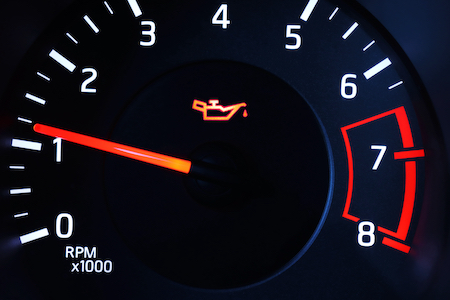
What causes low oil pressure? What should you do at the first indication something is wrong? With today’s technology, most cars are built with warning lights that trigger early to help avoid bigger problems. A low oil pressure warning light on your dashboard isn’t something you should see very often. When it illuminates, you should stop driving immediately. This is an indication that there isn’t enough oil left to do its job effectively.  

What Causes Low Oil Pressure?

A dashboard light is only one symptom of low oil pressure. It’s a good indicator, and one of the first you may notice. But there are other signs. 

  • A burning smell – if it smells like burning oil, it could mean there’s an oil leak due to a failed gasket. 
  • A clunking sound – if your engine is making a clunking sound, it may be an indicator of low oil pressure. Low oil prevents the engine from receiving the lubrication it needs. 
  • An overheating engine – without the proper motor oil, the engine isn’t lubricated. That means it’s working harder than necessary, and has a good chance of allowing heat to build. 

Notice one or more of these problems? It’s best to bring your car in right away. 

When the low oil pressure light illuminates on your dashboard, it can be caused by one of several things:

Not enough oil – most manufacturers recommend that car owners change their vehicle’s motor oil between 3,000 and 5,000 miles. This keeps fresh motor oil in the system, and ensures it’s always circulating through your engine, keeping it working its best. 

Wrong oil viscosity – did you change the oil yourself and use the wrong motor oil? Oil that is too thick may not flow quickly enough, and won’t transfer heat as well as thinner oils. That allows operating temperatures to increase, which can break down the chemical components of the motor oil faster, allowing sludge and other deposits to form. 

Clogged or dirty oil filter – oil filters play an important role in helping maintain oil pressure. When the filter becomes dirty or clogged, it reduces flow. An oil filter is built with a pressure relief valve that prevents the pressure from getting too high. It can no longer do its job if it’s damaged. 

Oil pressure gauge – your engine may have plenty of oil, but the problem lies with the oil pressure gauge. If electrical issues prevent the indicator from reflecting what’s happening, it can give a false reading. The fix may be as simple as replacing the gauge. 

Engine wear – oil continually moves through the engine as it operates. If it’s not working properly, it can constantly impact other working parts. Oil moves from the engine through the crankshaft and camshaft bearings. If this area is worn and allows too much oil to flow, it can reduce oil pressure. The oil pump will work harder to move oil through bearings and other pathways. This can be a continual source of pressure until something breaks down. 

Overheating engine – if the engine experiences too much heat, eventually it will stop working. Overheating causes the oil to thin, trying to prevent pressure build up.  

Faulty oil pump – while this isn’t as common as other potential problems, a defective oil pump can drop the flow rate. 

Worn out parts and components – with over 10,000 parts on a car, any one of them within the engine compartment can impact the combustion process in different ways, and lead to general wear and tear on the vehicle. A problem with the engine oil is often recognized by a blue smoke as it exits the tailpipe. 

Many times, your oil pressure warning light will start to illuminate as it detects a problem. Instead of coming on and staying on, it might start to flicker on occasion as it notices a problem. The oil pressure warning light is designed to come on if oil pressure falls below 5-10 pounds per square inch (psi) at idle, depending on the vehicle you drive. At the very least, it should be at 5 psi when not in motion, or the oil light will flicker or stay on. 

Continue to monitor this light. Check the oil level as soon as it’s safe. If you’re comfortable adding a little more oil, do so while continuing to monitor your car’s actions. This could be a sign of something larger. In that case, it’s time to bring your vehicle in for an inspection to determine where the problem lies. 

The best way to prevent your oil pressure light from coming on, and avoid low oil pressure altogether is to schedule regular oil changes. This is the best way to allow a certified mechanic to evaluate your car regularly, and ensure it’s always working at its best. 

Filed Under: Car Maintenance Tagged With: What Causes Low Oil Pressure

How The Colorado Climate Impacts Your Car Battery

August 4, 2021 by Denver Express Car Care

If you’ve ever been stranded because of a dead car battery, you know it’s not a lot of fun. 

What causes it? 

Age is only one factor that determines how well the battery will operate. What you might not have considered before is how the Colorado climate impacts your car battery. 

Think of all Colorado weather can dish out. Just recently, Denver broke a 145-year-old record as temperatures climbed above 100 degrees for the fifth time this year. But warmth isn’t the only thing Front Range residents experience. Looking back through history, temperatures have dropped down as low as 29 degrees below zero. 

Think these wild and crazy temperatures don’t impact the performance of your car battery? Think again. 

Yet which is worse: heat or cold? Which climate impacts your car battery more?

What hot weather does to a car battery

While most people assume cold weather has the most impact on the performance of a car battery, summertime temperatures can wreak havoc too. That’s because high temperatures weaken the battery because of heat. 

As temperatures climb, if you were to reach under the hood and record how hot it is, you would find it rises as high as 140 degrees or higher. Under that amount of extreme heat, battery fluid starts to evaporate, which can damage the internal structure of the battery. 

Extreme temperature can also cause the voltage regulator and other charging components to malfunction, ultimately overcharging the battery system. This slows function and ultimately means the battery fails faster than its stated life. 

Heat can also build inside and allow the lead plates inside the battery to corrode. Corrosion leads to deterioration, and ultimately failure. 

What cold weather does to a car battery

How The Colorado Climate Impacts Your Car Battery

While car batteries can die at any time, with or without extreme temperatures, as winter moves in and the temperatures continue to dive, it can break down the internal components of a battery. 

Car batteries aren’t something you replace like motor oil. Instead, car batteries can last three to seven years. That means a car battery will experience heat buildup during summer months, only to turn around and face freezing conditions in the winter. That cyclical beating can take its toll. 

Cold weather can reduce the capacity of the battery by as much as 20 percent as temperatures drop to freezing, and as much as 50 percent when we start setting record lows. This reduction in capacity lowers battery output, which weakens the process of starting the car. 

Cold temperatures also cause motor oil to thicken and solidify, making it harder for the engine to turn over. That forces the battery to work even harder, even though capacity is struggling for power. 

A battery doesn’t power your vehicle. Instead, it’s used as a charge to turn the engine over, and provides power to the accessories like car windows and radio. As you drive your car, it recharges the battery, so it’s ready for your next outing. In cold weather, this recharging process slows down. That means you’ll have to drive further to accomplish the same recharge process. If you only head out on short errands, it might not be enough to keep the battery working efficiently. 

The coldest days are also the shortest days. Cold brings out dreary weather, cloudy skies, and sunrise and sunset to shorten considerably. That means you’ll use things like headlights, windshield wipers, and heater functions more than ever. This increases the battery load at a time where the recharge rate is reduced too. 

How to keep your car battery healthy all year long

Car batteries are not something you have to maintain; they simply need to be replaced every three to seven years. While you will find some batteries that have a water level indicator, allowing you to see the battery’s water level, most are sealed. 

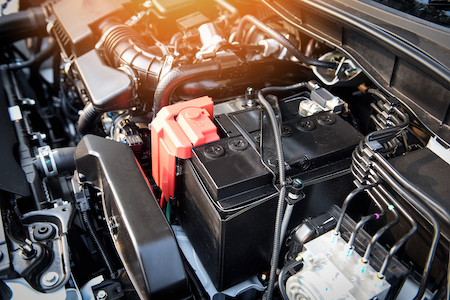
Still, it’s worth your time to pop the hood from time to time and check out the condition of your battery. Make sure that the battery and its posts are clean and free from dirt and engine grease. Dirt and grease act as a conductor, meaning they’ll lower battery power. 

You’ll also want to ensure there isn’t corrosion anywhere on or near the battery. Battery corrosion often takes on a blueish tint. If enough corrosion builds up, it acts as an insulator, which prevents current flow in your battery. 

To reduce the chances of impact from extreme temperatures, pay attention to where you park. If possible, park in a garage. Look for spots that are shaded by trees or buildings. This keeps the effect of sunlight to a minimum. 

How to know if your car battery is weak

In the same way that the human body breaks down in record-setting temperatures, you’ll notice similar impact on your vehicle. High temperatures make us more susceptible to dehydration; the heat dries us out. Inside a battery, the liquid can evaporate as it experiences high heat, especially for long periods of time. This weakens the battery’s charge, and speeds up deterioration. 

This isn’t an overnight process. Just like other systems on your vehicle, your car battery will give off warning signs as it starts to fail. 

  • As you start your car, listen to the engine cranking over. Does it take longer to start?
  • The check engine or battery light may illuminate for short periods.
  • If you have a battery with a water-level indicator, this fluid level will be low. 
  • The battery case may appear bloated or swollen. 
  • The battery posts have corrosion. 
  • You start to notice accessories like headlights appear dim and aren’t working at top levels. 
  • Your battery is three years old or older.  

Just because your battery stated a specific life span, doesn’t mean you’ll see it. It depends on driving conditions too. As you near the three-year mark, it often makes sense just to replace the battery if you start to notice any of the above symptoms frequently. 

Wonder if Colorado’s climate is impacting the way your car battery performs? Bring it in. We can check your battery and determine if it’s still functioning correctly, making it a solid and dependable part of your vehicle. If it needs replacing, we can help there too. 

Don’t get stranded – check your battery instead. 

Filed Under: Car Maintenance Tagged With: Colorado Climate Car Battery

Is It Bad For My Car If I Run Out Of Gas?

July 28, 2021 by Denver Express Car Care

There are two types of drivers in the world: the ones that prefer to fill up the gas tank the moment their vehicle’s gas gauge nudges towards a quarter tank, and the ones who prefer to push the limit and drive it down as close to empty as possible. 

Running out of gas is never fun. Depending on your current destination, it can leave you stranded in compromising places. It can make you late, and even put you in danger. 

If you have a running out of gas story, chances are you remember the details of what happened. But have you stopped to think about your car? What goes on underneath the hood when there’s no more gas to feed the system? Does it hurt the engine? How about the other mechanics?

Today’s vehicles are finely tuned pieces of equipment with specific parts that help push fuel to the engine. If fuel no longer exists within the system, these components can quickly break down.

Where the process starts

You might assume that from the moment the gas tank empties, the car screeches to a halt and no longer works. It doesn’t work that way. 

Instead, traces of gasoline continue to feed the system. The car will start showing signs that gas is no longer running through the system in the expected quantities. It may have power surges, engine sputtering, or even engine backfire. And in between it all, you’ll also notice a loss of power. This is your cue to get to safety. Pull to the right and get to safety as quickly as possible. 

This process may be further complicated by the fact that your hydraulic power to your brakes and steering systems start failing as well. It won’t completely take away your steering or brakes, but you’ll certainly notice a difference. It will require additional effort on your part. If you have electric power steering, it will continue to function from the car’s battery, so you’ll have more control and power over other types of vehicles. 

What goes on underneath the hood

If you start to notice the difference, you can only imagine what’s going on with the mechanics of your vehicle. 

Is It Bad For My Car If I Run Out Of Gas?

A car is designed for safety. It will do everything it can to keep you safe. When your car runs out of gas, the engine ceases to work. The loss of power will cause hydraulic assist to help with steering and brakes for a short time to get you to safety. It won’t cause damage to those components. But without gas flowing through the system, it can cause extensive damage quickly that surfaces as costly repairs. 

Why?

Because running out of gas damages the fuel delivery system. Today’s vehicles are intricately designed to work together, fed by electronics and technology to ensure every piece is efficient as possible. Today’s modern cars are equipped with an electronic fuel pump that resides in the gas tank. That fuel pump stays in good working condition by using the gas to both keep the tank cool and provide proper lubrication. If no gas exists, there isn’t anything left to perform this function. With a minimal amount of gas in the tank, the fuel pump is very likely to overheat and fail. 

That in itself can be a very costly repair. But it gets worse. 

As this process occurs, the fuel pump is, in essence, self-destructing. As it’s trying to perform its function and can’t, it can shed a variety of debris that makes its way into the fuel system. That spreads the possibility of destruction. 

The problems that occur when you run out of gas

Your fuel pump is only the beginning of where the damage can occur. Most car manufacturers today recommend filling up your gas tank at a quarter tank. Never let it go much lower to help keep an adequate supply of gasoline in the system to do its job. It’ll make your fuel pump last longer, and will ensure all working parts are well lubricated. 

But as gas runs lower, the fuel pump starts running into problems, followed by other possible conditions.

The fuel injectors may also be impacted. Over time, debris and other impurities can create sediment that falls to the bottom of the gas tank. It’s the fuel filter’s job to filter this all out to prevent it from moving further into the engine. But when the fuel level drops too low, the impurities can make their way into the fuel lines, clogging the fuel injectors, which are tiny nozzles that spray gas into the engine. 

Like the fuel pump, the fuel injectors may not display symptoms right away. If your car won’t start after running out of gas previously, it’s usually a problem with either the fuel pump or fuel injectors. 

To start your car after running out of gas, don’t turn the key and crank the engine right away. After refilling the gas tank, turn the key to “on” without cranking the engine. Then turn it back off. Do this a few times to help prime the fuel pump with plenty of gasoline before you crank the engine. This helps remove any air that has entered the fuel lines as a result of being without gasoline. 

If this doesn’t work, it’s time to let a mechanic check out the entire system. A qualified technician can ensure fuel injectors are properly working, and help restore power to your engine. 

What to do when your car runs out of gas

Prevention is everything when it comes to keeping your car in good working condition. Pay attention to the gas gauge. As it nears a quarter tank, make plans to stop at the nearest fuel station to add gasoline back into the tank. 

Yet if you do find yourself running out of gas, first and foremost is to stay calm. Find a safe place to pull over where you aren’t putting yourself or others at risk. If possible, exit the highway and find an open area or parking lot to stay free of traffic. 

Turn on your hazard lights. This will help warn other drivers that your car is temporarily a hazard to driving, and will help warn them to stay clear. This is especially important if you are near traffic and you could become a problem. 

Call for help. This is what roadside assistance is made for. You can rely on friends and family too if they are nearby. 

Then have your car inspected to ensure there is no damage. Fixing minor problems early will ensure they don’t escalate and turn into larger problems. 

Filed Under: Car Maintenance Tagged With: Run Out Of Gas

Have Advanced Driver-Assistance Systems? Here’s How To Maintain Them

July 24, 2021 by Denver Express Car Care

Just a few years ago, the thought of having a car do the work for you was still more hopeful than reality. That didn’t stop sci-fi movies from showing us what would be possible. Flying cars. Cars that drive themselves. Cars that did everything for you. 

While we might not be able to kick back in the backseat and get work done on the way to our jobs, we have come a long way with technology. Today’s car manufacturers are competing, trying to be first to market with all kinds of modern tools that make driving safer and easier. 

Most new cars come equipped with advanced driver-assistance systems (ADAS). They add to the complexity of how your car runs, and more importantly, to the ongoing maintenance of your vehicle. 

What is ADAS?

ADAS – advanced driver-assistance systems – are technological features designed to increase safety and drivability of your vehicle. When properly designed, these systems are installed to work together with the driver to improve functionality, and increase the ability to react to dangers on the road. 

Safety is key. ADAS is designed to provide warnings of potential dangers, automate portions of certain aspects of driving, and give drivers ample time to react and safely gain control over the vehicle. 

Some are built standard into a vehicle in production, while others are added aftermarket, allowing consumers to personalize based on their preferences and needs. 

How does ADAS work?

ADAS is the result of years – decades -of safety improvements. Over time, manufacturers have created things like three-point seatbelts, shatterproof glass, airbags, and more to make the driving experience safer, minimize injury, and reduce risk for all on the road. ADAS takes it a step farther by using three advanced technologies to keep a car safe as it moves about. 

Have Advanced Driver-Assistance Systems? Here’s How To Maintain Them
  • Ultrasound tracks the immediate space around the vehicle. 
  • Cameras provide surround view and offer things like park assist.
  • Radar, sensors, lidar, and other technology, can physically respond faster than a driver, creating warning systems that potentially alert dangers. 

Some of the most common ADAS applications include:

  • Adaptive cruise control (ACC) – allowing you to maintain your speed on long stretches of road. 
  • Adaptive light control – adapts the exterior lights to the conditions of the road.
  • Automatic parking – uses sensors and cameras to avoid blind spots when parking. 
  • Navigation system – provides on-screen instructions and prompts to help you follow directions on your route.
  • Night vision – helps you see things that might otherwise be difficult to see. Uses both infrared and thermal energy to help you avoid animals, cars, and other objects. 
  • Automatic emergency braking – helps you avoid danger by breaking as necessary. 
  • Driver drowsiness detection – uses sensors to detect driver’s attention and alerts using warning signals as necessary. 

Does your car have ADAS?

ADAS is not the same as having autonomous driving. Many cars today have a variety of features, including advanced driver-assistance systems. If you’re not sure what ADAS your car comes equipped with, there are a few ways to check. 

Start with your owner’s manual. It might be collecting dust in your glove compartment, yet this guide is one of the most important indicators that came with your car. It can guide you to all kinds of information, including knowing what systems you  have, and how to take care of them throughout the life of the vehicle. 

Walk around your vehicle. Sometimes you can tell what ADAS systems you have simply by walking around your car. Check places like the tailgate, the side mirrors, rearview mirror, and front bumper. Do you see tiny cameras? That’s a sign of an ADAS system. 

Talk with your mechanic. The next time you drop off your car, talk about which systems you have in place. We can help point them out, and provide you with proper maintenance schedules for them. 

Scheduling a vehicle alignment

As a driver, you’re probably familiar with alignments. A wheel alignment is a computerized process that calibrates and aligns all four wheels to ensure it drives straight. Often, these aren’t noticeable adjustments. Instead, technicians use sensitive equipment to ensure each wheel angle is adjusted to match manufacturer’s specifications. If you continue to drive with improper alignment, it can wear your tires faster, and also decrease overall safety while you drive. If you want to prolong the life of your vehicle, getting proper maintenance ensures everything is working correctly. 

While wheel alignment is performed using computerized equipment, ADAS alignment moves to another level. It requires specialized equipment and a fully trained technician to ensure proper ADAS alignment. Since ADAS uses technology to control things like brakes, cruise control, and steering, it also requires a special alignment process called a Safety Systems Alignment. 

A Safety Systems Alignment adjusts the angles of the tire, calibrates the ADAS cameras, sensors, and radar system that help control the technological systems and components. If they aren’t in proper alignment, they cannot function properly, putting you at risk. For example, if the rear camera system is out of sync, it can’t track your wheel angle to help you reverse. 

This isn’t something just anyone can do. It requires state of the art equipment, a highly skilled technician, and additional time to ensure your vehicle is up to par with your vehicle’s manufacturer’s guidelines. 

Do you need a Safety Systems Alignment?

When your wheels are out of alignment, several warning signals appear to alert you to potential problems. You might notice your car drifts to one side or the other as you drive straight. Or your steering wheel is crooked while going straight. 

That’s not always possible with ADAS. Your vehicle’s wheels may be in alignment, but with one of the ADAS features not working, it can steer you into a dangerous situation. 

The best way to ensure your ADAS is working correctly is with regular maintenance. Just like you get frequent oil changes, or rotate the tires every few thousand miles, a check-up to ensure your ADAS is working correctly will ensure the safety of you and your passengers. 

Filed Under: Car Maintenance Tagged With: Advanced Driver-Assistance Systems

  • « Previous Page
  • 1
  • …
  • 40
  • 41
  • 42
  • 43
  • 44
  • …
  • 103
  • Next Page »

Express Car Care
4200 E. Evans Ave. Denver, CO (map)
Phone: (303) 691-2760
Located just southeast of the Colorado Light Rail station

Follow Us Today!

  • Facebook
  • RSS

Shop Hours

Monday: 8:00AM – 5:00PM
Tuesday: 8:00AM – 5:00PM
Wednesday: 8:00AM – 5:00PM
Thursday: 8:00AM – 5:00PM
Friday: 8:00AM – 5:00PM
Saturday: Closed – A note from the owner
Sunday: Closed

Last car oil change time  – 5:00PM

Click for the BBB Business Review of this Auto Repair & Service in Denver CO

Recent Articles

Tire Rotation: When to Do It—and the Signs You Shouldn’t Ignore

Tire rotation is one of the simplest ways to help your tires wear evenly, last longer, and keep your vehicle handling predictably. It is easy to put off, but a consistent rotation schedule can save … [Read More...]

  • Which Oil Is Right for Your Car?
  • Stop Burning Money at the Pump
  • Differential Service: Why It’s Crucial for Your Car’s Longevity and Performance
  • How to Catch a Transmission Problem Before It Leaves You Stranded
  • Why You Shouldn’t Wait to Address a Small Exhaust Leak

Search Our Site

Brakes Service

How to Keep Your Brakes Quiet, Responsive, and Safe

Everything You Need To Know About Replacing Your Brake Pads

How to Know If It’s Time to Replace Your Brake Rotors

Oil Change

Top Benefits of Getting Regular Oil Changes in Denver

Oil Change Specials in Denver: Save Money and Keep Your Car Running Right

Why Regular Oil Changes Are Crucial for Denver Drivers

Suspension

How to Know If Your Car Needs Suspension Repair in Denver’s Bumpy Roads

A Guide To Understanding Bushings on a Car

Tips for Preventing Wear and Tear on Your Car’s Suspension

Transmission Service

How to Catch a Transmission Problem Before It Leaves You Stranded

How Often Should You Service Your Transmission in Denver?

Transmission Trouble? Common Signs and When to Visit Our Denver Shop

Engine Service

Stop Burning Money at the Pump

Everything You Should Know About Your Vehicle’s Timing Belt

Is Your Car Hesitating During Acceleration?

Auto Tips & Tricks

How to Deal With Car Noises That Only Happen When You Turn

Top 5 Maintenance Tips for High-Mileage Vehicles

Why Tire Pressure Matters More Than You Think

"Denvers Best Auto Repair and Quick Lube" - Copyright © 2026 - 4200 E. Evans Ave. Denver, CO 303-691-2760