• Home
  • Denver Auto Repair Services
    • Full Service Oil Change
    • Expert Mechanics
      • Expert Honda Mechanics
      • Expert Toyota Mechanics
      • Expert Subaru Mechanics
    • Automatic Transmission
    • Fuel System Cleaning
    • Radiator Flush Service
    • Wiper Blades
    • Air Filter
    • Cabin Air Filter
    • Gearbox Service
    • Brake Repair
    • Clutch Repair
    • CV Boots
    • Tune-Up
    • Steering & Suspension
    • Tires
  • Auto Diagnostic
  • Contact Us
    • About Us
  • Shop Specials
  • Testimonials
  • Blog
  • 303-691-2760

Express Car Care of Denver

"Denver's Best Auto Repair and Quick Lube"

  • Brake Service
  • Car Maintenance
    • Heating-Air Conditioning
    • Suspension
    • Transmission
    • Engine
    • Tires
  • Oil Change
  • Tips & Tricks

Short Distance Driving? Here’s How It Affects Your Car

July 21, 2021 by Denver Express Car Care

How much do you drive each day? 

Lots of people create a lifestyle where they don’t spend a lot of time in their vehicles. They live close to work. They walk. They work from home. 

Driving means taking the car to the grocery store … just a few miles away. Or maybe to pick up the kids from school … a few miles away. 

According to the US Department of Transportation’s Federal Highway Administration, the average person drives around 13,500 miles per year, which equates to just over 1,000 miles per month. 

Yet you know in your heart even that’s high. You just don’t drive. 

What does that do to your vehicle? Should you still follow maintenance guidelines according to mileage, even if it’ll take you many years to reach what manufacturers suggest? 

Let’s start with your warranty

If you have a newer car that’s still under warranty, you’re stuck with following the manufacturer’s guidelines to ensure your car maintains the suggested servicing schedule. You’ll void the warranty if you don’t. Pay attention to that as you purchase a vehicle, as some spell out maintenance schedules using different guidelines. 

If you aren’t sure, now is the time to pull out your owner’s manual and read all about it. 

Once your vehicle is out of warranty, then you can start to develop your own service routine depending on the type of driving you do. Keep in mind that it’s still important to bring your car in for service periodically. A vehicle left sitting unused can wear out parts in different ways. Rubber can harden. Oil can go bad. Parts can deteriorate simply by not being put into use. 

Short Distance Driving? Here’s How It Affects Your Car

Instead of waiting for something to happen, it’s better to find a trusted resource who can help you monitor your vehicle and help you decide the right maintenance routine for you. Going with an independent mechanic can provide you with a trusted resource whose goal is to help you maintain your vehicle. Dealers are notorious for pushing you into service you don’t need, upgrading to new vehicles every chance they get. A reputable independent mechanic wants to increase the lifespan of your current vehicle, and to help ensure it does so without causing problems while you’re on the road. 

Short distance driving damages engine oil

If you were to pop the hood on your vehicle and take a look underneath, you would find the engine is made from a variety of metal parts. Metal expands every time the temperature increases. An engine is created by piecing together a crankshaft, valves, pistons, con-rods, rings, cams – parts put together carefully to meet certain guidelines that are adhered to in a variety of conditions. They’re calibrated to ensure they work together to keep your vehicle operating smoothly, no matter what conditions it faces. 

Motor oil is a thick, slow-moving flow designed for lubrication. It flows throughout the system every time your vehicle is put into operation. As the engine heats, this oil becomes less dense, which allows it to flow freely throughout and lubricate the internal components to keep them operating efficiently. 

When these engine parts are cold, they don’t operate right. There isn’t enough lubrication to give each part the clearance necessary to work to the best of its ability. It takes time for the motor oil to warm, flow freely throughout the system, properly lubricate the entire system, and allow the engine to work to the best of its ability. 

Additionally, motor oil also uses this generated heat to rid itself of moisture and other byproducts. If your vehicle rarely reaches the desired temperatures, these contaminants aren’t removed, meaning the motor oil increasingly has the potential to compromise the integrity of your vehicle as well as overall performance. 

Short distance driving damages battery life

The biggest boost of energy comes from starting up your vehicle. When you turn the key (or press the button), it creates high demand from your battery. 

As you drive, the alternator recharges the battery, so it’s ready for action the next time you start up your car. When you take short trips, the alternator doesn’t have a chance to fully recharge the battery, weakening the overall effectiveness with every trip. 

Much like your engine needs time to warm up and reach its optimal operating temperature, so does the alternator. If the battery isn’t recharged properly, it pushes rapid depletion into motion, meaning your battery life decreases with every short trip. 

Weak batteries can impact how well your vehicle starts up each time you turn the key. But it impacts other items on your car as well. The battery also operates your vehicle’s accessory, which means your headlamps might not be as bright, or your heated seats might be impacted. 

Wear dates

Manufacturers list wear dates because many drivers use that as a gauge for maintenance and repair. And if you drive average distances or more each year, these guidelines are a good indication of things to watch for as you drive. 

Yet if you’re a short distance driver, don’t be lulled into a false sense of security just because your car rarely leaves its parking spot. Parts wear down whether they are constantly in use or not. They just wear down differently. 

No matter how much you drive each year, it’s important to create a maintenance schedule and stick with it. 

Work with a trusted mechanic to ensure your vehicle is well maintained, has fresh oil on a rotating basis, and parts are well cared for no matter how much action they see during a year. 

We can help you keep your car in good working condition, no matter how much you drive. 

Filed Under: Car Maintenance Tagged With: Short Distance Driving

Mountain Driving – Why There’s a Burning Smell Coming From Your Brakes

July 17, 2021 by Denver Express Car Care

Colorado driving brings all kinds of challenges to drivers. Here in Denver, you’ll deal with ice, snow, heatwaves, flooded roads, and sudden drops in temperatures that can have you turning on your air conditioner and heater all in one day. 

One of the greatest challenges comes from mountain driving. You may start out at home in a relatively flat location. Hop on the highway, and in just a couple of hours, you can be climbing thousands of feet, change from dry roads to snow-packed highways, and you’re left navigating it all. 

Whether you’re new to Colorado driving, or have been here for decades, it takes some getting used to. 

A big challenge comes from navigating up and down the mountain. It takes a lot of power getting up some of those hills. It also takes a lot of power to keep your car under control as you drive down.  If you’re driving and you suddenly notice a burning smell from your brakes, what does it mean? You know it’s not good, 

Anytime you smell a burning smell while you’re driving, it’s not good. Of course, it can mean different things. Any change in your vehicle should be brought to a mechanic’s attention as soon as possible to ensure it’s not a serious problem. 

What could a burning smell from the brakes mean? 

When you smell a burning smell coming from your brakes, it can mean a variety of things, depending on what you’re doing at the time you notice it. 

Mountain Driving - Why There’s a Burning Smell Coming From Your Brakes

New brakes

If you’ve just picked up your car where new brakes have been installed, it can be a little disheartening when you notice a burning smell as you tap on the brakes just a few miles from the shop. In this case, the burning smell isn’t a bad thing at all. A slight burning smell coming from new brakes is harmless, meaning the resin coating built into the brake pad is coming off, and the brakes are settling into use. Consider this the break-in period to allow your brake pads to adjust to your vehicle. 

Different brands and types will have a different break-in period. Some might not smell at all, while others have a noticeable odor for an extended period of time. If you’re not sure, give us a call. We can assure you everything will be alright, or if we feel there may be a problem, we’ll recommend you return so we can check everything out. 

Your parking brake may be engaged

We’ve been taught that the parking brake is just for parking, but it actually has a lot more uses than that. The parking brake is part of your overall braking system. When engaged, it presses against the rear brakes with less force than the regular braking pads. It’s a secondary system that was designed as a safety feature in case the braking system failed, yet today it’s primarily used to keep a vehicle in place while parked, especially if you’re on a steep incline. 

To engage a parking brake, you usually have one of four types of parking brakes. 

  • Stick lever – this can be located on the steering column of older models
  • Center lever – located between the two front seats
  • Foot pedal – located to the left of the other pedals
  • Push button – located on the console on newer vehicles

Manufacturers suggest using the parking brake as a safety precaution every time you stop. If you follow these guidelines, sometimes the parking brake feature might not disengage all the way when you release it before you start driving again. If so, this brake function is pressing against the rear brakes, and can cause a slight burning smell. 

Do you notice other problems? Do you hear a squealing or grinding noise? Are you having trouble accelerating? All can point to a problem with the parking brake releasing. 

Brakes are overheating

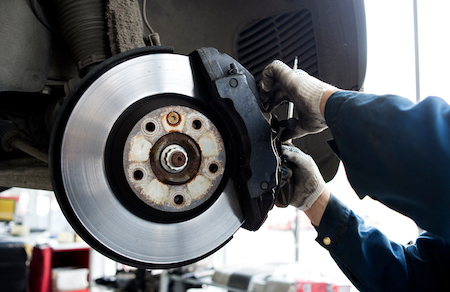
When you press down on your brake pedal, it engages the brake pads against the rotors, working hard to bring your wheels to a stop. This friction can produce a lot of heat in a short period of time. Aggressive or frequent braking can continually build heat rather than giving the braking system a chance to cool and dissipate some of the heat it’s generated as you drive. Eventually, this can cause the entire system to overheat. 

Now think about what happens when coming home from a day in the mountains. It’s miles of road at steep grades bringing you safely down thousands of feet at a rapid pace. Tapping the brakes to slow, over and over again, continues the process of allowing the brakes to generate heat. Especially as you’re navigating a long line of traffic heading in the same direction. 

In today’s world, most of us no longer use manual transmissions to get where we’re going. We rely on automatic transmissions to do the work for us. Yet even if you drive an automatic, have you noticed a “2” and “1” on your automatic gear shift? It’s built for these conditions. 

Instead of leaving your gears engaged for everyday forward driving, by shifting down to a lower gear, it will take the effort of slowing your vehicle off your braking system, and put it on the power of the engine instead. 

If you’re traveling under 50 mph, you can shift into 2nd gear on the fly, meaning you don’t have to pull over. You’ll hear the engine downshift, and the vehicle will begin to safely slow on its own. You need to use the brakes should be significantly reduced. 

For an exceptionally steep hill, you can further reduce your speed by moving it into 1st gear – as long as you’re traveling 30 mph or less. 

Then eventually move it back into automatic when the steep incline is gone. 

Do you notice a burning smell coming from your brakes? Try one of these three techniques and keep a watchful eye out to see if further problems develop. If they do, we’re only a phone call away. Schedule your appointment today, and we’ll ensure your brakes will keep you safe for as long as you own your vehicle. 

Filed Under: Brake Service Tagged With: Burning Smell from Brakes

What a Shaking Steering Wheel Means

July 14, 2021 by Denver Express Car Care

Shake, rattle, and roll. Throw in a catchy beat, and you have the makings of a great song. 

But if you start feeling your steering wheel shaking while you drive, that can be the start of something you won’t be singing about for very long. 

A shaking steering wheel is a symptom of a bigger problem. From bad tires to worn out brakes, there are a variety of issues that could be causing your steering wheel to shake. If you feel shaking, start noticing when it occurs. That can help lead to where the problem lies. 

Tires out of balance

One of the most common reasons that might start your steering wheel shaking starts with your tires. They may be out of alignment or out of balance, which sends shaking through your vehicle and into your steering wheel. 

If your tires are out of balance, you won’t notice this as you’re pulling out of the driveway, or moving at low speeds due to traffic. But as you pick up speed, the shaking will increase. That’s because tires out of balance start becoming a bigger problem the faster you drive. Slow down, and it goes away. 

The first thing to check is a visual inspection of all four tires. Are they properly inflated? Is one of them flat? Your car is designed to operate with all four tires evenly connected to the road as you drive. If one of them has lower air pressure than the others, it can throw the balance of your car off. 

If all tires are inflated correctly, the next thing to check is the tread on the tires. In order to keep the tread even on all four tires, it’s important to get them rotated periodically throughout the year. You can have this done at the same time as an oil change. This will ensure even wear for the life of your tires. It also keeps your car evenly connected to the road, meaning a smoother, safer drive for you. 

What a Shaking Steering Wheel Means

If the problem persists, it’s time to look at other potential problems.

Worn brake pads

Have you noticed that your steering wheel shakes only after you press down on the brake pedal? It might be a sign of worn brake pads. 

As you apply the brake pedal, a caliper applies pressure to the brake pad, which in turn connects with the rotor to slow you down. This slows you down until ultimately, you come to a stop. If anything happens during this process, you might feel a shake coming through the steering wheel. 

If it’s your brake pads, it’s usually because they are old, work, or dirty and can no longer grip the rotor effectively to bring your vehicle to a stop. The brake pad connects unevenly, which causes the skipping movement which vibrates up into your steering wheel. 

Calipers are designed to last. The problem usually stems from the brake pads, which have to be replaced on average about every 10,000 to 20,000 miles. It can also be from the brake rotors, which may need replacing every 70,000 or so miles. This depends on your driving conditions, how you drive, the weight of your vehicle, among other things. 

Suspension

The suspension can also be a common occurrence for a shaking steering wheel. This is especially true with vehicles that aren’t properly maintained, and haven’t been closely evaluated by a mechanic over time. That’s because suspension problems rarely surface overnight. Instead, they develop slowly over time. 

What can cause it? It might be a loose tie rod, or a ball joint that wiggles out of position. It might start with an odd, subtle noise, one you put off because you don’t notice changes right away in the way your car operates. This is also why it’s important to pay attention to any changes in the way your vehicle operates, and provide any noticeable differences to the mechanic in charge of working on your car. It can lead to pinpointing a problem that might not have surfaced without it. 

Dry guide pins

Guide pins are part of the brake calipers. Over time, they can slow down from dirt and lack of lubrication. To keep them performing well, they need to be periodically cleaned and lubricated or they become dry and corroded. This means they don’t apply the correct pressure as you press down on the brake pedal, which can cause the brake pad to connect with the rotor at the wrong angle. And when that happens, it produces a vibrating steering wheel. 

This is detailed work. A trusted mechanic will inspect the entire brake system, including the caliper housing to ensure it’s handling the lubricant correctly throughout the process. If a problem exists, correcting it early will ensure parts don’t wear down before their time. 

Do you have a shaking steering wheel?

Once you notice even a slight shake, it’s hard to ignore it. Don’t. Even a slight shake from time to time is a warning sign of future problems. 

Do a search online and you’ll find all kinds of horror stories about faulty equipment. In almost every case, horror stories are caused by people who ignored the warning signals. 

Even a tiny shake is trying to alert you to a problem. Take note of the details and bring it in. We can properly diagnose it, find the origination point of the problem, and fix it before it has a chance to grow. 

The best course of action will depend on the specific problem. But if you catch it early, you’ll reduce the chances of having an expensive problem that moves to different locations throughout your vehicle. 

While every part of your vehicle is important in helping to keep you safe and secure, any indication of a problem with your braking system should be checked immediately. If a problem threatens the longevity or safety of your car, fix it early to ensure you’re back on the road safely again. 

Just in time to turn up the radio and start singing your favorite tunes once again. 

Filed Under: Suspension Tagged With: Shaking Steering Wheel

Here’s What Can Happen If You Drive With Worn Brakes

July 10, 2021 by Denver Express Car Care

What’s one of the most important systems on your vehicle? While it’s easy to make a case for several, moving the brake system towards the top of the list is apparent. Imagine sailing down the highway after a day of skiing, only to find your brakes no longer work. That would be a scary experience at best. 

Yet a lot can happen to the brake system between being brand new and complete failure. Worn brakes occur after a lot of miles put on your car. It happens over time. And as the miles add up, your brakes deteriorate, they don’t work quite the way they do when they were new. 

They also start providing telltale signs they are wearing down. Notice the warning signs and you can fix your brakes long before they present you with a problem. 

Understanding the brake system

Before we get into the many ways you’ll start to notice worn brakes, it’s important to understand how a car’s brake system works. 

If you’ve ever ridden a bicycle, you have a basic understanding of how a brake system works. A bike has two wheels, with a brake attached to both. To control the speed, you press down on a hand brake, which applies pressure to each wheel and slows it down. The harder you push, the more force is used until eventually, the bike comes to a complete stop. 

The same applies to a vehicle, using four wheels instead. Cars have brakes on all four wheels, which is operated through a hydraulic system to make it easy to stop without a lot of work on your part. 

Here’s What Can Happen If You Drive With Worn Brakes

When your foot pushes down on the brake pedal, hydraulic force is sent into the system to start the braking process. A piston moves into a cylinder and squeezes hydraulic fluid  into the braking system. It moves through a series of brake lines and hoses to lubricate and produce a reaction. Pressure is transmitted to all four brake lines, which forces friction between the brake rotors and brake pads. As this pressure continues, it slows the vehicle until it eventually comes to a full stop. 

If any piece of this process starts to wear, it impacts the drive of your car. 

Of course, some are more noticeable than others. What can happen if you continue to drive with worn brakes? 

You can experience unpleasant sounds and smells

There’s no ignoring worn brakes. That’s by design. One of the most common repairs within the brake system is to replace worn out brake pads. Manufacturers design brake pads with a warning signal built in. As you get towards the end of the brake pad, metal is revealed which, when it connects with the brake rotor, will create a loud squealing sound. 

You might also notice a burning smell. If your brakes are new, that burning smell might simply be the resin used in production burning away as the brakes settle in. But if you’ve been driving for a while and you start to notice a burning smell, it can be from other complications. Brake fluid leaking can settle onto the brake pads, and when it’s heated from the friction of stopping, it can produce a burning smell. This is where it pays to know your car well. 

You can feel your car vibrate as you brake

When your vehicle is working properly, every process works smoothly. When you tap on the brakes, your vehicle slows until eventually coming to a stop. 

But when your brake pads have excessive wear or are damaged in any way, they don’t make a solid connection with the rotors. And without a solid connection, it can trigger an on-off connection, meaning you’ll feel a vibration as it works its way up through the system. 

If the car shakes or you feel vibrations through the steering wheel as you apply the brakes, and it stops as you take your foot back off the brake pedal, there’s a good chance it’s time to have your brakes serviced. 

You notice it takes longer for your car to come to a complete stop

Remember when your brakes were new? You tapped on the brake pedal and it felt like your car could stop on a dime? 

Over the years, you have to apply more pressure to get the same reaction. It’s essential to pay attention to response time. How much give is there as you press on the brake pedal? Do you feel your vehicle slowing with a tap, or are you having to press it all the way down? 

If you don’t have as much control through pushing on the brake pedal, it can slow your reaction time, putting you in more danger. If they don’t engage or disengage, the pads aren’t gripping properly or uniformly, which impacts how well you control your car. This can put you in a variety of dangerous positions, especially if you add inclement weather into the mix too. 

You notice your tires wearing down

Your tires are one of the most important parts of the brake system. They are what connects your vehicle to the road. Without the proper tire pressure and tread levels, they won’t have gripping power. And that can mean putting you at risk as you drive. 

You can do a few things to check your tires. Check the tire pressure at least once a month, more as we move through heatwaves and cold spells. If your car doesn’t have a tire pressure gauge built in, you can check it regularly at your local service station. 

You should also do a visual test regularly. Before getting in and driving away, walk around your vehicle and inspect your tires. Is one flatter than the others? Do you see any signs of damage? The faster you take action on potential problems, the better chance you have of fixing it before it needs full replacement. 

Keep an eye on tread levels as well. You can do this easily with a penny test. Place a penny with Lincoln’s head upside down and facing you into the tread of the shallowest part of the tire. If you can see the top of his head, your tires have worn down and need to be replaced. 

Can you drive on worn brakes? You do so every day. But when they reach a point of putting you, your passengers, and others around you at risk, it’s time to take action. 

Filed Under: Brake Service Tagged With: Worn Brakes

When It’s Time To Schedule a Diagnostic Test For Your Car

July 7, 2021 by Denver Express Car Care

The human body is a complex machine. It has an array of parts and systems that work together to keep you healthy and strong. 

In many ways, today’s automobiles closely resemble the human body. It’s a complicated network of more than 30,000 parts, all creating systems that allow you to travel safely wherever you need to go throughout your day. 

While cars used to operate with fairly simple systems, now it’s a complex network that relies on modern technology. It’s no longer possible to pop the hood, take a glance underneath, and know what’s wrong. 

In modern medicine, a diagnostic test is a procedure that is used to identify specific areas of weakness in order to determine a condition or disease. Diagnostic tests for vehicles are used in a similar manner. 

A diagnostic test used on a car, truck, SUV, or CUV can help an auto mechanic determine what’s wrong with the vehicle. It can also give them a snapshot of the vehicle’s overall health. If you’re buying a used car, for example, this snapshot can be a valuable piece of information in helping you determine whether to sign on the dotted line. 

By utilizing specialized diagnostic equipment, it allows a technician to pinpoint problem areas within the various systems quickly, and get to the root of the problem better, faster. 

Sounds like a good idea to run a diagnostic test, right? 

According to Kelly Blue Book, the average price of a new vehicle in the US here in 2021 is $40,472. The average vehicle produced today is expected to last 11.4 years, while the average length of time drivers keep a new vehicle is at 71.4 months. 

Doesn’t it make sense to keep your car in as good working condition as possible? 

It’s time for an annual checkup

When It’s Time To Schedule a Diagnostic Test For Your Car

When you go in for your annual checkup, it gives your doctor a chance to assess your vitals. They can check your blood pressure, assess your weight, perform blood tests to determine how healthy you are from the inside out. 

A diagnostic test for your vehicle works in much the same manner. If you bring your vehicle in annually, a diagnostic test can pinpoint weaknesses in the system, and give you a chance to fix it before the problem escalates. The sooner you make a repair, the less chance it has of breaking other parts around it, potentially stranding you by the side of the road. 

If you partner with an auto mechanic right here in Denver, you can be sure to build a relationship with someone who understands your vehicle, can help you make the best decisions for you and your wallet, as well as ensure your car remains in the best condition possible for as long as you own it. 

Pay attention to the check engine light

The average vehicle produced today comes with more than two dozen computer modules working together in the form of a network, linking all the components together to make your car run. In order to keep you apprised of potential problems, each of these computer modules is linked to a dashboard light, signaling to you there is a problem you shouldn’t ignore. 

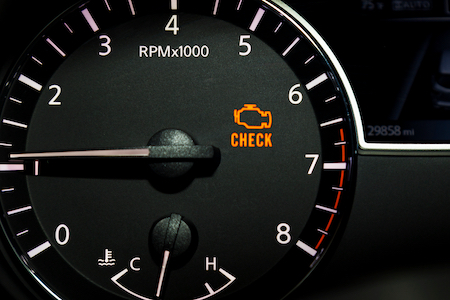
While you should take all of them seriously, one of the most crucial is the check engine light. It’s one of the most common to illuminate on the dashboard. It’s also one of the least specific. That’s because the check engine light is connected to so many different parts, and can be warning you of many different potential problems. It could be something as simple as a loose gas cap, or be more urgent in telling you there’s a loss of compression, which could quickly lead to engine failure. 

When this little light comes on, don’t ignore it. Schedule a diagnostic test and bring it in for inspection. This one simple test can use technology to get to the root of the problem, make the necessary changes, and get you back on the road in as little time as possible. 

Listen for changes in noises

Cars are built with a network of parts placed together to keep you safe as you drive each day. The first time you started up your car, you paid attention to the different sounds it made. You could feel the engine turn over. You could hear the gears as they clicked into place. All of these sounds became ingrained in your mind. It became your normal. 

Over time, as a vehicle begins to wear down, it can start creating sounds out of the ordinary. This isn’t something that happens quickly; in most cases, it’s a slow process that happens over time. 

It’s easy to ignore these noises. With so many other things going on in your daily life, why pay attention to small changes that are hard to hear? Yet these little noises are your warning sign of bigger problems. 

Do you hear a squeak, grinding sounds, a rattle, or a hum? Has it been intensifying over time? 

It’s time to schedule a diagnostic test. 

Before you buy a used car

Given how well cars are put together today, it sometimes makes sense to buy a used car instead of new. New cars are expensive; used cars can save you money. A new car built today can operate well for more than a decade, and provide several hundred thousand miles of driving. 

But how do you know if you’re sitting in a quality car or a lemon? While the condition of the car is a good representation of how well it was maintained, it isn’t everything. A diagnostic test can alert you to minor problems and help you choose wisely before putting money down on a used car. It’s an easy way to get third-party approval before you complete the transaction. 

Have you made diagnostic testing a part of your regular routine? 

Think of it as a checkup for your vehicle. It can help you understand how well your car is operating, allow you to make smaller repairs before they escalate in damage and price. 

Schedule your diagnostic test today. 

Filed Under: Car Maintenance Tagged With: Diagnostic Test

What Exhaust Problems Are Telling You About Your Car

July 3, 2021 by Denver Express Car Care

Sitting in traffic gives you a chance to notice potential problems with the cars around you. 

The car in front of you might have smoke pouring out of the tailpipe, with an odor that has you reaching to control the inside cabin’s airflow. 

Another car might have water leaking from the tailpipe, a trail forming as it drives along. 

A car drives by with sounds louder than usual. Maybe you hear a loud roaring sound when someone starts up a car nearby. 

Still another seems to operate perfectly. It quietly buzzes along the road, appearing to operate efficiently. 

Exhaust issues can quickly turn into problems. Priority in fixing them means you’ll stop potentially costly repair bills before they escalate, as well as reduce the risk of health problems if the gas enters your cabin. 

Before we talk about ways of fixing car exhaust problems, let’s learn a little more about the basics. 

How the exhaust system works

The purpose of a car’s exhaust system is to limit emissions, noise, and vibrations, and be a release system for combustion gases. It also improves performance of the engine, and fuel consumption. It’s made up of a series of components that stretch the length of your car, starting with the engine and running to the rear exhaust pipe. 

Combustion fumes of car exhaust pipe, The engine is not working properly.

Depending on the make and model of your vehicle, the design of the exhaust system may vary. However, they all work in a similar manner, to pull the harmful exhaust gases from the engine, which are produced as the engine operates. The gases produced include three toxic gases: carbon monoxide, nitrogen oxide, and nitrogen monoxide. 

The system starts with the manifold, which has the job of collecting exhaust fumes from the engine. It acts as a funnel to divert gases from cylinders in the engine through a single opening referred to as the front pipe. 

The gases then travel through a catalytic converter which removes the harmful elements and converts them to inert gases. They pass through a silencer or muffler, which reduces the sound waves and produces a quieter car. This is one of the biggest warning signs – if you hear a loud car, there’s a chance it has a problem with the exhaust system.  

The tailpipe is the exit point for exhaust fumes. This is what takes toxic fumes away from the vehicle, and keeps the passengers inside safe from harm. 

Common problems with an exhaust system

One of the most common problems within the exhaust system is corrosion of various components, including the front pipe. The silencer is also prone to corrosion damage, which is one of the biggest reasons you might experience more engine noise. 

Because the exhaust system stretches the length of the vehicle on the undercarriage, it can also be impacted if you hit something because of low clearance. There are many joints that can loosen, break, or cause vibrations over time, and can affect performance. If you hear a hissing noise, it might be a leak. 

Signs you have problems with the exhaust system

Like other parts of your vehicle, when something goes wrong in the exhaust system, it creates specific problems to alert you early, to give you time to fix the problem before it escalates. 

Decreased power and acceleration – one of the first issues you’ll notice with a compromised exhaust system is a decrease in performance of your engine. You won’t be able to accelerate well, and you won’t get the same power you’ve grown accustomed to while owning your car. 

Decreased fuel efficiency – when your vehicle isn’t performing well, you’ll also start to notice a decrease in fuel efficiency. Your car will have to work harder to achieve the same functions, which will take more fuel to accomplish the same goals. Watch your mileage numbers every time you fill up. Significant decreases in efficiency are your car’s way of telling you there’s a problem. 

A noisy engine – if any part of the exhaust system breaks down, it will impact the noise level of the engine. A faulty manifold gasket, for example, will cause an exhaust leak that sounds like a hissing or tapping sound. It will increase in decibel levels from a cold start, or as you accelerate. 

A burning smell – if the manifold gasket fails and begins to leak, the heat produced could impact the wiring or any of the many plastic pieces located underneath the hood. As the heat takes hold, they start to burn and it releases a distinct burning smell. 

A gas smell – if one of the exhaust pipes or tubes is damaged and starts to leak, it can allow a gas smell to circulate inside your vehicle while you drive. 

A loose or dragging exhaust pipe – if one or more of the brackets holding up the tailpipe are damaged or loosened, it can allow the exhaust pipe to hang or drag on the ground. When this happens, it’s important to fix it immediately, as it can quickly damage other parts of your vehicle through vibrations. If it falls off completely, it’s a danger to you and the other drivers around you. 

Keep your vehicle in good working condition through regular inspections

Although the exhaust system is vulnerable to both damage and corrosion, a well cared for vehicle will rarely have problems with the exhaust system with regular driving alone. Modern vehicles are designed for an exhaust system to last for 100,000 miles or longer with regular maintenance. Unless your car is damaged or you take your vehicle four-wheel driving, it should stay trouble-free for years. 

When you bring your car in for regular maintenance, we can use diagnostic tests to determine where minor problems exist. If we find a problem with the exhaust system, we can complete the required maintenance to bring the system back to good working condition, and get you on the road again in no time.  

Filed Under: Car Maintenance Tagged With: Car Exhaust Problems

Get Ready For Road Trip Driving – How To Avoid Common Car Problems

June 28, 2021 by Denver Express Car Care

You’ve made your plans, booked your reservations, bought a new swimsuit, and set out all the toys you want to bring with you. Get ready for road trip driving – you’re going to have a blast sharing time and memories with your family. 

But what if it all grinds to a halt a few hundred miles out of town? It’s hot. Your car has a problem. It’s now by the side of the road, while you’re scratching your head wondering what’s wrong. 

If you’re out in the middle of nowhere, waiting for a tow to the nearest station, it’s going to cost you both time and money. 

Could any of this have been changed before you left home? Could you avoid common car problems and avoid being stuck by the side of the road, with your car packed and ready to go, your family now at risk?

The answer is: Yes. 

Road trips often put your car under stress. You drive beyond your normal routine, have a loaded down car with more weight than you’re used to, driving in conditions outside the ordinary. And that can put your vehicle at risk, especially if you haven’t had it inspected lately. 

Statistics show that the global vehicle roadside assistance market is growing steadily at about 2 percent per year.  As vehicles continue to get older, they are at more risk for breaking down. 

These are the most common car problems that occur when people head out on the open road. 

Your car battery quits

On average, a car battery will last from two to five years. One of the most important factors in determining how long the car battery will last is the weather. All you have to do is watch the weather forecast to realize a heatwave has extended all across the US this summer. If you’re heading out on the open road, there’s a good chance you’ll drive through record-breaking heat. 

Happy tourist travelling in countryside

A running engine is already producing a significant amount of heat underneath the hood. Now add in record-breaking heat, and the fact that your vehicle is operating many hours a day at top speed. It can be a recipe perfect for making your car battery call it quits. 

If your car’s battery is more than a year old, it’s important to get it checked to ensure it’s properly charged. If there are any questions about its efficiency, it’s better to replace it before heading out on your journey. 

Your tire goes flat

What happens if you’re at a campsite, or a little hotel in the middle of nowhere, and you wake up to a flat tire? One recent report stated as many as 60 percent couldn’t change a tire. Add in heat, and pulling everything out of the car to find the spare, plus the possibility of not having the right tools for the job, and you’re looking at a situation that can go from bad to worse quickly. 

What’s more, heat can play havoc on your tires, especially if they aren’t in great shape. A worn tire has a much greater chance of causing a tire blowout. People don’t know how to recognize bald tires, tires with tread problems, or even if they are filled properly. They often rely on computerized data to warn them of a potential problem. Yet the last place you want a warning signal is on the open road. 

Your best bet is to have your tires checked before you head out on a road trip. Have the tires rotated and balanced, and ask a trusted mechanic how well they will perform in the coming weeks as you complete your trip. If they suggest replacement, listen to their advice. It’ll cost a lot less for you to make a well informed decision at home rather than a small town hundreds of miles from home. 

Your vehicle has brake trouble

Brakes are always under a lot of pressure to perform. Now throw in hours of driving each day, unfamiliar territory which means you’ll be using your brakes even more, plus the heat of the engine as it travels down the road in record-breaking heat. Yep, that can definitely impact the way your braking system performs. 

Now imagine a car filled to the bring with personal items and family members. This isn’t the time you want your braking system failing. 

Before you head out of town, have a reputable mechanic take a look at the braking system and make the necessary repairs to keep it working at its best. This includes an inspection of the brake pads, fluid, rotors, and drums. If something needs repair, get it replaced before you head out on your trip. 

Your transmission goes out

Your transmission system is what makes your car sail smoothly down the road. It’s what moves the power from the engine to the wheels. It includes a clutch, gearbox, prop shaft, differential, and drive shafts. 

While your transmission can go out unexpectedly, in most cases, it gives off warning signs long before you experience trouble. Have you experienced problems with your dashboard lights? Noises as you move your car between gears? Or maybe you’ve noticed a fluid leak when you pull out of a parking space? They are all signs your transmission is in trouble. 

Catch it early and one of the easiest ways to combat potential problems is with a transmission flush. By adding new fluid, it’ll keep the entire system operating well for thousands of miles into the future. 

Your engine dies

We’ve all seen drivers on the side of the road with their hoods up, smoke circling everywhere. Yep, that’s potential engine failure at its worst. If your engine dies, it’s the heart of your vehicle. Experience it on the road and you might be looking at an expensive repair bill, or even the possibility of investing in a new car. 

Pay attention to the check engine light. It’s one of the most common to illuminate because it’s a warning signal for so many things. If it illuminates before your trip, be sure to have a diagnostic test performed before you leave to pinpoint any potential problems. 

Fixing things early can ensure your road trip is a success from beginning to end, without having to worry about repair bills and downtime for a car that simply doesn’t work. 

Filed Under: Tips & Tricks Tagged With: Road Trip Driving

Tire Rotation – Should You Rotate Regularly, or Not?

June 24, 2021 by Denver Express Car Care

With every part of your vehicle, there’s a set of guidelines to ensure they remain in top condition. As they wear, there are also suggested plans of action for repair and replacement, to ensure you’re never stranded by the side of the road. 

One of the most common reasons you’ll find people pulled over along the highway is for a flat or blown tire. It’s one of the most common repairs, because your tires are constantly under pressure. 

When you purchase new tires, they promise you they’ll last 40,000, 50,000, even 60,000 miles or longer. The reality of that depends on how well you care for the tires during that time frame. 

No, you can’t put new tires on and forget about them. Tire rotation is a crucial part of giving tires their longest lifespan. 

What is tire rotation?

Tire rotation means periodically moving the tires to a different position on your vehicle. You should rotate them as recommended by your vehicle’s manufacturer, or about every 5,000 miles. To make the process easy, you might consider bringing your vehicle in for an oil change, and have the tires rotated at the same time. 

When a mechanic rotates your tires, it also gives them a chance to inspect them for other potential problems. They can check air pressure, look for visible signs of damage, and check their tread depth. If you’ve noticed anything unusual with the way your car drives, let your mechanic know. It’s a perfect time for them to inspect the tires in more detail to ensure a safe drive for you in the coming months. 

Why should tire rotation be a part of your regular routine? 

Tire rotation is important for several reasons. 

Banner For Car Wheel Business. 3d render and illustration. Wheel black background.

Potentially the biggest reason is to ensure you get the full mileage from your tires. By rotating them and putting tires in new positions every few thousand miles, it ensures the tread life is maximized. Tires on the front of a front wheel drive vehicle take a larger portion of the friction as you move down the road.  Each wheel could have its own little quirks about pressure and the way it handles on the road. Rotating them changes the way each tire connects, and gives them the best chance at an extended life. 

Also, even pressure on a tire ensures even tread wear throughout the life of a tire. Tread depth helps with traction on the road. Because we have a variety of weather conditions here in Colorado, connection is everything. With proper tread depth, you’ll ensure the safest levels of cornering and braking performance your vehicle can offer. That means a safer drive for you, your passengers, and the people around you. 

If you have an all-wheel drive car, keeping your tires in balance means less stress on the drivetrain. And that can amount to less maintenance over time. 

Is 5,000 miles suggested or mandatory?

We see all kinds of advice online that suggests mileage markers as a guideline instead of a rule. Ultimately, it’s about two things. 

First, you should always consult your owner’s manual for maintenance requirements. The people who built your vehicle have the best understanding of how to maintain it. When in doubt, heed their guidance and follow their advice. 

Second, Nothing is ever cast in stone. However, if you wish to keep your car in the best condition possible, and avoid potential problems that could impact your drive, erring on the side of being consistent with checkups will never hurt. 

Allowing a mechanic to inspect your vehicle regularly gives them a chance to find potential problems before they escalate. With tire rotation, they can determine any potential problem with your tire before it gives you trouble on the road. 

It reduces the cost of an expensive repair, giving you a chance to fix it before more goes wrong with your vehicle. 

Other reasons to rotate your tires regularly

While your tires are an expensive part of your vehicle, parts you’ll be replacing regularly as you drive, there are other reasons to inspect them regularly. 

While regular tire rotation can ensure your tires the longest life, it also ensures your safety. If tires don’t wear evenly, it can increase your risk of a blowout. At a minimum, it will impact the performance of how you drive, and can lower your gas mileage, making you spend more at the pump each time. 

Your tires are also largely responsible for braking. Think of your tires as a protection system for the wheels. If tires are overly worn, they can jar the wheels, impact the brakes, which can cause you problems in emergencies. Ever had to stop quickly and your brakes not perform the way you’re used to? It could be a problem with your tires. 

Especially on a front-wheel drive car, it uses gripping for traction. If the tires on the front are compromised, it can affect your car’s performance overall. 

What happens during tire rotation? 

Above all, tire rotation gives the mechanic a chance to inspect the tires and determine if there is a potential problem. This stops issues in their tracks. It also allows them to look at a variety of conditions, from proper inflation to how they are impacting the drivetrain. They also check tire safety, looking for things like overinflation, blistering, or cupping on your tires. 

In most cases, tire rotation involves moving the front tires to the rear, and the rear tires to the front. There are other possible patterns depending on what the professional finds, and according to your manufacturer’s guidelines. 

What’s your next step?

When was the last time you had your tires rotated? 

When was the last time you scheduled a maintenance visit with your local mechanic?

Regular inspections are the easiest way to keep your vehicle in good condition, create peak performance, and reduce the cost you’ll spend on repair bills when things go wrong. 

It’s your early warning protection system. 

Schedule your maintenance visit today. 

Filed Under: Car Maintenance, Tires Tagged With: Tire Rotation

Why Is My Car Overheating?

June 21, 2021 by Denver Express Car Care

The temperatures are climbing – 90, 95, 100. You’re stuck in traffic, and it’s hot!

You look over to the side of the road. Standing there is a person with the hood of their car propped open, smoke pouring out in all directions. Their car is overheating. 

Aren’t you glad it’s not you? 

Yet you stop to think about the probability of you being in the same situation. Your vehicle is several years old. You change the oil, put new tires on periodically. Maintenance? You bring it in when there seems to be a problem.  What more can you do?

Are you in a situation where your car might overheat? 

Why a car overheats

Your car’s engine can overheat for a variety of reasons. In most cases, it’s because something is wrong with the cooling system, and the heat isn’t able to escape the engine compartment. The source of the cooling system issue could be many things, including:

  • A cooling system leak
  • A faulty radiator
  • A broken water pump
  • A clogged coolant hose

No matter what causes an issue, allowing your engine to overheat in any way isn’t something you want to linger. The longer it goes unchecked, the more damage your engine can sustain. Until it eventually sustains permanent damage and can’t be repaired. 

What are the signs of an engine overheating?

Luckily, an engine doesn’t overheat without a few warning signs along the way. This is why it’s good to pay attention to your vehicle as it ages. If you see any of these warning signs, take steps to cool your engine before it overheats more. You may be able to reduce the risk of irreversible engine damage. Signs of overheating include:

Why Is My Car Overheating?

Steam – this is the one thing we all recognize when we see people pulled over to the side of the road. If you notice any amount of steam leaking from underneath the hood, pull over as quickly as you can. 

The engine temperature gauge increasing – the monitors on your dashboard are there to warn you of potential problems. If you see the temperature gauge increasing, spiking up towards “H” or to the red, it’s time to pull over and turn off your engine. (Temperature gauge icons change depending on the make and model of your car. Take the time to become familiar with your vehicle before you drive it.)

A strange smell coming from the engine compartment – if anything is leaking, it’s going to give off a smell outside of ordinary. Coolant has a very distinctive sweet smell, while oil dripping anywhere into the engine compartment would create a burnt smell. 

If you notice any of these symptoms of overheating, pull over as soon as you can, turn off your vehicle, and let the engine compartment cool down. 

The engine is overheating … now what?

When you first see warning signs of an engine overheating, time is of the essence. The faster you act, the greater chance you have of limiting damage, meaning less cost from repair bills. If you notice any of the signs from above, do these things. 

Turn off the air conditioner and crank up the heat.

You often see cars by the side of the road, smoke billowing from underneath the hood, in the middle of a heatwave. When you’re running your air conditioner at high for miles, it adds stress to the engine. If it’s weakened to begin with, it can be more than it can handle. To reduce the stress, turn the air off and dial it to maximum heat. This can help pull the heat away from the engine to keep it from overheating. This gives you a chance to find a safe place to pull over. 

Safety first

Immediately look for a safe place to pull over. This isn’t the time to put your safety at risk – cars are easier to replace. Put your car into park and shut off the car. This gives the engine a chance to cool. Keep the engine off for at least 15 minutes. You can also keep an eye on the temperature gauge, as it should move back to the normal range as the engine cools. 

Check your coolant levels

After your vehicle cools down, you can check to see if your coolant level is low. If it is, topping it off and adding more coolant can prevent overheating and allow you a chance to bring your vehicle in to get things fixed. Keep in mind that this step won’t do much good if the coolant hose is clogged, or if the problem stems from a broken fan or water pump. If you’re unsure, towing your vehicle might be the safest route. 

Restart your car

If your car appears to be back to normal, and you’ve chosen to drive it to a mechanic, start the car and watch all signs while you carefully drive your car to the repair shop. Keep an eye on the temperature gauge. If it rises again, pull over and consider having it towed. 

The key to lowering your repair risks is not to panic. If at all possible, pull over, turn the vehicle off, and don’t keep driving. This exacerbates the problem. 

Also, be aware that you should never open the hood immediately as soon as you pull over. That steam is hot! Opening it could put you at risk of burns and injuries. Let the temperature gauge settle before popping the hood. 

How to prevent your car from overheating

The easiest way to recover from an overheated vehicle is never to have it overheat in the first place. Taking care of your car ensures that it will always be there for you. 

This means scheduling regular inspections to allow a mechanic to inspect and test every system of your car. This can find minor problems that can snowball. Regular coolant flushes can keep fresh coolant inside your vehicle, and prevent leaks and blockages by finding them before they become a problem. 

You can also stay up to date on all other maintenance items, such as ensuring your radiator is inspected and in good shape, according to manufacturer’s guidelines. 

It’s far more beneficial and less expensive for checkups each season than allowing your car to show signs of a potential problem, and waiting until your car breaks down. 

Schedule your maintenance visit today. 

Filed Under: Engine Tagged With: Car Overheating

Drum Brakes

June 21, 2021 by Denver Express Car Care

Brakes that work properly are essential to your safety.  You want to carefully maintain your brakes.  In vehicles that are equipped with drum brakes, the brake components are housed inside a drum that rotates with the wheel.  When you step on the brake pedal, brake shoes push out against the inside of the drum, slowing the wheel.

Brake shoes will wear away with use from rubbing on the drum as you brake.  When it’s time to replace brake shoes, it’s a straight-forward repair.

If you hear squealing or grinding when you are braking, have your service adviser check them out.  He’ll have a technician perform a thorough brake inspection to see what needs to be done.  He’ll check for signs of brake problems and go over other brake components to see that they’re working properly.

He can tell you it it’s time to replace the shoes or if there are other issues with your drum brakes that should be addressed.  Some people ignore the warning signs and keep on driving long after the shoes are completely worn out.  When this happens, metal brake components will grind against the drum, damaging it enough that it must be resurfaced or replaced.

When you push on your brake pedal, the wheel cylinder is activated, and it pushes the shoes against the drum to slow the vehicle.  This cylinder, and various springs within the brake, can wear out affecting your ability to stop.  The worn components can be easily replaced.

The new shoes we put on your vehicle will restore your brakes to manufacturers’ specifications.  Or, we can install upgraded parts to increase your stopping power and reduce brake noise and brake dust.  We have several options to meet your braking requirements as well as your budget.

Taking care of your brakes keeps them working safely – and you can also prevent premature brake repairs from happening down the road.

Give us a call or come in and see us and let us know how we can help you.

Filed Under: Brake Service Tagged With: Drum Brakes

  • « Previous Page
  • 1
  • …
  • 41
  • 42
  • 43
  • 44
  • 45
  • …
  • 103
  • Next Page »

Express Car Care
4200 E. Evans Ave. Denver, CO (map)
Phone: (303) 691-2760
Located just southeast of the Colorado Light Rail station

Follow Us Today!

  • Facebook
  • RSS

Shop Hours

Monday: 8:00AM – 5:00PM
Tuesday: 8:00AM – 5:00PM
Wednesday: 8:00AM – 5:00PM
Thursday: 8:00AM – 5:00PM
Friday: 8:00AM – 5:00PM
Saturday: Closed – A note from the owner
Sunday: Closed

Last car oil change time  – 5:00PM

Click for the BBB Business Review of this Auto Repair & Service in Denver CO

Recent Articles

Tire Rotation: When to Do It—and the Signs You Shouldn’t Ignore

Tire rotation is one of the simplest ways to help your tires wear evenly, last longer, and keep your vehicle handling predictably. It is easy to put off, but a consistent rotation schedule can save … [Read More...]

  • Which Oil Is Right for Your Car?
  • Stop Burning Money at the Pump
  • Differential Service: Why It’s Crucial for Your Car’s Longevity and Performance
  • How to Catch a Transmission Problem Before It Leaves You Stranded
  • Why You Shouldn’t Wait to Address a Small Exhaust Leak

Search Our Site

Brakes Service

How to Keep Your Brakes Quiet, Responsive, and Safe

Everything You Need To Know About Replacing Your Brake Pads

How to Know If It’s Time to Replace Your Brake Rotors

Oil Change

Top Benefits of Getting Regular Oil Changes in Denver

Oil Change Specials in Denver: Save Money and Keep Your Car Running Right

Why Regular Oil Changes Are Crucial for Denver Drivers

Suspension

How to Know If Your Car Needs Suspension Repair in Denver’s Bumpy Roads

A Guide To Understanding Bushings on a Car

Tips for Preventing Wear and Tear on Your Car’s Suspension

Transmission Service

How to Catch a Transmission Problem Before It Leaves You Stranded

How Often Should You Service Your Transmission in Denver?

Transmission Trouble? Common Signs and When to Visit Our Denver Shop

Engine Service

Stop Burning Money at the Pump

Everything You Should Know About Your Vehicle’s Timing Belt

Is Your Car Hesitating During Acceleration?

Auto Tips & Tricks

How to Deal With Car Noises That Only Happen When You Turn

Top 5 Maintenance Tips for High-Mileage Vehicles

Why Tire Pressure Matters More Than You Think

"Denvers Best Auto Repair and Quick Lube" - Copyright © 2026 - 4200 E. Evans Ave. Denver, CO 303-691-2760