• Home
  • Denver Auto Repair Services
    • Full Service Oil Change
    • Expert Mechanics
      • Expert Honda Mechanics
      • Expert Toyota Mechanics
      • Expert Subaru Mechanics
    • Automatic Transmission
    • Fuel System Cleaning
    • Radiator Flush Service
    • Wiper Blades
    • Air Filter
    • Cabin Air Filter
    • Gearbox Service
    • Brake Repair
    • Clutch Repair
    • CV Boots
    • Tune-Up
    • Steering & Suspension
    • Tires
  • Auto Diagnostic
  • Contact Us
    • About Us
  • Shop Specials
  • Testimonials
  • Blog
  • 303-691-2760

Express Car Care of Denver

"Denver's Best Auto Repair and Quick Lube"

  • Brake Service
  • Car Maintenance
    • Heating-Air Conditioning
    • Suspension
    • Transmission
    • Engine
    • Tires
  • Oil Change
  • Tips & Tricks

Help! My Car Shifter Is Stuck In Park

June 25, 2020 by Denver Express Car Care

I was driving my car the other day, and pulled into a parking spot, expecting to run an errand and be on the road again in minutes. Three hours and one tow truck later, my best laid plans for a productive afternoon ground to a halt.

For most of us, driving is an automatic process. Unlock the doors. Start the engine. Put the shifter in reverse. Back out of the parking spot. Drive away. We repeat those actions again and again until we pull into the garage for the evening.

But what I experienced isn’t all that uncommon. Sometimes you’ll find the car shifter stuck in park, and no matter how much you turn your wheel or play with the shifter, it simply won’t budge.

What do you do if the car shifter is stuck in park?

Don’t force the shifter into action

Help! My Car Shifter Is Stuck In ParkWhen your gear shifter is stuck, the first rule of thumb is not to force it into action. To do so may cause further damage to your transmission.

There are a few different factors that could be in play. Some are more serious than others, so it’s important to evaluate the potential problems carefully. Start by asking yourself a couple of questions.

Is my car parked on an incline?

When you park on an incline, your car shifts as you put it into park and walk away. Sometimes, this causes excessive pressure on the parking pawl – a device that fits the automatic transmission in order for it to lock up the transmission. If this gets stuck, it may prevent the piece from retracting, sticking into gear. Pushing the car just a bit can sometimes relieve this action and allow you to continue to move on with your day. You can avoid this problem by applying the parking brake before letting your foot off the brake whenever you’re parked on an incline.

Do my brake lights work?

The brake switch and the shift interlock mechanism are interconnected. If you are stuck in park, have someone stand behind your vehicle and check your brake lights. Do they light up? If not, your brake switch may have come unplugged, disconnecting the sensor and making your parking connections inoperable.

Does your car have a manual shift interlock release?

Depending on the car you drive, some have what is known as a manual shift interlock release. Check around your automatic shifter for a plug, a button, or a small key slot. You can usually remove the cover by inserting a key or other small object into the slot. Pushing the button should allow you to shift out of park – just make sure you apply the brakes first as you might start rolling away. Just be aware that this might be a temporary fix. It’s still a good idea to get your car thoroughly checked to ensure it’s in good working condition.

Car still won’t shift? Now what?

If you’ve checked the above and still have a car that won’t shift, it might be time to call in a tow truck and bring it into our shop.

There are several other issues that may be at play, that may be preventing your car shifter from moving out of park.

Damaged safety mechanism

Every vehicle has a variety of safety mechanisms to keep you safe while around your car. When you start up your car, a safety feature prevents you from taking your car out of park until you press down on the brake pedal. This is called a shift interlock solenoid. Solenoids are metal cylinders that allow you to move the gearshift with ease. Every action on your vehicle triggers the next action. When you press down on the brake pedal, it signals the solenoid it’s okay to release the gearshift and allow you to move to your desired action. If this is damaged, you’ll be unable to get out of park. Replacing it is necessary to get on the road again.

Brake light switch failure

This is different from your brake light burning out. If the switch connecting your brake lights to the braking action fails, your gear shift will stick. The culprit is nothing more than a faulty switch. Replacing it will get you on the road once again.

Faulty shifter cable

If you’re driving an automatic, the transmission is fitted with a cable that links to the shifter. A manual transmission is equipped with two cables instead of one. These cables are at risk of breaking or being damaged, depending on how you drive. Slamming into gear, or frequent speed shifting can all cause wear and tear. A stretched cable won’t do the job effectively, and will eventually get stuck.

Limp mode

Sometimes your vehicle is unable to read the signals coming from the sensors. These sensors are what helps your vehicle determine when to switch gears. If one goes out, it triggers what is known as limp mode. This feature is designed to protect the transmission, giving a driver a chance to bring the car in for repair before damaging the transmission further. You won’t be able to pick up speed, so highway driving is out. You should only try this without getting a tow truck if you are close to the repair shop.

It might also be caused by weather

Let’s face it, Colorado can have extreme weather conditions in days, or even hours. If the weather drops below freezing, below zero, it can play havoc with your transmission. A frozen shift lock solenoid might be the cause of a car shifter stuck in park. Warming your car up may be an easy fix.

It’s time to let a mechanic get you back on the road

It’s easy to get upset, even angry when your car doesn’t work as designed. But in most cases, attempting to jam your car back into working condition may only cause more damage.

Carefully try out some of the mentioned techniques from above. If you can’t immediately put your finger on what the cause is, call in a tow truck and have one of our mechanics look for the cause.

You’ll save money in the long run by fixing the problem the right way without doing further damage to your car.

Is your car shifter stuck in park? What can we do to help you get on the road once again?

Filed Under: Car Maintenance Tagged With: Car Shifter Is Stuck In Park

Serpentine Belt

June 22, 2020 by Denver Express Car Care

Your serpentine belt is powered by the engine as it turns.  Your alternator, air conditioning compressor and power steering pump depend on your serpentine belt in order to run.  On some vehicles it also runs the water pump, radiator fan and power brakes.
If your serpentine belt breaks, your battery won’t last long.  If it runs your fan or water pump, your engine could overheat before your battery dies.  Steering and braking would also be affected.  To put it mildly, you could be up a creek without a paddle if your serpentine belt breaks.  Hopefully, we’ve made an impression about how important it is to replace your serpentine belt before it’s worn out.

Your owner’s manual will advise you when they recommend it’s best to replace your serpentine belt.  Your friendly and knowledgeable service adviser at Express Car Care can inspect the belt as well to determine if it’s close to failure.

You may have heard that it’s a good idea to check for cracks in your belt to see if it’s time for a new one.  However, with the newer belts, belt thickness is a more reliable indicator of the status.  At Express Car Care, we use a special tool to measure the depth of the grooves to see if a replacement is in order.

A worn belt can also cause problems even before it breaks.  It can slip out of place and put undue stress on the accessories it runs.

There’s a tensioner pulley on your engine that puts pressure on the belt to keep it at the right tension.  Since the spring on the tensioner wears out like any other part, we recommend replacing the tensioner pulley at the same time you switch out the serpentine belt.

Replacing your serpentine belt on schedule will save you from a dangerous breakdown.

Come in and let us help you keep your vehicle on the road.

Filed Under: Car Maintenance Tagged With: Serpentine Belt

Brakes 101: Does Slamming On The Brakes Hurt Your Car?

June 21, 2020 by Denver Express Car Care

Slamming on the brakes is something we all experience from time to time.

You’re driving along, thinking about work. Or school, or the kids, or what you’re doing this weekend, or what to pick up at the store …

At any given moment, there may be a dozen things running through your brain. But all of a sudden, you look up and see the car in front of you stop. Your only option is to slam on the brakes and hold on.

Then afterward, you take a deep breath and continue on your journey. You’re okay. But is your car?

What slamming on the brakes can do 

Cause an accident – the most damaging thing that can happen is you’re involved in an accident. Depending on how severe it is determines if you’ll drive away.

But even if you don’t connect with another car, you can still cause damage inside and out. If you lose control, you might swerve into a curb, damaging your wheel. The sudden forward motion can also throw your passengers around in the car. They can jerk their heads, bump windows and doors, even experience whiplash depending on the speed.

Reduce your gas mileage – when you’ve experienced a heart-pounding experience, the last thing you might think about is your gas mileage. But if you find yourself slamming on the brakes frequently, it could be a sign you’re an aggressive driver.

Brakes 101: Does Slamming On The Brakes Hurt Your Car?Following too close and tailing people means you move into reactive driving. Your decisions are always about reacting in quick bursts, depending on what the person in front of you is doing. There is no margin of error; you have to react quickly to keep your car under control.

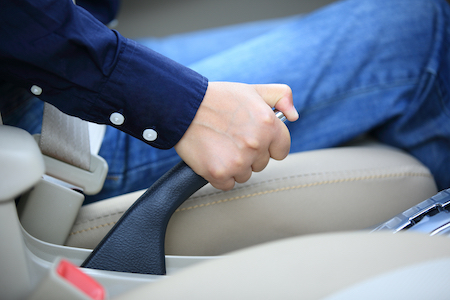
According to the Department of Energy, aggressive driving will lower your gas mileage by as much as 15 percent in the city, and up to 40 percent on the highway. Just think how much you’ll save if you back off and take a few extra minutes to get where you’re going.

Damage your tires – when you slam on the brakes, the most obvious part on your vehicle to sustain damage is your tires. You may hear the screech as they connect with the pavement. You may see smoke pouring up from under your car. You may smell a smell of burning rubber. That can’t be good for your tires.

And it isn’t. Sudden braking can cause flat spotting.

Flat spotting occurs when your wheels lock-up and your car skids. Because one small portion of your tires stay connected with the pavement while your car skids, it can wear that section as it remains on the pavement. That uneven wear causes a flat spot on the tread. While this might not damage your tires enough for replacement, it can shorten the lifespan of your tires.

Brake pad deterioration – brake pads are designed to connect with the rotors and create friction, which brings your vehicle to a stop. While they are designed to provide this action no matter what speed you’re going, slamming on the brakes places extra pressure on the connection. And that connection can cause your braking system to overheat.

As the braking system overheats, it can cause the brake pads to wear down faster, and allow stress to be placed on the rotors that may compromise the entire system. Even one incident of slamming on the brakes can put your entire braking system at risk, especially if your brake pads or rotors were already compromised.

How do you know if sudden stopping caused problems within your braking system? Pay attention to how your car drives. Do you have a shaky steering wheel, hear a squeaky sound as you apply the brakes again, or notice a brake light on your dashboard? All can be a sign that your braking system received more damage than you thought.

Damage to brake hoses – it’s not just the brake pads that can be impacted by a quick stop. As you push the brake pedal to the floor, brake fluid moves through the system, providing the pressure needed to bring the car to a stop.

The quick-action creates heat and pressure to move through the entire brake system, which can begin to cause damage to every part within the system. Small cracks and leaks can begin, especially if the hoses are old and were already internally weak.

Immediately following a quick stop, watch your vehicle carefully for a few days. Check under the car as you drive away – are there signs of brake fluid? Does your brake light flicker or turn on your dashboard? Watch for signs and contact one of our mechanics immediately to reduce the chances of further damage to your car.

Damage to the driveshaft – the drive shaft is what connects the engine to the wheels. This is what gives your vehicle the power to move and turn.

Think of the drive shaft as a “ball and socket” structure that allows movement and rotation. When you stop quickly, it can dislocate this structure, causing the joint to be slightly off askew.

Will your vehicle continue to drive? Possibly. Your car might not show any external damage. But over time, if this joint doesn’t perfectly mesh, it can begin to wear down and cause damage elsewhere in your car.

What you can do to prevent brake damage

It doesn’t take a rocket scientist to know that even small amounts of damage can cause your car to wear faster, and possibly be not as safe as it was when you drove off the lot.

Keeping your vehicle in good condition means you’ll get a longer life from it, as well as keep the occupants safer everywhere you drive.

Slamming on your brakes is an easy problem to solve. Yes, we all might have to do it from time to time. But if you find it’s a normal part of your commute, it’s telling you to tone down the aggressive driving behavior.

Be more aware of how you drive. Notice hazards that you meet regularly and do what you can to avoid being placed in those situations. Leave a few minutes earlier, no matter where you’re off to, and give yourself more time to get where you’re going.

You’ll enjoy the ride more. And your car will love you for it too.

Filed Under: Brake Repair, Brake Service Tagged With: Slamming On The Brakes

Trouble Driving? It Might Be Your Steering System

June 18, 2020 by Denver Express Car Care

Ever since we’ve used vehicles for getting around, we’ve had some form of steering system.

Sitting on top of a horse, you take in the reins, gently pulling one side or the other to go in that general direction.

If you’ve hopped on a sled and sailed down a hill, you’ve used your weight to control what direction you move.

Taking a slight turn off the path takes gentle movements. For more profound directional changes, you’ll need to put more force into your actions.

Your vehicle works in a similar manner.

Your car works using four different wheels for control. If you make a right-hand turn, both front wheels angle and lead into the turn.

That’s where the complexity of the steering system lies. Your car’s front wheels are interconnected to position correctly and turn at the appropriate angles to get you where you want to go.

Rack and pinion steering

The rack and pinion steering system is the most common type of steering on today’s vehicles.

It starts with a shaft extended down from the steering wheel. This shaft is connected to a round gear called a pinion.

The pinion sits in a metal rod, also known as the rack. It extends the full width of your car, connecting to both your right and left wheel.

As you move your steering wheel left and right, the pinion moves through the different notches on the rack. As this rod moves, it controls the movement of your wheels.

Not all rack and pinion steering systems are the same. If you’ve ever been in a vehicle that doesn’t handle as well as another, or noticed the turning radius of one car doesn’t match another, it’s because different vehicles have different steering ratios.

Why your steering system might be giving you trouble

Trouble Driving? It Might Be Your Steering SystemIf you’ve ever driven your car and tried to turn, only to have your steering wheel be almost impossible to turn, you might have been frustrated with the inaction. Steering wheel issues can be caused by one of several things.

A power steering pump failure

In order for your steering wheel to turn easily as you drive, a power steering pump ensures the proper amount of pressure is applied to complete the turn. If this mechanism stops working, your steering wheel becomes that much more difficult to turn. It might be a simple repair – a piece has broken loose. Or it could be the entire power steering pump needs to be replaced.

Power steering fluid issues

Like other parts of your car, the steering system uses fluid to create hydraulic pressure within the system. Over time, this fluid can dissipate, creating issues with your ability to turn. As a part of your regular maintenance plan, have your power steering fluid checked according to the manufacturer’s guidelines.

A problem with the steering rack

The rack isn’t one solid piece, but instead is a series of different shafts and joints that connect the steering system together. As these parts wear down through use, the stress can cause additional problems with the steering rack. When this happens, you might notice the steering capabilities shifting and stiffening up. It might not be an immediate problem with safety, but it is an indicator that a mechanic should check out as soon as possible.

Improper tire pressure

Your tires are the baseline for every system in your vehicle. If they aren’t filled to the proper levels, it can be difficult turning the steering wheel, especially if the tire pressure is low. Make checking your tire pressure a routine maintenance item, checking it once a month as you pull into the filling station.

Damage to the serpentine belt

The serpentine belt is one long, continuous belt used to control multiple devices within the engine compartment, including the power steering pump. Because this belt is used so often and in so many ways, it’s easy for it to wear down or become damaged. Depending on what damage occurs determines how it impacts the steering wheel. This is another reason why you should schedule regular maintenance visits with a mechanic to ensure your vehicle is running smoothly.

How steering and alignment meet

Your vehicle is a complex set of components, all working together to get you where you want to go. Sometimes it’s a little more difficult finding out where the true problem lies.

If you’ve checked out the different parts of your steering system, checked the pressure on your tires, and still notice a problem with the way your vehicle steers, it might be an alignment problem.

Proper steering and wheel alignment go hand in hand.

When your vehicle was initially manufactured, every part fit perfectly together. The wheels were in perfect alignment. All parts fit tightly and securely together. When you turned on your vehicle and started driving, the wheels were set to move straight and drive smoothly. That’s due to having a proper alignment designed to work in conjunction with the rest of your vehicle.

Unfortunately, as you drive, a variety of things can go wrong with your car. When you hit a pothole, the alignment begins to erode. Normal driving begins to wear down parts. Until eventually, your car no longer moves the way it used to.

Pay attention to how your car drives on a straight road. Does it veer to one side without adjusting the steering wheel? Have you noticed your steering wheel is crooked when you’re driving straight ahead? Do you notice your tires squealing without any other reason? Your car may be in need of an alignment.

Proper alignment means your car will move in the direction you steer it. It also means you’ll have more control as you run across daily driving situations, and keep you and your vehicle’s occupants safer as you navigate driving situations.

Are you having trouble driving? 

If you’ve noticed a change in the way your car drives, and it’s impacting the way your car steers into curves and corners, it might be time to check your steering system. Our technicians will inspect your car’s steering and suspension system to ensure everything is running its best. Schedule your maintenance visit with us today. 

Filed Under: Car Maintenance Tagged With: Steering System

What Your Parking Brake Is For

June 14, 2020 by Denver Express Car Care

There are a lot of parts to a car that we tend to take for granted. They’re there. We may use them from time to time. But we rarely think much about them.

That defines the parking brake perfectly.

The parking brake is designed for what its name suggests: to add extra security to your vehicle when it’s stopped, resting, and you’re away from the car. Of course, that’s not it’s only function. Which is why it is sometimes referred to as an emergency brake, e-brake, or hand brake too.

When you think parking brake, think safety. That’s what it’s designed for. But what is its true function?

Let’s start at the beginning.

How does a parking brake work?

A parking brake is a part of a car’s braking system. It connects to the rear brakes, and when engaged, engages the vehicle’s primary braking system with less force.

Looking back at history, the parking brake was an important part of the braking system. It was designed to give a driver another option to stop the car if, by chance, the hydraulic brakes fail while driving.

What Your Parking Brake Is ForOn modern cars, however, the parking brake is rarely needed in that circumstance. That could be why the name has morphed over time from the emergency brake to the parking brake.
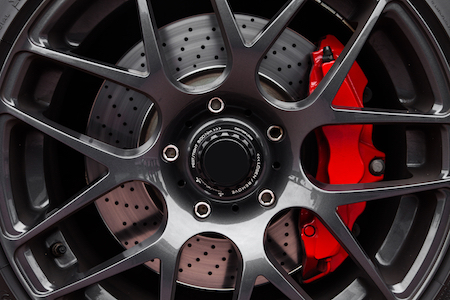
While your primary brakes operate through a technology-driven hydraulic system that gradually brings your car to a stop, the parking brake is designed to hold your car in place.

Today, we use the parking brake as an extra precaution for keeping our vehicles motionless while parked. This can be a big benefit when parked on steep inclines or declines.

As our vehicles get more sophisticated, the way systems operate is changing too. In general, there are four different types of parking brake systems. You can check your owner’s manual to confirm what comes equipped on your vehicle.

  • Stick lever – on older cars, you’ll find this located on the instrument panel
  • Center console lever – this is located between the two front seats
  • Foot pedal – this is located on the floor on the left side of the pedals
  • Push button – with newer cars, you’ll find the parking brake can be activated by a button located somewhere on the console

When should you use your parking brake?

As the name implies, a parking brake should be used whenever you park your car. Whether you drive with manual or automatic transmission, the parking brake adds extra security when you walk away from your car.

While some will tell you that parking brakes are more important when you park on an incline or decline, others will tell you it’s equally important to use it no matter where you place your vehicle. Your braking system uses a device that keeps your brakes locked and engaged whenever you put your car into park and walk away. However, failure can occur, and it’s not just the brakes that can cause the problem. If the gears aren’t engaged, it can cause your car to roll, even on what appears to be a flat surface. Engaging it each and every time you turn off your car ensures your car stays where you place it.

Here’s a tip for reducing the stress on the drive train. If you are parking on an incline or decline, leave your foot on the brake pedal as you move the gears to park position. Before you take your foot off the brake pedal, engage the parking brake too.

Have you ever let your foot off before engaging the parking brake? Have you felt your car jolt forward or backward as it adjusts to sitting on an incline? That action over time can damage both your transmission and braking systems. That means costly repairs before their time. Engaging the parking brake first prevents this action from occurring, protecting various systems throughout your vehicle.

When you’re ready to drive, start your engine, press down on the brake pedal to engage the brake system, release the parking brake, and then move into drive. Driving with your parking brake on can damage your vehicle.

Why is a parking brake important?

Get into the habit of using your parking brake every time you stop. It gives you added stability while your vehicle is inactive. While this can be important to keep your vehicle stable while resting on an incline, there are other circumstances where this is important too.

For example, if you’re sitting on a busy street or in a parking lot, and someone hits your vehicle, the parking brake decreases the chance of it rolling, increasing the likelihood of damage.

It also keeps your car in overall good working condition. If you don’t use parts, they start to wear. A parking brake that is rarely used can stiffen, rust, corrode, weaken, and wear down, meaning it’s less likely to work when you need it most.

Like every part of your car, it’s important to have the parking brake regularly inspected to ensure it’s in proper working condition.

Potential problems with your parking brake

While parking brakes rarely present problems, you may likely find yourself in one of these situations:

Parking brake frozen – ice can cause the parking brake to freeze when it’s really cold. Leaving the engine run for a few moments can start to heat your car and make the ice melt. If this doesn’t melt it, you can find which wheel it’s connected to, and melt the ice with a hairdryer.

Rust or corrosion – over time, corrosion or rust can infiltrate the mechanism inside the parking brake, making it harder to work until it freezes altogether. It might be difficult to diagnose without having it towed in. You can apply and release the brakes a few times to see if you can disengage it. Shift between reverse and drive to see if it loosens up the debris enough to take the parking brake off. If not, your only choice is to have it towed and repaired.

Engaged too hard – when people are in a hurry, they often make quick movements that can hurt more than help. That’s often the case with the parking brake. If you pull up too hard, it can jam it. Pulling with all your strength can get the brake shoe stuck in the wheel drum. It can stretch out the cable that runs from the wheel to the brake handle enough that makes it impossible to disengage. If you’ve tried and can’t release the parking brake, it may be time to seek help.

Whether you have a question about a specific problem, or just need an inspection and check up to keep you on the road safely, we can help.

How can we help you today? 

Filed Under: Brake Repair, Brake Service, Tips & Tricks Tagged With: Parking Brake

Help! My Brakes Smell Like They’re Burning

June 10, 2020 by Denver Express Car Care

Ah, a new car smell. Just saying it brings thoughts to mind.

How would you describe it? While it may be difficult to put into words, what you might not know is all the time and energy put into creating it. Yes, people really do pay attention to the way a new car smells.

While you can argue how natural those smells really are, the good news is they fade away. Drive it around for a short time, and your car will no longer smell. (At least a new car smell. If you leave a gym bag behind the seat for too long, all bets are off.)

But what about when you do notice something out of the ordinary? A smell that you can’t quite put your finger on, but you know it shouldn’t be there?

There’s nothing like the smell of burning brakes. Any time you get a whiff of a burning smell while driving your car, it’s cause for concern. Safety is your top concern.

Pull over. Assess the problem.

Depending on what’s causing the smell and what you were doing when the smell first started, different courses of action can be needed.

You have new brakes

When was the last time you had your brakes serviced? When were your brakes last replaced? If you have new parts on your braking system, it could be causing the burning smell. And that’s okay.

New brake pads are covered in resin. As your brake pads adjust and settle into the braking system, the material starts to burn off. This smell is a sign your brake system is working, getting stronger each time you work them.

Help! My Brakes Smell Like They’re BurningThis break-in period is different for every vehicle, for every set of brakes. With some, you may not notice it at all. With others, it can linger for days.
Give it a few days. You should start to sense the scent disappearing. If it’s still strong days later, bring it back in and one of our mechanics will check it out.

Your parking brake may be engaged

The parking brake is a system that some drivers use all the time, others, not so much. If you fall into the “once in a while” group, you might accidentally leave it engaged.

If you notice a burning smell soon after you start driving, check to ensure your parking brake isn’t engaged. The friction caused by driving while the parking brake is on can overheat over time, eventually causing damage.

Of course, the burning smell is only part of what you might sense. Other indications include trouble accelerating, a squealing noise, or even the sound of grinding. On some vehicles, you might even have a light emit on your dashboard panel.

Double check that the parking brake is off, to rule this out as a possible cause of the burning smell.

Your brakes are overheating

The third and most serious of potential problems is if your brakes are overheating.

Every time you use the brakes on your vehicle, they work by creating friction to slow down or come to a stop. While brake pads are designed to take normal wear, if you drive aggressively or overuse them, it can lead to your brakes overheating.

We see it quite regularly because of the Rocky Mountains. If you head up into the hills regularly, it can happen if you ride the brakes coming back down. Friction causes heat. By leaving the brake pads engaged for minutes at a time, the heat builds to a point where it overheats. That’s when the burning smell starts. Some people say it smells like carpet burning. In any case, it’s a scent you’ll pick up on immediately, and one you should pay attention to for safety.

The smell might be the first indication, but there are usually more. You may notice the brake pedal feeling a little spongy when you press down on it. You might notice a stream of smoke coming from under the car.

Your first course of action is to get to safety and stop. Give your brakes a chance to cool down while you consider your next actions.

How to avoid overheating

Especially here in Colorado, it’s important to have other ways to control your vehicle.

First, drive cautiously, not aggressively, leaving plenty of space all around you. If you’re not following close behind another car, you’ll have more opportunity to apply light pressure instead of pouncing on the brake pedal. It’ll also prevent you from riding the brakes, using them consistently throughout your drive.

Next, try downshifting instead. Even automatic engines have multiple gears for this reason. Instead of riding the brakes, especially coming down a steep hill, downshift and let the engine do the work instead.

Finally, have a mechanic as a friend. If you schedule regular checkups for your vehicle, you’ll stay on top of potential problems. You’ll learn if your brakes are wearing down, or discover how much tread is left on your tires. You’ll take the guesswork out of staying on top of what work needs to be done to your car.

Is it all brake pads? Can it be just one?

It’s also important to keep in mind that brake pads can sometimes wear at different levels. Your front end and read brake pads naturally will wear differently.

Even then, as your vehicle is moving forward, this momentum tends to put more strain on the front brakes. This often causes them to wear quicker than the rear brakes.

However, you’ll sometimes find brakes wearing on one side more than the other.

It’s the brake caliper’s job to push brake pads against the rotors. This is what creates the friction, causing your vehicle to stop. If the caliper sticks, meaning it stays pressed against the rotor, it will wear faster than usual.

Sometimes rotors wear unevenly, which is known as disc thickness variation. It can wear due to sticking calipers, or dirt getting trapped between the pad and the rotor. Pouncing on the brake pedal frequently can also cause a problem.

It might even be a misalignment in the brake pads. If they bounce, or simply not installed right, it can also lead to problems.

Take action – have your brake system checked

Smells are designed to give you advance warning of a problem.

If you notice a distinct smell to alert you to burning brakes, safety is your first concern. Give us a call soon after. We can get your car in, make necessary repairs, and have you back on the road again in no time.

Filed Under: Brake Repair, Brake Service Tagged With: Burning Brakes

Check Engine Light

June 8, 2020 by Denver Express Car Care

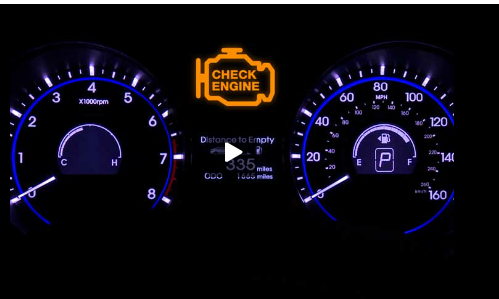
When your check engine light comes on, you may be torn between utter panic and just wanting to ignore it and hope it goes away.  That’s perfectly understandable.  That same check engine light could come on for anything from a serious engine or transmission problem all the way down to a loose gas cap.
There’s a very common misconception that the trouble codes stored in your engine computer will specifically identify a problem when the check engine light comes on.  This isn’t the case, it’s more like pointing to the symptoms of the problem.

Think of it like taking your temperature.  Say it’s 101.  Your heat sensor (the thermometer) tells you that your temperature is out of the normal range, but it doesn’t tell you why you have a fever.  You’ll need more information, more tests before you can diagnose why you have a fever.  A check engine light works in the same way.

For any given trouble code, there could be several causes.  So, your trained technician takes the trouble code as a starting point and begins a diagnostic process to determine the cause of the problem.  Sadly, some problems take longer to solve than others.

When your engine management system logs a problem and illuminates the check engine light, your service technician will plug in a scanner, download the trouble codes and go to work tracing the cause of the problem.

That’s only the first step.  This is when your technicians training, equipment, databases and skill get put to work diagnosing the problem and deciding the best way to fix it.

If your check engine light is flashing it means that the problem could lead to serious damage, don’t ignore it.  You should get to the service center as soon as possible and get the problem solved.  If it’s on but not flashing, you have some time to get your vehicle in at your convenience.

Come in and see us or give us a call if you have any questions.

Filed Under: Car Maintenance Tagged With: Check engine light

It’s Pothole Season, Time For New Shocks and Struts

June 7, 2020 by Denver Express Car Care

There’s a joke that circulates every year about this time all across the Front Range.

There are four seasons: fall, winter, spring, and road repair.

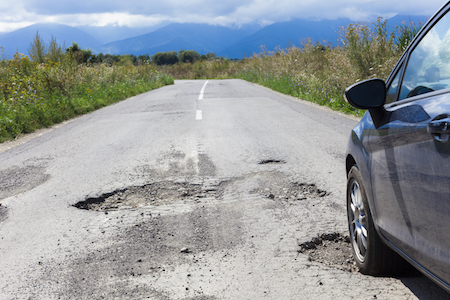
You’re nodding your head right now, because while it’s meant to be humorous, it’s kind of true. Some of the potholes around town can do severe damage if you hit them full force. They are no longer potholes, some seem like sinkholes ready to swallow you up.

If you’ve ever hit one, you might duck and cringe from the impact. What is it doing to your car? Good question.

The answer is: the damage might be worse than you thought.

Every time you hit a pothole, the impact jolts through the tires, wheels, shocks, and struts, vibrating throughout the different systems of your car.

While it’s pretty obvious if it does enough damage to blow a tire or bend a wheel, internal damage is harder to see. So it wears over time. And if you don’t fix it soon, the damage continues to mount, taking the cost of your repair bill right along with it.

Before we get into whether you need new shocks and struts, let’s look at what they do for your vehicle.

What shocks and struts do

A shock absorber does one thing: it keeps your vehicle from bouncing when you drive.

It’s Pothole Season, Time For New Shocks and StrutsStruts are built into the structure of your suspension system. They are made from many different parts, including the coil spring and shock absorber, and affect your vehicle’s steering and alignment.
When people talk about a vehicle’s suspension, then often use the phrase “shocks and struts.” It’s important to note that not all cars have both. Shocks are part of the overall suspension, whereas a strut is a complete assembly. Every wheel will have one or the other, not both.

However, your car might have different assemblies on the front and back wheels – struts on the front, and shocks on the back, for example. To find out what you have, you can check your owner’s manual, or learn more about it the next time you bring your vehicle in for a check up.

Signs you might need new shocks and struts

No matter what assembly you have on your vehicle, ensuring your shocks and struts are in good working condition is crucial. How do you know if you need new shocks and struts?

Performance decreases – you start noticing little things as you drive. Your vehicle seems more bouncy. It seems rough even when you’re on a smooth road. It tends to roll on every turn you make.

Nose dives – nose diving happens when you apply the brakes and the front end of your car bounces low to the ground. If you don’t fix it right away, it can escalate to having momentary loss of steering, or need an extended amount of time for braking. This comes from the shocks or struts not having enough power to handle the weight of your vehicle.

Noises – if your vehicle starts reminding you of an old bed mattress, squeaking through bumps and potholes, or with every movement you make getting in and out of your vehicle, it might be your shocks or struts.

Body roll – this is a term used to describe the feeling a vehicle has going into a turn. Even with the slightest turn, the vehicle leans into it, sometimes causing control issues.

Squats – when you take off from a stop sign or traffic light, the momentum of the vehicle falls to the back wheels, causing the front end to lurch up. It causes hesitation in the forward movement of your vehicle.

Visible damage – like every part on your vehicle, it’s important to do a visual inspection from time to time to ensure your vehicle is in good working condition. Do you notice a problem with the wheels – some shocks or struts are visible in the wheel well. Do you notice a pool of liquid near the tire – hydraulic fluid can leak from a damaged shock or strut.

It might not be the shocks and struts at all

Potholes can do a lot of damage to your suspension system. Sometimes it doesn’t impact your shocks and struts, but instead affects wheel alignment. How can you tell the difference?

The tires aren’t wearing evenly – do a visible inspection of your tire tread from time to time. If you see a portion of the tread that is wearing faster than other areas, it’s most likely your wheels are out of alignment. You may also have a worn or bent suspension or steering part, which can put everything out of balance.

The vehicle pulls to one side or another while driving – if you’ve ever felt the car pull one way or another while driving on a straight road, that’s a sign of a wheel alignment problem. You’ll have to fight to keep the steering wheel in one position, or it will drift from side to side.

The front end shakes – sometimes you notice a vibration as you’re driving. If you notice your front end shaking, it may be a whole host of problems, including an issue with wheel alignment. Getting your car checked as soon as possible is your best bet.

Your steering wheel is crooked – when you’re driving on a straight stretch of road, your steering wheel should point forward and be pointing straight ahead. If it’s crooked while you’re moving straight, it’s a dead giveaway that you have a problem with wheel alignment.

This is a safety issue

When your vehicle isn’t working as it should, it’s a safety issue. That means you’re putting you, your passengers, and others around you at risk.

If you noticed any of the above when you last took your car out for a drive, don’t delay. Even one small pothole can cause enough damage to impact the safety of your car.

Schedule your appointment today, and we’ll find the root of the problem, and get you back on the road in no time.

Filed Under: Suspension Tagged With: New Shocks and Struts

These 6 Things Might Be Draining Your Car Battery

June 3, 2020 by Denver Express Car Care

Electronics are a part of our life. If we grab a remote, we expect it to work. If we push a button, the device should pop into action. And when we turn the key, the engine should start.

But what if it doesn’t?

Your car battery is something you probably take for granted. When you turn the key or punch the button, you expect things to start. Your mind is filled with daily activities. Nowhere in there is the thought of being stranded.

What things might be draining your car battery?

What a car battery does

Before we talk about why your car battery might not be working, it’s important to understand how it does.

Most vehicles today use a lead-acid SLI battery, which creates a chemical reaction to move into action. SLI – starting, lighting, and ignition – works by providing a short blast of energy out to various parts of your car. It triggers energy into the engine to get it started, before transferring it over to the alternator to take over the power supply while you drive. It also sends energy to accessories such as the radio and headlights,

What can drain a car battery?

A dead car battery can be frustrating. It can make you late for an important meeting, or strand you away from home.

These 6 Things Might Be Draining Your Car BatteryBut as much as that can stop you in your tracks, it’s even more annoying knowing it could have been avoided.

Car batteries rarely fail without advanced warning. There are certain actions you take with your vehicle that can lead to draining your car battery.

Parasitic battery drain

Your vehicle’s battery is used for two things: starting the engine and sending power to your car’s accessories. It would be annoying to have to reset the clock or reset your radio channels every time you got into your vehicle. Car batteries are designed with a parasitic battery drain that keeps sending power out even after the engine is turned off. While that’s a good thing for low drainers like your clock, headlamps and interior lights take more power. If you leave them on overnight, they can be enough to drain your battery, especially if it was weak to begin with. The best way to avoid this is to ensure your lights are all turned off, and your doors are closed before you walk away.

Extreme heat or cold

While most people would never consider Colorado to have extreme temperatures, the few days it does drop below zero or move above 100 can take its toll. Especially if your battery is nearing the end of its life. If your battery had a hard time cranking the engine over on the coldest day of the year, be prepared this summer as the temperature climb. Consider the age of your battery. It might make sense to change the battery out now before it leaves you stranded.

Loose or corroded connections

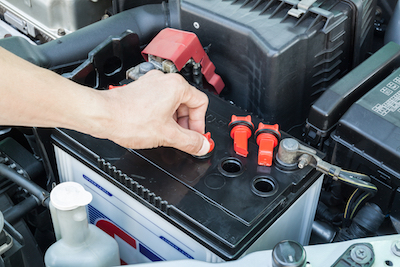
Your vehicle’s battery has both positive and negative terminals. Sometimes these connections can wiggle loose from the stress of driving every day. Because fluids jostle around, the terminals may also become corroded. If either of these occurs, your battery can’t properly transmit power to the rest of your vehicle. That’s why it’s important to give your car a thorough maintenance check regularly, and clean and repair anything that isn’t working right. Creating a relationship with one of our mechanics is a great way to keep your maintenance visits on track.

Short trips

How many miles do you drive per day? Is it a mile to the store, another mile to pick up the kids, followed by a mile back home? While it’s great to be a part of a community, and have everything you need a short drive from home, those quick trips can also wreak havoc on your car battery. The battery fires up the engine, but it’s the alternator that helps the battery stay charged. If it doesn’t get the chance to circulate effectively while you drive, it can shorten the battery life.

An aging battery

Like every part on your vehicle, a car battery will only last so long. While a manufacturer might promise up to five years, two to three is more the target for most car batteries. Of course, it depends on how you drive and where you live. Short trips will kill a battery faster than steady road trips. Even leaving your car sitting without starting for weeks at a time can slowly cause your battery to fail. Pay attention to when you install it. The closer you get to end of life, the more you should watch for potential problems.

Failing alternator

Sometimes it’s not your battery that’s failing; it’s the alternator. Your battery is a burst of energy sent out to get things started on your car. But once it’s moving, the alternator keeps everything running. If you stop at a traffic light and things start fading or dying, it’s a sign of problems with your alternator.

What to consider when buying a new battery

Car batteries are designed to last anywhere from two to five years. While you might see car batteries sitting in your favorite big box store, it still takes a little knowledge to buy the right one and install it without a problem. Car batteries are determined by:

Size – car batteries are divided into several groups, which indicate the length, width, and height of the battery. The one your vehicle needs is determined by the space allotted for it. Check your owner’s manual to find out what group your vehicle needs.

Freshness – yes, there is an expiration date on a car battery. Especially for batteries that aren’t as popular as others, it can sit on the shelf indefinitely. Why put in a battery that already has six months or more in age?

Power requirement – this refers to the cold cranking amps (CCA) and cranking amps (CA). This is the amount of energy required to start the battery in extreme conditions.

Warranties – the car batteries with the longest warranties are also some of the more popular manufacturers in the marketplace. Don’t go with obscurity to save a little money. This is one area you should stick with popularity.

Battery life – stop by one of our service bays, we’re happy to check the battery life of your current battery. This will help you determine if it’s time for a new one, or a little maintenance can keep it going.

Who can you trust?

We pride ourselves on being a family-operated business that’s been in your community since 2000. We work here. We live here. And we’re here for you, when you need us most.

Have a question about your car battery? We’re just a phone call away.

Filed Under: Tips & Tricks Tagged With: Draining Car Battery

Car Repair Tips When You Aren’t Driving Much

May 29, 2020 by Denver Express Car Care

Take a look at how many miles you’ve driven this year. Does the number shock you?

While the number varies based on the age of the driver, the US Department of Transportation states that, on average, people drive just over 13,000 miles per year. And that was before the COVID-19 set in. Thanks to staying in place several months in 2020, many of us are driving a lot less than before.

But it’s not just the pandemic that lowers the miles we put on our vehicles. Working from home may be our new norm. Maybe you’ve shifted your goals, and will hang closer to home, more time spent on family activities inside your house. Vacations? The only road trip you’re planning is to the local park.

How does that impact your car?

Whether it moves or not, it still needs maintenance. Car repair tips may change based on mileage, but you still have to put in the work. Here’s how.

Keeping your battery charged

While some parts are designed well enough to sit without problem, your car battery needs regular interaction to keep it fully charged. Car batteries aren’t designed like the ones you put in your remotes, or in your phone. Instead, they discharge over time.

The best way to keep it charged and fully operational is to drive your car at regular intervals. But there isn’t a “step by step” plan for how often that is. As a battery ages, it needs more frequent charging. Temperature changes can also impact the outcome.Car Repair Tips When You Aren’t Driving Much

While there isn’t a standard for every car, a lot of experts recommend getting in and driving at least once per week. Starting your car and letting it idle for a few minutes isn’t a solution either. The battery needs the stop and go action you only get from driving. At the very least, drive around the block a few times.

Keeping all systems going

If you don’t start up the battery regularly, it loses its charge. Likewise, if you don’t drive regularly, the various systems in your vehicle won’t get the proper lubrication they need to operate best.

If oil starts to settle, for example, the fluid may start separating, seals and belts can begin to dry out. When you do start your car up again, minor damage can quickly grow into more, and escalate the necessity and cost of your repair bills.

Taking your car out regularly ensures all fluids move into action. They keep all moving parts working as they should. That’s one of the reasons idling isn’t recommended; the other systems can’t function while idling.

Even your tires can be impacted

Tires are made of rubber. They’re designed for movement. As a car sits, all of that weight can add pressure to the tire, causing flat spots to develop. Think of a wheel that isn’t perfectly round; it doesn’t operate correctly. With too many flat spots in place, the only course of action is to throw it out. And that can be a costly expense.

Be mindful of where you park

Not all of us are lucky enough to have a garage to park in. And while sitting on the road may work for short timeframes, be especially mindful of where you park if your car will sit for a while.

Parking on soft locations like grass or dirt can allow moisture to sit in the undercarriage of your car. This can cause a host of problems, including rust on some of the parts.

Parking under trees can allow sap, needles, bird droppings, or fruit to leak down onto the paint, being a nightmare to remove. And in some cases, remove the paint altogether.

Keeping your car filled

If you’re not driving, why top off your tank? There are two reasons to do so.

First, having a full tank prevents moisture from accumulating inside the tank. Fuel that is compromised by moisture can start to break down fuel particles. It can also allow microbial growth to set in, which can damage the entire fuel line.

Second, it also stops gasoline fumes from building to hazardous levels. As your fuel system ages, tiny leaks can start to form. Leaving your car set can allow fumes to settle in rather than dissipate while driving.

Keep your car clean

That may sound counterintuitive since you aren’t driving. But a dirty car attracts more problems. Inside and out.

Start with the interior. Clean out the trash and ensure food and crumbs are nowhere to be seen. Rodents and other small animals are looking for places to nest. Why not choose a warm place where food is already in place?

A clean exterior will also protect your paint from unwanted marks and stains. Chemicals leftover from our harsh winter streets can rust and damage the undercarriage. And depending on what’s sitting on your paint, it can quickly eat through to protective coating.

Stick with your normal maintenance schedule

Even though you might not be putting thousands of miles on your vehicle each year, it’s still important to stick with a preventative maintenance schedule. That means changing the oil every few months. Checking hoses and belts to ensure they are in good condition. Checking tire pressure, and ensuring they still have ample tread. Ensuring your brake system works well.

Check your car before you start driving more frequently

Your car has been sitting for several months. You get in and head out of town on a road trip. What could go wrong?

A lot, actually. If a car sits and you don’t pay attention to it, problems can arise just out of sight. They may work, until they don’t. Do you really want to be on the road, miles from town?

Your best course of action when you are ready to return to a normal level of driving is to give your car a thorough check-up and ensure everything is working at its best. Ease back into driving. Take it out for a few miles, watch, smell, and listen.

In most cases, potential problems will surface quickly. If you’re careful at watching for them, you’ll notice them and be able to repair them before they grow into something bigger.

Filed Under: Tips & Tricks Tagged With: Car Repair Tips

  • « Previous Page
  • 1
  • …
  • 53
  • 54
  • 55
  • 56
  • 57
  • …
  • 103
  • Next Page »

Express Car Care
4200 E. Evans Ave. Denver, CO (map)
Phone: (303) 691-2760
Located just southeast of the Colorado Light Rail station

Follow Us Today!

  • Facebook
  • RSS

Shop Hours

Monday: 8:00AM – 5:00PM
Tuesday: 8:00AM – 5:00PM
Wednesday: 8:00AM – 5:00PM
Thursday: 8:00AM – 5:00PM
Friday: 8:00AM – 5:00PM
Saturday: Closed – A note from the owner
Sunday: Closed

Last car oil change time  – 5:00PM

Click for the BBB Business Review of this Auto Repair & Service in Denver CO

Recent Articles

Tire Rotation: When to Do It—and the Signs You Shouldn’t Ignore

Tire rotation is one of the simplest ways to help your tires wear evenly, last longer, and keep your vehicle handling predictably. It is easy to put off, but a consistent rotation schedule can save … [Read More...]

  • Which Oil Is Right for Your Car?
  • Stop Burning Money at the Pump
  • Differential Service: Why It’s Crucial for Your Car’s Longevity and Performance
  • How to Catch a Transmission Problem Before It Leaves You Stranded
  • Why You Shouldn’t Wait to Address a Small Exhaust Leak

Search Our Site

Brakes Service

How to Keep Your Brakes Quiet, Responsive, and Safe

Everything You Need To Know About Replacing Your Brake Pads

How to Know If It’s Time to Replace Your Brake Rotors

Oil Change

Top Benefits of Getting Regular Oil Changes in Denver

Oil Change Specials in Denver: Save Money and Keep Your Car Running Right

Why Regular Oil Changes Are Crucial for Denver Drivers

Suspension

How to Know If Your Car Needs Suspension Repair in Denver’s Bumpy Roads

A Guide To Understanding Bushings on a Car

Tips for Preventing Wear and Tear on Your Car’s Suspension

Transmission Service

How to Catch a Transmission Problem Before It Leaves You Stranded

How Often Should You Service Your Transmission in Denver?

Transmission Trouble? Common Signs and When to Visit Our Denver Shop

Engine Service

Stop Burning Money at the Pump

Everything You Should Know About Your Vehicle’s Timing Belt

Is Your Car Hesitating During Acceleration?

Auto Tips & Tricks

How to Deal With Car Noises That Only Happen When You Turn

Top 5 Maintenance Tips for High-Mileage Vehicles

Why Tire Pressure Matters More Than You Think

"Denvers Best Auto Repair and Quick Lube" - Copyright © 2026 - 4200 E. Evans Ave. Denver, CO 303-691-2760