
• Home
  • Denver Auto Repair Services | Express Car Care
    • Full Service Oil Change
    • Expert Mechanics
      • Expert Honda Mechanics
      • Expert Toyota Mechanics
      • Expert Subaru Mechanics
    • Automatic Transmission
    • Fuel System Cleaning
    • Radiator Flush Service
    • Wiper Blades
    • Air Filter
    • Cabin Air Filter
    • Gearbox Service
    • Brake Repair
    • Clutch Repair
    • CV Boots
    • Tune-Up
    • Steering & Suspension
    • Tires
  • Auto Diagnostic
  • Contact Us
    • About Us
  • Shop Specials
  • Testimonials
  • Blog
  • 303-691-2760

Express Car Care of Denver

"Denver's Best Auto Repair and Quick Lube"

  • Brake Service
  • Car Maintenance
    • Heating-Air Conditioning
    • Suspension
    • Transmission
    • Engine
    • Tires
  • Oil Change
  • Tips & Tricks

Your Nose Knows Gasoline

February 15, 2021 by Denver Express Car Care

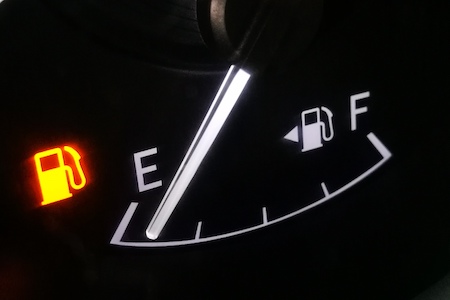
Each time we fuel up our vehicles, we get a little whiff of gasoline, so your nose knows the smell.  There shouldn’t be any gasoline smell in or around your vehicle when you are away from the gas station.  When you do smell gasoline away from the gas pump, the causes can range from something simple to something that could be very dangerous.

Let’s begin with the simple causes.  It could be a loose or faulty gas cap, or you might be missing one entirely.  You may also have a leak in the fuel tank vent hose.  These are relatively straightforward things to repair.  By the way, because your vehicle has fans that draw in outside air, you may be able to smell these outside gasoline leaks inside the cabin.

Here are some other possible sources of a gasoline smell.  You could have a leak in your fuel tank, and these are more common than you might think.  Fuel tanks can rot or get punctures by road debris.  The tank can be fixed or replaced.

The fuel lines can also deteriorate or be damaged by road debris.  Vehicles with fuel injectors have high pressure in their fuel lines, so any small holes or leaks can allow vaporized gasoline to escape, sometimes near hot engine parts.  Obviously, this is something that a technician should repair as soon as possible.

Another couple of causes of a gasoline smell?  A leak near a fuel injector can also allow small amounts of gasoline to escape.  A technician can replace the seals or O-rings if they have deteriorated.  Also, you could have gasoline leaking out of your vehicle’s charcoal canister, which is a device that prevents evaporating gasoline vapors inside your fuel tank from venting out to the atmosphere.  This will often cause the Check Engine Light to illuminate.

Gasoline fumes and leaks can be dangerous for a couple of reasons; they could be a fire hazard and inhaling fumes can cause health problems.  It’s always wise to get fuel leaks checked out at your auto repair center as soon as possible.
Filed Under: Car Maintenance, Tips & Tricks Tagged With: Your Nose Knows Gasoline

How To Improve The Gas Mileage Of Your Pickup Truck

February 10, 2021 by Denver Express Car Care

When gas prices are low, how much you spend filling up your tank each week might not be of concern. But the higher the prices climb, the more aware you are of the vehicle you drive.

On average, today’s passenger vehicles get just over 24 miles per gallon. For light trucks, that number falls to 17.5.

That can be a big deal if you drive hundreds of miles each week. It can cut into your budget very quickly.

Yet a vehicle comes predisposed with limits to the mileage it can achieve. You can’t change that. Right?

Turns out, you can. If you’re looking for ways to improve the gas mileage of your pickup truck, read on.

Regular maintenance is key

Every bump you hit in the road, every mile you put on your pickup truck, every trip you take, adds to the wear and tear of your vehicle. Regular maintenance is the best way to counter problems that arise over time.

This includes getting the oil changed according to manufacturer’s guidelines. It also includes ensuring your tires are inflated to proper levels, and maintaining them so you aren’t driving on under-inflated or poor quality tires.

Check your owner’s manual for the ideal pressure for each tire. It’s also listed on the panel inside the driver’s door. Do not go beyond the maximum pressure, and ensure it doesn’t fall below minimum pressure as you drive. Especially in Colorado’s harsh driving conditions, both can put you at risk for blow-outs and flat tires.

Be aware of aerodynamics

How To Improve The Gas Mileage Of Your Pickup TruckPickup trucks are meant to haul. That’s why you bought your truck. It’s a workhorse, designed to help you do your job well.

Yet as you’re driving around each day, be aware of how you carry different loads. Would a bed cover help protect what’s inside? It might also provide better aerodynamics as you sail down the highway. Can you avoid roof racks and large items challenging the way you drive? Every item that changes the dynamics of your vehicle has the potential to reduce the way your truck moves.

Stop aggressive driving behavior

Traffic on Colorado roads can be crazy at times. How you approach each drive determines how many miles per gallon you’ll get with each tank of gas. Aggressive behavior means you consistently stop and go, apply the brakes, and waste gas.

Back off the person in front of you and learn to slow down and take it easy. Tailgating won’t get you where you’re going any faster, and it puts you and the cars around you at risk. When you can, use your cruise control to help remain at a constant speed. And slow down and respect speed limits, they are designed to help you achieve the highest gas mileage possible. Plus, it keeps your car safer, which means less risk of accidents and potential servicing issues.

Use the right gas

When manufacturers designed your pickup, they did so with optimal performance in mind. They build systems to accept certain types of oil, and specific types of gas. Don’t skimp on which fluids you select to put into your truck.

If the manufacturer suggests regular, it’s for a reason. Don’t add premium, assuming it will be better for your vehicle. If you select a reputable brand of gas rather than finding the cheapest in the city, you’re also ensuring the gas is high quality and contains additives designed to keep your truck running well.

Stop hauling extras

It’s a pickup truck; why not throw a few extra things in the back? A few sandbags for weight. A toolbox just in case. Pretty soon, you’ve added dozens of additional pounds to your vehicle, which ultimately takes more energy to move around town.

Your pickup came with suggested gas mileage ratings based on how it performs as designed. The more weight you add to it, especially unevenly as things are scattered around your truck, it can throw those averages off. Want an easy way to improve your gas mileage? Keep your truck bed clean.

Stop idling 

Most drivers would be amazed at the amount of time they spend idling in their vehicles. You sit on the highway in rush hour, you sit multiple cars deep, waiting for drive-thru service. Instead of spending minutes every day wasting your gas in this manner, pull into a parking spot and go inside instead. In many cases, you’ll be in and out faster, and you’ll save on gasoline in the process.

Plan your route

How many trips, on average, do you take each day? Do you leave your home or office multiple times, stopping by to pick things up, running errands, and driving just to stay busy? Driving multiple short trips each day cuts into your gas mileage.

Instead, plan your trips before you ever leave. Can you drive a loop, completing errands as you go? Can you put off certain trips until you have multiple things to do in one area? Can you create days where you run errands, and days where you stay and work from home or the office? This might even add to your productivity levels.

Pay attention to gauges

Today’s vehicles are more automated and technologically advanced than ever before. It’s easy to ignore those little icons as they light up on your dashboard, or the service messages that dance across your instrument panel. They are there for a reason.

Think of them as an extension of your to-do list. They are a gentle reminder that it’s time to give your pickup truck a little TLC.

Staying ahead of potential problems not only produces a more reliable vehicle, but it also extends the life of your truck.

Are you getting the best gas mileage possible with your pickup truck?

Filed Under: Tips & Tricks Tagged With: Improve Gas Mileage

Easy Ways To Repair Your Car Without The Stress

December 18, 2020 by Denver Express Car Care

If you look up the word maintenance in the dictionary, it means:

Upkeep or support, the process of keeping something in good condition by regularly checking it and repairing it

Maintenance is something we spend a lot of our time working on. Your house and your car are your two biggest investments; it only makes sense to spend the time necessary to keep them in good working condition.

But therein lies the problem. Both your house and your car are large investments, you use them in a variety of ways every day. We tend to ignore the little things that might not seem like such a big deal, pushing it off for later “when we have the time.” And they go on our to-do lists, sitting there, waiting.

There are two approaches you can take to repair your car and keep it in good working condition:

  • Scheduling it
  • Waiting for emergencies

Think about your own patterns; drivers usually fall in one of the two categories. Regular maintenance is obviously the wiser choice, both to keep you safely on the road, and to spend less time, money, and energy on repairs.

Imagine for a minute, a driver who replaces their motor oil regularly. They replace the oil several times a year with fresh, high quality oil. Their car works well, and it operates as efficiently as possible. Compare that with the driver who forgets to change out the oil. What will that car look like two years down the road?

Creating a stress-free way to repair your car and keep it in good working condition doesn’t have to be difficult. But it does require you to set yourself up for success. Here’s how.

Create a car maintenance schedule and stick with it

Easy Ways To Repair Your Car Without The StressDid you know every make and model comes with a handy guide that provides guidelines for how to repair your car over the years? Who better to keep you on track for maintaining your vehicle than the people that built your car?
When you signed the paperwork and drove away, you were presented with an owner’s manual filled with details about your car. Did you read it? If you bought a used car, you can also find this information online. Just Google it.

Most of us know we have to change the motor oil frequently, keep the windshield washer fluid tank filled, and install new tires as they wear down. That’s the easy stuff. But just like your motor oil or tires eventually wear down, so do the rest of the parts on your car. All 30,000 of them.

While you don’t have to check every part of your car frequently, it is a good idea to understand the major systems, and realize what parts need cleaning, changing, or replacing, and how often you should perform the task. If you find a reliable mechanic, they can also provide you with regular support – think of them as a general doctor for your vehicle. That’s especially important now as cars are increasingly more technology-driven.

Remember, all maintenance schedules are guidelines for how often they should be looked at. It’s equally important to pay attention to the way your car performs, noting any changes in the way it drives or handles on the road.

Create an auto repair log

Do you really need to create a log of all the repairs performed on your car? It may sound like a waste of time, but it can be a helpful tool. Here’s why.

A log of repair work can help you understand the needs of your car. It can help you:

  • Track fixes and repairs
  • Help troubleshoot problems and make it easier to find solutions
  • Provide proof of expenses
  • Help separate personal and business usage
  • Log mileage
  • Add value to your car when it comes time to sell

If you’ve ever purchased a used car before, a log of all repair work would make your faith in the vehicle that much higher, wouldn’t it? The proof of good maintenance would be right there. You can buy an inexpensive journal and keep it in your glove compartment, or consider downloading an app, so it’s always with you.

With your logbook in hand, you can keep a better eye on the repairs performed throughout the years. It helps you be better informed about how your car is operating.

Fix things sooner rather than later

Problems don’t go away by themselves. Instead, they build over time, escalating, until you have an emergency situation on your hands.

Take the example we used from above about changing out your motor oil. Pulling into a service station every few thousand miles for fresh motor oil keeps your car running smoothly. It costs a few dollars, and is a smart way to keep your car in good condition. If you don’t change the oil regularly, dirt begins to build, and over time can lead to extreme engine wear. If you run out of oil, your engine will fail. The parts will grind, seize up, and stall your vehicle. What would have been a few dollars for an oil change is now thousands of dollars in repair bills.

Of course, some car parts are more dangerous to leave unchecked than others. Determining the difference is something you’ll learn over time. You can consult with your owner’s manual to establish a guide of what to replace, and rely on a good mechanic to keep your vehicle in good running condition.

You can also use good judgment regarding what you replace quickly, and what you can leave until later. Common sense tells you that an oil leak is something that can’t wait, while a scratch in the paint can. In general, leaks, noises, smells, or changes in the way your car performs are things you should check immediately.

Follow the instructions – don’t delay

We’ve said it before in this article, but we’ll repeat it. The best way to repair your car and keep it in good working condition is to follow the guidelines established by your vehicle’s manufacturer.

It will explain the meaning of the dashboard lights as they flicker on, warning you of potential problems.

It will give you guidelines as to what to repair and when.

It will provide you with tips on making your vehicle operate better.

It will give your car the longest life possible.

Your car is one of your biggest investments. Isn’t repairing your car regularly worth it to make the most of your purchase?

Filed Under: Denver Auto Repair, Tips & Tricks Tagged With: Repair Your Car

A Few “Key” Facts

November 23, 2020 by Denver Express Car Care

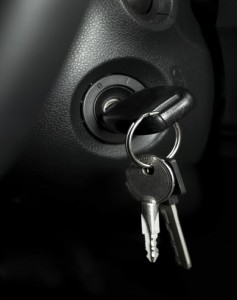
You expect your key to turn in your vehicle’s ignition…but sometimes…it won’t, and that’s a problem.  Whether you’re trying to start your vehicle or trying to leave it, it’s a problem.
Here are a few “key” facts of what can cause this to happen.  One of the most common is that the steering column locking mechanism is stuck.  Locking steering columns are an anti-theft feature introduced in the 1970’s.  If yours is sticking, try moving the steering wheel a little from side to side as you turn the key;  sometimes this will cause it to release.

A key may also stick if the vehicle is in gear.  Most vehicles will only let you start in neutral or park.  If you have an automatic transmission vehicle, make sure it’s in park.  Move the shift lever through the gears and back into park to make sure.  If the key still doesn’t turn, you can try jiggling the shift lever as you turn the key.  Electrical and mechanical contacts sometimes don’t line up properly, and a little jiggle might nudge them into place.

Sometimes vehicles with alarms can cause a key to jam; some require the doors to either be closed or open before the key will move.  Other vehicles with newer electronic ignition systems won’t allow you to turn the key if the battery is dead.

Another possibility is something jammed in your lock cylinder.  The little pins and spring that figure out you are putting in the correct key can stick as well.  Your key may also be the culprit.  The ridges can wear down, or the shaft can get bent.  Oh, and speaking of the key, are you trying to use the right one?  Double check it.

If you have a key that resists turning and you’re able to get it unstuck, consider yourself warned.  It probably won’t “fix” itself, and it’s time to have your qualified technician dig a little deeper to track down the root of the problem.  You could be less “luc-key” the next time it happens.

Filed Under: Car Maintenance, Tips & Tricks Tagged With: A Few "Key" Facts

Why Your Car May Fail The Emissions Test

November 18, 2020 by Denver Express Car Care

How long have you called Denver home? If you were around in the 1970s or 1980s, you might remember the brown cloud. As we continued to industrialize our city, the population moved outward and began developing suburbia. That meant more driving for all of our daily needs.

The EPA adopted the Clean Air Act to establish standards on air pollution from both factories and vehicles. But even with this law, Denver’s air pollution was visibly noticeable, partially because the city sits in a bowl-like valley. With mountains on one side and the Platte River Valley on the other, a temperature inversion traps pollution inside this bowl, creating a “brown cloud” of unhealthy air.

While policies continue to work at keeping this brown cloud under control, it hasn’t gone away. Experts say that the brown cloud has been replaced by thick smog, with the EPA changing our overall rating recently from “moderate” to “serious.” In 2018, Denver logged 131 days of poor air quality. And that impacts everyone across the Front Range, especially those with compromised respiratory systems.

Years ago, Colorado set up a program to monitor gas emissions from vehicles. Its goal was to keep the worst Why Your Car May Fail The Emissions Testpolluters off of the roads. Several counties require an emissions test to register a vehicle, including:

  • Boulder
  • Broomfield
  • Denver
  • Douglas
  • Jefferson
  • Portions of Adams
  • Portions of Arapahoe
  • Portion of Larimer
  • Portions of Weld

There are exceptions to this rule. If you aren’t sure if this rule applies to you, check with the Colorado Air Care Testing Facility near you to determine if your car needs testing, and how often you should take it in.

What an emissions test checks for

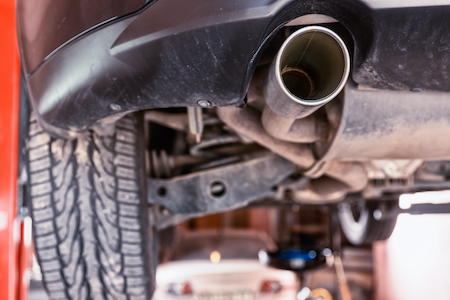
An emissions test is designed to ensure that a vehicle isn’t producing unacceptable levels of toxic gases. Tests are designed to measure the amount of emissions coming from a car’s engine. It’s a simple test that checks the pollutants being emitted from the tailpipe and being released into the air supply.  It measures:

  • Nitrogen oxide (NOx)
  • Carbon monoxide (CO)
  • Particulate matter (PM)
  • Non-methane organic gases (NMOG)
  • Formaldehyde (HCHO)

If your car passes, you can register your vehicle and drive it on the roads.

But what if your emissions test fails?

Here are the most common reasons a car will fail an emissions test.

Your car needs an oil change. An oil change is considered to be regular maintenance. It’s something that you should perform regularly, whether you drive regularly or not. Clean oil has fewer hydrocarbons in it, and helps keep your engine cleaner. A clean engine means cleaner emissions output. Check with your vehicle’s manufacturer, or refer to your owner’s manual to determine how often your oil should be replaced. Remember, this is based on time and miles driven. Even if you work from home and your car sits idle most days, it doesn’t mean your car doesn’t need fresh oil on a regular basis.

Your car has a rich air-fuel mixture. This is often caused by a malfunctioning injector or a faulty oxygen sensor. Check and replace both of these items before checking the emissions once again; this fixes the problem in a lot of cases. If the system continues dumping too much gas into the system, it will burn out the catalytic converter. Bringing it into our shop for a thorough checkup can find this and fix it if it’s the problem.

Your spark plugs are worn. When spark plugs wear down, they produce incomplete combustion. The spark plug creates electricity that ignites the air-fuel mixture inside the engine. The spark plugs create the motion inside the piston, and continue to provide power to keep your vehicle moving. When this process is incomplete, it can impact how much your car is emitting. Changing your spark plugs may be all that is needed to get your car back on the road.

Your car’s gas cap is leaking. This is a simple issue you can fix yourself. First, inspect your gas cap to see if it’s properly sealed. Tighten it if necessary. If you notice a leak, replace the gas cap and test your vehicle’s emissions again.

Your car’s air filter is dirty. When a vehicle’s air filter clogs, it can increase the levels of hydrocarbons being emitted from your car’s engine. Most manufacturers suggest replacing your car’s air filter at least once a year. If you don’t remember when you last had it changed, consider replacing it and trying the emissions test again. This should be a part of your regular maintenance plan to ensure your vehicle is in the best condition possible.

Your car’s evaporative emission control system (EVAP) is defective. When a vehicle’s EVAP system isn’t working correctly, gas vapors will move from the gas tank and add to the pollution levels in the atmosphere. This is often caused by a leak in the hoses or vents, causing the EVAP system to work improperly. While this can be difficult to track, a thorough diagnostics test can often reveal where the problem lies.

Your car’s check engine light is defective. While every light on your dashboard is important, the check engine light is one you should never ignore. It can signal many different problems with the way your engine operates. Occasionally, the check engine light itself may malfunction, and be the cause of why your car is failing the emissions test.

The best way to proceed is with proper maintenance and an inspection by a professional mechanic

While a failed emissions test isn’t a sign your car has major systems problems, it is a warning of an issue that needs solving.

While regular maintenance can keep your vehicle in top driving condition, it’s an ongoing process.

By stopping by regularly, we can ensure your vehicle is in good condition, and will give you peace of mind, knowing your car will be reliable no matter where your travels take you.

How can we help you maintain your vehicle for years to come? 

Filed Under: Car Maintenance, Tips & Tricks Tagged With: Fail Emissions Test

Auto Repair Inspection For Before You Buy A New Used Car

November 14, 2020 by Denver Express Car Care

One of the good reasons for having an auto mechanic on your side is they can help you through all kinds of situations. It’s nice knowing you’ll get an honest answer to all of your vehicle questions.

While that may be important if you notice a squeak when you apply the brakes, or hear a noise as you drive through a turn, it’s equally important when you consider buying a used car.

Used cars have been through a lot as they travel down the road. Yes, it might look good from the outside, the paint might be in good condition, the interior might be spotless. But how do you know if the internal workings of the car make it a good used car?

That’s why knowing a reputable auto mechanic can help you out.

If you’re looking at buying a used car, it’s important to do your homework before you start the search.

According to AARP, the average mileage per year is between 12,000 and 15,000 miles. That means for a five-year-old vehicle, having between 60,000 and 70,000 miles on the odometer isn’t out of the ordinary.

The Bureau of Transportation states that today’s vehicles on the road average just over 11 years. The standard vehicle being built today can fully be expected to continue running through 200,000 miles and more, with some inching their way towards 300,000.

Auto Repair Inspection For Before You Buy A New Used CarThere are a lot of reasons to keep your vehicle that long. The obvious is to save money on the price of purchasing a new vehicle.

That also makes it worth the time to buy a vehicle only a few years old. You can easily expect a vehicle to give you years of quality life, even if you purchase one a few years old.

That’s one of the biggest reasons it’s worth your time to ensure you’re buying a quality used car.

Inspections aren’t required when you buy a used car

There aren’t specific laws that give you the authority to have an inspection before you purchased a used vehicle. However, the Federal Trade Commission does advise people on specific steps people should take before you buy a used car.

Some are obvious:

  • Test drive the car on varied road conditions – on hills, highways, and stop and go traffic
  • Determine the value before you negotiate the price

Still others are great advice:

  • Ask for the car’s maintenance records from the owner
  • Get an independent review of the vehicle’s history. You can check with the Department of Justice’s National Motor Vehicle Title Information System to find out information about the vehicle’s title, which can help you determine if the car has been in an accident, flood damage, and other possible risk factors.

And finally, they recommend considering hiring a mechanic to inspect the car.

If the seller is reputable and is sure of the condition of the car, they will be happy to allow an inspection to take place. If, however, they are hiding something, an argument about this process should be your warning sign.

What will a good mechanic check on a vehicle inspection?

There are certain things you can do as a potential used car buyer. You can perform a road test to see how the car drives. You can check the odometer for mileage. You can check the headlights and taillights to ensure everything is working. You can use visual cues to help determine how well the owner took care of the car.

But a good mechanic will go deeper into how the car operates. They look at:

Tire inspection – this is a good indicator for how well the car is maintained. They look for uneven wear at the inside or outside edges. They look for jagged edges in the tread. They look for uneven cupped patterns that may indicate suspension problems.

Test drive – a good mechanic is trained to pick up small noises that occur as you drive around. They take it through a series of tests, including highway driving, up and down hills, and in stop and go traffic, to see how it handles. Clunks, rattles, squeaks, and clicking noises can all be indicators of potential problems. If they note a sound, they can check it more thoroughly back in the shop.

Stop test – while it’s not something any of us should do on a regular basis, occasionally, you might have to slam on the brakes to come to a stop. The way your car brakes can tell you a lot. It’s also a good test before you buy a used car. In a safe area, doing a hard stop from 40 miles per hour will show how the braking system works. Does it pull to one side? Does it lock up? Do the brakes pulsate? A vehicle with all of its systems working correctly will stop in a straight line.

Fluid test – first and foremost, motor oil should be honey-colored and translucent. If it’s dark or has a sour smell, it could be a sign of a problem, and at the very least alert you to the fact that the previous owner didn’t change out the motor oil on a regular basis. It’s not the only fluid that should be checked. A mechanic will check for leaks, and ensure all other fluids are in good condition.

Of course, depending on where you go, mechanics can do a variety of other things to, depending on the age, make, and model of your car. Hooking it up to a diagnostics test can reveal hidden problems. Putting it up on a rack to look at the undercarriage, and giving the body a thorough evaluation can point out potential issues.

If you’re in the market for a good used vehicle, don’t overlook what a thorough inspection can do for you. It can be the difference between buying a lemon and investing in a quality car that will give you years of reliability.

Filed Under: Tips & Tricks Tagged With: Auto Repair Inspection

Key Reasons Why Cars Last Longer Than Ever Before

October 28, 2020 by Denver Express Car Care

According to the Environmental Protection Agency, the average car is driven about 15,000 miles per year. The New York Times found that fifty to sixty years ago, the average expected life of a vehicle was around 100,000 miles. Today, because of better technology, tighter tolerances, and better anti-corrosion coatings, the average life is closer to 200,000.

Cars are lasting longer than ever before. While that may be good for you as the car owner, it can compromise the overall driving experience if it isn’t well maintained. The average age of cars and light trucks on the road has reached peak levels to 11.8 years in 2019. It’s predicted to be more than 84 million vehicles on the road at least 16 years old by 2023. That poses significant problems, especially when car manufacturers 16 years ago weren’t thinking about that kind of longevity.

Why are coats lasting longer?

And equally important, what can you do to ensure your vehicle will last you for many years to come?

Improving the way a vehicle is assembled

Key Reasons Why Cars Last Longer Than Ever BeforeThe way cars are produced has changed a lot over the years. To say they’ve gone through a massive overhaul in the last century would be an understatement.

The first cars were powered by steam at the turn of the century. They didn’t have windshields, doors, or turn signals. Safety features – they weren’t in existence.

Mass production is what brought the first inkling of what we have with our vehicles today. Slowly, cars became safer, more durable, with improved systems and functions to create a better driving experience.

Laws like the 1966 National Traffic and Motor Safety Act worked on improving driving conditions. It included traffic safety programs, driver education and licensing, inspections, highway design, and traffic law enforcement.

The National Highway Traffic Safety Administration began testing and rating vehicles for collision protection in 1978. That made manufacturers work harder at creating vehicles that would protect passengers.

And it all starts at the assembly line, with the way today’s modern vehicles are put together. What used to be left to humans, which varied from person to person, is now a precise task as machines and robotics handle every detail.

Emphasis is placed on making every part better, stronger, lighter, and more efficient. To improve fuel economy, for example, required designers to come up with ways to make body parts more efficient. They had to be thinner, lighter, and made of better materials so they wouldn’t rust or corrode.

All of this is because regulations keep getting better. And that isn’t going to stop. We now demand it in every car we purchase, knowing it’ll give us years of service.

Engine efficiency

Old engines made a vehicle operate, but they weren’t very efficient. That’s changed as laws and regulations required it so.

Old carburetors would drip fuel into the engine, and because there wasn’t a lot of control, that extra fuel would wash away, corroding parts as a part of the process. Unburned fuel would dilute the oil, wear out rubber, and cause the engine to be anything but efficient.

Now, modern fuel and oil have been modernized to the current status where they are beneficial at helping vehicles thrive. You no longer have engines that die from corrosion and buildup. Fuel injection makes every system a precise course of action. It controls fluids in such a way that they go where needed, in the right amounts, at the right time. A cleaner combustion process means a better engine that lasts longer, and saves on fuel and oil in the process.

Motor oil from just a few decades ago was simple at best. But as mechanics and engineers learned more about the process, they refined the fluids used in today’s engines. Synthetic oils are designed to work no matter what the temperature is outside, from freezing cold to sweltering heat. This isn’t the motor oil your parents used.

Thanks to technology, you can go farther between servicing, and expect parts to last for tens of thousands of miles. Spark plugs, for example, now last 100,000 miles or more.

It’s no longer about guessing when you’re vehicle is in need of repair. Today’s vehicles will tell you what it needs, when it needs it.

Better electronics

Imagine a vehicle that can tell you what it needs. Gauges alert you when you’re running low on fuel. Lights warn you of potential problems. Voice commands give you diagnostics, and offer refinement to improve the driving experience.

Of course, this isn’t sci-fi; this is reality. All you have to do is sit in a new car and you’ll find technology a big part of how it operates.

With on-board computer sensors and monitors, every system, every piece is watched closely to ensure it’s operating the way it should. When something moves outside of the established limits, a sensor is alerted, and it warns you via a dashboard light. They are finely tuned to maximize part life, give you advanced warning to bring your car in for servicing, and lessen the likelihood of being stranded because of a part that no longer works.

Establishing a car maintenance program you can live by

If you choose to keep your vehicle for years, it’s important to service your car regularly to maintain each of the systems at optimal performance. The average car built today includes over 30,000 parts. Each of those parts are attached and combined to work together. If one part is bad, it has the ability to impact every other part in some manner.

A reputable auto mechanic isn’t just there to service your vehicle when you have problems with your car. They are also there to be a part of the team that keeps it operating correctly for as long as you own it.

If you’re looking for a partner to keep your car operating in great condition, stop by today and give us a try. From regular oil changes to overhauling complete systems, we can help your car stay safe and on the road for years to come.

Filed Under: Car Maintenance, Tips & Tricks Tagged With: Why Cars Last Longer

Driving on Technology

October 26, 2020 by Denver Express Car Care

Driving on TechnologyThink of how much technology has changed vehicles in the last several years.  And there’s a lot more coming.

Many of you will remember when drivers were the ones who had complete control of several driving functions:  steering, braking and skid and accident prevention, just to name a few.  Thanks to driving technology, now computers and high-tech systems in the vehicle assist with many of these skills.  Anti-lock brakes help the driver stop while avoiding uncontrolled skids, traction control helps reduce slippage, and stability control can minimize the chances of losing control.

Backup cameras let drivers see what’s directly behind them which they never could see before.  Sensors warn drivers if a vehicle is crossing in front or behind them.  Even more sensors and fish-eye cameras alert drivers when they’re getting too close to something.  And those are just a few samples of the new driving technology advances.

The quest for self-driving vehicles has produced features that are already making their way into today’s cars, trucks, and SUV’s.  Electric and hybrid vehicles are introducing break-out driving technologies.  For example, a new braking technology allows the driver to let up on the accelerator, and instead of the car coasting for a while or the driver having to apply the brakes, the vehicle will slow down using regenerative braking without the driver even touching the brake pedal.  This regenerative braking system recharges the batteries.  Another system helps steer the car to keep it in the center of the lane using cameras and radar to keep track of the lane markers.

Most of these driving technologies aim at improving safety and efficiency, in much of the same way as all the other systems installed in the vehicle you currently own.  But whether you’re driving on new technology or not, it’s always important to keep them maintained so they’re working properly.  At Express Car Care we invest in training and diagnostic tools and equipment to keep your high-tech systems up to date as we all move forward to the vehicles of the future.

Filed Under: Tips & Tricks Tagged With: Driving on Technology

All-Wheel, Front-Wheel, Rear-Wheel – What’s The Difference?

October 21, 2020 by Denver Express Car Care

Here in Colorado, we face a variety of driving experiences throughout the year.

Scorching hot days where the pavement seems to melt before your eyes? Check.

Frigid temperatures with ice and snow packed roads that make it difficult to drive? Check, we have those too.

All of that can make it difficult to decide which car to buy. Should you focus on purchasing an all-wheel, front-wheel, or rear-wheel design? What’s the difference? Is one suited better for Colorado driving?

What is front-wheel drive?

When it comes to selecting a family car to get you around the city, front-wheel drive vehicles remain a popular choice. One recent study showed that just over 40 percent of the vehicles on the road today have front-wheel drive. But what exactly does that mean?

With a front-wheel drivetrain, the power of the vehicle remains with the front two wheels. This setup gives the front wheels the responsibility of moving and steering the car where you desire it to go.

From a design perspective, this is a less complex model, therefore it is also the least expensive way of powering a car. Because the engine is already upfront, it’s easier to connect power to the front wheels via two shorter drive axles.

But cost and ease is only part of the reason front-wheel drive vehicles remain one of the most popular choices on the road. They are also one of the most fuel-efficient.

Back in 1975, the Corporate Average Fuel Economy (CAFE) program was enacted. It was designed to improve fuel economy during the time of the Arab Oil Embargo. It sought standards to curtail fuel consumption as well as create jobs and cut global warming. As a part of that, automakers discovered that front-wheel drive vehicles was the quickest were to gain a few miles per gallon.

Having a more compact drivetrain, where the parts sit in front of the vehicle, reduces the weight. Less weight to move around on the road means a more fuel-efficient vehicle. It also works well here in Colorado because having the motor over the drivetrain also improves acceleration and traction. Whether roads are filled with water, ice, snow, sand, or gravel, a front-wheel drive vehicle will be easier to keep under control.

What is rear-wheel drive?

All-Wheel, Front-Wheel, Rear-Wheel - What’s The Difference?Everything we discussed above that comes equipped with a front-wheel drive car is reversed with a rear-wheel model.

You’ll find a variety of vehicles equipped with rear-wheel drive. Rear-wheel drive is a transmission system designed for a more even weight distribution and optimal handling in normal driving conditions. When the sun is shining and you’re ready to take your car for a drive, you’ll enjoy the performance of a rear wheel drive system. Punch the accelerator from a standing start, the weight transfers to the rear, and gives you a smoother transition as you pick up speed. No fishtailing.

However, that performance doesn’t convert well when ice and snow build up. With more power in the rear wheels, it increases the possibility of fishtailing and losing control as your back wheels try to maneuver.

What is all-wheel drive?

All-wheel drive is a type of four-wheel drive system. It automatically shifts power between the front and rear wheels, depending on the kind of driving conditions. It’s designed for lighter winter driving and off-pavement use. If you truly want to go four-wheeling, you’re better off selecting a four-wheel drive vehicle. But for most driving conditions here across the front-range, all-wheel drive is a good choice.

The concept of all-wheel drive has changed considerably since its inception. The split between all-wheel drive and four-wheel drive used to be more pronounced. To switch between the two, you would have to shift between them, selecting your driving preference. Thanks to technology, the difference is more automatic, with different types of vehicles moving seamlessly between the two, depending on the driving conditions. Vehicles like “crossovers” and others offer a wide variety of performance features. It’s easier to focus on the make and model, determining which is a good fit for your driving needs.

The role of the tires

While a vehicle’s drivetrain is important to how well your vehicle will perform in different situations, there’s another piece to the puzzle that can help make your car safer. The tires on your car are equally important to overall performance.

If you purchase a sporty vehicle, one that is designed for performance on dry roads, they are usually sold with summer tires designed with traction that can hug the open road. Dry conditions give you ease of handling, and can be quite fun to drive. However, the moment you add ice and snow to the mix, those tires won’t seem so impressive.

By adding snow tires to a front-wheel drive vehicle, you may see better performance than an all-wheel drive with summer tires. Again, the two pieces work in conjunction with each other to help you stay in control while you’re driving on the road.

Here in Colorado, we have both types of road conditions. And while all season tires can work well all year long, if you travel significant distances all year long and want the best performance possible in all conditions, combining snow tires with all-wheel drive is the way to go.

Problems with the drivetrain

No matter which type of vehicle you own, at some point in time, you may notice problems with the drivetrain.

  • Vibrations or intense shaking from under the vehicle
  • Difficulty making turns
  • A loud clunking noise when shifting occurs as you drive
  • A shuddering when stopping or starting
  • A squeaking noise at low speeds
  • A knocking noise as you drive

Any sound out of the ordinary is a reason for concern. If you notice something changes with the way your car drives, pay attention to where it’s coming from. This can help one of our mechanics pinpoint the problem.

Whether you have a front-wheel, rear-wheel, or all-wheel drive vehicle, the most important aspect of keeping them running well is to get them serviced regularly.

Filed Under: Tips & Tricks, Transmission Tagged With: what’s the difference all-wheel front-wheel rear-wheel

TSB, not USB

August 3, 2020 by Denver Express Car Care

You probably know that USB is a computer term (it stands for Universal Serial Bus).  But do you know what a TSB is?  If you don’t, you should, because it could be important for your vehicle.

A TSB is a Technical Service Bulletin.  When a new vehicle is introduced and starts being driven by thousands of real-world users, weaknesses in the parts or the design begin to be revealed.  So automakers send out TSBs, so that service technicians will be aware and know to look for those problems.  A TSB can be issued for things such as a loud noise when the vehicle turns or a minivan power door that won’t close properly.

A TSB is not the same as a recall.  If a vehicle has a defect that could result in people being hurt or illegal emissions, that vehicle is recalled.  The manufacturer must pay for a safety defect to be fixed, usually at a dealership.

When a Technical Service Bulletin is issued, it’s an acknowledgement that the vehicle manufacturer has noticed a pattern of something not working the way it should.  They also suggest the proper repair to address these known issues.  The cost for a TSB is usually only covered by the manufacturer if the vehicle is still under warranty.

If your vehicle is no longer covered by a warranty, but a TSB has been issued on a certain problem, any service facility can perform the service.  Ask your service adviser about TSBs that may have been issued for your vehicle.  Those TSBs can be helpful for the technician to diagnose any problem you are experiencing.  The TSB will also guide the technician on the best repair procedure to get your vehicle working the way it should.  We’re committed to maintaining your vehicle’s performance, safety, and fuel economy.  Trust your vehicle to Express Car Care of Denver.

Filed Under: Tips & Tricks Tagged With: not USB, TSB

  • « Previous Page
  • 1
  • …
  • 5
  • 6
  • 7
  • 8
  • 9
  • …
  • 16
  • Next Page »

Express Car Care
4200 E. Evans Ave. Denver, CO (map)
Phone: (303) 691-2760
Located just southeast of the Colorado Light Rail station

Follow Us Today!

  • Facebook
  • RSS

Shop Hours

Monday: 8:00AM – 5:00PM
Tuesday: 8:00AM – 5:00PM
Wednesday: 8:00AM – 5:00PM
Thursday: 8:00AM – 5:00PM
Friday: 8:00AM – 5:00PM
Saturday: Closed – A note from the owner
Sunday: Closed

Last car oil change time  – 5:00PM

Click for the BBB Business Review of this Auto Repair & Service in Denver CO

Recent Articles

Winter Car Prep Tips for Denver

Denver winters can bring freezing temperatures, snow, ice, and rapid weather changes. A little preparation before the first major storm can help your vehicle start reliably, handle winter roads, and … [Read More...]

  • Tire Rotation: When to Do It—and the Signs You Shouldn’t Ignore
  • Which Oil Is Right for Your Car?
  • Stop Burning Money at the Pump
  • Differential Service: Why It’s Crucial for Your Car’s Longevity and Performance
  • How to Catch a Transmission Problem Before It Leaves You Stranded

Search Our Site

Brakes Service

How to Keep Your Brakes Quiet, Responsive, and Safe

Everything You Need To Know About Replacing Your Brake Pads

How to Know If It’s Time to Replace Your Brake Rotors

Oil Change

Top Benefits of Getting Regular Oil Changes in Denver

Oil Change Specials in Denver: Save Money and Keep Your Car Running Right

Why Regular Oil Changes Are Crucial for Denver Drivers

Suspension

How to Know If Your Car Needs Suspension Repair in Denver’s Bumpy Roads

A Guide To Understanding Bushings on a Car

Tips for Preventing Wear and Tear on Your Car’s Suspension

Transmission Service

How to Catch a Transmission Problem Before It Leaves You Stranded

How Often Should You Service Your Transmission in Denver?

Transmission Trouble? Common Signs and When to Visit Our Denver Shop

Engine Service

Stop Burning Money at the Pump

Everything You Should Know About Your Vehicle’s Timing Belt

Is Your Car Hesitating During Acceleration?

Auto Tips & Tricks

Winter Car Prep Tips for Denver

How to Deal With Car Noises That Only Happen When You Turn

Top 5 Maintenance Tips for High-Mileage Vehicles

"Denvers Best Auto Repair and Quick Lube" - Copyright © 2026 - 4200 E. Evans Ave. Denver, CO 303-691-2760