
• Home
  • Denver Auto Repair Services
    • Full Service Oil Change
    • Expert Mechanics
      • Expert Honda Mechanics
      • Expert Toyota Mechanics
      • Expert Subaru Mechanics
    • Automatic Transmission
    • Fuel System Cleaning
    • Radiator Flush Service
    • Wiper Blades
    • Air Filter
    • Cabin Air Filter
    • Gearbox Service
    • Brake Repair
    • Clutch Repair
    • CV Boots
    • Tune-Up
    • Steering & Suspension
    • Tires
  • Auto Diagnostic
  • Contact Us
    • About Us
  • Shop Specials
  • Testimonials
  • Blog
  • 303-691-2760

Express Car Care of Denver

"Denver's Best Auto Repair and Quick Lube"

  • Brake Service
  • Car Maintenance
    • Heating-Air Conditioning
    • Suspension
    • Transmission
    • Engine
    • Tires
  • Oil Change
  • Tips & Tricks

Archives for November 2010

Fact Vs Fiction With Your Car Engine

November 15, 2010 by Denver Express Car Care Leave a Comment

In these days of endless information on the internet and Wikepedia, it’s more important to make sure the information we get is based in fact not fiction. It’s fact vs  fiction! We should separate fact from fiction in all areas of our lives including taking care of our cars engine.  With the help of Consumer Reports, I’ve compiled a small list of fact vs  fiction.

Fiction: You have to let your engine warm up for several minutes before you can start driving.

Fact: This advice was true in the past but today’s car engines warm up more quickly when they’re driven.  The sooner they warm up, the sooner they reach their maximum efficiency and performance.  But you shouldn’t rev the engine high during the first few miles while it’s warming up.

Fiction: Switching between conventional oil and other types of oil is bad for my engine.

Fact: Mixing or switching between types of motor oil isn’t harmful to your engine because conventional, synthetic, synthetic blend and high mileage oil are all compatible.

Fiction: If regular-grad fuel is good, premium must be better.

Fact: Most cars will run just fine on regular-grade (87 octane) fuel.  A higher octane fuel (premium) is often recommended for high compression, hotter running engines.  So if your car is designed for 87 octane, you don’t need to use premium, it won’t improve your car’s performance.

Fiction: There isn’t any difference between conventional and synthetic motor oil.

Fact: There aren’t any real differences in the stock base used to make synthetic and conventional oils, but there are differences in the processes used to make each oil and the additives  that they each contain.

Fiction: We should inflate our tires to the pressure shown on the tire’s sidewall.

Fact: The PSI figure on the side of the tire is the maximum pressure that the tire can hold safely.  The automaker’s recommended pressure is usually found on a doorjamb sticker, in the glove box, or on the fuel-filler door.  Check you tire pressure when the tires are cold for an accurate reading.

Fiction: A dealership must perform regular maintenance to keep your car’s factory warranty valid.

Fact: As long as the maintenance items listed in the car owner’s manual are performed on schedule, the work can be done at any auto repair shop.  Just keep accurate records and receipts in case of a warranty dispute on a car repair.

I’m sure this list is incomplete and many more facts vs  fiction could be added.  If you have some to add or any questions that you would like answered, please write a comment and share them with us.  We will do our best to answer them for you.
Filed Under: Car Maintenance Tagged With: Fact Vs Fiction

Motor Oil Types-How to Choose the Right One for Your Car

November 9, 2010 by Denver Express Car Care Leave a Comment

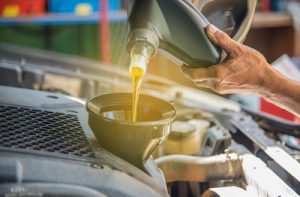
When you walk into a quick-lube and ask for an oil change today, you will usually be asked what type of motor oil you want to use.  Because cars have changed, the motor oil we put in them has changed too.  Here are the motor oil types available and a brief description of the difference between them.  This information should help you choose the right motor oil for your car.

Conventional Oil-This is the standard car motor oil.  All leading brands carry a motor oil for service level “SL”.  “SL” refers to a group of lab and engine tests that the oil is put through in order to meet the standards of the American Petroleum Institute (API).  This oil works well in just about every light-duty car on the road.  When you choose this oil it is important to change your oil and filter regularly.Motor Oil Types-How to Choose the Right One for Your Car

Full Synthetic Oil-This motor oil is made for high-tech engines like BMW, Lexus, Corvette, or Mercedes-Benz.  It has superior sludge and varnish protection which keeps the engine cleaner.  It protects your engine from becoming to hot under severe driving conditions and also protects it in cold temperatures because the oil flows faster when the engine is started.

Synthetic Blend Oil-These have a mixture of synthetic oil and organic oil and are formulated to give engine protection for somewhat heavier loads and higher temperatures.  They evaporate less which increases fuel economy.  This type of motor oil is popular with people who drive SUV’s and pickup trucks with heavy loads.  Synthetic blend oil costs less than full synthetic and just slightly more than conventional oil.

Higher Mileage Oil-We are driving our cars longer now and if your cars odometer reads more than 75,000 miles, this type of motor oil would be a wise choice.  This oil is formulated with seal conditioners that restore their shape and increase their flexibility.  Rubber seals are designed to swell enough to stop leaks, this oil helps them do that.  Higher mileage engines can perform differently than new ones, causing oil consumption, decreased engine performance and more rapid oil breakdown.  By choosing higher mileage oil you can reduce oil consumption, improve horsepower and prolong the life of the engine by cleaning buildup and sludge from your older engine.

When you’re trying to determine which type of motor oil to choose for your car, don’t forget to check your owner’s manual and talk to your service technician.  They can give you the best advice for your particular situation!

Filed Under: Engine, Oil Change Tagged With: Motor Oil Types

Car Maintenance Checklist

November 2, 2010 by Denver Express Car Care Leave a Comment

Living here in Colorado, we can never tell for sure when the snow might arrive.  In order to prepare your car for winter driving, here is a recommended car maintenance checklist.

  • Check the Hoses-Visually inspect hoses for cracks, leaks or loose clamps and feel them to check for spots that might be brittle or spongy, that means they need to be replaced.  Antifreeze can’t do it’s job if the hoses that carry it through your system are damaged.
  • Flush the Cooling System-The additives contained in the engine coolant (antifreeze) that lubricate and protect engine parts from rust and corrosion are depleted over time.  It’s recommended to have the cooling system flushed and new coolant added every two to five years depending on the car manufacturer.
  • Test the Electrical System-Have your car’s battery tested and make sure that there isn’t any corrosion on the terminals or clamps.  Check all the cable connections to make sure they’re tight.
  • Adjust the Alternator Belt-The alternator is the source of electrical power when your car is running, it also charges the battery.  The alternator belt needs to be adjusted properly.  For older model cars this is done manually.  Newer cars usually have automatic tensioners.  Have the belt checked for wear and cracks which signal it’s time to have it replaced.  It’s a good idea to have a trained auto technician do these services.
  • Windshield Cleaning Tools-Make sure the windshield fluid reservoir is filled with a non-freezing solution.  Check the pump and sprayers to see if they are working properly.  If your wiper blades leave spots or streaks, they should be replaced.  You might want winter wiper blades that have a rubber boot to prevent ice and snow from building up.
  • Check the Tires-Make sure your tires have an adequate tread depth.  You should replace worn tires right away.  Putting snow tires on for the winter is a very good idea.  Check the tire pressure.  When the temperature drops the pressures in your tires will too, so check the tire pressure more often in the winter months than you do in the summer.
  • Brake Inspection and Flush-If you have any existing brake problems, they will get worse in the winter when your traction is reduced.  Have the brakes inspected to make sure they are working properly.  Brake fluid absorbs water and then collects in the system, it can cause rust, fluid leaks or damage to parts.  To prevent this from happening, most manufacturers recommend that the brake system be flushed every two to three years.  Check your owner’s manual for your car’s recommendations.

If you apply this car maintenance checklist, you can keep your car running and hopefully keep a smile on your face all through the winter months.

Filed Under: Car Maintenance, Tips & Tricks Tagged With: Car Maintenance Checklist

Express Car Care
4200 E. Evans Ave. Denver, CO (map)
Phone: (303) 691-2760
Located just southeast of the Colorado Light Rail station

Follow Us Today!

  • Facebook
  • RSS

Shop Hours

Monday: 8:00AM – 5:00PM
Tuesday: 8:00AM – 5:o0PM
Wednesday: 8:00AM – 5:00PM
Thursday: 8:00AM – 5:00PM
Friday: 8:00AM – 5:00PM
Saturday: Closed – A note from the owner
Sunday: Closed

Last car oil change time  – 5:00PM

Click for the BBB Business Review of this Auto Repair & Service in Denver CO

Recent Articles

Stop Burning Money at the Pump

Get a Fuel System Cleaning! Most drivers know to change the oil, rotate the tires, and replace the air filter. But one maintenance service that often gets overlooked — until the check engine light … [Read More...]

  • Differential Service: Why It’s Crucial for Your Car’s Longevity and Performance
  • How to Catch a Transmission Problem Before It Leaves You Stranded
  • Why You Shouldn’t Wait to Address a Small Exhaust Leak
  • 5 Reasons to Choose a Local Family-Owned Auto Shop Over a Big-Box Garage
  • The Top Reasons Your Car Might Be Stalling and How We Fix It

Search Our Site

Brakes Service

How to Keep Your Brakes Quiet, Responsive, and Safe

Everything You Need To Know About Replacing Your Brake Pads

How to Know If It’s Time to Replace Your Brake Rotors

Oil Change

Top Benefits of Getting Regular Oil Changes in Denver

Oil Change Specials in Denver: Save Money and Keep Your Car Running Right

Why Regular Oil Changes Are Crucial for Denver Drivers

Suspension

How to Know If Your Car Needs Suspension Repair in Denver’s Bumpy Roads

A Guide To Understanding Bushings on a Car

Tips for Preventing Wear and Tear on Your Car’s Suspension

Transmision Service

How to Catch a Transmission Problem Before It Leaves You Stranded

How Often Should You Service Your Transmission in Denver?

Transmission Trouble? Common Signs and When to Visit Our Denver Shop

Engine Service

Stop Burning Money at the Pump

Everything You Should Know About Your Vehicle’s Timing Belt

Is Your Car Hesitating During Acceleration?

Auto Tips & Tricks

How to Deal With Car Noises That Only Happen When You Turn

Top 5 Maintenance Tips for High-Mileage Vehicles

Why Tire Pressure Matters More Than You Think

"Denvers Best Auto Repair and Quick Lube" - Copyright © 2026 - 4200 E. Evans Ave. Denver, CO 303-691-2760