
You hear a slight hissing noise. Maybe there’s a faint smell of exhaust after you park in the garage. No check engine light, no loud rattling, no immediate issues. So you brush it off.
But here’s the thing: a small exhaust leak is never “just a small problem.” Left unchecked, it can quickly turn into a major safety concern for you and your passengers, not to mention a potential budget-buster in future repairs.
If you drive in and around Denver, where weather, altitude, and road conditions already challenge your car’s performance, this isn’t something to ignore. Let’s break down why.
What Is an Exhaust Leak?
Your vehicle’s exhaust system carries harmful gases away from the engine and out the tailpipe. It’s made up of several connected components, including:
- Exhaust manifold
- Catalytic converter
- Resonator and muffler
- Pipes and joints
- Oxygen sensors
When any of these connections crack, rust, or loosen, it can create a leak, allowing unfiltered gases to escape before they safely exit your tailpipe.
How Do Exhaust Leaks Start?
In most cases, exhaust leaks are caused by:
- Rust and corrosion (especially from moisture and road salt/magnesium chloride used in Colorado winters)
- Worn gaskets or seals
- Loose or broken hangers that let components shift or drag
- Cracks in the manifold or joints from extreme heat cycling
- Physical damage from debris or potholes
Even tiny leaks start causing trouble right away.
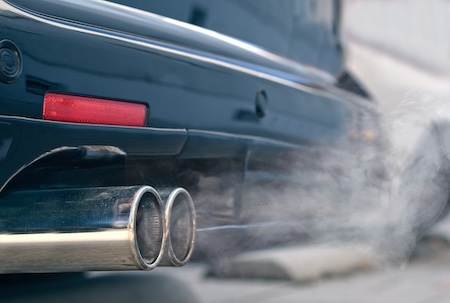
Why a Small Exhaust Leak Is a Big Deal
1. Carbon Monoxide Danger
Perhaps the biggest risk from a leaking exhaust system is carbon monoxide (CO) exposure. CO is an odorless, colorless gas that can seep into your vehicle’s cabin through the HVAC system or floorboards.
Prolonged exposure—even at low levels—can lead to:
- Drowsiness
- Nausea
- Dizziness
- Headaches
- In severe cases, loss of consciousness or death
If you often drive with windows up and heat or AC running, especially during long commutes or winter drives, a small leak can turn dangerous fast. If you smell exhaust inside the cabin, roll down the windows and bring your car in immediately.
2. Poor Fuel Efficiency
Exhaust leaks allow oxygen into the system in places it shouldn’t be. That confuses your vehicle’s oxygen sensors, which may adjust your fuel-air mixture incorrectly.
The result? You burn more fuel than needed. If you’ve noticed a dip in your miles per gallon, this might be why.
3. Increased Emissions
Leaking exhaust means untreated gases bypass the catalytic converter, which is designed to reduce harmful emissions. Not only is this bad for the environment, but it can also cause you to fail emissions testing, common in Denver and surrounding areas.
4. Decreased Engine Performance
Because the exhaust system is tightly linked with your car’s engine function and sensors, leaks can lead to:
- Hesitation or jerking
- Power loss on acceleration
- Rough idling
- Engine misfires
That “small leak” can start messing with your vehicle’s performance and your peace of mind quickly.
5. Damage to Other Components
A minor leak that goes unrepaired can lead to:
- Warped valves
- Cracked manifolds
- Burned gaskets
- Damaged catalytic converter (an expensive replacement)
Addressing it early can save you thousands in repairs down the line.
Signs of an Exhaust Leak
Wondering if your car might already have a leak? Keep an eye (and ear and nose) out for these symptoms:
- Ticking or tapping sound from the engine area (especially on startup)
- Hissing or popping noises under the vehicle
- Smell of exhaust inside the car or garage
- Vibrations in the steering wheel, gas pedal, or floor
- Poor fuel economy
- Check engine light related to oxygen sensors
If you spot any of these, it’s time for a professional inspection.
How Denver Driving Makes Exhaust Leaks Worse
Denver’s climate and driving conditions accelerate wear and tear on your exhaust system:
- Winter de-icers like mag-chloride cause corrosion faster than traditional salt.
- Mountain driving means steep inclines, higher engine loads, and increased underbody heat.
- Altitude changes affect engine pressure and oxygen levels, putting stress on the exhaust flow.
- Potholes and debris from snowplows or unmaintained roads can damage exhaust pipes and hangers.
If you live in Denver, a small leak today can become a big problem tomorrow.
What To Do If You Suspect a Leak
Don’t try to self-diagnose an exhaust leak with DIY sealants or tape. While temporary fixes exist, they’re not safe long-term, especially when carbon monoxide is involved.
Instead:
- Schedule an inspection with a trusted mechanic (yes, we’re happy to help)
- Avoid long drives or idling until the problem is diagnosed
- Ventilate your car well if you notice any unusual smells
- Keep your family safe—especially kids and pets who are more susceptible to CO exposure
Preventing Future Exhaust Leaks
Want to minimize your chances of future issues? Here are a few maintenance tips:
- Wash your undercarriage regularly—especially after winter driving
- Park indoors or under cover when possible
- Inspect your exhaust system during routine services (especially every 12,000–15,000 miles)
- Replace gaskets or rusted parts early before they turn into bigger issues
Listen to your vehicle. Unusual sounds are usually trying to tell you something.
A Leak May Start Small—But the Risk Isn’t
An exhaust leak doesn’t just affect your car. It can affect your health, wallet, and daily safety. And in a climate like Denver’s, ignoring it can accelerate the problem faster than you think.
If you hear something strange or notice a smell that wasn’t there before, don’t wait.
Bring your car in. Let us take a look. Our certified technicians will perform a full exhaust system inspection and let you know exactly what’s going on—no pressure, no guesswork, just honest advice and quality service.
Need an exhaust inspection in Denver?
We’re here to help. Book your appointment today and stay safe on every drive.