• Home
  • Denver Auto Repair Services
    • Full Service Oil Change
    • Expert Mechanics
      • Expert Honda Mechanics
      • Expert Toyota Mechanics
      • Expert Subaru Mechanics
    • Automatic Transmission
    • Fuel System Cleaning
    • Radiator Flush Service
    • Wiper Blades
    • Air Filter
    • Cabin Air Filter
    • Gearbox Service
    • Brake Repair
    • Clutch Repair
    • CV Boots
    • Tune-Up
    • Steering & Suspension
    • Tires
  • Auto Diagnostic
  • Contact Us
    • About Us
  • Shop Specials
  • Testimonials
  • Blog
  • 303-691-2760

Express Car Care of Denver

"Denver's Best Auto Repair and Quick Lube"

  • Brake Service
  • Car Maintenance
    • Heating-Air Conditioning
    • Suspension
    • Transmission
    • Engine
    • Tires
  • Oil Change
  • Tips & Tricks

What To Do When Your Power Steering Goes Out

October 24, 2019 by Denver Express Car Care

Power steering on today’s automobiles is something most of us take for granted. But if you’ve ever had it disappear, you’ll appreciate it a little bit more.

It can be kind of scary, especially here along the Front Range. You’re driving. Heading to the office, or maybe off for a weekend in the mountains. You’re singing along with the radio, talking with the family, and suddenly it’s very difficult to turn the steering wheel in your car. What do you do when your power steering goes out?

Depending on what’s wrong determines the right course of action. Not all power steering problems require extensive repair work. But like other car repair issues, quick action can often save you time and money down the road.
What To Do When Your Power Steering Goes Out
Understanding Power Steering Technology

Power steering isn’t new technology. In fact, it was put in place as the first automobiles started flowing off the production line.

Hydraulic steering uses a pump to supply pressure. Driver control is authorized by use of rack and pinion. Fluid pressure is created within the pump, and pushed against a piston. As the wheel turns, pressure builds and flows, causing the piston to move. This piston is also attached to the steering mechanism, and with the air of hydraulic pressure, the steering wheel is moved and controlled by whoever is driving.

It all comes down to a highly sensitive valve system. When the steering wheel is straight, the steering valve is at rest. But as you turn it, fluid begins to flow around the valves, through the reservoir, and into the cylinder. The fluid moves and flows to different pressure chambers, depending on the direction you turn the wheel to control the gears. When the steering wheel is released, it returns to its neutral position.

When The Power Steering Goes Out

If there is a problem with any part of this hydraulic system, you’ll know it. Even a slight turn of the steering wheel will exert pressure, be more stubborn and stiff, and require more power to create the action of turning. If you drive for any distance, it can actually leave you a little sore. It also begs the question: what’s wrong?

One of the simplest solutions is power steering fluid is low. This could be caused by a leak somewhere in the system. It could be caused by a lack of maintenance over the years, and your fluid has simply run out over time.

It might be due to contamination within the power steering fluid. As you drive your car, parts wear down and start breaking off. These tiny pieces can end up in the power steering fluid and corrode the functionality of the power steering fluid.

A more serious problem could be that the pump itself is failing. While this isn’t a common problem, it does happen from time to time. The best way to prevent any of this and stay on top of a potential problem is to be proactive from the start. If you take care of your system, provide regular servicing, this shouldn’t be an issue.

You can also watch for a potential leak by paying attention to what’s underneath your car. If you leave it set for any length of time, check for fluid. If you see a pink or amber puddle, it might be steering fluid. You can add power steering fluid yourself, or get it into our shop quickly so we can evaluate your entire system and ensure everything is working up to par.

Can It Be Something More?

Keep in mind that your car is put together with thousands of pieces all interlocked together, relying on each other to make sure everything works as it should. When one thing goes wrong, it can create a snowball effect, causing more pieces to go bad.

Every movement your car makes has enough force to impact different pieces. A shimmy or a shake is absorbed by the steering gear. If tires are low or out of balance, it can increase the likelihood of a recurring shimmy every time you drive. If the force is strong enough, it will damage bearings and impact the gears. This gives the drive system free play, meaning it starts the process of making steering difficult to control. It’s not an all-or-nothing problem. It occurs gradually over time.

Many drivers are misled to thinking you can control this shimmy by adjusting the nuts on the top of the steering gear. You can’t. Turning this will not eliminate shimmy, and may actually do more damage to the gears then leaving it alone. This can bind the gears together, essentially making the problem even worse.

It may also be from worn out steering valves. If power steering seems fine when you first turn your car on, and becomes increasingly more difficult as you drive, it may be the steering valves. A reputable repair shop can help make the diagnosis and fix the problem.

What If Your Power Steering Goes Out While You’re Driving?

What if you miss all the warning signs and the power steering goes out while you’re driving?

Don’t panic. The important thing is to slow the car down and remove yourself from traffic. Turn on your blinkers to signal moving over to the side of the road. You can turn on your hazards as well, further indicating to those around you that you have a problem.

Don’t stomp on the brakes. Depending on how fast the car is going, this could send you into a tailspin. And without the ability to steer, this could put you in a hazardous situation. Brake slowly and move over to the side.

Once you get the car stopped, turn the car off and on again. Test the wheel, can you move it easier? Sometimes the act of turning the car off can reset your system. This may give you the chance to move your car from traffic and get it in to our shop as quickly as you can. If you still notice problems, your best bet is to call for a tow truck.

Keep Your Power Steering In Good Health

Like all systems, your best bet is to keep your power steering system in the best shape possible to avoid potential problems when you least expect it. If you can’t remember the last time your power steering fluid was changed, maybe now is the time.

Use our coupon for a power steering flush. We’ll ensure everything is working the way it should, to keep you and your family safe every time you get into your car and head out into traffic.

Filed Under: Car Maintenance Tagged With: Power Steering

Change Your Oil, Drivers!

October 21, 2019 by Denver Express Car Care

As engine technology advances, recommended oil change intervals have gotten longer.  High quality oil in a well-engineered engine has led to extended intervals.


Here’s the problem:  With longer oil change intervals, it’s extremely important to follow them closely.  Back in the day of 3 months or 3,000 miles, if you went an extra month or an extra thousand miles, your oil was still fresh enough that it didn’t have time to build up much sludge.

But if your recommended interval is 6,500 miles and you go over another thousand, you’re getting into heavy sludge territory.  This can cause big problems.

You absolutely need to follow mileage intervals on changing your oil very closely.  And don’t forget your severe service schedule.  If you do a lot of stop and go driving, short trips, drive in dusty or polluted conditions, hot or cold weather, or haul heavy loads, you’re driving in severe service conditions.  Is your driving closer to the regular schedule or the severe service schedule?  It’s your call as the driver to decide when to change your oil to protect your engine.

If your car came from the factory with synthetic oil, the recommended oil change interval is for synthetic oil.  If you use conventional oil, you shouldn’t be using the synthetic oil interval – you need to shorten it.

Service advisers often report that when they talk to a driver with 200,000 miles or more on their vehicle, the vehicle owner will say their secret is changing the oil on time.  Please don’t skip an oil change.  Once sludge has started to build up, it’s tough to get it out.  So don’t let that happen to you!  Change your oil, drivers!

Filed Under: Oil Change Tagged With: Change Your Oil

Car Doesn’t Start? Is It The Battery or the Alternator?

October 18, 2019 by Denver Express Car Care

Nothing is worse than going out to your car, turning the key, and nothing happens. You hear a slight click-click noise, but nothing happens. And if you try it again and again, even that stops.

You had plans! Now what?

If your car doesn’t start, it’s a sign that something is wrong with your starting system. It could be caused by several things, including:

  • A dying or dead battery
  • A bad alternator
  • Loose or corroded connection cables

But first, before we determine where your problem lies, it’s important to understand the differences between the alternator and the battery, and what they each do.Car Doesn’t Start? Is It The Battery or the Alternator?

The Alternator

Think of your car’s alternator as the power generator that supplies energy throughout the vehicle’s charging system. All vehicles using an internal combustion engine use an alternator.

When the engine is running, the alternator kicks into gear, charging the battery and supplying energy throughout the electrical system.

It’s bolted to the engine and is driven by a serpentine belt.

The Battery

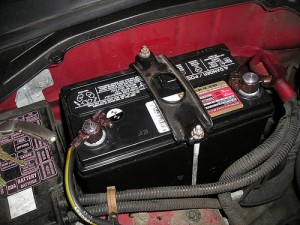
Your car’s battery is what keeps it running. It stores energy and transforms it into power as needed.

Yet a car battery is different than other batteries you use around your home, such as in a watch or your television remote. With a car battery, the greatest thrust of power is at the time you turn the key. It needs maximum current for a short period of time to jolt the vehicle into action.

That’s known as an SLI battery. SLI stands for starting, lighting, and ignition. It sends short bursts of energy to power your lights and other accessories. But one the engine comes to life, the power to keep the car running is supplied by the alternator.

If your car is still relatively new, most vehicles are equipped with a generic SLI battery. They aren’t designed for optimum use, or for long life.

My Car Doesn’t Start – Why?

When the alternator starts to fail, the battery jumps into action and starts picking up the slack. No matter how good your car’s battery is, it isn’t designed for this level of use. It will eventually wear down, and leave you stranded somewhere along your journey.

Car batteries are not intended for long term power supply. When your car doesn’t start, it’s easy to assume it’s the battery’s fault. But there’s an easy way to determine where the problem really lies.

Jumpstart your car with a set of jumper cables. Remove them as quickly as possible once your car comes to life. Then wait.

If the car continues to run, it was likely a problem with the battery.

If the car soon dies, you’ve pinpointed it’s a problem with your alternator.

Even if you get the battery running again, keep in mind that this might be a temporary thing. Something caused the car to stop working in the first place. Even a jump start might not keep it running for very long.

You can test the battery with a voltmeter to determine its life.

What Else Should You Watch For?

Because the alternator is critical to keeping your car’s electrical system working the way it should, any mechanical problem can be a sign that something is going on with the alternator.

In newer cars, everything is computerized. You’ll have warning lights for just about anything mechanical in the system. If a problem exists with your alternator, you’ll most likely see a warning light shaped like a battery flip on. Some may also blink “ALT” or “GEN” instead. This light is telling you the car has a voltage problem. It’s in the early stages of failure.

Most alternators require 13 to 14 volts to operate your vehicle effectively. Too little, and your car will have problems working. Too much, and it will corrode the system.

You might notice other things not working as well as they once did. Since the alternator supplies electrical current, you might notice your headlights dimming, not as bright as they once were. You might notice your dash lights begin to fade. Maybe your tachometer stops working. Or the heated seats turn off before its time.

This is your car’s way of compensating for a problem. It’s putting energy to the one place that matters most – keeping your car running while warning you to pull over and stop the car.

It might also be broken or loose connections.

Electricity from your alternator runs through a series of cables and wires. If there are any problems with these cables, wires, or connections, it can stop the energy from moving from one point to another. This symptom is often accompanied by a burning smell as well. If too much power is generated to one spot, it will produce higher voltage, in effect “cooking” one area of the system. It gives off a distinct smell that warns you of potential problems.

We’ve also had cars come in with starting problems, only to discover it’s a problem under the hood. If a belt brakes, it can hang off the engine block, flapping around as you operate your vehicle. It may be missing altogether. Broken or loose belts are pretty easy to spot; open up the hood and take a peek. Even if you aren’t skilled in auto mechanics, you can usually spot a potential problem.

Because every car is different, it’s best to get in tune with your car. Watch – listen – smell – those should be things you do every time you’re in your car.

Watch for signs that something is wrong. Do you see lights on the dashboard? Do you see things that aren’t working the way they once did? Is something harder to turn? Or do certain functions disappear?

Listen for any new noise that wasn’t there before. Pay attention to clinks, buzzes, hisses, and bangs. If there isn’t a logical explanation for it, it might be your car’s way of telling you something is wrong.

Likewise, a new smell is telling you something isn’t working the way it should. You have something spilling, overflowing, leaking, or disappearing. And when each piece of your car doesn’t have the proper tools to do its job, it’s going to find a way to do it anyway it can.

Have you noticed something new with your car? Don’t let it go. At the first sign of trouble, bring your car in and let’s diagnose the problem. If could be the difference between a minor repair and a major overhaul.

Filed Under: Car Maintenance Tagged With: Alternator, Battery

How Does A Car’s Brakes Work?

October 15, 2019 by Denver Express Car Care

When most people purchase a car, they don’t think a lot about the individual pieces used to create the final vehicle.

You might look at make and model. You might look online for reviews. You might consider safety and select one that will provide you and your family miles of safe driving.

While it’s easy to take the time to select your preferred color, ensure it has the features you’ll enjoy, or even select one for a comfortable ride, rarely do you consider what makes it all work.

Did you stop to consider how your car’s brakes work, for example? Or did you just assume they work because of advancements in technology?How Does A Car’s Brakes Work?

Buying a new car usually means the brakes will work for years without trouble. It can be a bit more difficult if you purchase a used car. It depends on who you buy from and how well the vehicle was maintained.

But in either case, you’ll start driving your car as you move throughout your busy days, relying on the safety of your car.

How does a car’s brakes work?

How do you know you’re safe every time you step on the brake pedal?

There’s a lot riding on it.

Imagine sailing down the mountain after a day of skiing, only to discover nothing happens when you press the brake pedal down. That’s a pretty scary thought, isn’t it? Especially if you have your family inside the vehicle?

The braking system is a fantastic invention that helps you get from point A to point B safely and secure. So how does it work?

Motion

Let’s start at the beginning. The concept of braking is simple. Any time you’re in motion, it takes friction to slow down. A vehicle’s braking system takes kinetic energy and turns it into heat energy through the use of friction as it is applied to your wheels. Your wheels turn. Using friction, brakes convert this to heat energy, which slows and stops your car.

Pretty simple. But of course, there are many ways to approach it. You can even see this at work in the Flintstones cartoons where foot-power is used to slow and stop the vehicle.

Today’s cars are a lot more complicated, and we use this process in different ways to achieve the same results.

Brake System Parts

A car’s braking system is made up of a number of parts.

Brake pedal – this is the lever you press down on with your foot. The more pressure you apply, the more your car slows down until it eventually stops.

Brake booster – most vehicles today have power brakes. The brake booster is what increases the force of the stopping mechanism without having to increase the force of pressing down. There are two separate kinds of brake boosters – vacuum-assisted and hydraulic-assisted. Vacuum-assisted boosters create a vacuum using air coming in from the engine. Hydraulic-assisted uses hydraulic pressure from the vehicle’s power steering. As you step on the pedal, force created by this action kicks in and makes stopping easier.

Master cylinder – this holds the brake fluid. Brake fluid runs through the brake lines and into each wheel of your car. The master cylinder ensures power is sent to all four brakes at an even rate. Most master cylinders have two reservoirs, each filled with brake fluid. This is a fail-safe mechanism to give more assurance that if there’s a leak or a blockage, all four wheels won’t be impacted at the same time. On a rear-wheel drive car, one reservoir feeds to the front while the other supplies the rear. On a front-wheel drive car, it uses a diagonally split system because the front brakes do most of the braking. That ensures there is one line to each of the front brakes, to lessen the likelihood of complete failure.

Brake lines – these are steel tubes that connect the master cylinder to each of the four brakes on your car’s wheels. This is how brake fluid moves from the reservoirs in the master cylinder to each of the brakes.

Brakes – there are two different kinds of braking systems: drum brakes and disc brakes.

Drum brakes have been on cars for over one hundred years. Drums are attached to each wheel, with two heat-resistant pads inside. As you press down on the brake pedal, brake fluid moves into the drum. It activates two small pistons that control the brake pads and pressing out against the brake drum. This process slows the car down. Drum brakes are inexpensive and can last a long time. You’ll likely find them on the rear wheels of the vehicle.

Disc brakes were developed to combat the biggest problem with drum brakes: heat. Drum brakes are self contained. As heat builds, it has nowhere else to go. If they get too hot, they can no longer create the friction necessary to slow and stop. Disc brakes work in the opposite direction, squeezing the brake pads in towards a metal disc attached to the wheel. This creates more pressure, thus creating friction. And because the brakes don’t reside in a drum, they don’t get as hot as drum brakes do.

Of course, there are other tiny parts that make a big impact too. This is an intricate system designed to keep you safe as you slow and stop.

Brakes can become compromised in all kinds of conditions. Brake damage or failure can result from things such as improper maintenance, ignoring maintenance altogether, low levels of brake fluid, worn out brake pads, or even undetected damage from an unknown source. Colorado driving conditions often exacerbate the situation, especially if you travel mountain roads regularly, drive in extreme weather conditions, or often pull trailers and other sports or camping equipment  that can take its toll on brake systems.

Watch for these signs

To avoid potential brake problems that can leave your passengers at a safety risk, watch for:

Strange noises – if you tap on the brake and hear a high pitched squeal, a scraping noise, or a grinding noise, it might be your brake pads coming in contact with the disc.

Pulling feeling – if you notice your vehicle pulling to one side or the other when you tap on the brake pedal, it can be one of your brakes isn’t working the same as the other. If your brake pedal sinks to the floor, or pulsates before braking begins, it’s a sign your brakes need maintenance and attention.

Slowing takes more time – if it takes longer to slow and stop, it indicates a problem with your brakes.

Warning lights – don’t ignore those tiny lights that appear on the dashboard from time to time. They’re there for a reason.

Do you have a problem with your brakes? Stay safe and schedule an appointment today.

Filed Under: Brake Repair Tagged With: Car’s Brakes Work

Serpentine Belt Replacement

October 14, 2019 by Denver Express Car Care

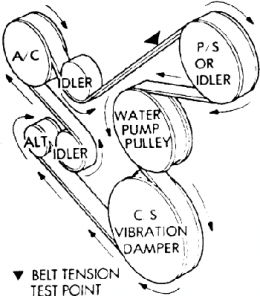
Your serpentine belt is a long belt that’s driven by your engine.  It winds around several accessories that power important automotive systems.  Let’s go over them.

  • First, the serpentine belt drives your air conditioning system.
  • Next, the belt powers the alternator.
  • The serpentine belt may also run the pumps for both the power steering and power brakes.  In some vehicles, power steering may have an electric drive and power brakes can be vacuum driven.
  • On many vehicles, the serpentine belt powers the water pump ( on some cars, the water pump is powered by the timing belt).

Your service technician can perform a visual inspection of the belt to see if it has any cracks that signal the belt could fail soon and also measure the amount of belt material to make sure there is enough.

There’s a special, spring-loaded pulley attached to the engine called the tensioner pulley and sometimes an extra pulley called the idler pulley.  Their job is to make sure there’s a constant tension on the serpentine belt so that it doesn’t slip.  The spring can become worn and no longer provide the necessary pressure to keep the belt tight.  That’s why it’s often recommended that the tensioner, and the idler pulley, if so equipped, be replaced at the same time as the serpentine belt.

All in all, the serpentine belt’s an important part for the function of your vehicle and it’s not as expensive to replace as you might think.  So it’s good to do your serpentine belt replacement before it fails.

Give us a call and let us help you.

Filed Under: Car Maintenance, Heating-Air Conditioning Tagged With: Serpentine Belt Replacement

How Do I Check My Brake Pads?

October 9, 2019 by Denver Express Car Care

Think about how many times you count on your car’s brakes to do their jobs each day. You rely on them to stop you at the stop sign by your neighborhood elementary school. You rely on them in the parking lot at your local grocery store. You rely on them as you’re exiting the highway on your way to work.

What if they failed?

The consequences could be devastating. It’s the stuff action-thriller movies are made of. And while they may be fun to watch on Friday night, the last thing you want happening is to live it out in real life.

But how do you know when your brakes are no longer working? Can you check your brake pads and know they need replacing?How Do I Check My Brake Pads?

As your brake pads wear, they become thinner and won’t have the full stopping radius as when they were new. And that means your vehicle isn’t as safe for you or your occupants. If you can’t stop quickly, or it takes longer to come to a full stop, you’re more at risk.

How do I know if my brake pads are worn out?

Your vehicle has brakes on all four wheels of your car. It’s operated by a hydraulic system, which helps transmit force through the braking system with the use of braking fluid.

Even though your vehicle has brakes on all four wheels, it relies more on the front brakes for more stopping power. That’s because during the braking process, a car’s weight is shifted forward to the front wheels, meaning they need more braking power to bring the vehicle to a stop.

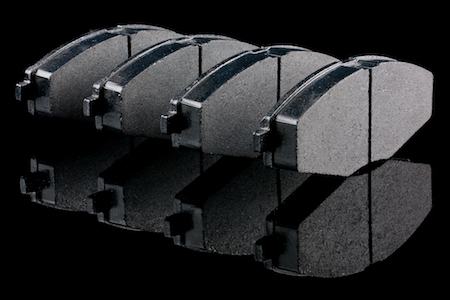
Most modern day vehicles use a disc brake system. A disc brake uses a disc to turn the wheel. This disc is straddled by a caliper, which uses tiny hydraulic pistons working to control the braking process.

These pistons push brake pads down against the disc on each side, causing friction to bring it to a stop. They are shaped in such a way as to cover a wide area of the disc.

When they’re new, this system works perfectly. But over time, many things can go wrong, including the brake pads wearing down. That’s why it’s important to periodically check your brake pads to ensure they are in great shape.

Before you do anything, be sure your brakes are cool. Even a quick trip out in your local community can make your brakes incredibly hot. Think about how much power it takes to stop your car over and over again as you zip along your neighborhood streets, parking, and returning home.

In some cases, you can tell your brake pads are having problems just by looking at your wheel. The next time you wash your car, spend a few minutes looking at your wheels. Do you notice a buildup of brake dust? This is normal. As brake pads wear down, the amount of brake dust begins to fade. Cleaner wheels mean less friction potential in your brake pads. And that can be a sign you might need new brake pads.

On many vehicles, you can see the brakes without removing the wheels. Take a peek between the holes in the wheel. To determine how much life is left on the brake pad, you will need to determine the thickness. You might need to pull out your flashlight to get a good look. If you think the pad has less than ¼ inch thickness left, it might be time to get them replaced.

Some brake pads have wear lines built into them. This is an indicator slot in the middle of the brake pad. If this slot is barely visible, or is no longer there, it’s time for new brake pads.

Other warning signs your brake pads need replacing

Not all warning signs are physical. In many cases, your brakes give you warning signs you can pick up on by driving and listening.

Have you ever pressed down on the brake pedal and heard a loud screeching noise? That’s your brake pads signaling their life is coming to an end. Your brakes have a metal shim built into them to provide you with an indicator. When this metal shim appears through brake wear, it pushes metal against metal, making that loud screeching noise. It’s loud enough you’ll hear it over your air conditioner or heater, or over the music from your radio. This warning gives you plenty of time to make it to the repair shop before you start experiencing brake failure.

You may also notice your brakes aren’t as responsive as they once were. Press down on the brake pedal; does it sink closer to the floor before you gain traction? That could be an indication of a leak within the braking system. It might be a problem with brake fluid, or possibly an air leak in the brake hose. Investigate further and see if you notice a tiny puddle of fluid underneath your car. This can be a telltale sign of a brake fluid leak.

A vibration in your brake pedal can all be signaling you have a problem with warped rotors. As you press down on the brake pedal, the warped rotors don’t connect perfectly with the brake pads; they are unable to grab the surface evenly. This gives a pulsating feeling as you continue to press down on the brakes.

You should also be watching your sensors on your dashboard. If the braking system light comes on, it’s your vehicle’s computer system telling you something is wrong. This is a sign to get to a repair shop when it’s convenient for you.

How many miles do you get out of brake pads?

In general, brake pads should be replaced around 50,000 miles. Of course, that’s just an estimate. It depends on a variety of things, including the make and model of your car. Some brakes may need replacing around 25,000 miles, while others may last as long as 70,000 or more. Consult your owner’s manual to find out the average for your vehicle.

Of course, this is just a rough estimate. It’s important to pay attention to the way your car handles, and notice when things don’t feel the way it should.

When in doubt, bring your car in for evaluation. It’s better to be safe than have a problem that could put you or your family in jeopardy. We’re here to help, from checking your brake pads, to full replacement of your brake system.

Filed Under: Brake Repair Tagged With: Check My Brake Pads

How Long Does It Take A Mechanic To Replace A Transmission?

October 7, 2019 by Denver Express Car Care

When you get in your car, turn the key, and everything runs smoothly, it’s easy to forget how many moving pieces are in your vehicle. But when your engine fires up and you hear noises, or your car runs rougher than normal, that’s when the questions begin.

  • What’s wrong?
  • Will I get safely to my final destination?
  • Is it something I can live with, or do I need to bring it into the shop right away?How Long Does It Take A Mechanic To Replace A Transmission?

Some things are easily remedied. Others, every time you start and move your car, you risk further damaging parts and systems.

Most cars on the road today have an automatic transmission. That means your car automatically switches gears as you increase and decrease your speed, without having to manually shift to get there. It allows you to focus on the road instead of worrying about what gear you’re in. Suffice to say, your transmission is an important system to make your car run properly.

Like other parts on your car, wear and tear can take its toll on the transmission. Eventually, it will stop working and leave you stranded unless it receives proper care along the way.

How do you know if your transmission is failing? 

  • Your transmission is slipping – Listen to your car as it switches gears. Does it feel like it’s changing gears at the wrong time?
  • Shift sticking – Is it increasingly harder to move out of park, to reverse, and to drive? If it feels like the gears are sticking, it’s a sign your transmission is failing.
  • Transmission fluid leak – Your transmission fluid should never leak. If you notice fluid beneath your car when you drive away, that’s a sign that it’s time for maintenance.

Like any other vehicle problem, the first step is having one of our repair technicians diagnose the problem and determine if parts can be repaired, or if they will need replacement.

Repair is easier and will take less time. Often, parts can be replaced quite easily, and you can drive away knowing you’ve stopped the problem in its tracks, and you’ll have many more miles down the road before you need to replace them altogether.

But in some cases, the damage is so severe, replacement is your only option. While transmissions can last a long time, they aren’t infallible. Other parts within the system fail too, causing more severe problems. In this case, your best course of action is to replace the transmission.

How long does it take to replace a transmission?

Even the sound of it makes you shake your head with worry. How can you go days without a car? What are your options while your car is in the shop?

The good news is quite often, it doesn’t take more than a day or two to replace a transmission. Of course, it depends on the model and make of your car, and the type of transmission it is. If you have a rear-wheel drive vehicle that’s commonplace on the road, plan on being without your vehicle at least a day or two. If you have a front-wheel drive, the process can take longer as it’s quite labor-intensive. Estimate up to three to four days to ensure you give yourself plenty of time.

Better yet, stop by. The best way to get an estimate of how long it will take to replace a transmission is for us to see what type of vehicle you’re driving. Only then can we give you an accurate picture of how long it will take.

How often should I change my transmission fluid?

What makes your transmission run effectively is the transmission fluid. Transmission fluid is a slippery liquid that helps lubricate the gears. With an automatic transmission, it also acts as a coolant, and transmits power from the engine to the transmission.

Transmission isn’t as commonplace as gas or oil. You don’t replace it on a regular basis, such as with motor oil or windshield washer fluid. But it is part of routine maintenance for your vehicle, to ensure it has the longest life possible.

Most manufacturers of cars with manual transmissions suggest replacement of transmission fluid every 30,000 to 60,000 miles. Manufacturers of vehicles with automatic transmissions suggest 60,000 to 100,000. In some cases, the transmission fluid never has to be replaced at all – doing so will actually cause more harm than good.

The biggest reason it should be changed is because of contamination over time. Every time you use your car, the systems kick into gear. Bearings and gears move and rotate. Parts start to wear out. Microscopic pieces of metal infiltrate the transmission oil, and shorten the life of your transmission. If the fluid isn’t clean, it can’t do its job as effectively as it did when it was new. Each piece corrodes the fluid a little bit more, until damage of other parts begins.

If you don’t change it regularly, you will shorten the transmission’s life. If you aren’t sure when it was last replaced, a good place to start is with a maintenance visit, where we check your entire system and make sure everything is operating in good condition. It will ensure that you can drive safely in the near future, and that every part is operating as it should.

Note: Transmission fluid isn’t like motor oil. Transmission fluid doesn’t burn up. If you are low on transmission fluid, you have a leak somewhere in the system. It’s time to fix it to avoid potential problems.

Know your options

There are a lot of ways to proceed when it’s time to replace your transmission. Your first choice isn’t always to install a new one. In some cases, rebuilding is a perfect solution. Replacing just part of the system can have you back on the road as good as new.

The key is to find a good repair shop to help you make your decision. We understand your transmission going out probably wasn’t in your budget plans.

We can give you all of your options and help you make the right choice for your situation. Our goal is to get you back on the road safely, and ensure your vehicle is in good condition. We’ll give you great advice, and help you make the right decision.

Stop by today for a free estimate. We look forward to working with you.

Filed Under: Car Maintenance Tagged With: Replace A Transmission

What Percentage Do Brake Pads Need To Be Replaced?

October 3, 2019 by Denver Express Car Care

What’s one of the most important systems on your vehicle? It would be hard not to put the brake system at the top of the list. Imagine sailing through congested areas, or trying to navigate a busy intersection without the use of brakes. It simply couldn’t happen.

Yet for all of its importance to how well your car works, most of us pay little attention to the braking system. We expect it to be there, working for us, every time we turn the key.What Percentage Do Brake Pads Need To Be Replaced?

Like other parts, your brakes wear out over time – especially your brake pads. These are one of the most important pieces of your braking system.

How were brake pads invented?

When most of us think about the very first cars, we think of the horseless carriages we see rambling in old movie clips. They bumped and jumped along on dirt roads, never going very fast.

These original vehicles were  created with brake systems made from wood. The driver pressed a lever that moved a block of wood against the wheel of the car. The friction from the action stopped the vehicle.

What worked at 10 to 20 mph didn’t work as cars picked up speed. Friction causes heat. And wood doesn’t do very well when you involve heat.

Today, one of the pioneers in modern braking systems is considered to be Gottlieb Daimler, who invented mechanical drum brakes. He theorized that by anchoring a cable-wrapped drum to a vehicle’s chassis, it could be used to stop the momentum of the car.

Daimler wasn’t the only one who had a hand in making our modern brake systems. William Lanchester patented the disc brake in 1902. Anti-lock brakes were invented by Gabriel Voisin in 1929. And the rest, as they say, is history.

How do modern brake pads work?

We’ve come a long way since those wooden blocks used as brake pads.

Today’s brake pads are created in several ways.

Years ago, brake pads were made from asbestos, because of its heat-absorbing material. Over time, as asbestos was called out for being a highly carcinogenic and cancer-causing material, manufacturers turned to organic brake pads to fill the void.

Organic brake pads are currently used on the majority of vehicles sold in the US. They are created using a mixture of fibers, including rubber, carbon compounds, glass, fiberglass, Kevlar, and more. They are bound together using resin, and provide good performance throughout the life of the product.

Of course, that’s not the only option. Another option is ceramic brake pads. These pads are ceramic-based, made from ceramic plates that look like modern-day pottery. They are denser but more durable, having fine copper fibers weaved throughout to increase strength and conductivity. They are quieter than organic brake pads, have a longer lifespan, and are considered to have more reliability in a greater amount of temperature variances. However, they are the most costly of all brake pads. Heat is transferred through the brake pads and into the rest of the braking system more easily, meaning you’ll see more wear and tear on other parts as well.

Metallic brake pads are made of iron, copper, steel, and graphite, mixed together and bonded to create the pad material. The reason these have stood the test of time is that they are durable, provide good performance, and are cost-effective. They can take the greatest heat variance, which makes them perfect for performance vehicles that tend to use the braking system more, and at higher speeds.

No matter what type of brake pad your vehicle uses, they stop your car in similar fashion. The brake pad makes contact with the rotors and causes friction to slow your car down to a stop.

When you press on the brake pedal, it sends brake fluid through a cylinder down into the calipers. The calipers engage the brake pads, and start applying pressure to the rotor attached to each wheel. This pressure creates the friction used to slow down your car. As the rotor slows, so does your wheel.

How do I know when my brakes have a problem?

If your brake system is working as it should, you probably don’t think much about it. But as your brake pads start wearing down, your car’s performance will change.

You might notice a screaming or grinding noise every time you press down on the brake pedal. This signals the brake pads are worn and aren’t connecting with the rotors the way they should. It’s your cue to bring in your vehicle as soon as possible.

You might notice shaking in your steering wheel or brake pedal. As worn out brake pads connect with the rotors, they can produce a shimmy or a shake. It’s your car’s way of telling you something is wrong.

You might notice a warning light. A dashboard light might illuminate telling you there’s a problem with your system. It could be brake pads, low brake fluid, or a parking brake that’s engaged. If you can’t find the cause, bring it to the shop for us to check everything out.

Is there a percentage when brakes are officially worn out?

Every vehicle is made under different guidelines. You can check with your owner’s manual to determine how often your brakes should be inspected. General guidelines suggest twice a year or approximately every 5,000 miles. Of course, you should always follow what the manufacturer recommends.

You’ll often hear that brake pads have worn by a certain percentage. Some mechanics will say you have a certain percentage of brake life remaining – a 40 percent brake life remaining.

It’s important to talk with your mechanic to understand what that means. Some vehicles can move down to 25 percent and not show any of the classic signs. Safety is always the key.

Have a question about your brake pads? We’re here to help. Give us a call today, we’re happy to perform a brake pad check and see how worn your brake system is. 

Filed Under: Brake Repair Tagged With: Brake Pads

What Are The Dangers Of Driving With Broken Struts

September 29, 2019 by Denver Express Car Care

Every car, truck, SUV, or crossover has a suspension system. It’s the parts of a car that hold your vehicle off the ground, protects passengers and cargo, and gives the vehicle its ability to make turns as you drive around.

The suspension system contains parts you are very aware of – your tires and wheels. It also contains things you probably don’t pay much attention to – springs, shocks and struts.

Every part on your car starts wearing out the moment you drive it off the showroom floor. And as this wear happens, your car won’t perform the way it once did. You might notice it doesn’t turn as sharp as it once did. You might feel as if your vehicle is a little more squirmy on rainy roads.What Are The Dangers Of Driving With Broken Struts

That’s your car warning you that something is wrong. And if you don’t act quickly, a bigger problem is about to materialize.

What is a car strut?

Your car’s suspension system wouldn’t exist without struts. Stuts are the part that hold your vehicle off the ground. Without them, it would fall to the pavement.

Sturts lock together many different parts of the suspension system. They connect to the coil spring and shock absorber. They connect to the steering mechanism. They provide support to help shock absorbers support the weight of the vehicle and give it the smooth ride you expect.

You’ll often find the terms “shocks and struts” used interchangeably. But there are subtle differences. The only job a shock has is to stabilize the car. It keeps it from bouncing around. The car would still be able to drive if the shocks went out.

Is it safe to drive a car with bad struts?

When your struts wear down, they do more than give you an uncomfortable ride. They also present safety risks that can increase your chances of an accident. Worn struts can increase the amount of time it takes to stop your vehicle, especially in adverse weather conditions. If the streets are wet from snow or rain, you’ll need more distance for stopping with a worn out strut.

Struts also help stabilize the car. Every time you make a turn, your car’s struts are there to provide stability for the action. While that might not seem that important when you’re making a right hand turn into your neighborhood, increase the speed, and try a hairpin turn at highway speeds. That puts you, your riders, and the other vehicles around you at increased risk.

Of course, struts aren’t something that wear out quickly. You don’t have to replace them on a regular schedule like you do an oil change or new wiper blades. It depends on several things, including the model and make of your car, plus the amount of wear and tear you put on your car every day. Someone who drives up and down the mountain for work and play every day is going to be different from someone who drives two minutes to work and back.

Under normal conditions, you might be able to get 75,000 to 100,000 miles before you notice a change. With heavier use, you might start noticing problems at 50,000. Like most parts on your vehicle, the answer to “when I should replace it” is “it depends.”

What are the symptoms of bad struts?

Struts won’t wear out overnight. Instead, it’s a gradual process over time. That’s why it’s important to pay attention to how your car drives, especially as it ages.

Every time you hit a bump in the road, or hit a pothole that makes you cringe from the jarring effect, your struts wear down a little at a time. And eventually, they start talking back.

Here are a few warning signs that your struts need replacing.

The nose of the car dips when braking. Have you ever punched on the brakes when someone cuts you off, only to feel the nose of the car dips down more than it should? That’s a problem with the struts.

Highway speeds are a little more intimidating. Do you feel that shimmy when you reach certain speeds? Have you pressed your car from 60 to 70, only to bring it back down because of the shake? That’s your struts talking. They aren’t providing the same stability they once did.

The tires wear unevenly. When the struts are going out, they’ll apply different amounts of pressure to the tires. You’ll see the tread wearing away in unique ways, giving each tire an uneven wear pattern.

The tires bounce with every dip in the road. Every time you hit a bump, it will feel as if the car is bouncing to recover. You might also hear a clunking noise along with it.

You’ll notice a pull when you take turns, especially at higher speeds. The car will feel wobbly going into the turn and recovering back to driving straight.

You may also notice fluid leaks. When this happens, it’s a sign that the seal has broken and the fluids that make your suspension system work is escaping. The more the system operates without proper fluid levels, the more damage may be done to your suspension system.

How do I buy new struts?

If you’re not sure if your struts need replacing, the best place to start is by taking your car in for servicing. Our goal is to ensure your car is safe to drive. We’ll give you all of your options and help you make the right decision for your vehicle.

Like everything in life, you get what you pay for. Adding new struts to your vehicle isn’t a DIY project.

Ensure you purchase quality, brand name struts. You have choices, depending on how you drive. Some will be a little stiffer for better performance, something that may be important if you like feeling the curves of the road. Others are better for comfort, and will ensure you enjoy the ride.

It’s also important to discuss other parts of the suspension system while making a decision about your struts. The struts are just one piece of the suspension system. If your struts are worn out, there’s a good chance other parts are as well, like the bearing mounts or the shock boots.

Whatever you do, don’t neglect your struts. Stop by as soon as you have questions about their safety. It can help give you a better ride, and get you back on the road, enjoying the experience once again.

Filed Under: Suspension, Tips & Tricks Tagged With: Driving With Broken Struts

What Causes Brakes To Smoke?

September 25, 2019 by Denver Express Car Care

On most days, you hop in your car and drive where you’re going trouble-free. You think little about how your car is operating, because at least on the surface, everything is fine.

Then occasionally something goes wrong, and it’s impossible to ignore. You’re driving your car, and suddenly you begin to notice a strong odor of smoke. You look around and see a trail of smoke either in front or back of your vehicle. This can cause a moment of panic, one you can’t ignore.

In this situation, it’s often your car’s brakes.

What causes brakes to smoke? 

The first question to ask yourself is: How old is your brake system?What Causes Brakes To Smoke?

For older vehicle brakes, the most common reason your brakes will start to smoke is a stuck caliper.

Brake calipers are essential to help your vehicle stop. Your car probably functions with disc brakes. With a disc brake system, the car’s wheels are attached to metal discs (also known as rotors) that make the wheel spin. A caliper’s job is to push against the rotor like a clamp, cause friction, and slow the wheel down.

Of course, that process depends on everything working as it should. If dirt or corrosion sets in, it can cause the caliper to stick. It will heat up as the friction continues until eventually, it smokes and creates the familiar odor.

What if brake pads are brand new? 

What if new brakes smoke a few miles outside of the repair shop?

This isn’t unusual after brake pads are replaced. In fact, it’s so common that manufacturers have a name for it: polymerization, or a curing process.

Again, when brake pads move against the rotors, friction causes a lot of heat. As brake pads connect with the rotors the first few times, the curing process takes place.

Your new brakes aren’t burning up; they aren’t faulty from the shop. The smoke smell you incur are gases formed during this curing process.

It’s important to be gentle with your new brakes for the first few miles. If new brake pads overheat too quickly, it can cause something called brake fade. Check with the technician and follow manufacturer’s guidance. They often recommend a “bedding” process to ensure your brakes pads are working properly. This:

  • Cures the brake pad material
  • Embeds the material into the rotor to cause a film for proper stopping
  • Smooths out the rotor surface

Brake pads come in many different formats, made from several different materials. Therefore, every brake pad will come with its own set of guidelines and rules. And if you go with a more specialized product for higher end performance, it may have an even more distinct smell as it goes through the curing process.

Why do brakes smell like they are burning?

Sometimes it’s not about what you see, but what you smell. Every part of your vehicle creates different sounds, smells, and noises. You’ll find your brakes can sometimes create a distinct burnt smell.

If this occurs and you’ve been driving for a while, especially down a very steep hill, and you’ve been riding your brakes, it’s probably the friction building up from the process.

Brake pads are designed to produce friction when you need it to stop. But too much of anything can lead to problems. The more pressure you apply, the more friction occurs, and slowly, heat develops. If it gets too hot, you may start smelling a burnt smell. It can also cause your brakes to smoke.

This isn’t a problem once in a while. But if you start to notice it regularly, or if you notice a burnt smell during normal driving conditions, you have a bigger problem. It might be a caliper has seized, which causes the brake pad to drag against the rotor. It might also be a parking brake is still being applied, or you leave your foot lightly on the brakes, and it continues to drag.

If you can’t find a reason for it, it’s time to get your car into the shop.

How do I cool down my brakes?

Brakes overheat when constant pressure is applied between the brake pads, calipers, and rotors. The more pressure, the greater the chance of problems developing over time.

Your pads can wear and become damaged when friction “cooks” them onto the same spot on the rotor. This means as soon as you discover overheating, your best course of action is to cool your brakes down quickly.

Overheated brakes can cool down simply by not using the brakes. Slow down your speed, leave plenty of space around you, so that you won’t need your brakes for a bit. Try to do this for five minutes or so, to give your brakes a chance to cool. This will keep the pads and rotors from warping because of the concentrated heat.

Can your brakes catch fire?

You’ve heard the adage: where there’s smoke, there’s fire.

Applying this to this discussion on brakes, one could assume that if brakes heat and smoke, then they must be able to catch fire as well.

That assumption would be correct.

Brakes can catch fire for a variety of reasons. It can be from improper car maintenance. Or from careless driving.

You’ll find brakes catching fire with aggressive drivers. They often brake too hard, keep their foot attached to the brake pedal, and pound on the brakes on a regular basis. The friction it causes between the brake pads, calipers, and discs is a continual process. Eventually, that heat has nowhere else to go, and it catches fire.

In some cases, the parts that make up the braking system no longer fit well together. The pieces aren’t positioned correctly, they fit tightly together, or are simply worn out from wear. When pressure is placed on parts in the wrong manner, that pressure can cause sparks, which leads to fire.

Take care of your brakes

Every car owner should realize that brakes are one of the most important parts of your vehicle. You can’t drive without them. You should be watchful of the care you give them.

If you suspect anything wrong with your brake system, don’t hesitate to stop by. In the case of your brake system, it’s better to be safe than sorry.

How can we help you with your brakes?

Filed Under: Brake Repair Tagged With: Brakes To Smoke

  • « Previous Page
  • 1
  • …
  • 61
  • 62
  • 63
  • 64
  • 65
  • …
  • 103
  • Next Page »

Express Car Care
4200 E. Evans Ave. Denver, CO (map)
Phone: (303) 691-2760
Located just southeast of the Colorado Light Rail station

Follow Us Today!

  • Facebook
  • RSS

Shop Hours

Monday: 8:00AM – 5:00PM
Tuesday: 8:00AM – 5:00PM
Wednesday: 8:00AM – 5:00PM
Thursday: 8:00AM – 5:00PM
Friday: 8:00AM – 5:00PM
Saturday: Closed – A note from the owner
Sunday: Closed

Last car oil change time  – 5:00PM

Click for the BBB Business Review of this Auto Repair & Service in Denver CO

Recent Articles

Tire Rotation: When to Do It—and the Signs You Shouldn’t Ignore

Tire rotation is one of the simplest ways to help your tires wear evenly, last longer, and keep your vehicle handling predictably. It is easy to put off, but a consistent rotation schedule can save … [Read More...]

  • Which Oil Is Right for Your Car?
  • Stop Burning Money at the Pump
  • Differential Service: Why It’s Crucial for Your Car’s Longevity and Performance
  • How to Catch a Transmission Problem Before It Leaves You Stranded
  • Why You Shouldn’t Wait to Address a Small Exhaust Leak

Search Our Site

Brakes Service

How to Keep Your Brakes Quiet, Responsive, and Safe

Everything You Need To Know About Replacing Your Brake Pads

How to Know If It’s Time to Replace Your Brake Rotors

Oil Change

Top Benefits of Getting Regular Oil Changes in Denver

Oil Change Specials in Denver: Save Money and Keep Your Car Running Right

Why Regular Oil Changes Are Crucial for Denver Drivers

Suspension

How to Know If Your Car Needs Suspension Repair in Denver’s Bumpy Roads

A Guide To Understanding Bushings on a Car

Tips for Preventing Wear and Tear on Your Car’s Suspension

Transmission Service

How to Catch a Transmission Problem Before It Leaves You Stranded

How Often Should You Service Your Transmission in Denver?

Transmission Trouble? Common Signs and When to Visit Our Denver Shop

Engine Service

Stop Burning Money at the Pump

Everything You Should Know About Your Vehicle’s Timing Belt

Is Your Car Hesitating During Acceleration?

Auto Tips & Tricks

How to Deal With Car Noises That Only Happen When You Turn

Top 5 Maintenance Tips for High-Mileage Vehicles

Why Tire Pressure Matters More Than You Think

"Denvers Best Auto Repair and Quick Lube" - Copyright © 2026 - 4200 E. Evans Ave. Denver, CO 303-691-2760