• Home
  • Denver Auto Repair Services
    • Full Service Oil Change
    • Expert Mechanics
      • Expert Honda Mechanics
      • Expert Toyota Mechanics
      • Expert Subaru Mechanics
    • Automatic Transmission
    • Fuel System Cleaning
    • Radiator Flush Service
    • Wiper Blades
    • Air Filter
    • Cabin Air Filter
    • Gearbox Service
    • Brake Repair
    • Clutch Repair
    • CV Boots
    • Tune-Up
    • Steering & Suspension
    • Tires
  • Auto Diagnostic
  • Contact Us
    • About Us
  • Shop Specials
  • Testimonials
  • Blog
  • 303-691-2760

Express Car Care of Denver

"Denver's Best Auto Repair and Quick Lube"

  • Brake Service
  • Car Maintenance
    • Heating-Air Conditioning
    • Suspension
    • Transmission
    • Engine
    • Tires
  • Oil Change
  • Tips & Tricks

Archives for May 2010

Car Maintenance Tips For Your Older Car

May 28, 2010 by Denver Express Car Care Leave a Comment

I have an older car. What type of car maintenance tips can you offer to make sure my vehicle stays in top shape? I’m not ready to jump into a new car, so I want to keep my older car in the best shape possible.
We’re hearing a lot of this these days. Instead of replacing a car on schedule every three to four years, people are pushing the window of ownership, and are choosing to keep their older cars an extra year or two. Not only will it save you money on monthly payments, but it also can save you on insurance rates as well.

Keep a car maintenance log
Keep a small spiral notebook and pen in your glove compartment, and keep track of all of your car related maintenance. You may also want to record your gas fill-ups and mileage – a reduction of mileage can be an early warning sign of a future problem. Also use the same service location for all your car maintenance items – they will track your maintenance and be able to monitor potential problems along the way.

Take the time to clean your car thoroughly
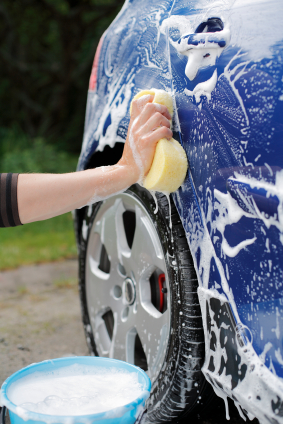
Clean your car inside and out. While everyone likes a clean car on the outside, the inside is just as important. Clean off the magnesium chloride from your wheel wells and undercarriage, which Colorado uses to keep the streets ice free in the snowy months.

Fix and fill your washer fluid tank
With Colorado’s variable weather patterns, you may notice a cracked washer fluid tank on an older car. Fix immediately, and keep it filled with plenty of window washer fluid, especially on those cold, slushy days.

Check your tires regularly
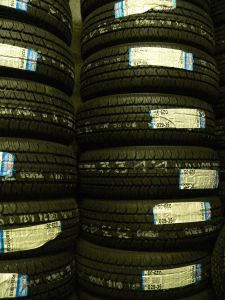
Ever find one of your tires missing the tire valve cap? It may cause your tire to leak. Tire valve caps keep out dirt and moisture that can cause leaks over time. Also make sure your tires are properly inflated. Under-inflated tires create excessive heat and stress, and lead to failure in a much shorter period of time that the manufactures expected life. Check your tires periodically for uneven wear and proper tread, and make sure you rotate your tires on a regular schedule.
Filed Under: Car Maintenance Tagged With: Car Maintenance Tips

When To Replace Your Timing Belt

May 27, 2010 by Denver Express Car Care Leave a Comment

Some parts on your automobile are easy to see when they need replacing. The tread may wear down on your tires, or the fluid in your washer tank runs low. For other parts, its more important to maintain them on a regular basis based on an interval specified by your car’s manufacturer.

Replacing your timing belt is one such part. For most vehicles, your timing belt needs to be changed between 60,000 to 75,000 miles.

Your cars timing belt is a ribbed band of rubber and fiber that controls the timing of your engine’s valvetrain. In connects the crankshaft with the camshaft. It’s a necessary piece of your engine, and if it breaks, your car shuts down. Whether you’re at home, at work, or hundreds of miles from home on vacation, you’ll need to repair your car immediately after the timing belt breaks.

Your timing belt gives no indication of wear or impending failure – it simply snaps when you’re driving and leaves you stranded. While it may seem unfounded to change something with no problems, the alternative can cause you nothing but headaches.

In the case of replacing your timing belt, an ounce of prevention truly is worth a pound of cure.

Filed Under: Engine Tagged With: When To Replace Timing Belt, When To Replace Your Timing Belt

How Often Should I Change My Automotive Brakes?

May 21, 2010 by Denver Express Car Care Leave a Comment

Have a question about how long your automotive brakes will last on your car? There are a couple of things to consider.

Brake Pads
Brake pads typically come with a warranty – you may see a lifetime warranty, or a warranty based on mileage, such as a 10,000 mile warranty. Lifetime warranties aren’t meant to last a lifetime. Auto parts manufacturers use that terminology because brake pads do last a long time, and most car owners will trade and purchase a new car long before their brake pads need replacing.

Regardless of the terminology, it’s more important to listen to your car instead. When you apply the brakes, you can hear the sounds of a worn brake pad. If you hear a grinding noise or a squeak, its time to replace the brake pads regardless of the mileage.

Rotors
Brake rotors, or brake discs, are what your vehicle’s brake pads clamp down on, and what stops the wheels from spinning. Like brake pads, there are different types of rotors, depending on your car and driving needs.

Unlike brake pads, rotors do not need to be changed on a regular basis, and should last indefinitely if you provide regular maintenance routines on your automobile. Rotors will be damaged if you allow your brake pads to wear down, and drive without the use of pads for an extended period of time. The grinding noise you begin to hear from the brake pads is an indication of the screws in the base of the brake pads grinding into the groove of your rotor. The more it continues to grind, the greater your chance of having to replace your rotors.

[Want to keep your automotive brakes in top condition? Have them checked and replaced on a regular basis.]

Filed Under: Brake Service Tagged With: Automotive Brakes, How Often Should I Change My Automotive Brakes

How To Find the Best Tire Dealer in Colorado

May 19, 2010 by Denver Express Car Care Leave a Comment

You are about to head out of town on a road trip vacation. You know it’s been a while since you’ve purchased new tires, and have started noticing your tires are looking old and worn. In order to keep your family safe, replace your tires before you head out of town.

How do you find the best tire dealer in Colorado? One that will give you honest advice, the best price, and give you quality customer care from beginning to end.

Do a little research.
Start online. The best tire dealers value their reputation and their business. They will spend the time and money on their business, and give you a sense of security when making your final selection. It’s always a bit stressful when you choose a company to work with, only to find they’ve shut down a few weeks after you’ve been in. A reputable tire dealer will be in business for the long haul.

Don’t always choose a big box store.
We’ve all heard the big box names that have multiple locations around the country. They focus on one thing, and one thing only. While they may seem to have the best price upfront, they may actually have hidden costs. Ask questions. What guarantees do they have? Do they offer extra services, such as tire rotations or free repairs?

Support your neighborhood location.
Sometimes it’s nice to build friendships within your local community. While chain stores can have low prices, they may also have a huge fluctuation in employment. Meaning you’ll never get the same person when you visit a location. Not so with a neighborhood tire dealer. In many cases you’ll be dealing with the owner. Not only can he offer you advice and great service today, but he’ll also remember you on your second, third and fourth visit. And that can bring you peace of mind that you’re getting honest service, no matter how large or small your problem.

Filed Under: Tires Tagged With: best tire dealer, best tire dealer in colorado, How To Find the Best Tire Dealer in Colorado

Car Maintenance Checklist

May 14, 2010 by Denver Express Car Care Leave a Comment

As we move from spring to summer, now is a great time to perform regular maintenance to the things you use the most. Because we rely on our vehicles every day, rain or shine, it’s a good idea to put it at the top of your list.

Here is a car maintenance checklist that will keep you car running smoothly and efficiently, no matter what the time of year.

Once per month

  • Check your car’s oil level. Add oil if running low.
  • Check your tire pressure. Add air as appropriate.
  • Inspect your tires as you check the pressure. Make sure they aren’t leaking, wearing in an uneven pattern, or damaged.
  • Check your coolant or antifreeze. Add if running low.
  • Check your windshield washer fluid, and add more as needed, especially during high use months.

Once per quarter

  • Change your car’s oil every 3 months or 3,000 miles. Check your air filter and replace as needed.
  • Check battery, brake, transmission and power steering fluids. Add fluid if its running low. Also watch for patterns of low fluids, as it could be a sign of something wrong with your system.
  • Check hoses, belts and cables. Clean if corroded, and replace when you notice worn, frayed or brittleness.

Once per year

  • Replace the wiper blades to avoid brittleness and smears.
  • Check headlights, brake lights and turn signals. Replace bulbs as appropriate.
  • Check the spare tire to make sure it’s fully inflated.
  • Inspect the brakes for signs of wear or damage.
  • Inspect shock absorbers for wear or oil seepage.

While this checklist should be followed routinely, add in extra checks if you are planning long road trips to ensure your family is safe along the journey. Checks and maintenance before you leave can prevent costly mishaps along the way, saving you time and money.

Filed Under: Car Maintenance Tagged With: Car Maintenance Checklist

Brake Specialist – Understanding How Your Brakes Work

May 12, 2010 by Denver Express Car Care Leave a Comment

When you’re driving in your car, and push down on the brake pedal, we unconsciously know it’s going to work. But how does it work? And more importantly, what do you watch for to make sure they keep working for you? Those are questions a brake specialist deals with every day.

Your car’s brake system is a complex system of parts and components that spreads all along your car. The easiest way to avoid brake failure is to maintain your car, and to listen to your car’s system regularly. Your brakes squeak, click and grind – its just a matter of listening and discovering when the noise changes. And using a brake specialist to keep you on a regular maintenance schedule.
In your car, the brake pedal is connected to the pistons, and the pistons are connected to the brakes. Your car will have two sets of brakes: disc front brakes and drum rear brakes. In both sets, friction is used to control and stop the car when you require them. Several things can interfere with the friction, leading to failure:

  • An oil leak can eliminate the friction within the braking system
  • If brakes routinely overheat, they can create hard spots in the brake rotors or drums. These hot spots resist friction, reducing the grasping mechanism within the brake system.
  • A squeaking noise can indicate thin or wearing brake pads. Replacing brake pads early can prevent future maintenance. If pads wear down past the pads to the rotors, it can cause further damage, and cost even more to replace.

Take notice of your cars messages. Your antilock brake system (ABS) light will come on at the first sign of damage. You may also start hearing squeaking or grinding noises when you apply the brakes. Or you begin to feel a pulse in your brake pedal, or a pull or grab to one side or the other during the braking process.

Instead of waiting or ignoring the problem, check in with your brake specialist today.

Filed Under: Brake Service Tagged With: Brake Specialist

Oil Change Specials

May 7, 2010 by Denver Express Car Care Leave a Comment

Regular maintenance is a part of the life of your car. If you do just a few things on a regular schedule, you can avoid larger problems down the road.

And at the top of the list of the regular maintenance schedule is the oil change.

Changing your oil regularly prevents the formation of sludge. Fresh oil is used within the engine to clean away dirt particles, keeping them from settling onto the engine. With regular changes, the particles are removed before they begin to cause a problem.

In the same manner you visit your doctor for a routine checkup once per year, the auto industry has established the once every 3,000 miles oil change guidelines. This provides you with a regular interval, and helps extend the life of your engine.

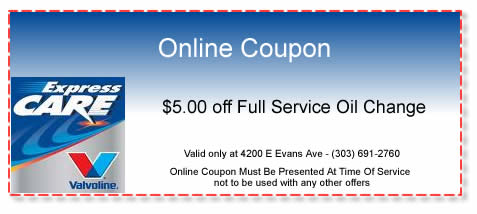
Different dealers and auto repair shops offer different services when you purchase an oil change. Here at Express Care, we offer our Express Care Full Service oil change, and include:

  • Drain and refill with Conventional oil, High Mileage oil, or Synthetic oil.
  • Install a new oil filter

Plus we check and fill the following:

  • Lubricate your vehicle
  • Transmission fluid
  • Power steering fluid
  • Battery water
  • Windshield washer fluid
  • Antifreeze/coolant
  • Differential fluid
  • Transfer case fluid
  • Tire pressure

Right now we’re offering oil change specials – to help you save even more.

Filed Under: Oil Change Tagged With: Oil Change Specials

Transmission Troubleshooting

May 6, 2010 by Denver Express Car Care Leave a Comment

Your transmission is the one piece of equipment that is multi faceted.  It controls everything from shifting your car from gear to gear, to controlling how fast you are going. While you may never change out a transmission or spend time learning how it works, there are some tips to help you with transmission troubleshooting, and knowing when its time to call in a mechanic.

While there are many pieces that make up a standard automatic transmission system, all transmissions have a few basic parts.

  • The bell housing, or metal case that sits underneath your car
  • The gears
  • The transmission fluid
  • A filter to keep the transmission operating properly

You’ll usually notice a problem with your transmission in one of two ways. Either your car will simply stop, or it starts running roughly. These two problems are generally caused by:

  • Low fluid level, which causes your car to shift poorly, and can eventually lead to transmission damage.
  • A leak within the system. This is usually easy to spot as transmission fluid has a red tint.
  • A clogged filter, limiting the cars performance.

Because of the many parts associated with a transmission, and the specialized tools you’ll need for troubleshooting and fixing, it’s usually left up to a professional. A professional understands what can be causing the problem, and can usually spot the problem quickly. They will test a variety of things before moving on to a rebuild or replacement.

Filed Under: Transmission Tagged With: Transmission Troubleshooting

Express Car Care
4200 E. Evans Ave. Denver, CO (map)
Phone: (303) 691-2760
Located just southeast of the Colorado Light Rail station

Follow Us Today!

  • Facebook
  • RSS

Shop Hours

Monday: 8:00AM – 5:00PM
Tuesday: 8:00AM – 5:o0PM
Wednesday: 8:00AM – 5:00PM
Thursday: 8:00AM – 5:00PM
Friday: 8:00AM – 5:00PM
Saturday: Closed – A note from the owner
Sunday: Closed

Last car oil change time  – 5:00PM

Click for the BBB Business Review of this Auto Repair & Service in Denver CO

Recent Articles

Stop Burning Money at the Pump

Get a Fuel System Cleaning! Most drivers know to change the oil, rotate the tires, and replace the air filter. But one maintenance service that often gets overlooked — until the check engine light … [Read More...]

  • Differential Service: Why It’s Crucial for Your Car’s Longevity and Performance
  • How to Catch a Transmission Problem Before It Leaves You Stranded
  • Why You Shouldn’t Wait to Address a Small Exhaust Leak
  • 5 Reasons to Choose a Local Family-Owned Auto Shop Over a Big-Box Garage
  • The Top Reasons Your Car Might Be Stalling and How We Fix It

Search Our Site

Brakes Service

How to Keep Your Brakes Quiet, Responsive, and Safe

Everything You Need To Know About Replacing Your Brake Pads

How to Know If It’s Time to Replace Your Brake Rotors

Oil Change

Top Benefits of Getting Regular Oil Changes in Denver

Oil Change Specials in Denver: Save Money and Keep Your Car Running Right

Why Regular Oil Changes Are Crucial for Denver Drivers

Suspension

How to Know If Your Car Needs Suspension Repair in Denver’s Bumpy Roads

A Guide To Understanding Bushings on a Car

Tips for Preventing Wear and Tear on Your Car’s Suspension

Transmision Service

How to Catch a Transmission Problem Before It Leaves You Stranded

How Often Should You Service Your Transmission in Denver?

Transmission Trouble? Common Signs and When to Visit Our Denver Shop

Engine Service

Stop Burning Money at the Pump

Everything You Should Know About Your Vehicle’s Timing Belt

Is Your Car Hesitating During Acceleration?

Auto Tips & Tricks

How to Deal With Car Noises That Only Happen When You Turn

Top 5 Maintenance Tips for High-Mileage Vehicles

Why Tire Pressure Matters More Than You Think

"Denvers Best Auto Repair and Quick Lube" - Copyright © 2026 - 4200 E. Evans Ave. Denver, CO 303-691-2760