
• Home
  • Denver Auto Repair Services
    • Full Service Oil Change
    • Expert Mechanics
      • Expert Honda Mechanics
      • Expert Toyota Mechanics
      • Expert Subaru Mechanics
    • Automatic Transmission
    • Fuel System Cleaning
    • Radiator Flush Service
    • Wiper Blades
    • Air Filter
    • Cabin Air Filter
    • Gearbox Service
    • Brake Repair
    • Clutch Repair
    • CV Boots
    • Tune-Up
    • Steering & Suspension
    • Tires
  • Auto Diagnostic
  • Contact Us
    • About Us
  • Shop Specials
  • Testimonials
  • Blog
  • 303-691-2760

Express Car Care of Denver

"Denver's Best Auto Repair and Quick Lube"

  • Brake Service
  • Car Maintenance
    • Heating-Air Conditioning
    • Suspension
    • Transmission
    • Engine
    • Tires
  • Oil Change
  • Tips & Tricks

Archives for August 2011

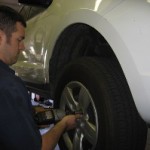
How Often Should I Change My Automotive Brakes?

August 27, 2011 by Denver Express Car Care Leave a Comment

This month we have been talking about brakes and we are often asked the question, “how often should I change my automotive brakes?”  Here are a couple of things to consider. 

Brake Pads

Brake pads typically come with a warranty – you may see a lifetime warranty, or more commonly, a warranty based on mileage, such as a 10,000 mile warranty.  Lifetime warranties aren’t meant to last a car’s lifetime.  Auto parts manufacturers use that terminology because brake pads do last a long time, but most car owners will trade and purchase a new car long before their brake pads need replacing.

Regardless of the terminology, it’s more important to listen to your car instead.  When you apply the brakes, you can hear the sounds of a worn brake pad.  If you hear a grinding noise or a squeak, its time to replace the brake pads, regardless of the mileage.

Rotors

Brake rotors, or brake discs, are what your vehicle’s brake pads clamp down on, and what stops the wheels from spinning.  Like brake pads, there are different types of rotors, depending on your car and driving needs.

Unlike brake pads, rotors do not need to be changed on a regular basis, and should last indefinitely if you provide regular maintenance routines on your automobile.  Rotors will be damaged if you allow your brake pads to wear down, and drive without the use of pads for an extended period of time.  The grinding noise you begin to hear from the brake pads is an indication of the screws in the base of the brake pads grinding into the groove of your rotor.  The more it continues to grind, the greater your chance of having to replace your rotors.

Do you want to keep your automotive brakes in top condition?  Have them checked and replaced on a regular basis.

For all of your Denver Auto Repair needs, trust Express Car Care. Call (303) 691-2760 or stop by our shop today.
Filed Under: Brake Service, Denver Auto Repair Tagged With: How Often Should I Change My Automotive Brakes

Service Brake System

August 20, 2011 by Denver Express Car Care Leave a Comment

If it’s time to service your brake system you will notice the following symptoms and conditions:

  • Soft or spongy brake pedal
  • Brakes not working properly
  • Manufacturers recommendation

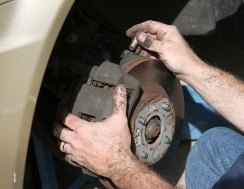
Once it has been determined that you need to service the brake system on your vehicle, a skilled technician will perform the following procedure:  

  • Remove all of the existing brake fluid in the master cylinder using a specialized brake fluid service system.

This brake fluid service system, which is connected to all four wheels at the same time, will refill the master cylinder with high quality new brake fluid after the old brake fluid has been completely flushed from the entire brake system.  The old contaminated brake fluid is removed at each wheel until new brake fluid has completely filled the system.

Your brake system benefits from this service because as brakes are used they generate heat and the brake fluid needs to remain liquid, without boiling, to operated properly.  Over time, brake fluid can become contaminated.  Contaminants, including moisture can lead to early failure of brake components.  The moisture absorbed by the brake fluid causes the brakes to feel soft, spongy, or not work properly.

The brake system is the most important safety system on your car.  By regularly changing the fluid in your brake system you can improve the performance of the brake system and reduce the chance of costly repairs due to brake failure from brake fluid contamination.  The contamination and deterioration of the brake system can be a gradual process.  While you may not notice any problems, it is a good idea to take preventative care of your brake system to help prevent future costly repairs.

For all of your Denver Auto Repair needs, trust Express Car Care. Call (303) 691-2760 or stop by our shop today.
Filed Under: Brake Service, Denver Auto Repair Tagged With: Service Brake System

Brake Specialist – Understanding How Your Brakes Work

August 13, 2011 by Denver Express Car Care Leave a Comment

When you’re driving in your car, and push down on the brake pedal, we unconsciously know it’s going to work.  But how does it work?  And more importantly, what do you watch for to make sure they keep working for you?  Those are questions a brake specialist deals with every day.   

Your car’s brake system is a complex system of parts and components that spreads all along your car.  The easiest way to avoid brake failure is to maintain your car, and to listen to your car’s system regularly.  Your brakes squeak, click and grind – its just a matter of listening and discovering when the noise changes.  And using a brake specialist to keep you on a regular maintenance schedule.

In your car, the brake pedal is connected to the pistons, and the pistons are connected to the brakes.  Your car will have two sets of brakes:  disc front brakes and drum rear brakes.  In both sets, friction is used to control and stop the car when you require them.  Several things can interfere with the friction, leading to failure:

  • An oil leak can eliminate the friction within the braking system
  • If brakes routinely overheat, they can create hard spots in the brake rotors or drums.  These hot spots resist friction, reducing the grasping mechanism within the brake system.
  • A squeaking noise can indicate thin or wearing brake pads.  Replacing brake pads early can prevent future maintenance.  If pads wear down  to the rotors, it can cause further damage, and cost even more to replace.

Take notice of your cars messages.  Your anti-lock brake system (ABS) light will come on at the first sign of damage.  You may also start hearing squeaking or grinding noises when you apply the brakes.  Or you begin to feel a pulse in your brake pedal, or a pull or grab to one side or the other during the braking process.

Instead of waiting or ignoring the problem, check in with your brake specialist today.


For all of your Denver Auto Repair needs, trust Express Car Care. Call (303) 691-2760 or stop by our shop today.


Filed Under: Brake Service, Denver Auto Repair Tagged With: Brake Specialist

Car Maintenance Tips For Your Older Car

August 6, 2011 by Denver Express Car Care Leave a Comment

I have an older car. ” What type of car maintenance tips can you offer to make sure my vehicle stays in top shape?” ” I’m not ready to jump into a new car, so I want to keep my older car in the best shape possible.”  We’re hearing a lot of this these days.  Instead of replacing a car every three to four years, people are pushing the window of ownership, and are choosing to keep their older cars an extra year or two.  Not only will it save  money on monthly payments, but it also can save  on insurance rates as well.

Keep a car maintenance log

Keep a small spiral notebook and pen in your glove compartment, and keep track of all of your car related maintenance.  You may also want to record your gas fill-ups and mileage, a reduction in mileage can be an early warning sign of a future problem.  Also use the same service location for all your car maintenance items-they will track your maintenance and be able to monitor potential problems along the way.  Keep your receipts from the services you have performed on your vehicle, they will help you remember what work you’ve already had done.

Buy gas at reputable service stations

Ask whether the gas you buy is filtered at the pump and if the station has a policy about changing the pump filter regularly.  Some stations don’t have pump filters, making you more vulnerable to dirty gasoline.  Other stations may not mix alcohol and fuel properly or water down their product.  Find a station you trust and stick to it.

Don’t fill up if you see the tanker

If you happen to see a gasoline tanker filling the tanks at your local gas station, come back another day or go to a different station.  As the station’s underground tanks are being filled, the turbulence can stir up sediment.  Sediment in your gas can clog fuel filters and fuel injectors, causing poor performance and possibly repairs.

Lighten up your key chain

Does your car key share a chain with a dozen or more other keys?  That’s a pretty heavy load hanging off the car key when it’s in the ignition.  The weight, combined with bouncing while you drive, can wear out the tumblers inside the ignition and eventually lead to ignition switch failure. To add years of service to your ignition switch, purchase a light weight key chain that allows you to separate your ignition key from the others.  Drive with only the ignition key in your ignition.  If your ignition key “sticks” when you try to turn on the car, it’s a warning that your ignition switch is about to fail.  Replace it before you get stranded.

Fix and fill your washer fluid tank

With Colorado’s variable weather patterns, you may notice a cracked washer fluid tank on an older car.  Fix immediately, and keep it filled with plenty of window washer fluid, especially on cold, slushy days.

Clean your car thoroughly

Clean your car inside and out.  While everyone likes a clean car on the outside, the inside is just as important.  Clean off the magnesium chloride from your wheel wells and undercarriage, which Colorado uses to keep the streets ice free in the snowy months.

For all of your Denver Auto Repair needs, trust Express Car Care. Call (303) 691-2760 or stop by our shop today.

Filed Under: Car Maintenance Tagged With: Car Maintenance Tips

Express Car Care
4200 E. Evans Ave. Denver, CO (map)
Phone: (303) 691-2760
Located just southeast of the Colorado Light Rail station

Follow Us Today!

  • Facebook
  • RSS

Shop Hours

Monday: 8:00AM – 5:00PM
Tuesday: 8:00AM – 5:o0PM
Wednesday: 8:00AM – 5:00PM
Thursday: 8:00AM – 5:00PM
Friday: 8:00AM – 5:00PM
Saturday: Closed – A note from the owner
Sunday: Closed

Last car oil change time  – 5:00PM

Click for the BBB Business Review of this Auto Repair & Service in Denver CO

Recent Articles

Stop Burning Money at the Pump

Get a Fuel System Cleaning! Most drivers know to change the oil, rotate the tires, and replace the air filter. But one maintenance service that often gets overlooked — until the check engine light … [Read More...]

  • Differential Service: Why It’s Crucial for Your Car’s Longevity and Performance
  • How to Catch a Transmission Problem Before It Leaves You Stranded
  • Why You Shouldn’t Wait to Address a Small Exhaust Leak
  • 5 Reasons to Choose a Local Family-Owned Auto Shop Over a Big-Box Garage
  • The Top Reasons Your Car Might Be Stalling and How We Fix It

Search Our Site

Brakes Service

How to Keep Your Brakes Quiet, Responsive, and Safe

Everything You Need To Know About Replacing Your Brake Pads

How to Know If It’s Time to Replace Your Brake Rotors

Oil Change

Top Benefits of Getting Regular Oil Changes in Denver

Oil Change Specials in Denver: Save Money and Keep Your Car Running Right

Why Regular Oil Changes Are Crucial for Denver Drivers

Suspension

How to Know If Your Car Needs Suspension Repair in Denver’s Bumpy Roads

A Guide To Understanding Bushings on a Car

Tips for Preventing Wear and Tear on Your Car’s Suspension

Transmision Service

How to Catch a Transmission Problem Before It Leaves You Stranded

How Often Should You Service Your Transmission in Denver?

Transmission Trouble? Common Signs and When to Visit Our Denver Shop

Engine Service

Stop Burning Money at the Pump

Everything You Should Know About Your Vehicle’s Timing Belt

Is Your Car Hesitating During Acceleration?

Auto Tips & Tricks

How to Deal With Car Noises That Only Happen When You Turn

Top 5 Maintenance Tips for High-Mileage Vehicles

Why Tire Pressure Matters More Than You Think

"Denvers Best Auto Repair and Quick Lube" - Copyright © 2026 - 4200 E. Evans Ave. Denver, CO 303-691-2760