• Home
  • Denver Auto Repair Services
    • Full Service Oil Change
    • Expert Mechanics
      • Expert Honda Mechanics
      • Expert Toyota Mechanics
      • Expert Subaru Mechanics
    • Automatic Transmission
    • Fuel System Cleaning
    • Radiator Flush Service
    • Wiper Blades
    • Air Filter
    • Cabin Air Filter
    • Gearbox Service
    • Brake Repair
    • Clutch Repair
    • CV Boots
    • Tune-Up
    • Steering & Suspension
    • Tires
  • Auto Diagnostic
  • Contact Us
    • About Us
  • Shop Specials
  • Testimonials
  • Blog
  • 303-691-2760

Express Car Care of Denver

"Denver's Best Auto Repair and Quick Lube"

  • Brake Service
  • Car Maintenance
    • Heating-Air Conditioning
    • Suspension
    • Transmission
    • Engine
    • Tires
  • Oil Change
  • Tips & Tricks

Power Brakes

July 15, 2015 by Denver Express Car Care

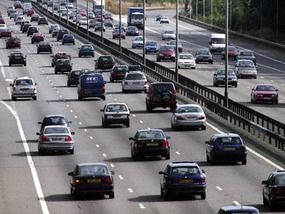
Power BrakesDriving around in traffic can really let you know if your power brakes are doing their job. Basically, the power brake system helps you provide braking power so that you don’t have to do all the work with your brake pedal.

The brakes themselves are applied at the wheel using hydraulic pressure.  When we step on the brake pedal, we create pressure in the power booster that’s multiplied by vacuum from the engine.  The resulting pressure pushes brake fluid through the master cylinder into tubes and hoses that run to the brake at each wheel.

When there’s a problem, it’s usually a fluid leak somewhere along the line.  It could be at a fitting or a hose, or even an internal leak in the master cylinder.  A leak gives the pressurized fluid somewhere to go other than to the power brakes, so stopping power is damaged.  Lose enough fluid and you can’t stop at all, and we all know that’s extremely dangerous.

If you notice any decrease in stopping power or if your pedal seems mushy, you could have a problem.  There are some preventative maintenance items for the power brake system that will help them last longer.  Obviously, you’d want to make sure your brake fluid is filled to the recommended level.  Low fluid in the master cylinder could indicate a leak or worn brake material.  Master cylinder leaks are usually caused by wear, but leaks in the brake lines and connectors can be minimized by replacing the brake fluid from time to time.  Brake fluid has additives that protect against corrosion that can damage brake components.

Brake fluid also attracts moisture which can lead to rust – not a good thing for expensive anti-lock brake components.  Also, significant amounts of water in the brake fluid can affect stopping power because the water has a much lower boiling point than brake fluid.  In the high temperature environment of the brake system, the water can vaporize – and steam doesn’t do a very good job of providing hydraulic pressure.

A final word – make sure you use the recommended type of brake fluid.  There are several kinds and using the wrong one can lead to total brake failure.  Your service adviser at Express Car Care can help, just call or come in and see us.

Filed Under: Brake Service Tagged With: Power Brakes

Brake Service At Express Car Care

June 3, 2015 by Denver Express Car Care

Brake Service At Express Car CareMost drivers know that braking means slowing or stopping a vehicle.  The mechanical aspects of the brakes themselves are just one issue.  There’s also the power brake system and brake fluid.  And then there are the tires, which are critical to the effectiveness of the brakes.

Let’s step back.  A car or truck rolls brand new off the showroom floor at a local dealer.  It has brand new brakes with brand new brake pads.  The brake lines and the power assist are filled with fresh fluid and are completely clean inside.  And the vehicle has brand new tires with full tread.  Naturally, braking power is at its peak performance.

But as you drive, the miles start to add up on your car and it no longer operates at peak performance.  Most car owners tend to focus on the brake pads.  In the automotive service community, the pads and shoes on drum brakes are called the friction material.  That’s because they provide the friction used to stop the vehicle.  The pads are designed to be effective throughout their useful life…it’s not until they are worn so thin that they lose stopping effectiveness.

The mechanical parts of the brakes have pistons and springs that get quite a workout while stopping the vehicle.  Over many miles, these wear and get gummed up.  They start to lose effectiveness gradually and could even fail.  That’s why a regular brake inspection is important.  At Express Car Care, we can test the operation of the brakes and see if any parts need cleaning or in need of brake repair.

That leads us to brake fluid service at Express Car Care.  Some of the critical additives in the fluid that lubricate and clean the vehicle fluid system are depleted over time.  That and moisture building up in the system deteriorate the performance of the brake fluid.  Brake fluid replacement at Express Car Care includes flushing the brake system to clean out deposits, water and dirt.  Then the system is filled up with fresh fluid.

The tires are what connect the vehicle to the road.  The stopping force is ultimately dependent on the traction provided by the tires.  The better they grip the road, the quicker you’ll stop as you drive.

For questions about brakes, brake pads or tires, talk to an Express Car Care service adviser.

Filed Under: Brake Service Tagged With: Brake Service

Smart Car Care for Denver Drivers: Anti-lock Brakes

March 11, 2015 by Denver Express Car Care

Smart Car Care for Denver Drivers: Antilock BrakesDenver drivers count on their brakes to safely slow down and stop their vehicles.  You’ve probably had the experience where you’ve slammed on your brakes and started to skid.  When your wheels are locked up, you are just sliding all over the road.  And if the road is wet, slick or covered with gravel–you can really get out of control.  Steering is next to impossible.  That is why anti-lock brake systems (ABS) were invented: to help you maintain important control in extreme stopping conditions on Colorado roads.

As mentioned, when wheels lock up, this diminishes your control.  Anti-lock brake systems keep your brakes from locking – helping you stop while still maintaining your ability to steer.  Each wheel equipped with ABS, have sensors on them that monitor wheel spin and compare it with vehicle speed sensors.  When Denver drivers are pressing on the brakes, still traveling forward, but the wheels are not turning….the anti-lock brake system quickly steps in and modulates the brakes.

The ABS quickly “pumps” the brakes, not allowing the wheels to lock-up while still applying braking pressure.  This is all done automatically without any intervention on your part.  You will feel a pulsation through the brake pedal and will hear a clunking as the brakes are rapidly being applied and let off over and over again.  The first time this happens to you, you may be surprised and think something is wrong.  There isn’t, so just keep your foot on the brake and allow the ABS to do its thing.  In fact, remember the essential three S’s of anti-lock brakes:  Stomp, Stay and Steer.  Stomp on the brakes, keep the pedal down, and steer as required.

When you first start your vehicle, the ABS does a quick self-check to make sure everything is OK.  The ABS warning light will briefly illuminate with all of the other warning lights on your dashboard and then go out.  If the system detects a fault, the ABS light will come on and stay on.  Denver auto owners should definitely take their vehicle in to Express Care Care for a check if the critical ABS warning light is on.

Proper brake system service is the best way to protect your anti-lock brake system.  Replacing brake fluid that is depleted and/or contaminated will help preserve proper ABS operation and protect it against detrimental corrosion.  Denver motorists can communicate with their helpful Express Car Care service specialist to see if it’s time for an automotive analysis of their essential braking system.

Give us a call of come in and see us.

Filed Under: Brake Service Tagged With: Antilock Brake Systems

Vehicle Maintenance Tips: Disc Brakes

October 22, 2014 by Denver Express Car Care Leave a Comment

Disc Brake MaintenanceQuestion:  What are the signs that I need a brake job?

Express Car Care Answer:  Signs of brake problems often fall into one of two categories for Denver motorist:  making noise or a pulsation in the brake pedal.  Let’s start with the noise.  Most brake pads have an audible brake wear indicator.  This is a small piece of metal that rubs on your brake rotor when the brake pads are worn to the point they should be replaced.  The noise is a chirp or soft squeal.  This noise gives Denver drivers enough essential warning to get their brakes serviced while there is still enough brake pad left to enable you to stop safely.

Motorists who ignore the chirp commonly find that the sound changes to a grinding noise.  That is more serious.  It means that the friction material on your brake pad is worn away and metal parts of the brake are grinding against the rotor when you press on the brakes.  Obviously, this harmful metal-on-metal means that your brakes aren’t stopping very well.  It also means that your rotor is being damaged.  It may need to be resurfaced or even replaced.

Pedal pulsation is another noticeable problem.  When your rotor is not in perfect alignment, it pushes against the brake pads unevenly as you apply the brakes.  There could be a number of reasons for this.  The rotor and wheel hub may not be mating well, causing the rotor to be spinning out of vertical alignment.  This harmful misalignment can be caused by either the rotor or the hub, or a combination of the two.  If this issue persists, the rotor may even start to wear unevenly to the point that its thickness varies, causing an even more noticeable pulsation.  This uneven mating of the brake pad and the rotor when braking means less contact and it will curtail braking power.

Your service center or the team at Express Car Care in Denver can determine the cause of the harmful misalignment and remedy the trouble.

Either unusual brake noise or pedal pulsation are signs for Denver car owners that there are brake problems.  Motorists should have a tech at Express Car Care survey their brakes thoroughly and recommend any critical steps necessary to correct the issue.  A regular brake inspection is on every vehicle’s recommended list.  Ask your helpful service professional if it’s time for an important brake inspection.


Filed Under: Brake Service, Car Maintenance Tagged With: Vehicle Maintenance Tips: Disc Brakes

Burning Brakes

July 9, 2014 by Denver Express Car Care Leave a Comment

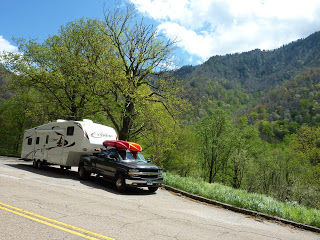
Burning BrakesSummer driving in Colorado can be very challenging at times.  It is so important that we don’t forget what we learned about driving downhill on our steep mountain roads.  Heavy commercial trucks aren’t the only drivers that will experience burning brakes if they’re not careful.  We all need to drive in such a way that we aren’t relying on our brakes too much.  I see it all the time coming home from a mountain trip.  Drivers with their brakes lights flashing on and off all the way down the mountain.  Whether you are a long-time mountain driver or have recently moved to Colorado, it’s important to know how to drive safely in the mountains.  Two things are especially critical:  brakes and tires.

The brakes on automatic transmission, late-models sedans weren’t built to handle the constant braking required on the 7 to 8 percent grades of mountain passes.  This is the time to use your car’s transmission to keep your speed low enough to maneuver the hairpin curves that you’ll encounter during mountain driving and prevent those burning brakes.  Before heading downhill, shift into second gear.  Don’t shift into neutral.

Using your transmission to avoid overheating your brakes on  winding mountain roads is smart, but also has its challenges.  In summer, driving in second gear, will cause your car’s engine to reach higher RPMs and hotter temperatures.  So if you haven’t checked your coolant level, or changed it since winter, you should do it now or you might overheat.

Another thing to consider is under-inflated tires.   This will give you less control on the road, and that is never a good idea, especially on a road with no guardrail and a thousand foot drop below.  So check your tire pressure before you leave home.  Also tires without tread can cause problems, especially if you’re towing a load.  The tread helps your tires grab the road and turn rather than spin.

Be aware of gravel and rocks on the road.  Gravel will cause you to slide and perhaps lose control.  Rocks large enough to cripple your car can roll onto the road, so stay alert and free from distractions while you’re driving.  Wildlife is also a concern when you’re driving in the Colorado mountains.  They can dart into traffic in a moments notice.  So have your brakes and tires checked out before you hit the road.

Filed Under: Brake Service, Tires Tagged With: Burning Brakes

Drum Brakes

April 30, 2014 by Denver Express Car Care Leave a Comment

Drum BrakesBrakes that work properly are essential to your safety as you drive and stop on our Denver streets.  You want to carefully maintain your brakes.  In vehicles equipped with drum brakes, (usually older model cars and trucks) the brake components are housed inside a drum that rotates with the wheel.  When you step on the brake pedal, brake shoes push out against the inside of the drum, slowing the wheel.

Now brake shoes just wear away with use from rubbing on the drum as you brake.  When it’s time to replace brake shoes, it’s a straight-forward repair.  If you hear squealing or grinding when braking, have your Denver service adviser check them out.  He’ll have a technician perform a thorough brake inspection to see what needs to be done.  He’ll check for signs of brake problems and go over other brake components to see that they’re working properly.

He can tell you if it’s time to replace the brake shoes or if there are other issues with your brakes that should be addressed.  Some people in our Denver community ignore the warning signs and keep driving long after the shoes are completely worn out.  When that happens, metal brake components will grind against the drum, damaging it enough that it has to be resurfaced or replaced.

When you push on your brake pedal, the wheel cylinder is activated and it pushes the shoes against the drum to slow the vehicle.  This cylinder, and various springs within the brake, can wear out affecting your ability to stop.  The worn components can easily be replaced.

The new brake shoes we put on your truck or other vehicle will restore your brakes to manufacturers’ specifications.  Or, we can install upgraded parts to increase your stopping power and reduce brake noise and brake dust.  We have several options to meet both your braking needs and your budget.

Taking care of your brakes keeps them working safely and can prevent premature brake repairs down the road.

Filed Under: Brake Service Tagged With: Drum Brakes

Disc Brake Maintenance

March 26, 2014 by Denver Express Car Care Leave a Comment

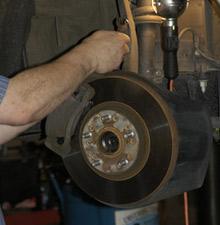
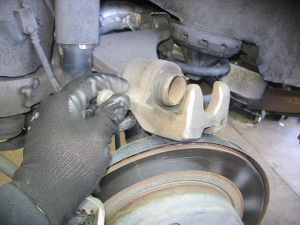
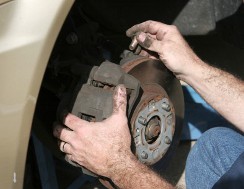
Disc Brake MaintenanceYour brakes are extremely important as you drive around Denver.  Having good brakes just keeps you out of trouble.  You’ll want to carefully maintain your brakes.  With disc brakes, brake pads rub on a disc – or rotor – to slow the wheels.  The brake pads are attached to a caliper that squeezes the pads against the rotor.  It’s kind of like how squeezing the handbrake on a bicycle pushes the brake pads against the wheel of the bike.

Now brake pads just wear away with use – like a pencil eraser wears out.  The good news is that replacing brake pads is a straight-forward repair.

If you hear squealing or grinding when you use the brakes, have your Express Car Care service adviser check them out.  He’ll have a technician perform a thorough brake inspection to see what needs to be done.  He’ll check for signs of brake problems and go over other brake components to see that they’re working properly.  He can tell you if it’s time to replace the pads or if there are other issues with your brakes that should be addressed.  Some people make the mistake of ignoring the warning signs and keep on driving long after the pads are completely worn out.  When that happens, metal brake components will grind on the rotor, damaging it enough that it needs to be resurfaced or replaced.

Rotors can also warp or crack, in which case they’ll need to be replaced.  Brake calipers also wear out over time.  They can develop leaks or the caliper pistons can freeze open or closed – either way it’s not good.  When this happens it’s time to replace the calipers.  A thorough brake inspection will reveal worn bearings or seals as well.

The new brake pads we put on your vehicle will restore your brakes to manufacturers’ specifications.  Or, we can install upgraded parts to increase your stopping power and reduce brake noise and brake dust.  We have several options to meet your braking requirements and your budget.

Taking care of your brakes keeps them working safely – and you could prevent premature brake repairs down the road.  At Express Car Care in Denver, we install quality NAPA replacement parts.

Filed Under: Brake Service, Car Maintenance Tagged With: Disc Brake Maintenance

Disc Brake Maintenance at Express Car Care in Denver

January 15, 2014 by Denver Express Car Care Leave a Comment

Disc Brake MaintenanceHello Denver auto owners.  Today, we’re talking about disc brakes.  Your vehicle weighs several thousand pounds and it takes a lot of force to bring it and your passengers to a safe stop – so everything needs to be in good working order.

The wheel hub keeps your wheel attached to the vehicle.  The brake disc – or rotor – is attached to the hub and spins with the wheel as you drive.  Your brake pads clamp onto the rotor to slow the wheel.  The brake caliper straddles the rotor and squeezes the rotor to slow it down.  The calipers contain brake pads which rub on the rotor when you step on the brakes.  The brake piston causes the calipers to squeeze and release as you use your brakes.

Your brake pads start to wear the first time you step on the brakes.  Eventually the pads are worn out and need to be replaced.  If you don’t replace brake pads when they’re worn out, the metal parts of the brake will grind against the rotor and carve grooves into the surface.

If a scored rotor isn’t too bad, your friendly Denver technician can put the rotor on a lathe and smooth it out.  If the grooves are too deep, or if the rotor is warped or cracked, you will need to replace it.  At Express Car Care, we have been servicing disc brakes for Denver auto owners for years and we can help you.

Servicing disc brakes at Express Car Care requires special attention to the mechanical sliding and mounting portions of the system.  Your Express Car Care service supplier knows the special needs.  Sometimes the brake pistons can stick and must be replaced.  Typically it’s cheaper to replace the entire caliper at Denver auto repair centers than to rebuild the piston.

So there you have it – a brief Express Car Care guide to how your disc brakes work.  Denver auto owners who replace their brake pads on time will not only keep their vehicle stopping safely, but could save money on unnecessary brake repair down the road.

Give us a call or come in and see us.


Filed Under: Brake Service Tagged With: Disc Brake Maintenance

Keeping Brakes in Good Repair for Winter Driving

December 6, 2013 by Denver Express Car Care Leave a Comment

Keeping Brakes in Good Repair for Winter DrivingDuring the winter months here in Denver, the weather is always changing and we never know just what conditions we will be driving in each day.  That is why it is so important to keep brakes in good repair for winter driving.  Existing brake problems can become worse during the winter, because we are driving in conditions that can cause traction to be reduced, like driving on snow and ice.  Bringing your vehicle in for a brake inspection so you can be sure your brakes will perform correctly when you need them to and keep you and your passengers safe is an excellent idea during the winter months.

The easiest way to keep your brakes in good repair is to have them and the rest of your vehicle maintained regularly.  It also helps to listen carefully to your car.  Brakes will squeak, click or grind when there is a problem, it’s just a matter of listening and discovering when the noises change.  As well as hearing squeaking or grinding noises when you apply the brakes, you might feel a pulse in your brake pedal, or a grabbing or pulling to one side or the other.  These are all indications that it might be time to stop in and see your auto repair shop and have the brakes inspected.

Having the brakes inspected goes a long way in preventing brake failure, but sometimes even with our best efforts, the brakes still fail.  If this happens to you, here are a few things to remember.

  • Don’t panic.  By remaining calm you are more likely to be able to steer your vehicle to a safe stop.
  • Turn on your turn signal and carefully try to get your vehicle to the right lane.  Watch your mirrors to avoid hitting another car.
  • When you reach the right lane, put on your hazard lights.  This will let other drivers know that you are having a problem and allow them to steer away from your car.
  • Take your foot off the gas pedal, downshift to a lower gear and allow the car to slow down.  You can downshift even if you don’t have a manual transmission, move the shifter from “Drive” or “D” to “Low” or “L”.
  • Steer your car onto the right shoulder of the road, and then shift your vehicle into neutral.  Gradually apply the hand brake (emergency brake) until the vehicle comes to a stop.  Pull the hand brake slowly to keep control over the vehicle.

At Express Car Care we have been providing quality brake services in Denver for over ten years.  So come in and see us or give us a call @ 303-691-2760.


Filed Under: Brake Service Tagged With: Keeping Brakes in Good Repair for Winter Driving

What Is Regenerative Braking?

August 9, 2013 by Denver Express Car Care Leave a Comment

Every once in a while, new technology is introduced into the automotive world, meaning new concepts are added to the world of purchasing cars and maintaining them over a lifetime.

Regenerative braking systems is one of those concepts. Regenerative braking was introduced when hybrid technology was introduced to the world of cars.

On a normal car, when you apply the brakes, the energy and heat of the action of braking dissipates and is wasted away. Not so with regenerative braking. Instead, when you apply the brakes, regenerative braking uses a mechanism that allows the vehicle to slow down while converting the resulting kinetic energy that is normally wasted into a useful form of energy. The energy and heat that is dissipated is instead converted and returned to the battery and reused in other systems throughout the vehicle. Because of this action, the battery is constantly being recharged, meaning the hybrid vehicle can go further on a charge without having to be returned to its outlet.

The concept of regenerative braking is still new and confusing to many. Imagine your car and what happens to it once you apply the brakes. The brake pads slowly apply pressure, creating heat from the friction of the pads and the tires slowing down. Energy is accumulated as the brake pads wear against the rotors. This energy is transferred to the vehicles electric motor, charging the battery in the process.

What Is Regenerative Braking?Regenerative braking does however have its limitations. Typically this system is only available on the wheels that drive the vehicle – so for a front wheel driven vehicle, it only applies to the two front wheels. This means your vehicle is only generating power on these two wheels. Because more action and power is associated with these wheels, they will have more wear and tear on both the wheels and tires, and on the brakes and brake pads. Which means you may be replacing tires, brakes and brake pads on a more frequent basis than those on the rear of the vehicle.

Regenerative braking works best at greater speeds. The more friction needed to stop the vehicle, the more energy is created. So to get the most benefit from this system, a person should be more apt to driving at high speeds on an ongoing basis than slower, city driving.

Have any questions about your regenerative braking system? Stop by or give us a call. We can make sure your car is in top condition, no matter how old or new, green or otherwise.

Filed Under: Brake Service Tagged With: auto repair, Brakes, hybrid, Regenerative braking

  • « Previous Page
  • 1
  • …
  • 8
  • 9
  • 10
  • 11
  • 12
  • Next Page »

Express Car Care
4200 E. Evans Ave. Denver, CO (map)
Phone: (303) 691-2760
Located just southeast of the Colorado Light Rail station

Follow Us Today!

  • Facebook
  • RSS

Shop Hours

Monday: 8:00AM – 5:00PM
Tuesday: 8:00AM – 5:o0PM
Wednesday: 8:00AM – 5:00PM
Thursday: 8:00AM – 5:00PM
Friday: 8:00AM – 5:00PM
Saturday: Closed – A note from the owner
Sunday: Closed

Last car oil change time  – 5:00PM

Click for the BBB Business Review of this Auto Repair & Service in Denver CO

Recent Articles

How Denver’s Climate Affects Your Car Battery

How Denver’s Climate Affects Your Car Battery

One minute it’s sunny. The next it’s snowing. Then you’re climbing 6,000 feet up I-70 to hit the slopes. Denver drivers know all about extremes. So does your car battery. Many drivers are surprised … [Read More...]

  • Everything You Need To Know About Replacing Your Brake Pads
  • Why Your Check Engine Light Keeps Coming On—And What to Do About It
  • How to Get the Most Mileage Out of Your Tires in Colorado
  • How a Local Mechanic Can Provide Better Service Than a Dealership
  • How to Deal With Car Noises That Only Happen When You Turn

Search Our Site

Brakes Service

Everything You Need To Know About Replacing Your Brake Pads

How to Know If It’s Time to Replace Your Brake Rotors

The Hidden Dangers of Driving With Low Brake Fluid

Oil Change

Top Benefits of Getting Regular Oil Changes in Denver

Oil Change Specials in Denver: Save Money and Keep Your Car Running Right

Why Regular Oil Changes Are Crucial for Denver Drivers

Suspension

How to Know If Your Car Needs Suspension Repair in Denver’s Bumpy Roads

A Guide To Understanding Bushings on a Car

Tips for Preventing Wear and Tear on Your Car’s Suspension

Transmision Service

How Often Should You Service Your Transmission in Denver?

Transmission Trouble? Common Signs and When to Visit Our Denver Shop

How to Prevent Common Issues with Automatic Transmissions

Engine Service

Everything You Should Know About Your Vehicle’s Timing Belt

Is Your Car Hesitating During Acceleration?

How to Troubleshoot a Rough Idling Engine

Auto Tips & Tricks

How to Deal With Car Noises That Only Happen When You Turn

Top 5 Maintenance Tips for High-Mileage Vehicles

Why Tire Pressure Matters More Than You Think

"Denvers Best Auto Repair and Quick Lube" - Copyright © 2025 - 4200 E. Evans Ave. Denver, CO 303-691-2760