• Home
  • Denver Auto Repair Services
    • Full Service Oil Change
    • Expert Mechanics
      • Expert Honda Mechanics
      • Expert Toyota Mechanics
      • Expert Subaru Mechanics
    • Automatic Transmission
    • Fuel System Cleaning
    • Radiator Flush Service
    • Wiper Blades
    • Air Filter
    • Cabin Air Filter
    • Gearbox Service
    • Brake Repair
    • Clutch Repair
    • CV Boots
    • Tune-Up
    • Steering & Suspension
    • Tires
  • Auto Diagnostic
  • Contact Us
    • About Us
  • Shop Specials
  • Testimonials
  • Blog
  • 303-691-2760

Express Car Care of Denver

"Denver's Best Auto Repair and Quick Lube"

  • Brake Service
  • Car Maintenance
    • Heating-Air Conditioning
    • Suspension
    • Transmission
    • Engine
    • Tires
  • Oil Change
  • Tips & Tricks

3 Things You Should Do (and 3 Things You Shouldn’t) When Your Car Overheats

June 10, 2022 by Denver Express Car Care

Sometimes you rely on gut instinct to direct you to take action. 

Imagine your family is heading to the mountains for a fun-filled weekend. You start climbing the hill, feeling a tug at the engine. The temperature gauge starts to climb. You might even see a little smoke escaping from around the hood. 

Now what?  

This is what happens as your car overheats. 

Some things might be a gut reaction. Your instinct kicks in and guides you to what you should do. But is it the right thing? Will you cause your vehicle more harm than good?

Why will a car overheat?

Your car may overheat for many reasons. In general, it’s because there’s a problem somewhere within the cooling systems, and heat isn’t able to escape from the engine compartment. It might be:

A bad radiator – a radiator can go bad in many ways. Maybe you kicked up debris from the road, puncturing the radiator which allows coolant to leak from inside. Debris in the coolant that circulates through the radiator may cause problems from the inside. Whatever the case, if the radiator isn’t working properly, it won’t keep your car cool, especially as you add strain to the engine climbing up a hill. 

3 Things You Should Do (and 3 Things You Shouldn’t) When Your Car Overheats

A bad radiator hose – hoses are created from plastic and rubber. A radiator hose feeds the engine coolant directly to the radiator, ensuring a constant flow for protection. With age, holes can form, causing leaks. Debris can cause blockages from the inside. And anything that prohibits fluid from moving as designed will impact the way your car operates. 

A bad thermostat – the thermostat controls the flow of coolant from the radiator to the engine. If this sticks open or closed, it won’t properly regulate the amount of flow, which can either flood the engine or allow it to overheat. 

A bad radiator fan – all cars use a radiator fan to help with the cooling process. If this doesn’t work, it affects how well your engine operates. 

A bad head gasket – this is often referred to as a “blown head gasket.” This happens when the seal between the cylinder head and the engine block fails. This is what properly seals coolant and oil passages, ensuring the right flow of fluids into the engine. 

What a car overheating looks like

You can’t miss the signs of an overheating engine. If you take action immediately, you may be able to stop engine damage and prevent expensive repair bills. Signs include:

  • The engine temperature gauge on your dashboard starts to climb towards the H or red zone. 
  • Steam, which can look like smoke, comes up from underneath the hood of the car. 
  • A strange smell coming from the engine area. 

If you notice any of these signs, time is of the essence. The longer you drive, the more damage may occur. 

3 things to do when your car overheats

As soon as you notice an engine problem, having a mechanic look at it and make the necessary repairs will prevent further damage. 

1. Turn off the air conditioner. Car’s often experience overheating in the summer as they are under even more pressure to perform. If you’re climbing into the mountains with your air conditioner full blast, it stresses the engine. If you notice it overheating, turn off the air conditioner immediately. Then crank to maximum heat. This helps pull heat away from the engine and allows the compartment to cool down while you find a safe place to pull over and stop the car. It may be a few minutes of being uncomfortable, but it might save your engine from extensive damage. 

2. Pull over and shut off the car. Give your vehicle a chance to cool down without operating for fifteen minutes or more. Keep an eye on the temperature gauge to see if it moves back towards the normal range. You can use this time to plan your next moves. Use roadside assistance if you have it. Phone a friend or call a tow truck to help get your car into a mechanic for inspection and repair. 

3. Restart the engine. If you won’t be towing the car, you can restart the car, carefully watching for any additional changes in the way it operates. Before you start it, you can check coolant levels and add antifreeze if it’s low. You should also watch the temperature gauge as you move your car in for servicing. If the temperature starts to rise again, pull over and shut it off. Tow it to avoid further damage. 

3 things you shouldn’t do when your car overheats

Now that you have a better idea of what you should do if you notice your vehicle overheating, let’s cover a few things that you should avoid. 

1. Don’t panic. When you’re in the heart of traffic and your car suddenly acts up, it can be especially worrisome. Your safety is what matters most. Take a deep breath and find the best way to steer to safety. Avoid swerving through traffic or putting others in harm’s way as you pull off the road. 

2. Stop driving. If your car is overheating, the only way to fix it is through repair. It’s telling you something is wrong underneath the hood. The more you drive it, the more extensive those repairs will be. If you’re a short distance from the service station and your car cools down, you might be okay to drive it. When unsure, it’s better to have it towed. 

3. Don’t open the hood. When you see steam seeping from underneath the hood, it’s only natural to want to open it and release it. Opening the hood at this point can put you at risk of burns or other injuries from this hot steam and smoke. Your best bet is to allow the engine compartment to cool before you open the hood to check coolant levels or look for other signs of damage. 

Prevention is key

Taking care of your car with regular maintenance is one of the best ways to ensure your vehicle doesn’t overheat. If it has regular oil changes and regular coolant fluids, staying up to date with all engine and radiator maintenance, you’re less likely to experience overheating. 

Before heading out on your next road trip, why not ensure your vehicle is well cared for. Schedule your maintenance visit now. 

Filed Under: Engine Tagged With: Car Overheats

 What The White Smoke From The Exhaust Means

June 7, 2022 by Denver Express Car Care

Car maintenance is a little bit timing when to bring your vehicle in for inspection, and a little bit noticing the signs your car makes when it’s warning you of potential problems. 

One of the things you never want to see is smoke pouring from the exhaust, regardless of the color. This signifies a deeper, internal problem, and suggests something is wrong. In general, a cloud of thick white smoke indicates a major issue needs to be addressed quickly, or risk something as serious as a blown engine. 

Understanding the exhaust system

Before we analyze what smoke coming from the exhaust pipe might mean, it’s important to understand what it is and where it comes from. 

Essentially, your vehicle’s engine needs four things to work:

  • Fuel
  • Air
  • A spark
  • Timing

Fuel is the basic lifeblood of keeping your vehicle working. Too much, and it runs rich. This can waste fuel, but can also eventually damage the engine. Too little, your engine will struggle, or not run at all. 

Air mixes with the fuel, which causes it to flow either at the perfect level, or can cause it to run rich or lean. As the two mix, it combines with a spark to ignite the fuel and start the car. This needs to have the right timing to ensure the engine runs efficiently. 

This timing affects how much emissions your engine emits. As your car ages, the process becomes less efficient. Older parts can mean each process is just a little off. That’s why older cars have less rigid emissions standards than newer cars. 

 What The White Smoke From The Exhaust Means

What normal exhaust looks like

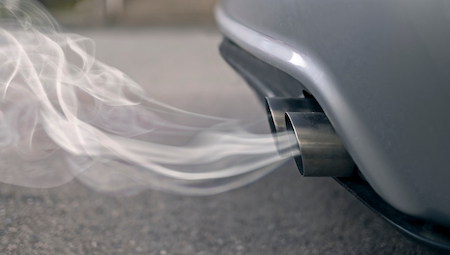
The exhaust pipe is there to pull emissions from the engine compartment and release it away from your vehicle. The gas coming from your tailpipe should be clear. On a cold day, the moisture in the emissions can sometimes look like a thin, white cloud. 

That’s because gas moves through a process to clean it before it’s released into the air supply. The catalytic converter is an exhaust emissions control device that converts the toxic gasses produced by the engine, and transforms into less harmful pollutants by changing their chemical structure. 

If you see something other than gas and air moving from the tailpipe, which has a clear visual appearance, you’ll notice it as smoke. A thick plume of white smoke from the exhaust comes from either water or coolant burning. 

Water or coolant can sometimes leak, moving into the combustion chamber as your vehicle operates. It can move through cracks in the cylinder head or engine block, or if your vehicle is experiencing a blown head gasket. Any of these indicate a major repair. 

White smoke is pouring out of the exhaust pipe … now what?

White smoke is a clear indicator of a bigger problem. The more you drive your vehicle, the more extensive damage may occur inside the engine compartment. Continuing to drive with a crack in the cylinder head, engine block, or coming from a blown head gasket could lead to further damage, contamination, or possible overheating. Drive too far under these conditions and you’ll have to replace the engine to get it operational again. 

Another way to check where the problem originates is by checking the coolant level. If it’s low and you don’t see coolant leaking anywhere else in the engine compartment, it supports the theory that there is a leak in the engine block or head gasket. Once this is cracked or blown, replacement is the only way to repair. 

Q&A – Common questions we get about white smoke from the exhaust

Q: Can low oil be the root cause of white smoke?

No. If oil somehow makes it into the combustion chamber, you’ll see a blueish smoke emitting from the tailpipe. 

Q: What if the smoke looks black or gray instead of white?

Each color indicates a different problem. Black smoke can mean too much gas is burning, the air filter may need changing, or the fuel injectors may be clogged. Gray smoke is often caused by burning excess oil or a crankcase ventilation valve malfunction. With an automatic, gray smoke can also be a sign of a transmission fluid leak into the engine. 

Blue smoke has a few causes. It could be motor oil burning in the fuel system, valve seals or piston rings breaking down. Cars with high mileage are also prone to emitting blue smoke. If you notice blue smoke, watch it for a bit. If motor oil is accidentally spilled onto the engine, it may look blue as it burns off. If it disappears right away, it’s probably nothing. 

Q: What is in the exhaust that makes it so bad?

Exhaust gasses come from the combustion process inside the engine. As it operates, it produces carbon monoxide, carbon dioxide, sulfur dioxide, nitrogen oxide, and hydrocarbons. Carbon monoxide is poisonous and needs to be directed away from the vehicle. The catalytic converter’s job is to convert it into carbon dioxide. 

Q: What about bad spark plugs? Can they cause white smoke emissions?

No. Spark plugs are used in the ignition system, but they don’t cause white smoke. Spark plugs have their own symptoms if they’re going bad. 

Q: What if smoke only appears when climbing a hill?

That can be common here along the Front Range, especially if you regularly pull heavy loads into the mountains. It’s almost always darker smoke, ranging from dark gray to black. The usual source of the problem is the carburetor. If the carburetor sends more excess fuel into the system when the engine is already stressed, it can create a puff of smoke. If this is the only time you see it, there’s nothing to worry about. 

Q: What about electric cars? Would the same problem exist with electric?

Exhaust gasses are produced with combustion engines. Because electric vehicles run on a battery, it won’t produce exhaust. In fact, electric cars won’t have a tailpipe on their design. 

Do you have white smoke coming out of the exhaust?

If so, it’s time to bring your vehicle in for servicing. Different shades of color will mean different things. But if you continue to see smoke of any color, it’s an alert that something is wrong. 

To reduce higher repair bills, coming in sooner will catch the problem early, and hopefully prevent it from escalating over time. 

What questions can we help you answer about the exhaust system?

Filed Under: Car Maintenance Tagged With: White Smoke From The Exhaust

Why Your Battery Light May Come On While You Drive

June 4, 2022 by Denver Express Car Care

On most days, you slide behind the wheel, turn the key, and start your day. Your car starts. Everything works well. You move throughout your day without thinking about how well your car operates. 

On some days, you start the car and instantly are alerted to an issue. Maybe it’s a noise, or a sound. 

It takes a lot of power to start your car and bring the entire system up and running. That’s where you’ll notice most inconsistencies with your vehicle. 

Yet problems can begin at any point during your drive. What if you’re moving down the road and the battery light comes on while you’re driving? What does it mean? What should you do? 

How a conventional battery works

While the sale of electric cars is increasing, most drivers on the road today still use conventional vehicles. That means most vehicles are still powered with a conventional car battery.

Car batteries are used to store energy to keep the car and its accessories running. Batteries use chemical energy to start, and to recharge during operation. 

When you insert the key or push a button, it signals the battery to switch to “on.” The car battery converts chemical energy into electrical energy, and delivers it to the starter to turn over the engine. 

The standard car battery runs on 12-volts of power. If the battery’s voltage drops, it impacts performance. It can change the way your car runs as you drive down the road. It can also show up in the accessibility of your vehicle’s accessories. Ever had a problem with the radio working, or the headlights dimming? That’s a clear indicator you have a problematic battery. 

Why Your Battery Light May Come On While You Drive

What it means if the battery light comes on while you drive

It takes a lot of power to start the engine. It’s when you’ll most likely notice a problem with the way your car operates. 

Yet things can also happen as you drive down the road. If you notice the battery light turn on your dashboard, you could be dealing with multiple issues:

  • A failing battery
  • Corroded battery cables
  • A faulty alternator
  • Damaged battery cells
  • A loose battery cable
  • Defective wiring in the car’s charging system

Most problems start small and escalate over time. Paying attention to how your vehicle operates can alert you to minor issues before they become full-blown problems. The battery light is an indicator of the onset of a problem. It could be something small or several issues at once. 

If the battery light comes on and stays on, there’s a problem with its performance. If left unaddressed, your battery can run out of power while you’re driving. And that can impact safety and performance. 

What can you do?

It’s only natural to want to troubleshoot an issue before you bring it in for a full inspection. If your battery light comes on and stays on, there are a few things you can check before scheduling an appointment. Minor issues can include:

Loose connection – your car goes through a lot as you drive. Connections can jiggle loose, causing your battery to lose full power. Check to see if the cables are still properly attached to the battery. A poor connection can cause a short within the system, illuminating the battery light. 

Dirty battery – driving can cause a whirlwind of dirt, debris, grime, chemicals, and other materials to settle underneath the hood. If your battery is filled with dirt or grime, it can impact the connection, and illuminate the battery light. 

Corrosion – chemicals or pollutants can come from the exhaust system or spray up from the road. If it accumulates on the top of the battery terminals, it may result in corrosion. This is more common in the summer months, where heat is prevalent. 

When you clean your car, pop the hood and look underneath. If you notice dirt, grime, or corrosion forming on top of the battery, you can clean it and ensure the connections are in place. But if you do these things and the battery light is still displayed on your dashboard, the problem is more serious and requires a mechanical inspection. 

Is it safe to keep driving?

If you’re driving and your battery light turns on, it’s alerting you your car is unsafe to drive. Because it’s illuminated because of a faulty alternator, battery connection, or some other mechanical problem, it’s wise to have it inspected as quickly as possible. 

Safety is everything. Find a safe spot to pull over, then further assess the situation. Is it difficult to steer? Do you notice other compilations with your drive? 

If it impacts your power steering, it can be difficult to drive. That makes it unsafe for you to be out on the road, putting you and other drivers around you at risk. 

If you are close to home, or can drive your car in to see one of our mechanics, we can assess the situation and get you back on the road. Driving the car may put you in danger, so it’s important to get it checked out before you start driving once again. Keep in mind that once you turn the engine off, you might not have enough battery power left to start it back up. Ensure you’re in a safe place before you flip the switch and turn off your vehicle. 

To get the most out of what’s left in the battery, reduce all accessories to ensure full energy is going to the essentials. Turn off the heater or air conditioner, don’t use power windows, unplug your devices from the charger, and flip the radio to the off position. Keep an eye on the temperature gauge, as engine overheating may be a further sign of charging problems. 

Have you experienced problems with your battery light coming on while you drive before? 

Filed Under: Car Maintenance

Preserving Your Truck’s Value With These Maintenance Tips

May 28, 2022 by Denver Express Car Care

Owning real estate adds to your balance sheet, providing you with an item that appreciates over time. 

Vehicles rarely work that way. Most new cars and trucks start to depreciate from the moment you drive them off the lot.  

Yet there’s a lot of wiggle room for what your vehicle will truly be worth when you try to sell it. If you own a truck, preserving the value starts by performing regular maintenance and keeping it in the best condition possible throughout its life. 

But what does that mean? How do you maintain your truck to preserve its value, ensuring you get top dollar when it comes time to sell? 

This is what makes the most difference in keeping your truck in top condition. 

Schedule oil changes regularly

Some basic maintenance items are more important than others. You can add “oil change” to this list. 

Regular oil changes fall right behind “keep fuel in the car” as a fundamental need to keep your truck on the road. Yet many drivers “forget” and wind up with problems because there isn’t a direct reminder system built into your car. (Outside of your car seizing if it no longer has motor oil!)

Preserving Your Truck’s Value With These Maintenance Tips

Motor oil provides lubrication to many of the internal components within the engine compartment. To avoid damage and keep the engine running smoothly, it needs fresh, dependable motor oil present every time it runs. Today’s modern vehicles don’t burn oil the way they did a few decades ago, but trouble will arise if oil isn’t provided at necessary levels. It’s the lifeblood of the modern day vehicle. 

There is confusion about what oil changes look like in a truck. While the 3,000 mile rule is in place for cars, it’s not as steadfast for trucks. The best way to find out what’s best for your truck is to read your owner’s manual and abide by manufacturer’s guidelines. Today’s trucks often need changing about every 5,000 to 7,000 miles. 

Monitor your tires

If you want to extend the life of your pickup truck, give the tires a little TLC along the way. This goes beyond replacing them when they’re worn down. 

Trucks usually wear each of the four tires down in different proportions. Front tires may wear differently than rear tires. And it often depends on the type of driving you do. Do you head off-road? Or haul heavy loads? All of that can impact the wear of your tires. 

In general, manufacturers recommend rotating your tires every time you schedule an oil change. This provides a more even wear process for each of your tires, and extends the life of a set of four to maximum levels. 

You should also check tire pressure regularly to prevent under and overinflation. Underinflation can lower the flexibility of the tire, making your vehicle more squirmy when you corner or come to a halt. Overinflation can ultimately wear the inner tread faster than the outer tread, creating less contact with the road. Both put you at risk and increase your chances of an accident. 

In addition to rotating the tires regularly, you should also balance and align the tires every other oil change to ensure ultimate control.   

Keep your car clean, inside and out

Here in Colorado, a dirty car can impact more than the paint. If contaminants and chemicals accumulate on the undercarriage, it can break down various components and wear out systems before their time. 

Have you ever seen a “brand new” truck that’s actually a decade or more old? Chances are it was owned by someone who took “cleaning” seriously. Washing it regularly ensures the paint isn’t harmed by chemicals eating away at the paint. Waxing the exterior is also a great way of sealing the paint from the harmful effects of the environment. And we have a bunch of them here in Colorado’s climate. Those UV rays will stay at bay with a fresh application of wax. 

Don’t stop cleaning once the outside is done. The inside is equally important. It’s a great way to keep the interior finishes looking their best, and prevent rapid deterioration of vinyl, cloth, or leather seats. 

Once the finishes are clean, continue by popping the hood of your truck and keeping the filters clean. Both oil and air filters on a pickup truck are a crucial part of truck maintenance. 

The air filter is critical because it traps dirt and prevents it from moving into the engine compartment, causing it to lose efficiency and functionality. A clean air filter also helps prolong items like spark plugs and ignition, to ensure your car runs smoothly every time you drive. 

If preserving the value is important to you, say “yes” to a new filter every time you schedule an oil change. It’s an easy way to keep it running efficiently every time you drive. 

Don’t wait for a battery to die, replace it instead

Batteries typically have a lifespan of 3 to 7 years. But if your truck takes you everywhere from off-roading to hauling heavy loads up the mountain, it’s better to err on the side of replacing the battery frequently. 

If the “check engine” light pops on, it could be for many reasons. An inspection will allow a mechanic to hook your truck up to a diagnostic machine and find out right where the problem lies. If the battery is weak, it’s good to replace it before it leaves you stranded. 

You can also perform a physical check from time to time. Do you notice buildup on top of the battery? Does the case look as if it’s swollen? Do you see spots of corrosion? All are good indicators of a potential problem with the battery. 

Batteries often quote several years of life, but once you move into the lower spectrum, it’s a good idea to have it tested regularly as it continues to age. 

What do you do to preserve your truck’s value?

When in doubt, schedule an inspection. Allowing a certified mechanic to evaluate the various systems and pinpoint where problems lie is the easiest way to keep it running for years. 

When was the last time you scheduled a maintenance visit? Make one today. 

Filed Under: Car Maintenance

5 Simple Maintenance Tips For Making Your Car’s Tires Last Longer

May 24, 2022 by Denver Express Car Care

Your car’s tires are important for many things. They connect you to the road for a smooth ride. They keep you safe as you move through all the bumps and dips on the road. They control performance and ensure both you and your car remain safe. 

Yet because your car’s tires are out in the open, subject to all the perils you meet each day, they are also one of the most susceptible components of your vehicle to potential risks. If a tire goes flat, it can put you at risk. If it isn’t inflated properly, it can decrease the lifespan of your tire. 

Your car’s tires are an important part of your vehicle’s overall performance. If you want to keep it safe and ensure a long lifespan, there are a few things you can do. 

Tire maintenance – What you can do to make your tires last longer

How much do you know about tire structure and how long they will last? Not all tires are the same. Different makes and models use unique characteristics that will help determine longevity and how well they perform under normal driving conditions. 

Many assume tires are made from rubber, but that is only partially true. As many as two hundred different materials are combined to create modern day tires built for comfort, performance, efficiency, flexibility, reliability, and safety. 

5 Simple Maintenance Tips For Making Your Car’s Tires Last Longer

Tires are not sold based on how much time they will last. Instead, it’s based on distance traveled. However, if you rarely drive your vehicle, and it sits for extended periods, your tires can still wear down. 

You’ll find different types, including all-season, all-terrain, and winter tires. All-seasons have a longer lifespan and will last as many as 70,000 miles. All-terrain are more performance-based, and are rated closer to 40,000 miles. Winter tires are made specifically for the winter season. If you leave them on year-round, you’ll reduce their lifespan. Otherwise you can expect up to six winter seasons of wear. 

No matter how well cared for your tires are, they will wear down over time. If you want to make your tires last longer, maintenance is key. Here’s what you can do to ensure they last the entire rated service life. 

Check tire pressure

Most modern day vehicles will have an internal tire pressure check built into your computer system. It will alert you through dashboard lights when tire pressure moves beyond the acceptable range. Pay attention to this gauge, as over or underinflation can cause tire damage. 

An underinflated tire will allow the sidewalls to flex more than they were designed for as you corner and brake throughout your drive. That leaves the tread not as tight, meaning it won’t stay well connected with the road, creating less stability and traction. You’ll have a slower response both in the way you steer and brake. 

An overinflated tire means the center of the tread will bear more of the load. This will ultimately wear the inner tread out faster than the outside edges. It creates less contact with the road, meaning you’ll have more trouble steering and braking. 

You can check tire specifications for your vehicle inside your owner’s manual. You can also find it on a label typically attached on the frame inside one of the doors. Be sure to follow these guidelines, as your tires may change as temperatures change quickly here along the Front Range. 

Rotate tires

No matter what type of tires you have on your vehicle, each of the four tires will wear separately based on how they connect with the road. This is especially true if you drive a four-wheel-drive or rear-wheel-drive vehicle where two tires will see more wear than the other two. 

To counter this process, it’s a good idea to rotate the tires every 6,000 miles or so to ensure even wear. You can schedule this with your regular oil changes; it’s an easy way to remember how often to perform this task. 

Maintain proper balance and alignment

Tires can wear differently for many reasons. There can be slight imperfections in tread wear. Tires or wheels may be slightly heavier in some spots. 

Over time, this impacts everything about the way you drive. It increases treadwear in certain spots. It can impact fuel economy. It can increase vibration running from your wheels through the steering wheel, making it more difficult to control. This only worsens as you pick up speed. 

To ensure your tires stay in balance, be sure to have it checked periodically. You can do so when you get your tires rotated, or when you hit a particularly jarring bump in the road. Most manufacturers recommend having tires balanced and aligned every 12,000 to 15,000 miles. 

Monitor your tread wear

Instead of relying solely on a mechanic for tire safety, you can monitor your tread wear yourself to ensure a long lifespan. Plus, it’s easy to do. 

Walk around and perform a visual check of all four tires. Look for evidence of uneven wear, cupping, damage, or distortion. If something doesn’t look right, it’s better to check it out. The faster you identify a problem, the quicker you can get it repaired, and the less it will impact the tire’s service life.  

You can also perform the penny test. Place a penny into the tread groove upside down, head first into the tire groove. Then inspect the penny. If you can see the top of Abe’s head, it’s time to replace the tires. If Abe’s head is covered, your tires are fine. You can repeat this in multiple places to ensure you don’t have uneven wear. 

Adjust your driving style

If you want to keep every part of your vehicle in good condition, while achieving the longest lifespan possible, become a better driver. 

Aggressive driving will impact more than just your tires. It affects your braking system, and can impact your fuel economy. It puts you at greater risk for accidents and injury. 

It may be fun seeing how fast you can pick up speed, but doing so regularly in urban driving will only increase maintenance items on your vehicle. 

Filed Under: Tips & Tricks, Tires Tagged With: Making Tires Last Longer

Maintenance Tips For Making Your Car Last Longer

May 21, 2022 by Denver Express Car Care

Today’s car prices are creeping higher and higher. A recent survey showed the average sticker price has exceeded $47,000.

Investing that much money in a vehicle is a significant hit to your wallet. It’s not something you want to do on a regular basis. Protecting your investment could make a difference between a well functioning car for 100,000 miles, or pushing it to 200,000 miles and beyond. 

Maintenance tips to make your car last longer 

To make your car last longer, it requires regular maintenance to keep it working well. It doesn’t take a lot of work. Just common sense items that ensure it’ll keep working its best for years to come. 

Keep your car protected from the elements

Driving in Colorado can be tough on a vehicle. Winter brings sub-zero temperatures, ice and snow pelting the finish, and chemicals splashing up on the undercarriage from the messy streets. Summer brings intense heat, dust storms, and hail, pelting the finish. 

In order for a car to continue to run well, it has to look good too. A dirty finish is an indicator of caked on dirt, grime, and chemicals. All of that can rapidly deteriorate a car’s frame and body, and impact many of the systems that keep you safe. 

Maintenance Tips For Making Your Car Last Longer

Take the time to wash your car by hand. It keeps the paint intact and won’t scratch the finish. Wax the paint occasionally to ensure it stays protected from UV rays. 

Don’t forget the inside. Clean it out regularly to keep the seats looking their best. If you install mats on the floorboards, it’s easier to keep them clean. 

If possible, park in a garage. Parking indoors reduces exposure to harmful elements, and keeps your car looking and running better for the long run. 

Follow a maintenance schedule

To stay healthy, you schedule regular checkups with doctors and dentists. You eat quality food. You avoid harmful scenarios. 

Treat your car in a similar manner. Instead of waiting for a problem to arise, take action instead. If you haven’t thumbed through your owner’s manual, spend some time getting more familiar with your car’s systems. Manufacturers make suggestions on when to bring your vehicle in, and how often you should replace fluids and other parts. 

Instead of waiting for them to wear down, if you stick to a timetable for replacing items like a timing belt, spark plugs, or hoses, it prevents expensive repairs when things go wrong, and reduces the likelihood of you being caught off-guard. It reduces the chances of you being stranded by the side of the road.   

Change fluids frequently

Cars use a variety of fluids for lubrication and to ensure smooth operation. Some you’re used to changing and adding regularly – we’re programmed to replace motor oil every 3,000 miles. Others we may not think much about – when’s the last time you thought about transmission fluid? 

AAA surveyed auto repair shops and found that 88 percent of drivers missed brake fluid maintenance, and 35 percent are behind in motor oil changes. 

Fluids keep your vehicle operating well. Without fresh, clean fluid, it wears down, accumulates impurities, and allows debris to infiltrate the system. If you haven’t had a fluids check, or aren’t sure when many of them were last checked and replaced, a maintenance visit would be beneficial to ensure your vehicle is operating well.  

Say yes to an air filter

It’s easy to overlook the little tasks, but they often cause the biggest problems. 

Did you know your engine consumes a lot more air than gasoline? Its performance depends on a careful mix of airflow and fluid to ensure it works correctly no matter what you experience on the road. 

The air filter is designed to keep that airflow as clean as possible, keeping dirt and debris outside of the engine where it can wreak havoc over time. 

Your owner’s manual will suggest how often you should replace your air filter. Especially in situations where it may err on the side of being dirty, changing it more frequently will never hurt. 

Drive as if your car depends on it

We all get busy. We rush from home to work, trying to fit in as many errands as possible. It’s easy to forgo washing the car, push back on how frequently you change the oil, and allow stuff to pile up in the back seat. When you’re late, you push the accelerator to the floor, trying to make up for lost time. 

Yet driving your car like you’re in a road race is hard on your car. High speeds can put your braking system at risk as you pounce on the brakes, wear down your tires before their time, and impact the efficiency of your vehicle. Strong braking will rapidly deteriorate your brake pads. Coming to hard stops puts unnecessary wear and tear on your tires. And quick acceleration when your engine is cold can harm parts throughout the system. 

Practice better driving not only for the wear and tear of your vehicle, but also for the safety of you and your passengers. 

Fix the little problems

We’ve all heard a funny noise coming from somewhere in the engine compartment, and ignored it until we have “time.” That’s the fastest way to allow little issues to grow into big problems. 

Cars are designed with warning signals built into all major parts and systems to give you a chance to repair them before they increase in severity. Technology has made it easier with dashboard diagnostic icons that light up when sensors are alerted of a potential problem. When these lights illuminate, it’s a signal to pull in for servicing as quickly as you can. 

Rattles, squeaks, hums, bangs, and even smells are often signs of potential problems. Pay attention, and your car will thank you by providing a longer life. 

Following a few maintenance tips will make your car last longer

Being proactive means keeping your car in the best possible condition for as long as possible. 

The easiest way is to schedule maintenance visits regularly to ensure every system is working well. Notice noises and smells. Question if something doesn’t feel right about the way your car is operating. 

It’s the best way to ensure a long life for your vehicle. 

Filed Under: Car Maintenance Tagged With: Maintenance Tips, Make Car Last Longer

Help! My Key Is Stuck In The Ignition

May 18, 2022 by Denver Express Car Care

Driving tends to be an inert activity, repetitive by nature, something you do as a habit every time you slide in behind the wheel. 

Then something happens to wake you up to a potential problem. You park, stop the engine, and realize your key is stuck in the ignition. 

Now what?

Before you add pressure and risk breaking it off, don’t panic. You can’t walk away with the key in the ignition. That’s a recipe for disaster. 

But using brute force will only give you more headaches. You’ll have a much bigger problem on your hands. 

Any key should easily slide out of the ignition once you have rotated it to its original position. If it doesn’t come out, there are several possible reasons. 

Why a key gets stuck in the ignition

There are many reasons why a key can get stuck in the ignition. 

Your car isn’t in park

If your car’s parking gear isn’t properly set, you might not be able to remove the key. Double check to ensure you’ve moved the gear shift to the “park” position. If you have an automatic transmission, the vehicle must be in “park” before the key can be removed. You can play with the gear shift moving it out of park and back in to see if you can fix the problem. With a manual transmission, you can move the shift to neutral and see if the key has any give. Playing with the shift function can sometimes cause the key to give. 

Help! My Key Is Stuck In The Ignition

The steering wheel is locked

If you move the steering wheel while turning off your vehicle, sometimes it can activate the steering wheel lock before the key releases. Not only will this prevent you from turning your steering wheel, but you won’t be able to pull the key out of the ignition. The ignition cylinder lock is activated at the same time as the steering wheel lock. To release both locks, simply turn the key gently while moving the steering wheel around. You should hit a point when both locks open up. 

There’s debris on the key

Think of everything you put your key through. It’s shuffled around from pockets and handbags. It’s thrown in with a variety of other items. You use it to open boxes and packages. Over time, tiny particles can reside on the key until they change the structure of the key enough to impact functionality. You may notice it gets increasingly difficult to remove over time. Cleaning your key from time to time will ensure it keeps working at its best. 

Your key is damaged

After years of abuse, a key can simply stop working. It may have tiny cracks, or the grooves have worn away. If you notice any damage, replace the key immediately. It’s a good idea to always have a spare for this reason. It provides you with an original key structure to fall back on. 

Your battery is dead

The ignition system requires power from your car’s battery to function. If the battery dies, it will most likely cause the ignition system to lock up. If that happens when you’re trying to remove it from the ignition, it will get stuck. The best thing to do in this situation is to jumpstart your vehicle and see if it releases your key. 

The ignition cylinder is bad

A vehicle is made from 10,000 parts. At any time, any one of those parts can go bad. If the ignition cylinder fails, it can lock in your key and prevent it from releasing. This is because there are rows of spring-loaded pins that align when you place the key into the ignition cylinder. Once in place, they hold on tight. Failure at this point will require repair work on the ignition system to fix the problem. 

How to get a stuck key out of the ignition

What it takes to get your key out of the ignition depends on the situation. If you are armed with the above knowledge, you’ll have a few things to try. 

But you should also pay attention to the process. Is this the first time you’ve had trouble with your key? Has it been getting worse over time? That can also weigh in as to what might be wrong. 

If this is the first time you’ve had trouble, the most common reason is a gear that isn’t quite in the right place. Confirm your gear shift is in “P” or “park.” You can move it out and back in to ensure the gears are properly aligned. 

Then jiggle the steering wheel. It’s also common for the steering wheel column lock to move into place, locking up the ignition too. Don’t put too much pressure on either, just a gentle wiggle will sometimes release the lock and key. 

If this is a growing or common occurrence, you might have bigger problems. 

Start by cleaning off your key. Use rubbing alcohol to get into the cracks. If you notice adhesive or a more stubborn substance, an adhesive remover might do the job. 

If you still haven’t solved the problem, your next step should be bringing your car to a mechanic to fully assess what’s happening with your vehicle. A mechanic can determine if it’s time to replace the ignition lock cylinder. 

And if the worst has happened, and the key has broken off in the ignition, you’re not the first person who has had to deal with this problem. It can happen when you apply too much force trying to remove it.

Do not try and insert the top half of the key to try and get the bottom half out. If you do anything to try and pry out the bottom half, you may push the broken half further into the lock, making it even more difficult to repair. Locksmiths do use key extractor tools to remove broken pieces of keys. Be sure to call in a professional, so you don’t further damage other parts of your car. 

Have you ever experienced a key getting stuck in the ignition?

Filed Under: Car Maintenance, Tips & Tricks Tagged With: Key Is Stuck In The Ignition

7 Maintenance Tips For Keeping Your Car’s Engine Running Smoothly

May 14, 2022 by Denver Express Car Care

According to a new report, today’s average car price is just over $47,000 and continues to rise. 

When you invest in a car today, keeping it running well is top priority. It costs enough for monthly payments and insurance fees, who needs the added expense of repair bills? 

The adage of “an ounce of prevention is worth a pound of cure” applies to keeping your vehicle running smoothly. The engine is at the heart of your car’s operating system. While you might not think much about your engine while moving down the road, you will if it starts making noises, or when the drive isn’t as comfortable as it once was. 

Engines need maintenance too. If you keep your engine in good operating condition, it will provide you with years of service. Ignore it, and you’ll pay for it many times over. 

What can you do?

Start with an oil change

Changing the oil is drilled into every driver from the moment they get their license. There’s a good reason for that. It’s the lifeblood of your car. 

When you change the oil regularly, you’re providing fresh, high-quality fluid into various engine parts, protecting them from potential danger. Oil keeps parts lubricated so they won’t overheat. 

7 Maintenance Tips For Keeping Your Car’s Engine Running Smoothly

Most repair shops and oil changing stations will recommend changing oil every 3,000 to 5,000 miles. Check with your car’s manufacturer for specific guidelines. Err on the side frequency. It’s better to ensure your vehicle is operating with high-quality fluids rather than allowing contaminants to reside inside. Age of the motor oil matters just as much as mileage if you work from home and rarely drive. 

Change out the oil filter when you add new fluid. The oil filter collects dirt and debris and prevents it from circulating back into the engine. This ensures motor oil runs freely through the system, and won’t clog up because of contaminants. 

Keep the cooling system in good condition

The cooling system includes the radiator, thermostat, water pump, and coolant. The easiest way to prevent your car from overheating is to ensure coolant is flowing through the system, protecting the major components. 

Coolant circulates when the thermostat determines enough heat is in the system to start cooling it down. The water pump pushes coolant from the radiator to the engine block, then back down to the radiator to be cooled once again. 

You can check the coolant levels by looking at the coolant tank underneath the hood. It’s a clear tank with green or orange liquid. You can also bring it in for an inspection, and we’ll ensure your coolant levels are topped off. 

Check the air filter

Just like a dirty air filter won’t allow proper flow of motor oil throughout the engine compartment, an air filter won’t operate correctly if it’s clogged with dirt and debris. Air filters keep things like bugs, dirt, and leaves from circulating through the air supply as you drive from making it into the engine. Depending on how you drive, the air filter can last a long time, but if it’s allowed to get too dirty, it will impact your engine in several ways. It stops airflow and lessens oxygen needed for the engine to function correctly. It decreases efficiency, which can also reduce your gas mileage.  If it’s allowed to get too dirty, it can block the system and cause irreparable damage to your engine. If you’re getting your oil changed regularly anyway, have the technicians look at the air filter to ensure it’s clean. 

Check for leaks

One of the benefits of parking in a garage, driveway, or parking spot is you can pay attention to potential problems. As you pull away, look to see if there are any fluids on the ground. The two main fluids you want to ensure aren’t leaking from your vehicle are motor oil and coolant. 

The engine is constantly under pressure, with extreme heat forming as you drive. Over time, parts wear out, rubber hoses can crack and break, and they can cause fluid to leak and pool when your car sits for a while.  

You can also pop the hood from time to time and see if anything is pooling near the engine compartment. Take a whiff – some fluids have distinct smells. If you do notice fluid, note its color. Motor oil will be dark brown or black. Engine coolant will be green or orange. Automatic transmission fluid will be red or brown. Power steering fluid will be reddish-brown, or darker as it ages. Brake fluid is clear when new, but will turn darker brown over time. 

Follow up on all dashboard lights

Dashboard lights illuminate for a reason. While it’s easy to ignore them, they light up to give you ample time to take action. 

The check engine light turns on frequently, and warns of a variety of problems, including alternator, battery, or even temperature problems. The best way to find where the issue originates is to bring it in for a diagnostic test. 

Replace the fuel filter

The fuel filter is similar in function to the oil filter. They both filter out particles in the fluids they use. Where an oil filter filters particles out of engine oil, the fuel filter takes particles out of the fuel. Fuel filters keep the fuel source cleaner, giving your system better energy to operate with. This can impact your fuel efficiency too. 

Change spark plugs

Spark plugs and wires run from the distributor to the cylinders, sending an electrical current to the spark plugs to ignite the fuel. They are used every time you turn your vehicle on. When they get too old, they cause your engine to run rough. Most manufacturers suggest to change them every 30,000 miles or so, but a technician can run diagnostic checks to determine if it benefits you to change them now. 

What do you do to your car to keep it running smoothly?

Regular maintenance helps protect your vehicle as well as keep your repair bills to a minimum. Is today the day you give your car an inspection to ensure everything is working well?

Filed Under: Car Maintenance, Engine Tagged With: Your Car’s Engine Running Smoothly

How To Extend The Life of Your Car’s Brakes

May 10, 2022 by Denver Express Car Care

Driving a car is a little bit of paying attention to the road in front of you, and a little bit of listening to how well your car is operating. 

If you listen, you can hear squeaks, chirps, and hums, warning you a potential problem is on the horizon. You can watch for smoke, feel vibrations, or even notice a burning smell coming from underneath the hood, all warning you something is wrong.

Your car’s braking system is one of the most vital systems on your vehicle. And even in the best circumstances, you’ll have to replace the brake pads every 30,000 to 70,000 miles or so. 

Is it possible to extend the life of your car’s brakes? Can you make your vehicle’s brakes last longer?

Understanding the brake system

Before we get into extending the life of your car’s brakes, it’s important to understand how they work. 

All modern vehicles on the road today use hydraulic brakes. They work by pressurizing and transferring brake fluid to each of the braking components located at each wheel. Whether disk or drum brakes, they use this pressurized fluid to apply the friction of the brake pad material against the rotors, creating the pressure needed for braking. 

How To Extend The Life of Your Car’s Brakes

Many cars on the road also use anti-lock brakes. These have wheel speed sensors, a computer control module, and an actuator to work together with the hydraulic brakes and prevent them from locking up during hard braking. They keep the car safer under extreme conditions. 

Hybrid vehicles also bring a regenerative braking system that works alongside hydraulic brakes, using electric components to initially slow the car. It relies on hydraulics to bring it safely to a stop. 

A parking brake provides added protection when hydraulic or regenerative braking systems need support. They apply more pressure on the rear braking assembly, perfect for keeping your car in place so it won’t roll. 

How can I make my brakes last longer?

Modern braking systems function and rely on several key parts. 

  • Master cylinder – used to push hydraulic fluid down into the brake lines
  • Brake rotor – spins while the vehicle moves, used in conjunction with the brake pad and caliper to cause friction to slow the car
  • Brake drum – the alternative to a brake rotor, used when cars use drum brakes instead of disc brakes
  • Brake pad – they rub against the spinning brake disc
  • Brake caliper – provide the clamping force that pushes the brake pad into the rotor
  • Brake shoe – used on drum brakes, the alternative to a brake pad
  • Brake booster – amplifies pressure from pushing down on brake pedal
  • Brake pedal – small pedal by the gas pedal
  • Brake lines – transfer brake fluid between the master cylinder and wheels

If you want to extend the life of your car’s brakes, knowing what each piece does helps you make better decisions while driving. Extending the life comes from care and maintenance of each piece of the braking system. 

Inspect your brakes regularly – in order to properly maintain the brake system, it’s important to have it thoroughly checked. At a minimum, schedule a yearly maintenance visit to allow a mechanic to inspect the system and make any necessary repairs. If you are road tripping and will be driving extensively, you might have the brake system checked first to ensure it’s working properly. You can also have the brake fluid levels checked to ensure the hydraulics work efficiently. 

Slow down – one of the hardest things for your braking system is to stop a fast-moving car. If you find yourself stomping on the brake pedal frequently, back away and give yourself more braking room. Extra heat on the brake pads adds friction, which wears down the material faster. It can also cause the rotors to warp as well. 

Change your driving habits – tailgating leads to a lot of quick braking. When you leave more space, it gives you more room to slow down. Without pouncing on the brakes, it saves the brake pads by reducing the amount of heat transferring within the system. 

Reduce the weight of your vehicle – more weight takes more stopping power. Instead of carrying a lot of extra equipment in your car, leave it behind and only haul what’s absolutely necessary. This will also help you improve your gas mileage too. 

Is there such a thing as lifetime brakes?

We’ve recently seen flyers that offer a lifetime guarantee on brake pads. Seems too good to be true, doesn’t it? That’s because it is. 

It’s just one more tactic repair companies use to try and gain your loyalty over time. 

Brake pads will wear out. It’s a fact. 

Different manufacturers may provide slightly different materials, which can provide you with a somewhat different lifespan. Yet overall, brake pads will last between 30,000 and 70,000 miles. It depends on type, composition, even the way you drive your vehicle. But eventually, your brake pads will wear out. 

Those lifetime brakes are a ploy to bring you back into the repair shop where you originally had them installed. With a “warranty” in hand, they’ll gladly give you “free” brake pads. Where you’ll pay is in the labor charges. And their labor charges are probably going to be one of the highest rates in the area. 

You’ll pay one way or another. 

This concept of “lifetime” brakes can be problematic for another reason: It gives the driver a false sense of hope. If you don’t anticipate your brake pads wearing down, you don’t look at minor telltale signs that your brakes are failing. 

The braking system contains more than brake pads. It’s a series of parts and components working together to keep your car under control and ultimately bring it to a stop. Those parts can wear down just as easily as brake pads. Even with wear left on your brake pads, these other parts can fail. 

And if you aren’t anticipating it, you might overlook the warning signs. Putting you in danger. 

Are your brakes operating well? 

Filed Under: Brake Repair, Brake Service Tagged With: Extend Car’s Brakes

Before Summer Gets Here – Car Maintenance Tips Before The Temperatures Rise

May 7, 2022 by Denver Express Car Care

Summertime in the Rockies is the best time of the year. Whether you choose to head up to the mountains to cool down, or drive to a ballgame to sit back and relax, Denver has you covered. There’s so much to do here!

But getting anywhere can be a challenge if you don’t have a reliable car. 

Long summers can bring on unpredictable weather. And the summers seem to be getting longer – 89 degrees in April is record-breaking. 

What is that doing to your vehicle? As the temperatures continue to rise, follow these summer car maintenance tips to ensure your vehicle is ready for all the action in the coming weeks and months. 

What are the most common summer car problems?

Most summertime car problems are predictable. You only have to look at the cars stranded by the side of the road. They include:

Before Summer Gets Here - Car Maintenance Tips Before The Temperatures Rise
White car rushing along a high-speed highway. Toned photo.
  • An overheated engine – when the car is pulled over and the hood is up with smoke billowing out, you know the engine is in trouble. 
  • Air conditioner problems – your vehicle needs to be in top condition to ensure cool air on the hottest days of the year. 
  • Worn out wiper blades – dust and debris mixed with rain can create a disaster for your windshield. After a bitterly cold winter, old wiper blades can be cracked and worn. 
  • Tire problems – low tire pressure can lead to a variety of system problems. If your tires aren’t in good shape, the blazing heat can cause a tire blowout.
  • Water pump issues – if the water no longer circulates coolant to the engine, it can overheat and stall the engine. 
  • Fuel leaks – this can impact your fuel economy and efficiency. 
  • Weak battery – batteries can drain from working overtime, keeping your car on the road. 

What maintenance items should you focus on before the summer heat sets in? 

Having a basic understanding of how your car operates can help you schedule maintenance visits to ensure everything is running well. 

Oil change

When was the last time you had an oil change? It’s one of the most common maintenance items drivers do to ensure their cars run well. Most manufacturers today recommend every 3,000 to 5,000 miles, but mileage plays a big part of it too. If you work from home and don’t drive as much as you used to, your vehicle may sit there for weeks – months – before it gets close to the limits. It’s still a good idea to circulate fresh oil through your car before the heat of the summer sets in. 

Air conditioner

While the air conditioning system might not seem important on a 60 degree day, you’ll be thankful you checked it early as record-heat sets in. As you drive, turn the air conditioner to test the temperature. Do you feel cold air? Does your car cool down quickly? If you notice any trouble with the cooling system, the fix may be as simple as adding refrigerant to give the AC system a boost. If that doesn’t do the trick, further diagnosis will help pinpoint the issue. 

Tire pressure

Most vehicles today come with warning systems that illuminate a dashboard light if your tire pressure is outside acceptable limits. It’s still important to check the condition of your tires, and ensure pressure is acceptable, especially before you hit the open road for a family vacation. 

There are other ways to ensure your tires are in good operating condition. A visual check can alert you to other problems, such as worn spots on the tread. Uneven patterns could alert you to under or overinflated tires, with the rubber no longer fully connecting with the road. Bring your vehicle in for tire rotation and balancing to ensure a long life. 

Vehicle fluids

Your vehicle contains various fluids that keep parts lubricated and working well. Gas and motor oil are at the top of everyone’s list. But drivers often forget to check other crucial fluids, and that can leave you stranded with a car that isn’t working well. Coolant, brake fluid, and transmission fluid are equally important for a well-working car. If you aren’t comfortable checking fluid levels, trusting one of our mechanics is a great option. We’re here to ensure your car is in top operating condition for everything you do this summer. 

Brakes

What do your summer activities include? Will you be pulling a camper into the mountains? Hauling a boat out for a weekend? Will you be climbing the mountain every weekend looking for adventure? Heat, altitude, and pulling heavy loads can all wear on your car’s braking system. And if they are already compromised from harsh winter roads, it can put you in a precarious situation. 

A red flag is if you already notice braking signals, such as a loud squeal when you tap on the brake pedal. Other warning signs can be more subtle, such as a slight vibration in the steering wheel. If your drive has changed in any way, it’s better to bring your car in for an inspection than wait for a problem to arise. 

Clean your car

A simple car maintenance tip is to handwash your vehicle from time to time. This lets you get close and personal to every side of your vehicle, which can alert you to bigger problems. Pay attention to tire tread, leaks in the wheel well, or funny smells coming from underneath the hood. A clean car not only looks better, but it ensures your vehicle stays in good operating condition. 

Keep your engine cool

Fluid changes and basic maintenance are all great ways to ensure your vehicle stays operational all summer. Yet it still doesn’t take the place of paying attention to how your vehicle acts as you drive. As you head into the mountains, or drive cross country facing record-breaking heat, keep an eye on your dashboard and pay attention to gauges as they change. Don’t try and push your car to the next exit. Or wait for a more convenient time. You risk the engine overheating, and if you don’t give it a break, your repair bills may soar. 

The best way to keep your vehicle working at its best is with a full inspection periodically to ensure it’s working well. 

When was the last time you brought your car in for standard maintenance? Before summer sets in, schedule your visit today. 

Filed Under: Car Maintenance

  • « Previous Page
  • 1
  • …
  • 32
  • 33
  • 34
  • 35
  • 36
  • …
  • 102
  • Next Page »

Express Car Care
4200 E. Evans Ave. Denver, CO (map)
Phone: (303) 691-2760
Located just southeast of the Colorado Light Rail station

Follow Us Today!

  • Facebook
  • RSS

Shop Hours

Monday: 8:00AM – 5:00PM
Tuesday: 8:00AM – 5:o0PM
Wednesday: 8:00AM – 5:00PM
Thursday: 8:00AM – 5:00PM
Friday: 8:00AM – 5:00PM
Saturday: Closed – A note from the owner
Sunday: Closed

Last car oil change time  – 5:00PM

Click for the BBB Business Review of this Auto Repair & Service in Denver CO

Recent Articles

5 Reasons to Choose a Local Family-Owned Auto Shop Over a Big-Box Garage

5 Reasons to Choose a Local Family-Owned Auto Shop Over a Big-Box Garage

We get it—you see a big-chain auto repair shop with flashy signs, weekend hours, and a recognizable brand. It’s tempting. But bigger isn’t always better, especially when it comes to something as … [Read More...]

  • The Top Reasons Your Car Might Be Stalling and How We Fix It
  • How to Keep Your Brakes Quiet, Responsive, and Safe
  • Why Your Vehicle Deserves a Full Multi-Point Inspection This Season
  • Car Gifts For Road Trippers: Essential Take-Alongs To Make Your Road Trips Safer
  • How Denver’s Climate Affects Your Car Battery

Search Our Site

Brakes Service

How to Keep Your Brakes Quiet, Responsive, and Safe

Everything You Need To Know About Replacing Your Brake Pads

How to Know If It’s Time to Replace Your Brake Rotors

Oil Change

Top Benefits of Getting Regular Oil Changes in Denver

Oil Change Specials in Denver: Save Money and Keep Your Car Running Right

Why Regular Oil Changes Are Crucial for Denver Drivers

Suspension

How to Know If Your Car Needs Suspension Repair in Denver’s Bumpy Roads

A Guide To Understanding Bushings on a Car

Tips for Preventing Wear and Tear on Your Car’s Suspension

Transmision Service

How Often Should You Service Your Transmission in Denver?

Transmission Trouble? Common Signs and When to Visit Our Denver Shop

How to Prevent Common Issues with Automatic Transmissions

Engine Service

Everything You Should Know About Your Vehicle’s Timing Belt

Is Your Car Hesitating During Acceleration?

How to Troubleshoot a Rough Idling Engine

Auto Tips & Tricks

How to Deal With Car Noises That Only Happen When You Turn

Top 5 Maintenance Tips for High-Mileage Vehicles

Why Tire Pressure Matters More Than You Think

"Denvers Best Auto Repair and Quick Lube" - Copyright © 2025 - 4200 E. Evans Ave. Denver, CO 303-691-2760