• Home
  • Denver Auto Repair Services
    • Full Service Oil Change
    • Expert Mechanics
      • Expert Honda Mechanics
      • Expert Toyota Mechanics
      • Expert Subaru Mechanics
    • Automatic Transmission
    • Fuel System Cleaning
    • Radiator Flush Service
    • Wiper Blades
    • Air Filter
    • Cabin Air Filter
    • Gearbox Service
    • Brake Repair
    • Clutch Repair
    • CV Boots
    • Tune-Up
    • Steering & Suspension
    • Tires
  • Auto Diagnostic
  • Contact Us
    • About Us
  • Shop Specials
  • Testimonials
  • Blog
  • 303-691-2760

Express Car Care of Denver

"Denver's Best Auto Repair and Quick Lube"

  • Brake Service
  • Car Maintenance
    • Heating-Air Conditioning
    • Suspension
    • Transmission
    • Engine
    • Tires
  • Oil Change
  • Tips & Tricks

3 Maintenance Tips To Keep Your Car at Top Value

October 18, 2021 by Denver Express Car Care

We live in a disposable world. If something breaks, we throw it away. 

With modern electronics like cellphones, computers, and entertainment consoles, technology is almost out-of-date when we purchase the device. After a year or two, we start to look at the next release, finding all the bells and whistles too tempting to ignore. 

As much as modern day vehicles use technology to their advantage, it’s more difficult to think of your vehicle as a disposable item. When it costs tens of thousands of dollars, it’s more important to care for your vehicle rather than letting it run down. You can’t run and pick up the latest release from the store with the same ease as a smartphone. 

Today’s cars are expensive. Learning the most important maintenance tips will keep your vehicle running well for as long as you own it. Doing so will ensure you have reliable transportation, no matter what the weather is outside, no matter where your travels will take you each day. 

And when it’s time to trade in your vehicle for something new, you know it will hold its value. 

What is car value?

Value can take on a variety of meanings. But when most people think about car value, they think in monetary terms. Value becomes the estimate of how much the vehicle is worth. 

3 Maintenance Tips To Keep Your Car at Top Value

When a car is brand new, being sold from the dealer, it has a price tag that goes along with it. You may have a little wiggle room, but in most cases, you’ll pay somewhere around the sticker price. 

The value of the vehicle changes the moment you drive the car off the lot. If you do a search online, you’ll find a variety of resources that can help you determine how much your car is currently worth. Things to consider include:

  • Make and model
  • Year of production
  • Mileage
  • Condition
  • Where you live
  • Demand

It also depends on what type of transaction will occur. 

  • A trade-in value is what you can expect if you bring it to the dealer and hand over your current vehicle in order to make an offer on a different car. 
  • A private party value would be the amount an individual would be willing to pay for the car if you handle the transaction yourself. 
  • A BlueBook value would be the suggested retail price based on make, model, and year alone. 

Maintenance tips to ensure top dollar when you sell

If you want the highest trade-in value, or have a desire to sell your car for the highest possible price, maintenance will play a key role in helping you achieve your goal. With common sense maintenance tips, you’ll create an easy plan to ensure you achieve top dollar when it comes time to sell. 

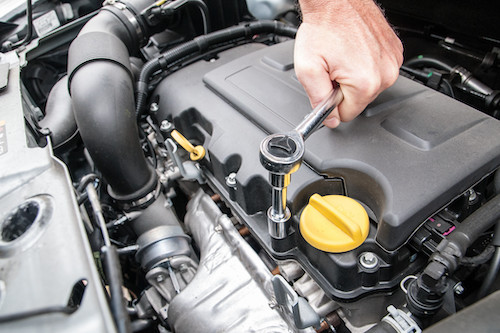
Be kind to the engine

A car’s engine is arguably one of the most important components of today’s modern cars. Without it, you wouldn’t be able to go. Keeping it in good shape means it’s reliable and ready to move whenever you sit behind the wheel. 

Regular maintenance starts with motor oil changes. Most manufacturers suggest bringing your vehicle in for servicing every 3,000 to 5,000 miles. This ensures your engine is operating with clean oil, and gives mechanics a chance to check and determine if other components are in good working condition too. 

In between oil changes, don’t ignore other messages your vehicle might be sending you. Is your heater working in the winter, and your air conditioner operating well in the summer? If your car is struggling to produce proper temperatures, it could be a sign of deeper problems. 

Pay attention to what’s happening around your car. As you leave your parking space or garage, take a quick glance underneath as you drive away. Are there any leaks? Note the size of the puddle, the color, and if there are any unusual smells. An antifreeze leak will take on a lime-green, orange, pink, or blue-green color, and may have a sweet aroma after you’ve driven it. 

You should also refer to your owner manual frequently, and bring your car in for regular checkups to ensure all systems are working properly. Brakes, belts, spark plugs, and more can all last thousands of miles, but may eventually wear down to the point of causing problems with the way your vehicle drives and handles. Through regular inspections, you can catch potential issues before they escalate, leaving your car in better working condition throughout its life. Which in turn extends its life as well. 

Maintain the interior too

If you spend a lot of time in your vehicle driving around town, you might think of it as a second home. There’s a pile of papers on the floor, leftover food bags behind the seat. Gym bags in the trunk, and extra grocery bags piling up in the back. Over time, these things accumulate, attract dirt and dust, and can eventually impact the air you breathe. 

As this settles into the seats, dashboard, and floorboards, it can dull the interior of your car. If you ever hope to sell it, this will be difficult to correct, and lower the amount you can ask for the car. To keep your value high, take a few minutes each week to ensure the interior shines. 

Replace early

If it’s not broken, don’t fix it. Most of us take that approach to maintenance in every situation in our lives. 

Yet to keep your car running well and free from potential problems, staying ahead of maintenance items will ensure the best condition for your vehicle. Read your owner’s manual thoroughly. Pay attention to maintenance checks to perform at different mileage markers. And consider working with our service station on a regular basis. This will allow our mechanics to understand your car, make suggestions about routine maintenance items, and help you make the best decisions for keeping your car on the road in the best condition. You’ll save money by replacing things before they can escalate into larger issues. 

Keep your car in good working condition. Maintain the value of your car simply by staying ahead of maintenance items, ensuring your vehicle is always running at peak performance. 

What can we help you with today? 

Filed Under: Car Maintenance Tagged With: Maintenance Tips

Making Your Brakes Last

October 14, 2021 by Denver Express Car Care

As a driver, you know some parts wear out sooner than others. You have to get an oil change every few thousand miles. Tires need to be replaced when they start to wear down. And brakes, they’re important too. 

Yet things are expensive these days. Money only stretches so far. If you’ve ever put off a maintenance item because something else takes precedence, you’ve pushed the limits of stretching the workability of a part. 

Brakes are an integral part of every car. Imagine sailing down I-70 without brakes. That would be more than a thrill ride as you try to keep control around every corner. But it doesn’t take a steep hill to throw you into a dangerous situation. Even approaching a stoplight in town can be a scary situation if you tap on the brake pedal and nothing happens. 

Having an efficient braking system will ensure your safety in every situation. How do you balance that with the desire to make your brakes last as long as possible? 

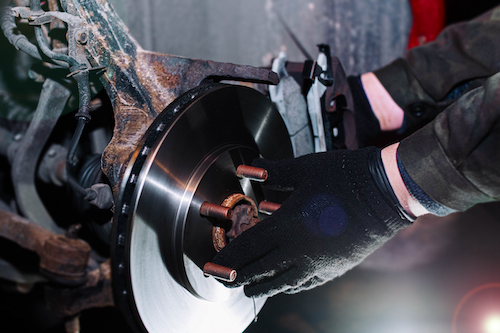
First, realize your braking system is only designed to last for so long. It will wear out over time. While you often hear brake pads are the first to go, it isn’t always the case. The brake system is made up of many different parts, and depending on how it wears down, a variety of things can go wrong over time. 

Overall, brakes will start to lose their effectiveness around 25,000 miles. Check your owner’s manual for more information, as your manufacturer has guidelines for every system they build. 

You can’t make your brakes last forever, but there are things you can do to extend their life. Here’s what you can do. 

Smart driving 

There are two types of drivers: offensive and defensive. When you slow down, stop being in a rush to get from place to place, you tend not to put as much stress on your vehicle. You can watch the traffic around you and assess what’s happening before you get into situations that require quick decisions. You can drive without putting excessive strain on your brake system. 

Making Your Brakes Last

Stomping on the brakes is never a good thing. It requires reflexive decisions, and makes you more likely to spin out of control. Leave space between you and the car in front of you no matter if you’re on a drive into the mountains, or are heading to the grocery store in your own neighborhood. This allows you to brake softly, putting less strain on your entire braking system. 

It’s also important to use your brakes fully engaged. Have you ever stopped at a light, and pulled up on the brakes allowing the wheels to inch forward? That’s known as wheel creep, which also increases wear on the braking system. Are you a two-footed driver? Do you keep one actively on the gas pedal while the other is on the brakes? That also puts excessive wear on the brake system. Use the brakes as intended, and they will last longer and provide more service for as long as you own your vehicle. 

Keeping your vehicle well maintained

When was the last time you washed your car? When was the last time you cleaned it thoroughly, inside and out? Are there boxes and bags of things in your trunk? Do you carry around excess weight that’s only adding to the heaviness of your car? Take out the sports equipment, the home maintenance projects, and the boxes left over from school. If it doesn’t belong in your vehicle for day to day travel, take it out. 

That’s because a heavier vehicle takes more braking power to control. Every vehicle was designed with specific guidelines in place. Manufacturers created the brake system to fully control the vehicle and the passengers it carries. When you start adding in ski equipment, a toolbox, parts from the hardware store – items that can add tens, if not hundreds of pounds of extra weight – it adds strain on the movement of the vehicle. 

It’s not just your brakes that will thank you. Excessive weight also strains tires and gas mileage too, making you spend more every day you drive your car. 

Brake system flush

When you press down on the brake pedal, it’s the job of brake fluid to allow your braking system to fully function. Brake fluid moves through the braking line, which causes the brake pads to compress against the rotors, which slows and stops your car. 

Like other fluids that flow through your car to make it operate efficiently, brake fluid will only last for so long. Eventually, it wears down, dirt, air, particles, and other contaminants infiltrate the fluid, and make it sluggish as it moves through the system. Ever tap on the brake pedal and have it feel spongy, non-responsive? That could be contaminated brake fluid in the line. 

A brake system flush rids the line of fluid and moisture and replaces it with clean brake fluid. A flush ensures you’ll have optimal performance from your braking system overall. It keeps all components of the brake system working their best. While the industry average is right around 25,000 miles, it’s dependent on the make and model of your vehicle. Not sure? We have access to all vehicle guidelines and can help determine the right maintenance schedule for your vehicle. 

Regular maintenance

As a car owner, you know certain aspects of car maintenance are important. You fill it up with gas regularly. You replace the tires. You get an oil change every 3,000 miles. 

While it might seem like a good way to save money, coupon shopping will not help you properly maintain your car. When you find coupons for every maintenance item you need completed, chances are you’re stretching out the timeframe of when it’s best to make changes to your vehicle. You notice a problem, and look for the best way to save money. You ignore the problem until it’s too big to ignore. 

By using a service station regularly for all of your vehicle’s needs, it’s similar to going to the same doctor for your wellness checkups, so they understand what to watch for and what to suggest. A mechanic gets to know your vehicle, makes notes of what to watch for, and can make suggestions to increase the longevity of each system within your vehicle. 

There are often problems only a practiced eye will notice. We work with different vehicles every day, and have the knowledge and skill to help you make the most of every part, every system within your car. 

Filed Under: Brake Repair, Brake Service Tagged With: Making Your Brakes Last

Regular Maintenance For Your Diesel Car or Truck Can Increase Longevity

October 10, 2021 by Denver Express Car Care

Diesel cars and trucks might not be as popular in the US market as they are overseas, but they still make up over 7 million vehicles on the road. Diesel registrations account for 2.8 percent of all passenger vehicles, including cars, SUVs, pickup trucks, and vans. If you look at pickup trucks alone, they currently hold just over 10 percent of the market share. 

There’s a reason for that. Many consider diesel to be a dirty fuel. So instead, US buyers are flocking towards hybrids and electric cars, which may be a bigger part of our future. But diesel does have a place as a clean, green option for those wanting a high-powered engine without limiting efficiency. Even today, there are still new diesel vehicles entering the market.  

Both diesel and gasoline engines use internal combustion. Air enters the engine and creates power by combining with fuel. The engine’s cylinders compress the mixture, which ignites. This causes movement of the piston and crankshaft, which activates the transmission to set the car into motion. The piston then moves back into position to expel the used gas out as exhaust. 

The difference between gas and diesel engines involves the compression process. With gas, a spark plug ignites the fuel. Diesel uses extreme compression. That causes diesel engines to have more power, but pays the price as they are louder. 

Yet, for many drivers, if they’ve had diesel-fueled vehicles in the past, they love them for the many benefits they offer: better fuel economy, lower emissions, cheaper and less frequent maintenance visits to the service station. 

Regular Maintenance For Your Diesel Car or Truck Can Increase Longevity

Diesel engines may require fewer maintenance visits, but it doesn’t stop the need for regular maintenance to keep your vehicle operational. If you want your diesel car or truck to last for years, there are a few things you should schedule regularly. 

Keep your car or truck’s engine clean

Since diesel engines can last longer than their gas counterparts, it pays to spend a little more attention on the engine compartment to ensure it’s clean. If you’re navigating over more challenging terrain, dusty, bumpy roads are a part of your daily routine, dirt may accumulate faster on the engine. If it accumulates, it can shorten the lifespan of the various components, which in turn will decrease your fuel efficiency. 

Colorado winters can also wreak havoc on the various engine components. Salt, mag chloride, sand, and other winter hazards can stick inside the engine compartment, and cause corrosion. 

Proper cleaning can start as a part of your regular car or truck washes. Use a moist sponge to wipe down the engine compartment. An old toothbrush can help remove debris from nooks and crannies. Just be sure the engine compartment is cool before you begin any maintenance work, and always wear protective gear such as goggles and gloves before touching and potentially hazardous materials. Check with your owner’s manual to determine appropriate action, as not all parts should be subjected to large amounts of water. 

Don’t forget the oil change

It’s equally important for regular oil changes for your diesel engine compared with a gas engine. Check with your owner’s manual for ballpark timing for changing out your motor oil. A good rule of thumb is around every 5,000 miles, but adjust that based on the kind of driving you do. 

If you regularly use dirt roads, pull heavy equipment, or move up and down the mountain, your car or truck may benefit from oil changes more frequently. This is one of the easiest yet important maintenance tasks you can perform on your vehicle. 

Air filters and fuel filters

Almost all vehicles, including diesels, use an air filter to help keep the engine working at its best. You’ll find it under the hood inside the cold air collector box located near the front of the engine compartment. 

A dirty air filter can choke the engine, meaning it will need more fuel to create the same amount of power you’re used to. Manufacturers recommend changing the air filter every 12,000 miles or so, and having it checked if you notice problems with engine power or acceleration. 

Gas-powered engines use a single fuel filter, but most diesel engines use a primary filter between the engine and gas tank, and another between the transfer pump and injectors. Diesel fuel doesn’t go through the same refining process as gasoline, allowing more condensation in the tank. The two fuel filters help absorb this condensation. If water builds, you may notice a decrease in horsepower, the engine may stall out more frequently, and it could cause problems with your fuel injectors. 

Most diesel fuel filters need replacing every 10,000 to 15,000 miles. Check with your manufacturer for guidelines for your make and model. It’s advisable to replace both fuel filters at the same time. 

Proper cooling maintenance

In order to keep the engine cool, vehicles use coolant, or antifreeze, to transfer heat from the engine back to the air. As coolant moves through the engine compartment, it picks up heat. Hot coolant cycles back into the radiator, which turns the heat back into air. Then the cooled coolant travels back into the engine compartment, and starts the process all over again. 

Because diesel engines run hotter than gas motors, the radiator is at more risk. Higher temperatures mean a greater chance of overheating, which can lead to failure in many of the various components, including cylinders and gasket seals. If you let it go on too long, you risk complete engine failure. 

Proper cooling maintenance includes regular changing of coolant. This involves pumping specialized cleaning fluid through the cooling system and radiator to remove rust and any impurities left in the system by dirty or compromised coolant. The system is then topped off with fresh coolant to help with efficiency. 

Once again, check with your owner’s manual for radiator flush recommendations. A good rule of thumb is around every 40,000 to 60,000 miles. If you notice orange or green fluid leaks under your car, a sweet smell coming from the engine, or steam coming up from underneath the hood, it may be an indicator of a problem with your cooling system. 

Partner with someone for the best regular diesel maintenance for your vehicle

Whether you use your diesel car or truck for work or play, it’s important to know you can rely on it to get you where you’re going. Maintenance for your diesel car or truck is imperative to keep your vehicle running well for years. Stop by today and learn how we can help you keep your car or truck working at its best now and for years to come. 

Filed Under: Car Maintenance Tagged With: Maintenance For Your Diesel Car or Truck

Your Suspension Is Important – Here’s Why

October 7, 2021 by Denver Express Car Care

We’ve all seen the aftermath of a car out of control. The sides are crushed. The windows are broken. If it rolls, the roof may be caved in. 

It’s your car’s suspension system that keeps it safely on the road. 

A car can flip for a number of reasons. But if it isn’t well maintained, it increases the chance of problems occurring while driving out on the open road. Have you noticed:

  • Bouncing more than usual when you ride on a bumpy road
  • More pull in the steering wheel as you drive
  • It’s harder to keep control on wet roads
  • Traction issues as you move through curves and take turns

All of these are signs you may be experiencing problems with your suspension system. 

What is a suspension system?

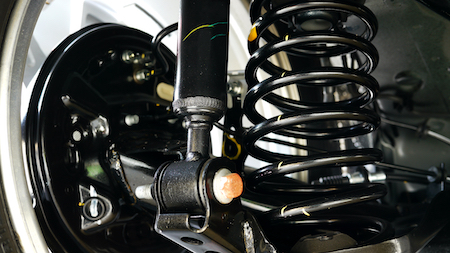
Your car’s suspension system is a protective layer of shock-absorbing components designed to keep your drive safe and smooth as you move down the road. It includes a variety of parts, including tires, struts, shock absorbers, steering, springs, sway bars, and axles. 

The front suspension system is in charge of steering and traction functions, while the rear suspension helps keep your car stable, ensuring it doesn’t hit the ground. The two work together to keep distance between the car’s frame and the road for optimal comfort and control. The passenger cabin is designed for comfort because it’s sitting on top of the suspension connected to the wheels. It’s insulated to keep passengers from feeling every impact as it maneuvers over bumps in the road. 

Your Suspension Is Important - Here’s Why

When you talk with a mechanic about your suspension system, in general, it includes:

  • Springs, which control the height and load
  • Shocks, which absorb and dampen the energy your tires transmit as they contact the road

Your car may also have an anti-sway bar to help shift the movement of your wheels as you turn the steering wheel. It stabilizes the car as you turn the steering wheel to move directions. 

Why the suspension system is important

If you were to separate the suspension system from the cabin for a moment, and see the wheels in action as they move down the road, you would see the tires take the brunt of every bump in the road. Small bumps may move the tires vertically. Holes may cause the tires to move and sway. Depending on the size of the imperfection in the road will determine just how much your vehicle’s tires move and sway. 

Without a suspension system, you would feel every one of these imperfections every time you hit one. Your drive would be uncomfortable at best. 

The suspension system works to absorb the energy transferred through the wheels to help your car’s inside cabin stay comfortable as it rides along imperfect roads. Both the shocks and springs play a vital role in this process. The shocks absorb the energy from impact as you travel down the road, while the springs expand to dissipate the energy to prevent your car from bouncing out of control. 

Combined, you get a car that stays safe and remains comfortable no matter where you drive.  

You have more control through steering, and can do so with ease. The tires remain connected with the road for a safer and more stable drive.  With a properly working suspension system, each part will do its job effectively without putting the other components at risk. Meaning a longer life span for your vehicle. 

Signs your shocks and struts need replacing

The words “shocks and struts” are often used reciprocally, but they are two different things. Each wheel has either a shock or a strut, though many vehicles use struts on the front wheels and shocks on the rear. You can consult your owner’s manual for more information on which your vehicle uses. Or look under your car. They are easy to distinguish as long as you know what you’re looking for. 

In general, shocks and struts will need replacing every 50,000 to 100,000 miles. This will change depending on your driving habits. If you frequently drive over rough roads, you will be replacing the parts on your suspension system more frequently. 

Like other parts of your car, shocks and struts don’t fade all at once. Instead, they deteriorate slowly over time. You’ll start noticing signs long before your safety is put at risk. 

There are four main ways your shocks and struts signal it’s time for replacement. 

A bumpy ride

If you’ve started noticing your ride is rougher, it could be time to replace the parts on your suspension system. We’ve often heard drivers say, “it feels like I’m driving a truck.” Even the slightest bump in the road will cause you to sway inside your vehicle. 

Leaking fluid

Shocks and struts use hydraulic fluid to complete the action. If the seal is broken and fluid leaks on the exterior of the shock or strut, it’s a sign of a problem with the suspension system. If a shock doesn’t have enough hydraulic fluid, it won’t be able to absorb impact while you drive. 

Difficulty while driving

Do you notice your vehicle swaying as you take turns? Or nose diving when you hit the brakes? This is a clue the shocks and struts aren’t doing their job efficiently. They aren’t handling the weight distribution as you move through normal driving conditions. And if your car can’t stop as it’s supposed to, it’s never a good sign. 

Tire tread

You can also take a look at the tire tread to determine if your suspension system is off. If you see wavy dips, also known as cupping, in the tire tread, it’s a telltale sign of the tires not completely connecting with the road as you drive. Without the shocks and struts performing their jobs, your wheels might not fully connect with the road, leaving uneven wear marks on the tires. Without proper tread, your tires may not provide thorough handling and stopping power when you need it most. 

Is it time to get your suspension system checked out? 

If you suspect any of these signs are causing a less than stellar drive, it’s time to let a mechanic take a look at the suspension system and ensure it’s in good working condition. It’s what keeps you and your family safe no matter what the road conditions are like on your daily drive. 

When was the last time you scheduled a regular maintenance visit to determine if your car is in good working condition? Do it today. 

Filed Under: Suspension Tagged With: Suspension

What Fluid Stains On Your Driveway Tell You About Your Car

October 4, 2021 by Denver Express Car Care

One of the benefits of continually parking in the same parking spot is you can keep an eye on your car’s performance. 

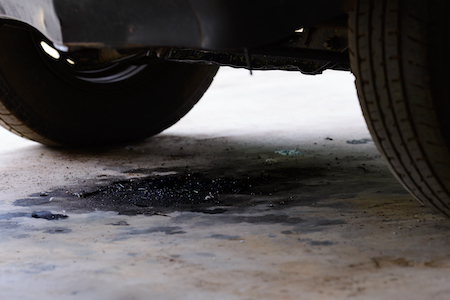
Notice fluid stains on your driveway? They’re trying to tell you something about your car. 

Today’s modern cars are filled with various fluids to keep it operating well. Even if your car is brand new, you should monitor these fluids regularly to ensure your car remains operational and in good running condition. Noticing a small spot on your driveway early could help you save thousands of dollars on car repair bills down the road. 

When you look at the stains on your driveway, you may notice different colors and textures. There might even be different smells associated with each one. How do you know what fluid is leaking? Is there a way to tell which you should take immediate action with? Read on. 

Motor oil

Motor oil is one of the most common fluids you’ll see on your driveway. It’s also one of the most frequently serviced and replaced fluids you’ll change regularly. When you first notice a fresh oil leak on your driveway, you’ll know it by its reddish-brown color. If you’re not sure if it’s motor oil, touching it with your fingers will reveal a tacky, sticky consistency. Pinpointing where the leak is coming from can be difficult. It may be a worn out gasket, seal, or valve cover. Once you have an oil leak, it’s important to have your car serviced, find the root cause, and fix it before it has more impact on your engine. 

Coolant or antifreeze

Coolant, also known as antifreeze, circulates throughout the system to ensure your engine stays cool as it operates. Coolant comes in a variety of colors; most are pinkish or greenish tints. You can also recognize coolant by its sweet smell, and its thin consistency. Coolant leaks are one of the most common leaks on a car. While most leaks aren’t serious if caught early, ignoring this telltale sign can run the risk of lowering the coolant in the system, which can lead to your car’s engine overheating. Leaks can come from the radiator, reservoir, or the head gasket; it’s important to let a trained professional follow the signs and make adjustments accordingly. Be aware that because of its sweet smell, it can attract kids and animals to it. It’s deadly if ingested. 

What Fluid Stains On Your Driveway Tell You About Your Car

Brake fluid

It’s safe to say that a leak in your brake system isn’t something to ignore. If you notice brake fluid on your driveway, have your car towed and fix it without climbing behind the wheel. Brake fluid is clear or has a yellowish tint. It will feel oily, slicker than motor oil, with a medium thickness if you touch it. You can check the brake fluid reservoir, usually found on the driver’s side underneath the hood, but this is something you should leave to the professionals. Brake fluid controls hydraulic pressure within the brake system. Leaking brake fluid can cause a pressure drop, which could ultimately lead to brake failure. 

Power steering fluid

Power steering fluid has a medium viscosity, and will appear yellowish in color. You may also notice it takes on a mechanical smell. Power steering systems also use hydraulics, to make it easy to turn and control the way your car moves. As you turn the wheel, power steering fluid fills a cylinder in the system, which allows pressure to control the wheel. Leaks can cause power steering fluid to lower the pressure, making your steering wheel harder to turn. 

Transmission fluid

Power steering fluid and transmission fluid are essentially the same things. Both are hydraulic fluids, and in some cases, car manufacturers will use them interchangeably. It’s always best to consult your owner’s manual first before repairs. The biggest difference is transmission fluid contains detergents for cleaning, and friction modifiers to reduce friction. If you have a transmission fluid leak, it will have a reddish color, and be a slippery substance. The problem can arise from several different areas, including a broken seal, a cracked fluid line, or a pan gasket failure. Bringing your vehicle in will allow one of our mechanics to find and fix the problem. 

Windshield washer fluid

Windshield washer fluid might not impact the way your car operates, but not having it can be a hindrance to the way you drive. Try moving down a messy highway after a snowstorm without it. A leak could leave you finding windshield washer fluid on your driveway, sporting a blue, green, or orange color. It’s very thin, feeling almost like water, but has a distinct slightly sweet smell. It can soak into the concrete and disappear quickly because of its consistency, which makes it important to pay attention to what happens underneath your vehicle no matter how long you’re parked. 

How to track fluid levels before you notice them on your driveway

Most drivers are familiar with the 3,000 rule for motor oil. As a rule of thumb, have your vehicle’s oil changed every 3,000 miles to ensure it’s clean and provide optimal coverage for your engine. As long as you keep oil changes on your calendar, and have your car serviced regularly, your chances of seeing oil on the driveway are low. 

You can do so with the other fluids too. 

If you haven’t spent time reading your car’s owner’s manual, now is the time. Take some time to understand the fluids mentioned above, how they impact your vehicle, and when they should be checked to ensure they are still in good working condition. Even lifetime fluids can be compromised; when should you have your car inspected to ensure it’s still operating efficiently? 

The best way to keep your car operating well is to pay attention to what’s happening underneath your vehicle. Check out the driveway from time to time. It’s the best indicator of what’s happening on the inside. It allows you to make repairs quickly, avoiding damage and higher repair bills in the weeks and months to come. 

Filed Under: Car Maintenance Tagged With: Fluid Stains On Driveway

The Temperatures Are Falling! Is Your Car’s Heater Ready?

September 28, 2021 by Denver Express Car Care

Here in Colorado, summer seems to stick around a little longer in the year. September is beautiful. We can stay outside doing what we love longer, hiking, walking, or biking to enjoy the color all around us. 

Yet there’s a hint of coolness in the air. The temperatures are falling. Is your car’s heater ready for winter? 

The heater isn’t something most of us test until we need it. We get up one morning to find cold temperatures, possibly snow on the ground. Then we turn the heat on and expect it to work, providing us with the heat we need to keep the inside passenger compartment comfortable. 

Where does the warm air come from?

As your car’s engine heats up, it warms up the antifreeze that circulates from the radiator to the engine. Two rubber heater hoses also circulate from the engine to the heater core, which is a small box that sits behind the dashboard. Heated antifreeze moves through one hose into the box, while another takes it back to the engine compartment. 

When you turn the heater on, air blows through this heater core. It’s warmed up, and moves through the vents and into the passenger cabin. Some vehicles work by having a heater valve that controls the flow of antifreeze through the heater core, turning it on or off based on your selection. Other vehicles control the amount of air that flows into the air blend box, and how much is passed directly over the heater core. 

Once you understand how heat moves from the engine compartment into your passenger area, it’s easier to understand how the amount of heat you have is a telltale sign of potential problems underneath the hood. If a problem exists with the radiator, for instance, it can also impact the way the heater core works. If you have an antifreeze leak, it can lower the quality of coolant in the system, which can clog up the flow from the radiator and thermostat, which causes the thermostat to fail, and so on. 

The problem may be with your cooling system

Think of antifreeze (coolant) as the lifeblood of your car’s engine. If it’s not in optimal condition, it can’t perform its job. Antifreeze is designed to regulate the temperature inside the engine compartment, as well as keep it safe from freezing-cold temperatures. If antifreeze is in good condition, it circulates properly, the engine functions, and you can control the inside cabin to your liking. The heater relies on the circulation of antifreeze to ensure proper temperatures, and to be able to release as much heat as you desire into the cabin. If the cooling system isn’t working well, then your vents won’t blow warm air. 

The Temperatures Are Falling! Is Your Car’s Heater Ready?

A leaking heater core can start small and grow exponentially in short order. You may first notice an antifreeze leak by a sweet smell coming from your vents. You can’t miss the sweetness. It may also be combined with vapor coming out the vents, causing a buildup of film on the inside of the windows. This is a hazardous material, so it’s important to get it fixed immediately. Another sign may be a leak on your driveway. Depending on which antifreeze you use, it could have a pinkish or greenish tint. A leak is a clear indicator your car doesn’t have the proper amount of coolant inside the system. Without fixing it, your vehicle is in danger of overheating, which almost always means your car will break down. 

Listen for the blower

When you turn on the heating system, you have the ability to set it at different levels, depending on how warm you choose to make the inside air. The blower is designed to pump conditioned air through the vents at varying speeds. Over time, this electric blower motor can wear out, which weakens its ability to send air flow into the interior cabin. As temperatures start to dip, it’s a good idea to test out the blower motor before you need heat. As you drive around, test out the varying levels, from low to high. Listen for unusual noises that could indicate something is wrong with the blower. Clunking, grinding, squealing, or metal-on-metal sounds are all indicators of a problem with the blower motor. This gives you ample time to get it fixed before the first snowstorm of the season arrives. 

Your air conditioner is also an indicator

If you’ve ever thought your heating and cooling system were two separate entities, think again. Your car’s heating system actually uses the air conditioner to help dry out moist air, which is needed to help you defrost your windshield and side windows before and as you drive. You might not think to turn on your air conditioning system when it’s already below freezing outside, but a functioning air conditioning unit is integral for driving in Colorado weather. 

Have you noticed problems with the way your air conditioner kept you cool in this unusually good fall weather? Has it been more difficult keeping the interior cabin properly conditioned as the temperatures continue to climb outside? That’s your car’s way of telling you to pull in for a little maintenance before the winter begins. A functioning air conditioner is the only way to survive the winter drive. 

Are you ready for another Colorado winter? 

The good news is that it’s easy to ensure your car heater is in good working condition and ready for another Colorado winter. Periodic maintenance of your cooling system will ensure you can keep the interior of your car at whatever temperature you desire, while knowing at the same time your engine is running optimally too. 

Auto manufacturers recommend changing your coolant after 4 years or 60,000 miles, and every 2 years or 30,000 miles after that. Be sure to check your owner’s manual for complete advice based on your make and model. 

This ensures your coolant is powerful enough to keep your engine system working as designed, and gives mechanics a chance to repair any leaks and inspect the various components for signs of breakdown. 

Is your car heater ready for winter? 

Filed Under: Car Maintenance Tagged With: Car Heater

What Are All-Weather Tires and Do They Work In Colorado?

September 24, 2021 by Denver Express Car Care

It can easily reach into the 100s in July, and dip down below zero in January. But come April and October, you can easily witness all four seasons in just a few hours of time. 

That makes it difficult to know what to plan for when you head out the door in the morning. It also makes it difficult to know what kind of weather your vehicle will face on the drive in. 

Should you have plenty of windshield washer fluid for splashback? Check. 

Should you ensure your brakes are always in good condition to handle everything from dry to icy conditions? Add a check there too. 

But when it comes to what tires to put on your vehicle, it’s hard to know what to do. Summer tires will provide good traction on the hot pavement the summer brings. Winter tires will help with traction no matter how much snow or ice is on the road. But changing tires can be difficult at best. And at what point do you make the change?

Maybe an all-weather tire makes more sense. 

What are all-weather tires?

As the name implies, all-weather tires are designed to offer you traction and stability in all kinds of driving conditions. The tread is created to handle summertime heat along with slushy, icy, snowy roads. The specialized rubber used to create the tires provides flexibility in a variety of driving conditions. Like when you move from sunny, warm weather in the morning, to icy, snow-packed roads by the evening commute. 

Don’t mistake all-weather tires for all-season tires. The name may be similar, but their performance isn’t. Where all-weather tires are designed to handle different road conditions, all-season tires are designed to function in all four seasons. They provide stability to handle the average of each season, meaning some rain, and very light snow. 

What Are All-Weather Tires and Do They Work In Colorado?

All-weather are designed with unique tread perfect for gripping the road no matter what conditions exist. Hot pavement, wet roads, or snowy, winter conditions can all be navigated well with all-weather tires. They have deep grooves which help reduce hydroplaning when the roads are wet, plus ample flexibility for handling when the snow starts to fall. 

The pros of all-weather tires

When you are ready to purchase a new set of tires, it’s important to consider your drive before you make your final selection. Do you drive dozens of miles per day? Is mountain driving a part of your daily commute? Do you navigate dirt roads and back country driving? Or is everything a few minutes from your urban home?

All-weather tires have improved traction on most road surfaces. All-weather are designed moving across different types of terrain at different times of the year. They provide good traction in all driving conditions here in the Denver Metro area. 

All-weather tires provide a year-round solution. If you’re tired of changing from summer to winter tires, storing them, and wondering when to change, all-weather may be the perfect choice for you. 

All-weather tires provide decent solutions on ice and snow. If you commute a few miles to work each day, relying on snowplows to help clear the roads, all-weather tires can be a viable solution. They handle decently on snow and icy roads.

Investing in all-weather tires can also save you money over buying both summer and winter tires. This saves you from bringing your car in twice per year for switching them out, and storing them while they aren’t in use. 

The cons of all-weather tires

This is all about expectations. It’s about knowing what you demand from your driving experience. 

If you want the ultimate control for driving in snowy conditions, you’ll never beat snow tires. All-weather tires offer flexibility to help you move through the different road conditions Colorado faces each year, but nothing will ever compare to what true snow tires offer. All-weather will get stiff in extreme cold, and will reduce traction between you and the road. This comes down to where you live and drive – how much traction do you really need each day? 

All-weather will also have delayed reaction on icy roads when compared with snow tires. They may be a step up from summer tires and all-season tires, yet still fall below the ability of snow tires. 

All-weather tires will also be a little more difficult to drive with in deep snow. If you tackle the deep stuff regularly, nothing will handle better than snow tires designed for winter driving conditions. 

Which are the best tires for you? 

Before you make your final decision, ask yourself a few questions. 

  • What are my daily driving conditions like? 
  • Do I spend more time driving in certain conditions than others?
  • Do I spend more time in urban or rural driving conditions?
  • Do I have the room to store tires? 
  • What’s best to work with the car I drive?
  • What kind of driver am I?

Your tires are an important part of your vehicle’s braking system. To ensure they provide good traction and help you stay safe year-round, select the right tires for you. 

Are all-weather tires a viable option for some Colorado drivers? You bet. Stop by today. We’ll help you make the right choice, and help keep your vehicle in good driving condition no matter what the weather is like outside. 

Filed Under: Tires Tagged With: All-Weather Tires

Does Your Truck Need Winter Tires

September 21, 2021 by Denver Express Car Care

Have you ever watched shows on television that show people navigating treacherous winter conditions without a problem, laughing and talking as if nothing were happening outside the window? 

You know it’s not reality. Even a few snowflakes can set off a chain of events. The driver in front of you swerves. You hit a patch of ice. You grip the steering wheel as if your life depends on it. There has to be a better way!

Does your truck need winter tires? Will that solve the problem? Are they worth the money, or should you just look for a job closer to home? 

When there’s snow, you have to plan for snow

Living in Denver means you’ll get plenty of opportunities to drive in snowy conditions. Just this past year was one of the snowiest years on record, with Denver receiving more snow than it had seen in 37 years. 

Even just an inch or two can have a dire effect on your daily commute. Ice can form. Snow can accumulate. And all of it impacts your truck’s traction and handling, creating more risk for you to fishtail, skid, slide, and bump into the cars around you. 

Not surprisingly, 24 percent of weather-related crashes occur when pavement is slushy, icy, or snowy. Almost 15 percent occur when snow or sleet is falling. Waking up and taking a peek out the window can immediately put you on alert – you’ll face a stressful drive. Is there a way to change that? 

Does Your Truck Need Winter Tires

The answer may be with winter tires

No matter what type of vehicle you drive – truck, 4×4, SUV – your tires are the source for your wintertime stopping power and performance. Tires give you cornering grip. They give you the ability to effectively turn and recover if the tire slips and slides. 

While trucks often have a unique ability for traction and safety, that can change rapidly when the snow starts to fall. 

Unlike regular tires, winter tires are created with rubber that won’t harden as the temperatures drop. The tread of winter truck tires remains flexible no matter how far the temperatures drop, enabling them to better grip icy and snow-packed roads. 

Winter tires also have specially designed tread patterns that cut through the layers of wintery roads. They handle precipitation more effectively, and are designed to keep your vehicle on track and driving straight no matter how bad the roads get. They provide full-depth tread that better pushes away snow and sleet to improve how it handles on the road. 

Snow tires or chains – what’s the difference? 

Even if you have snow tires, you may occasionally see recommendations for adding tire chains if you’re going to drive. If you’re going to carry tire chains and plan on using them when the roads are bad, is it really necessary to invest in snow tires too? 

Think of tire chains as a cheap alternative to snow tires. They give you much-needed traction when you need it most. But unlike snow tires, they aren’t there at the spur of the moment, when things rapidly change. And if you’ve been in Colorado long enough, you know weather can move into the city in moments. With tire chains, you’ll be out of your truck, putting them into place, and spending time outside as the weather worsens. You have to plan ahead, and spend the time necessary to put them into place. 

Snow tires are more expensive than tire chains. You also have to plan and have them installed on your vehicle before the winter weather arrives. But once they’re in place, you won’t have to think twice. They’ll be there as an added safety feature whenever lousy weather arrives. 

Do winter tires really make a difference? 

If you’ve done any search online, you know there’s a debate over the effectiveness of winter tires. Are they a good investment? Are they something you should consider for your truck? 

The answer comes in knowing your own driving habits. Are you looking for performance, or are you the type who prefers to stay home? 

Winter tires add to safety when you need it most. If you’ve ever felt your truck slide, you know the fear that comes along with losing control. While not perfect, winter tires can cut back on that happening. 

Winter tires won’t make your vehicle invincible. But it will give you performance when you need it most. For most truck owners, once they have snow tires in place, they can’t imagine driving again without them. 

For even more proof that winter tires can add safety to your drive, look at the advice provided by the Colorado Department of Transportation. They state:

Winter tires are safest for snowy and icy conditioners. Tread patterns built into winter tires provide extra traction and stability, while the rubber stays softer in cold temperatures, giving it superior grip. 

When compared to all-weather or mud and snow tires, there’s a distinct advantage. In a stopping distance test from 60 mph on snow packed roads:

  • Summer tires took more than 800 feet to stop
  • All-season tires to 668 feet to stop
  • Winter tires to 310 feet to stop

In short, winter tires work well when the weather turns nasty. When Colorado puts the Traction Law into effect, your all-season tires won’t make the cut. If you have to be somewhere, no matter what the weather is like, winter tires are the only way to go. 

Are winter tires worth the investment for your truck?

Only you can decide if now is the time to invest in new winter tires. 

But if you’re looking for better performance all through the year, if you do a lot of driving every single day of the week, winter tires may be the right investment for your needs. 

How can we help you keep your truck in good condition no matter what Colorado weather is like outside? 

Filed Under: Tires Tagged With: Truck Need Winter Tires

What Fuel Injectors Do and How To Keep Them Operating at Their Best

September 17, 2021 by Denver Express Car Care

Once upon a time, all cars were built solely for transportation. With a simple set of parts, cars were designed to move passengers from point A to point B, with little thought for anything else. 

As the decades moved forward, a lot changed with car production. Automakers added comfort, safety, and efficiency. 

Looking back at the history of the internal combustion engine, the carburetor played a big part in supplying fuel to the engine. Over time, designers added a variety of systems to keep up with modern day operating requirements. Carburetors had several different circuits designed to manage fuel for different reasons:

Main circuit – provide enough fuel for driving

Idle circuit – provide enough fuel for idling

Power circuit – provide enough fuel for acceleration 

Over time, as governments demanded stricter emissions requirements, catalytic converters were added to control the air to fuel ratio. Oxygen sensors were added to monitor the amount of oxygen in the exhaust. 

Technology changed, and the first fuel injection system was introduced as a way to improve efficiencies over carburetors. Common types include throttle body injection, multiport injection, direct injection, sequential injection, and central fuel injection. These systems have an injector at each cylinder, located in such a way as to be able to spray directly at the intake valve. It’s a faster, more accurate way of fuel metering, providing quicker response. 

How a fuel injector works

When a car works as designed, there’s little for a driver to think about. Step on the gas pedal, and the car moves forward. 

A throttle valve opens up as you press on the gas pedal, allowing air into the engine. As this occurs, the engine control unit (ECU) reacts and increases the fuel rate as air enters the engine. This occurs simultaneously. With any hesitation, you’d feel it in the way your car performs. Sensors ensure that the air to fuel ratio remains constant, and the amount of oxygen in the exhaust meets manufacturer’s guidelines. 

What Fuel Injectors Do and How To Keep Them Operating at Their Best

The fuel injector is an electronically controlled valve that supplies pressurized fuel into the system. As it’s energized, the fuel injector sprays pressurized fuel through a tiny nozzle designed to make the spray a fine mist so that it burns easily. The amount of fuel supplied is determined by how long the fuel injector stays open. This is controlled by the ECU. 

The fuel injectors are mounted to the intake manifold, so the spray directly connects with the intake valves. In order to ensure the right amount of fuel is sprayed, the ECU operates with a variety of sensors. They can include:

  • Coolant temperature sensor – this monitors the operating temperature of the engine
  • Engine speed sensor – this monitors engine speed
  • Mass airflow sensor – this monitors the amount of air flowing into the engine
  • Oxygen sensor – this monitors the amount of oxygen in the exhaust for the ECU to determine how rich or lean the fuel mixture is and make adjustments accordingly. 
  • Throttle position sensor – this monitors the throttle valve position to determine how much air is being released into the engine
  • Voltage sensor – this monitors the system voltage so the ECU can raise the idle speed if voltage drops

Fuel injectors will usually only fail in one of several ways

The fuel injectors on your vehicle are designed to last between 50,000 and 100,000 miles. This is impacted by the type of gas you put into your car, as well as how often the various fuel filters are changed. 

When fuel injectors wear down, it’s because:

The fuel injectors are clogged or dirty – when you turn off the engine, heat dissipates. This causes any fuel left in the injector to evaporate, which leaves behind tiny hard deposits. Over time, these can block the injector. 

The fuel injectors are leaking – fuel injectors can leak internally or externally. The most common reason is failure of the o-ring, which connects the fuel injector to the fuel rail. It can become hard and brittle over time from the heat of the engine. 

The fuel injectors fail – there are many moving parts inside a fuel injector. Over time, they can simply wear down and fail. 

Signs your fuel injectors may be failing

Your vehicle has more than 10,000 parts to ensure it operates effectively. Over time, any number of those parts can start to wear down. Few break or fail without warning. 

Like other systems on your vehicle, fuel injectors will start showing signs when there’s a problem. You may notice:

  • It’s difficult to start the engine when it’s hot
  • Your car has a rough idle
  • You failed your latest emissions test
  • You notice poor performance as you start your car and drive
  • The engine has a difficult time reaching full RPMs
  • You notice a decrease in gas mileage
  • You notice smoke pouring from the tailpipe
  • The car bucks at different throttle loads
  • Engine knocking

Preventing fuel injector problems

Fuel injectors are hard working pieces that can last the life of your vehicle. Like any other engine part, regular maintenance is the key to keep it operating efficiently. If you plan on owning your vehicle for years, there are a few things you can do to keep it operating at its best. 

Regular maintenance and inspection

Vehicles don’t take a lot of maintenance. Most drivers do what’s necessary to keep their vehicles operating at their best 

It starts with paying attention to what you put into your vehicle. Go with a high grade gasoline. Get regular oil changes. And stick with a car care center you can trust; one who will get to know your vehicle and ensure it’s working its best. Fuel injectors should be inspected every 25,000 to 40,000 miles under normal circumstances, more often if you do a lot of short journeys around town. 

Keep your engine healthy by changing out the oil and fuel filter regularly. This ensures the engine has proper fuel flow. 

You can also pay attention to the way you drive your vehicle. Short start/stop journeys increase wear and tear. While you can’t change your driving habits if you work and run errands close to home, you can be aware of ensuring your car is well cared for. Give your engine a chance to cool off before you shut it off on occasion. Maintenance is key to keeping it operating well. 

And if you have any questions about how your car operates, bringing your vehicle in quickly will be your best bet every time. 

Filed Under: Engine Tagged With: Fuel Injectors

Transmissions Need Repair Too

September 14, 2021 by Denver Express Car Care

When a car is new, everything works perfectly. You start the car, and the sound can be magical. It purrs as you put the car in gear and head off down the highway. 

Over time, starting the car becomes an automatic process. Get in. Turn the key. Think about your day ahead. Ignore the little changes going on underneath the hood. 

And that works well … for a while. 

Eventually, you can no longer ignore the noise. Something’s wrong. 

The question then becomes: What are you going to do about it?

Today’s modern combustion engine is a complex array of components. One of the most critical parts is the transmission. 

In short, a transmission is a vehicle’s gearbox. It’s what allows the car to move through the various gears as you drive. Without it, you could never move away from a stop sign, accelerate on the highway, or climb the hill near your home. 

The typical car transmission has between five and six gear sets and trains (the belts and chains that connect the gears together.) The transmission’s job is to ensure that your engine runs at the proper rate without moving too fast or too slow for the road conditions. It ensures the right amount of power moves from the engine down into your wheels, so your vehicle can move safely down the road as you move through your days. 

Today’s vehicles have two types of transmissions: manual and automatic. Manual transmissions are fading from most car lines as automatics are more precise in their movement, and have a lower error rate. By having an automatic transmission, a driver can focus on the act of driving, rather than worrying about when is the right time to change gears. 

Regardless of whether your vehicle is manual or automatic, the transmission works in the same way. As the driver accelerates, a gear lever moves from one gear to another as the road conditions require. While manual transmissions require the driver to push and hold a clutch control while moving the gear shift, an automatic transmission does it automatically. When engaged, a clutch maneuvers the clutch plates into place to connect with larger gears. As the gear lever moves, different gears shift and connect, which in turn controls the amount of power delivered to the engine and wheels. 

There’s a lot of power behind this movement. Over time, these connections can start to fail, putting you and your vehicle at risk. 

Transmissions Need Repair Too

Luckily, total transmission failure doesn’t happen without warning signals. If you notice any of these symptoms, it’s time to bring your car in for maintenance to stop the problem before it worsens. 

Odor

As you drive along, you can take in a variety of smells. If you pass a restaurant, it might remind you it’s time for dinner. But if you notice a strong odor that doesn’t dissipate as you drive, it might be time for a visit with one of our mechanics. If the smell seems to be coming from the engine compartment, if it has a strong burning smell, it’s a sure sign there’s a problem with one or more of the parts. 

As transmission fluid runs low or degrades, it overheats and can create a burning smell. This allows your engine to run hot, which can allow other engine components to wear down as well. Burning smells are never good for your vehicle; have them checked out, especially if they continue over time. 

Sounds

Remember that purr from when you first bought your vehicle? If you pay attention to the sounds your car makes over time, you can easily notice problems by the different sounds it makes. 

Clunking, humming, whining, rattling, or grinding is never good for your vehicle. Your first step is to determine where the noise is coming from, and when you most often hear it. A clunking noise when your car changes gear is a telltale sign that your transmission is experiencing problems. 

Check engine light

Today’s vehicles are a complex array of technological parts, all coming together to create the modern day car. If any one component isn’t operating correctly, it can have adverse effects on other parts. 

Most cars today have a variety of dashboard lights designed to signal when something is wrong. These lights illuminate the moment the ratios fall beyond manufacturer’s suggested guidelines. They light up in plenty of time for you to bring your vehicle in and get it inspected. Don’t ignore the little light on your dashboard. If you pay attention and take action quickly, you’ll save money on larger, more detailed repairs. 

Leaks

There are several main fluids in your vehicle, each designed to lubricate, cool, and help you maintain your car. 

If any of these fluids break down or leak, they can alter the way your vehicle operates. 

A transmission fluid leak is easy to spot because it shows up as a red color with a sweet smell. It can darken over time if it’s compromised and has dirt particles in it. It can also take on a burnt smell when it has broken down. 

Shaking

An automatic transmission should provide you with a smooth ride. Have you started to notice your car shaking as it changes gear? It’s a sign one or more of your gears may be wearing down, or one of the chains or belts needs replacing. 

Don’t ignore the shaking. It will only get worse over time. 

Won’t move into gear

Sometimes your car gets stuck in one gear and refuses to move to another. This is often a fluid issue. 

When transmission fluid is clean and topped off, the gears move freely as you drive. But as the fluid becomes compromised, it might affect the way the gears move. It might also be a problem with the computer system, not instructing your vehicle to move properly. 

Slipping gears

Instead of having a vehicle that won’t change gears, you might notice the gears occasionally slip between gears without any instruction from you. This is dangerous for your car and can put you in a dangerous situation. This can be caused from a variety of things, including a worn transmission, or low fluid levels. 

Are you experiencing any of these transmission symptoms? 

If your vehicle is experiencing any of these transmission symptoms, it’s time to bring your car in for repair. Don’t ignore unusual smells, noises, or a car that doesn’t drive as usual. It’s a sign your car has a problem, and the sooner you fix it, the quicker you’ll be back on the road without worry. Small problems can escalate into expensive repair bills if not acted on quickly. 

Filed Under: Transmission Tagged With: Transmissions Repair

  • « Previous Page
  • 1
  • …
  • 38
  • 39
  • 40
  • 41
  • 42
  • …
  • 102
  • Next Page »

Express Car Care
4200 E. Evans Ave. Denver, CO (map)
Phone: (303) 691-2760
Located just southeast of the Colorado Light Rail station

Follow Us Today!

  • Facebook
  • RSS

Shop Hours

Monday: 8:00AM – 5:00PM
Tuesday: 8:00AM – 5:o0PM
Wednesday: 8:00AM – 5:00PM
Thursday: 8:00AM – 5:00PM
Friday: 8:00AM – 5:00PM
Saturday: Closed – A note from the owner
Sunday: Closed

Last car oil change time  – 5:00PM

Click for the BBB Business Review of this Auto Repair & Service in Denver CO

Recent Articles

5 Reasons to Choose a Local Family-Owned Auto Shop Over a Big-Box Garage

5 Reasons to Choose a Local Family-Owned Auto Shop Over a Big-Box Garage

We get it—you see a big-chain auto repair shop with flashy signs, weekend hours, and a recognizable brand. It’s tempting. But bigger isn’t always better, especially when it comes to something as … [Read More...]

  • The Top Reasons Your Car Might Be Stalling and How We Fix It
  • How to Keep Your Brakes Quiet, Responsive, and Safe
  • Why Your Vehicle Deserves a Full Multi-Point Inspection This Season
  • Car Gifts For Road Trippers: Essential Take-Alongs To Make Your Road Trips Safer
  • How Denver’s Climate Affects Your Car Battery

Search Our Site

Brakes Service

How to Keep Your Brakes Quiet, Responsive, and Safe

Everything You Need To Know About Replacing Your Brake Pads

How to Know If It’s Time to Replace Your Brake Rotors

Oil Change

Top Benefits of Getting Regular Oil Changes in Denver

Oil Change Specials in Denver: Save Money and Keep Your Car Running Right

Why Regular Oil Changes Are Crucial for Denver Drivers

Suspension

How to Know If Your Car Needs Suspension Repair in Denver’s Bumpy Roads

A Guide To Understanding Bushings on a Car

Tips for Preventing Wear and Tear on Your Car’s Suspension

Transmision Service

How Often Should You Service Your Transmission in Denver?

Transmission Trouble? Common Signs and When to Visit Our Denver Shop

How to Prevent Common Issues with Automatic Transmissions

Engine Service

Everything You Should Know About Your Vehicle’s Timing Belt

Is Your Car Hesitating During Acceleration?

How to Troubleshoot a Rough Idling Engine

Auto Tips & Tricks

How to Deal With Car Noises That Only Happen When You Turn

Top 5 Maintenance Tips for High-Mileage Vehicles

Why Tire Pressure Matters More Than You Think

"Denvers Best Auto Repair and Quick Lube" - Copyright © 2025 - 4200 E. Evans Ave. Denver, CO 303-691-2760