• Home
  • Denver Auto Repair Services
    • Full Service Oil Change
    • Expert Mechanics
      • Expert Honda Mechanics
      • Expert Toyota Mechanics
      • Expert Subaru Mechanics
    • Automatic Transmission
    • Fuel System Cleaning
    • Radiator Flush Service
    • Wiper Blades
    • Air Filter
    • Cabin Air Filter
    • Gearbox Service
    • Brake Repair
    • Clutch Repair
    • CV Boots
    • Tune-Up
    • Steering & Suspension
    • Tires
  • Auto Diagnostic
  • Contact Us
    • About Us
  • Shop Specials
  • Testimonials
  • Blog
  • 303-691-2760

Express Car Care of Denver

"Denver's Best Auto Repair and Quick Lube"

  • Brake Service
  • Car Maintenance
    • Heating-Air Conditioning
    • Suspension
    • Transmission
    • Engine
    • Tires
  • Oil Change
  • Tips & Tricks

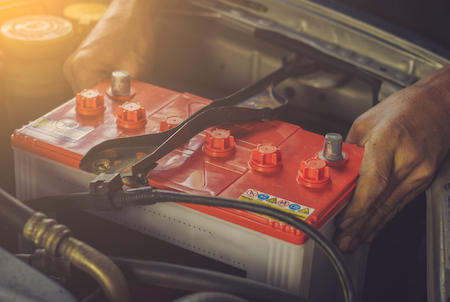
How Long Should a Car Battery Last

January 7, 2022 by Denver Express Car Care

Without a car battery, your engine wouldn’t start, and you’d be stuck where you are. 

Of course, your car battery does more than start the vehicle. It also creates the power necessary for both the ignition and electrical systems. Think of your battery as your car’s lifeline. Without it, your car won’t function. 

How long should a car battery last?

How a battery works

A lot of things around your home run off of battery power. From your smartphone to a smoke detector, batteries ensure you have enough power to the device to make it function. 

When you turn the key in the ignition, it’s the car battery that provides the jolt of power needed to power up the electrical components in your vehicle. The car battery converts chemical energy into electrical energy, and provides enough force to send voltage to the starter. It also provides a steady stream of electrical current to stabilize this energy and keep the engine running. 

That’s a lot of work for one little box underneath the hood of your car. 

Depending on the make and manufacturer, a car battery is designed to last anywhere from 3 to 5 years. How long your battery will last depends on things like:

Driving habits

Short trips of 20 minutes or less can actually shorten the lifespan of your car battery. Each time you start your car, it uses battery power. When you make short trips around your community, it doesn’t give the charging system enough time to fully recharge the battery. By integrating short and longer trips throughout the day, it works to keep your car battery healthy and in good working condition. 

How Long Should a Car Battery Last

Don’t think that leaving your car parked for extended periods of time won’t impact the battery. They naturally self-discharge over time. It’s better to disconnect the battery and remove it, or use a trickle charger designed to keep the battery at a constant charge level as it sits.

Also be wary of allowing your car battery to completely wear down through the use of electronics. Various car accessories like headlamps, interior lights, and the radio drain power from the car battery. That’s why if you forget to turn the lights off, it can impact your car starting the following day. Avoid using accessories for extended periods if you aren’t operating your car. 

Weather

Here in Colorado, we can have widely changing temperatures within a short period of time. Throughout the year, your car may deal with below zero temperatures, followed by heatwaves in the triple digits in the summertime. That’s a lot for your batter to deal with. 

Protecting your car battery from these extreme fluctuations will extend its life. If you have a garage, keeping your car inside during extreme weather will protect the battery from deterioration. 

Maintenance

If you pop the hood and look underneath, you may discover corrosion around the battery box. Corroded batteries weaken the battery’s charge, which can impact its lifespan. You can keep corrosion at a minimum by scrubbing it with a mixture of baking soda and water, then wiping away the residue including dirt or grease. 

Batteries won’t go bad overnight. By regularly testing it, you can watch how much amperage it’s putting out. We can test it when you come in for regular maintenance to ensure it’s operating well. 

Is your car telling you it’s time for a new battery?

While you can give your car battery a long lifespan with proper maintenance and paying attention to your driving conditions, eventually it will wear out. It doesn’t suddenly fail without warning signs first. 

Corrosion

When you see corrosion building up around the positive and negative battery terminals, it’s a sign the battery is weakening. You can clean it, but be aware it’s showing signs of age. 

Slow engine crank

When your battery is working well, your car should gain power immediately upon turning the key. If it’s slow to react, that’s a sign your battery is weak. 

Check engine or battery light

Today’s technology is designed to warn you of potential problems long before they cause you an issue. At the first sign of a dashboard light, bring your car in so we can use diagnostic tools to determine what’s wrong with your vehicle. 

Bloated battery case

Swelling usually happens when the battery has overcharged. Heat and hydrogen gas build up faster than the battery dissipates, which can lead to the battery casing warping and expanding. 

Leaks

When a car battery leaks, it can be from several things. Leaks can form through the cell caps at the top of the battery, or through damage to the battery body. Overcharging can also damage the battery, or if it is subjected to extreme cold for a length of time. This may be noticeable from the rotten egg smell it produces. 

Low battery fluid

While not a regular maintenance item, your car battery can run low on fluid. As a battery recharges, electricity flows through the water as it’s converted from original gasses of hydrogen and oxygen. This can sometimes lead to water loss, which will need to be replenished to keep it in good working condition. 

Age

The older your battery is, the greater chance it has of not working at its best. 

If you’re not sure how old your battery is, there’s an easy way to tell. It has a creation date printed on it. This creation date is listed as a code with a letter and number. The letter corresponds to a month – A is January, B is February, and so on. The number gives you the final digit of the year – 8 would be 2018, 9 would be 2019, etc. 

If your battery is more than four years old, it’s a good idea to plan on replacing it soon to avoid future issues associated with a weak battery. This gives you a chance to replace the car battery on your time rather than deal with an emergency situation somewhere away from home. 

If you’re having battery problems, bring your car in and let one of our technicians test it to find out where the issue lies. We can service it as necessary, or suggest a new battery that will ensure your car’s safety.

Filed Under: Car Maintenance Tagged With: Car Battery

Does Your Hybrid Vehicle Need an Oil Change?

January 4, 2022 by Denver Express Car Care

It’s hard not to notice there are more electric and hybrid vehicles on the road now than ever before. Maybe you’re thinking of switching and investing in new hybrid technology. But what will that do to your maintenance routine? Do hybrid vehicles still need an oil change? 

Before we get into maintenance, let’s dive into the statistics. 

The different types of electric vehicles include:

  • Hybrid electric vehicles (HEV) – they are powered by traditional gasoline and an electric motor that uses energy stored in a battery. The battery is charged by regenerative braking as you drive. 
  • Plug-in hybrid electric vehicles (PHEV) – they are similar to HEVs but rely on plugging in to recharge the battery. 
  • All-electric vehicles (EV) – these run on electricity alone. 

While all-electric vehicles are growing in popularity, hybrids have been on the market longer, and continue to have higher sales. Currently over 5.4 million hybrid cars have been sold, and are on the roads all across America. 

Does Your Hybrid Vehicle Need an Oil Change?

If you own one or are thinking of buying one, what does that mean for your regular maintenance routine?

Do hybrids need an oil change?

Hybrid vehicles run on both gasoline and electricity. While this increases the gas mileage, and ensures you won’t use as much gas as with more traditional cars, it still works in the same manner. A hybrid vehicle still relies on a combustible engine for part of the process, meaning you’ll still need to include oil changes as a part of your normal maintenance routine. 

The good news is you can stretch out the time between visits. Just like you’ll find your gasoline goes farther, so will your motor oil. The typical hybrid manufacturer suggests you can go 10,000 miles or more between oil changes, more depending on how you drive. Check with your owner’s manual to see what your manufacturer suggests. 

Keep in mind that a combustion engine will always need regular oil changes to continue to operate well. If you drive your hybrid only short distances, it may push the mileage beyond a year or more. Just like traditional vehicles, you should change the oil regularly based on mileage or age, ensuring the motor always has fresh oil to keep it working at its best. 

Manufacturers will also recommend specific types of motor oil. Because a hybrid still uses a combustible engine, you can schedule an oil change like you would with a traditional car. 

What about other hybrid maintenance items?

Hybrids have special needs. Because they are essentially two cars in one, it’s important to understand the different types of maintenance it will need over time. 

Because it runs off a combustible engine, it will need much of the standard care, including:

  • Oil changes – while using a battery for some of the power will put less strain on the engine, it will still need regular oil changes. 
  • Tires – adjustments, rotations, filling, and replacement will all be standard care for hybrids. 
  • Filters – because it has the inner workings of a combustion engine, it will still need air filters and cabin filters as a part of your normal care routine. 
  • Fluid refills and flushes – vehicles require many different types of fluids to stay running smoothly. To ensure levels remain constant, and you maintain and flush them for refills at the required intervals, be sure to check with your owner’s manual and work with a mechanic who can provide proper maintenance for as long as you own your vehicle. 

Hybrids still use a braking system, however, they rely on regenerative brakes for full operation. As you brake, the energy is absorbed back into your battery to keep it fully charged. As a result, these brakes need special requirements to keep them working at their best. Be sure a mechanic understands the nuances and can provide you with expert care. 

One of the biggest differences is with the car battery. Hybrid batteries must be powerful enough to provide as much energy as fuel gives gasoline vehicles. This means they are larger capacity than traditional car batteries, and have special needs. You can’t purchase a traditional battery and expect it to do the same job. However, hybrid batteries tend to last much longer than in a fuel-based car. Some manufacturers offer up to a 150,000 mile warranty. Just be sure to understand the nuances of the warranty, and follow the specific guidelines to ensure you don’t void it by not following the rules. 

Because a hybrid vehicle runs on both fuel and electricity, you’ll find it has a complex electrical system that should be maintained over time. They are built with auto start and shut off features that help with fuel economy, and to preserve the life of the battery. The electrical system should be calibrated periodically to ensure it provides proper power within the system. Too much power or a jolt of electric current could cause serious damage to your starter or transmission. 

Schedule care for your hybrid

Above all, your hybrid vehicle requires regular routine maintenance to ensure it keeps running and in good condition. Don’t wait until you have a problem. Instead, schedule regular maintenance to ensure you catch potential problems before they grow into bigger issues. 

A great place to start is by giving your hybrid vehicle an oil change. Because a hybrid relies on a standard combustible engine, it uses standard motor oil built for all combustible vehicles. Just be sure to check with the manufacturer for guidelines on what oil to use. 

Finding a mechanic with a routine maintenance item like an oil change is a great way to find a mechanic who treats you fairly, and gives you a chance to discover someone in your local community who you can rely on to do the job correctly. 

Filed Under: Oil Change Tagged With: Hybrid Vehicle Need Oil Change

Simple Ways To Determine If Your Brakes Have Problems

December 28, 2021 by Denver Express Car Care

Driving a car is an automatic function of our lives. Within weeks of purchasing it, we adjust to its sounds, noises, and movements. We expect it to work … until it doesn’t. 

The more aware you are of the sounds, noises, and movements, the greater chance you have of noticing when problems occur. Solving the issue before it escalates can save you time, energy, and money. It may also save your life. 

Your brake system is one of the most vital systems on your car. If your brakes fail, it can put you in a precarious situation. Luckily, your brake system has warning signs that potential problems are occurring. If you notice these early, you can fix the problem before it escalates. What should you watch for?

Watch for the brake light on your dashboard

We see it quite frequently where a driver brings their vehicle in with several dashboard icons lit. These sensors go off for a reason; don’t ignore them. They are providing you with ample warning that your vehicle no longer meets manufacturer’s guidelines. 

If the brake light indicator appears on the dashboard, it’s providing you with a warning that it’s either time for a routine maintenance check, or there’s a problem within the system. An illuminated brake light could signify that your vehicle has low levels of brake fluid. If this is left unchecked for too long, it could lead to serious braking issues. Low fluid impacts stopping distance, and could impact how the brake pads wear. 

Simple Ways To Determine If Your Brakes Have Problems

Schedule your appointment soon to avoid bigger problems. 

Listen for squealing or squeaking noises

Cars make a lot of noise throughout your drive. You can easily pick up on noises as they change over time if you stay fully aware. New noises coming from your brakes aren’t always a bad thing, but they might be indicators of a potential problem. 

How long do they last? Do you hear the noise over and over again? Sometimes a rock or debris can impact sound. But as it leaves the system, your car should return to normal.  

Brake pads are built with wear indicators that produce a squealing noise. This high-pitched sound will continue to build the more you drive. This ensures you can’t ignore it. You’ll notice it every time you step on the brakes. 

Watch for problems with anti-lock brakes

Most modern day cars come with anti-lock braking systems that offer a key safety component to help your drive. ABS is designed to help prevent your brakes from locking up during emergency situations. It also helps your tires from losing traction on icy or slippery roads when you step on the brakes. 

In most cases, if your anti-lock brakes have a problem, you’ll see an icon on your dashboard illuminate. Problems can range from a damaged ABS tone ring to a faulty speed sensor. The best way to determine where the problem lies is to bring it in for a diagnostic test to see what’s triggering the warning light. 

Notice brakes get spongy to the touch

When you first get your vehicle, your brakes respond immediately to your touch. As brakes wear down, it takes more pressure to achieve the same results. As you press down on the brake pedal, it moves closer to the floor, and it takes on a somewhat spongy feel. Causes can include:

  • Air in the brake line. This is often caused by a brake fluid leak or if the brake fluid is low. 
  • Damage to the brake line. If you’ve been in a car crash, or your car was damaged in any way, it could have impacted the brake line. Age can also impact it, allowing the line to become brittle, cracked, or rusted out 
  • Low brake fluid. If there is a leak in the system, brake fluid might not be at the recommended level. 
  • Master cylinder issues. The master cylinder controls brake fluid levels. If it isn’t working correctly, it isn’t sending brake fluid in the quantity needed. It will be more difficult to brake as you’re driving. 

You notice a shake or vibration when steering

If the steering wheel shakes or vibrates when you apply the brakes, it could be a sign of a bigger problem. Common problems include:

  • Worn brake pads. Any time the brake pads reach end of life, it can impact the way your car drives. When the pads can no longer grip the rotors as intended, it can cause the steering wheel to shake. 
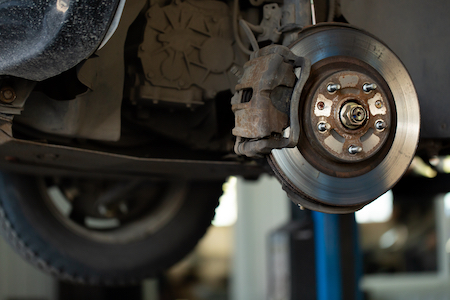
  • Warped rotors. When applying the brakes, the brake pads connect with the rotors to stop the wheels from spinning. Over time, the rotor can wear down. If it does so unevenly, it can impact the brake friction when you apply the brakes. This is why it’s important to fix the brake pads quickly, as they are less expensive and easier to repair than the rotor.  

You notice a burning smell

If the brakes get too hot, they can leave off a sharp, chemical odor. If you notice this coming back from a day of skiing, for example, it’s best to pull over and let your brakes cool before driving again. Double check the parking brake to ensure it’s not engaged. If there’s smoke coming from the wheel, it may be a caliper that is malfunctioning. If you aren’t sure, your safest bet is to have your car towed. It keeps you safe and ensures further damage isn’t caused to your brake system. 

Your car pulls to the left or right 

While this can be caused by a variety of problems, it might be from a problem with your brake system. If it’s caused by the front brakes, one brake may be working while the other is not. That will cause your car to handle differently as you apply the brake, with your car moving right or left depending on which brake isn’t working. Any time you notice your car not driving in a straight line, it’s time to have an inspection to ensure it’s working correctly. 

Don’t ignore problems with your brakes

Even the smallest issues can cause your brakes to fail. Any warning sign is designed to give you a chance to bring your car in for inspection before you have more serious problems. 

Schedule your appointment today. 

Filed Under: Brake Repair, Brake Service Tagged With: Brakes Problems

What To Know About Your Car’s Spark Plugs

December 21, 2021 by Denver Express Car Care

One of the most powerful parts inside your vehicle are the spark plugs. They are instrumental in powering up your car. Think of them as little bolts of electricity. Without them, your vehicle simply won’t go. 

If you look up the definition of spark plug in the dictionary, it states:

A device for firing the explosive mixture in an internal combustion engine

When engaged, it ignites a mixture of compressed fuel and air with an electric spark, while containing the combustion pressure within the engine compartment itself. This gives your vehicle what it needs to power up. 

As you can imagine, spark plugs withstand intense heat and pressure. They are built to burn off buildups and other contaminants as it repeats this process every time you start your car. 

If you have an internal combustion vehicle, your car won’t start without spark plugs in place. Their health determines how well your engine will perform as you start your car and drive. Over time, a weak or compromised spark plug can lead to a variety of problems, from issues with starting to misfiring as you drive. Without healthy spark plugs, your vehicle won’t perform well, meaning your fuel economy will be compromised. 

Different types of spark plugs

While there are some models that don’t use spark plugs, most modern-day vehicles need them to produce power. Without a spark, your car won’t go. Engine performance is directly related to how healthy your spark plugs are. 

Your engine needs at least one spark plug per cylinder. So, if you have a four-cylinder car, it will operate using four spark plugs. 

What To Know About Your Car’s Spark Plugs

Different vehicles need different spark plugs. They are not a “one size fits all” part. Certain spark plugs are more efficient, or perform better than others. Your car was built with certain characteristics in mind. That’s why it’s always a good idea to check with your owner’s manual before routine maintenance. 

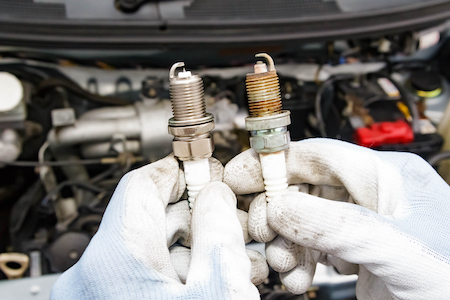
All spark plugs have a small central and side electrode to generate the necessary voltage. Overall, there are four main types of spark plugs:

  • Copper
  • Iridium
  • Platinum
  • Double platinum

Copper spark plugs use a nickel alloy electrode that is soft and not very durable. They don’t last very long, require more voltage, and are better suited for older vehicles built before 1980. 

Iridium spark plugs tend to last the longest. They have a small center electrode which means it needs the least amount of voltage to produce results. If your vehicle currently uses iridium spark plugs, never downgrade to other materials as it will diminish performance. They are the most expensive of the four types of spark plugs. 

Platinum spark plugs are similar to copper, except with a platinum disk in place of the nickel alloy electrode. This makes them more durable than copper spark plugs. While not the strongest on the market, they are often recommended for newer cars that use an electronic distributor ignition. 

Double platinum spark plugs are reliable if your distributor ignition system is a waste spark system. This causes the spark plug to fire twice, once for the compression cylinder, the other in the exhaust cylinder. This produces more reliability in rainy or damp environments. 

How spark plugs wear out

Spark plugs aren’t something that wears out quickly. You won’t be replacing them frequently, like you do an air filter during an oil change. 

By the time spark plugs reach end-of-life, they’ve been through thousands of starts and stops, withstanding extreme temperatures and a wide variety of conditions. When your vehicle was designed, manufacturers installed specific spark plugs with duration in mind. When it’s time to replace your current spark plugs, sticking to the guidelines will continue durability for years to come. 

Spark plugs won’t last forever. Over time, it can cause:

Deposit buildup – every time spark plugs ignite, the air-fuel mixture can leave behind trace materials. This continues to build, which can lead to pre-ignition of the fuel. If you ever find your vehicle jerking, it could be an unreliable air-fuel mixture. 

Expanding gap – as a spark plug ignites, it travels over a gap of space to provide the correct level of combustion. As the spark plug ages, this gap can widen. When it’s too far apart for proper combustion, starting will be ineffective. 

What will new spark plugs do for your vehicle?

Your vehicle won’t start without working spark plugs in place. When you start to notice problems with the starting process, a mechanic can inspect your vehicle and pinpoint the issue. If the spark plugs are worn, replacing them will give you:

  • Better performance – fully functioning spark plugs provide better combustion. If you are having any performance issues, it may be your spark plugs. 
  • Better fuel economy – every time spark plugs misfire, it can impact fuel efficiency. 
  • Smoother starts – it’s sometimes difficult to realize just how worn down your vehicle’s spark plugs are. When you replace them and experience the instantaneous start, you can recognize just how jerky bad spark plugs can make the ignition process. Replacing them on schedule can give you a smoother ride longer. 
  • Lower emissions – regular tune ups and spark plug replacement can reduce the amount of emissions your vehicle releases into the environment. 

When spark plugs need replacing

Like any part on your vehicle, spark plugs give off signs to warn you it’s time for replacement. You may notice:

  • Rattling or knocking noises – when pistons and combustion aren’t working properly, you’ll hear it in the interaction. If the spark plug fires and the piston doesn’t move accordingly, you’ll hear rattling or knocking noises. 
  • Hard start – when you turn the key and your car doesn’t pop right off, you may feel jerkiness or erratic performance. Those misfires are your warning sign. 
  • Low performance – spark plugs continue to fire as you accelerate and change gears. If it feels sluggish throughout this process, it could be a sign of needing new spark plugs. 
  • Poor fuel economy – pay attention at the pump. If your gas mileage decreases, it’s a sign something is wrong with performance. Old spark plugs reduce economy as the vehicle fails to receive the right spark, meaning it works harder to produce the same results. 

If you’ve noticed any of these symptoms, your first line of defense is to stop by for a full inspection. We can find the issue, and provide you with choices to prevent future problems while giving your better performance at the same time. 

Filed Under: Engine Tagged With: Spark Plugs

Having Steering Problems? It’s Probably One Of These Things

December 18, 2021 by Denver Express Car Care

Power steering is something most drivers take for granted. Until they have steering problems. 

Modern vehicles all use power steering to make driving easier. If you’re under the age of 40, chances are you’ve never driven anything without power steering. Cars today use a hydraulic power steering pump that provides help while you steer. 

Go back in time to when cars entered the marketplace. Cars were built so the driver controlled the moving process. When a driver wanted to turn right or left, they would have to crank the steering wheel and physically adjust the wheels to get the car to move in their desired direction. That required physical strength that some people had trouble with. Inventors set out on a course to make the process easier. By the 1960s, power steering was an option for most vehicles, with it becoming standard by the 1970s. 

Of course, a lot has changed over the years. 

How power steering works 

Today’s vehicles use power steering to respond to even the smallest of adjustments you make. That makes it easier to control, and easier to stay in the lane as you drive, no matter what your speed. 

Power steering systems use either an electric or hydraulic device to turn and steer the wheels. 

Hydraulic power steering uses hydraulic fluid to amplify the action of turning the wheels. Hydraulic fluid is pressurized by a pump driven by the engine, which provides hydraulic pressure for the steering system. As you turn the steering wheel, hydraulic pressure is applied to the steering gear, which makes it easy for the wheels to turn. 

Having Steering Problems? It’s Probably One Of These Things

Electric power steering uses an electric motor that draws energy from the electrical system to provide steering ability. As a driver adjusts the steering wheel, sensors detect movement. This data is fed into a computer system which evaluates how much assistance to apply. The biggest benefit of an electric power steering system over a hydraulic system is better adaptation to specific driving conditions. 

Electronic power steering, also known as EPS, is growing in popularity because of the performance improvements. Electric steering can give the driver the option to switch between different driving conditions for a different experience in driving. Comfort, standard, sport – you’ll find these steering systems and more depending on the make and model you drive. 

Common power steering problems

Today’s vehicles have over 10,000 parts. Two main power components with the steering system include the pump, and the rack and pinion unit. It also includes a variety of hoses and connectors to ensure the system works well. If there is an issue with any of these parts, you won’t get assistance as you turn the steering wheel, making it difficult at best. That can put you in danger as you respond to actions out on the road. In general, five things may be wrong with your vehicle if you’re having trouble turning the steering wheel. 

Low power steering fluid

One of the most common reasons for decreasing power in the steering wheel is low power steering fluid within the system. This usually occurs when the fluid is leaking from the pressurized hoses. If the hose is cracked or wiggles loose, it can cause the fluid to leak out. This fluid is required to keep the entire system well lubricated. If there isn’t hydraulic fluid within the system, the steering wheel gets more difficult to turn. You might be able to drive it, but it is a sign of a problem within the system. Eventually the steering pump will fail, and replacement is a lot more expensive than adding in new power steering fluid. 

Bad power steering fluid

Parts and systems today are designed for years of use. But that doesn’t prevent fluids from getting old and stopping working. Even if hoses and joints are still in good shape, holding power steering fluid inside, the fluid itself can become thick and corroded over time. If it’s too thick to lubricate the system, you’ll notice it in a steering wheel that doesn’t move properly. You can check if your power steering fluid is thick and dark. That’s a sign it needs flushing and replacement as soon as possible. 

Broken serpentine belt

Another common problem is an issue with the serpentine belt. If the serpentine belt is damaged or cracked, you’ll feel stiffness in the way the steering wheel turns. This belt is in constant action as you drive and make adjustments according to road conditions. It can wear down fairly quickly, especially here in Colorado where we face weather extremes throughout the year. If this is the problem, the belt will become looser as you drive. If it breaks, you won’t be able to drive the car at all. Heed to the warning of a problematic steering wheel to avoid bigger repair bills if it fails. 

Bad steering rack

The steering rack contains the rack and pinion. Different joints and shafts are responsible for keeping the steering rack attached to the steering wheel. As this rack wears down or is damaged, it will prevent you from steering your vehicle properly. You’ll know when the steering rack is going bad when you notice the wheel is tight only from a cold start. Once it warms up, the lubricant warms up and the steering action improves. It may loosen up as you drive, but the potential for problems is still there. 

Power steering pump failure

The power steering pump is what produces the right amount of pressure to allow you to move the steering wheel freely. If this pump no longer works correctly, it becomes more difficult to turn and control the steering wheel. As it wears down, you’ll be required to put more force into the act of turning the wheel. The heavier the vehicle, the harder it will be to complete this action. Bringing it in early means we can check for loose connections or other potential problems before determining if you need a new power steering pump. 

Do you have power steering problems? If you see yourself in any of the conditions above, it might be a problem with your power steering system. Bring your vehicle in today and we’ll inspect it and pinpoint the issue. 

Stay safe!

Filed Under: Car Maintenance Tagged With: Steering Problems

Have Advanced Driver Assistance Systems? Pay Attention To The Alignment

December 14, 2021 by Denver Express Car Care

If you’ve hopped behind the wheel of a new car lately, you know a lot of the driving is now done for you. Adaptive cruise control, lane change assistance, collision avoidance, blind spot monitoring – each of these advanced driver assistance systems (ADAS) is designed to make your job a little easier, keeping you and your passengers safer in the process. 

To ensure each of these systems works properly, sensors are placed in different regions of your vehicle. With ADAS, every sensor is needed to ensure accurate decisions are made as to how your car moves. If a wheel is out of alignment, or a misdirected sensor, it won’t provide proper input. This can lead to poor performance, or even emergency situations. 

Cars have changed so much in the last few years that many dealerships offer driving assistance programs to help you understand these advanced driver assistance systems more intimately before you take the vehicle home. At the very least, you should become familiar with your owner’s manual. It’ll help you become more familiar with the individual systems, and understand the maintenance routine necessary to keep everything working well. 

Getting to know your advanced driver assistance systems better

Almost all accidents on the road today are caused by human error. The role of ADAS is to prevent accidents and reduce the impact of those that occur. That’s why you’ll find ADAS applications like:

  • Automatic emergency braking
  • Blindspot detection
  • Lane departure correction and warning
  • Parking assistance
  • Traffic sign recognition

Each of these systems is designed applications using interface standards while running vision-based algorithms, relying on individual sensor functions and real-time multimedia. Each autonomous application uses a chip that connects with sensors placed around the vehicle. These sensors take in a large amount of data with the help of image software, sensors, lidar, and radar. It responds to unique situations faster than any human could process. 

Have Advanced Driver Assistance Systems? Pay Attention To The Alignment

If you drive a car with ADAS, you know how easy it is to rely on your vehicle performing specific functions. Studies show that in the first month, drivers are fully engaged as they adjust to self-help cars. That slowly wanes as it becomes the new norm for driving. And that’s where you can miss what’s happening to your vehicle over time. 

How wheel alignment changes with ADAS

A wheel alignment is a regular routine maintenance item for your vehicle. Like oil changes and checking tire pressure, a wheel alignment ensures your tires safely connect to the road, and keep you pointed in the direction you want to go. 

Wheel alignments today are computerized processes where a mechanic aligns all four wheels to ensure your car drives straight. It’s done by adjusting three separate angles of each wheel known as camber, caster, and toe. 

These aren’t large adjustments; they are often so small you would have difficulty noticing a change in the tire. That’s because computerized analysis can inspect every aspect of alignment and make micro changes that you and I might overlook. It can bring back your wheel alignment to what the manufacturer suggests. 

Improper wheel alignment will wear your vehicle’s tires down faster, and decrease safety while you’re driving. If the wheels aren’t properly connected to the road, you run the risk of having your car steer out of control. 

This is why ADAS can help. It also adds more complex nuances to a car’s driving and braking systems. 

With a standard wheel alignment, the alignment process involves specialized computer equipment to determine how well the system functions. ADAS takes that to another level. With even more specialized and fine-tuned sensors, the controls for things like steering, brakes, and cruise control all need a higher level of adjustment, referred to as a Safety Systems Alignment. 

This alignment starts by adjusting the three angles of the tires. It goes further by calibrating the ADAS cameras, sensors, and radar to ensure complete control of the vehicle. These functions rely on proper alignment of the vehicle to ensure it can be controlled in the manner it was programmed. 

For example, one of the most visible systems drivers use is the rear camera system. It tracks the wheel angle to show where your car is traveling in reverse. If this camera isn’t aligned properly or the steering wheel is out of alignment, it can impact what the camera show, which turns the process into a hazardous situation. 

To receive a Safety Systems Alignment, it requires:

  • State of the art equipment – these computers are designed exclusively to monitor cameras and sensors with precision. The slightest error in camera angle could impact the safety of the drive. 
  • Highly skilled technicians – this isn’t a process you can perform on your own. It requires a skilled mechanic who understands how to calibrate every sensor and camera system your vehicle may have. 
  • Extra time – to perform a complete inspection takes time. We have to ensure your tires are properly aligned, as well as ensure your entire safety system meets guidelines. 

Do you need an ADAS alignment? 

If your vehicle relies on ADAS for any of its safety features, you’ll need a safety systems alignment from time to time. 

There are several symptoms that suggest it’s time for a wheel alignment:

  • You notice your tire is wearing unevenly from tire to tire. 
  • The steering wheel is crooked as you drive straight. 
  • You hear noise as you are steering. 
  • The car pulls to the right or left as you drive. 
  • You hear a squealing noise from the tires. 
  • You install new tires. 

ADAS problems don’t show up in the same way. Your wheels may appear to be driving straight, but the sensors aren’t registering it that way. That’s why it’s imperative to bring your vehicle in for regular alignment maintenance to ensure they are operating correctly. 

To ensure all of your ADAS features are working properly, schedule a safety systems alignment along with your other routine maintenance. Schedule yours today. 

Filed Under: Car Maintenance Tagged With: Advanced Driver Assistance Systems, Alignment

When Your Car Won’t Start, This May Be The Problem

December 10, 2021 by Denver Express Car Care

Nothing can bring on a feeling of dread quite like a starter problem with your car. 

You hop into your vehicle expecting to go to work. Or you fall in after a long day of playing, ready to head home for the night. You turn the key or press the button and … nothing. The car won’t start. 

Now what?

How a starter works

When you turn the key in your car’s ignition, the engine turns over. This may seem like an easy, instantaneous process, but it actually relies on several actions to take place. 

When you turn the ignition, it engages the engine and allows it to suck in air and fuel. 

On the engine itself is a flywheel with a ring gear at the edge. It’s fitted onto a crankshaft. A pinion on the starter is designed to fit within the grooves of this ring gear. 

When Your Car Won’t Start, This May Be The Problem

When you turn the ignition, an electromagnet inside the compartment engages and pushes a rod with the pinion attached. The pinion connects with the flywheel and the starter motor engages. This spins to turn the engine, sucking in both air and fuel. 

Once the engine is operating, the starter motor disengages, the electromagnet stops, and the rod retracts. This prevents damage from occurring to the starter system.

Over a period of time, any part of this system can begin to wear down. The two most common parts to tail include:

  • The solenoid – this sends an electrical signal to the starter to activate the action
  • The starter motor itself

When either of these occur, the starter will no longer engage, meaning your car won’t start. Until repair or replacement, you’ll be stuck. 

Luckily, these parts rarely cease without warning. When the starter begins to wear down, it will give off signals alerting you to potential problems. 

Warning signs your starter is wearing out

Like any other mechanical device on your car, the starter won’t stop working without warning signs appearing first. Here are a few indicators you can watch for to help you determine if you have a problem with your starter. 

The engine won’t turn over

One of the most common indicators of a potential problem with your starter is when you turn the key in the ignition and nothing happens. This can be caused by the solenoid or motor burning out. It may also be a problem with your battery; one of our mechanics can test the system and see where your problem lies. 

Starter engages but the motor doesn’t spin

There are times when you turn the key in the ignition, and you hear a clicking sound as the starter tries to activate. No matter how many times you turn the key, the motor won’t turn over. This is usually caused by a problem with the gears on the flywheel. The gear may be stripped, or it’s separated from the flywheel. If this is the case, the starter will need to be replaced. 

The engine turns over intermittently

This can be a trickier issue than the other two. Your car starts fine, and then it doesn’t. This can be a minor problem anywhere within the system. 

  • A loose or dirty wire
  • An electrical component that’s burnt out
  • A gear starting to slip

When you start to see patterns in the behavior of your vehicle, the situation will only get worse over time. Before it leaves you stranded, take your car in for an inspection to pinpoint the problem early, and possibly reduce the pricetag of your repair bill. 

You hear a grinding noise when you turn the key

Instead of a clicking noise, the sound might be deeper. This warning sign occurs when the gears connecting the flywheel to the starter wear down, or the parts within the starter motor wear out. Any noise originating in the starting process should be checked out to ensure it doesn’t leave you stranded.

See or smell smoke when starting the motor

The starter process is mechanical, relying on the electrical system to make it all work. If any portion of this process isn’t working correctly, it can cause the starter to overheat. This may produce smoke or a burning smell coming up from underneath the engine. It could be caused by a variety of things, including a blown fuse or a problem with the ignition switch. A mechanic will be able to evaluate it and get to the root cause. 

The starter continues to run after the engine is working

Whether you turn the key or press the button, once you hear the engine engage, you release the key or pull your finger away, ready to put the car into gear and drive away. The starter process disengages until it’s needed again. Unless it doesn’t. If you hear the starter continue to work after release, you have a problem somewhere in your system’s electrical circuitry. It can lead to damage elsewhere in your system if you continue to drive without fixing it. 

What happens if you don’t fix a starter at the first sign of trouble?

If your car won’t start, there’s little you can do. You’ll have to have your car towed and fix the problem before driving it once again. But if you experience a warning sign of starter trouble, you have time to resolve the issue before it worsens. Continued driving with a starter problem can lead to:

  • Dim lighting
  • Battery problems
  • Electrical system damage
  • Transmission damage
  • Engine damage
  • Vehicle refusing to start

Minor repairs can sometimes be fixed quickly and at a lower cost to you. The more your car goes unchecked, the more damage can occur, and the more your repair bill will increase. Taking early steps can often keep the problem to a minimum.

Take your vehicle in early, and we can help identify where the problem originates. The root cause of any starter problem is most likely the starter motor, starter relay, or solenoid. This involves straightforward repairs, and your car will be back and ready for you to drive in no time. 

Filed Under: Engine Tagged With: Car Won’t Start

Hybrid Car Maintenance – Every Car Needs a Little TLC From Time to Time

December 7, 2021 by Denver Express Car Care

If you’re thinking of buying a car today, there’s more to it than deciding on a brand, make, or model. The automotive industry is changing fast enough now, you have to consider whether you want to stick with gas operated, or move to hybrid or electric technology. 

Selecting the make and model is only the first step in deciding what will work best for your lifestyle. Before you choose based on looks and gas mileage, consider your maintenance routine too. What does hybrid car maintenance look like? Is it much different than what you’re used to with your gas-powered vehicle?

Hybrid car use in America

Hybrid and battery-operated cars are growing in interest. In 2020, there were 6.8 million battery electric vehicles in use globally, with more than half of them being added to the road during the course of the year. 

Tesla might have given the industry its biggest push, but it by far isn’t the only choice. Pick your favorite car manufacturer – chances are they have an electric model. 

A hybrid rests somewhere between a gas-powered and electric car. A hybrid combines at least one electric engine with one gas-powered engine to move the car. Sometimes the electric motor will do all the work. Sometimes it moves to the gas-powered engine. Sometimes the two work together to keep the car moving. This action results in a more efficient car with less gas burned and better fuel economy. In some cases, adding electric power can even increase performance. 

So what’s the right choice for you as we move forward with technology? If you’re concerned about the future of gas-powered vehicles, and aren’t ready for a fully electric model, a hybrid vehicle may be the best choice for you. 

What about hybrid car maintenance? How will your regular routines change?

Hybrid car maintenance 

Because hybrid vehicles have both a gas-powered and electric engine, they need the basic maintenance offered to a gas-powered car, with a few additional needs for the electric. Hybrids will still need things like regular oil changes, belt replacement, and tire alignment. Because it runs on a battery, you’ll still have to replace the battery. For the electric battery, most today come with warranties for extended periods of time and a long life – 8 year, 80,000 miles, for example. That ensures the electric battery continues to operate without replacement for a long time. 

To start thinking about what a hybrid car will need for a regular maintenance routine, consider adding these tasks to your schedule. 

Check car fluids

Because hybrids run on both gas and electricity, they will need a regular course of action when keeping the engine compartment clean and running well. Just like standard combustion engines, you’ll have to replace your motor oil regularly. Beyond that, you’ll have to replace coolant, transmission fluid, and brake fluid based on the needs of your car. Check with the owner’s manual that came with your vehicle for more information. Or work with a mechanic experienced in working with EV technology to ensure every aspect of your vehicle continues to operate well. 

Cooling system check

Hybrids have a more complex cooling system because it relies on two different types of power to keep the vehicle running. To keep everything under the hood cool, it requires a complex system relying on a split radiator to keep the internal combustion engine cool. At the same time, another series of circuits serves the various electrical components. Each hybrid system can be slightly different, so it’s important to follow the guidelines based on the manufacturer and make of your vehicle for further advice. 

Hybrid battery 

Because hybrid vehicles rely on both gas and battery for power, the batteries won’t travel as far as a fully electric vehicle. Depending on the make and model, you can have a limited range of 70 to 250 miles for each charge. The battery itself will last anywhere from 70,000 to 100,000 miles. 

You might be used to allowing your mobile technology to fully drain before plugging it in. Hybrid batteries work similarly. It’s best to drain the battery down and then recharge it to full capacity. This keeps it functioning at its best. Freezing weather can impact how well a hybrid battery operates. Consider keeping it in a garage, or buying a heater. 

Tire inspection

Whether you drive a gas-powered, hybrid, or electric vehicle, the reliance on tires to get you from point A to point B will always be the same. Your tires connect to the road and provide safe passage as you drive. If your tires aren’t in top shape, problems can start to build throughout the vehicle. 

Do a spot check periodically to ensure your cars are in good condition. You can do the penny check to ensure the tread depth is in proper proportion. Most cars today come with an electronic tire pressure sensor. Ensure each tire is properly filled for maximum wear. Keep your tires in proper alignment, and have them balanced and rotated regularly. Every other oil change is a routine that will help you stay on track. 

Brake check

Hybrid vehicles use regenerative braking technology to recharge the battery. When the driver removes their foot from the accelerator to coast or applies the brakes, the electric motor spins in reverse and acts as a generator to recharge the battery. This energy also adds resistance to the wheels without the use of the conventional brakes, which means the brake pads and other parts of the braking system won’t wear down as fast as it does with a traditional gas-powered system. 

Still, your braking system is one of the most important parts of your vehicle. Routine checks will ensure everything is working correctly. If you’re heading out of town, or head into the mountains regularly, it’s a good idea to put a maintenance visit on your calendar periodically to ensure the safety of your braking system. 

Do you have a hybrid vehicle? 

Technology is allowing advances in our transportation system like never before. Hybrid car maintenance may be slightly different from traditional, but it’s still necessary to ensure your vehicle stays safe throughout the years. 

How can we help you ensure your car is working well? 

Filed Under: Car Maintenance Tagged With: Hybrid Car Maintenance

How Old Is Your Car Battery? It Might Be Time For a New One

December 4, 2021 by Denver Express Car Care

On average, you can expect your car battery to last anywhere from two to five years. Of course, that depends on the battery you install, driving conditions, and the environment in which you drive. 

Here in Colorado, a lot can impact your car battery even if all you do is drive to work and run a few errands each day. Your vehicle is subjected to:

  • Intense summer heat
  • Bitter cold winters
  • Ice, snow, and slush
  • High altitude driving
  • Short distance driving

And those are just for a start. Every time you take your car out, it impacts your car battery. Even leaving it at home and not starting your car can take its toll over time. 

How a car battery works

Our lives are filled with devices that run off of batteries. Take a fully charged battery, pop it into your device, and you’ll have hours, days, or even weeks of use. 

Some batteries you must replace every so often; when they die, it’s time for a new one. Other batteries you can charge over and over again. 

A car battery is the latter. When you turn the key or press the button to start your car, that process sends a signal to the battery that starts a chemical reaction inside the battery box. This reaction creates electrical energy that activates the motor running and the engine cranking. 

How Old Is Your Car Battery? It Might Be Time For a New One

Car batteries are designed for starting, lighting, and ignition. It sends short bursts of energy to your lights, accessories, and engine. The energy is transferred to the alternator once the battery powers up the engine. As it runs, it will fill up the car battery and ready it for the next use. 

How long a car battery will last

Think about how often this process occurs throughout your day. You start the vehicle to take the kids to school, drive to work, head out for lunch. You stop and start your car over and over again. 

While the average car battery will last between 2 to 7 years, there are several ways you can increase the likelihood your battery will have a long life:

Short rides – when you start your car, the battery drains power as it provides energy to kick everything into action. As you drive, that energy is replaced, so the battery will be ready to operate when you start the car up again. If you limit your driving to short rides, it never has a chance to build power back up. Plan longer drives periodically to ensure your battery receives the full charge. 

Turn off lights – do you flip on interior lights frequently? Do your headlamps stay on even after you turn off the engine? Lights can be a big drain on the battery, especially if they stay on for hours or days at a time. Build a habit of checking to ensure lights are off before walking away from your car. 

Battery check – what does your daily drive look like? Do you take rough roads? Do you navigate potholes and speed bumps that can jar anything loose? It’s a good idea to check underneath the hood from time to time to ensure everything is in its place. The battery might come unfastened, which can cause damage or short circuit. Watch for corrosion around the battery terminals; you can clean it with a simple mixture of baking soda and water. 

Turn off electronics when the engine isn’t running – you wait for the kids after practice. You’re early for a meeting. There are a lot of reasons we sit inside our vehicles and wait – why not use things like the radio, lights, or air conditioning while we do so? Because it adds wear and tear to your battery. If you find yourself doing this regularly, look for ways to change your patterns. It’ll help extend the life of your car battery. 

Signs your car battery may be dying

No matter how well you take care of your car battery, it will need replacing every few years to keep your vehicle running well. Luckily, a weak car battery alerts you with a few telltale signs before it dies. 

Trouble starting – as the components of the battery begin to wear, they won’t operate at the same level as when the battery was new. You’ll notice it as your car has trouble turning over. 

Electrical problems – because it’s the battery’s job to power the vehicle’s electronics, you’ll notice a change in the way they function. If your headlamps seem dim, it could be a sign of a weak battery. 

Check engine light – the check engine light is one of the most frequent dashboard icons to light up. If you pay attention to how your car operates, you can usually deduct what might be wrong and make the necessary adjustments. When in doubt, bring it in, and we can help pinpoint the problem. 

Bad smell – when a battery is damaged or not functioning correctly, it can cause the battery to leak. If you smell rotten eggs, a leaking battery may be the culprit. Replace it as soon as you can. 

Corrosion around the connectors – pop the hood and glance over the various components from time to time. A white substance on the metal parts of the battery is a sign of corrosion. Corrosion can lead to voltage issues, which means you’ll have trouble starting your car. 

Damaged battery case – Colorado’s weather can do funny things to a battery case. Intense heat, bitter cold, and everything in between can sometimes cause a battery case to swell and crack. This can lead to a variety of harmful effects. If you notice anything unusual, bring it in for us to inspect. 

Age – when did you last replace your battery? Pay attention to dates, and you can start recognizing weaknesses in the way your battery is operating. If it’s been three or four years, it might be worth replacing your battery before it leaves you stranded. 

Is it time to replace the battery in your vehicle? 

Filed Under: Car Maintenance Tagged With: Car Battery

How To Check and Inspect Your Brake Pads to Avoid Brake Failure

November 28, 2021 by Denver Express Car Care

The braking system on your car is probably something you don’t think much about. You get in. You drive. And when you press down on the brake pedal, you slow down and eventually come to a stop. 

What if they didn’t work? 

Like everything on your vehicle, brakes have a limited lifespan. The various components wear down a little each time you use them, and eventually become so worn they need repair or replacement. 

How big a risk is brake failure?

Why brakes fail

When you press down on your brake pedal, that pressure is transferred into the brake lines. Brake fluid transmits that pressure to the brakes themselves, which ultimately causes you to slow down and come to a stop. 

There are two different kinds of brakes on vehicles today: drum and disc. In both, the pressure from the brake lines pushes the drum or disk against the wheel itself to slow it down. 

Brakes can fail from a variety of events, but in general, can be lumped into two categories. 

A leaky brake line – this is when a leak forms somewhere in the brake line. Brake fluid slowly drains from the system until there isn’t enough left to move pressure from the brake pedal to the tires. 

Worn out disc or drum – this is when one or more parts to the brake system itself wear out. If brake pads, shoes, rotors, or any other part of the drum or disc brake system wear down enough to prevent proper friction on the wheels to stop them, you’re at risk. 

Brake failure – quick or slow?

The good news is that car manufacturers have built a series of safety features into every system on your vehicle, to alert you of potentially dangerous situations long before they occur. As problems arise within the braking system, you’ll be alerted by a change in the way your brakes handle, a noise when you press on the brake pedal, or even a change in the way your car handles. If you step on the brake pedal and it feels spongy or pulls to one side, it’s a sign you have a problem with the brakes. Schedule an appointment with one of our mechanics as soon as possible to avoid further damage and increased risk. 

How To Check and Inspect Your Brake Pads to Avoid Brake Failure

Brake pads – the most common problem

While multiple things can potentially go wrong within your braking system, in most cases, you’ll replace the brake pads more frequently than any other part of the system. 

Brake pads will last around 40,000 miles on average, while brake rotors can last as much as three times as long. Why? Brake pads are responsible for bringing your car to a stop. When you press down on the brake pedal, it’s the brake pad that presses up against the rotor, slowing down the wheel in the process. Eventually, this material will wear down, leaving only the metal baking in place. 

While 40,000 is a rough estimate, many things can alter how many miles you’ll receive on each set of brake pads you install. 

  • Do you drive mostly on the highway or in town?
  • Do you frequently ride the brakes?
  • Are you an aggressive driver, often pouncing on the brake pedal?
  • Who manufactured your brake pads?

Brake pads are made of frictional material bonded to a metal backing plate. Brake pads are typically made from one of three different materials:

Organic – most vehicles on the road today use organic brake pads. They are also known as NAO pads, or non-asbestos organic pads. These pads are made of materials such as carbon, fiber, glass, rubber, and sometimes Kevlar mixed with resins to help bond it all together. While organic pads are usually the least expensive, they also wear down faster than the other types of pads. Still, they are a good choice for average daily driving conditions. 

Semi-metallic –  when you purchased your vehicle, if it didn’t come with organic brake pads, there’s a good chance semi-metallic brake pads were installed instead. These are often a popular choice on trucks or larger SUVs. Semi-metallic brake pads are created from metal shavings such as copper, steel, brass, and possibly graphite. They are bound together by resin. They are best suited for more rigorous driving conditions and heavy-duty use. 

Ceramic – want a brake pad somewhere in between, that offers performance as well as a comfortable ride? Ceramic brake pads may be the way to go. Ceramic brake pads are made from hard, ceramic fibers. That gives them the longest lifespan of the three types, and also the quietest ride. They handle heat very well, but instead of absorbing heat like the other brake pads, it sends it out and impacts other parts of the braking system. These are high-performance parts that can enhance your drive. 

Do a brake check and stay safe

While you drive, you should monitor the way your car handles. 

Before you get into your car, do a visual inspection occasionally to ensure your brakes are in good working condition. Do so with your car parked safely and the ignition off. 

Look at the wheels. Do you notice brake dust on the wheel? How much? If you notice it increasing over time, it’s something you should bring up on your next visit. 

On some cars, you can also see the brake pad. Notice its thickness. If it seems thin, ¼ inch or less, it may be time for replacement. Monitor this and speak with one of our mechanics on the safety of your braking system. 

When you start the car and drive, listen to your brakes. Brake pads are designed with a marker that makes noise when they need to be changed. It will get louder over time, as the material on the brake pads continues to wear. 

You should also pay attention to how your vehicle drives. You can often feel changes in the way the brake pedal moves and connects with the braking system. 

Your car is also built with a warning system. If the brake warning light comes on at any time, have it checked sooner rather than later. 

Are your brakes in good working condition?

Filed Under: Brake Repair, Brake Service Tagged With: Check Your Brake Pads

  • « Previous Page
  • 1
  • …
  • 36
  • 37
  • 38
  • 39
  • 40
  • …
  • 102
  • Next Page »

Express Car Care
4200 E. Evans Ave. Denver, CO (map)
Phone: (303) 691-2760
Located just southeast of the Colorado Light Rail station

Follow Us Today!

  • Facebook
  • RSS

Shop Hours

Monday: 8:00AM – 5:00PM
Tuesday: 8:00AM – 5:o0PM
Wednesday: 8:00AM – 5:00PM
Thursday: 8:00AM – 5:00PM
Friday: 8:00AM – 5:00PM
Saturday: Closed – A note from the owner
Sunday: Closed

Last car oil change time  – 5:00PM

Click for the BBB Business Review of this Auto Repair & Service in Denver CO

Recent Articles

5 Reasons to Choose a Local Family-Owned Auto Shop Over a Big-Box Garage

5 Reasons to Choose a Local Family-Owned Auto Shop Over a Big-Box Garage

We get it—you see a big-chain auto repair shop with flashy signs, weekend hours, and a recognizable brand. It’s tempting. But bigger isn’t always better, especially when it comes to something as … [Read More...]

  • The Top Reasons Your Car Might Be Stalling and How We Fix It
  • How to Keep Your Brakes Quiet, Responsive, and Safe
  • Why Your Vehicle Deserves a Full Multi-Point Inspection This Season
  • Car Gifts For Road Trippers: Essential Take-Alongs To Make Your Road Trips Safer
  • How Denver’s Climate Affects Your Car Battery

Search Our Site

Brakes Service

How to Keep Your Brakes Quiet, Responsive, and Safe

Everything You Need To Know About Replacing Your Brake Pads

How to Know If It’s Time to Replace Your Brake Rotors

Oil Change

Top Benefits of Getting Regular Oil Changes in Denver

Oil Change Specials in Denver: Save Money and Keep Your Car Running Right

Why Regular Oil Changes Are Crucial for Denver Drivers

Suspension

How to Know If Your Car Needs Suspension Repair in Denver’s Bumpy Roads

A Guide To Understanding Bushings on a Car

Tips for Preventing Wear and Tear on Your Car’s Suspension

Transmision Service

How Often Should You Service Your Transmission in Denver?

Transmission Trouble? Common Signs and When to Visit Our Denver Shop

How to Prevent Common Issues with Automatic Transmissions

Engine Service

Everything You Should Know About Your Vehicle’s Timing Belt

Is Your Car Hesitating During Acceleration?

How to Troubleshoot a Rough Idling Engine

Auto Tips & Tricks

How to Deal With Car Noises That Only Happen When You Turn

Top 5 Maintenance Tips for High-Mileage Vehicles

Why Tire Pressure Matters More Than You Think

"Denvers Best Auto Repair and Quick Lube" - Copyright © 2025 - 4200 E. Evans Ave. Denver, CO 303-691-2760