• Home
  • Denver Auto Repair Services
    • Full Service Oil Change
    • Expert Mechanics
      • Expert Honda Mechanics
      • Expert Toyota Mechanics
      • Expert Subaru Mechanics
    • Automatic Transmission
    • Fuel System Cleaning
    • Radiator Flush Service
    • Wiper Blades
    • Air Filter
    • Cabin Air Filter
    • Gearbox Service
    • Brake Repair
    • Clutch Repair
    • CV Boots
    • Tune-Up
    • Steering & Suspension
    • Tires
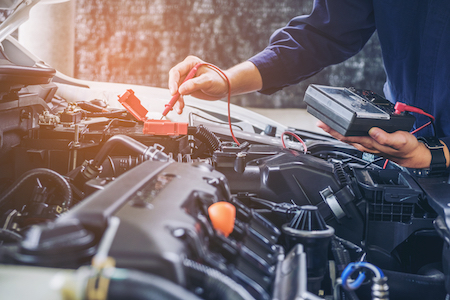
  • Auto Diagnostic
  • Contact Us
    • About Us
  • Shop Specials
  • Testimonials
  • Blog
  • 303-691-2760

Express Car Care of Denver

"Denver's Best Auto Repair and Quick Lube"

  • Brake Service
  • Car Maintenance
    • Heating-Air Conditioning
    • Suspension
    • Transmission
    • Engine
    • Tires
  • Oil Change
  • Tips & Tricks

CV Joint and CV Boot Repair – What You Need To Know

February 18, 2022 by Denver Express Car Care

“Your tire is flat. You’ll need to replace it.” Those words are straightforward and simple to understand. As a driver, if a mechanic gives you that advice, you may jump right on board. 

But some parts are a little more difficult to understand. 

“Your CV joint and CV boot are damaged and need repair.” Where do you begin? 

What are a CV joint and CV boot?

CV stands for constant velocity. A CV joint (or CV axle) is used in front-wheel drive vehicles to transfer engine power to the drive wheels. It’s also used in some vehicles with independent rear suspension, as well as some four-wheel and all-wheel drive cars. 

A CV axle uses two CV joints (an inner and outer joint) to transfer power to the drive wheels at a constant speed no matter what the travel conditions. That means no matter what speed the vehicle is traveling at, or the state of the road, the CV joint handles the power to ensure a safe and comfortable drive. 

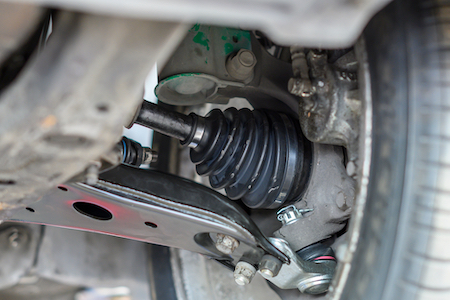
CV joints use grease for lubrication. To keep this grease pliable and in good working condition, the CV joints are covered with a rubber boot called a CV boot. CV boots are made from durable rubber designed to withstand extreme temperatures and driving conditions. CV boots are designed to last 100,000 miles or more. But because they are often exposed to the elements, they can and will occasionally go bad. Like other parts on a vehicle, it’s a good idea to routinely inspect CV boots to ensure they are in good working condition. If you move beyond 125,000 miles, scheduling routine inspections will ensure they stay operational and don’t leave you stranded. 

How CV joints can fail

CV axles rarely fail. CV joints, however, can occasionally fail if something happens to the CV boot. When a CV boot is torn or fails due to age, the grease inside keeping the CV joints well lubricated starts to leak. It also leaves the CV joints unprotected, meaning dirt, grime, and other debris from the roadway can enter the joint. When this happens, it will eventually fail. 

CV Joint and CV Boot Repair - What You Need To Know

Of the two, the outer joint will almost always fail first. That’s because more of the action is performed using this joint, and it’s also more vulnerable to the open road. If you suspect damage to the CV joints, it’s almost always the outer joint. 

How CV boots can fail

If the CV boot gives out, it puts the CV joints in danger. Ensuring the CV boot is in good working condition can prevent most costly problems. CV boots can give off several warning signs of a problem:

Grease leak – it’s the most common symptom of a CV boot issue. Over time, the rubber can become dry, brittle, or crack. Once a split occurs in the rubber, grease from the CV joint can leak out. You’ll see this on the inside of the wheel, or flung onto the chassis or other parts of the underside of the vehicle as the CV joint continues to turn. 

Clicking, popping, or grinding noise – if a CV boot is damaged for a while, it can lead to a CV joint becoming loose on the axle. If you hear a noise during turns, this might be the case. Most CV joints that reach this stage need replacing. 

Vibrations – if a CV boot is damaged, it can allow dirt, grime, and other particles to get underneath the boot and near the CV axle. This debris causes damage, which can lead to a vibration up from the CV axle and through the steering wheel. This may only happen at certain speeds.  

A CV boot is a protection device to keep the CV axle and CV joint clean and damage-free. It’s the first line of defense. To ensure a long life, keep an eye on the CV boot for potential damage, and maintain and repair it at the first sign of wear.

Inspecting the CV Axle

Whenever you suspect a problem with your vehicle, the fastest way to ensure everything is working well is to bring it in for an inspection. Trust our knowledge and experience to ensure your car is working well and won’t leave you stranded. 

If you do suspect a potential problem with your CV axle, you can do a manual check at home with just a simple flashlight in hand. 

First, park your car on level ground. Ensure the emergency brake is engaged. 

Next, slide underneath the vehicle at front center, to be able to inspect both CV axles at the same time. Alternatively, you can slide underneath in front of one wheel at a time and inspect them separately. 

Look closely at each CV axle. Each axle has two CV boots – outer and inner. Visually inspect the rubber for cracks, leaks, or other damage. If you see grease leaking, it’s a sign of wear. 

If you suspect CV joint damage, you can take your vehicle out for a drive, paying attention to the way it drives. On a flat surface, such as an empty parking lot, turn the steering wheel all the way in one direction, then drive in a circle. Repeat going the opposite direction. If one of the CV joints is bad, you’ll notice a clicking or popping sound as you drive in a circle. 

If the CV joint is bad enough for you to hear a clicking or popping sound while driving straight, it’s reached the end of life, and will ultimately fail soon. Schedule an appointment as soon as possible to avoid further damage, or risk being stranded by the edge of the road. 

Does your vehicle need CV joint or CV boot repair?

CV boots serve as a protection device to allow the CV axles and joints to remain clean and in good working condition. To maintain a long service life, inspecting them at the first sign of potential damage is important. When in doubt, have a professional check it out. Make an appointment today. 

Filed Under: Suspension Tagged With: CV Boot Repair, CV Joint

What Are Auto Diagnostic Tests and Are They Reliable?

February 14, 2022 by Denver Express Car Care

When some problems arise, you can visually see the issue. If a tire is flat, you patch it. 

Other problems are more difficult to diagnose. You know your car isn’t running correctly. You know there’s a problem deep within the systems. But where?

Luckily, we have auto diagnostic tests to help pinpoint where the problem is. How reliable are auto diagnostic tests?

The history of auto diagnostic tests

Diagnostic tests are a relatively new concept in the automotive industry. Over the past two decades, the industry grew as electronics were introduced and used just as frequently as mechanics. 

The 1990s are considered the start of automotive diagnostics, as electrical structures were introduced into the complexities of car manufacturing. As computer chips became readily available and we moved to higher technological advances, vehicles changed their structures and relied more on sensors.  

These sensors made it easier to locate a problem. Vehicles converted into a digital piece of technology that could be monitored and tested periodically to ensure everything is working correctly. 

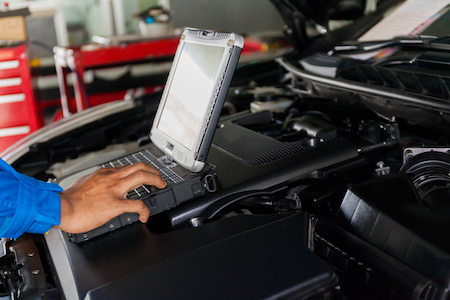
Running an auto diagnostic test from time to time helps keep your car safe and operating correctly. For a technician, it’s no longer guesswork when you bring the car in. Trouble codes tell them where a problem originates. Note – the code refers to where the problem lies, not necessarily what the problem is. This is where training and education come into play, where a mechanic uses their knowledge base to get to the root of the problem. 

What Are Auto Diagnostic Tests and Are They Reliable?

What parts can be tested?

Today’s diagnostic tests can reveal issues in all the vehicle’s major systems. 

  • Engine
  • Exhaust system
  • Brakes
  • Transmission
  • Fuel system

Diagnostic tests are designed to ensure your vehicle is running at optimal levels. It diagnoses:

  • Problems with the engine
  • Issues with the transmission
  • Responsiveness
  • Braking issues
  • Potential contamination or faults with the exhaust systems
  • Wear, tear, or breakage with major components

Drivers often have a misconception about what codes on their dashboards are telling them. If the check engine light turns on, they may attempt to pinpoint the problem by looking up the code being referred to. But this is only a starting point. This is where human experience takes over and gets to the root of the problem. 

What auto diagnostic testing is advantageous 

Technically, scheduling an auto diagnostic test isn’t a “needed” service. It’s not something you plan regularly as you would an oil change. 

Diagnostic testing usually comes into play when you start having trouble with your car. Suppose you notice a problem with performance, or a dashboard light suddenly turns on. In that case, a diagnostic test can help pinpoint where it originates, giving mechanics the ability to move right to the problem. 

This eliminates guesswork, and fixing by trial and error. It gets you in and out faster, and gives you better assurance that the original problem is fixed. 

The reliability of an auto diagnostic test

Depending on the age of your vehicle, you may be familiar with guessing at what a problem is. 

Before technology moved into the way a car functions, many of the most common issues were solved through human knowledge. But sometimes, the most challenging problems could take time to diagnose, as the output of the problem might not match what’s truly wrong. 

This meant a driver may have brought the vehicle back in multiple times trying to get to the heart of the problem. 

That’s wasted time, energy, and effort for all parties involved. 

Take smoke coming from the tailpipe as an example. Smoke coming from the tailpipe is a sign of a problem with the engine. But it could be triggered by several different things. 

It might be water vapor that’s built up inside the exhaust system, burning off as you start the car. 

It might be the fuel/air mixture is too rich, and isn’t combusting correctly. 

It might mean oil is burning inside the combustion chamber due to leaky valves or bad piston rings. 

Or it could be a sign coolant is burning in the engine, signaling it may be a blown head gasket, which could lead to the engine overheating.

A mechanic may recognize the signals and fix one issue. But if it’s multiple problems, one may be overlooked, especially if it’s a minor problem. 

A diagnostic test can pinpoint that and lead to fixing the problem before it escalates. 

Accuracy is important

Years ago, cars were more mechanical by nature. Systems were more straightforward, meaning getting to the root cause was easier for a mechanic to perform. 

That hasn’t changed. Some problems are easy to diagnose. A mechanic may see the issue frequently, and know exactly how to fix it. 

But today’s vehicles aren’t just mechanical. They are a blend of mechanics and technology, designed for precise calibration to ensure efficiency and ease at the same time. 

Compare it to a doctor’s visit. You go in with a complaint, a particular weakness or spot that’s troubling you. A doctor will ask questions, gather information, and order tests. These are essentially diagnostic tests. The doctor may have an idea of what’s wrong, but a diagnostic test confirms it, and rules out other causes. 

The same works for your vehicle. 

A mechanic may suspect what’s wrong. A diagnostic test confirms it. And ensures there aren’t other trouble areas that may be causing problems. 

Is it time for an auto diagnostic test?

If you’ve noticed a problem with one of the major systems, a diagnostic test may aid in getting to the root cause. Before you bring it in, gather as much information as possible:

  • What is the problem?
  • When does it occur?
  • What circumstances surround the most noticeable characteristics?
  • Is there a noise? Is it constant or inconsistent?
  • Have you noticed other issues?
  • Have you tried to fix it yourself?

The more information you bring in with you, the easier it will be for our technicians to figure out what’s wrong. 

Call us today and schedule your appointment. We’re here to help you get back on the road again. 

Filed Under: Engine Tagged With: Reliable Auto Diagnostic Tests

Does Your Clutch Need Repair or Replacing?

February 10, 2022 by Denver Express Car Care

Clutch failure. Even if you aren’t quite sure what it means, it sounds bad. 

Like other parts of your vehicle, the clutch is only designed to last for so long before it starts to wear down. Both manual and automatic transmissions have clutches designed to engage the transmission and harness the power to move the wheels throughout a full cycle. As you move out of park and start moving, the clutch engages. As you come to a stop, the clutch engages. 

Manual transmission vehicles create movement between gears manually using a clutch pedal. An automatic transmission creates this movement automatically. In both cases, there is constant movement and friction as the gears move into place. Over time, enough wear will occur to wear down the clutch, requiring repair or replacement to ensure your safety. 

How do you know which it is? Is it time to repair or replace the clutch in your car? Read on to find out how you’ll recognize the symptoms. 

What is a clutch? Why does my car need a clutch?

Before you can diagnose clutch problems, learning more about its function can help you recognize potential problems early. 

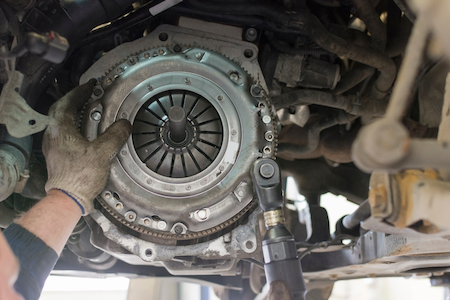
A clutch is a mechanical device that engages and disengages the transmission between several rotating shafts. A clutch is a connection point between two shafts, allowing them to lock and spin together, or disengage to operate separately. 

In most vehicles, the clutch sits between the engine and the main driveshaft. It takes power from the engine and transfers it to the wheels. While an engine spins and creates power continuously, your wheels don’t. To gain control over the wheels without turning off the engine, you need a way to operate the two separately. This happens between the clutch disc and the engine’s flywheel, giving you full access to control power and speed in any condition. 

Does Your Clutch Need Repair or Replacing?

A traditional clutch will contain a variety of parts, including:

  • Clutch disc – the connection point to the transmission
  • Cable – connects the clutch pedal to the clutch fork
  • Clutch fork – controls the force between the clutch and the pressure plate
  • Pressure plate – connects to the clutch disc
  • Flywheel – connects to the engine

Each piece is connected via links, cables, and other bearings to ensure it maneuvers correctly. If any one of these parts starts to fail, you’ll notice it in the way your car performs. A few things that can go wrong include:

A slipping clutch

A clutch can have anywhere from 50,000 to 100,000 miles before it needs repair or replacement. As the clutch wears down, the material begins to wear out, and it won’t perform as it did when it was new. A clutch needs friction to engage. Without the proper friction, the clutch won’t work as well as it should. That means you may feel the clutch slip as you accelerate, and the clutch moves between gears. It’ll feel like your vehicle is dragging, even though the engine may be revving up. 

A slipping clutch can be caused by a variety of problems, including:

  • A cable that needs adjusting
  • A clutch linkage is bent or damaged
  • The pressure plate is weak or warped
  • The clutch assembly is dirty from oil or grease leaks
  • A broken motor mount

As it slips between gears, it may also become sensitive to movement, or even get stuck. For a manual transmission, you may notice this if you press down on the clutch pedal and it slips out of gear immediately, or you have to push it all the way to the floor without movement. Clutches can stick for various reasons, including:

  • A broken or stretched clutch cable
  • Leaky or defective clutch master cylinder
  • Air in the hydraulic line
  • Clutch components out of sync
  • Linkage out of adjustment 

A clutch master cylinder failure

Clutch failure can originate in the clutch master cylinder for a variety of reasons. With each potential problem, it creates signs that something is wrong. You’ll notice a problem in different ways. 

Noises – when parts aren’t properly synced and working well, the friction between the parts will create a variety of sounds. With a manual transmission, you might hear a noise as you press the clutch pedal to the floor, even if the engine is turned off. That’s an indicator of a clutch fork problem. As lubricant dries up, it can cause a noise as it tries to engage. 

Vibrations – as you press down on the pedal, you may feel a vibrating sensation from time to time. Vibration can be caused by a variety of things, but usually starts as things wear down. Friction no longer occurs between separate parts, meaning they rub against each other incorrectly. This appears as a vibration as they try to engage. 

Spongy or loose feel – this is often caused by a hydraulic problem. There may be air in the hydraulic system, low fluid in the reservoir, or a leaking connection, hose, or pipe somewhere in the system. 

Grinding while shifting gears – there should always be free-flow as your car moves from gear to gear. When you start feeling or hearing the process, it’s a sign of a worn down part. Any one of the parts that make up the clutch system isn’t moving correctly at the right speed. Instead of moving into position, it sticks or drops quickly. You’ll hear it as parts don’t connect as intended. It may require an adjustment, or a full replacement. 

What can it be? An inspection will get to the root cause

 Each symptom is a signal it’s time to bring your car in for an inspection. It’s the easiest way to get to the root of the problem, and fix it before it escalates into something else. In some cases, it might be a simple repair. It’s better to know for sure before it escalates, causing more damage, and potentially putting you at risk. 

Filed Under: Transmission Tagged With: Clutch Repair or Replacing

Does Your Car Really Need a Transmission Flush?

February 7, 2022 by Denver Express Car Care

Some vehicle maintenance items become so routine, you rarely think about them. You fill up with gas, pull in for oil changes, and replace your tires when the tread wears down. 

But internal items are trickier to understand. How do you know if your transmission isn’t operating well? Would a transmission flush work, or is the problem deeper?

A quick search online will tell you controversy surrounds transmission flushes. Some reports say it’s a myth to need to flush the system at all. Other resources tell you it’s a must to keep your car in good working condition. Who do you believe? 

A quick search by brand tells you it’s mixed between manufacturers. Toyota recommends automatics flush the system every 60,000 to 100,000 miles, while manual vehicles need care every 30,000 to 60,000 miles. Mercedes has a wider range of recommendations, depending on the year, make, and model. You’ll find advice for transmission flushing between 40,000 and 100,000 miles. 

Understanding automatic transmission fluid

According to a CarMax study, Americans love automatic transmissions, with 96 percent of the population driving automatic vehicles. Maybe it’s our multitasking strategies that make automatic transmissions more convenient. 

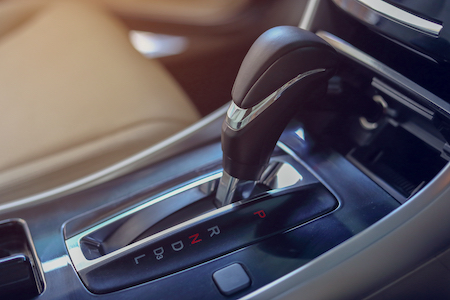
Automatic transmissions use a hydraulic system that relies on a constant flow of transmission fluid to provide the correct supply of hydraulic pressure for ultimate response. It’s the transmission fluid’s job to provide proper flow through each hydraulic line within the transmission system. 

Does Your Car Really Need a Transmission Flush?

Transmission fluid is designed with a specific viscosity and additives that help reduce expansion as the fluid heats under pressure. If operating well, it will remain consistent over time. 

Over the years, the additives will wear down, which can cause the fluid to thin and be more susceptible to the expansion process. This is when it’s time to replace the transmission fluid to ensure your car continues to operate well. 

Why a transmission flush is necessary

Today’s vehicles use a variety of fluids to continue to operate well:

  • Windshield washer fluid – to ensure your safety while driving on dirty roads
  • Motor oil – to keep the engine healthy and running smoothly
  • Coolant – also known as antifreeze, helps to keep the engine cool
  • Brake fluid – keeps the brake system fully operational

Each of these fluids is important to ensure your vehicle continues to operate, and you won’t be stranded while out on the road. 

Some fluids drain out of the system and simply need to be refilled to continue working. Windshield washer fluid provides the necessary spray to keep your windshield clean in all driving conditions. If it runs out, you simply fill up the reservoir and it’s available once again. 

Transmission fluid works slightly differently. 

With an automatic transmission, the fluid continues to circulate throughout the fuel lines. As it wears down, small particles travel with the fluid, and can stick or corrode the inside of the lines. Even if you were to drain the lines, those tiny particles could still be a problem. The only way to thoroughly remove those particles is with a flush to the system. 

If those particles continue to build, they can wear down the various parts of the transmission system. Here are four reasons why it’s important to perform a transmission flush according to manufacturer’s guidelines:

It increases transmission lifespan

Clogs in the hydraulic fuel lines can lead to all kinds of problems. As particles and contaminants build up, they can lead to inner seal leaks and breaks. It can force liquid into areas where it shouldn’t be. And while you might not notice the results immediately, they can have a trickle down effect. Flushing the transmission occasionally and replacing minor parts is a lot more friendly on the wallet than replacing a transmission after complete failure. A transmission flush can extend the life of your vehicle by ensuring the entire system is once again operating properly. 

It makes shifting easier

It’s the transmission’s job to ensure smooth shifting as you speed up and slow down. Over time, particles and contaminants can cause gears to slip or stick, impacting the effectiveness of your driving. A transmission flush gets rid of those imperfections and ensures a smoother shift. 

It improves fuels economy

How well the transmission operates is what ultimately controls fuel efficiency. If the flow of gasoline is inhibited in any way, it takes more energy to produce the same results. A vehicle in good working condition ensures the best fuel efficiency possible. If the transmission slips or doesn’t engage properly, it requires more fuel inside the engine. A transmission flush brings the entire system back to good working condition, helping your car be as efficient as possible. 

It protects your car’s warranty

Do you have an extended warranty on your vehicle? More manufacturers are offering years of coverage on well cared for parts. The key is ensuring each system is well cared for, and that you meet their key requirements. Do you know what your owner’s manual says about transmission flushes? If not, it’s time to read up and learn what your vehicle needs to thrive and stay within the acceptable guidelines. Be sure to track it in case you need to fall back on the warranty at any point you own the vehicle. 

Is it time for a transmission flush?

A lot of what we’ve referred to in this article concerns automatic transmissions. Manual transmissions work differently, and require different levels of maintenance. The best way to ensure you’re giving your vehicle what it needs to operate well is to refer to your owner’s manual regularly, and use the advice to set up your own maintenance routine. 

https://denverexpresscare.com/transmissions-need-repair-too

We’re also a great resource to have on your team. With our diagnostic tools, we can evaluate your vehicle periodically, and assess what maintenance items need to be scheduled. Every vehicle is different, depending on the way the car is driven. 

By being proactive, you can stay ahead of potential repair problems. Fixing issues before they escalate is the best way to keep your repair bills low. 

Does your vehicle need a transmission flush? 

Filed Under: Transmission Tagged With: Transmission Flush

Do All Shocks and Struts Need To Be Replaced At The Same Time?

February 3, 2022 by Denver Express Car Care

Describe your vehicle’s performance. Most people would say things about the power it has when driving on the road. 

But there’s another side of performance that determines just how enjoyable the ride is. 

If you’ve ever ridden in an old pickup truck, imagine how bumpy the ride was as you rambled down the road. Every bump, every pothole shot right through your system. 

Now think about the ride in a high performance car. You barely heard the road. You definitely didn’t feel it. Every bump was handled with ease, barely registering on your radar. 

You can thank the shocks and struts in your vehicle for that. 

What’s the difference between a shock and strut?

Shocks and struts are often used interchangeably. Yet they have distinct differences. You can not substitute one for the other. If your vehicle uses struts, you cannot replace them with shocks. 

A shock is the piece of the suspension system that helps coil springs absorb the impact of the road. It’s the shock’s job to take the bounce out of the movement of the car. They help keep the tires fully connected with the road instead of bouncing up as it hits different bumps in the road. 

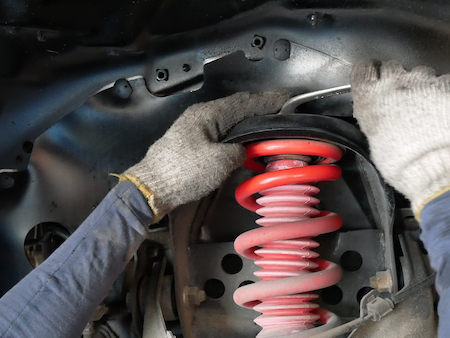
A strut combines a shock absorber and the coil spring into one single unit. While it acts as an absorber with every bump your car hits, it also provides structural support and integrity to the suspension system. 

What does your vehicle use, shocks or struts?

Each wheel will either have a shock or a strut. They come in pairs. If your rear left wheel has a shock, your rear right wheel will too. 

However, your vehicle may have shocks on one axle, and struts on another. Most modern vehicles have struts on the front axle, and shocks on the rear axle. You might also find struts on both axles, while it’s rare to have shocks on all four. 

What does your car use? 

Check your owner’s manual. If you no longer have it, a quick check online will determine what your make and model have in place. 

Do All Shocks and Struts Need To Be Replaced At The Same Time?

You can also check under the car. They are easily seen if you look underneath your vehicle. 

A mechanic can also tell you which components are attached to your suspension system. They can also make recommendations for replacement, when necessary. 

Do shocks and struts need to be replaced at the same time?

We alluded to the answer above. Shocks and struts come in pairs. What’s located on one side of the axle will appear on the other. 

Shocks and struts are always sold in pairs, and should be replaced in pairs. This provides consistency to both sides of the vehicle. 

What’s more, mechanics suggest that you replace all four at the same time. This gives you a consistent response on your vehicle overall, every single bump you hit in the road. 

If one set of shocks or struts wears out, chances are the other set isn’t far behind. By replacing them all at the same time, you ensure a safer, more comfortable ride. 

How do you know when your shocks and struts need replacing?

Shocks and struts tend to wear out every 50,000 to 100,000 miles. The more aggressive you are on the road, the faster they will wear out. If you frequently drive on dirt roads, and love taking advantage of mountain driving, you’re more likely to replace them sooner rather than later. 

Like other components, shocks and struts don’t wear out all at once. Instead, they provide warning signs of potential problems. 

Bumpy ride

It might start gradually, but you’ll eventually notice your ride is getting rougher. You start to feel every bump in the road. Does your vehicle bounce more than once or twice when you hit a bump? Let it go on too long, and you’ll feel like you could lose control. 

Fluid leak

Whenever you notice leaking fluid, it’s a sign to bring the car in for inspection. Leaking fluid near the exterior of the shocks and struts is a sign they’ve been compromised and they no longer have enough hydraulic fluid to do their job. If you aren’t sure if the fluid is coming from the shock absorber, wipe it down and check it again in a few miles. 

Uneven tread wear

Take a look at your tire tread from time to time. It can tell you a lot about performance. If you notice wavy dips on the tread, it’s a sign you have worn shocks and struts. This is caused when the tires don’t stay firmly on the road as you drive. Instead, they bounce up from time to time, which creates uneven wear marks. This will compromise your tires faster, and decrease your stopping power. 

Braking problems

A classic sign of worn out brakes and struts includes a nosedive when you hit the brakes, or swaying as you make a turn. Because the shocks and struts aren’t able to handle the changes in your vehicle’s weight distribution effectively, your car will decrease in performance. 

Today’s vehicles are designed with a variety of safety systems built into the structure. Anti-lock brakes and stability control systems all rely on the various components to keep your car safe. If any piece isn’t functioning properly, it puts the entire structure at risk. Response is everything in an emergency. 

The best way to know when it’s time to replace your shocks and struts is to let a technician evaluate your suspension from time to time. If you notice a sign, book your appointment sooner rather than later. Also consider creating inspection appointments at the change of seasons. This is a great way to ensure your vehicle is ready for the ice and snow of winter, and the heat of the summer.  

After any suspension work, it’s a good idea for a full alignment too. This ensures your car is balanced and ready for all the driving you’ll do in the coming weeks and months. 

When was the last time you had your suspension system checked? Shocks and struts need to be replaced in pairs, especially when you notice problems. If you suspect an issue, give us a call today. 

Filed Under: Suspension Tagged With: Shocks and Struts

What Are The Signs of a Bad Timing Belt

January 28, 2022 by Denver Express Car Care

The timing belt is an integral part of the engine compartment. It’s a rubber belt that synchronizes movement between the camshaft and crankshaft, and ensures the valves stay freely moving and your engine continues to run. 

When operating well, your timing belt helps your vehicle operate smoothly. A bad timing belt can cause problems with the way your car runs, and if left unchecked, can cease operation altogether. 

How do you know if your car’s timing belt is bad? 

Digging deep into timing belts

Depending on how old your car is, you may have also heard a timing belt referred to as a timing chain. A timing chain functions in the same way as a timing belt. The difference is in the location and construction. 

Timing chains are made from metal, where a timing belt is constructed of reinforced rubber. Before rubber became widely used, metal parts were standard in the production of automobiles. Timing belts were introduced in the 1960s as the material became stronger, and it was less expensive to produce. 

Timing chains are built within the engine, receiving lubrication from engine oil that can help it last for a long time. Timing belts are located outside the engine, and will dry out and crack over time. 

While metal is noisier than rubber, improvements have been made over the past few decades to where timing chains are making a comeback in some vehicles. To find out how your car operated, you can check your owner’s manual, or speak with your mechanic the next time you get your car serviced. 

While older timing chains needed replacing every 60,000 miles or so, today’s timing belts can last up to 100,000 before replacement. Many mechanics recommend that if the water pump goes out, it’s best to replace the timing belt at the same time as the belt needs to be removed in order to get to the pump. 

Warning signs of a bad timing belt

As the timing belt ages, it may start offering warning signs that it’s no longer working as well as it should. To prevent the timing belt from going out while driving, ensure regular maintenance to keep oil viscosity normal and ensure all parts are fully lubricated. And watch for these signs. 

A drop in oil pressure

Oil is the lifeblood of your vehicle. Without the right amount of oil, your engine will cease to operate. And that can be a very costly maintenance item. Full replacement is often the only way. 

Keeping an eye on all gauges while driving can alert you to potential problems. A failing timing belt can cause oil pressure to drop. If you notice this, pull over immediately and turn off the vehicle. A failing timing belt can cause the timing of the camshaft to be off, which can cause pieces to break off and fall into the oil pan. This is the worst-case scenario. It’s not something that often happens because most people heed other warning signs first. 

Broken pistons or valves

While it’s not common to have complete failure, if the camshaft and crankshaft aren’t performing correctly, the pistons and valves operate out of sync. This means they may collide with other components in the system, crack off and break. 

Broken parts are never a good thing, especially in a fast moving system. Pieces can be thrown in a variety of directions, causing even more destruction. If you see sudden changes in how your vehicle operates, and hear noises that come on suddenly, pull over and turn off your engine immediately. 

Rough idling 

When you look at a timing belt, you’ll notice they have little teeth or ridges on the edges to help it move. This is to help it move between the gears, allowing it to rotate through the various components of the system. As the belt ages, these ridges smooth down, the belt becomes looser, and the gears don’t mesh in quite the same way. This process can cause the engine to idle rough. The longer this continues, it can eventually lead to the engine stalling. 

Misfiring

As the timing belt begins to slip, it can cause a variety of problems. Slipping away from the gears causes the pistons and valves to open and close out of sync. This results in a misfire. While it can be easy to ignore, this is an indicator that the system isn’t performing up to par. If allowed to continue, you risk permanently damaging your engine. 

Smoke 

The timing belt is in constant rotation, keeping everything moving in perfect condition. This also ensures proper air intake, including exhaust. If there is a problem anywhere in the rotation process, the system may take in too much air, or release too much exhaust. In this case, you’ll often see an unusual amount of smoke escaping as the car operates. 

Prevention is key to avoiding timing belt problems

Having a timing belt go out isn’t something car owners have to experience. A little prevention goes a long way in keeping everything running well. 

If your vehicle operates using a timing chain, oil viscosity is key. Use your vehicle’s suggested motor oil to ensure it’s properly lubricated. When in doubt, error on replacing your oil frequently to ensure good quality motor oil is always running through the system. Today’s lighter oils can penetrate more areas to ensure every component stays running well. 

You can also have your vehicle checked from time to time to ensure the various systems and components are working well. Pay attention to manufacturer’s suggestions, replacing certain parts before they have a chance to go out. 

Have you experienced a bad timing belt before? 

Filed Under: Engine Tagged With: Bad Timing Belt

What Happens If You Drive With a Bad Brake Caliper?

January 21, 2022 by Denver Express Car Care

When you hop into your car and drive to school or work, you don’t think much about how it operates. You turn the key and go. 

Yet if you stop to think about each system, chances are you’d push the braking system to the top of the list in importance. After all, without the braking system, your car would experience extensive damage pretty quickly, while you may face injury yourself. 

How much do you know about the braking system? Brake pads. Rotors. Brake fluid. Calipers. There are several major components that create an effective braking system. If any one piece is damaged or not working correctly, 

Understanding brake calipers

While most people understand that pushing on the brake pedals initiates the braking process, they don’t understand a brake caliper’s job. Brake calipers are a crucial part of making your car slow down and come to a stop as you push down on the brake pedal. 

A caliper is a component of the disc brake system, which is what most cars have in the front brakes. 

What Happens If You Drive With a Bad Brake Caliper?

The brake caliper sits like a clamp on a wheel’s rotor. You can actually see it on most cars if you glance through the spokes on your wheel. The caliper houses the brake pads and pistons. Its main purpose is to clamp down on the rotor, creating friction with the brake rotors. 

When you press down on the brake pedal, brake fluid creates pressure, causing the piston to move against the brake pad, which in turn pushes it against the brake rotor. The more pressure you put on the brake pedal, the more friction between the pads and rotors. Until your vehicle comes to a complete stop. 

The brake caliper sits inside the wheel, and is connected to the master cylinder through a series of tubes, hoses and valves. These connections push brake fluid through the system to make it work. If any piece or component in this system isn’t operating well, it can greatly impact the braking process. And that can put you and the people around you in danger. 

What happens if you drive on a bad brake caliper?

If you drive with a bad brake caliper, you’re risking the entire braking system not operating as it should. 

The caliper houses the brake pads and pistons. A stuck caliper means the brake pad will not completely pull away from the brake rotor. A part of the brake pad will have constant pressure against the rotor while you drive. Which also means part of the braking system will be engaged all the time. 

This can add stress to the entire braking system. It can also add stress to the transmission, which can cause failure earlier. 

At a minimum, it will cause your brake pad to wear down prematurely. This means you’ll be replacing your brake pads more frequently, and putting yourself at risk if it doesn’t engage properly when you step on the brake pedal. 

As soon as you notice a problem, fixing it is your best solution. 

When is it time to replace brake calipers?

While you might not notice a problem right away, eventually you’ll start to notice your brakes aren’t working the way they should. A bad caliper can cause a variety of warning signs, signaling to you a potential problem. 

Pulling to the right or left – one of the biggest warning signs is a vehicle that doesn’t drive straight. As you’re driving down the road, does your vehicle pull to the right or left? As you’re braking, do you notice the pull get more prominent? If one of the calipers is bad, it’ll impact the connection between the brake pad and the rotor, causing your vehicle’s stopping function to be compromised. 

Heat coming off the wheel – as you can imagine, when the brake pad connects with the rotor, it creates a lot of friction. This friction gives off tremendous heat. Under normal driving conditions, this heat dissipates quickly. But if the connection is constant, the heat continues to grow. If you suspect a stuck caliper, stop the vehicle and turn off the engine. Place your hand near the wheel without touching it. Can you feel more heat than the other wheels? This may be a sign of a stuck caliper. Bring it in for an inspection right away. 

Dirty brake pads – imagine all the wear and tear your brake pads see as you drive. From ice and snow, to the one-hundred degree days in the summer months, your brake pads deal with a lot of dirt and debris kicked up from the road as you drive. Sometimes that dirt can build up on your brake pads, causing the caliper to stick. A mechanic may be able to clean them and get them working once again. If they are worn, you can replace the brake pads before they cause any more problems. 

Brake hose problems – the braking system contains multiple parts to remain in good working condition. If the brake hose wears out, it won’t deliver brake fluid properly to the various parts. Without brake fluid, the master cylinder won’t be able to control the brake caliper movement. This can be assessed by a mechanic, and a brake hose replacement may be necessary. 

The best way to keep your calipers in good working condition is to ensure your brake pads are replaced and the brake fluid is topped off. Brake pads are the most frequently part replaced on the braking system, with most brake pads being replaced every 10,000 to 20,000 miles. 

Tracking your maintenance items can alert you to potential problems before they exist. Are your brake pads nearing your vehicle’s suggested guidelines? Are you pushing the 20,000 mile marker? It may be time to schedule an inspection with one of our mechanics. We can evaluate the entire system, and ensure your brakes are safe and ready to work every time you drive. 

Filed Under: Brake Repair, Brake Service Tagged With: Drive With a Bad Brake Caliper

What Is Fuel System Cleaning?

January 18, 2022 by Denver Express Car Care

As a vehicle owner, you take on the responsibility of maintaining it to ensure it continues to run well. Routine maintenance includes a variety of things:

  • Filling it with gas
  • Changing the motor oil
  • Filling the reservoir with windshield washer fluid
  • Keeping the tires properly inflated
  • Replacing the tires from time to time
  • Replacing the brake pads
  • Doing a fluid check for each of the major systems

Some maintenance items become almost automatic. You understand the car needs gasoline to keep running, so you make stopping by a filling station a part of that routine. 

Other maintenance items aren’t as well known. 

Like fuel system cleaning. 

It’s not something that’s commonly promoted through local repair shops. And yet it’s an important part of keeping your car operating well. 

A quick search will show you there’s a lot of variance as to when it should be performed. One resource says fuel system cleaning should be done annually. Another thinks it should be cleaned around 45,000 miles or three years, whichever occurs first. Still another says a car can drive 60,000 miles or more before considering a fuel system cleaning. Who should you believe?

What Is Fuel System Cleaning?

Start with your owner’s manual. Your car’s manufacturer knows best when it comes to the inner workings of your vehicle. 

You can also speak with one of our mechanics. It’s our job to inspect your car thoroughly, and let you know if the fuel system needs a little TLC. 

The fuel system

The fuel system provides the lifeblood to keep your car moving. If a piece of the fuel system is compromised, it won’t allow the fuel to flow properly throughout the system, putting other parts of the system at risk. 

The fuel system starts with the gas tank. It’s a reservoir that holds either gasoline or diesel, depending on the car you’re driving. 

The fuel lines carry fuel from the reservoir to the engine. Fuel filters are built into the system to capture tiny impurities that may flow through the lines, to ensure pure fuel makes it into the injectors for optimal performance. 

Fuel pumps give the system power. They push gas through the fuel lines, past the fuel filters, and through the fuel injectors. 

The fuel injectors have tiny nozzles that allow a fine spray of fuel to move into the cylinder. As this happens, the spark plug causes the spark that ignites the fuel and causes power to surge throughout the system, bringing your car to life. 

The fuel injectors mimic a fine aerosol spray, similar to how a can of hairspray might work. Over time, these tiny nozzles can get clogged, which causes the spray function not to work as intended. Instead of a fine mist, it turns into harsher sprays concentrated in certain areas. It takes more gas to create the power necessary for the same action. And that starts your vehicle down the road to inefficiency. 

Is fuel system cleaning necessary?

When you search online, you can find advice covering a full spectrum. Some will tell you fuel system cleaning is critical for performance. Others will tell you it isn’t necessary to keep your car running smoothly. 

If you use hairspray regularly, you know that some cans can work from beginning to end without a problem. At other times, you have to work at it to keep it spraying a fine mist every time you press down on the nozzle. 

The fuel system may work flawlessly … for a while. The older your vehicle is, the longer you drive it without cleaning it, the more likely it will be to start wearing down. 

There isn’t a harsh rule for when you should schedule a fuel system cleaning. But just because there isn’t a steadfast rule, doesn’t mean you should ignore it either. Like other systems, paying attention to your vehicle will alert you to potential problems. If you notice signs that indicate the fuel system might be the center of the issue, a fuel system cleaning may be just what your vehicle needs. 

Some of the signs you can watch for include:

  • Your car’s gas mileage starts decreasing without other factors at play. You’re filling up more even though your driving hasn’t changed. 
  • Your car seems to be losing power. It doesn’t have the same drive as it once did during your normal driving routines. 
  • Your car doesn’t always start up with the first turn of the key. It sounds a little rough during the startup phase. 
  • You notice your car struggles to keep up with you as you accelerate. 
  • Your engine hesitates when you step down on the accelerator to push your car into action. 

Once you notice a problem, pay attention to it. Does it worsen over time? It may be time to schedule a maintenance visit, have your car inspected, and consider a fuel system cleaning to ensure it continues to work well. 

The benefits of fuel system cleaning

Because it takes time for parts to wear down, when your vehicle finally needs fuel system cleaning, it’s a chance to replace older parts. Just like motor oil that breaks down and turns grimy, or tires that lose tread and put you more at risk, a fuel system cleaning ensures all parts of the fuel system are in great working condition. They make your car more efficient once again. 

If one part isn’t working correctly, it adds more stress to the other parts in the system. By cleaning the system and ensuring everything is working well, you’re increasing the life of every part in the system. 

An efficient fuel system means it takes in and processes gasoline as efficiently as possible. This is why it’s important to pay attention to your gas mileage. If you fill up more frequently and notice your gas mileage is waning, it’s a good sign of a problem. Fixing it will make the entire fuel system operate better, and make your vehicle more efficient. 

If the system uses gas efficiently, it also reduces the emissions it releases into the air. That makes your car as clean as possible as it takes you on your daily routine. It’s better for your car, and for the planet too. 

Is fuel system cleaning in your future? 

Filed Under: Engine Tagged With: Fuel System Cleaning

How Long Should a Timing Belt Really Last

January 14, 2022 by Denver Express Car Care

When you own a car, you have some idea of what routine maintenance means. You know to watch the gas gauge because the car won’t go without gasoline. You understand that periodic oil changes are necessary to ensure your vehicle stays operational.

But for other parts on a car, it can get a little murkier. You may have heard of the timing belt before, but how long is it supposed to last? And what does it do anyway?

A timing belt is designed to ensure everything in the engine runs smoothly. It helps keep you safe while you navigate the road. 

Like other parts, it’s critical to pay attention to the health of the timing belt. If a severe problem occurs while you’re driving, it can put you and those around you at risk. 

What is a timing belt?

When you think of a belt, imagine something wrapping around something else. You might include a belt to accessorize your clothing as you dress for the day. 

A timing belt works in much the same way. It harnesses all of the internal moving parts of the engine together. It can also power the water pump, oil pump, and injection pump. 

How Long Should a Timing Belt Really Last

A timing belt is made from rubber with hard teeth that interlock with the cogwheel of the crankshaft and camshaft. It synchronizes the movement between the two, ensuring that the engine intake and exhaust valves operate correctly. 

If the intake valves open too early, it can release too much fuel-air mixture into the system. This can lead to poor combustion, and limit power coming from the engine. If the exhaust valves open too early, the combustion chamber loses pressure which causes less power from the engine. If any parts operate out of sync, they risk damage as they collide. 

Timing belt, timing chain, what’s the difference? 

Timing belts and timing chains perform the same function. Without proper function, your engine would cease to run. 

As the name suggests, the main difference between them is what they are made of. A timing chain is made from metal, whereas a timing belt is made of composite material, usually resin or rubber, and synthetic thread. 

Timing chains were first developed back in the 1940s and remained the standard in vehicles into the 1960s. Reliable rubber wasn’t the norm, which made most internal parts made from metal. As time went on, rubber became more versatile and durable, which made it more practical to incorporate into a vehicle. It made the timing belt cheaper, lighter, and easier to handle. 

However, rubber isn’t as durable as metal. In comparison, metal almost always outlasts rubber. This means you might be replacing rubber timing belts sooner than metal timing chains. To find out what your car has, you can check your owner’s manual for more information. 

Typically, timing belts have a lifespan of around 60,000 to 90,000 miles. Timing chains are expected to last the life of the car. All of this is based on normal operating conditions. 

Timing belts will be quieter than timing chains. The timing chain resembles a chain on a bicycle. It’s a sturdy metal device that will create a noticeable sound even if it’s operating correctly. That may not be a problem for some drivers, but it could be a problem if you buy a luxury car for a quiet ride. That’s where timing belts have the advantage. 

While failure isn’t something that happens a lot, there is a distinct difference between the two. If a timing belt fails, it means the valves might not be properly synced, causing pistons to crash into one another. The damage can quickly rise into thousands of dollars of repair work. When a timing chain breaks, the heavy metal pieces can cause extensive damage, sometimes requiring a new engine. 

For all that and more, it benefits you to pay attention to potential problems, recognize the early warning signs, and get it repaired before it fails. 

Signs it’s time to replace your timing belt 

Like other major parts on your vehicle, a bad timing belt will offer warning signals before failure. They can include:

Check engine light – the check engine light illuminates for many different reasons. Rather than guessing at what the problem may be, or worse, ignoring it altogether, bring your car in for a complete diagnostic test to make the necessary repairs. 

Noises – a bad timing belt can make a variety of noises, depending on what’s wrong. You may notice squealing or rubbing noises as the belt makes contact with other parts. You may hear a ticking noise coming from the engine compartment. It’s similar to a roulette wheel when you spin it. 

Oil – a good indicator of a bad timing belt can be with your regular oil changes. Timing chains are lubricated with motor oil. If it starts grinding against the gear, metal shavings can find their way into the oil. You’ll notice this when you change out the oil filter on your regular oil change. Timing belts have teeth on the inside that can wear down and break off. If they fall into the oil pan, they’ll clog the system. This prevents oil from circulating properly, leading to other problems such as your engine overheating. 

Misfiring – both the timing belt and chain are designed to maintain precise timing within the engine. If that timing is off, your engine won’t function properly. You’ll notice the engine misfires because the valves won’t open and close as they should, or the combustion reaction isn’t calibrated correctly. 

Engine won’t start – if the timing belt is broken and falls off the gears, your car won’t start. You’ll hear the starter motor engage, but the engine itself won’t turn over. The only way to deal with this situation is to tow the car in for repair. 

Is your timing belt in need of repair? 

Whether your vehicle operates on a timing belt or chain, if you’re reading this, you may have a problem with the way your car operates. 

Before you let the condition worsen, schedule a maintenance visit today. It’s the best way to ensure you keep the repair bills to a minimum, and get your car back on the road as quickly as possible. 

Filed Under: Engine Tagged With: Timing Belt

This Is How You Tell If Your Brake Calipers Need Replacement or Repair

January 10, 2022 by Denver Express Car Care

The braking system is one of the most important systems on your vehicle. While you might be familiar with brake pads and brake fluid, brake calipers are a little more obscure. What are they? What do they do? And how do you maintain them throughout the life of your car? 

What are brake calipers?

Owning a car means performing regular maintenance. For your braking system, the most often parts to be replaced include the brake pads. 

Manufacturers recommend replacing brake pads every 10,000 to 20,000 miles. When it comes to the brake rotors, you have a bit longer. Rotors should be replaced every 60,000 to 70,000 miles to ensure your braking system remains in great shape. While not as common as motor oil, your brake fluid should still be replaced every four to five years. If you haven’t read through your owner’s manual, it’s a good thing to keep on hand. 

Brake calipers also need replacing over time. Through wear and tear, they lose their ability to clamp down and relax the brake pads as you apply and release pressure. 

A brake caliper is a part of the disc brake system, which is what most vehicles have on their front brakes. You can see it sitting on your wheel if you look through the spokes. The brake caliper houses the brake pads and pistons. Its sole job is to slow the car’s wheels as you press down on the brake pedal, to create friction against the brake rotors. 

Inside the caliper, a powerful piston uses pressure from hydraulic fluid to press the brake pads against the brake rotor. When working properly, the calipers move effortlessly based on the amount of pressure from the brake pedal. 

This Is How You Tell If Your Brake Calipers Need Replacement or Repair

When something in the system breaks, wears down, or stops altogether, that’s when you have a problem. 

Brake caliper alerts – how to know when you have a problem

Like other systems on your vehicle, the braking system has all kinds of warning signals to alert you when things aren’t working correctly. 

Most vehicles have sensors to art you to braking problems. The brake light on your dashboard will illuminate when the sensors detect something is wrong within the system. 

The brake light could trigger if you’re low on brake fluid, or the pressure isn’t within set guidelines. It can also alert you to brake pads wearing down if the car is equipped with pad sensors. The dashboard light is designed to give you plenty of time to set up a service visit and fix the problem before it escalates. 

Unfortunately, problems with the brake calipers can be a little more challenging to detect. 

Where’s the brake caliper problem?

There are several ways you can identify and prevent further brake caliper breakdown. 

Noises, smells, and feelings

Driving is often one of those mindless tasks you perform on autopilot. But it is a good idea to stay alert and pay attention to what your car is trying to tell you. The first problem with any system is often identified through one of your senses. 

Does your car drive differently? A malfunctioning caliper can cause your vehicle to pull to one side as you drive. This is due to an unbalanced braking system. Because one caliper doesn’t provide pressure in the same manner as the other side, you’ll notice your car lurching forward, or pulling to one side as you slow and stop. 

You may also hear a squealing or grinding sound. This happens when brake pads run thin, and can’t connect with the rotors efficiently. Is it the brake pad, or is it a caliper malfunctioning that caused it to wear down before its time? If you’re nearing the lifespan of your brake pads, it may be the problem. But if you still have life left on them, it may be worth further investigation. 

Too much pressure on the braking system can also ramp up the heat within the system. If you notice a burning chemical smell near one of the front wheels, it may be a sign of overheating from the brake pads and the bonding agent. 

Do a visual inspection

If you’ve ever boarded a plane early, and watched outside the window, chances are you’ve seen the pilot walk around doing a visual inspection. Why? He’s in charge of the plane, keeping the passengers safe, and the plane in good working condition. It’s up to him to decide if it’s okay to fly, and if he’s comfortable with the mechanics and technology he’s been given. 

Driving works similarly, though most of us rarely take a walk around our vehicles before jumping in behind the wheel each time we drive. But there is something to learn from a pilot – it’s a good idea to do a visual check from time to time. Do you notice tire tread wearing unevenly? Is there liquid accumulating near the caliper or the wheel? Keep an eye on anything that looks suspicious, and bring it in for inspection at your earliest convenience. 

Proper maintenance means prevention

Luckily, it won’t take much time out of your day to ensure your vehicle is working well. With an occasional visual inspection, and a moment or two paying attention to what your car is trying to tell you, you’ll be able to drive securely with the knowledge that everything is working well. 

Bring in your car for regular motor oil changes. Ensure your tires are properly inflated, and your wheels are properly balanced. 

Let a mechanic run through a checklist to ensure everything is working well. You can schedule this at the start of each season. Or if you’re heading out on the open road. It’s a great way to keep your security in check to ensure something bigger doesn’t happen. 

Braking problems? It might be caliper issues

Your brake calipers are designed to last 100,000 miles or more. They aren’t a component that needs to be replaced often. 

Being aware of potential signs of a problem will ensure your braking system continues to work well. It’s the best way to keep your passengers safe, and your vehicle operating well. 

When was the last time you had your braking system inspected?  

Filed Under: Brake Repair, Brake Service, Tips & Tricks Tagged With: Brake Calipers

  • « Previous Page
  • 1
  • …
  • 35
  • 36
  • 37
  • 38
  • 39
  • …
  • 102
  • Next Page »

Express Car Care
4200 E. Evans Ave. Denver, CO (map)
Phone: (303) 691-2760
Located just southeast of the Colorado Light Rail station

Follow Us Today!

  • Facebook
  • RSS

Shop Hours

Monday: 8:00AM – 5:00PM
Tuesday: 8:00AM – 5:o0PM
Wednesday: 8:00AM – 5:00PM
Thursday: 8:00AM – 5:00PM
Friday: 8:00AM – 5:00PM
Saturday: Closed – A note from the owner
Sunday: Closed

Last car oil change time  – 5:00PM

Click for the BBB Business Review of this Auto Repair & Service in Denver CO

Recent Articles

5 Reasons to Choose a Local Family-Owned Auto Shop Over a Big-Box Garage

5 Reasons to Choose a Local Family-Owned Auto Shop Over a Big-Box Garage

We get it—you see a big-chain auto repair shop with flashy signs, weekend hours, and a recognizable brand. It’s tempting. But bigger isn’t always better, especially when it comes to something as … [Read More...]

  • The Top Reasons Your Car Might Be Stalling and How We Fix It
  • How to Keep Your Brakes Quiet, Responsive, and Safe
  • Why Your Vehicle Deserves a Full Multi-Point Inspection This Season
  • Car Gifts For Road Trippers: Essential Take-Alongs To Make Your Road Trips Safer
  • How Denver’s Climate Affects Your Car Battery

Search Our Site

Brakes Service

How to Keep Your Brakes Quiet, Responsive, and Safe

Everything You Need To Know About Replacing Your Brake Pads

How to Know If It’s Time to Replace Your Brake Rotors

Oil Change

Top Benefits of Getting Regular Oil Changes in Denver

Oil Change Specials in Denver: Save Money and Keep Your Car Running Right

Why Regular Oil Changes Are Crucial for Denver Drivers

Suspension

How to Know If Your Car Needs Suspension Repair in Denver’s Bumpy Roads

A Guide To Understanding Bushings on a Car

Tips for Preventing Wear and Tear on Your Car’s Suspension

Transmision Service

How Often Should You Service Your Transmission in Denver?

Transmission Trouble? Common Signs and When to Visit Our Denver Shop

How to Prevent Common Issues with Automatic Transmissions

Engine Service

Everything You Should Know About Your Vehicle’s Timing Belt

Is Your Car Hesitating During Acceleration?

How to Troubleshoot a Rough Idling Engine

Auto Tips & Tricks

How to Deal With Car Noises That Only Happen When You Turn

Top 5 Maintenance Tips for High-Mileage Vehicles

Why Tire Pressure Matters More Than You Think

"Denvers Best Auto Repair and Quick Lube" - Copyright © 2025 - 4200 E. Evans Ave. Denver, CO 303-691-2760