
Slamming on the brakes is something we all experience from time to time.
You’re driving along, thinking about work. Or school, or the kids, or what you’re doing this weekend, or what to pick up at the store …
At any given moment, there may be a dozen things running through your brain. But all of a sudden, you look up and see the car in front of you stop. Your only option is to slam on the brakes and hold on.
Then afterward, you take a deep breath and continue on your journey. You’re okay. But is your car?
What slamming on the brakes can do
Cause an accident – the most damaging thing that can happen is you’re involved in an accident. Depending on how severe it is determines if you’ll drive away.
But even if you don’t connect with another car, you can still cause damage inside and out. If you lose control, you might swerve into a curb, damaging your wheel. The sudden forward motion can also throw your passengers around in the car. They can jerk their heads, bump windows and doors, even experience whiplash depending on the speed.
Reduce your gas mileage – when you’ve experienced a heart-pounding experience, the last thing you might think about is your gas mileage. But if you find yourself slamming on the brakes frequently, it could be a sign you’re an aggressive driver.
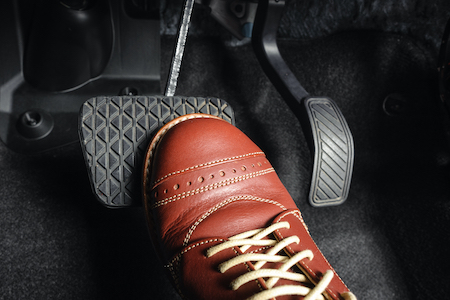 Following too close and tailing people means you move into reactive driving. Your decisions are always about reacting in quick bursts, depending on what the person in front of you is doing. There is no margin of error; you have to react quickly to keep your car under control.
According to the Department of Energy, aggressive driving will lower your gas mileage by as much as 15 percent in the city, and up to 40 percent on the highway. Just think how much you’ll save if you back off and take a few extra minutes to get where you’re going.
Damage your tires – when you slam on the brakes, the most obvious part on your vehicle to sustain damage is your tires. You may hear the screech as they connect with the pavement. You may see smoke pouring up from under your car. You may smell a smell of burning rubber. That can’t be good for your tires.
And it isn’t. Sudden braking can cause flat spotting.
Flat spotting occurs when your wheels lock-up and your car skids. Because one small portion of your tires stay connected with the pavement while your car skids, it can wear that section as it remains on the pavement. That uneven wear causes a flat spot on the tread. While this might not damage your tires enough for replacement, it can shorten the lifespan of your tires.
Brake pad deterioration – brake pads are designed to connect with the rotors and create friction, which brings your vehicle to a stop. While they are designed to provide this action no matter what speed you’re going, slamming on the brakes places extra pressure on the connection. And that connection can cause your braking system to overheat.
As the braking system overheats, it can cause the brake pads to wear down faster, and allow stress to be placed on the rotors that may compromise the entire system. Even one incident of slamming on the brakes can put your entire braking system at risk, especially if your brake pads or rotors were already compromised.
How do you know if sudden stopping caused problems within your braking system? Pay attention to how your car drives. Do you have a shaky steering wheel, hear a squeaky sound as you apply the brakes again, or notice a brake light on your dashboard? All can be a sign that your braking system received more damage than you thought.
Damage to brake hoses – it’s not just the brake pads that can be impacted by a quick stop. As you push the brake pedal to the floor, brake fluid moves through the system, providing the pressure needed to bring the car to a stop.
The quick-action creates heat and pressure to move through the entire brake system, which can begin to cause damage to every part within the system. Small cracks and leaks can begin, especially if the hoses are old and were already internally weak.
Immediately following a quick stop, watch your vehicle carefully for a few days. Check under the car as you drive away – are there signs of brake fluid? Does your brake light flicker or turn on your dashboard? Watch for signs and contact one of our mechanics immediately to reduce the chances of further damage to your car.
Damage to the driveshaft – the drive shaft is what connects the engine to the wheels. This is what gives your vehicle the power to move and turn.
Think of the drive shaft as a “ball and socket” structure that allows movement and rotation. When you stop quickly, it can dislocate this structure, causing the joint to be slightly off askew.
Will your vehicle continue to drive? Possibly. Your car might not show any external damage. But over time, if this joint doesn’t perfectly mesh, it can begin to wear down and cause damage elsewhere in your car.
What you can do to prevent brake damage
It doesn’t take a rocket scientist to know that even small amounts of damage can cause your car to wear faster, and possibly be not as safe as it was when you drove off the lot.
Keeping your vehicle in good condition means you’ll get a longer life from it, as well as keep the occupants safer everywhere you drive.
Slamming on your brakes is an easy problem to solve. Yes, we all might have to do it from time to time. But if you find it’s a normal part of your commute, it’s telling you to tone down the aggressive driving behavior.
Be more aware of how you drive. Notice hazards that you meet regularly and do what you can to avoid being placed in those situations. Leave a few minutes earlier, no matter where you’re off to, and give yourself more time to get where you’re going.
You’ll enjoy the ride more. And your car will love you for it too.

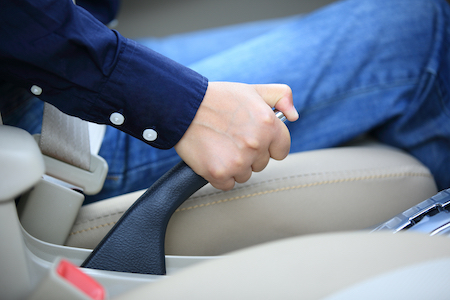 On modern cars, however, the parking brake is rarely needed in that circumstance. That could be why the name has morphed over time from the emergency brake to the parking brake.
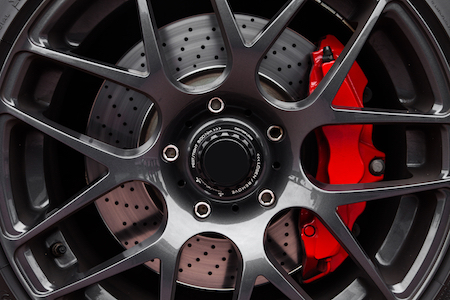 This break-in period is different for every vehicle, for every set of brakes. With some, you may not notice it at all. With others, it can linger for days.
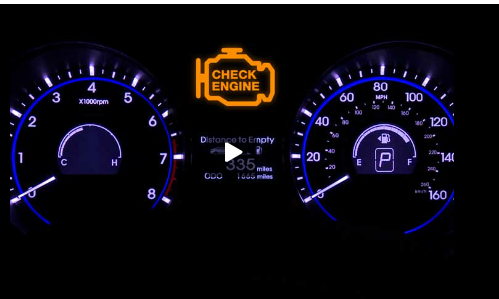 When your check engine light comes on, you may be torn between utter panic and just wanting to ignore it and hope it goes away. That’s perfectly understandable. That same check engine light could come on for anything from a serious engine or transmission problem all the way down to a loose gas cap.
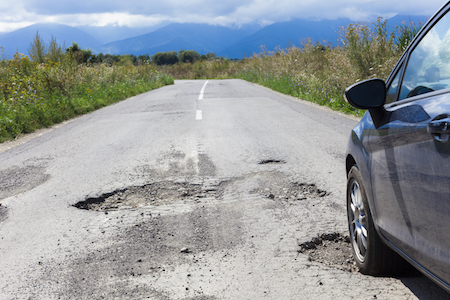 Struts are built into the structure of your suspension system. They are made from many different parts, including the coil spring and shock absorber, and affect your vehicle’s steering and alignment.
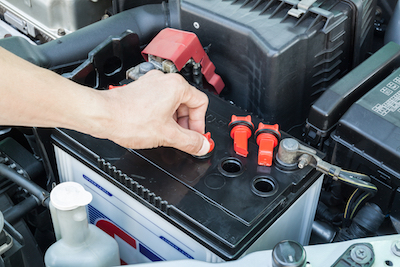 But as much as that can stop you in your tracks, it’s even more annoying knowing it could have been avoided.
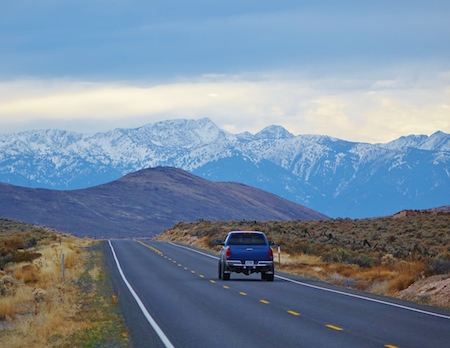 With a larger body, full-size pickups will physically have more room inside and offer more luxury than a mid-size. If things like legroom and headroom matter, look to the bigger pickup truck. Bed size is also significantly larger with a full-size pickup. If you regularly carry large items like construction materials, the full-size pickup is often the better choice.
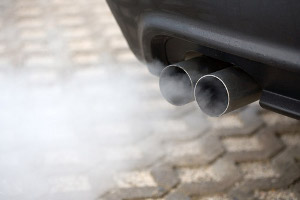 We’ve all heard a car or truck in our neighborhoods that needs a new muffler. But there’s more to the exhaust system than just the muffler.