• Home
  • Denver Auto Repair Services
    • Full Service Oil Change
    • Expert Mechanics
      • Expert Honda Mechanics
      • Expert Toyota Mechanics
      • Expert Subaru Mechanics
    • Automatic Transmission
    • Fuel System Cleaning
    • Radiator Flush Service
    • Wiper Blades
    • Air Filter
    • Cabin Air Filter
    • Gearbox Service
    • Brake Repair
    • Clutch Repair
    • CV Boots
    • Tune-Up
    • Steering & Suspension
    • Tires
  • Auto Diagnostic
  • Contact Us
    • About Us
  • Shop Specials
  • Testimonials
  • Blog
  • 303-691-2760

Express Car Care of Denver

"Denver's Best Auto Repair and Quick Lube"

  • Brake Service
  • Car Maintenance
    • Heating-Air Conditioning
    • Suspension
    • Transmission
    • Engine
    • Tires
  • Oil Change
  • Tips & Tricks

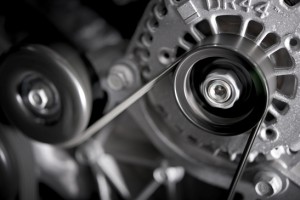
How Often Should You Replace Your Car Belts

July 5, 2013 by Denver Express Car Care Leave a Comment

Gotta love Colorado weather. One day you can be reaching record highs with the thermometer reaching into the 100 degree mark, and the next you can be hitting record lows with an inch or more of rain.

Preparing for that as a person is difficult – should you dress for summer and bring a jacket? But for your car, its another story. Your car may sit outside in the hot sun all day, and no matter what the temperature is outside, it can get even hotter inside.

When heat builds up, it can take its toll on a variety of things, including your car’s belts. And once a belt breaks, it produces a domino effect that results a loss of power to your car. Meaning you are stuck wherever the belt happens to break.

Instead of waiting for that to happen, being proactive can ensure you won’t be stranded at the most inopportune time. Belts are inexpensive and easy to replace. On your next oil change, ask your neighborhood mechanic to check your belts as well – if you work with the same mechanic again and again, they will be able to monitor your car’s condition over the years.

Another fortunate thing about belts is they are predictive by nature and usually give you plenty of warning before they fail.

Experts recommend changing v-belts every 40,000 miles or so, and serpentine belts around 50,000 miles.

You can also listen for noises, or for different reactions in your normal driving conditions. If you notice any of the following, its best to schedule a maintenance visit with your mechanic as soon as possible:

  • Squealing
  • Grinding
  • Rattling
  • Squeaking
  • Rumbling
  • Hissing

Remember, a good rule of thumb is to have your belts checked on a regular basis. With just a little TLC, you’ll keep your car from breaking down at the least opportune times.

Filed Under: Car Maintenance Tagged With: How Often Should You Replace Your Car Belts

Car Overheating?

July 3, 2013 by Denver Express Car Care Leave a Comment

Don’t let your Fourth of July celebration be put on hold because your car is overheating!  More than just the comfort and convenience of being able to control the temperature inside your vehicle, your car’s heating and cooling systems are necessary in preventing your vehicle from overheating due to extremely high operating temperatures.  Your cooling system is what keeps your car from becoming too hot, so it’s a good idea to have it checked each time you have your car in for a routine service.

All the parts that make up the cooling system, the radiator, radiator top hose, radiator bottom hose, thermostat, thermostat housing, water pump, electric cooling fan, and a thermo-time switch, all work together to accomplish one thing.  They move coolant around the engine so it can absorb and dissipate heat.

One of the main reasons for a car to overheat is a lack of coolant in the car’s cooling system.  This happens if there is a leak somewhere in the system and the coolant is escaping or if fresh coolant hasn’t been put in the radiator.  The radiator is the most prominent part of the cooling system.  Every time you drive, your radiator uses up a coolant and water mixture that helps to lower the temperatures in your vehicle’s engine system and keep your car from overheating.  The coolant that has traveled through the engine is pumped through the tubes of the radiator and is cooled off for another round.  If your coolant isn’t changed, the hoses and passages get dirt and sludge built up in them and the coolant can’t flow rapidly enough to cool the engine.  This is why it is important to have your coolant mixture replaced routinely.  When the coolant breaks down there is more stress on your radiator and your engine runs hotter than normal.  Dirt and deposits also build up and reduce your car’s performance.  An extended use of bad coolant can result in damage to your radiator that would require it to be replaced.

Another cause for a car to overheat is a thermostat that’s stuck.  If the thermostat is stuck in the closed position it blocks the coolant from flowing to your engine.  A damaged water pump or cooling fan or a clogged radiator can also cause your car to overheat.  These should all be looked at and diagnosed by a trained mechanic and not something that you should try to figured out alone.

The most important thing to remember if your car is overheating is don’t continue to drive it!  Pull over and turn the car off, by doing that you might avoid the severe and costly damage that overheating can cause.

For all of your Denver Auto Repair needs, trust Express Car Care.  Call (303) 691-2760 or stop by our shop today.

Filed Under: Car Maintenance Tagged With: Car Overheating

Does Your Car Need New Shocks or Struts?

July 2, 2013 by Denver Express Car Care Leave a Comment

“My friend went in to a mechanic a while back for an oil change. They told her she needed new shocks and struts and she may be stranded if she didn’t have them replaced immediately. She chose not to do it and brought her car into a friend – who told her everything was fine. How do I avoid unscrupulous mechanics? How do I know when my older car truly needs new shocks and struts?”

Search the Internet today and you’re sure to find a lot of stories about people not having the best of luck with auto repair shops. Which means when its time to trust a mechanic to make sure your car is in top working order, it can be difficult to determine who to trust – and who to steer clear of.

An oil change is one thing, but what happens when you think you may need a larger problem fixed, such as shocks and struts?

Shocks and struts aren’t like some car parts that need to be replaced on a regular basis or at a specific mileage. Some original shocks may need replacing after 30,000 to 40,000 miles; struts often last to 50,000, 60,000 or even longer.

One way to evaluate your need for new shocks and struts is to consider how your car handles on a daily basis. Does it bounce excessively when you hit a bump or drive down a bumpy road? Does the nose of your car dip down when breaking? Does the body of your vehicle roll or sway when cornering or driving in crosswinds? Does your suspension bottom out when backing out of driveway with a car full of passengers?

The bounce test is one of the easiest ways to tell if your car needs to shocks and struts. But it isn’t the only way.

In some cases your shocks may start to leak – you can easily see oil or wetness on the outside of the shock or strut.

In some cases your original equipment may not be well suited for the requirements you are placing on it. Do you pull a boat or camper on a regular basis? Are you in construction, hauling on a daily basis? Upgrading and installing stronger, special shocks and struts can give you better performance overall.

Worn out shocks and struts won’t necessarily  create a driving hazard, but there are studies that show they can increase the distance needed for stopping a vehicle, or increase skidding on wet surfaces. And they most definitely will improve the overall quality of your ride.

Shocks and struts are generally replaced in pairs – though it isn’t always necessary if only one shock or strut is leaking, or if they have relatively low mileage. While shocks can be a fairly easy replacement project, struts are more difficult. They require a fair amount of suspension disassembly, and most wheels need realigning after replacement.

Have any questions? Remember, its always better to check early and face a potential problem head on. The quicker you get the problem solved, the less damage and potential loss of use of your car you’ll experience.

Filed Under: Suspension Tagged With: Does Your Car Need New Shocks or Struts?

Fuel System Cleaning

June 19, 2013 by Denver Express Car Care Leave a Comment

Does your vehicle idle roughly while you’re sitting in traffic?  Is your gas mileage lower than in previous months or does your engine hesitate when you’re accelerating?  Does it have a pinging or knocking sound?  These and other symptoms could be trying to tell you that your car is in need of a fuel system cleaning.

The fuel system in your car is made up of fuel injectors, intake ports and valves, combustion chambers, a throttle body and the intake manifold.  When dirt and deposits get into any of these areas, it can lower your fuel economy, lessen your car’s performance and interfere with the proper operation of your engine.  These deposits are a result of burning gasoline and should be removed on a regular basis.  If deposits are allowed to build up in the combustion chamber and intake valves without regular cleanings, your engine’s compression is altered.  This can cause rough idling, engine stalling or hesitation, loss of power or engine knocking, or engine run-on when the car is turned off.

Once you have determined that your vehicle needs a fuel system cleaning,  one of our technicians will attach cleaning tools to the fuel system that will clean deposits from the fuel injectors and remove deposit build-up from the intake valves and the combustion chambers.  Deposits are also removed from the air intake system, including the throttle body and intake manifold.  The fuel system cleaning services the existing parts in the engine so they run like they were brand new.  It is usually recommended that you have a fuel system cleaning every 36,000 miles to keep your car running at it’s best.

If you have experienced any of these symptoms while driving your vehicle and think you might need a fuel system cleaning, come in and see us or give us a call at (303) 691-2760.

Filed Under: Car Maintenance, Engine Tagged With: Fuel System Cleaning

How Is Your Car Air Conditioner?

June 6, 2013 by Denver Express Car Care Leave a Comment

What happens when you turn on the air conditioner in your car?  Do you get a nice rush of cool air?  Or if the air does come out, is it hot or foul smelling?  How is your car air conditioner working?  It can be very frustrating when you get into your car, expecting a cooling breeze, and instead you get sputters of hot air.  It doesn’t take a rocket scientist to recognize that your car air conditioner isn’t working.  With the summer months almost here, a working air conditioner in your car is practically a necessity and in this day and age, we don’t have to suffer from the heat while we travel.  The following tips should help you decide where the problem may lie and what you might do to fix it.

Your car air conditioner is made up of several parts:  a compressor, a condenser, an evaporator, and several valves, fittings and hoses.  A fairly common reason for your car’s air conditioner to stop working is a lack of refrigerant.    Pressure gauges can be used to determine if your air conditioner needs a charge, or if your system may be losing refrigerant due to a leak.  Possibly a cracked hose, a pinhole in the condenser, or a leaky compressor.  A special dye can be added to your system that will help to locate a leak.

While the car is running, turn on the air conditioner and listen for the clutch of your compressor to engage.  If it does not engage or if it engages and disengages rapidly, you could have a blown fuse or may need to replace the clutch.

If your car’s air conditioner is noisy, make sure that all mounting bolts connected to your air conditioning system are tight.  This should help eliminate any rattling or other noises.

If your system has intermittent cooling, it may be freezing up.  Air and moisture in the system can cause this to happen.  You should use a vacuum pump to rid the system of moisture and air.

If you have a mold or mildew smell when you use your air conditioner, condensation has probably become trapped within one or more of the areas of the air conditioning system.  There is a service available to remove this mold and mildew from your system.

When all else fails, take your car to your auto technician and have your cooling system serviced.  Your auto technician will be able to diagnose any problems and make the necessary repairs to make your summer driving cool, clean and comfortable.

Filed Under: Heating-Air Conditioning Tagged With: How Is Your Car Air Conditioner?

Car Maintenance Schedule

May 22, 2013 by Denver Express Car Care Leave a Comment

Most of us have everything scheduled , whether we realize it or not!  We eat, sleep and play,  all on a schedule that we have created.   So it only makes sense that we schedule regular car maintenance for the vehicles that we use every single day to get us to our other scheduled events!

We’ve put together a car maintenance schedule that should help keep your car running smoothly and efficiently.


Once per month

  • Check your car’s oil level.  Add oil if running low.
  • Check your tire pressure.  Add air as appropriate.
  • Inspect your tires as you check the pressure.  Make sure they aren’t leaking,  or wearing in an uneven pattern, or damaged.
  • Check your coolant or antifreeze.  Add if running low.
  • Check your windshield washer fluid, and add more as needed, especially during high use months.

Once per quarter

  • Change your car’s oil every 3 months or 3,000 miles.  Check your air filter and replace as needed.
  • Check battery, brake, transmission and power steering fluids.  Add fluid if its running low.  Also watch for patterns of low fluids, as it could be a sign of something wrong with your system.
  • Check hoses, belts and cables.  Clean if corroded, and replace when you notice worn, frayed or brittleness.

Once per year

  • Replace the wiper blades to avoid brittleness and smears.
  • Check headlights, brake lights and turn signals.  Replace bulbs as needed.
  • Check the spare tire to make sure it’s fully inflated.
  • Inspect the brakes for signs of wear or damage.
  • Inspect shock absorbers for wear or oil seepage.

Although this schedule should be followed routinely, you should add in extra checks if you have long road trips scheduled so you can ensure your family is safe for a long journey.  Checks and maintenance before you leave can prevent costly mishaps along the way and save you valuable time and money.

If we can help with any of these services give us a call at (303) 691-2760 or come in and see us at the shop.


Filed Under: Car Maintenance Tagged With: Car Maintenance Schedule

Safe Roads

May 8, 2013 by Denver Express Car Care Leave a Comment

Spring has arrived here in Denver and as all of us who live here know, spring weather always brings along with it more annoying road construction!  It seems that the process of building and rebuilding safe roads also includes having to endure an undetermined length of time driving through and around construction zones.  According to the Colorado Department of Transportation (CDOT) and AAA Colorado, there are more than 150 projects on state and interstate highways in Colorado this year.  Since work-zone crashes kill an average of 11 people per week, nationwide, it is so important that we do everything we can to keep our roads safe.

In a recently published article by AAA, they share these tips that they would like drivers to keep in mind when driving through “cone zones”.

  • Slow down and move over when road workers and emergency responders are present.  It’s a Colorado law and it can save lives.
  • Expect the unexpected.  The work zone you’ve driven through before may have changed since the last time you visited.  Out-of-state drivers won’t be familiar with lane changes, uneven surfaces and lower speeds and may take sudden evasive actions.
  • Obey road crew flaggers.  Ignoring them, racing past them or expressing anger towards them only endangers them and aggravates other drivers.
  • Don’t tailgate even when other motorists cut into the safe space you’ve created behind the car in front.  This requires patience on your part.
  • Minimize distractions.  Focus, focus, focus!  Store your phone, make your call later and don’t reach for food or drinks.  To put it simply, drop anything and everything that would prevent you from seeing and obeying road signs, steering clear of roadside workers or hearing emergency vehicle sirens.
  • Be patient and stay calm.  This is by far the most difficult step of all, because who doesn’t want to reach their destination sooner rather than later?

We can all contribute to having safe roads in Denver and Colorado and also have a positive impact on roadside workers and other drivers by simply following a few friendly guidelines.  So I guess the question is, ” How will you respond?”

Filed Under: Denver Auto Repair, Tips & Tricks Tagged With: Safe Roads

Oil Change Intervals

April 23, 2013 by Denver Express Car Care Leave a Comment

Quick lube businesses and their employees have often been accused of recommending “unneeded” oil changes so they can make more money.  That may be true for some businesses, but when we service a car, we only recommend services that we believe are necessary to keep your car running at its best.  Here are some of the reasons why we encourage an oil change interval of 3,000 miles or every three months.

In recent years, many vehicle manufacturers have extended their recommended oil change intervals to 7,500 or 10,000 miles.  They have good intentions of trying to help reduce the maintenance costs for car owners, but they have run into trouble.  The Center for Auto Safety has gotten thousands of complaints from drivers who thought they were following the correct oil change  intervals in their owners manuals but ended up with a crankcase full of sludge.  Motor oil does more than just lubricate the engine.  It also forms a film on surfaces that separates moving parts so they don’t rub against one another, reducing friction and wear.  Oil also serves as a coolant for critical engine parts like the crankshaft and valve train.  It also helps to prevent rust and corrosion from building up inside the engine and keeps surfaces clean by dissolving and carrying away dirt and deposits.

Extended oil change intervals of 7,500 to 10,000 miles are based on “ideal” operating conditions, not stop and go driving, or driving our cars for several short trips, like the majority of drivers do each day.  So most drivers should be following a severe service schedule rather than a normal schedule to better protect their engines.  Most experts still consider a 3,000 mile or six month oil change interval the best for “severe” drivers.

Customers at our shop have also told us that they think because motor oils are of a higher quality than they once were, they don’t need to change the oil as often.  This would be a valid argument if oil filters had also improved in quality as well, but unfortunately they haven’t.  An engines main line of defense against abrasion and the wear caused by it,  is the oil filter.  The oil filter’s job is to remove solid contaminants like dirt, carbon, and metal particles from the oil before they can damage surfaces in the engine.  If your oil filter is clogged, it can’t do its job and unfiltered oil will enter the engine.  Contaminants  that find their way into the crankcase will be pumped through the engine and accelerate wear.

Although motor oils have been improved and are continuing to be improved, there hasn’t been much done to improve oil filters.  The majority of oil filters still need to be replaced every 3,000 miles, so until the oil filters have been improved as well, we will continue to recommend a 3,000 mile or three month oil change interval.

For all of your Denver Auto Repair needs, trust Express Car Care.  Call (303) 691-2760 or stop by our shop today.

Filed Under: Car Maintenance, Oil Change Tagged With: Oil Change Intervals

Auto Repair Estimate

April 10, 2013 by Denver Express Car Care Leave a Comment

There are a number of different ways that you might end up taking your car to the mechanic.  It might be that subtle clanking noise suddenly turns into an aggressive roar.  Or perhaps that dripping you always thought was just condensation from the air conditioner has now taken on a distinctive rainbow glow.  Whatever the reason might be, heading to an unfamiliar mechanic can be a stressful experience, especially for you wallet.

The purpose of an auto repair estimate is to inform both the mechanic and the owner of the car about the kind of work needed to repair it,  either repairs after an accident or just repairs that come with everyday wear and tear.  There are several kinds of auto repair estimates available.  Some websites offer repair estimates online.  The sites take into account the year, make and model of the car as well as the extent of the damage.

An online estimate, however, should not be used as a replacement for an auto repair estimate from a qualified mechanic.  When you bring your car to a repair shop, you should expect that a reputable mechanic will provide you with a detailed estimate that includes the cost of parts, the cost of labor and a time-line for the job.  Some mechanics may try to convince you that they cannot provide an estimate until they are part way through the job and can examine the full extent of the damage, but a reputable mechanic will be able to provide you with an outline of the expected repairs before extensive work is done on the vehicle.

A written repair estimate protects both the mechanic and the customer from potential problems.  When you sign off on an estimate, you are agreeing to pay reasonably within the figure you’ve been quoted.  If a mechanic performs the repairs included in the estimate and charges you around the same amount as the estimate, you cannot insist that you didn’t know how much the repairs would cost as a means of avoiding payment.

Likewise, mechanics are held to the amounts listed in their estimate.  States issue their own guidelines for adhering to estimates, but a standard rule is that a mechanic cannot perform repairs that would result in more than a twenty percent increase in cost without your consent.  That means that if a mechanic quotes you $400 for a repair, he cannot perform any work that would end up costing you more than $500 unless they specifically get your consent to do so.

If you are looking for a mechanic and they avoid offering you a written estimate for repairs, you need to move on.  Reputable mechanics understand the value of a written estimate and should incorporate them into their regular business practices.

For all of your Denver Auto Repair needs, trust Express Car Care.  Call (303) 691-2760 or stop by our shop today.

Filed Under: Car Maintenance, Denver Auto Repair Tagged With: Auto Repair Estimate

Power Steering Flush

March 27, 2013 by Denver Express Car Care Leave a Comment

Have you ever had a dream where you’re racing down the highway with the wind in your face and then all of a sudden it becomes a nightmare, and you lose your ability to steer your car?  I have, and I decided at that moment, I never wanted to have that experience in my real life!

The power steering system is one of the most critical parts of your vehicle.  Rack and pinion steering is the most common type of steering found in cars and minivans, but you can also find it on some SUVs and trucks.  To put it simply, rack and pinions are a pair of gears that work together to steer the vehicle.  In order to operate smoothly, the gears need hydraulic fluid, which is also called power steering fluid, to transmit power to your vehicles power steering system.  If the power steering fluid is dirty and isn’t flushed, there is an increased risk of damage to the entire power steering system.  A power steering flush is simply draining out your car’s old power steering fluid and replacing it with fresh fluid.  The function of the fluid is to transmit hydraulic pressure so you can steer your car easily in every driving situation no matter the temperature, from frigid cold to scorching heat.  Power steering fluid also lubricates the pump, controls the valves, and ensures a quiet operating system.

Over a period of time, the internal power steering components, as well as the seals and O-rings are subjected to wear and tear and they will begin to wear out.  When this happens the power steering fluid gets contaminated with broken down debris.  This forces the power steering pump to work harder.  Now the power steering pump has to pump the debris as well as the fluid and it eventually breaks down.  We have noticed that the 1996-1999 Toyota 4-Runners and Toyota Tacomas seem to be more prone to leaks if their systems aren’t flushed routinely.  If you own one of these vehicles you might want to have the power steering fluid checked to make sure you don’t need a power steering flush.  The fluid should appear either an amber or pink in color when it is fresh.  It is time for a change when the color appears significantly darker than when it was fresh.  Check your owner’s manual for specific recommendations for your particular vehicle.  If they aren’t available, a good rule of thumb is to change the power steering fluid as often as you change your engine coolant {anti-freeze}.  Since the fluid is the least expensive part of your power steering system and flushing it can help prolong the life of the more expensive parts of the system, a power steering flush is something that should be seriously considered.

For all of your Denver Auto Repair needs, trust Express Car Care.  Call (303) 691-2760 or stop by our shop today.

Filed Under: Car Maintenance, Transmission Tagged With: Power Steering Flush

  • « Previous Page
  • 1
  • …
  • 81
  • 82
  • 83
  • 84
  • 85
  • …
  • 101
  • Next Page »

Express Car Care
4200 E. Evans Ave. Denver, CO (map)
Phone: (303) 691-2760
Located just southeast of the Colorado Light Rail station

Follow Us Today!

  • Facebook
  • RSS

Shop Hours

Monday: 8:00AM – 5:00PM
Tuesday: 8:00AM – 5:o0PM
Wednesday: 8:00AM – 5:00PM
Thursday: 8:00AM – 5:00PM
Friday: 8:00AM – 5:00PM
Saturday: Closed – A note from the owner
Sunday: Closed

Last car oil change time  – 5:00PM

Click for the BBB Business Review of this Auto Repair & Service in Denver CO

Recent Articles

Why Your Check Engine Light Keeps Coming On—And What to Do About It

Why Your Check Engine Light Keeps Coming On—And What to Do About It

You’re cruising down I-25 or pulling into your favorite coffee shop when you see it—the amber engine icon lighting up your dashboard. Again. The check engine light is one of the most misunderstood … [Read More...]

  • How to Get the Most Mileage Out of Your Tires in Colorado
  • How a Local Mechanic Can Provide Better Service Than a Dealership
  • How to Deal With Car Noises That Only Happen When You Turn
  • Why Regular Belt and Hose Inspections Save You from Major Repairs
  • How Our Long-Term Staff Brings Confidence to Your Car Care

Search Our Site

Brakes Service

How to Know If It’s Time to Replace Your Brake Rotors

The Hidden Dangers of Driving With Low Brake Fluid

Denver Driving Conditions and What They Mean for Your Brakes

Oil Change

Top Benefits of Getting Regular Oil Changes in Denver

Oil Change Specials in Denver: Save Money and Keep Your Car Running Right

Why Regular Oil Changes Are Crucial for Denver Drivers

Suspension

How to Know If Your Car Needs Suspension Repair in Denver’s Bumpy Roads

A Guide To Understanding Bushings on a Car

Tips for Preventing Wear and Tear on Your Car’s Suspension

Transmision Service

How Often Should You Service Your Transmission in Denver?

Transmission Trouble? Common Signs and When to Visit Our Denver Shop

How to Prevent Common Issues with Automatic Transmissions

Engine Service

Everything You Should Know About Your Vehicle’s Timing Belt

Is Your Car Hesitating During Acceleration?

How to Troubleshoot a Rough Idling Engine

Auto Tips & Tricks

How to Deal With Car Noises That Only Happen When You Turn

Top 5 Maintenance Tips for High-Mileage Vehicles

Why Tire Pressure Matters More Than You Think

"Denvers Best Auto Repair and Quick Lube" - Copyright © 2025 - 4200 E. Evans Ave. Denver, CO 303-691-2760