• Home
  • Denver Auto Repair Services
    • Full Service Oil Change
    • Expert Mechanics
      • Expert Honda Mechanics
      • Expert Toyota Mechanics
      • Expert Subaru Mechanics
    • Automatic Transmission
    • Fuel System Cleaning
    • Radiator Flush Service
    • Wiper Blades
    • Air Filter
    • Cabin Air Filter
    • Gearbox Service
    • Brake Repair
    • Clutch Repair
    • CV Boots
    • Tune-Up
    • Steering & Suspension
    • Tires
  • Auto Diagnostic
  • Contact Us
    • About Us
  • Shop Specials
  • Testimonials
  • Blog
  • 303-691-2760

Express Car Care of Denver

"Denver's Best Auto Repair and Quick Lube"

  • Brake Service
  • Car Maintenance
    • Heating-Air Conditioning
    • Suspension
    • Transmission
    • Engine
    • Tires
  • Oil Change
  • Tips & Tricks

Car Maintenance Checklist

November 2, 2010 by Denver Express Car Care Leave a Comment

Living here in Colorado, we can never tell for sure when the snow might arrive.  In order to prepare your car for winter driving, here is a recommended car maintenance checklist.

  • Check the Hoses-Visually inspect hoses for cracks, leaks or loose clamps and feel them to check for spots that might be brittle or spongy, that means they need to be replaced.  Antifreeze can’t do it’s job if the hoses that carry it through your system are damaged.
  • Flush the Cooling System-The additives contained in the engine coolant (antifreeze) that lubricate and protect engine parts from rust and corrosion are depleted over time.  It’s recommended to have the cooling system flushed and new coolant added every two to five years depending on the car manufacturer.
  • Test the Electrical System-Have your car’s battery tested and make sure that there isn’t any corrosion on the terminals or clamps.  Check all the cable connections to make sure they’re tight.
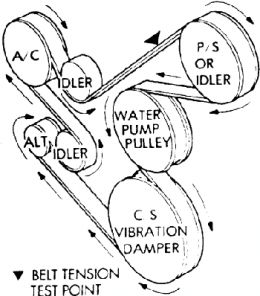
  • Adjust the Alternator Belt-The alternator is the source of electrical power when your car is running, it also charges the battery.  The alternator belt needs to be adjusted properly.  For older model cars this is done manually.  Newer cars usually have automatic tensioners.  Have the belt checked for wear and cracks which signal it’s time to have it replaced.  It’s a good idea to have a trained auto technician do these services.
  • Windshield Cleaning Tools-Make sure the windshield fluid reservoir is filled with a non-freezing solution.  Check the pump and sprayers to see if they are working properly.  If your wiper blades leave spots or streaks, they should be replaced.  You might want winter wiper blades that have a rubber boot to prevent ice and snow from building up.
  • Check the Tires-Make sure your tires have an adequate tread depth.  You should replace worn tires right away.  Putting snow tires on for the winter is a very good idea.  Check the tire pressure.  When the temperature drops the pressures in your tires will too, so check the tire pressure more often in the winter months than you do in the summer.
  • Brake Inspection and Flush-If you have any existing brake problems, they will get worse in the winter when your traction is reduced.  Have the brakes inspected to make sure they are working properly.  Brake fluid absorbs water and then collects in the system, it can cause rust, fluid leaks or damage to parts.  To prevent this from happening, most manufacturers recommend that the brake system be flushed every two to three years.  Check your owner’s manual for your car’s recommendations.

If you apply this car maintenance checklist, you can keep your car running and hopefully keep a smile on your face all through the winter months.

Filed Under: Car Maintenance, Tips & Tricks Tagged With: Car Maintenance Checklist

What Is Antifreeze?

October 5, 2010 by Denver Express Car Care Leave a Comment

Antifreeze is the colored fluid, usually red or green, found in your radiator.  It can also be referred to as coolant and serves a few purposes.     What Is Antifreeze? The main purpose for placing antifreeze/coolant in your radiator is to keep the water that is in the engine from freezing in cold temperatures and boiling over in hot temperatures.  The engine of a car produces high levels of heat when it is running, the fluids flowing through the radiator system help to draw some of the heat away from the engine so it doesn’t overheat.  Antifreeze/coolant also has corrosion inhibiting chemicals that prevent rust build up that can take place in the engine of a car.  Radiators are usually filled with a 50/50 mix of water and coolant, since antifreeze/coolant doesn’t evaporate like water does it keeps the levels of evaporation to a minimum.   An added purpose of antifreeze is lubrication, it lubricates the moving parts it comes in contact with, like the water pump.

By properly servicing your car’s cooling system, (which includes changing the antifreeze at recommended intervals), you will help to avoid major engine problems.  If you wait too long to change the antifreeze/coolant, the used coolant can harm cooling system components because the corrosion inhibiting chemicals have been used up and are no longer able to do their job.  The idea is to change the coolant before the corrosion inhibitors reach dangerously low levels.

For regular antifreeze the vehicle manufacturers generally recommend coolant changes every 30,000 miles or every two to three years.  There are also “extended life” coolants that are designed to last 100,000 miles or five years.  But be aware that these “extended life” coolants only provide extended life when used in a clean system mixed with water.  If they are mixed with regular antifreeze or old antifreeze in a system, the corrosion protection is reduced to that of regular antifreeze.

If you are unsure as to whether or not the antifreeze/coolant needs to be changed you can have your service center test it to determine its condition.

Filed Under: Car Maintenance, Engine, Tips & Tricks Tagged With: Antifreeze

What Is a Cabin Air Filter & When Should It Be Replaced?

September 28, 2010 by Denver Express Car Care Leave a Comment

Many car owners have never even heard of a cabin air filter and would have no idea when it needs to be replaced if they had!  Hopefully the information here will answer the questions you might have about this unknown filter.

Cabin Air Filter

Dirty Cabin Air Filter

A cabin air filter is a part of your car’s ventilation system that removes pollutants from the air before they can enter the passenger compartment.  Cabin air filters can also be referred to as pollen or dust filters, interior ventilation filters, ACC filters, or passenger compartment filters.  A cabin air filter purifies the air as well as protecting the heater and AC components.  If the cabin air filter is dirty or clogged, the heating or air conditioning performance will suffer as well as the inside air filtration.  When this filter looses its effectiveness, you might notice unpleasant odors or reduced air flow from the cabin vents.  It is recommended to replace this filter at least once a year or every 12,000 to 15,000 miles.  It should be replaced more often if your car is driven in places with heavy pollution or dusty conditions.  Two types of filters are offered for replacement, single stage and multi-stage filters.  Single stage filters trap dust, large soot, and allergens.  Multi-stage filters use activated carbon that reduces toxic gases and odors as well as dust and allergens.  Multi-stage filters are usually the better quality filter and more often recommended.

This filter is a relatively new feature and not all vehicles have one.   If you own a 2000 or newer car, it probably has one.  Cars and trucks in the U.S. began using cabin air filters around 1995, so check your owner’s manual or talk to your repair technician.  Most repair technicians  will be able to tell you whether or not your vehicle has one.   The ease or difficulty of replacing the filter depends on the make and model of your vehicle.  You might have to have it replaced by a technician.  Once you know whether your car is equipped with one or not, then you’ll know if you need to add” check cabin air filter” to the list the next time your car is serviced!

Filed Under: Car Maintenance, Heating-Air Conditioning Tagged With: What is a Cabin Air Filter & When Should It Be Replaced?

Transmission Trouble

September 21, 2010 by Denver Express Car Care Leave a Comment

Has your car lost its get up and go?  Here are five things to look for if you think your car might have transmission trouble.

  1. Lack of Response- Your car shouldn’t hesitate when shifting or refuse to go into gear.  If the engine speeds up when you step on the gas pedal but the car doesn’t, or if the car’s passing gear won’t engage, those could be signs of trouble.
  2. Whining, Clunking or Humming- Your car should shift quietly when it’s running correctly.  The sounds can vary but you should have your car checked if you notice new noises that can begin irregularly then grow in frequency.  If caught early you can avoid costly repairs.
  3. Grinding or Shaking- Your car should shift smoothly from gear to gear.  If you are experiencing any jarring or shimmying when your car shifts you might have transmission trouble.
  4. Check Engine Light- Newer cars have sensors that pick-up small irregularities in the engine and notify the computer that something is wrong.  These sensors can detect vibrations and early problems that you can’t even feel or see.  The check engine light can  also alert you to other issues that might be going on with your car.
  5. Leaking Fluid- Transmission fluid is vital to your car’s shifting ability and should be checked regularly.  The transmission fluid should be bright red, clear and smell sweet if parts are working correctly.  The fluid shouldn’t be dark in color or have a burnt smell.  Unlike motor oil, transmission fluid isn’t burned up so if the fluid level is low it is very possible you could have a leak.  The transmission fluid runs through a filter to help keep it clean.  This  filter should  be replaced according to your manufacturers recommendations so it doesn’t become clogged.   

Just being aware of the signs of possible transmission trouble and looking out for them can help you keep your car on the road and running smoothly.

Filed Under: Tips & Tricks, Transmission Tagged With: Transmission Troubleshooting

Fall Tune-Up

August 30, 2010 by Denver Express Car Care Leave a Comment

As the kids are heading back to school, now is the perfect time to “tune-up” your car!  Since you will more than likely be chauffeuring your children back and forth from their fall activities or school, it’s a good idea to make sure your car is running  in peak condition.

The phrase “tune-up” is an old-fashioned maintenance term that only applies to older cars.  For today’s cars that are equipped with electronic ignition and at least one on-board computer which automatically adjusts fuel mixture, ignition timing and idle speed, ” engine performance maintenance” is a more accurate term.  But whatever you call it, it is necessary to have your car serviced at least once a year to maintain peak engine performance or restore the engine to its original operating efficiency.            

A tune-up is a process of inspecting, diagnosing, testing, and adjusting or replacing parts on your car that if left unchecked could cause decreased performance or other problems.  A basic tune-up includes removing and checking the spark plugs,  cleaning or replacing the spark plugs and installing them in the engine.  Your car’s distributor cap and rotor are checked for wear and cracks.  If there are cracks, moisture can get in and cause corrosion of the metal, which causes your car to misfire.  These parts should be replaced at recommended intervals or if they show excessive wear.  A tune-up also includes setting the idle speed to your car’s specifications.  These are the basic procedures performed during a tune-up but you can take this opportunity to have other systems checked out as well, such as brakes, clutch, fuel lines, hoses and belts.

The terminology used and services performed on our cars may have changed with time, but the importance of having your car serviced regularly hasn’t, so call your automotive technician and make an appointment for your fall “tune-up” today!

Filed Under: Car Maintenance, Engine Tagged With: Tune-up

Auto Repair: How Much Should It Cost?

August 17, 2010 by Denver Express Car Care Leave a Comment

How many times have you gone into an auto repair shop for a repair that in your mind shouldn’t cost very much and then been shocked by the actual cost?  Auto repair isn’t cheap and we shouldn’t expect it to be. Auto Repair: How Much Should It Cost? The cost of repairing a  vehicle is based on several factors.   The make, model and year of the vehicle affect the cost of repairing it.  Lack of accessibility on some cars raises the cost.  Of course, type of auto repair needed determines how much it will cost.  Some repairs cost more because the parts involved are more expensive.  The cost of auto repair is also determined by the labor rates in your area.  The average shop charges between $60-$100 per hour for labor.  Finally, where you take the vehicle for repair affects the cost.  Dealerships usually charge more than independent repair shops because they have more overhead costs to cover.  As with all your auto repair needs, it’s important to look for a trustworthy shop that will give you honest advice, quality service and fair prices.

We can’t avoid auto repair!  Sooner or later, something is going to break, wear out or fail.  We can try to  prevent major repairs by good preventative maintenance but auto parts still wear out.  Most frequently, tires, brakes, belts and hoses.  And the more miles on your car the greater the possibility you may have engine or transmission problems.  Nothing lasts forever, so when your vehicle needs repair, you want to know how much it should cost before the work begins.  A reputable shop will give you an estimate that lists the parts that need replacing and their cost, the labor charged to replace those parts, any charges for diagnostic time (this covers the time it takes to connect a scan tool to your vehicle and read out any fault codes that may be in the vehicle’s computer) and any additional charges for miscellaneous items such as hazardous waste disposal fees, or shop supplies.

The labor you are charged is usually based on a standard “flat rate” and it most often the most expensive item on auto repairs.  The labor time required to perform a certain task will vary depending on accessibility of the part, the degree of difficulty of the job, and whether special procedures or tools are required to complete the job.  All of these are taken into account when a vehicle manufacturer or manual publisher determines the flat rate tables for various repair jobs.  This information is published and then used by repair shops in preparing their auto repair estimates.  The longer it takes a technician to replace a part, the higher the charge.  Auto repair is difficult, messy, back-breaking work that requires skill, training, and experience.  Cars today are just as technical as a PC, and when they crash, they’re just as costly to repair.  Most of us don’t expect to have our computers repaired for nothing but somehow we have the idea that  auto repair should only cost us pennies! Maybe it’s time to think again!

Filed Under: Car Maintenance, Engine Tagged With: Auto Repair Cost

Cheap Oil Changes, Are They Worth It?

August 3, 2010 by Denver Express Car Care Leave a Comment

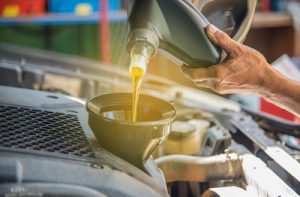
During this economic crunch, we are all looking for ways to save money.  But when it comes to the condition of our cars, those valued objects that get us to our jobs, the grocery store, school and social events do we want to risk getting a cheap oil change?  Saving a little money now by using cheap oil can cost you a lot in the future when the oil fails to do its job.

There are two important things that oil does for your engine.  First it provides lubrication.  Inside your car’s engine there are many moving parts that would rub against one another, creating extreme levels of friction and wear. If these parts come into contact with one another without oil between them to create a cushion, there would be severe damage to your engine.  Without quality oil your engine’s performance is greatly  affected.  Your car won’t run smoothly and your gas  mileage will be much lower.    Secondly motor oil cleans the engine and prevents contaminates or “sludge” from building up.  Quality oil will contain detergents that help clean the engine and additives that help inhibit corrosion.Cheap Oil Change, Are They Worth It?

You might think that you are saving money by going to a shop that advertises a $19.99 oil change.  But in order to give you that price they have to sell you cheap oil and a low quality oil filter that doesn’t meet with manufacturer’s specifications.  When the cost of an average oil change is $35-$45 at a reputable shop that uses high quality oil and high quality oil filters and it’s recommended that you change your oil every 3 months or 3,000 miles, if you do the math that comes to 50 cents a day to change the oil in your car.  Most of us can afford 50 cents a day!  We spend more than that on our morning coffee!  If we skip one coffee trip a week and put that money toward our oil change, our wallets wouldn’t even notice! Considering all the benefits our cars provide when they run well, don’t you think it’s worth it?

Filed Under: Engine, Oil Change Tagged With: Oil Change

Questions To Ask Your Automotive Repair Technician Before You Leave Your Car

July 14, 2010 by Denver Express Car Care Leave a Comment

Today’s cars are more complicated than ever, using computers and sensors to run virtually everything within your car.  From navigational systems, to videos, and even WiFi connectivity, when something goes wrong, it can have a major impact on your daily life.

Your automobile is a big investment. And with today’s increasing technology, even a small repair can be a big investment as well. It’s important to find an automotive repair technician you can trust, and will give you honest feedback on the condition of your vehicle, and what your options are. Here are some questions to ask before you leave your car with an automotive repair technician:

  • How safe will my car be? Certain cars are more susceptible to theft and break-ins. Do they keep your car safe and locked up if you must leave it over night? Do they have an alarm systems in place and a well lit area?
  • How much experience do you have? Review the credentials of your automotive technician, as well as the qualifications of the company as a whole. A company should stand behind their work, no matter what technician works on your car, and should guarantee the work they perform.
  • What type of certification do you have? Again, both the company and the technician should have certification to work on vehicles. Find out if your automotive technician is ASE certified or has comparable training.  Ask if mechanics have received updated training that supports the technological advances found in today’s cars.
  • Is there a guarantee policy and what are the conditions under which it is implemented?  While every good mechanic strives to offer the best service possible, occasionally something may happen with the work performed. Find out what the guarantee policy is.
  • Do you have a web site, and do you post specials or discounts?  If there are discounts, is it necessary to clip coupons to receive the discounted price?

The better working relationship you have with your automotive repair technician, the more you can rely on them to ask questions, and keep your car in top shape. They are there as a resource for you, not simply to repair your car. They build their business by being an expert, and sharing their expertise with you. Just ask.

Filed Under: Car Maintenance Tagged With: Repair Technician

Auto Repair Estimate

July 6, 2010 by Denver Express Car Care Leave a Comment

There are a countless number of ways you may end up at a mechanic. Maybe that subtle clanking noise suddenly turns into an aggressive roar. Perhaps that dripping you always thought was condensation from the air conditioner has now taken on that distinctive rainbow glow. Whatever the reason, heading to a mechanic you’re unfamiliar with can be a nerve wracking experience, especially for your wallet.

Auto repair estimates are designed to inform both the mechanic and the customer about the kind of work needed to repair a car after an accident or normal wear and tear. There are several kinds of auto repair estimates available. Some websites offer repair estimates online. The sites take into account the year, make and model of the car as well as the extent of the damage.

An online estimate, however, is not a replacement for an auto repair estimate from a qualified mechanic. When you bring your car to a repair shop, you should expect that a reputable mechanic will provide you with a detailed estimate that includes the cost of parts, the cost of labor and a time line for the job. Some mechanics may insist that they cannot provide an estimate until part way through the job so that they can examine the extent of the damage, but a reputable mechanic will be able to provide you with an outline of the expect repairs before extensive work is done on the vehicle.

Written estimates protect both the mechanic and the customer from potential problems. When you sign off on an estimate, you are agreeing to pay reasonably within the figure you’ve been quoted. If a mechanic performs the repairs in the estimate and charges you around the same amount as the estimate, you cannot insist that you did not know how much the repairs would cost as a means of avoiding payment.

Likewise, mechanics must be held to the amounts listed in their estimate. States issue their own guidelines for adhering to estimates, but a standard rule is that a mechanic cannot perform repairs that would result in more than a 20 percent increase in cost without your expressed consent. That means that if a mechanic quotes your $500 for a repairs, he cannot perform any work that would end up costing you more than $600 unless he specifically gets your consent to do so.

If you are looking for a mechanic, move on if he attempts to avoid offering you a written estimate for repairs. Reputable mechanics understand the value of a written estimate and should incorporate them into regular business practice.

Filed Under: Car Maintenance Tagged With: Auto Repair Estimate, Colorado Auto Repair Estimate

Why A Car Overheats

June 29, 2010 by Denver Express Car Care Leave a Comment

What would we do without a car? Cars are our freedom. They allow us to drive five miles to the store, or 500 miles to a retreat where we can get away from it all.

We are all aware of the many conveniences of having an automobile, and how it makes life so much easier.  The time and money saved by owning a car are enormous as opposed to relying on public transportation or carpooling.  But along with owning a car comes the responsibility of maintaining it too.

Now that summer is upon us, we must be diligent in having our cars checked before hitting the road for vacations or weekend get aways.  One common malfunction with cars during summer months is overheating.  There are several reasons why a car overheats, some being very simple and others requiring the knowledge of a trained mechanic.  Listed below are five reasons that frequently cause cars to overheat:

1. The car is losing anti-freeze due to a leak in the radiator. Or the radiator is clogged.  Either one of the problems results in the engine not getting enough coolant, ending up with an overheated car.  Ideally the liquid in the radiator should be a mixture of 50% anti-freeze and 50% water.

2. Loose belts and/or hoses may cause the engine to run hot.  Hoses wear out over time and may develop small “pinholes” which cause leaks.  Belts should be checked regularly as they can become frayed over time and could possibly break.

3. The radiator cap may need replacement or tightening.  Sometimes a very simple solution such as checking the radiator cap is the answer to the problem.  The seal on the cap gets brittle and may cause pressure to escape from the radiator.

4. The water pump may need to be replaced.  Unless you have a considerable amount of experience in repairing cars, this is an item that is best suited for a mechanic.  Today’s cars are extremely complex with computerized parts. A simple scan from the diagnostic tools found in a mechanic’s shop can give you an immediate answer.

5. The radiator is low or completely out of coolant.  As we drive our cars, the heat generated can cause evaporation of fluids.  It is important to frequently check the coolant level in the radiator, especially during the summer months when running the air conditioner.

With proper maintenance our cars will deliver dependable service and keep us running smoothly throughout the year.  Take the time to inspect your vehicle and keep lots of coolant on hand before hitting the road.

Filed Under: Car Maintenance Tagged With: Why A Car Overheats

  • « Previous Page
  • 1
  • …
  • 57
  • 58
  • 59
  • 60
  • Next Page »

Express Car Care
4200 E. Evans Ave. Denver, CO (map)
Phone: (303) 691-2760
Located just southeast of the Colorado Light Rail station

Follow Us Today!

  • Facebook
  • RSS

Shop Hours

Monday: 8:00AM – 5:00PM
Tuesday: 8:00AM – 5:o0PM
Wednesday: 8:00AM – 5:00PM
Thursday: 8:00AM – 5:00PM
Friday: 8:00AM – 5:00PM
Saturday: Closed – A note from the owner
Sunday: Closed

Last car oil change time  – 5:00PM

Click for the BBB Business Review of this Auto Repair & Service in Denver CO

Recent Articles

Why Your Check Engine Light Keeps Coming On—And What to Do About It

Why Your Check Engine Light Keeps Coming On—And What to Do About It

You’re cruising down I-25 or pulling into your favorite coffee shop when you see it—the amber engine icon lighting up your dashboard. Again. The check engine light is one of the most misunderstood … [Read More...]

  • How to Get the Most Mileage Out of Your Tires in Colorado
  • How a Local Mechanic Can Provide Better Service Than a Dealership
  • How to Deal With Car Noises That Only Happen When You Turn
  • Why Regular Belt and Hose Inspections Save You from Major Repairs
  • How Our Long-Term Staff Brings Confidence to Your Car Care

Search Our Site

Brakes Service

How to Know If It’s Time to Replace Your Brake Rotors

The Hidden Dangers of Driving With Low Brake Fluid

Denver Driving Conditions and What They Mean for Your Brakes

Oil Change

Top Benefits of Getting Regular Oil Changes in Denver

Oil Change Specials in Denver: Save Money and Keep Your Car Running Right

Why Regular Oil Changes Are Crucial for Denver Drivers

Suspension

How to Know If Your Car Needs Suspension Repair in Denver’s Bumpy Roads

A Guide To Understanding Bushings on a Car

Tips for Preventing Wear and Tear on Your Car’s Suspension

Transmision Service

How Often Should You Service Your Transmission in Denver?

Transmission Trouble? Common Signs and When to Visit Our Denver Shop

How to Prevent Common Issues with Automatic Transmissions

Engine Service

Everything You Should Know About Your Vehicle’s Timing Belt

Is Your Car Hesitating During Acceleration?

How to Troubleshoot a Rough Idling Engine

Auto Tips & Tricks

How to Deal With Car Noises That Only Happen When You Turn

Top 5 Maintenance Tips for High-Mileage Vehicles

Why Tire Pressure Matters More Than You Think

"Denvers Best Auto Repair and Quick Lube" - Copyright © 2025 - 4200 E. Evans Ave. Denver, CO 303-691-2760