• Home
  • Denver Auto Repair Services
    • Full Service Oil Change
    • Expert Mechanics
      • Expert Honda Mechanics
      • Expert Toyota Mechanics
      • Expert Subaru Mechanics
    • Automatic Transmission
    • Fuel System Cleaning
    • Radiator Flush Service
    • Wiper Blades
    • Air Filter
    • Cabin Air Filter
    • Gearbox Service
    • Brake Repair
    • Clutch Repair
    • CV Boots
    • Tune-Up
    • Steering & Suspension
    • Tires
  • Auto Diagnostic
  • Contact Us
    • About Us
  • Shop Specials
  • Testimonials
  • Blog
  • 303-691-2760

Express Car Care of Denver

"Denver's Best Auto Repair and Quick Lube"

  • Brake Service
  • Car Maintenance
    • Heating-Air Conditioning
    • Suspension
    • Transmission
    • Engine
    • Tires
  • Oil Change
  • Tips & Tricks

Auto Repair Estimate

March 5, 2011 by Denver Express Car Care Leave a Comment

There are a countless number of ways you may end up at the mechanic.  Maybe that subtle clanking noise suddenly turns into an aggressive roar.  Perhaps that dripping you always thought was just condensation from the air conditioner has now taken on a distinctive rainbow glow.  Whatever the reason, heading to a mechanic you’re unfamiliar with can be a nerve wracking experience, especially for your wallet.  Colorado Auto Repair Estimate

Auto repair estimates are designed to inform both the mechanic and the customer about the kind of work required to repair a car after an accident or just normal every day wear and tear.  There are several kinds of auto repair estimates available.  Some websites offer repair estimates online.  The sites take into account the year, make and model of the car as well as the extent of the damage.

An online estimate, however, is not a replacement for an auto repair estimate from a qualified mechanic.  When you bring your car to a repair shop, you should expect that a reputable mechanic will provide you with a detailed estimate that includes the cost of parts,  the cost of labor and a time line for the job.  Some mechanics may insist that they cannot provide an estimate until part way through the job so that they can examine the extent of the damage, but a reputable mechanic will be able to provide you with an outline of the expected repairs before extensive work is done on the vehicle.

Written estimates protect both the mechanic and the customer from potential problems.  When you sign off on an estimate, you are agreeing to pay reasonably within the figure you’ve been quoted.  If a mechanic performs the repairs included in the estimate and charges you around the same amount as the estimate, you cannot insist that you didn’t know how much the repairs would cost as a means of avoiding payment.

Likewise, mechanics must be held to the amounts listed in their estimate.  States issue their own guideline for adhering to estimates, but a standard rule is that a mechanic cannot perform repairs that would result in more than a twenty percent increase in cost without your expressed consent.  That means that if a mechanic quotes you $500 for a repair, he cannot perform any work that would end up costing you more than $600 unless he specifically gets your consent to do so.

If you are looking for a mechanic, move on if he attempts to avoid offering you a written estimate for repairs.  Reputable mechanics understand the value of a written estimate and should incorporate them into their regular business practice.

For all of your Denver Auto Repair needs, trust Express Car Care. Call (303) 691-2760 or stop by our shop today.
Filed Under: Car Maintenance, Denver Auto Repair Tagged With: Auto Repair Estimate, Colorado Auto Repair Estimate

Clutch Repairs

February 26, 2011 by Denver Express Car Care Leave a Comment

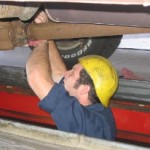
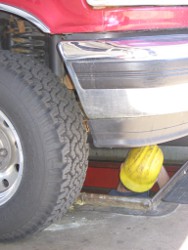
If you drive a manual transmission car and the clutch is working smoothly, you have complete control over the gears.  You decide when to shift and which gears to use.  You’re in control and are always aware of which gear you’re in.  But if your clutch is in need of repairs you will most likely feel “out of control”.    The clutch in a car allows the driver to engage the engine, which is constantly spinning, with a transmission that isn’t and do it, smoothly.  This isn’t what happens if your vehicle is in need of clutch repairs.   Clutch Repair

Clutch problems can occur at almost any mileage and for a wide variety of reasons.  Stop- and- go city driving with lots of shifting is always harder on the clutch than open highway driving.  One of the most common problems is slipping.  When a clutch starts to slip, you’ll notice it more when the engine is under load, like accelerating to pass another vehicle, driving up a hill or towing a trailer.  The more the clutch slips, the hotter it gets and the more it wears.  We also need to make sure we don’t ride the clutch when we drive.  Slipping the clutch excessively when starting out or when creeping along in traffic causes the clutch to get too hot and if it isn’t given a chance to cool, it can cause damage to the clutch and other parts as well.  If the clutch is slipping, you may notice a burning smell.  This is also a sign that the clutch is getting too hot.

Another problem is chattering.  This is a jerking and grabbing action that happens when the clutch is engaged.  Chattering can also be caused by burned linings or a warped flywheel so if you have these symptoms it’s best to get your vehicle into a trusted repair shop and have it checked out.

If your vehicle needs clutch repairs you will notice problems when you’re shifting.  A damaged clutch won’t engage smoothly and might shake a little bit when you put it in gear.  But there are several other problems that can be mistaken for a clutch problem, like a bad pressure plate, slave cylinder, clutch cylinder or throw-out bearing, so your best option might be to see a trusted mechanic to help you determine your best course of action.

For all of your Denver Auto Repair needs, trust Express Car Care. Call (303) 691-2760 or stop by our shop today.
Filed Under: Car Maintenance, Denver Auto Repair, Engine Tagged With: Clutch Repairs

Oil Pressure Light

February 19, 2011 by Denver Express Car Care Leave a Comment

Oil Pressure LightQuestion from Reader: What causes the oil pressure light to appear when I stop?  I checked the dipstick, it’s okay and I still have another thousand miles before I’m due for an oil change.

Dear Reader: The oil pressure light in your vehicle is a warning system to alert you of low oil pressure.  This can be caused by a low oil level or something more serious.  Since you’ve checked the oil level and it appears to be fine, what could be happening when you come to a stop and the engine drops to an idle is that the oil pump, which is powered by the engine, is slowing and not pumping enough oil to keep the oil pressure up.  If the oil pump is worn or  isn’t working correctly the oil pressure light will appear.

Low oil pressure may also be caused by debris that gets sucked into the oil pump.  The oil pump is the only engine component that is continually lubed with unfiltered oil.  The oil doesn’t pass through a filter until after it leaves the pump, so any abrasive debris can pass through the pump before it is trapped by the filter.  This debris can restrict the flow of oil and reduce oil pressure.

A plugged oil filter can be another cause of low oil pressure.  When the oil leaves the pump, it passes through the filter before going on to the bearings.  All filters create a certain amount of resistance to flow but if the filter becomes clogged with debris, oil flow will be blocked which will cause damage to your engine.

The oil pressure light may also appear if the engine is leaking oil from its gaskets or seals.  There are quite a few things that could be wrong when the oil light appears.  These could be simple and minor repairs or more serious repairs that could damage your engine if they are ignored.   So have a trusted mechanic or auto repair technician check it out right away.

For all of your Denver Auto Repair needs, trust Express Car Care. Call (303) 691-2760 or stop by our shop today.
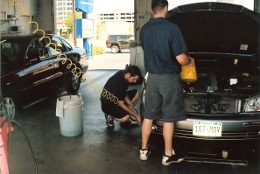
Filed Under: Car Maintenance, Denver Auto Repair, Engine Tagged With: Oil Pressure Light

The Importance of Finding a Family Owned Auto Repair Shop

February 12, 2011 by Denver Express Car Care Leave a Comment

Car repairs can drive you crazy, and the thought of the cost can make your stomach swell with butterflies.  The first question that enters your mind is, “can I trust this shop to do right by me?”  If the answer is “no” then you need some tips on how to find the right repair shop for your needs.

Start by asking family or friends where they take their cars for repair and what their experience was like.  You will probably discover that the majority of them used a family owned local shop because they can trust the advice – the owner is there and has to build up his reputation.     The Importance of Finding a Family Owned Auto Repair Shop

Dealerships or franchise repair shops may be locally owned but they have a corporate bottom line that a family owned shop does not.  The family owned shop has a vested interest in the community it operates in, their professional reputation depends on providing fair quotes and repairs that are done right the first time and are more likely to happen than with a dealer ship or franchise operated business.

The local mechanic is more familiar with his customer base, the types of cars his customers drive and he has the ability and interest in developing a relationship with each individual he comes in contact with.  He is also more apt to be honest about whether a particular repair is necessary or if it can be done at all.  He is not likely to risk his business or reputation doing unnecessary repairs just to make a dollar.  Word of mouth carries a great deal of weight and it doesn’t take but one unhappy customer to damage a business.

Using a family owned repair shop allows both the business and customer to develop a sense of trust that is hard to find these days.  If something is not repaired correctly, on time, and in accordance with the original cost quote, your redress would not include having to deal with a corporate structure that can be confusing and irritating.  You can have a face to face with a family owned repair shop and come to a mutually satisfactory resolution and still be friends.

Filed Under: Car Maintenance Tagged With: Auto Repair Shop

Changing Serpentine Belt

February 5, 2011 by Denver Express Car Care Leave a Comment

Have you ever gone in for a routine oil change and the technician has recommended changing the serpentine belt?  What was your reply?  Did you decline the service with the idea that they were just trying to make more money?  If your trusted technician recommends changing the serpentine belt, you might want to do it and save yourself a lot of trouble later.

First of all, exactly what is a serpentine belt?  The serpentine belt is what powers the alternator, water pump, power steering, and air conditioning.  Making sure your serpentine belt is in good condition and working correctly is essential in keeping your vehicle moving.  A single belt, winding its way through a maze of pulleys drives  every single engine accessory at the same time.  This belt has a lot of responsibility.  Changing Serpentine BeltEvery time the  belt passes around a pulley, it bends and flexes.  This produces heat which causes the rubber to harden over time.  The wear process can be greatly accelerated if the belt is loose or slips because any added friction makes the belt run even hotter.  If you want to lengthen the life of the serpentine belt it is important to make sure it is properly tensioned and that the proper tension is maintained throughout its service life.  Some signs that the tension isn’t correct can be a squealing belt, severe cracking on the belt, or a battery that keeps running down because of a slipping belt.  If you are experiencing any of these symptoms or if your technician recommended changing your serpentine belt the last time you visited him, it’s time for a change.  Don’t take the chance it won’t break on you, because when it snaps, all drive power is lost.  The water pump quits circulating coolant through the engine, the alternator quits producing amps, the power steering pump stops assisting steering and the air conditioner quits cooling.  We don’t want you to suffer the same consequences one of our customers did.  They were told their serpentine belt had a lot of cracks and needed to be changed.  They didn’t want to spend the $90 to $120 dollars that it costs to change the belt and left without the service.  Two days later their car was being towed into our shop and their costs were now much more than the cost of changing the serpentine belt because of the collateral damage the broken belt had caused!  Don’t let this happen to you!  Make that initial investment that will end up saving you money down the road.

Filed Under: Car Maintenance Tagged With: Changing Serpentine Belt

Fuel System Cleaning

January 22, 2011 by Denver Express Car Care Leave a Comment

We are asked quite a few questions when we recommend a fuel system cleaning.  The most frequently asked questions are:  ” I haven’t noticed any problems so why do I need this service?”  The answer to this question is that most vehicles are equipped with a “knock sensor” which decreases the engine’s performance to prevent harmful knocking conditions.  You might not notice the reduced performance and fuel economy because it happens gradually.  After the fuel system cleaning you may notice a dramatic increase in the performance and fuel economy of your car.

We are also asked, “why does my car need a fuel system cleaning?”  Our cars have fuel systems that have fuel injectors, intake ports, intake valves, combustion chambers, throttle body and an intake manifold.  Each of these areas can have deposits build up that can create problems in the engine.  If you have experienced rough idling, engine stalling or hesitation, loss of power or engine knocking, the problem might be in your fuel system. Fuel System Cleaning

Another question we get is,” what’s the difference between a fuel system cleaning and a tune-up?”  When you have the fuel system cleaned there aren’t any parts replaced.  When you have a tune-up the spark plugs are usually replaced.  The fuel system service cleans the existing parts in the engine so they run like they were new.  Since we haven’t replaced any parts we’re often asked what we actually do to the car.  What our technician will do is attach cleaning tools to the fuel system that clean deposits from the fuel injectors, intake valves and the combustion chamber.  The deposits are also removed from the air intake system.   These deposits occur as a by-product of burning gasoline and need to be removed on a regular basis.  We recommend that you have a fuel system cleaning every 36,000 miles to keep your car running at it’s best.

Filed Under: Car Maintenance, Engine Tagged With: Fuel System Cleaning

Quick Oil Changes

January 3, 2011 by Denver Express Car Care Leave a Comment

At this time in history it seems that we are moving faster than ever and everything we want, we want it quick!  We even want quick oil changes!  Is there anything wrong with that?  I don’t think so.  There are certain advantages to visiting a quick lube for an oil change.  Of course the most obvious advantage is time.  The average quick lube shop takes 14 minutes to perform a full-service lube, oil and filter change and multipoint inspection.  Fourteen minutes every few months isn’t much time to spend on maintaining your vehicle.Quick Oil Changes

Another advantage of the quick lube is convenience.  It isn’t difficult to find a quick oil change shop, they seem to be on every corner.  That doesn’t mean it’s recommended to pop into just any quick lube.  It’s important that you do some research on the shop that you want to visit.  Find out if they use quality oil and if their service techs are properly trained.  Also make sure they are held accountable to perform quality work on your vehicle.  Most quick oil changes are accompanied by a multipoint inspection.  These inspections can catch things such as headlights or other small bulbs that need to be replaced as well as air filters and cabin air filters(the filter that works for your heat and AC inside the car, although not every car has one.)  An inspection can also alert you to a major repair that might be necessary soon.  (This is the time you want to make sure that the shop you are dealing with is reputable and trustworthy so they aren’t trying to sell you repairs you don’t really need.)  If your quick lube also has an auto repair shop, (like ours) you can set up an appointment to have your car repaired.  One stop shopping!  Getting a quick oil change in a shop like ours is even more convenient because we can also perform major services like a transmission flush or a coolant flush at the same time we’re changing the oil.  So if saving time while maintaining your car is important to you than quick oil changes is the answer you’re looking for!  What do you think?

Filed Under: Car Maintenance, Oil Change Tagged With: Quick Oil Changes

Shocks and Struts: More Than a Comfortable Ride

December 6, 2010 by Denver Express Car Care Leave a Comment

Shocks and struts serve the same purpose,their main function is to keep your car from bouncing.  A car has front and rear springs to cushion it over rough road conditions.  Shocks and struts are designed to help keep your tires on the road.  There is a slight difference between a shock and a strut.

Shocks and Struts:  More Than a Comfortable Ride

Installed Shock

Shocks are usually used to depress leaf springs and are usually a single cylinder in the open and a strut is normally surrounded by the coil spring and is bigger and more complicated.  Because of that, it usually costs more to replace a strut than a shock.

Shocks and Struts:  More Than a Comfortable Ride

Installed Strut

Shocks are normally used in the rear suspension on a car and struts are on the front.  Some trucks have shocks on both the front and rear.  But they both achieve the same thing.  They control the action of the spring to resist bottoming out, like when you hit a pothole, and keep the movement of the springs under control as they rebound.  Since we have so much road construction going on in our area, potholes are in abundance and if your car continues to bounce long after you’ve hit one, you should have your car inspected for possible shock or strut replacement.

Worn shocks and struts not only affect the comfort of your ride and control of your car, but they affect its braking effectiveness too.  Here is a checklist for the signs of worn shocks or struts:

  • Do you experience excessive bounce ( 3 or more bounces) when crossing an intersection or dip?
  • When stopping quickly, does your car rock back and forth several times?
  • While applying your brakes firmly at higher speeds, does your vehicle have a tendency to drift left or right?
  • When changing lanes quickly does your car rock or sway from side to side?
  • On a tight curve like a freeway ramp, does your car lean and sway giving it an uneasy and disconnected feeling?

If you experience any of these signs you should have your car inspected by a trusted service technician, (like us)!  They can help you correct the problems , prevent further damage to your car, and restore that comfortable ride we are all looking for!

Filed Under: Suspension Tagged With: Shocks and Struts

Fact Vs Fiction With Your Car Engine

November 15, 2010 by Denver Express Car Care Leave a Comment

In these days of endless information on the internet and Wikepedia, it’s more important to make sure the information we get is based in fact not fiction. It’s fact vs  fiction! We should separate fact from fiction in all areas of our lives including taking care of our cars engine.  With the help of Consumer Reports, I’ve compiled a small list of fact vs  fiction.

Fiction: You have to let your engine warm up for several minutes before you can start driving.

Fact: This advice was true in the past but today’s car engines warm up more quickly when they’re driven.  The sooner they warm up, the sooner they reach their maximum efficiency and performance.  But you shouldn’t rev the engine high during the first few miles while it’s warming up.

Fiction: Switching between conventional oil and other types of oil is bad for my engine.

Fact: Mixing or switching between types of motor oil isn’t harmful to your engine because conventional, synthetic, synthetic blend and high mileage oil are all compatible.

Fiction: If regular-grad fuel is good, premium must be better.

Fact: Most cars will run just fine on regular-grade (87 octane) fuel.  A higher octane fuel (premium) is often recommended for high compression, hotter running engines.  So if your car is designed for 87 octane, you don’t need to use premium, it won’t improve your car’s performance.

Fiction: There isn’t any difference between conventional and synthetic motor oil.

Fact: There aren’t any real differences in the stock base used to make synthetic and conventional oils, but there are differences in the processes used to make each oil and the additives  that they each contain.

Fiction: We should inflate our tires to the pressure shown on the tire’s sidewall.

Fact: The PSI figure on the side of the tire is the maximum pressure that the tire can hold safely.  The automaker’s recommended pressure is usually found on a doorjamb sticker, in the glove box, or on the fuel-filler door.  Check you tire pressure when the tires are cold for an accurate reading.

Fiction: A dealership must perform regular maintenance to keep your car’s factory warranty valid.

Fact: As long as the maintenance items listed in the car owner’s manual are performed on schedule, the work can be done at any auto repair shop.  Just keep accurate records and receipts in case of a warranty dispute on a car repair.

I’m sure this list is incomplete and many more facts vs  fiction could be added.  If you have some to add or any questions that you would like answered, please write a comment and share them with us.  We will do our best to answer them for you.

Filed Under: Car Maintenance Tagged With: Fact Vs Fiction

Motor Oil Types-How to Choose the Right One for Your Car

November 9, 2010 by Denver Express Car Care Leave a Comment

When you walk into a quick-lube and ask for an oil change today, you will usually be asked what type of motor oil you want to use.  Because cars have changed, the motor oil we put in them has changed too.  Here are the motor oil types available and a brief description of the difference between them.  This information should help you choose the right motor oil for your car.

Conventional Oil-This is the standard car motor oil.  All leading brands carry a motor oil for service level “SL”.  “SL” refers to a group of lab and engine tests that the oil is put through in order to meet the standards of the American Petroleum Institute (API).  This oil works well in just about every light-duty car on the road.  When you choose this oil it is important to change your oil and filter regularly.Motor Oil Types-How to Choose the Right One for Your Car

Full Synthetic Oil-This motor oil is made for high-tech engines like BMW, Lexus, Corvette, or Mercedes-Benz.  It has superior sludge and varnish protection which keeps the engine cleaner.  It protects your engine from becoming to hot under severe driving conditions and also protects it in cold temperatures because the oil flows faster when the engine is started.

Synthetic Blend Oil-These have a mixture of synthetic oil and organic oil and are formulated to give engine protection for somewhat heavier loads and higher temperatures.  They evaporate less which increases fuel economy.  This type of motor oil is popular with people who drive SUV’s and pickup trucks with heavy loads.  Synthetic blend oil costs less than full synthetic and just slightly more than conventional oil.

Higher Mileage Oil-We are driving our cars longer now and if your cars odometer reads more than 75,000 miles, this type of motor oil would be a wise choice.  This oil is formulated with seal conditioners that restore their shape and increase their flexibility.  Rubber seals are designed to swell enough to stop leaks, this oil helps them do that.  Higher mileage engines can perform differently than new ones, causing oil consumption, decreased engine performance and more rapid oil breakdown.  By choosing higher mileage oil you can reduce oil consumption, improve horsepower and prolong the life of the engine by cleaning buildup and sludge from your older engine.

When you’re trying to determine which type of motor oil to choose for your car, don’t forget to check your owner’s manual and talk to your service technician.  They can give you the best advice for your particular situation!

Filed Under: Engine, Oil Change Tagged With: Motor Oil Types

  • « Previous Page
  • 1
  • …
  • 56
  • 57
  • 58
  • 59
  • 60
  • Next Page »

Express Car Care
4200 E. Evans Ave. Denver, CO (map)
Phone: (303) 691-2760
Located just southeast of the Colorado Light Rail station

Follow Us Today!

  • Facebook
  • RSS

Shop Hours

Monday: 8:00AM – 5:00PM
Tuesday: 8:00AM – 5:o0PM
Wednesday: 8:00AM – 5:00PM
Thursday: 8:00AM – 5:00PM
Friday: 8:00AM – 5:00PM
Saturday: Closed – A note from the owner
Sunday: Closed

Last car oil change time  – 5:00PM

Click for the BBB Business Review of this Auto Repair & Service in Denver CO

Recent Articles

Why Your Check Engine Light Keeps Coming On—And What to Do About It

Why Your Check Engine Light Keeps Coming On—And What to Do About It

You’re cruising down I-25 or pulling into your favorite coffee shop when you see it—the amber engine icon lighting up your dashboard. Again. The check engine light is one of the most misunderstood … [Read More...]

  • How to Get the Most Mileage Out of Your Tires in Colorado
  • How a Local Mechanic Can Provide Better Service Than a Dealership
  • How to Deal With Car Noises That Only Happen When You Turn
  • Why Regular Belt and Hose Inspections Save You from Major Repairs
  • How Our Long-Term Staff Brings Confidence to Your Car Care

Search Our Site

Brakes Service

How to Know If It’s Time to Replace Your Brake Rotors

The Hidden Dangers of Driving With Low Brake Fluid

Denver Driving Conditions and What They Mean for Your Brakes

Oil Change

Top Benefits of Getting Regular Oil Changes in Denver

Oil Change Specials in Denver: Save Money and Keep Your Car Running Right

Why Regular Oil Changes Are Crucial for Denver Drivers

Suspension

How to Know If Your Car Needs Suspension Repair in Denver’s Bumpy Roads

A Guide To Understanding Bushings on a Car

Tips for Preventing Wear and Tear on Your Car’s Suspension

Transmision Service

How Often Should You Service Your Transmission in Denver?

Transmission Trouble? Common Signs and When to Visit Our Denver Shop

How to Prevent Common Issues with Automatic Transmissions

Engine Service

Everything You Should Know About Your Vehicle’s Timing Belt

Is Your Car Hesitating During Acceleration?

How to Troubleshoot a Rough Idling Engine

Auto Tips & Tricks

How to Deal With Car Noises That Only Happen When You Turn

Top 5 Maintenance Tips for High-Mileage Vehicles

Why Tire Pressure Matters More Than You Think

"Denvers Best Auto Repair and Quick Lube" - Copyright © 2025 - 4200 E. Evans Ave. Denver, CO 303-691-2760