
• Home
  • Denver Auto Repair Services
    • Full Service Oil Change
    • Expert Mechanics
      • Expert Honda Mechanics
      • Expert Toyota Mechanics
      • Expert Subaru Mechanics
    • Automatic Transmission
    • Fuel System Cleaning
    • Radiator Flush Service
    • Wiper Blades
    • Air Filter
    • Cabin Air Filter
    • Gearbox Service
    • Brake Repair
    • Clutch Repair
    • CV Boots
    • Tune-Up
    • Steering & Suspension
    • Tires
  • Auto Diagnostic
  • Contact Us
    • About Us
  • Shop Specials
  • Testimonials
  • Blog
  • 303-691-2760

Express Car Care of Denver

"Denver's Best Auto Repair and Quick Lube"

  • Brake Service
  • Car Maintenance
    • Heating-Air Conditioning
    • Suspension
    • Transmission
    • Engine
    • Tires
  • Oil Change
  • Tips & Tricks

Avoiding The Top 5 Car Repairs

June 3, 2021 by Denver Express Car Care

Your vehicle is one of the most expensive items you own. It’s a complex system with over 30,000 parts that, when operating correctly, gives you the ability to move around freely.

With that many parts, however, if one thing goes wrong, it can quickly escalate, causing problems with the way you drive. It might start as a noise or a funny smell, but if left unchecked, can turn into a major car repair.

Luckily, you can avoid costly car repairs by adhering to a regular car maintenance schedule. Regularly scheduled maintenance keeps parts well lubricated, the system running smoothly, and your vehicle on the road.

Let’s start by looking at five of the most common and most expensive car repairs we see coming into our shop.

Brake pad and rotor replacement

A car’s brake system is one of the most important systems on your vehicle. Imagine flying down the mountain after a day of skiing, and you discover your brakes don’t work. Even in town, as you move closer to a red light, without brakes, it can be a harrowing experience.

Over the life of your vehicle, you will have to replace your brake pads about every 40,000 to 50,000 miles. Of course, that changes based on the make and model of your car, as well as your driving experience. Someone with all city driving will replace brakes more often than someone with all highway driving.
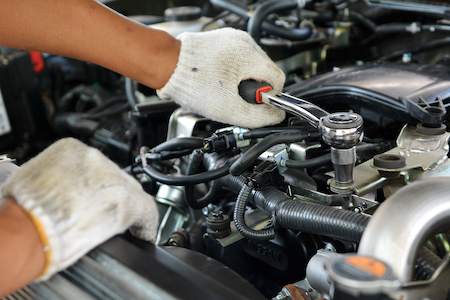
Avoiding The Top 5 Car RepairsBrake pads are the least expensive part of this process. Brake pads are designed to provide you with warning signs as they start to wear down. They are built with a metal bar just shy of the recommended thickness level. When this is reached, it will produce a metal on metal grinding sound that warns you it’s time to replace the brake pads. This gives you plenty of warning to schedule a visit with one of our mechanics, and replace the brake pads before they impact performance or safety.

Ignore this sound, and the brake pads can start wreaking havoc on other parts of the braking system. Poor quality brake pads can impact rotors. If they are damaged or warped past the point of repair, these will also have to be replaced. And that can escalate your repair bill exponentially.

Tire replacement

A good set of tires can last you anywhere from 25,000 to 50,000 miles or more. But you can’t replace a set of tires, have them installed, and leave them unchecked for all those miles. Because they are your one connection to the road as you drive, more can go wrong with a set of tires than most drivers realize.

How often do you test the air pressure in your tires? If you say every fill-up, you’re on the right track. Tire pressure can change rapidly depending on driving conditions. Both cold and heat change the way they perform, as well as how and where you drive your vehicle each day.

Pay attention to the tread as well. Do you see uneven wear marks? That’s a sign of a deeper problem in the performance of your vehicle. Rotate your tires regularly. You might consider having it done each time you change the oil. This ensures your tires wear evenly, and will prevent damage based on the way you drive. This can also alert you to bigger problems you can fix before they escalate.

Fuel injector cleaning

Think about all your vehicle goes through as you drive the Colorado roads. Ice and snow build up in the winter, with chemicals, rocks, and sand impacting many parts underneath the hood. Freezing temperatures can also impact the functionality of individual parts. Then in the summer months, heat can impact the way your car moves.

Fuel injectors spray gas into the combustion chamber to allow the correct amount of gasoline to enter into the engine. Each cylinder has a corresponding fuel injector – a four cylinder engine will have four fuel injectors.

Fuel injectors do wear out over time. But with the proper cleaning and service schedule, you can extend their life. Most manufacturers state fuel injectors will last between 50,000 and 100,000 miles, depending on care, gasoline used within the system, and how often fuel filters are changed.

Timing belt

The timing belt connects the engine with the vehicle’s crankshaft to ensure the valves open and close properly. The timing belt synchronizes the rotation of the camshaft and crankshaft to ensure the valves open and close, allowing the pistons to move up and down. Without a timing belt, your car’s engine wouldn’t operate.

A timing belt goes through a lot of wear and tear. The timing belt breaking is a big problem, and can lead to extensive damage to the engine. Check with your vehicle’s manufacturer to determine how often it should be replaced; it’s typically around 60,000 to 100,000 miles.

Warning signs can include missing teeth from the belt itself, a ticking noise from the engine compartment, or visible signs of cracking or damage. Simple maintenance checks periodically can warn you of potential problems, giving you the chance to replace it before it can break and cause extensive damage.

Transmission

It’s a problem with the transmission. Those are words no vehicle owner wants to hear because it’s one of the most expensive car repairs you’ll make.


Without a transmission, your car won’t move. It helps the engine run smoothly, and moves power from the engine through the wheels.

A transmission isn’t just one simple block. Instead, it’s made up of over 800 parts that are unique to each make and model on the road today. When they all work together, your car will operate seamlessly. To ensure that happens, it’s important to keep transmission fluid fresh and operational. Ensure it’s at the right level, and avoid aggressive driving or riding the brakes.

How a mechanic can keep your car running

These are just a few of the major car repairs that can impact your vehicle and your wallet. Owning a car doesn’t mean expensive repair bills. If you schedule your maintenance visits with a mechanic you can trust, you’ll ensure your car stays healthy and operating well for as long as you own it.

Scheduled checkups will always ensure your car stays operating and in peak performance. Don’t ignore mileage or date reminders; they are there for a reason. If you work together with a reputable mechanic, you can drive with peace of mind.
Filed Under: Car Maintenance, Denver Auto Repair Tagged With: Top 5 Car Repairs

Replace Your Air Filter

May 24, 2021 by Denver Express Car Care

In order to run effectively, your engine needs clean air to burn fuel – and it needs a lot.  In fact, a typical vehicle needs about 216,000 gallons of air for every tank of gas.

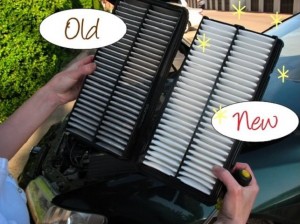
All that air passes through a filter that catches the dust and dirt.  Eventually the air filter gets completely full of dirt because it can only hold so much.  Then the dirt and dust start getting through the air filter and it needs to be replaced.  This dirty air  passes through the mass airflow sensor and starts to accumulate on the delicate sensor element.  The mass air flow sensor measures how much air is getting into your engine.  When the airflow reading is incorrect, your engine doesn’t get the proper amount of fuel.  It runs rough and doesn’t perform as well as it should.

Eventually, if you don’t replace your air filter, the sensor is so damaged it needs to be replaced – which is pricey.  Truth is, you could buy a case or two of air filters for the cost of one sensor replacement.

Of course, that dirty air keeps on going through to your engine where it’s burned along with the fuel, which dirties up your combustion chamber and increases harmful exhaust emissions.

The next time your service adviser brings out your dirty air filter and recommends a replacement, remember the cost and poor performance that can be waiting for you around the corner if you don’t replace your air filter.  This is a simple service that shouldn’t be neglected if you want to keep your engine running properly.

Give us a call or come in and see us, we’re here to help.

Filed Under: Car Maintenance, Denver Auto Repair Tagged With: Replace Your Air Filter

Used Car Inspection

May 10, 2021 by Denver Express Car Care

It’s natural for Denver drivers to be a little anxious when they buy a used car in the Denver area; it’s natural to worry that it has something wrong with it or that it hasn’t been well maintained.  If it’s possible, bring the vehicle in for a used car inspection at Express Car Care.  Your friendly and knowledgeable service adviser can tell you if there are current or emerging problems in the used car that you’re interested in purchasing.  The peace of mind is well worth the price of the inspection service.

It’s also important for Denver drivers to get on track with the maintenance schedule and stay on track.  If you don’t have maintenance records for the used car assume the worst and get started right away with an oil change at Express Car Care.  The inspection by Express Car Care that comes with a full service oil change will reveal any basic problems.  Be sure to bring up any specific concerns you might have with your service adviser.  A more intense inspection can find hidden problems like body damage and sealer in A/C units which can be major expenses down the road.

Purchasing a Carfax report may let you know if the vehicle’s been in a major accident and give you a title history.  You can find out if that ’71 Barracuda really was owned by a little old lady who only drove it to church on Sundays here in Denver.

If you’ve bought well, there’s no reason to believe that with proper maintenance your “new” used car won’t last a long, long time.

Give us a call and let us help.

Filed Under: Denver Auto Repair, Tips & Tricks Tagged With: Used Car Inspection

Why Car Repair Shop Reviews Matter 

April 13, 2021 by Denver Express Car Care

When were you last in a situation where your car had a problem, and you didn’t know where to go?

We’ve all been in that situation before. Maybe you’re new to town. Or maybe you’ve purchased a new home in a new neighborhood and aren’t familiar with the local shops.

You want to do business with a local, but where should you go?

Typically, there are three ways to find a new car repair shop.

1. Drive by. Every day as you’re out running errands, you notice the repair shops in your community. Which one should you trust?

2. Mailers and flyers. Of course, you can always rely on marketing. Homeowners are bombarded with flyers in their mailboxes offering coupons for different services. Does one of them seem to be a good deal, and applies to what’s wrong with your vehicle?

3. Referrals. Arguably, this is one of the best ways to discover new shops. If your neighbor or friend trusts a place, maybe you can too.

Still, we’ve all heard horror stories about taking your vehicle in for service, only to have the mechanic come out and tell you there’s a major complication with your car. Do you trust the advice? Do you sink hundreds – thousands – of dollars into your vehicle?

Do you trust that they are telling you the truth?

Two types of car repair shops, which is right for you?

Why Car Repair Shop Reviews MatterAs you’re running errands, you’ve probably come across two separate types of car repair shops in your neighborhood: national brands, and locally owned shops.

The national brands are part of a corporate conglomerate with shops all over the country. Their names are recognizable, and part of that is to gain your trust. If you visit one in your local city, you can go to one in another town and expect similar service. Of course, that’s not always the case.

Locally owned shops are also known as “mom and pop” shops. They were started by a local member of the community, and operate as a family operation. You’ll typically talk with the owner and get to know them over time.

According to a survey by Consumer Reports, independent mechanics provide a more satisfying experience. They surveyed over 40,000 consumers and asked them about their recent repair experiences. One mechanic they interviewed said it best:

“If you keep your car for many years, find a local, independent garage you can trust, and then build a relationship by giving them repeat business. If you stay loyal, they’re bound to treat you right, which can be advantageous when it comes to those really expensive jobs.”

With most large corporations, they operate to maximize profits. They set prices and stick with schedules to ensure maximum revenue. The people you meet when you bring your vehicle in are employees. And as employees, they come and go based on their goals and desires.

Local car repair shops are locally owned and operated, often bringing in family and friends who stick around. You’ll see the same friendly faces every time you bring your vehicle in.

How do you find a car repair place you can trust?

As mentioned before, you can find local service shops in a variety of ways. As you narrow down your focus, that’s when you should head online. While you might receive one or two reviews from your neighbors, online, you can gain a wealth of information with only a few clicks. Whether you use social media like Facebook, or review sites like Angie’s, you’ll start to see patterns emerge.

Car repair shop reviews help you monitor quality – If a business is around for any length of time, chances are you’ll find a number of reviews online. People realize how important this is, and they are highly motivated to leave their own. Don’t read one or two and finalize your decision. Instead, take some time to get a consensus about how people feel about the local shop. Do they like the people? Do they like the service? Do they have any trouble with the mechanics of the repair after they drive away? Online reviewers are honest about quality, and you can quickly build a better understanding of how well a shop is doing.

Car repair shop reviews build trust – One review might not be enough to lower your concerns, but how about ten, or twenty? Building reviews online should be a part of a local business’s goals. It’s a great way to tell other people in your community about the great resources you’ve been using for years. With reviews, you can also see the dates of when the item is posted. Does the service stay the same year after year? That can be a bonus for a local shop.

Car repair shop reviews can also show your customer service care – Let’s face it, all reviews aren’t going to be positive. This is also a chance for a car repair shop to show its true colors. How do they handle the situation? Do they ignore the review? Or do they take the time to answer the poster and face the problem head-on? Not every customer is going to gel with a business, and that’s okay. This is where it’s important to read reviews carefully, and go with the majority view. It will tell you everything.

Celebrate good reviews

There are many ways to celebrate good reviews. Increasingly, online review resources understand how difficult the process of finding quality repair shops can be, so they highlight service businesses that go above and beyond.

Here at Express Car Care, we take our reviews and ratings very seriously. We’ve recently been awarded the distinction of being a 2020 CARFAX Top-Rated Service Center, with an average rating of 4.9, and we couldn’t be happier!

If you want to see what other drivers already discovered, and want to have a mechanic who works with you to ensure your car is in top shape, schedule your maintenance visit with us today.

Filed Under: Denver Auto Repair Tagged With: Car Repair Shop Reviews

Growling that Grates

March 29, 2021 by Denver Express Car Care

A driver who uses his or her ears has a leg up on those who don’t.  Noises, in addition to helping us to be aware of traffic, can also give us clues to potential problems in our vehicles.  One noise to pay special attention to is growling.
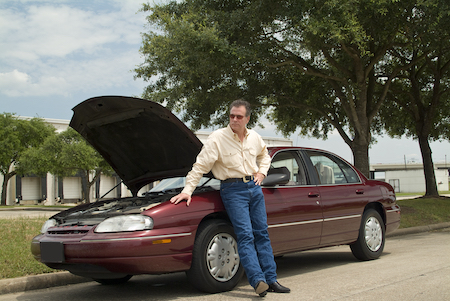
Growling is a universally recognizable noise; you know it when you hear it.  In a vehicle, it’s usually the sound of metal contacting metal, and not in a good way.  So, what is your vehicle telling you if you hear growling when you are turning your steering wheel?

There are a few possibilities.  One is the mechanical linkage that helps your steering wheel turn your wheels and tires.  This system frequently has a hydraulic system that makes turning the steering wheel easier for you.  This can be one source of growling sounds you might hear.  An auto technician can check your power steering fluid to see if it’s at the correct level and still has a good consistency.

There are a few things that can go wrong with your power steering.  If your fluid is low, that might be a sign of a leak in the pump, hose, or somewhere else in the system.  It’s important to have your power steering working properly since losing the ability to turn precisely can sharply reduce the safety of your vehicle.

If that growling sound is coming from around the wheel area, it could be a suspension issue.  That growling is giving you a warning that a component such as a constant velocity (CV) joint or a wheel hub may be on the verge of failing, so it’s a good idea to get it checked right away.  Another reason you may be hearing growling when you turn your steering wheel is that your brakes are engaging when they shouldn’t.

Growling noises are trying to tell you something, and they can tell a trained technician a great deal.  Inform your service adviser about the symptoms you’re hearing or seeing.  Your Express Car Care service provider can put that growling to a an end.  Your ears will thank you.

Filed Under: Car Maintenance, Denver Auto Repair, Suspension Tagged With: Growling that Grates

Is Your Car Worth Fixing?

March 7, 2021 by Denver Express Car Care

There used to be a time when cars wouldn’t last more than a few years. The parts would wear out. The systems would cease to work. There wasn’t a choice – you had to replace your car out of necessity.

Over time, manufacturers have gotten better at building reliable parts and cars. No longer can you expect a car to last a handful of years. In fact, according to a recent IHS Markit study, the number of pre-2005 cars and trucks on the road today has climbed to an all-time high. One in four vehicles on American roads are at least 16 years old.

One-hundred thousand miles on a vehicle used to be considered a breaking point. Now, many car owners who hit that milestone say their vehicles are just getting started.

Still, if you’ve driven your current vehicle for years, it’s hard not to wonder at what point it’s better for your wallet to invest in something new. You like not having car payments. Your car may have been cost-effective up until now. But how do you choose whether to keep your car or replace it? Is your car worth fixing, or should you start shopping for something new?

Start with a simple question: Is it cosmetic or mechanical?

People often start considering a new car for one of two reasons: The car may no longer appeal to them visually, or repair bills are starting to escalate.

Why are you considering investing in a new car? Is it for cosmetic reasons? Is the paint chipping? Do you have scratches and dents all over the car?

Maybe a little bodywork could improve its looks. Yet before you take your car in for estimates on sprucing up the outside, think about the inside for a moment. Does your car shake, rattle, and roll? Do you continuously smell gas fumes when you’re near the rear?

As a driver, paying attention to the way your car handles is part of being a good driver. It helps you recognize what’s happening underneath the hood, and make good choices before your vehicle leaves you stranded by the side of the road.

Is Your Car Worth Fixing?If you’ve put money into repairing it before small fixes turn into larger problems, it might be worth fixing a few car dings, or even repainting your car. It can make you feel happier when you walk up to your car in the parking lot, and drive it on the city roads. It can even add to the value, becoming something someone else wants to drive rather than an eyesore they hide from their friends.
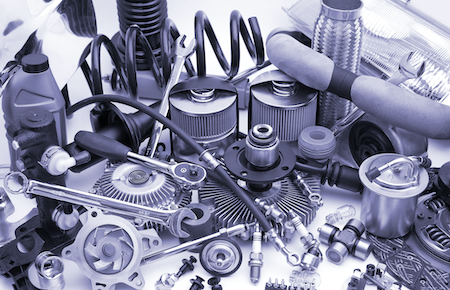
Mechanical problems are an entirely different issue. Small repairs that can be easily made maybe a decent trade-off, especially if you no longer have a monthly car payment. But when small repair bills grow in size, it’s time to start questioning their value.

Where do you draw the line?

Get a car repair estimate

The good news is if you bring your vehicle in, and trust a neighborhood mechanic rather than a dealer, you’ll get an estimate before we even start the work. Neighborhood mechanics almost always charge less for repairs than dealers – it’s just one of the ways they keep their large lots in business.

Before you decide what repairs to make to your car, take a look at the estimate and see what work needs to be done. Transmission assembly can be well over $6,000. Replacing an engine begins at $5,000, depending on make and model. Replacing a hybrid battery and reprogramming and engine control model can be in access of $4,400.

Once you have your estimate in hand, talk with your mechanic. Is there a way to make the process less expensive? Are there certain parts of the process you can forgo, or at least put off, spreading the costs over several months? Can you use salvaged parts? Or can you rebuild rather than replace?

That’s where working with a neighborhood mechanic stands apart from working through a dealer. Neighborhood mechanics understand it takes a lot to budget everything in your life. They are more willing to give you options and help you make the right – and safest – choice for your needs.

Run the numbers

With an estimate in hand, you can now run the numbers. Use Kelley Blue Book to determine the value of your car if you were to sell it to a private buyer.

If your car is worth $3,500, for example, and the repair estimate is in excess of that amount, it would be hard to justify the repair. Edmunds makes a simple rule of thumb that applies to this situation: If the cost of repairs will be greater than either the bluebook value of your car or one year’s worth of monthly payments, it’s time to consider a new vehicle.

Remember, though, that repairing a car will ultimately be less expensive than purchasing a new one. It’s not always the money alone you should consider.

  • Do you want to take on several years of car payments?
  • Are you worried your car will break down even after this repair?
  • How is the outlook of your job?
  • What changes are occurring in your life right now?

If a repair could bring you several more years of reliable transportation, it might be your best choice.

You know this car, and its history. It might be better than going with another used potential problem.

Make the right choice for you

As you’re making your final decision, remember reliable transportation is always crucial. And there are still ways around getting a reliable car.

If you’ve had your heart set on a specific car, can you lower your expectations for the time being? Instead of a Honda Accord, will a Honda Civic be a better choice for now?

Or maybe you can purchase a used car. We offer an inspection service that will check out the major systems and give you more assurance you’re investing in a quality car rather than a lemon.

No matter which direction you choose, regular maintenance is critical in keeping your vehicle on the road without leaving you stranded.

Have further questions about repairs for your car? Just ask.

Filed Under: Denver Auto Repair Tagged With: Car Worth Fixing

Buying Auto Parts or Visiting a Mechanic – Which Is Better?

February 24, 2021 by Denver Express Car Care

No matter what type of vehicle you own, you’ll eventually have to replace a few parts to keep it running. Whether it’s a can of oil, a new belt or hose, or replacing an entire system, you have a choice:

  • Buying auto parts yourself and handling the fix yourself
  • Visiting a mechanic and letting an expert handle the repair

There’s never a right or wrong answer every time. It depends on your knowledge, your skills, and how much time you have to invest in the outcome.

Buying auto parts may seem like a great way to save money. But so much can go wrong.

There are no guarantees or warranties to help you down the road

There are two scenarios at work here.

Let’s say you buy the auto parts necessary to repair your vehicle. The part itself may come with a guarantee, but it often is limited to the part; it will not cover a potential problem when you install it yourself. A manufacturer can’t take that risk – what if you install it incorrectly? It’s limited to what you spend on the part itself.

Some budget-minded drivers attempt to buy parts at a low cost, then take them to a mechanic in an attempt to counter this problem. In this case, it depends on the mechanic helping you out.

Mechanics often won’t use auto parts supplied by the driver because they can’t guarantee the parts are in good working order. This is their reputation on the line. They don’t want to be held liable for using a part that simply won’t work.

An expert will want to take control over the entire situation, to ensure your car is safe as you drive away.

You might not buy the right equipment

Buying Auto Parts or Visiting a Mechanic - Which Is Better?One trip to the auto parts store will tell you there are dozens – hundreds – of parts for your vehicle, and when it comes right down to it, they all look the same.

The size may change slightly. Ratios may be off. Parts often vary from make, model, and year.

Imagine ripping your car apart, running to the auto parts store, buying a part, and coming home only to realize it isn’t the right part. Rinse. Repeat.

In some cases, you might not have the right tools for the job either. Different parts have different installation methods – do you have the right wrench?

It’s a matter of time, expertise, and money. Bringing your car to a mechanic will get the job done the right way. Trying it yourself is always a hit or miss at best.

Are you convinced visiting a mechanic is in your best interest?

Want your visit to run smoothly from beginning to end?

Communicate clearly

A mechanic can’t guess at what’s wrong with your car. They don’t drive it every day like you do. Instead, they rely on you to help them determine where the problem is.

Whether you’re bringing it in for a routine checkup, or have a larger problem that can no longer be ignored, spend a few moments creating a list of the things you want the mechanic to check out. Even if you aren’t sure if something is a problem or not, a working list will help a mechanic get to the root of the problem. Noises, smells, rattles, leaks, sensations – even if it seems to be little, it’s better to bring it to a mechanic’s attention to help determine where the problem is.

Be prepared

Cars cost money to operate. Too often, drivers attempt to ignore problems until they become so bad they can’t drive. That ends in a very large bill repairing multiple problems and big-ticket items.

Often, a regular maintenance schedule can find problems as they start, and make minor repairs that will keep your car operating well for the life of the vehicle. Still, cars will eventually need larger services, such as brake replacement and new tires. If you understand how each system is wearing on your vehicle, and you monitor it as you drive, you can save for the larger repairs.

Your car isn’t a storage unit

Today’s vehicles are bigger than ever. That means we see many drivers come in that use their vehicles as storage units. There are golf clubs in the back, boxes stacked from bottom to top. There are leftover papers everywhere, even a stroller tucked behind the front seat.

Trouble is, in some cases, a mechanic will have to remove those items to get where they need to be.

All of that extra equipment adds weight to your vehicle. That might impact the overall quality of the repair. While you might need some of it for your weekly trips and errands, before you bring it into the shop, spend a few minutes decluttering it for your repair visit.

Trust the mechanic to do their job

While you may know how your vehicle drives from day to day, a mechanic is trained to find where potential problems lie, and understands how to fix them. Tell them your concerns, even give them your list, then let them take over and do their job the right way.

If they have questions, they’ll be in touch. Do they have your cell number to reach you at any point during the repair visit? This can speed up the process, and allow you to make decisions as they come up.

Is it time for visiting a mechanic that can help you keep your car in good working order? 

When it comes time to finding the right mechanic, sometimes trusting a local service will ensure you learn how to work with the people, and that they understand working with you.

It gives you a chance to build a team to help you keep your car in as good of condition as possible. No matter what.

Whether you’re looking for an oil change, need your tires balanced, or are in need of new brakes on your car, our family-owned business is ready and waiting to help you.

Filed Under: Denver Auto Repair Tagged With: Visiting a Mechanic

Thermostat

January 18, 2021 by Denver Express Car Care

The thermostat is part of your cooling system.  The thermostats in your vehicle perform a similar function to the thermostats in your home.  At home, you set your thermostat to maintain a comfortable temperature range.  Then when your home gets too hot, the air conditioning kicks on or when it gets too cool, the heater turns on.

So your engine also has an optimal temperature range:  warm enough to run efficiently and not so hot as to cause engine damage.  Your vehicle’s thermostat is a valve between the engine and the radiator.  When Denver residents first start a cold engine, the valve (thermostat) is closed, allowing the coolant surrounding the engine to warm up to the proper operating temperature.  As the coolant gets hotter, the thermostat opens, allowing coolant to flow through to the radiator to be cooled.  The thermostat opens and closes to keep the engine within a certain temperature range.

Now thermostats are rated for a specific temperature depending on the engine – not a one size fits all proposition.  Thermostats are subject to normal wear.  Proper operation depends on a special wax that expands as it heats up to open a spring-loaded valve.  A worn thermostat could stick in the open position causing the engine to run too cool.  This is inefficient and could affect performance and fuel economy.  If a thermostat sticks in the closed position, the engine can be subject to the results of overheating.

There isn’t a specific routine for drivers to maintain their thermostat, but maintaining the cooling system by changing the coolant/antifreeze on a regular schedule will make sure the coolant has enough corrosion inhibitors to protect the thermostat and other system components.  Cooling system experts and the team at Express Car Care in Denver recommend replacing your thermostats when you do a coolant flush or exchange.  Also, thermostats usually wear out faster than your hoses, so if a worn hose replacement is performed, replace the thermostat at the same time.

If your temperature warning light comes on, have an inspection of your cooling system right away.  This could be a thermostat.  The thermostat could also be the culprit for Denver residents who aren’t getting hot air when they turn on their heater.

The thermostat is a relatively inexpensive part that stands guard between you and catastrophic engine damage.  Follow your owner’s manual instructions or check with your friendly and knowledgeable Express Car Care service adviser to see if it’s time for a cooling system inspection or service.

Filed Under: Denver Auto Repair, Heating-Air Conditioning Tagged With: Thermostat

Easy Ways To Repair Your Car Without The Stress

December 18, 2020 by Denver Express Car Care

If you look up the word maintenance in the dictionary, it means:

Upkeep or support, the process of keeping something in good condition by regularly checking it and repairing it

Maintenance is something we spend a lot of our time working on. Your house and your car are your two biggest investments; it only makes sense to spend the time necessary to keep them in good working condition.

But therein lies the problem. Both your house and your car are large investments, you use them in a variety of ways every day. We tend to ignore the little things that might not seem like such a big deal, pushing it off for later “when we have the time.” And they go on our to-do lists, sitting there, waiting.

There are two approaches you can take to repair your car and keep it in good working condition:

  • Scheduling it
  • Waiting for emergencies

Think about your own patterns; drivers usually fall in one of the two categories. Regular maintenance is obviously the wiser choice, both to keep you safely on the road, and to spend less time, money, and energy on repairs.

Imagine for a minute, a driver who replaces their motor oil regularly. They replace the oil several times a year with fresh, high quality oil. Their car works well, and it operates as efficiently as possible. Compare that with the driver who forgets to change out the oil. What will that car look like two years down the road?

Creating a stress-free way to repair your car and keep it in good working condition doesn’t have to be difficult. But it does require you to set yourself up for success. Here’s how.

Create a car maintenance schedule and stick with it

Easy Ways To Repair Your Car Without The StressDid you know every make and model comes with a handy guide that provides guidelines for how to repair your car over the years? Who better to keep you on track for maintaining your vehicle than the people that built your car?

When you signed the paperwork and drove away, you were presented with an owner’s manual filled with details about your car. Did you read it? If you bought a used car, you can also find this information online. Just Google it.

Most of us know we have to change the motor oil frequently, keep the windshield washer fluid tank filled, and install new tires as they wear down. That’s the easy stuff. But just like your motor oil or tires eventually wear down, so do the rest of the parts on your car. All 30,000 of them.

While you don’t have to check every part of your car frequently, it is a good idea to understand the major systems, and realize what parts need cleaning, changing, or replacing, and how often you should perform the task. If you find a reliable mechanic, they can also provide you with regular support – think of them as a general doctor for your vehicle. That’s especially important now as cars are increasingly more technology-driven.

Remember, all maintenance schedules are guidelines for how often they should be looked at. It’s equally important to pay attention to the way your car performs, noting any changes in the way it drives or handles on the road.

Create an auto repair log

Do you really need to create a log of all the repairs performed on your car? It may sound like a waste of time, but it can be a helpful tool. Here’s why.

A log of repair work can help you understand the needs of your car. It can help you:

  • Track fixes and repairs
  • Help troubleshoot problems and make it easier to find solutions
  • Provide proof of expenses
  • Help separate personal and business usage
  • Log mileage
  • Add value to your car when it comes time to sell

If you’ve ever purchased a used car before, a log of all repair work would make your faith in the vehicle that much higher, wouldn’t it? The proof of good maintenance would be right there. You can buy an inexpensive journal and keep it in your glove compartment, or consider downloading an app, so it’s always with you.

With your logbook in hand, you can keep a better eye on the repairs performed throughout the years. It helps you be better informed about how your car is operating.

Fix things sooner rather than later

Problems don’t go away by themselves. Instead, they build over time, escalating, until you have an emergency situation on your hands.

Take the example we used from above about changing out your motor oil. Pulling into a service station every few thousand miles for fresh motor oil keeps your car running smoothly. It costs a few dollars, and is a smart way to keep your car in good condition. If you don’t change the oil regularly, dirt begins to build, and over time can lead to extreme engine wear. If you run out of oil, your engine will fail. The parts will grind, seize up, and stall your vehicle. What would have been a few dollars for an oil change is now thousands of dollars in repair bills.

Of course, some car parts are more dangerous to leave unchecked than others. Determining the difference is something you’ll learn over time. You can consult with your owner’s manual to establish a guide of what to replace, and rely on a good mechanic to keep your vehicle in good running condition.

You can also use good judgment regarding what you replace quickly, and what you can leave until later. Common sense tells you that an oil leak is something that can’t wait, while a scratch in the paint can. In general, leaks, noises, smells, or changes in the way your car performs are things you should check immediately.

Follow the instructions – don’t delay

We’ve said it before in this article, but we’ll repeat it. The best way to repair your car and keep it in good working condition is to follow the guidelines established by your vehicle’s manufacturer.

It will explain the meaning of the dashboard lights as they flicker on, warning you of potential problems.

It will give you guidelines as to what to repair and when.

It will provide you with tips on making your vehicle operate better.

It will give your car the longest life possible.

Your car is one of your biggest investments. Isn’t repairing your car regularly worth it to make the most of your purchase?

Filed Under: Denver Auto Repair, Tips & Tricks Tagged With: Repair Your Car

Will Electric Cars Make Auto Mechanics Obsolete?

December 14, 2020 by Denver Express Car Care

As a society, we have a nostalgic vision of what auto mechanics is all about.

We picture a scene from a movie, where a person drives into an auto shop with their vehicle. A smiling face in a pair of coveralls meets them at the door. They bring the car in and get to work.

They have a toolbox nearby filled with screwdrivers, wrenches, and pliers. You might see them slide under the vehicle, tapping and banging around as they get to the heart of the problem. Hours later, with grease smears everywhere, the happy mechanic waves as the customer drives away.

Those days are gone.

Instead, today’s auto mechanics deal with modern cars and high tech tools.

If you’ve purchased a vehicle recently, how many new “bells and whistles” are included on the car?

Like Automatic Parking Assistant. This modern technology makes parallel parking easy. Using ultrasonic sensors located at the front, rear, and sides of the car, it detects the parking spot, the vehicles around it, and guides it into place.

And that’s just the beginning. We’re already looking forward to a day where autonomous cars allow us to sit back and relax instead of keeping an eye on the road.

Or a day where electric cars are the norm.

What does all of this mean to auto mechanics? Is there a place for a vehicle servicing shop in the future?

Auto Mechanics – Past, Present, and Future

Will Electric Cars Make Auto Mechanics Obsolete?When you head back in time, fixing a car was a very hands-on job. The vehicle servicing station was a busy place, with lots of mechanics needed to work several hours on each job. Every turn of a wrench, every twist of a bolt was done by hand, and it could take a mechanic hours to complete one simple job. While hundreds – thousands – of little pieces fit together to build complex systems, it was necessary for a mechanic to check and service them all by hand.

This may sound like something right out of the 1950s, but it really wasn’t that long ago. Even cars built ten years ago required a lot more hands-on maintenance.

But with the advances in technology over the past few years, we’ve also seen changes in the way cars operate.

Remember when automatic locks on the doors was the latest technology? Now each system is interwoven together and controlled by a centralized motherboard. Instead of pulling things apart with a screwdriver or wrench, new cars are more likely to be connected to a laptop to pinpoint exactly where the problem lies. And only then is a fix attempted, often with newer, more high-pressured tools.

Yep, today’s cars are no longer a bunch of nuts and bolts, instead, they are computers on wheels.

Still, we are nowhere near where technology will take us next. Self-driving vehicles, electric cars, and more sophisticated technology will forever change the way we get around. While we may have a nostalgic view of what an auto mechanic has in their toolbox, in truth, the toolbox of the future will be little more than a series of computerized programs.

What Does That Mean for an Auto Mechanic?

With everything we’ve mentioned so far in this article, it’s natural to question the future of auto mechanics – will it disappear completely from view? The answer is: no, it’s not going to happen anytime soon.

Instead, like every industry, it will continue to evolve over time.

Cars will always need tires, and a way to connect to the road. They will always need a braking system, a way to safely control the vehicle and bring it to a stop. Who drives it and how it functions might change, but the basic requirements won’t – not for a very long time.

What will change is the way an auto mechanic approaches their job.

An auto mechanic may keep their screwdriver and wrenches in their toolbox on a shelf. But the toolbox itself may stay on the shelf, collecting dust, nothing more than memorabilia from a bygone era.

Instead, future toolboxes will include diagnostic tools that are run by technology. They’ll use things like code readers and laptops to tweak a computer’s settings.

And you as a driver will be part of the solution. Ever noticed all the codes that flash when you start your car, or numbers dancing across your dashboard as you drive? That’s due to the continual diagnostics going on underneath the hood, using sensors to tell what’s working and what’s not. When things vary even just a little, it alerts you to a potential problem.

It’s important to note that auto mechanics are not going to be a thing of the past. There will still be a need for a highly trained auto mechanic. But the way they approach analyzing a vehicle and making adjustments will.

A New Approach To Repair

Auto repair itself is getting more sophisticated all the time. As more things become automated, auto mechanics will find new ways of working for a new generation of vehicles.

They won’t approach a car in the same manner as before. Think of it more in terms of hiring an engineer, working with code, using programmed software to make a diagnosis, and utilizing various tools to get to the root of the problem.

While auto mechanics of yesteryear went to school to learn the nuts and bolts of how a car is put together, tomorrow’s technicians will work more with technology to tweak and get to the root of the problem. Popping the hood won’t mean pulling pieces apart to determine their condition. Instead, it’ll be about hooking up the main computerized dashboard and looking at reports online.

Instead of guessing at where a problem lies, diagnostics will show you exactly where it begins.

Things may change for all those who love tinkering with cars, and have always been mechanically inclined. But it can never stop the love for what a great car has to offer.

Technology has changed everything. That’s never going to stop. Peering under the hood may change in the coming years as we make significant progress in the way our automobiles operate, but keeping them safe will always be our number one priority.

Do you have a trusted auto mechanic who can help you stay safe no matter what kind of car you drive?

Filed Under: Car Maintenance, Denver Auto Repair Tagged With: auto mechanics

  • « Previous Page
  • 1
  • 2
  • 3
  • 4
  • 5
  • 6
  • …
  • 17
  • Next Page »

Express Car Care
4200 E. Evans Ave. Denver, CO (map)
Phone: (303) 691-2760
Located just southeast of the Colorado Light Rail station

Follow Us Today!

  • Facebook
  • RSS

Shop Hours

Monday: 8:00AM – 5:00PM
Tuesday: 8:00AM – 5:o0PM
Wednesday: 8:00AM – 5:00PM
Thursday: 8:00AM – 5:00PM
Friday: 8:00AM – 5:00PM
Saturday: Closed – A note from the owner
Sunday: Closed

Last car oil change time  – 5:00PM

Click for the BBB Business Review of this Auto Repair & Service in Denver CO

Recent Articles

5 Reasons to Choose a Local Family-Owned Auto Shop Over a Big-Box Garage

5 Reasons to Choose a Local Family-Owned Auto Shop Over a Big-Box Garage

We get it—you see a big-chain auto repair shop with flashy signs, weekend hours, and a recognizable brand. It’s tempting. But bigger isn’t always better, especially when it comes to something as … [Read More...]

  • The Top Reasons Your Car Might Be Stalling and How We Fix It
  • How to Keep Your Brakes Quiet, Responsive, and Safe
  • Why Your Vehicle Deserves a Full Multi-Point Inspection This Season
  • Car Gifts For Road Trippers: Essential Take-Alongs To Make Your Road Trips Safer
  • How Denver’s Climate Affects Your Car Battery

Search Our Site

Brakes Service

How to Keep Your Brakes Quiet, Responsive, and Safe

Everything You Need To Know About Replacing Your Brake Pads

How to Know If It’s Time to Replace Your Brake Rotors

Oil Change

Top Benefits of Getting Regular Oil Changes in Denver

Oil Change Specials in Denver: Save Money and Keep Your Car Running Right

Why Regular Oil Changes Are Crucial for Denver Drivers

Suspension

How to Know If Your Car Needs Suspension Repair in Denver’s Bumpy Roads

A Guide To Understanding Bushings on a Car

Tips for Preventing Wear and Tear on Your Car’s Suspension

Transmision Service

How Often Should You Service Your Transmission in Denver?

Transmission Trouble? Common Signs and When to Visit Our Denver Shop

How to Prevent Common Issues with Automatic Transmissions

Engine Service

Everything You Should Know About Your Vehicle’s Timing Belt

Is Your Car Hesitating During Acceleration?

How to Troubleshoot a Rough Idling Engine

Auto Tips & Tricks

How to Deal With Car Noises That Only Happen When You Turn

Top 5 Maintenance Tips for High-Mileage Vehicles

Why Tire Pressure Matters More Than You Think

"Denvers Best Auto Repair and Quick Lube" - Copyright © 2025 - 4200 E. Evans Ave. Denver, CO 303-691-2760