• Home
  • Denver Auto Repair Services
    • Full Service Oil Change
    • Expert Mechanics
      • Expert Honda Mechanics
      • Expert Toyota Mechanics
      • Expert Subaru Mechanics
    • Automatic Transmission
    • Fuel System Cleaning
    • Radiator Flush Service
    • Wiper Blades
    • Air Filter
    • Cabin Air Filter
    • Gearbox Service
    • Brake Repair
    • Clutch Repair
    • CV Boots
    • Tune-Up
    • Steering & Suspension
    • Tires
  • Auto Diagnostic
  • Contact Us
    • About Us
  • Shop Specials
  • Testimonials
  • Blog
  • 303-691-2760

Express Car Care of Denver

"Denver's Best Auto Repair and Quick Lube"

  • Brake Service
  • Car Maintenance
    • Heating-Air Conditioning
    • Suspension
    • Transmission
    • Engine
    • Tires
  • Oil Change
  • Tips & Tricks

Question on Tire Wear

February 18, 2019 by Denver Express Car Care

Express Car Care Question:  My name is Dan. The tires on my vehicle wore out early and I had to replace them.  What can I do to make my tires last longer?

Express Car Care Answer:  Dan’s problem, premature tire wear, is a very common problem for Denver drivers.  Here are several suggestions on ways to lengthen your tire wear:

First, tires lose air pressure over time, so check the tire pressure at least once a month and fill them up as necessary.  A sticker on the driver’s side door jamb has the recommended tire pressure listed for your vehicle.

Another suggestion for lengthening tire wear is tire rotation.  Tire rotation is an important step in increasing the life of tires.  Your front tires take the brunt of stopping and steering forces, so they wear out faster than rear tires.  They should be rotated regularly so that all four tires are allowed to wear more evenly.  Talk to us at Express Car Care if you’d like more information on tire rotation.

Out of balance wheels can also cause a tire to wear out too fast. If you feel a vibration in your seat or steering wheel when you’re driving, you may have a wheel out of balance. It’s important to have your wheels balanced properly so the tires wear as evenly as possible.

Finally, a poor wheel alignment and worn or damaged suspension can chew through a tire very quickly.  Ask your friendly pros at Express Car Care to have your tires inspected for signs of premature tire wear.  Your technician will be able to pinpoint the cause and take care of it.

These are just some simple steps you can take to prevent premature tire wear.  Give us a call and let us know how we can help.

Filed Under: Tires Tagged With: Question on Tire Wear

Safe Towing Guide

February 4, 2019 by Denver Express Car Care

Let’s talk about safe towing for drivers.  Too often many drivers will just slap a trailer on the hitch and take off.  But there are safety considerations to protect your tow vehicle, comply with Colorado laws and limit your liability.

First of all, know your tow vehicle.  Your options will affect the tow rating, so you need to carefully read the towing section of your manufacturer’s owner’s manual to know how much your vehicle can tow.

Next, you need to know the weight limits of your trailer hitch.  It will have a maximum tongue limit and an overall limit.

Third, know your hitch type:  a weight-distributing hitch may be required by your manufacturer for certain trailer weights.

And fourth, know the towing laws for the areas in which you’ll be towing, as they may have stricter equipment requirements.

Your owner’s manual will also give you some help in determining how to calculate how much weight you can tow.  It’s more complicated than the maximum weight the marketing guys trumpet.  There are two codes drivers can find on the driver’s side door.  One is GVWR- or Gross Vehicle Weight Rating.  This is the maximum weight of the tow vehicle, including passengers and cargo.

The other is GCWR – or Gross Combined Weight Rating.  This is the combined weight of the vehicle, passengers, cargo and loaded trailer.

Every locality requires safety chains and they also have regulations for when trailer brakes are required in Colorado.  The tires on your vehicle and trailer should be in good condition and have the proper load rating.  Your suspension should be inspected to make sure it can handle the load.  Also your transmission may need additional fluid cooling, so check with your Express Car Care service adviser about adding a transmission cooler and/or performing maintenance.

Carefully follow your vehicle’s towing guidelines to maximize your safety, protect your vehicle from damage and protect yourself from liability.

A quick note on your trailer:  wheel bearings on trailers are often neglected by drivers.  They need to be serviced on schedule to avoid failure.  This is especially important for trailers that are driven through water.

If this safe towing guide has made you aware of any services you might need on your vehicle, come and see us at Express Car Care in Denver, we can help.


Filed Under: Tips & Tricks Tagged With: Safe Towing Guide

Exhaust Service

January 21, 2019 by Denver Express Car Care

Driving down the road or around town, we’ve all heard a car or truck that sounds like it needs a new muffler.  But there’s more to the exhaust system than just the muffler.  The exhaust system has three main functions:
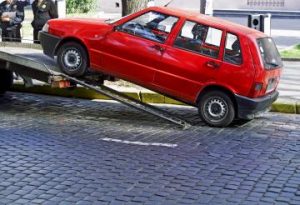
 

  1. Safely get hot exhaust gas from the engine out the tailpipe.
  2. Treat the exhaust to remove harmful pollutants.
  3. Muffle the engine noise.

Exhaust gas is poisonous.  Drivers don’t want it getting into their passenger compartments.  Most of us know that carbon monoxide can be deadly.  That’s why you should never run your engine in a closed garage.  If you have a leak somewhere in the exhaust system, exhaust could get into the passenger cabin and make you sick or even kill you.

If you smell exhaust in the vehicle, roll down your windows and get it inspected at Express Car Care in Denver.  You may smell or see exhaust coming from the engine compartment or under the vehicle if you have a leak.  Sometimes the sound from an exhaust leak is loud and obvious.  Sometimes it’s a ticking sound when you start the engine that goes away as you drive.  That could be a small crack or a bad fitting that leaks when it’s cold but seals up when the metal heats and expands.

Then there are the environmental issues to consider.  Exhaust gas contains a number of pollutants and particulates.  The catalytic converter scrubs some of those harmful substances.  Diesel vehicles have systems that deal with soot.  Catalytic converters eventually wear out and need to be replaced.  They’re expensive,  so you want to help them last as long as possible by keeping the fuel system clean and replacing your air filter.  These components need to be tested for proper functioning with an emissions test from time to time.  Then there’s the muffler.

The beauty of getting a new muffler is that you can suit your own taste.  Some drivers want whisper quiet, some like a little rumble, and others like a roar.  Give us a call and let us know how we can help.

Filed Under: Denver Auto Repair Tagged With: Exhaust Service

Timing Chain

January 7, 2019 by Denver Express Car Care

All engines have either a timing belt or a timing chain to synchronize the opening and closing of the intake and exhaust valves.  This keeps the engine running smoothly and efficiently.  If the timing is off, it may not even run at all.  Timing belts need to be replaced on schedule.  A broken or slipping timing belt could cause extensive engine damage.
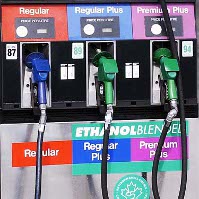
Timing chains are being used more and more in modern engines.  They are more durable and usually don’t have a recommended replacement interval.  However, timing chains and their associated components do wear out over time.  The tensioner and guide rails can wear out, which causes the timing chain to be loose.  A tooth on a cam sprocket could break allowing the timing chain to slip.  You don’t want to wait for a complete failure ( and possible extensive damage) so it’s important to watch for the signs of impending failure.

You may notice sluggish performance, reduced fuel economy or difficulty starting when the timing chain system is worn.  You could hear a variety of noises:  rattle, rumble, whine, buzz, or whir coming from the engine.  If you experience any of these things, bring it to our attention and we’ll look into it.  If you do require a timing chain replacement, we’ll also replace all the other system wear components such as the tension and guide rails.

Although the timing chain does not require maintenance as we usually think of it, it does require constant lubrication.  The engine does this normally as it runs.  However, a low oil level or using a poor quality oil will keep the timing chain from being properly lubricated.  A timing chain can last a long time with regular oil changes using quality oil.  Regular oil changes are an easy way to lengthen the life of your timing chain, I bet we can all manage that.


Filed Under: Car Maintenance, Engine Tagged With: Timing Chain

How To Save Gas

December 24, 2018 by Denver Express Car Care

High gas prices have hit most of our budgets in the Denver area.  If increased fuel costs are consuming a bigger portion of your budget, you may be tempted to skimp in some other areas – like scheduled maintenance at Express Car Care.

According to news reports and industry studies, you’re not alone.  Nine out of ten personal vehicles on the road have at least one maintenance or repair item that hasn’t been done.  Some of these items are serious safety concerns, others are just more likely to affect the cost of operating your vehicle.

In this area, we can take a lesson from professional vehicle owners:  fleet owners and operators like trucking companies and delivery services.  Because their livelihood depends on it, they have gotten scheduled maintenance down to a science.  And the last thing they skimp on is regular maintenance.

Why is that?  Well, for one thing, they know that routine maintenance prevents expensive repairs and costly breakdowns.  They also know that a well-maintained vehicle uses less fuel.  For them, even a small decrease in fuel economy may mean a drop in profits.

Here are some Express Car Care services that could potentially help you save gas.  Fuel system cleaning, transmission service, differential service, oil change.  Ring any bells?  Is there at least one thing on the list that hasn’t been done for your vehicle?

Let’s suppose you chose to spend $150 and get caught up on some of these services and that they combine to improve your fuel economy by 15%.  What would that mean for your pocketbook?

The average personal vehicle is driven about 12,000 miles a year.  If you get 20 miles per gallon in your vehicle, over the course of one year you would pay for the $150 worth of service and save and additional $165 if gas is at $3.50.  If gas is $4.50, you’d save $255, and you’d rack up savings of $345 if gas is $5.50.

From this you can see that the more fuel cost, the more it pays to take care of your vehicle.  Some of us drive trucks for work or recreation – or want a large SUV for family needs.  A 15% improvement in fuel economy can generate huge savings – $660 a year if gas is $4.50 a gallon.

So catch up on those services you’ve been neglecting.  Talk with your service adviser about your vehicle’s needs.  Get a couple done now and a couple next time.  Chances are you’ll save a lot of money on fuel this year – and a lot more on repairs in the years to come.

Filed Under: Tips & Tricks Tagged With: How to Save Gas

Radiator Fans

December 10, 2018 by Denver Express Car Care

Denver drivers who are old enough have probably heard the term “fan belt”.  Back in the day, the radiator fan in your vehicle was turned by a belt driven by the engine.  There are still belt driven fans, although most are now driven by the serpentine belt.  But most vehicles now have electric fans that draw fresh air across the radiator to cool it.

As coolant/antifreeze circulates in the cooling system, it captures heat from the engine and flows into the radiator.  Air cools the radiator and the coolant in it before it sends it back into the engine to pick up some more heat.  Now your engine has an ideal temperature range in which it is most efficient:  it shouldn’t be too hot or too cool.  The electric radiator fans help maintain the ideal temperature.

A switch mounted in a cooling system passage checks the temperature of the coolant.  If the coolant is at the low end of the range, the switch turns off the fan motor.  When the coolant rises to a certain temperature,  the switch turns on the fan.  When you are running the air conditioning, the radiator fan will likely be turned on as well to help reduce the extra engine heat created by the load placed on it by the air conditioner.

A lot of vehicles will actually have two radiator fans.  One, both or neither may be running at any given time depending on the conditions.  When you are cruising at highway speed, the air rushing over the radiator and around the engine will help control the heat.  By contrast, stop and go driving around town doesn’t generate much natural air flow so the radiator fans will be working hard.

Some drivers may hear the sound of the radiator fan running after turning the vehicle off. This keeps the engine from heating excessively after it has been run and shut off.

Both the radiator fan motors and the switch are wear items that will eventually fail.  If your temperature light comes on while driving, you have a cooling system problem.  Your knowledgeable Express Car Care service adviser can test your entire cooling system, including the radiator fans, to determine what is causing the indicator light.  Of course, servicing the cooling system as recommended will help extend the life of all the components.  Ask your Express Car Care service adviser if you are due for a cooling system service.

Filed Under: Car Maintenance, Engine Tagged With: Radiator Fans

Tire Rotation & Balancing Answers

November 26, 2018 by Denver Express Car Care

Question:  How do I know when I should get my tires rotated and balanced?

Express Car Care Answer:  The interval for tire rotation could depend on a recommendation from either the tire manufacturer or the vehicle manufacturer.  The background question for drivers is “why do tires need to be rotated?”

Front tires wear differently than the rear tires because steering wears the shoulders faster up front.  Rotating the position of the tires allows for more even wear among all the tires.   The suspension set-up on certain vehicles may also affect the relative wear between the front and rear tires.  There are several tire rotation patterns and your knowledgeable Express Car Care professional will make sure that you get the correct pattern for your particular vehicle.

Wheels and tires are not perfectly balanced due to slight variations in the manufacturing process and the placement of tire pressure monitoring sensors.  So weights are strategically placed on the wheel to ensure that the tire spins true.  When a wheel is out of balance it is essentially bouncing thousands of extra times as you drive.  This can result in an uncomfortable vibration for drivers in the steering wheel or through the seat.  An unbalanced tire will also wear more quickly and it’s also punishing on your shocks and struts.

Drivers should have their wheel balanced if they detect a vibration or uneven wear.  A wheel balance check every year is a good idea.  Because tires cost so much in our area, it’s a great idea to do everything you can do to make them last as long as possible.  Proper inflation, regular tire rotation and balancing are the keys to long tire life.  The team at Express Car Care can check your tires for signs of uneven wear and diagnose and correct the problem.

Filed Under: Car Maintenance, Tires Tagged With: Tire Rotation & Balancing Answers

Simple Answers: Air Conditioner

November 12, 2018 by Denver Express Car Care

Question:  Why isn’t my air conditioner blowing cold air?

Express Car Care Answer:  Your air conditioner uses refrigerant to create cold air.  The most common reasons drivers lose their cold air have to do with the refrigerant.

The first reason is not enough refrigerant.  Refrigerant is a gas in the air conditioning system and if there are small holes in a hose, seal or coupler, enough gas can leak out and prevent the system from creating cold air.

Another potential problem for auto owners is contamination.  Over time, the inside of the rubber hoses can deteriorate, and little bits of rubber can clog up various filters and other parts of the vehicle air conditioning system, preventing proper circulation of the refrigerant.  A component of the system could also be worn or broken.  So the first step for drivers who can’t cool their vehicle is a thorough air conditioning inspection, looking for leaks and worn parts.  In fact, Federal law requires an inspection before adding refrigerant.  Some states do not allowing topping off a leaking system.

Once any repairs are made, refrigerant is added.  At the same time, special oil is added to the system.  This oil cools and lubricates various components as it circulates along with the refrigerant.  If you have a refrigerant leak, you also have an oil leak – and it’s important that both be replenished for proper function and protection of your A/C system.

Sometimes overlooked by drivers is the fact that a worn serpentine belt ( which drives the A/C compressor) leads to belt slippage which puts additional strain on the compressor.  Replacing your serpentine belt and belt tensioner on schedule at Express Car Care will extend the life of your A/C compressor and other belt driven accessories.

Come in and see us.

Filed Under: Heating-Air Conditioning Tagged With: Simple Answers: Air Conditioner

Simple Answers About Winter Tires

October 29, 2018 by Denver Express Car Care

Question:  What is the benefit of winter tires?

Express Car Care Answer:  This is a really good question.  Most new vehicles in Denver come with all-season tires that work pretty well in winter conditions that many drivers may encounter.  First, let’s talk about the things that dedicated winter tires do really well, we’ll touch on all-season tires, and then you should have enough information to help you in your tire selection.

The first thing to take into account about winter is fairly obvious, it’s cold.  The rubber compound used in summer and all-season tires gets a bit hard when the temperatures drop below 45 degrees Fahrenheit or 7 degrees Centigrade.  Winter tires, on the other hand, stay more pliable when the thermometer takes a dip.  This means better dry road traction in the cold.

Ice and snow is the next thing drivers need to consider during the winter.  Some drivers live where there is a lot of snow, a lot of the time.  Extreme winter condition snow tires have a tread design that cuts into and expels deep snow for maximum traction.  These tires have a mountain and snowflake icon on the sidewall of the tire.

If you live in an area where the ice and snow are more moderate, you can still benefit from having winter tires.  Their tread has many small “cuts” called sipes that really help them get a grip on ice.

Now, all-season tires are a year-round compromise between high summer performance and high winter performance.  They just don’t perform as well in extreme conditions as the tires that are dedicated to either summer or winter driving.  For example, winter tires offer 25% to 50% more traction than all-season tires.  And studies have shown that all-season tires can take upwards of 40% longer to stop than winter tires.  This could be enough of a difference to prevent getting stuck or getting in an accident.

So what’s the best tire for you?  Talk to  your service adviser about the conditions you drive in throughout the year and how important performance is to you.  For many drivers that put a premium on handling performance, dedicated summer tires in summer and dedicated winter tires in winter are what they need to satisfy their performance needs.  Other drivers don’t have that same need and all-season tires work well for them.

Whatever you choose, winter tires or all-season, we are ready to mount them for you, come on in and see us.


Filed Under: Tires Tagged With: Simple Answers About Winter Tires

Guide to Battery Maintenance

October 15, 2018 by Denver Express Car Care

In today’s Express Car Care auto care blog, we are focusing on battery maintenance.  Eventually your car battery will fail and you will need to replace it. In fact, 70% of batteries don’t even make it four years.  There are some things drivers can do, however, to make their battery last a little bit longer.

It’s all about the flow of electrical power.  When you start your vehicle, the battery uses power to get your engine cranking.  As your engine runs, your alternator generates electricity to run all your electrical systems:  lights, several computers, anti-lock brake system, traction control, power windows, electronic fuel injectors, stability control, air conditioning, – the list goes on.  Any leftover electricity goes to recharge your vehicle’s battery.

Now, if you were on a long road trip, no sweat – you’d have plenty of time to fully recharge your battery.  But not if you’re making stops around town.  Every time you start your engine, your battery takes that big hit again.  Multiple starts – multiple hits.  By the time you get home, you have less than a full charge.

When the battery is continuously in a discharged state, it loses its ability to fully recharge.  This starts a downward spiral in your battery life.  Now when your battery is on its way to getting this bad, your alternator is working overtime trying to keep it charged.  This causes your alternator to wear out prematurely.  A lot of experience technicians suggest replacing your battery after five years, even though it hasn’t yet failed, just as a maintenance item to extend the life of your alternator.

There is something simple you can do to help your battery last longer – by hooking up a battery charger once a month in the summer and every three months in the winter.  This will ensure your car battery routinely has a full charge.  You can do this less often in the winter because the electro-chemical process slows down when it’s colder and less damage is done when your battery is low.  Computerized battery chargers are real easy to use because they monitor and control the charging rate to keep the battery from overheating while it’s charging.

We recommend that you ask your service adviser to test your battery, so you know how much life is left.  If it’s good but needs a battery maintenance service, he’ll have it cleaned up and make sure the connections and cables are good.  If it looks like you ought to replace it, he’ll help you with a battery that’s right for your vehicle and your driving needs.  Give us a call.

Filed Under: Car Maintenance Tagged With: Guide to Battery Maintenance

  • « Previous Page
  • 1
  • …
  • 64
  • 65
  • 66
  • 67
  • 68
  • …
  • 102
  • Next Page »

Express Car Care
4200 E. Evans Ave. Denver, CO (map)
Phone: (303) 691-2760
Located just southeast of the Colorado Light Rail station

Follow Us Today!

  • Facebook
  • RSS

Shop Hours

Monday: 8:00AM – 5:00PM
Tuesday: 8:00AM – 5:o0PM
Wednesday: 8:00AM – 5:00PM
Thursday: 8:00AM – 5:00PM
Friday: 8:00AM – 5:00PM
Saturday: Closed – A note from the owner
Sunday: Closed

Last car oil change time  – 5:00PM

Click for the BBB Business Review of this Auto Repair & Service in Denver CO

Recent Articles

5 Reasons to Choose a Local Family-Owned Auto Shop Over a Big-Box Garage

5 Reasons to Choose a Local Family-Owned Auto Shop Over a Big-Box Garage

We get it—you see a big-chain auto repair shop with flashy signs, weekend hours, and a recognizable brand. It’s tempting. But bigger isn’t always better, especially when it comes to something as … [Read More...]

  • The Top Reasons Your Car Might Be Stalling and How We Fix It
  • How to Keep Your Brakes Quiet, Responsive, and Safe
  • Why Your Vehicle Deserves a Full Multi-Point Inspection This Season
  • Car Gifts For Road Trippers: Essential Take-Alongs To Make Your Road Trips Safer
  • How Denver’s Climate Affects Your Car Battery

Search Our Site

Brakes Service

How to Keep Your Brakes Quiet, Responsive, and Safe

Everything You Need To Know About Replacing Your Brake Pads

How to Know If It’s Time to Replace Your Brake Rotors

Oil Change

Top Benefits of Getting Regular Oil Changes in Denver

Oil Change Specials in Denver: Save Money and Keep Your Car Running Right

Why Regular Oil Changes Are Crucial for Denver Drivers

Suspension

How to Know If Your Car Needs Suspension Repair in Denver’s Bumpy Roads

A Guide To Understanding Bushings on a Car

Tips for Preventing Wear and Tear on Your Car’s Suspension

Transmision Service

How Often Should You Service Your Transmission in Denver?

Transmission Trouble? Common Signs and When to Visit Our Denver Shop

How to Prevent Common Issues with Automatic Transmissions

Engine Service

Everything You Should Know About Your Vehicle’s Timing Belt

Is Your Car Hesitating During Acceleration?

How to Troubleshoot a Rough Idling Engine

Auto Tips & Tricks

How to Deal With Car Noises That Only Happen When You Turn

Top 5 Maintenance Tips for High-Mileage Vehicles

Why Tire Pressure Matters More Than You Think

"Denvers Best Auto Repair and Quick Lube" - Copyright © 2025 - 4200 E. Evans Ave. Denver, CO 303-691-2760