• Home
  • Denver Auto Repair Services
    • Full Service Oil Change
    • Expert Mechanics
      • Expert Honda Mechanics
      • Expert Toyota Mechanics
      • Expert Subaru Mechanics
    • Automatic Transmission
    • Fuel System Cleaning
    • Radiator Flush Service
    • Wiper Blades
    • Air Filter
    • Cabin Air Filter
    • Gearbox Service
    • Brake Repair
    • Clutch Repair
    • CV Boots
    • Tune-Up
    • Steering & Suspension
    • Tires
  • Auto Diagnostic
  • Contact Us
    • About Us
  • Shop Specials
  • Testimonials
  • Blog
  • 303-691-2760

Express Car Care of Denver

"Denver's Best Auto Repair and Quick Lube"

  • Brake Service
  • Car Maintenance
    • Heating-Air Conditioning
    • Suspension
    • Transmission
    • Engine
    • Tires
  • Oil Change
  • Tips & Tricks

Fuel Saving Tip

December 23, 2017 by Denver Express Car Care

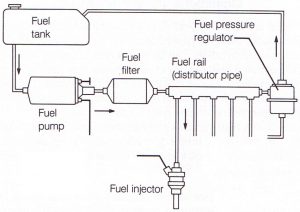
A lot of gas is wasted by Denver vehicles with dirty fuel delivery systems.  Let’s start at the tank.  The gas tank gathers tiny amounts of dirt, rust and sediment over the years of driving around.  That’s why there’s a fuel filter to clean the fuel after it leaves the tank.  A dirty filter will rob the engine of the clean gas it needs to run efficiently.
The fuel intake components get coated with gum and varnish over time.  This results in fuel being delivered inefficiently and some of that gunk getting into the engine.  A fuel system service will leave your intake as clean as a whistle.

The big fuel thief is dirty fuel injectors.  They deliver fuel to the engine at a specified pressure and in a particular spray pattern.  When they’re clogged, the fuel doesn’t get atomized the way it’s supposed to and doesn’t get burned as efficiently.

See your owner’s manual or ask your friendly and knowledgeable service adviser when a fuel system cleaning is recommended.

Filed Under: Tips & Tricks Tagged With: Fuel Saving Tip

Quality Replacement Parts

December 11, 2017 by Denver Express Car Care

Let me tell you about an experience that took place at a well-established Italian restaurant that had changed hands a few months ago.  The previous owners were an Italian couple  that used old family recipes and fresh ingredients to make their pasta and sauces from scratch. They enjoyed stellar reviews for decades.
The new owners decided to take a different approach.  The cooks followed the same recipes, but were required to used bagged salads, canned sauces and vegetables, frozen meat and boxed pasta.  Needless to say, there was a night to day difference between the before and after dining experience – and their online reviews reflected the decline.  Same chefs – same recipes but not quality ingredients.

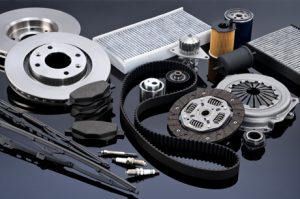
Now think of this same principle in relation to auto repair.  You can imagine how important high quality replacement parts are for vehicle repairs.  The parts need to deliver the performance you expect right from the beginning as well as over the long haul.  We feature quality NAPA auto parts and because they meet or exceed the original manufacturer specifications, they will fit and function as they should.

It’s very important for a business to stand behind its work and unfortunately rather uncommon these days, but we do everything that we can to stand behind ours.  We employ highly trained service technicians and equip them with the diagnostic and repair tools they need to keep your vehicle in tip-top shape.  And NAPA Auto Parts helps us deliver on our promises to you with high quality replacement parts that help your vehicle run safely and efficiently.

Skilled technicians and quality replacement parts is the perfect recipe for motoring satisfaction.

Filed Under: Tips & Tricks Tagged With: Quality Replacement Parts

Water Pump

November 27, 2017 by Denver Express Car Care

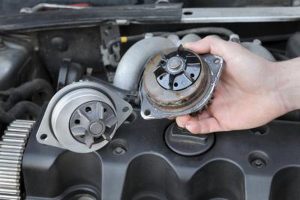
Let’s talk water pumps for vehicles here in Denver.  The engine in your vehicle is cooled by coolant/antifreeze mixed with water.  This mixture circulates around the engine, absorbing some of the heat.  The coolant then flows through the radiator where air cools it down for the return trip back through the engine.  Your vehicle’s water pump is what drives this process.

Cooling system problems are the number one mechanical failure in Denver.  So the water pump plays a pretty important role.  You can’t get very far without a water pump.

After all the distance and years of pumping coolant, water pumps just wear out.  You might notice a whining or grinding sound coming from the water pump, or you might see coolant leaking from the pump itself.

The precise location of the water pump varies depending on the vehicle.  Some vehicles have the water pump attached to the outside of the engine where you can see it.  With these, the water pump is driven by the serpentine belt.

Some vehicles have the water pump that is driven by the timing belt.  The timing belt cover often hides the water pump when it’s set up this way, so you can’t see the pump without removing the cover.

When you have Express Car Care replace the water pump on one of these, you really should replace the timing belt at the same time.  We’ve already gotten things taken apart and it’s very likely the belt has been contaminated by coolant.  Timing belts usually need to be replaced at similar intervals anyway, so it makes a lot of sense to do both jobs at once.

The opposite is true too; when you change the timing belt on this type of engine, replace the water pump while you’re at it.  The water pump will eventually fail and getting to it is an expensive project.  For not that much more you can take care of both the timing belt and the water pump at the same time.

Come in and see us if you think you can use our services for your water pump.

Filed Under: Car Maintenance, Heating-Air Conditioning Tagged With: Water Pump

Wheel Alignment

November 13, 2017 by Denver Express Car Care

Denver drivers ought to be concerned about wheel alignments for two primary reasons:  safety and money.  When your wheels are out of alignment, they can pull to one side, sometimes severely.  One moment of inattention could put you into on-coming traffic, a curb, or off the road.  And an improper alignment will chew up your tires very quickly when you’re driving on freeways and surface streets.

One of our customers said the wheels on his vehicle were a little out of alignment before a family vacation, but he didn’t think it was that bad, so he didn’t take care of it before he left on his trip.  A couple of days and a lot of highway driving later and his front tires were worn down to the cords.  He had to take a half day out of his mountain vacation to find a town large enough to have a tire center so he could get replacements.

All four wheels are supposed to be lined up and pointed in the same direction.  Sometimes one or more goes out of alignment and is pulling against the rest of the team.  In addition to excessive tire wear, this also hurts fuel economy.

Part of the alignment service is an inspection of the steering and suspension components.  Whatever caused the wheels to be knocked out of alignment in the first place may have also damaged important parts.  So we want to be sure to replace broken or bent parts as needed.  The process corrects alignment of each wheel along three axes:  toe, camber and caster, as well as front to rear alignment.

Your vehicle owner’s manual may have a recommendation for how often alignment should be checked.  If not, ask your helpful service adviser.  Here are some things to look for that should be a warning that you need to get in for an alignment check right away:  Your vehicle is pulling to one side, your steering wheel isn’t centered, you feel a vibration at higher speed or you see unusual tire wear.

Filed Under: Car Maintenance Tagged With: Wheel Alignment

Better Service, Better Fuel Economy

October 30, 2017 by Denver Express Car Care

Many of our customers would like to know how they can improve their fuel economy.  At Express Car Care, we help drivers keep their vehicles running in prime condition which makes them more efficient fuel-wise.  When your car works the way it was designed to work, it will use less fuel and you save money.

To help organize our discussion, we’ll mention the things that rob us of fuel economy in two ways:  increased friction and inefficient fuel combustion.

Friction:  Anything that increases friction increases drag or load on the engine.  The engine has to work harder to overcome the drag – and that eats up more fuel.  The first thing that can cause drag on the engine is low oil. Low oil means there isn’t enough to fully lubricate the engine and that increases the friction.

Using the wrong viscosity and grade of oil can also adversely affect fuel economy.  Talk to your helpful and knowledgeable service adviser about the right kind of oil for your vehicle.  Dirty oil won’t lubricate as well as clean oil.  The same principles apply to transmission fluid as well.  Getting your oil changed and transmission serviced on a routine schedule will reduce friction and save you money on fuel.

You might want to consider upgrading to synthetic oils in your differentials, engine and transmission to reduce friction.  Another friction related factor is under-inflated tires.  When tires are low on air, it’s like driving through sand – the engine has to work harder to move every mile.  Drivers should check or have their tire pressure checked at least once a month.

Sticking or binding brakes can also put a drag on your vehicle and can hurt fuel economy.  A simple brake inspection at Express Car Care can uncover potential problems.

Let’s move on to Fuel.  A dirty fuel system has varnish and gum interfering, and the fuel injectors may be unable to deliver the correct amount of fuel at the right pressure and in the spray pattern that the engineers intended when they designed it.  A fuel system cleaning will get all of that working correctly and will improve your fuel economy.

Your spark plugs also have to be functioning properly, so replacing worn spark plugs will help your vehicle burn its fuel efficiently and will save you money at the pump.


Filed Under: Car Maintenance, Tips & Tricks Tagged With: Better Fuel Economy, Better Service

Tips on Buying a Used Car

October 16, 2017 by Denver Express Car Care

Here are 5 tips on buying a used car for anyone who’s in the market:

  1. Ask the seller for service records.  Most owners who document their regular maintenance service visits take good care of their vehicles.
  2. Inspect the vehicle thoroughly.  Check for uneven tire wear, poor alignment, suspension issues, strange sounds and funky odors.
  3. If everything checks out up to this point, bring it in to Express Car Care for a thorough used car inspection.  Your helpful and knowledgeable service adviser can give you a heads up on any pressing issues or emerging problems that will need to be addressed eventually.  If the seller won’t allow you to do this before you buy…move on.
  4. Buy a CarFax report.  This will show any major accidents and title status concerns including whether it is a salvaged vehicle.  You don’t want to purchase a car only to find out that it was under water for a week after a hurricane.
  5. After you have made your purchase, stay on top of regular maintenance and save those records.  Express Car Care will help keep your car running well and you will really enjoy not having a car payment.

As always, please give us a call or come in and see us if you have any specific questions.

Filed Under: Tips & Tricks Tagged With: Tips on Buying a Used Car

Heater Core

October 2, 2017 by Denver Express Car Care

You may have wondered where the warm air in your passenger compartment comes from.  Well, as your engine starts to warm up, it also warms the coolant/antifreeze that circulates around the engine and through the radiator.  There is also a hose that carries coolant/antifreeze from the engine to the heater core and another one that takes it back into the engine.  The heater core looks like a little radiator and lives in the air blend box behind the dashboard.

When you turn on the heat, air blows over the heater core which warms it and then blows it into the cabin.  Some vehicles have a heater valve that directs coolant through the heater core when the heat is on and bypasses the heater core when the heat is off.  In other vehicles, the temperature of the air is controlled within the air blend box by how much air is directed over the heater core.

The engine cooling system also encompasses the heater core.  Things that adversely affect your radiator will also harm your heater core.  The coolant/antifreeze contains corrosion inhibitors that coat the surfaces inside the cooling system, including the heater core.  When the corrosion inhibitors are depleted, the cooling system can become corroded, filled with contaminants and may even start to leak.

There are several signs of a leaky heater core:

  • First you may notice a sweet smell from your vents.  This is coolant leaking out and getting into the air.  You may even see vapor coming out of the vents and notice a film building up inside the windows.  Of course, breathing coolant vapors isn’t good for you.
  • You may also see coolant on the driveway.  Depending on the design of your vehicle, you may even get coolant leaking out into the foot wells of the cabin.

Coolant/antifreeze leaking out through the heater core means that the overall coolant level in the system will be low and the engine is in danger of overheating – which is the most common cause of mechanical breakdown.

The good news is that the things you do to protect your cooling system also protect your heater core.  Changing your coolant/antifreeze as directed by your vehicle manufacturer or on the advice of your service technician will help ensure your coolant has enough corrosion inhibitors working to protect the system.  Also, quickly repairing any leaks and inspecting hoses for signs of internal breakdown will help keep things from becoming an emergency.

Talk with your service adviser at Express Car Care about when a cooling system service should be performed.

Filed Under: Heating-Air Conditioning Tagged With: Heater Core

Question About Your Head Gasket

September 18, 2017 by Denver Express Car Care

Express Car Care Tech Question:
My name is Landon.  I bought a new minivan and it started smoking out of the tail pipe.  My service center said my head gasket went out.  What can I do to prevent this from happening again?

Express Car Care Answer:

The head gasket fits between the top of the engine and the cylinder head.  Its job is to seal that connection and keep oil and coolant circulating in the right parts of the engine.

When it leaks, oil can get in the coolant and vice versa.  Sometimes coolant or engine oil can get into the combustion chamber where it gets burned with the fuel, which is what makes all the smoke that Landon was talking about.

He said his van was new, so it’s likely that the head gasket failed because it was improperly installed, which is very rare.  Sometimes they just burn through.

Engine overheating is a leading cause for blown head gaskets.  Following the schedule for cooling system service is a great way for drivers to avoid overheating.

Replacing a head gasket is a fairly expensive repair at most auto service shops.  It’s definitely worth investing in regular cooling system maintenance at Express Car Care to avoid that pricey repair job.  Ask your friendly and knowledgeable service adviser if it’s time for a cooling system service.

Filed Under: Engine Tagged With: Question About Your Head Gasket

Battery Upgrades

September 4, 2017 by Denver Express Car Care

When that car battery finally gives up the ghost and it’s time to replace it, drivers have options.  First, let’s be clear that you should always get a replacement battery that meets or exceeds your vehicle’s specifications.  But you may have some special needs.  When they first put the battery into your vehicle at the factory, they had no idea where it would end up or how you would use it where you drive.  That battery was chosen to meet the needs of a wide range of motorists.  Replacement time is a good opportunity to talk to your service adviser about how you use your vehicle, so if it’s necessary you can get  a battery upgrade.

An obvious criterion is where you live, whether in Colorado or somewhere else.  Cold starts require a lot of power from your battery.  The colder the climate, the more power is needed.  This comes from a combination of cold sluggish oil and the slower chemical reaction within the battery itself when it’s cold. If this sounds like you, talk to your service adviser about a battery with more Cold Cranking Amps (CCA).

The next consideration for drivers is reserve capacity.  This is the number of minutes of reserve power the battery has under a particular load,  If your driving is mostly short stop-and-go trips around town, your battery may not have time to fully recharge while driving.  You may need to tap into those reserves to get started again.  Also, modern vehicles have a lot of always-on systems that draw on the battery – things like the security system, remote sensors, and vehicle computers.  These combine with the electronic entertainment system, sensors, heated seats and even chargers for phones, tablets and computers to put a fairly high load on the battery.  Your service adviser can give you advice on the reserve capacity you might need.

Most standard batteries are “wet-cell”, meaning they are filled with liquid battery acid.  New Absorbed Gas Mat (AGM) batteries are “non-spillable”, which makes them safer.  They also have a longer life span and greater life cycle than wet-cell batteries.  Off-roaders like these batteries because their performance isn’t affected by steep inclines and odd angles.

Lastly, drivers should consider the warranty.  Premium batteries come with a longer warranty.  Warranties are typically either full-replacement (the battery is replaced if it fails within the warranty period) or pro-rated (a partial credit is given for the failed battery depending on how far into the warranty period you are when it fails).

Your service adviser can help you decide if a battery upgrade is right for you and which battery will best meet your needs.

Filed Under: Car Maintenance Tagged With: Battery Upgrades

Differential Service

August 21, 2017 by Denver Express Car Care

When Denver drivers take a corner in their vehicle, the outside wheels have a slightly longer distance to go than the inside wheels.  That means that the outside wheels have to turn a bit faster than the inside.  The piece of mechanical wizardry that makes this possible is called the differential.

The differential allows the drive wheels to rotate at different speeds in turns without the wheel binding or hopping.  If you have a rear-wheel drive vehicle, the differential is on the rear axle.  You’ve seen that bulge in the middle of the axle when you’re behind a truck…that’s the differential.

If you have a front-wheel drive vehicle, the differential’s function is handled by your transaxle.  Of course, all-wheel drive vehicles have differentials on both axles.  They also have a center differential or a transfer case between the front and rear axles to compensate for speed differences between the front and rear.

Because all the power of the engine is transferred through the various differentials, you can imagine that they are very strong and are built to last a long time.  That’s why it’s important for drivers to keep their differential properly lubricated.  Differential fluid cools and protects the gears.

Your friendly and knowledgeable Express Car Care technician will check the differential fluid level and top it off if necessary.  With low fluid, the differential will run too hot and wear prematurely.  Ask your service adviser when it’s recommended to change your differential fluid.  Fresh fluid added during a differential service, will extend the life of your differential.  Your technician will also inspect the u-joints, which connect your drive shaft to the differential and may recommend service after the inspection.  Some u-joints can be lubricated as part of a routine lube, oil and filter change as well.

Drivers need to know that differentials will eventually wear out and need to be replaced.  You might notice a strange noise from your axle area as one of the first warning signs.  When the differential shows signs of failing, it’s time to repair it.  If you leave it unattended too long you run the risk of it freezing up when you’re driving and you could lose control of your vehicle.  Plus, other parts like the axle, driveshaft and transmission could be damaged.

Filed Under: Car Maintenance Tagged With: Differential Service

  • « Previous Page
  • 1
  • …
  • 67
  • 68
  • 69
  • 70
  • 71
  • …
  • 102
  • Next Page »

Express Car Care
4200 E. Evans Ave. Denver, CO (map)
Phone: (303) 691-2760
Located just southeast of the Colorado Light Rail station

Follow Us Today!

  • Facebook
  • RSS

Shop Hours

Monday: 8:00AM – 5:00PM
Tuesday: 8:00AM – 5:o0PM
Wednesday: 8:00AM – 5:00PM
Thursday: 8:00AM – 5:00PM
Friday: 8:00AM – 5:00PM
Saturday: Closed – A note from the owner
Sunday: Closed

Last car oil change time  – 5:00PM

Click for the BBB Business Review of this Auto Repair & Service in Denver CO

Recent Articles

5 Reasons to Choose a Local Family-Owned Auto Shop Over a Big-Box Garage

5 Reasons to Choose a Local Family-Owned Auto Shop Over a Big-Box Garage

We get it—you see a big-chain auto repair shop with flashy signs, weekend hours, and a recognizable brand. It’s tempting. But bigger isn’t always better, especially when it comes to something as … [Read More...]

  • The Top Reasons Your Car Might Be Stalling and How We Fix It
  • How to Keep Your Brakes Quiet, Responsive, and Safe
  • Why Your Vehicle Deserves a Full Multi-Point Inspection This Season
  • Car Gifts For Road Trippers: Essential Take-Alongs To Make Your Road Trips Safer
  • How Denver’s Climate Affects Your Car Battery

Search Our Site

Brakes Service

How to Keep Your Brakes Quiet, Responsive, and Safe

Everything You Need To Know About Replacing Your Brake Pads

How to Know If It’s Time to Replace Your Brake Rotors

Oil Change

Top Benefits of Getting Regular Oil Changes in Denver

Oil Change Specials in Denver: Save Money and Keep Your Car Running Right

Why Regular Oil Changes Are Crucial for Denver Drivers

Suspension

How to Know If Your Car Needs Suspension Repair in Denver’s Bumpy Roads

A Guide To Understanding Bushings on a Car

Tips for Preventing Wear and Tear on Your Car’s Suspension

Transmision Service

How Often Should You Service Your Transmission in Denver?

Transmission Trouble? Common Signs and When to Visit Our Denver Shop

How to Prevent Common Issues with Automatic Transmissions

Engine Service

Everything You Should Know About Your Vehicle’s Timing Belt

Is Your Car Hesitating During Acceleration?

How to Troubleshoot a Rough Idling Engine

Auto Tips & Tricks

How to Deal With Car Noises That Only Happen When You Turn

Top 5 Maintenance Tips for High-Mileage Vehicles

Why Tire Pressure Matters More Than You Think

"Denvers Best Auto Repair and Quick Lube" - Copyright © 2025 - 4200 E. Evans Ave. Denver, CO 303-691-2760