• Home
  • Denver Auto Repair Services
    • Full Service Oil Change
    • Expert Mechanics
      • Expert Honda Mechanics
      • Expert Toyota Mechanics
      • Expert Subaru Mechanics
    • Automatic Transmission
    • Fuel System Cleaning
    • Radiator Flush Service
    • Wiper Blades
    • Air Filter
    • Cabin Air Filter
    • Gearbox Service
    • Brake Repair
    • Clutch Repair
    • CV Boots
    • Tune-Up
    • Steering & Suspension
    • Tires
  • Auto Diagnostic
  • Contact Us
    • About Us
  • Shop Specials
  • Testimonials
  • Blog
  • 303-691-2760

Express Car Care of Denver

"Denver's Best Auto Repair and Quick Lube"

  • Brake Service
  • Car Maintenance
    • Heating-Air Conditioning
    • Suspension
    • Transmission
    • Engine
    • Tires
  • Oil Change
  • Tips & Tricks

Tracking True

October 31, 2016 by Denver Express Car Care

Tracking TrueWheel alignment is often overlooked by busy car owners until serious tire damage has been done.  One wheel can be knocked out of alignment from the others by hitting a curb or a pothole in the road.
The tires will wear out very quickly and will need to be replaced prematurely.  It could also lead to suspension damage.  Conversely, worn suspension or steering components can lead to alignment problems for motorists.

But the big issue for drivers is safety.  When your wheels are out of alignment, the vehicle will pull to one side, which could lead to an accident.  When you’re out of alignment, you should have it taken care of right away.

Signs of alignment problems are:  Your car pulls to one side.  Also, your steering wheel may not be centered when you’re going straight.  If you see the edges of one or more tires rapidly wearing down, your should have your service adviser look it over.

If you’ve been in an accident that involved a wheel, you should get your alignment checked.  A big jolt can seriously throw things out of alignment, but drivers also need to understand that a series of smaller ones can add up.  Worn steering or suspension components can also lead to alignment problems for drivers.  That’s why your vehicle manufacturer recommends periodic alignment checks.

If your owner’s manual doesn’t specify, once a year might be appropriate, or check with your service adviser.  He’ll be able to tell you if your vehicle requires a four wheel alignment or if it’s just the front wheels that can be aligned.

One thing is for sure, the cost of an alignment is cheaper than having to buy new tires because of neglect.


Filed Under: Car Maintenance, Suspension Tagged With: Wheel Alignment

Thermostat

October 17, 2016 by Denver Express Car Care

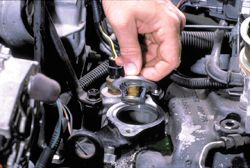
ThermostatThe thermostat on your vehicle is an important part of your cooling system.  Your thermostat performs a similar function to the thermostat in your home.  At home, you set your thermostat to maintain a comfortable temperature range.  When your home gets too hot, the air conditioning kicks on and when it gets too cool, then the heater.

Now your engine also has an optimal temperature range:  warm enough to run efficiently, and not so hot as to cause engine damage.  Your vehicle’s thermostat is a valve between the engine and the radiator.  When you first start a cold engine, the valve (thermostat) is closed, allowing the coolant surrounding the engine to warm up to the proper operating temperature.  As the coolant gets hotter, the thermostat opens, allowing coolant to flow through to the radiator to be cooled.  The thermostat opens and closes to keep the engine within a certain temperature range.

Now thermostats are rated for a specific temperature depending on the engine – not a one size fits all proposition.  Thermostats are subject to normal wear.  Proper operation depends on a special wax that expands as it heats up, to open a spring-loaded valve.  A worn thermostat could stick in the open position causing the engine to run too cool.  This is inefficient and could hurt performance and fuel economy.  If a thermostat sticks in the closed position, the engine can quickly overheat, possibly causing damage.

There isn’t a specific maintenance routine for the thermostat, but maintaining your cooling system by changing your coolant/antifreeze on schedule will make sure the coolant has enough corrosion inhibitors to protect the thermostat and other vital system components.  Cooling system experts recommend replacing your thermostat when you do a coolant flush or exchange.  Also, thermostats usually wear out faster than your hoses, so if you need to replace worn hoses, replace the thermostat at the same time.

If your temperature warning light comes on, have your cooling system inspected right away.  This could be a thermostat problem.  The thermostat could also be the culprit if you aren’t getting hot air when you turn on your heater.

The thermostat is a relatively inexpensive part that stands guard between you and catastrophic engine damage.  Follow your owner’s manual instructions, or check with your service adviser to see if it’s time for a cooling system inspection or service.

Filed Under: Car Maintenance, Heating-Air Conditioning Tagged With: Thermostat

Service Intervals

October 3, 2016 by Denver Express Car Care

Service IntervalsQuestion:
I’m really confused about auto service intervals for various items on my car.  Help!

Express Car Care Answer:  The simple answer for Denver drivers is to follow the vehicle’s recommended service intervals listed in your owner’s manual or in your service center’s database.  But the team at Express Car Care sympathizes with you because of the confusing intervals for modern vehicles.

The days of simple rules of thumb that applied to most vehicles are long gone.  For example, let’s look at an oil change:  manufacturers’ recommendations run anywhere from every 3,000 miles to 15,000 miles.  This big range comes from engine design and recommended types of oil – so drivers really do need to know and follow the recommendations for their specific vehicle.

Your owner’s service manual will have a schedule for both maintenance services and inspections.

Service items include:  Tire rotation, wheel balancing, oil change, coolant service, transmission service, brake system, power steering system, fuel system, differential service, and transfer case service.

Inspections will include:  Alignment check, air conditioning, brakes, suspension, axles, exhaust, tires, lights, emissions, belts and hoses, and steering.

It’s important to remember there is NO exception that would make it OK to extend an interval.  These intervals already assume the “best case” conditions for a safe margin of error.  However, you may live or drive in conditions that are harsher than average.  Your owner’s manual may have a modified schedule for “severe service” – things like extreme temperatures, towing, hauling heavy loads, short trips, or stop-and-go traffic.

Consult your owner’s manual or with your service adviser about your driving situation and adjust your service intervals accordingly.


Filed Under: Car Maintenance Tagged With: Service Intervals

Viva la Differential

September 19, 2016 by Denver Express Car Care

Viva la DifferentialWith front-wheel drive being so common these days, the differential is also being taken care of during a transmission service at Express Car Care, so most Denver drivers don’t even have to think about it.  And most rear-wheel drive differentials don’t need to be serviced for many miles, so it’s understandable why it’s not something on the top of drivers minds.  Because of this, it’s not uncommon for people not to know they have a differential, let alone know that it needs service.

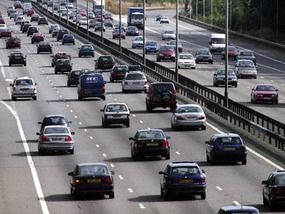
To understand better what a differential does, think about a high school track.  There are lanes marked on the track.  For the long distance races, the starting lines are staggered.  The starting lines for the outside lanes are ahead of the starting lines for the inside lanes.  That’s to compensate for the longer length of the outside lanes.  Staggering the starting lines means that each runner has the same distance to run.

The differential compensates for the difference in speeds on drive wheels between the inside wheel and the outside wheel in a turn because they have to travel together through slightly different distances.

Differentials do a lot of work and require very heavy duty parts, and those parts need protection.  The differential fluid lubricates the gears in the differential and keeps them cool.  The fluid eventually gets dirty and worn down.  Some kinds of differentials require special additives that break down over time.  So follow recommended intervals for replacing your differential fluid.

Your helpful and knowledgeable pro at Express Car Care will drain the used fluid and check it out for metal bits, which could be a sign of excessive wear on the gears.  He’ll then replace the fluid and install the additives if necessary.

Four wheel drive vehicles need special attention to their differentials because they have a differential on both the front and rear axles that work at different times and sometimes under heavy loads – so they may need to be serviced at different intervals.  Your service adviser can look up the recommended service interval or you can check your owner’s manual.


Filed Under: Car Maintenance, Transmission

Wheel Bearings

August 8, 2016 by Denver Express Car Care

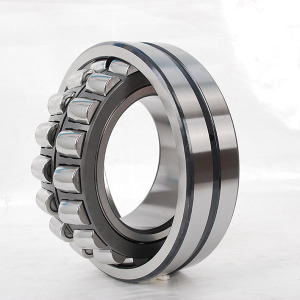
Wheel BearingsYour wheel bearings may be something that you’ve not given much thought about while you’re driving your car around.  But wheel bearings are what enable your wheels to spin freely.  Since they bear the entire weight of the vehicle, they have to be tough.  Wheel bearings can last well over 60,000 miles or 100,000 kilometers.  They do wear out though and must eventually be replaced.

You might hear a groaning sound from your wheels.  The sound might disappear at some speeds and reappear at others.  Your service technician at Express Car Care can quickly tell if your bearings are bad by raising the vehicle and wiggling the wheel.  When you grasp the top and bottom of the tire, it shouldn’t move along the vertical axis.

Many vehicles these days have wheel bearing assemblies that cannot be serviced at Express Car Care.  When the bearings go bad, we simply replace the entire wheel bearing assembly.

For those vehicles with wheel bearings that can be accessed, we can do some preventive maintenance.  You may have heard the phrase “pack the bearings”.  With this procedure we remove the bearings, carefully clean them and inspect them for any imperfection or wear.  If the bearings can be reused, we reinstall them and pack them with grease.  If not, we put in new bearings.  Check your owner’s manual or ask your service adviser if your bearings can be serviced, and if so, when it should be done.

Taking care of bad bearings is extremely important.  When bearings go bad, they generate tremendous amounts of heat – enough to lock up the wheel.  That’s not a good thing at any speed.  In some cases the wheel can even fall off!  Either of these situations can cause a serious accident.  So have your wheel bearings inspected, especially if you suspect a problem and replace them right away if there is one.  Don’t let yourself be caught off-guard.

Filed Under: Car Maintenance Tagged With: Wheel Bearings

Severe Service Schedule

June 27, 2016 by Denver Express Car Care

Severe Service ScheduleSome of our customers at Express Car Care are surprised to learn that there are actually two service schedules for their vehicles.  One is the regular schedule and the other is the severe service schedule.

Let’s look at what the manufacturers say constitutes severe driving conditions, and let you draw your own conclusions:

  • Most of your trips are less than four miles
  • Most of your trips are less than ten miles and outside temperatures are below freezing
  • The engine is at low speed most of the time – not on the highway
  • You operate your vehicle in dusty areas
  • You regularly tow a trailer, carry heavy loads or a car-top carrier
  • Stop and go driving
  • Driving in very hot or very cold weather

So you can see that a lot has to do with how you drive, but some has to do with where you drive.  Some areas of the country will be more or less severe than it is here in Denver.

For many, normal driving includes elements of severe service driving.  So how do you know?  Picture a line with “regular” on one end and “severe” on the other, and make a judgment on where you fall.

If your regular oil change recommendation is 5,000 miles and the severe service recommendation is 3,000 -when should you change your oil?  For some, it’s closer to 3,000 miles.  For others, it’s closer to 5,000 miles.  Your service adviser will be happy to have this discussion with you and help you sort it out.

If you drive where the air is dusty or polluted, fluids will become contaminated and filters will get dirtier more quickly.

So make an honest evaluation of your driving conditions in and around Denver.  You’ve made the commitment to take care of your vehicles, so it only makes sense to follow the right schedule.

Give us a call for advice for your car based on our local Denver driving conditions.


Filed Under: Car Maintenance Tagged With: Severe Service Schedule

Improve Fuel Economy

June 13, 2016 by Denver Express Car Care

Improve Fuel EconomyLet’s review some things that Denver residents can do to improve fuel economy.  Bottom line – the better you maintain your vehicle, the less fuel you will use.  It all adds up in a big way.  For example, replacing your dirty engine air filter will pay for itself in fuel savings before your next oil change – and will keep saving you money after that.

A clean, well-maintained fuel system really pays big dividends for budget conscious Denver residents.  A clogged fuel filter wastes gas.  So does a dirty fuel system, grimy fuel injectors and plugged up PCV valves.  A fuel system service decreases the gas you use, and increases the power – so you can’t go wrong.

Some of us might ignore our check engine light.  But fixing the problem that caused the light to come on will usually improve fuel economy as well.

It may simply be time for a tune-up.  Tune-ups should improve your fuel economy as well as keeping your vehicle in good running condition.  Don’t overlook the routine maintenance items, like scheduled oil changes, transmission and cooling system service.  Dirty or low fluids actually use more fuel.  Just look at your recommended service intervals in the owner’s manual, or ask your helpful Express Car Care service adviser for the schedule.

Don’t overlook your tires.  Under-inflated tires waste gas because they don’t roll easily and cause the engine to use more fuel to turn them.

Check your gas cap to make sure it isn’t worn or doesn’t leak.

None of these things are very complicated or expensive and when you maintain your vehicle properly, you will improve fuel economy today and prevent repairs tomorrow.

Filed Under: Car Maintenance, Tips & Tricks Tagged With: Improve Fuel Economy

Alternator Replacement

May 30, 2016 by Denver Express Car Care

Alternator ReplacementSome drivers have probably noticed a bunch of warning lights on their dash when they start their engine.  They flash on to test the circuits and then go off if everything’s OK.  One of the warning lights looks like a car battery.  Its job is to tell you if your vehicle’s battery isn’t charging properly.

Most motorists probably know that their battery stores electricity – enough to start the engine and get moving.  but that’s about it – you can only get a few miles on battery power alone.  You need an alternator to generate enough electricity to run your vehicle’s engine and power your electrical accessories, like the stereo, power seats, heater fan, on-board computers, and so on.  On top of that, the alternator needs to recharge your battery.  So when your alternator isn’t working, there isn’t going to be enough electricity for all of those things.  When your alternator fails, you aren’t going very far.

So why would your alternator not work?  Usually they’ve simple worn out.  Alternators are driven by your serpentine belt and spin 2 to 3 times faster than the engine – that’s a lot of work.  The bearings wear out, as do the copper wire coils and magnets that generate the electricity.

There’s no sense in hobbling along with an alternator that’s not working properly.  It will fail at some point and leave you stranded, then you’ll be wishing you would’ve had an alternator replacement sooner.  You need to get a bad alternator replaced as soon as you possible.  When you come to Express Car Care for an alternator replacement, someone knowledgeable will install an alternator that meets your specifications.  Some drivers use a lot of additional electrical products in their vehicles, like computers and DVD players.  Others may regularly tow a camping trailer that is putting extra pressure on its battery as they drive.  If that sounds like you, you’ll need to think about upgrading to a more heavy duty alternator.  Come in and let us help you figure it out.

Filed Under: Car Maintenance, Engine Tagged With: Alternator Replacement

Waiting On Vehicle Service?

May 2, 2016 by Denver Express Car Care

Waiting on Vehicle Service?Why do car owners hesitate to get their vehicles serviced?  A recent report stated that over 80% of the vehicles on the road have one or more services or repair needed, but haven’t taken care of them.  Now that’s a lot of undone service.  That translates into something over 160 million vehicles in the U.S. alone.  Some of the neglected items are minor, others are serious safety concerns.

There are several reasons why Denver drivers hesitate to take care of recommended services – especially services that are recommended by their service adviser when they’re in for another service, like an oil change.

The first issue boils down to comfort with car care.  Some drivers aren’t comfortable with their technicians and don’t feel they know enough to make good decisions.  And if drivers don’t know much themselves about cars, they hesitate to ask questions because they don’t want to seem ignorant.  That’s human nature.  But, there’s only so much we can know, we can’t all be experts in everything, so we specialize.  It’s very important to ask questions of any specialist, whether it’s your doctor, or automotive technician. Your technician values your questions.  He wants you to understand the recommendation and why it needs to be done.

That brings us to the next issue.  Folks say that they don’t always know if they really need the service or if they are just being sold something.  The heart of the issue is trust.  Do you trust your service center and advisor at Express Car Care?  Trust has to be earned and that takes time and experience, but you can shortcut the process when you realize that most of the recommendations are based on vehicle manufacturer’s maintenance schedules.  In other words, you don’t have to trust me, you can trust your owner’s manual.

Basically, the engineers who designed your vehicle say here’s when you need to have it serviced.  That’s who make the recommendation, not your service adviser, he’s just reminding you.

Drivers do need to trust their technicians experience and judgement from time to time though.  When he inspects your vehicle, he may find problems or concerns.  He will explain things so you can prioritize the concern and make a good decision about whether or not to have something done.

That brings us to the third issue.  Money.  Often the concern is about spending the money to take care of a recommended service.  We all have lists of things we either need, or want to spend our money on, and auto maintenance usually isn’t very high on that list.

When there is a real budget concern, your helpful service adviser can help you prioritize the work that needs to be done and come up with a plan for taking care of it that works with your budget.  There’s no need to keep waiting on your vehicle service.  Come in and see us.

Filed Under: Car Maintenance Tagged With: Waiting on Vehicle Service

Answers About Your Engine Air Filter

March 7, 2016 by Denver Express Car Care

Answers About Your Engine Air FilterQuestion:  What’s the harm in putting off replacing my engine air filter a little longer?

Express Car Care Answer:  That’s a fair question we hear from Denver drivers because the harm takes a while to manifest.  Let’s take a small step back and talk about what an engine air filter does.

The air around us contains dust, dirt, pollen, spores, etc.  Some areas and times of the year have more contaminants in the air.  The job of the air filter is to keep that stuff out of your engine.  The benefit to drivers is obvious!

Your engine uses a lot of air – 12,000 liters of air for every liter of fuel – so the engine air filter has a huge job to do.  When the air filter gets full and can’t hold anymore dirt, all that air still has to get to the engine, so the dirt gets forced through the filter too and heads on down to the engine.  The air flows passed the mass air flow (MAF) sensor on its way to the engine.  The MAF sensor tell the engine control computer how much air is coming so the computer can send the proper amount of fuel into the engine to maintain the correct air-to-fuel ratio.

When dirty air is flowing passed the filter, dirt starts to build up on the delicate MAF sensor elements causing incorrect air flow readings.  The computer then sends the wrong amount of fuel to the engine.  This can rob power from the engine, but the most harm comes from fuel that hasn’t been burned passing through the exhaust system and getting caught in the catalytic converter.  This leads to your catalytic converter failing.

A primary cause of catalytic converter failure is improper engine management, often triggered by a dirty MAF sensor which was contaminated because the engine air filter had not been replaced as recommended.  As a driver, you can buy cases of air filters for what it would cost to replace a catalytic converter.  So when it’s time to replace your engine air filter keep in mind the potential long term effects of putting it off.  Talk to your friendly and knowledgeable Express Car Care service adviser and let him help.

Filed Under: Car Maintenance Tagged With: Answers About Your Engine Air Filter

  • « Previous Page
  • 1
  • …
  • 43
  • 44
  • 45
  • 46
  • 47
  • …
  • 61
  • Next Page »

Express Car Care
4200 E. Evans Ave. Denver, CO (map)
Phone: (303) 691-2760
Located just southeast of the Colorado Light Rail station

Follow Us Today!

  • Facebook
  • RSS

Shop Hours

Monday: 8:00AM – 5:00PM
Tuesday: 8:00AM – 5:o0PM
Wednesday: 8:00AM – 5:00PM
Thursday: 8:00AM – 5:00PM
Friday: 8:00AM – 5:00PM
Saturday: Closed – A note from the owner
Sunday: Closed

Last car oil change time  – 5:00PM

Click for the BBB Business Review of this Auto Repair & Service in Denver CO

Recent Articles

How to Catch a Transmission Problem Before It Leaves You Stranded

How to Catch a Transmission Problem Before It Leaves You Stranded

Transmission problems don’t always come with loud alarms or dashboard warnings. Sometimes, they start quietly, like a slight delay when shifting gears or a strange new sound you can't quite place. But … [Read More...]

  • Why You Shouldn’t Wait to Address a Small Exhaust Leak
  • 5 Reasons to Choose a Local Family-Owned Auto Shop Over a Big-Box Garage
  • The Top Reasons Your Car Might Be Stalling and How We Fix It
  • How to Keep Your Brakes Quiet, Responsive, and Safe
  • Why Your Vehicle Deserves a Full Multi-Point Inspection This Season

Search Our Site

Brakes Service

How to Keep Your Brakes Quiet, Responsive, and Safe

Everything You Need To Know About Replacing Your Brake Pads

How to Know If It’s Time to Replace Your Brake Rotors

Oil Change

Top Benefits of Getting Regular Oil Changes in Denver

Oil Change Specials in Denver: Save Money and Keep Your Car Running Right

Why Regular Oil Changes Are Crucial for Denver Drivers

Suspension

How to Know If Your Car Needs Suspension Repair in Denver’s Bumpy Roads

A Guide To Understanding Bushings on a Car

Tips for Preventing Wear and Tear on Your Car’s Suspension

Transmision Service

How to Catch a Transmission Problem Before It Leaves You Stranded

How Often Should You Service Your Transmission in Denver?

Transmission Trouble? Common Signs and When to Visit Our Denver Shop

Engine Service

Everything You Should Know About Your Vehicle’s Timing Belt

Is Your Car Hesitating During Acceleration?

How to Troubleshoot a Rough Idling Engine

Auto Tips & Tricks

How to Deal With Car Noises That Only Happen When You Turn

Top 5 Maintenance Tips for High-Mileage Vehicles

Why Tire Pressure Matters More Than You Think

"Denvers Best Auto Repair and Quick Lube" - Copyright © 2026 - 4200 E. Evans Ave. Denver, CO 303-691-2760