• Home
  • Denver Auto Repair Services
    • Full Service Oil Change
    • Expert Mechanics
      • Expert Honda Mechanics
      • Expert Toyota Mechanics
      • Expert Subaru Mechanics
    • Automatic Transmission
    • Fuel System Cleaning
    • Radiator Flush Service
    • Wiper Blades
    • Air Filter
    • Cabin Air Filter
    • Gearbox Service
    • Brake Repair
    • Clutch Repair
    • CV Boots
    • Tune-Up
    • Steering & Suspension
    • Tires
  • Auto Diagnostic
  • Contact Us
    • About Us
  • Shop Specials
  • Testimonials
  • Blog
  • 303-691-2760

Express Car Care of Denver

"Denver's Best Auto Repair and Quick Lube"

  • Brake Service
  • Car Maintenance
    • Heating-Air Conditioning
    • Suspension
    • Transmission
    • Engine
    • Tires
  • Oil Change
  • Tips & Tricks

How to Improve Stopping Power and Safety with Brake Maintenance

March 21, 2023 by Denver Express Car Care

What’s the stopping power of your car? How fast can you stop? Of course, that’s a loaded question. The answer is: It depends. It depends on:

  • How fast you’re driving
  • The maintenance of your vehicle
  • How old your brake system is
  • What weather conditions are currently
  • The make and model of the vehicle

Inherently we know that our cars will stop differently in July than in January. Hot streets create a different experience than a road covered in ice and snow. 

And while you might not think about your stopping power every time you jump behind the wheel, you might think about safety. You have a lot going on inside your vehicle. Safety is your number one concern. 

This is why brake maintenance should also be top of your list. Brakes keep you safe. Your ultimate goal is to improve stopping power to lower your risk.

What to know about stopping power

What do you need to know about your brakes stopping power? For most drivers, it’s a simple process. Tap on the brakes; the car slows down until it ultimately comes to a stop. 

How to Improve Stopping Power and Safety with Brake Maintenance

But there’s more to it than that. 

Stopping power measures what it takes to bring the vehicle to a stop. It’s the stopping distance as you face everyday driving conditions. Ultimately it depends on:

  • How well the brakes work when you tap on the brake pedal
  • How well a vehicle reacts when the brake pedal is pressed
  • Your perception of driving conditions
  • How well you react when you sense a change in driving conditions

In most cases, it takes about three-quarters of a second to perceive a change in driving conditions, and another three-quarters of a second to react and tap the brake pedal to start the braking process. That’s 1.5 seconds before the brakes start doing their job. At a standard 60 mph, your car can travel as much as 120 to 140 feet in that 1.5 seconds.

Once you start the reaction process, it’s the vehicle’s turn takeover. Dry pavement conditions will provide more stopping power than wet pavement. It can easily double or even triple the space needed to bring your vehicle to a complete stop. 

All of this is with a car in good working condition. Ignoring regular brake maintenance can increase the time needed to stop, putting you, your passengers, and those around you at risk.  

It’s time for brake maintenance

As you continue to drive your car, you’ll get comfortable with how it works. You’ll develop a relationship with it, understanding when it’s trying to communicate with you. 

Maybe you hear a strange noise you’ve never heard before. A light flashes on the dashboard. Or an odor becomes apparent when you step on the brakes. 

Your vehicle was designed with safety systems to alert you when problems arise. Rarely will systems fail on a dime. Instead, warning signals will be sent, alerting you to potential problems.  

If you notice these early, you have time to do something about them. Your brakes are one of the most important systems in your car. Watch for any of these problems. Then take action as soon as possible. 

Noisy brakes – Brake pads are the most commonly replaced items within the brake system. The pads are designed with a warning marker to alert you the brake pads are wearing down. You can’t miss this high-pitched squeal. Every time you step on the brake pedal, that squeal will remind you it’s time to replace your brake pads. Ignore it, and the noise will worsen. Wait too long, and it could do more damage to the brake system, possibly warping the rotors. This will increase your repair bill once you bring it in for replacement. 

Smelly brakes – It’s not based on sound alone; you’ll notice a smell along with it. As brake pads wear down and possibly impact the brake caliper, it may begin to produce a scent you won’t be able to ignore. It may be a chemical smell as the wear layer burns down, or a burning smell as the brakes heat up. If you notice it, it’s time to bring them in for maintenance. 

Soft brakes – You can’t miss this soft, spongy feel when you press down on the brake pedal. You’ll press down further to get the same job done. Moisture can accumulate in the brake fluid reservoir, allowing the brake fluid to boil from the heat generated as you drive. Air in the brake’s hydraulic system can delay the reaction time between pushing on the brake pedal and stopping. 

Hard brakes – The opposite is also true. If you push down on the brake pedal and it’s harder than usual, it’s a sign of misaligned brakes or a brake booster no longer functioning correctly. 

Tires – The reason you have trouble stopping might not be your brakes at all. Instead, it could be a tire that can no longer function as designed. When tire tread is too thin or too worn, it doesn’t have the traction to bring your vehicle to a stop. It won’t have the “bite” necessary to grip the road. Bad driving conditions only accelerate this problem. That’s why it’s good to have them checked occasionally. 

Are your brakes well maintained? 

Good brake maintenance starts with getting to know your car. It’s about feeling how it runs when operating well so that you know when something is off. 

There’s no denying that one of the most critical systems on your vehicle is your brakes. If they aren’t working correctly, your stopping power can quickly diminish. 

When was the last time you had your brakes checked and maintained? If it’s been a while, now may be the time. With quick servicing, our experts will ensure your vehicle is ready to face the challenges of the road ahead, no matter what the Colorado weather throws our way. 

Filed Under: Brake Repair, Brake Service

Tune-Up Tips: How to Keep Your Car Running at its Best

March 18, 2023 by Denver Express Car Care

If you’ve priced new cars lately, you might have been shocked. The average luxury car is now up to $67,050, with non-luxury lines hovering around $44,584. 

That’s a lot of money to invest in something that depreciates the moment you drive it off the lot. The better you care for it, the longer it will run. 

How do you keep your car running at its best? Regular maintenance and tune-ups will ensure your investment stays operating well throughout its life. 

Use these tips to help you keep car maintenance at the forefront of your mind.

What is a tune-up?

A tune-up is a regular maintenance visit with a mechanic to keep it running smoothly and efficiently. It typically involves checking and adjusting various systems and components to ensure they are operating optimally.

With over 30,000 parts, there are many components to track and take care of. Luckily, all vehicles are built similarly with comparable systems and components. Tune-ups vary depending on the make and model of the vehicle, as well as its age and condition, but generally include:

Tune-Up Tips: How to Keep Your Car Running at its Best

Spark plugs – they deliver an electrical spark to ignite the fuel-air mixture in the engine. Over time, spark plugs can become worn and misfiring can occur, causing decreased fuel efficiency and increased emissions.

Ignition system – this includes the spark plug wires, distributor cap, and rotor. These components can wear out over time, leading to misfiring and decreased performance.

Air filter – the air filter helps prevent debris from entering the engine, which can lead to damage. A dirty or clogged air filter can also reduce fuel efficiency and performance.

Fuel system – this includes the fuel filter, fuel pump, and fuel injectors. These components help to deliver fuel to the engine and can become clogged or wear out over time, causing decreased performance and increased emissions.

Motor oil and oil filter – engine oil helps lubricate the engine and protect it from wear. A regular oil change and oil filter replacement can help to keep the engine running smoothly and prevent damage.

Emissions control systems – this helps reduce the amount of pollutants released into the environment. They include the oxygen sensor, catalytic converter, and other components, and can become clogged or worn out over time, causing increased emissions and decreased performance.

While these are just a few of the many parts and systems located on your vehicle, it’s important to note that a car tune-up can help to improve a vehicle’s fuel efficiency, performance, and emissions. Tune-ups help to identify and resolve potential problems before they become more serious. 

However, it’s equally important to note that the frequency and type of tune-ups required will vary depending on the make and model of the vehicle, as well as its age.

Why do tune-up requirements change as a car ages?

As a car ages, things start to change. Parts wear down at different rates. Systems rely on a variety of functions, some old and some new. All of that can stress how the vehicle operates and cause additional issues.  

While you should continue with tune-ups as your car ages, how a tune-up is defined and the repair work that needs to occur will vary and change along with it.  

As components age, they can become worn or damaged, reducing their efficiency and performance. For example, spark plugs can become dirty, ignition components can wear out, and fuel and air filters can become clogged. These issues can lead to decreased fuel efficiency, reduced performance, and increased emissions. Regular tune-ups are needed to maintain optimal performance.

Advances in technology can also affect the tune-up requirements for a vehicle. As engines have become more sophisticated, the number of spark plugs, or the use of traditional distributors, has changed. Newer vehicles may use electronic fuel injection, which requires different maintenance procedures than older vehicles that use carburetors.

Emissions requirements have also changed over time, requiring different tune-up procedures to maintain compliance. Catalytic converters and oxygen sensors are the perfect examples, with components now required to control emissions at today’s optimal levels. Your car needs evaluation to fix what it can, and optimize based on function. 

Why you should rely on a professional for a tune-up

Some will say there are many things you can do yourself in order to ensure your car is tuned-up and in excellent working condition. We agree! This is about you keeping a watchful eye over how your car operates every single day. 

And when you have questions, it’s time to bring them in and have us dig deep into how it’s working. 

Relying on a professional for a tune-up provides you with:

Expertise – a professional mechanic has the training and experience to diagnose and repair any issues with your car’s engine. They know how to perform a comprehensive tune-up, ensuring that all engine components are running smoothly.

Equipment – professional mechanics have access to specialized tools and equipment necessary for a thorough tune-up. These tools can diagnose problems you may not be able to detect on your own, such as a misfiring spark plug or a clogged air filter.

Precision–  a professional tune-up is a precise process that involves checking and adjusting many different engine components. A professional mechanic has the expertise to perform this task quickly and efficiently, ensuring that your car runs smoothly and without any issues.

Safety – a poorly tuned car can be dangerous to drive. A professional mechanic can identify and fix any safety issues, such as worn brakes or loose steering components, before they become a problem.

Cost savings – regular tune-ups can save you money in the long run. You can prevent more expensive repairs down the road by ensuring that your car is running at peak performance. Regular tune-ups also help to improve fuel efficiency, which can save you money on gas.

Tune-up tips that really make a difference

Whether your car is brand new or an old friend who’s been with you for years, it’s important to use these tune-up tips regularly to keep your car working at its best. 

How can we help you keep your car in top condition? Stop by today. We look forward to getting to know you better. 

Filed Under: Car Maintenance Tagged With: Tune-Up Tips

The Role of Sensors in Your Car’s Anti-Lock Brake System: Understanding How They Work

March 14, 2023 by Denver Express Car Care

Few systems on your vehicle are as critical as the brakes. They help keep your car under control. They help keep you safe. 

Since brakes were first developed, designers have worked to make them better. 

The very first cars were equipped with simple braking systems consisting of a lever or pedal connected to the wheels. These early brakes were not very effective, and they often failed to stop the car in a timely manner. With so few cars on the road, it had little effect. But it did spawn the next generation of brakes.

In the early 20th century, new technologies improved the performance of brakes. Drum brakes were introduced, which used brake shoes to press against the inside of the drum wheel. This design was more effective than the earlier mechanical brakes, and became the standard for most cars.

In the 1950s and 1960s, disc brakes were phased in. Disc brakes use a rotor attached to the wheel with brake pads that press against the rotor to slow down the car. This design is more effective than drum brakes and provides better stopping power. Disc brakes have now become the standard for most cars, and are used on both the front and rear wheels.

With more advanced materials and computer-aided design, braking systems continue to evolve. Today, you’ll find cars equipped with advanced braking technologies, including anti-lock braking systems (ABS), electronic brake force distribution (EBD), and brake assist (BA). These systems use sensors and computer-controlled actuators to optimize braking performance and improve safety.

What does the future hold? Electric vehicles (EVs) are bringing in new brake systems specifically designed for EVs. These systems use regenerative braking, which captures the energy generated by the car’s brakes and uses it to recharge the battery.

If there is a way to make the braking system safer, car designers are finding ways to implement the technology. Sensors are and will remain an essential part of overall car design. 

The Role of Sensors in Your Car's Anti-Lock Brake System: Understanding How They Work

The role of anti-lock brakes

You don’t have to go any further than the name to understand the role anti-lock brakes play in the braking system. Anti-lock brakes are designed to prevent the wheels from locking up. If you’ve ever experienced this on icy roads, you understand how dangerous it can be. Anti-lock brakes avoid skidding or loss of control. It helps decrease the braking distance to improve overall safety. 

The ABS keeps the tires connected to the road. Before ABS, pressing down hard on the brake pedal could lock the steering wheel and cause the wheels to skid. When you lose traction, you lose control.

ABS uses sensors to monitor the rotation of each wheel. It detects slippage, skidding, or wheel lock. When it encounters it on one or more wheels, the electronic control unit will send a signal to the hydraulic control unit, releasing braking pressure to improve the grip. With the lock position corrected, brake pressure is reapplied to keep the wheel connected and bring the car to a complete stop. 

How an anti-lock brake sensor works  

Anti-lock sensors are located at each wheel hub. These sensors constantly monitor the rotation of each wheel throughout the drive. They monitor every aspect of wheel cycling to see if any of them skid or lose control. 

Speed sensors calculate the revolutions and continuity between each wheel. If it detects differences, the ABS engages and takes over the braking. 

A speed sensor consists of a magnet wrapped in a coil, attached to a sensor ring connected to the CV joint hub. As these two meet, they create an electrical field that measures the number of pulses per second created between each coil and sensor ring. This converts to a digital signal that is transmitted to the ABS. The controller counts the pulses and evaluates when to control the braking. 

What can go wrong with the anti-lock brake sensors

Different cars will have different anti-lock brake sensor configurations, with most of today’s vehicles having a sensor attached to each wheel. With more parts means there are more chances for a component to fail, activating a potential problem that can impact you while you drive. 

With most vehicles, technology creates precise measurements and has a dynamic way of alerting you to potential problems. When an ABS sensor fails, it will warn you in several ways. 

The ABS light comes on

The most apparent alert system will occur right on your dashboard. The ABS light will come on, alerting you it’s detected an issue with the ABS. Think of the ABS light as a similar warning signal to the check engine light. It’s a check system that alerts you to minor changes, giving you plenty of time to schedule a visit with your mechanic to determine where the problem lies. Never ignore warning signals. They’re there for a reason. 

Braking changes

The goal for any driver should be to avoid heavy braking conditions whenever possible. Slamming on the brakes is never good, putting you, your passengers, and your car at risk. That said, systems like ABS are designed for unavoidable situations where hard braking is necessary. Over time, you may notice changes in the way your brakes respond. Does it take longer to react? Do you see tiny slips in what used to be flawless recovery? It might be an indicator of a problem with an ABS sensor. Since the ABS is crafted from just a few components, the problem may lie within the controller or the sensors. A mechanic can test both and find out exactly where the problem lies. 

Less stability under poor driving conditions

We’ve had our share of bad driving conditions this year. The ice and snow have lingered for what seems to be a long time. Over time, you’ve developed a sense of how your car performs under different weather conditions. This is where it pays to focus on your car’s performance. A properly functioning ABS will minimize any traction loss. If you experience any traction loss or feel a slight slippage, it might indicate an ABS sensor failing. This is often caused by a problem within the module, or a component of the sensor that needs replacing. 

The role of the anti-lock brake sensor – is yours working? 

Today’s modern conveniences keep us safer on the road. It’s also possible for more problems to occur over time as things wear down. 

When was the last time you had your car inspected? Schedule an inspection today if you think you have a problem with an anti-lock brake sensor. 

It’s the best way to keep you safe and out of harm’s way. 

Filed Under: Brake Repair, Brake Service Tagged With: Anti-Lock Brake Sensors

Auto Repair and Suspension: How to Improve Handling and Ride Comfort

March 10, 2023 by Denver Express Car Care

You expect a smooth, comfortable ride when you hop in your vehicle. If you notice every bump and dip in the road, it’s a sign something is going on with your vehicle’s suspension. How do you improve handling and ride comfort?  

How suspension controls handling and ride comfort

The suspension system is crucial in controlling handling and ride comfort. It is responsible for absorbing shocks and vibrations from the road surface and maintaining contact between the tires and the road. Without this, you wouldn’t have stability and control of the vehicle.

The suspension system controls:

Handling – The suspension system helps maintain the vehicle’s stability while it is in motion. It does this by controlling the movement of the wheels and keeping them in contact with the road. This helps the driver maintain control even in rough or uneven terrain.

Ride comfort – A well-designed suspension system can provide a comfortable ride even on rough roads, minimizing the discomfort felt by passengers.

Auto Repair and Suspension: How to Improve Handling and Ride Comfort

Weight distribution – The suspension system also helps distribute the vehicle’s weight evenly, improving handling and ride comfort. When the weight is evenly distributed, the car is less likely to sway or bounce around as you’re driving down the road.

Cornering – When the vehicle corners, the suspension system keeps the body of the vehicle level, which helps to maintain traction and stability.

Braking – The suspension system prevents the wheels from locking up and allows the vehicle to come to a stop smoothly and safely.

Improving your vehicle’s ride quality can make your driving experience more comfortable and enjoyable and even reflect your personality. As a driver, you may have unique preferences for how your vehicle handles and the overall driving experience.  

How you can improve the right quality

Technology is the key to today’s driving experience. We’ve been increasing every aspect of the everyday commute in just a few short years. Cars today help you drive, navigate, and park. They alert you to potential problems long before they impact your drive. 

Yet you can’t rely entirely on technology to alert you of minor issues that can impact your comfort. Some of that comes from scheduling regular maintenance. An auto repair shop is critical to ensuring your car’s longest lifespan. For the suspension to be in top condition, pay attention to:

Check tire pressure – A smooth ride depends on how well your tires connect with the road. Make sure your tires are inflated to the recommended pressure. Overinflated or underinflated tires can lead to a harsh ride and poor handling.

Replace worn-out shocks and struts – Shocks and struts help absorb bumps and vibrations from the road, providing a smooth and comfortable ride. When worn out, the vehicle may bounce or jolt excessively, making the ride uncomfortable and potentially causing motion sickness. Shocks and struts also play a crucial role in the handling and stability of the vehicle. They help the wheels stay in contact with the road, providing traction and grip during acceleration, braking, and cornering. When worn out, the vehicle may feel unstable, wander or drift on the road, or even sway or roll during turns. Replacing worn-out shocks and struts can improve the handling and stability as well as restore the smoothness and comfort of the ride.

Check wheel balance and alignment – Misaligned wheels can cause uneven tire wear, poor handling, and a rough ride. Wheel balancing involves adjusting the weight distribution of the tire and wheel assembly to ensure that it rotates evenly around its axis. When a tire and wheel assembly is incorrectly balanced, it can cause vibration, uneven tire wear, and handling problems. On the other hand, wheel alignment involves adjusting the angle and position of the wheels relative to the vehicle and the road surface. When wheels are misaligned, they can cause a range of problems, including uneven tire wear, poor handling, and decreased fuel efficiency. Each process helps improve handling, reduce tire wear, and improve fuel efficiency.

Install high-quality tires – Higher quality tires can significantly improve the driving experience by providing better traction, handling, comfort, and safety. High-quality tires typically have better tread designs and compounds that provide superior grip on the road, especially in wet or slippery conditions. This improved traction can lead to better acceleration, braking, and cornering, making the vehicle more stable and responsive. They also tend to have more advanced construction and materials, resulting in a more precise and consistent handling experience. With better feedback and control, the vehicle will feel more connected to the road, allowing the driver to maneuver more confidently.

Reduce vehicle weight – Too much weight in a vehicle can significantly impact the suspension system, which is responsible for supporting the weight of the car and its occupants, as well as absorbing shocks and vibrations from the road. When a vehicle is overloaded, the suspension may sag or compress beyond normal limits, causing the ride height to lower. This can lead to reduced ground clearance, decreased handling and stability, and increased tire wear.

It can also strain the suspension components, such as springs, shocks, and struts. This can cause them to wear out more quickly or even fail prematurely, compromising the vehicle’s safety. And when a vehicle is overloaded with extra sports equipment and weekend to-do items, it may be more challenging to control and handle, especially during sudden maneuvers or emergencies. The suspension system may not effectively absorb shocks and vibrations, causing the vehicle to bounce, sway or roll more than usual.

Improve handling today – your car will thank you

What will it take to improve how your vehicle handles on the road? A lot of it is based on your suspension system. 

If you take care of your car and schedule regular maintenance visits with your auto repair shop, you’re more likely to keep your vehicle in good working condition for life. 

How can we help you ensure proper handling of your vehicle? If you’ve noticed a problem with your suspension system, it’s time to schedule an inspection. 

Filed Under: Car Maintenance, Denver Auto Repair Tagged With: auto repair, Improve Handling

How Car Repair Affects your Warranty to Stay Protected

March 7, 2023 by Denver Express Car Care

Having a new car means you won’t have much to think about. It’ll perform well every time you drive. 

However, even new cars are subject to potential problems. That’s why cars come with a warranty. 

All new cars and some used cars will come with a warranty. But “warranty” can mean different things and cover different parts of the vehicle.  

Bumper-to-bumper – Bumper-to-bumper warranties are issued on new cars, with the length of time determined by years or mileage: 3 years/36,000 miles would be an example. They can change based on the make and model, and what the manufacturer decides to cover. 

Powertrain – Powertrain warranties only cover the drivetrain. This includes the engine, transmission, driveshaft, differential, and other parts connected to the power supply. These parts generally are the most expensive components on a car, and will cost you the most out of pocket if something goes wrong. You’ll often find powertrain warranties higher than bumper-to-bumper, such as 10 years/100,000 miles. 

Warranties are not insurance. They aren’t designed to fix damage caused by an accident. Warranties exclusively fix problems caused by a bad build or design. If any damage occurs through normal driving or wear and tear, it won’t be covered by a warranty. 

How Car Repair Affects your Warranty to Stay Protected

Warranties will, however, be influenced by your approach to car repair. If you don’t regularly maintain your vehicle, it might leave the components vulnerable. If you don’t change the motor oil regularly, for instance, the powertrain warranty may do you no good. 

Yes, you can approach car repair your way and still keep a warranty valid 

There are many misleading recommendations from auto dealers that to maintain a warranty, you’ll have to service a vehicle in-house. Not true. 

The Magnuson-Moss Warranty Act made it unlawful for car dealers to deny a claim or void a warranty if maintenance is performed by someone other than the dealer. Coverage can only be denied if the service is performed incorrectly.  

That makes car repair that much more critical. Only have your vehicle serviced at a reputable car repair shop to ensure every routine maintenance item you do is done correctly. Trust that they will perform service up to code and won’t use inferior parts that could void the warranty.  

What does regular vehicle maintenance include?

Keeping a car in good working condition requires regular maintenance. Working with a reputable car repair shop ensures your vehicle stays in the best shape possible. Regular servicing includes:

Oil changes

Motor oil should be changed every 3,000 to 10,000 miles, or once every three to six months, depending on the make and model of your vehicle. Oil changes are the most important service you can provide your vehicle on a regular basis. Err on replacing it more rather than letting it go on too long. 

Fluid changes

While motor oil may be the most common fluid to change regularly, it isn’t the only one. Other fluids that should be checked and refilled or replaced periodically include:

  • Brakes
  • Coolant
  • Power steering
  • Transmission
  • Windshield wiper fluid

Fluid replacement also depends on the make and model. Some vehicles can go years without replacement, but it is still a good idea to have them inspected occasionally. Read through your owner’s manual for more details on what to expect. 

Tire Rotations

Rotating your tires helps ensure that they wear evenly, which can extend the life of your tires. It can also help improve your car’s handling and fuel efficiency. Most manufacturers recommend rotating your tires every 5,000 to 7,000 miles to even out wear and tear and make the tires last as long as possible.

Brake Inspections

If your brakes are not working properly, it can be dangerous to drive your car. Most manufacturers recommend regularly inspecting your brake pads and replacing them every 20,000 to 50,000 miles. If you don’t replace them early, they risk wearing down the brake rotors, which can be a more costly repair.  

Air Filter Replacement

A dirty air filter can reduce your car’s fuel efficiency and can cause damage to your engine. Most manufacturers recommend replacing your air filter every 15,000 to 30,000 miles.

Battery Check

Your car’s battery is responsible for powering all of the electrical components in your vehicle. If your battery is weak or not functioning correctly, it can cause your car to break down or fail to start. Most manufacturers recommend having your battery checked every three years. Still, it’s a good idea to have it checked more frequently if you take short trips or regularly face extreme temperatures.

Timing Belt Replacement

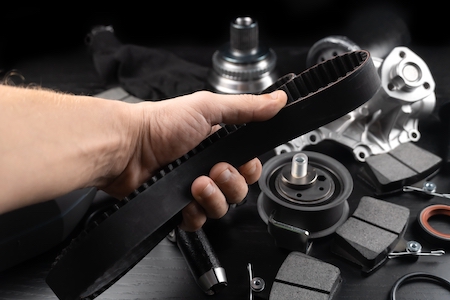
The timing belt is responsible for synchronizing the rotation of the engine’s camshaft and crankshaft. If the timing belt breaks, it can cause significant damage to your engine. Most manufacturers recommend replacing your timing belt every 60,000 to 100,000 miles, depending on the make and model of your car.

Spark Plug Replacement

Spark plugs are responsible for igniting the fuel in your car’s engine. If your spark plugs are worn or dirty, it can cause your engine to misfire, leading to reduced performance and fuel efficiency. Most manufacturers recommend replacing your spark plugs every 30,000 to 100,000 miles, depending on the type of spark plugs your car uses.

Transmission Service

Your car’s transmission is responsible for shifting gears and transferring power from the engine to the wheels. Regular transmission service can prevent transmission problems and extend the life of your transmission. Most manufacturers recommend having your transmission serviced every 30,000 to 60,000 miles.

Suspension and Steering System Check

Your car’s suspension and steering system are responsible for providing a comfortable ride and allowing you to control your vehicle. Regularly checking and maintaining these systems can prevent problems and ensure your car handles correctly. Most manufacturers recommend checking your suspension and steering system every 50,000 miles or as needed.

Keep your new car new – schedule car repair 

When you purchase a car, the last thing you want to consider is your vehicle failing. It happens. Keep the warranty in mind as you schedule car repair inspections occasionally. 

Warranties cover any repairs or replacements due to a design fault. However, it is essential to note that a warranty can become void if you do not properly maintain your car. 

Are you up to date on your inspections and repairs? 

Filed Under: Car Maintenance Tagged With: Car Repair

How to Choose the Right Mechanic for Your Car Clutch Repair

March 4, 2023 by Denver Express Car Care

When your car is working well, it’s easy to drive by auto mechanics without giving much thought to which to trust with your car. Even simple services like oil changes don’t require a lot of foresight. 

Yet spending a few minutes now may help alleviate difficulties later on when you face major work, such as a clutch repair. 

When something major happens, who do you trust? Should you pull into just any mechanic? 

How to find a good mechanic

Choosing the right mechanic for your car can be a daunting task. Your car is a significant investment, and you want to ensure that it is in the hands of a skilled and trustworthy professional. The best way to do that is by:

Doing your research

Start by doing your research on the mechanics in your area. You can find this information by searching online, asking for recommendations from friends and family, or keeping your eyes open as you’re on your daily drive. You can consult organizations like the Better Business Bureau or the Automotive Service Association for recommendations.

Looking for reviews online

Once you have a list of potential mechanics, look online for reviews. This is an excellent way to gauge a mechanic’s service quality. Look for reviews on websites such as Google, Yelp, and Facebook. Pay attention to the overall rating, the number of reviews, and the comments left by previous customers.

How to Choose the Right Mechanic for Your Car Clutch Repair

Interviewing prospective mechanics

After you have narrowed down your list of potential mechanics, it’s time to interview them. Call and ask a few questions: 

  • How long have you been in business?
  • Do you guarantee your work?
  • What type of training do the mechanics have?
  • Do you provide free estimates?
  • What are your payment policies?

A good mechanic will be willing to answer your questions and provide you with a clear understanding of their services.

Giving a mechanic a try with a small task

Once you have selected a mechanic, trying them with a small task is a good idea. This will allow you to evaluate their work and customer service. Choose a minor repair, such as an oil change or a tire rotation. See how they operate and whether they meet your expectations. If satisfied with their work, you can move forward with more significant repairs or maintenance tasks.

What is a clutch and how does it work?

A clutch is a mechanical device used in manual transmission vehicles to engage and disengage the engine from the transmission system. The clutch connects the engine to the transmission when the driver engages the clutch pedal and disconnects them when the pedal is released.

The clutch system consists of several components, including the clutch pedal, clutch plate, pressure plate, release bearing, flywheel, and clutch cable or hydraulic system.

When the driver presses the clutch pedal, it disengages the clutch plate from the flywheel, separating the engine from the transmission. The clutch plate has friction material on its surface and is connected to the engine’s crankshaft. The pressure plate is connected to the transmission’s input shaft and exerts pressure on the clutch plate to engage it with the flywheel. The release bearing sits between the clutch plate and the pressure plate and is activated when the clutch pedal is pressed. The clutch cable or hydraulic system transfers force from the clutch pedal to the clutch assembly.

That may seem like a lot of parts. You don’t have to fully understand a clutch system to keep it operating well. What you should keep in mind if you drive a manual transmission is that clutches can and will wear down over time. 

Need clutch repair? Here’s how you know

Several signs indicate that your clutch may be going bad. Here are a few common symptoms to watch out for:

Difficulty shifting gears – If you find it hard to shift gears, it could be due to a worn clutch or clutch cable. In some cases, the transmission may also be the culprit. You may notice that the transmission slips, grinds or pops out of gear. This could be due to worn synchronizers or a damaged shift fork.

Slipping clutch – A slipping clutch is one of the most common symptoms of a worn clutch. It happens when the clutch disc wears out, causing it to slip against the flywheel. This can cause the engine to rev, but the vehicle may not accelerate as expected.

Burning smell – If you smell a burning odor, it could indicate that the clutch is overheating. This can be caused by a slipping clutch or by riding the clutch pedal. Riding the clutch pedal means keeping your foot on the pedal even when it’s not necessary, causing the clutch to engage partially and overheat.

Noise – Unusual noises such as rattling, grinding or clicking sounds when you press or release the clutch pedal could indicate a problem with the clutch mechanism. For example, a rattling noise could indicate a loose clutch plate or flywheel bolts, while a grinding noise could indicate worn clutch parts or a damaged flywheel.

Difficulty engaging/disengaging the clutch – If you have difficulty pressing the clutch pedal, or if it feels too soft or too hard, it could indicate a problem with the clutch cable, hydraulic system, or the release bearing. The release bearing is the component that pushes against the pressure plate to disengage the clutch when you press the pedal. If the bearing is worn, it may not disengage the clutch completely, causing difficulty shifting gears.

What’s next?

If you drive your car regularly, you’ll notice how your vehicle behaves typically. Use this to gauge any changes in your car’s performance, and take action when you suspect something is wrong. 

If you notice any of the above symptoms, it’s important to have your vehicle checked by a qualified mechanic. They can diagnose the problem and recommend the necessary repairs to ensure the safety and longevity of your vehicle. [This is where it’s crucial to have a mechanic you can trust!]

What questions can we answer for you about clutch repair? 

Filed Under: Transmission Tagged With: Clutch Repair

Check Engine Lights – What The Codes Tell You About Your Car

February 28, 2023 by Denver Express Car Care

When you first turn your car on, your vehicle goes into test mode. It runs through a series of diagnostic tests to ensure everything operates smoothly and up to the manufacturer’s guidelines. 

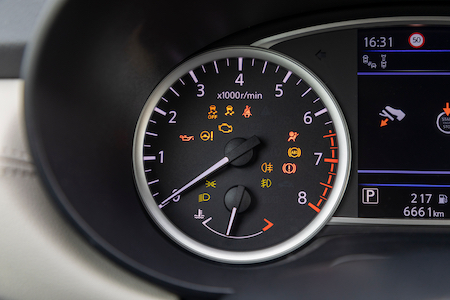
You’ll see the lights flash on your dashboard. They’ll stay lit for a second or two before turning back off. 

But what if the check engine lights don’t turn off? What are the different codes trying to tell you? Paying attention could be the difference between a minor repair and a significant malfunction. 

The History of Check Engine Light Codes

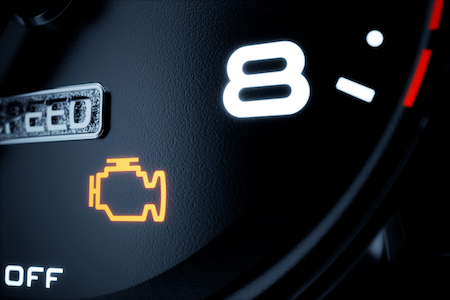
The Check Engine Light is a warning light on the dashboard of cars and trucks that alerts the driver to potential engine issues. When the Check Engine Light illuminates, the vehicle’s onboard diagnostic system (OBD) detects a problem and generates a code corresponding to the issue. This code can be read by a mechanic or an OBD scanner and is used to diagnose the problem and determine what repairs are needed.

The history of check engine light codes goes back several decades, and has evolved alongside advances in automotive technology. 

Check Engine Lights - What The Codes Tell You About Your Car

In the 1970s, the US government began implementing emissions standards for vehicles in an effort to reduce air pollution. As part of this effort, car manufacturers began developing onboard diagnostic systems to monitor engine performance and emissions levels. These early diagnostic systems were relatively primitive and could only detect a few issues.

In the 1980s, automotive technology advanced rapidly, and diagnostic systems became more sophisticated. This led to the development of the OBD-I system, used by car manufacturers from the late 1980s through the mid-1990s. OBD-I systems could detect a broader range of issues than earlier systems but were still limited in their diagnostic capabilities.

In 1994, the US government implemented new vehicle emissions standards, which required car manufacturers to use a more advanced onboard diagnostic system. This system, known as OBD-II, was more sophisticated than previous systems and could detect a broader range of issues more accurately.

One of the key features of OBD-II was the standardization of diagnostic trouble codes (DTCs). DTCs are five-digit codes that correspond to specific engine issues, and are used to diagnose problems with the vehicle. Before OBD-II, each car manufacturer used its own proprietary codes, which made it difficult for mechanics to diagnose and repair issues on different cars.

The standardization of DTCs made it easier for mechanics to diagnose and repair engine issues and allowed for the development of more advanced diagnostic tools. Today, most OBD-II scanners can read and interpret DTCs, which makes it easier for drivers to understand what is wrong with their vehicles

Types of DTCs

There are two types of DTCs: generic and manufacturer-specific. Generic DTCs are standardized across all car manufacturers, and are used to diagnose common engine issues. For example, code P0300 indicates a misfire in one or more cylinders, while code P0171 means a lean air/fuel mixture.

Manufacturer-specific DTCs are unique to each car manufacturer, and are used to diagnose issues specific to a particular vehicle make and model. For example, the code P0101 on a Toyota may indicate an issue with the mass air flow sensor, while the same code on a Ford may indicate a different problem.

Evolution of DTCs

Over the years, the number of DTCs has grown as engine technology has become more complex. The original OBD-II standard included around 400 generic DTCs, which has since grown to over 5,000 codes. These codes cover various engine issues, from minor problems like a loose gas cap to more severe issues like a faulty catalytic converter.

In recent years, there has been a push toward making diagnostic codes more user-friendly for drivers. Some car manufacturers have begun developing systems that can display simplified codes or plain-language descriptions of engine issues on the dashboard, rather than requiring drivers to decipher complex codes.

Triggering the check engine light

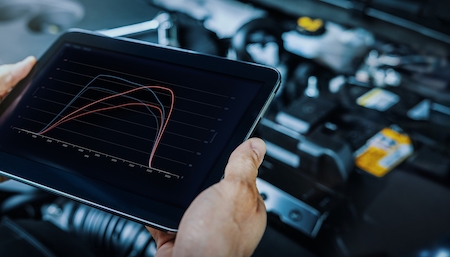
Over the years, cars have become complex technological systems that work and function through a variety of sensors. When a technician runs an OBD II diagnostic test, it provides a wealth of information that helps a mechanic pinpoint a problem. They consider real-time data and any information available from past performance issues to determine where the problem lies. 

Not all errors or issues will trigger the check engine light. This is especially true for low-priority codes that don’t have huge repercussions. This is why bringing your car in as soon as possible is essential if the check engine light does illuminate. If it’s enough to trigger the light, it’s serious enough to be a problem for your car’s engine. The manufacturer designed the OBD II system to be your guide and help you fix potential issues long before they worsen.  

What are the most common check engine light codes?

OBD II codes have been standardized to make it easier for mechanics to decipher where the problem lies. Every code starts with a letter:

P – powertrain
C – chassis
B – body
U – network

These letters will be followed by three or four digits that go further into which system is experiencing an issue. It can alert you to what part is involved. For example, a P0301 is used to state there is a problem with the ignition system and it’s with cylinder 1. P0302 would tell you the problem is with cylinder 2. 

Now that you know hundreds of codes can provide information on engine problems, you might think you need an owner’s manual just for the OBD II codes. It turns out that some check engine lights are much more common than others, shortening the list considerably. The top check engine light codes include:

P0010 – intake camshaft actuator circuit p[em
P0016 – crankshaft position / camshaft position sensor
P0102 – mass air flow circuit low input
P0113 – intake air temperature sensor
P0128 – engine coolant temperature below thermostat regulating temperature
P0133 – oxygen sensor slow response 
P0135 – oxygen sensor
P0141 – oxygen sensor heater
P0171 – fuel trim system lean 
P0172 – system too rich
P0174 – system too lean
P0218 – transmission over temperature condition
P0300 – engine misfire detected
P0301 – cylinder 1 misfire detected
P0302 – cylinder 2 misfire detected
P0303 – cylinder 3 misfire detected
P0304 – cylinder 4 misfire detected
P0325 – PCM knock sensor circuit
P0401 – exhaust gas recirculation flow insufficient
P0411 – EVAP system control incorrect purge flow
P0420 – catalyst system low efficiency
P0430 – catalyst system low efficiency 
P0440 – evaporative emission system
P0442 – evaporative emission system small leak detected
P0446 – EVAP vent solenoid valve control system
P0455 – evaporative emission system leak detected
U0101 – lost communication with TCM

Your car’s check engine light is illuminated and you have an OBD II code. Now what?

While having the code may alert you to where the problem lies, it does little to pinpoint the problem and make the correct repair. 

That’s where a relationship with a reliable mechanic comes into play. 

They can take the information the diagnostic codes are telling them, and use it to focus in on where the problem lies. A P0304 code will tell you there’s a misfire in cylinder 4, but it will take focus and critical thinking to determine the problem. Is it getting too much fuel? Is the spark reaching the cylinder? 

Once the problem is discovered, then the proper fix can be made. 

Is your car’s check engine light illuminating? Whether you know what OBD code it’s referring to or not, now is the time to bring your car in and get to the root of the problem. 

We’re here to help. 

Filed Under: Car Maintenance Tagged With: Check Engine Lights

Auto Repair for Better Performance: The Importance of Regular Maintenance

February 24, 2023 by Denver Express Car Care

Ask a hundred drivers about getting better performance from their vehicles, and you’ll likely hear a hundred different answers. That’s because better performance can mean many things. 

For some, it might mean acceleration. They care about speed and power and focus on acceleration from a standstill to a certain speed, such as 0 to 60 miles per hour (mph).

For others, it might be about the maximum speed that your vehicle can reach. You can use a GPS device or a speedometer to track your vehicle’s speed as you accelerate on a straight, flat road.

Maybe it’s about fuel efficiency. You select a car based on fuel efficiency, getting the highest miles per gallon (mpg) possible. You can calculate your vehicle’s fuel efficiency by tracking the fuel you use over a certain distance and dividing that by the total distance traveled.

It can also be about handling and cornering. It’s the way your vehicle handles turns and corners, measured by evaluating the amount of body roll, tire grip, and steering response. 

How auto repair affects performance

When you bring your vehicle in regularly for auto repair, it helps keep your ride in good working condition, and helps prevent expensive repairs down the road. 

Auto Repair for Better Performance: The Importance of Regular Maintenance

Cars are an incredible investment, with the average car now costing just over $48,000. Vehicle maintenance also requires an investment in time, energy, and money. If you schedule regular maintenance visits with a reputable auto repair shop, you’ll be able to avoid major repairs that can occur due to age and neglect. By following a schedule, you can catch minor problems before they become significant issues affecting your vehicle’s performance.

Regular maintenance helps to keep your vehicle’s systems running at peak efficiency. A well-maintained system means it keeps the engine running smoothly, which can improve your fuel efficiency. That’s even more important today, with the price of gas creeping up every week. 

Performance is also about extending the life of your vehicle. Staying on top of maintenance items can help to prevent premature wear and tear on your vehicle’s systems, which can help your car last longer and perform better over time.

While you might not consider selling your car soon, regular maintenance will ensure top dollar and higher resale value. A well-maintained vehicle is generally worth more than one that has been neglected, so by keeping up with care, you can help to preserve your vehicle’s resale value.

Regular maintenance can also help to ensure your safety on the road. Imagine heading out on a dark night if you haven’t changed the motor oil in months. It’s gloppy, a thick mess. It can easily cause your engine to fail, leaving you stranded by the edge of the road. A poorly maintained vehicle will never fare well, putting your and your passengers’ safety at risk.

Signs your vehicle needs maintenance soon

Even a well-maintained car will occasionally encounter problems. The difference comes down to how fast the driver responds. If performance is important, you’ll schedule a visit to the auto repair shop as quickly as possible. If not, you might see how long it takes before a more serious problem arises. (Which driver are you?)

Awareness is key to improving performance and ensuring your vehicle stays operating well. There are several signs that a vehicle needs maintenance soon. Here’s what to look out for:

Warning lights – If the check engine light or any other warning lights on your dashboard come on, it could be a sign that something is wrong with your vehicle, and needs to be checked by a mechanic.

Strange noises – If you hear unusual sounds such as grinding, rattling, or squeaking when driving your vehicle, it could be a sign of an issue that needs to be addressed.

Changes in performance – If you notice reduced acceleration, difficulty starting, or decreased fuel efficiency, it could be a sign that maintenance is needed.

Vibrations – If you feel vibrations or shaking while driving, it could indicate an issue with your vehicle’s suspension or wheels.

Fluid leaks – Glance underneath your vehicle. If you notice any fluid leaks underneath your car, such as oil or coolant, it could be a sign of damage or wear and tear.

Worn tires – If your tires go flat, won’t hold pressure, look worn down, or have uneven wear, it could be a sign that your vehicle needs an alignment or tire rotation.

Unusual smells – Yes, that odor is trying to tell you something. If you smell something unusual coming from your vehicle, such as burning rubber or oil, it’s a sign of a problem.

Of course, these are just a few of the more common items you might notice. Paying attention will alert you to changes in your car’s behavior. Always err on the side of maintenance. A trusted mechanic can also be your guide, helping you stay on top of minor issues, fixing them before they escalate to bigger problems. 

Need a service maintenance checklist?

Service intervals can vary by make or model. It’s best to sit down with your owner’s manual to understand better how your vehicle works. 

You should always service immediately anything that impacts safety. If the check engine light appears, it’s a warning of a problem with the engine. Don’t panic; it’s designed to alert you early to give you enough time to get to safety and bring your car in for a diagnostics test. Don’t ignore it – fast action will ensure the lowest level of repair. 

The tire pressure light is another dashboard icon you should always consider. Low tire pressure indicates your tire isn’t correctly filled. It will impact how you drive and may cause it to go flat or blow out. 

Have a broken or faulty headlight or taillight? It’s another reason for quick action. This could put you at risk whenever you’re on the road.  

Monthly checkups should include more safety tests. Test turn signals, brake and parking lights. If you’re heading out on a long trip, it’s time to test motor oil and top off if necessary. Refill the windshield washer reservoir to ensure you never face an obstructed view. It may be time for wheel balancing and alignment. This also allows a mechanic to look at the tire’s tread. 

Quarterly checkups are good for motor oil and filter replacement. Most vehicles require new oil every 3,000 to 10,000 miles, or three to six months, whichever is greater. It’s also time to pop the hood and take a look underneath. Do those belts and hoses appear to be leaking fluid? 

Twice a year, we suggest even more inspections. This is a great time to bring your vehicle in and have it serviced by a professional. This gives you a chance to learn the reputation of a local auto repair shop. It provides a mechanic with an opportunity to understand the car better. You can perform small maintenance items to ensure a well-functioning vehicle as you move into a new season. 

Yearly and long-term checkups require a bit more servicing. Use your owner’s manual as guidance. 

How can we help you create optimal performance for your vehicle? 

Filed Under: Car Maintenance Tagged With: Auto Repair For Performance

The Importance of Regular Anti-Lock Brake System Maintenance

February 21, 2023 by Denver Express Car Care

Love puzzles? Want a challenge? The average car today has around 30,000 parts inside. The engine alone has thousands of tiny components that all come together to create a powerful display of energy that allows you to move throughout your days. 

Yet anytime you have that many parts coming together in one place, eventually, you’ll have a problem. If one bolt comes loose, it can bring an entire system to a grinding halt. And on a moving vehicle, that can be a big problem. 

Imagine your anti-lock brake system doesn’t work. It’s cold outside. The streets are icy. You tap the brakes – and they don’t work. 

That’s just one of the reasons maintenance is essential. If you pay attention to your anti-lock brake system before you need it, you’ll reduce the chances of having a problem when you need it most. Here’s what maintenance looks like on your anti-lock brake system. 

What are anti-lock brakes

Anti-lock brakes, also known as ABS, are a safety feature in today’s modern vehicles. They help prevent the wheels from locking up during sudden braking. While this technology was first introduced in the late 1920s, it wasn’t until the 1970s that ABS became widely available in consumer vehicles. 

When a vehicle’s wheels lock, the driver can lose control of the car. It can skid, making it difficult to steer or stop. Anti-lock brakes work by preventing this from happening. When the driver taps the brakes, ABS rapidly pumps the brakes, allowing the wheels to continue rotating. This allows the driver to maintain steering control, allowing the vehicle to move more quickly and safely.

The Importance of Regular Anti-Lock Brake System Maintenance

ABS is made up of several vital components. Wheel speed sensors are located at each wheel. They monitor the speed of the rotation, sending signals back to the ABS control module, which processes the information and determines if one or more wheels are locking up.

If the control module detects a wheel lock up, it sends a signal to the brake actuator, which rapidly pumps the brakes. The brake actuator uses a pump to pressurize brake fluid, which causes the brakes to be applied and released in rapid succession. This helps prevent the wheels from locking up, and allows the driver to maintain control of the vehicle.

Anti-lock brakes are beneficial during all low-traction conditions, such as rain, snow, or ice. When the roads are slippery, it’s easier for the wheels to lock up because there’s less friction between the tires and the road. ABS helps by keeping the wheels steady,  allowing the driver to maintain control of the car.

7 maintenance tips for your anti-lock brake system

Anti-lock brakes are a critical safety feature in modern vehicles that help prevent the wheels from locking up during sudden braking. Regular maintenance is essential to ensure that your anti-lock brakes are working properly. Here are seven maintenance items that you should do to keep your anti-lock brakes working well:

Check the brake fluid level

ABS relies on brake fluid to function correctly. The brake fluid level should be checked regularly, and topped off if necessary. If the brake fluid is low, it could indicate a leak in the system, which should be repaired as soon as possible. Remember, your ABS needs the right fluids to keep it running smoothly.

Inspect the brake pads and rotors

The brake pads and rotors are the components that come into contact with the wheels to slow them down. Over time, the brake pads will wear down, and the rotors may become corroded or damaged. Inspecting the brake pads and rotors will help you identify any issues before they become a problem. Think of it as a check-up for your ABS.

Check the wheel speed sensors

The wheel speed sensors are responsible for monitoring the speed of the wheels and sending signals to the ABS control module. If a sensor is faulty, the ABS system may not function properly. Check the sensors regularly for any signs of damage or wear and tear. These sensors are the eyes of your ABS, so make sure they’re working.

Check the ABS control module

The ABS control module is the brain of the system. It’s responsible for processing the information from the wheel speed sensors and determining if one or more wheels lock up. If the control module is malfunctioning, the ABS will not work. It’s essential to keep the brain of your ABS in good shape.

Check the brake actuator

The brake actuator is a hydraulic component that uses a pump to pressurize the brake fluid, which causes the brakes to be applied and released in rapid succession. Check the brake actuator for any signs of damage or wear and tear. This is the muscle of your ABS, so make sure it’s functioning.

Check the brake lines and hoses

The brake lines and hoses deliver brake fluid from the master cylinder to the brakes. Check the cables for any signs of leakage, cracking, or damage. These are the veins of your ABS, they need to be in good condition to function correctly.

Have the ABS inspected by a professional

Have your ABS inspected by a professional mechanic regularly. They will have the proper tools and knowledge to diagnose issues with the system and make necessary repairs. Always consult your vehicle’s owner’s manual for recommended maintenance schedules and guidelines.

It’s also worth mentioning that if the ABS warning light comes on in your vehicle’s dashboard, it’s an indication that there may be an issue with the ABS and you should take it to a professional to diagnose and repair the problem as soon as possible.

When was the last time you scheduled a maintenance visit for your anti-lock brake system?

Regular maintenance is essential to ensure that your anti-lock brakes are working properly. It ensures that your anti-lock brakes are always ready to perform when needed. 

Remember to consult your vehicle’s owner’s manual for recommended maintenance schedules and guidelines. Not sure when they were last inspected? Don’t put it off; schedule it today. 

It’s the best way to ensure your vehicle is safe whenever you take it out for a drive. 

Filed Under: Brake Repair, Brake Service Tagged With: Anti-Lock Brake System Maintenance

Brake Fluid Leaks: How to Identify and Fix Them

February 18, 2023 by Denver Express Car Care

Drip. Drip. Drip. 

It’s something you might not notice right away. But eventually, you’ll discover your vehicle is leaking. What is it? What does it mean?

Cars use a variety of fluids to keep them operational:

  • Motor oil
  • Coolant
  • Brake fluid
  • Transmission fluid
  • Power steering fluid
  • Windshield washer fluid
  • Gasoline

Try and operate your vehicle without one of these essential fluids. It won’t happen. It’s up to you to ensure all systems work well, and the fluids are at proper levels. 

Including brake fluid. Brake fluid leaks can not only impact your brake system’s functionality but can also put you at risk. Imagine driving down the mountain after a day of skiing, and your brakes no longer work. 

With so much riding on your brake system, here are a few things to consider if you find a brake fluid leak.

How brake fluid keeps the brake system operational 

Brake fluid is a crucial component of a vehicle’s brake system. It is responsible for transmitting power from the brake pedal to the brake calipers to the brake pads, slowing the wheels down. 

Brake Fluid Leaks: How to Identify and Fix Them

The brake system is closed, meaning that brake fluid is sealed inside and doesn’t typically need to be refilled the way you do motor oil or coolant. However, over time, the fluid can become contaminated or lose effectiveness, leading to decreased braking performance or even failure.

Brake fluid is typically made of a glycol-based fluid designed to withstand high temperatures and maintain viscosity over time. When the brake pedal is pressed, the brake fluid is forced through small passages in the brake lines and calipers. The brakes may not function properly if the fluid doesn’t flow easily.

The brake fluid also acts as a lubricant for the various moving parts in the brake system, such as the brake calipers and the brake pads. This helps to prevent wear and tear on these parts and keeps the system running smoothly. The brake fluid is also responsible for protecting the brake system from corrosion by forming a protective barrier on the metal components.

Brake fluid is hygroscopic, which means it absorbs moisture over time. This can decrease the fluid’s boiling point, which can cause brake fade or failure. Therefore, it is important to have the brake fluid checked regularly, and to replace it if necessary.

Check your owner’s manual for guidance, but brake fluid should generally be replaced every two to three years. Some manufacturers recommend replacing the brake fluid more often, such as every 30,000 miles or so. Replacing the brake fluid can help to ensure that the brakes are in good working condition and can help to prevent costly repairs down the road.

What can cause brake fluid to go bad?

Brake fluid is an essential component of a vehicle’s brake system, responsible for transmitting force from the brake pedal to the brake calipers, eventually slowing the wheels down and bringing the car to a stop. However, brake fluid can become contaminated over time or lose effectiveness, leading to decreased braking performance or even failure. Understanding the causes of brake fluid deterioration is essential to ensure that the brake system is functioning correctly and prevent costly repairs.

One of the most common causes of brake fluid deterioration is exposure to moisture. Brake fluid is hygroscopic, which means it absorbs moisture over time. This can decrease the fluid’s boiling point, which can cause brake fade or failure. Moisture can enter the brake system through the brake lines, calipers, and other components. This can happen due to leaks in the design, condensation due to temperature changes, or even through the brake fluid reservoir itself.

Brake fluid deterioration can also happen when exposed to high temperatures. As brake fluid is forced through the brake lines and into the brake calipers, it is subjected to high temperatures. This extreme heat can cause the fluid to break down, leading to decreased effectiveness and a reduced ability to lubricate the moving parts in the brake system. High temperatures can also cause the fluid to boil, resulting in brake fade or failure.

Contamination can also occur. This comes from rust, dirt, or other particles entering the brake system. These contaminants can cause the brake fluid to become dirty or discolored, reducing its effectiveness and leading to decreased braking performance. Contamination can also cause the brake system to wear out more quickly, leading to costly repairs.

Like other car parts, age will eventually become a factor. Over time, brake fluid will lose its effectiveness and can become contaminated. This can happen as a result of the fluid absorbing moisture, becoming polluted with dirt or other particles, or simply due to the age of the liquid. Replace the brake fluid periodically, even if it appears to be in good condition.

Brake fluid can also fail due to a lack of maintenance. The brake fluid can be compromised if the brake system is not maintained correctly. This can happen due to not checking and replacing the liquid regularly, not properly cleaning and inspecting the individual components in the brake system, or not correctly lubricating the moving parts. One part feeds to another; a regular maintenance schedule will ensure everything is working well.  

Have a brake fluid leak? 

Brake fluid is typically a light yellow color, but it will darken to  gold or brown with age. If you see it underneath your car, or notice it accumulating in your wheel wells, it’s a sign of a leak. 

It could be coming from any component within the brake system. It could be a failure of any part at any time. 

But there’s one surefire way to prevent failure and deterioration before it starts; have brake fluid checked regularly, and replace it if necessary.

Start by checking your owner’s manual for guidelines. Then schedule a maintenance visit with one of our mechanics to be sure that the leak isn’t a sign of a bigger problem. 

How can we help you today?

Filed Under: Brake Repair, Brake Service Tagged With: Brake Fluid Leaks

  • « Previous Page
  • 1
  • …
  • 24
  • 25
  • 26
  • 27
  • 28
  • …
  • 101
  • Next Page »

Express Car Care
4200 E. Evans Ave. Denver, CO (map)
Phone: (303) 691-2760
Located just southeast of the Colorado Light Rail station

Follow Us Today!

  • Facebook
  • RSS

Shop Hours

Monday: 8:00AM – 5:00PM
Tuesday: 8:00AM – 5:o0PM
Wednesday: 8:00AM – 5:00PM
Thursday: 8:00AM – 5:00PM
Friday: 8:00AM – 5:00PM
Saturday: Closed – A note from the owner
Sunday: Closed

Last car oil change time  – 5:00PM

Click for the BBB Business Review of this Auto Repair & Service in Denver CO

Recent Articles

Why Your Check Engine Light Keeps Coming On—And What to Do About It

Why Your Check Engine Light Keeps Coming On—And What to Do About It

You’re cruising down I-25 or pulling into your favorite coffee shop when you see it—the amber engine icon lighting up your dashboard. Again. The check engine light is one of the most misunderstood … [Read More...]

  • How to Get the Most Mileage Out of Your Tires in Colorado
  • How a Local Mechanic Can Provide Better Service Than a Dealership
  • How to Deal With Car Noises That Only Happen When You Turn
  • Why Regular Belt and Hose Inspections Save You from Major Repairs
  • How Our Long-Term Staff Brings Confidence to Your Car Care

Search Our Site

Brakes Service

How to Know If It’s Time to Replace Your Brake Rotors

The Hidden Dangers of Driving With Low Brake Fluid

Denver Driving Conditions and What They Mean for Your Brakes

Oil Change

Top Benefits of Getting Regular Oil Changes in Denver

Oil Change Specials in Denver: Save Money and Keep Your Car Running Right

Why Regular Oil Changes Are Crucial for Denver Drivers

Suspension

How to Know If Your Car Needs Suspension Repair in Denver’s Bumpy Roads

A Guide To Understanding Bushings on a Car

Tips for Preventing Wear and Tear on Your Car’s Suspension

Transmision Service

How Often Should You Service Your Transmission in Denver?

Transmission Trouble? Common Signs and When to Visit Our Denver Shop

How to Prevent Common Issues with Automatic Transmissions

Engine Service

Everything You Should Know About Your Vehicle’s Timing Belt

Is Your Car Hesitating During Acceleration?

How to Troubleshoot a Rough Idling Engine

Auto Tips & Tricks

How to Deal With Car Noises That Only Happen When You Turn

Top 5 Maintenance Tips for High-Mileage Vehicles

Why Tire Pressure Matters More Than You Think

"Denvers Best Auto Repair and Quick Lube" - Copyright © 2025 - 4200 E. Evans Ave. Denver, CO 303-691-2760