• Home
  • Denver Auto Repair Services
    • Full Service Oil Change
    • Expert Mechanics
      • Expert Honda Mechanics
      • Expert Toyota Mechanics
      • Expert Subaru Mechanics
    • Automatic Transmission
    • Fuel System Cleaning
    • Radiator Flush Service
    • Wiper Blades
    • Air Filter
    • Cabin Air Filter
    • Gearbox Service
    • Brake Repair
    • Clutch Repair
    • CV Boots
    • Tune-Up
    • Steering & Suspension
    • Tires
  • Auto Diagnostic
  • Contact Us
    • About Us
  • Shop Specials
  • Testimonials
  • Blog
  • 303-691-2760

Express Car Care of Denver

"Denver's Best Auto Repair and Quick Lube"

  • Brake Service
  • Car Maintenance
    • Heating-Air Conditioning
    • Suspension
    • Transmission
    • Engine
    • Tires
  • Oil Change
  • Tips & Tricks

When Should You Use Your Parking Brake

April 10, 2021 by Denver Express Car Care

Your car’s braking system is one of the most essential mechanisms built in for safety. Imagine driving down the mountain after a day of skiing without it. Even coming to a stop for a stoplight would be a harrowing experience if something were to go wrong.

While your front and rear brakes make up the most important part of the braking system, there’s a third brake that doesn’t get as much attention yet is equally important: the parking brake. The parking brake is connected to the rear brake system, and is used mainly as a failsafe if something were to happen to your brakes during your normal drive.

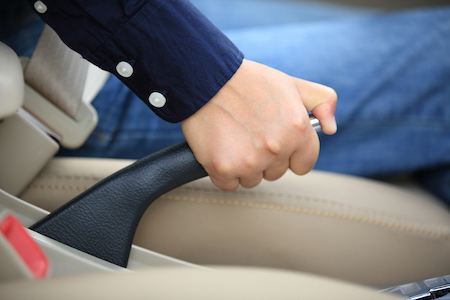
The parking brake is a secondary brake system that is designed to be independent of the front and rear brakes. This is your safety feature. You’ll find the control for your parking brake in one of four places:

  • Center console – it’s a lever located between the two front seats
  • Foot pedal – it’s a pedal located on the floor on the far left of all other pedals
  • Stick – in older vehicles, you may find the emergency parking brake lever located on the instrument panel
  • Push button – on newer vehicles, a push button exists on the console with other components

The mechanism is available for easy access.

If you drive a manual transmission, you may be used to using a parking brake to keep your car from rolling. But that doesn’t make a parking brake on an automatic transmission any less important. In truth, everyone should be familiar with the uses of a parking brake, and utilize it to make your driving experience safer.

How a parking brake works

When Should You Use Your Parking BrakeYour vehicle’s brakes are designed to bring your car to a stop. The more pressure you apply to the brake pedal, the more tension is transferred from the brake pad to the wheel, slowing your car until it eventually stops.
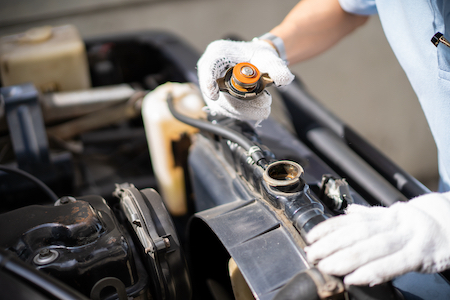
When you engage the parking brake, discs inside your rear wheel squeeze up against the inner part of the wheel in much the same way. This action slows the wheel, eventually stopping it and keeping it from rolling away.

While parking brakes work in a slightly different manner from vehicle to vehicle, to engage the parking brake, fully engage the rear brake system by pressing down on the brake pedal. Only then should you pull the lever or press the button for the parking brake system. Once the parking brake is in place, shift your car into park. Then release the brake pedal. This allows the hydraulic system to activate and do its work without putting added stress on the transmission.

Why your vehicle has a parking brake

In everyday situations, you might be tempted to only utilize your vehicle’s braking system. When you place your vehicle in park, a parking pawl is pushed into one of the grooves of the transmission gear to keep it from moving. A parking pawl is nothing more than a hammer-shaped pin that drops into place. While it might be enough force in everyday situations, it can weaken over time, especially if you’re on steep inclines or hills. One small pin stopping a several ton vehicle will only work for so long.

If you don’t use your parking brake regularly, this parking pawl weakens over time. That can impact your transmission system, or cause accidents as your vehicle rolls away. That can lead to expensive repairs.

Get in the practice of using your parking brake

Even if you infrequently drive, even if you park in relatively flat areas across the Front Range, your vehicle can still be at risk. If you’re putting your car in park, it’s a good idea to engage the parking brake too.

We advise using a parking brake no matter where you park your vehicle, but especially as your risk level increases.

Are you parallel parking on a hill? Engage your parking brake.

Are you filling up your vehicle at a gas station? Engage your parking brake.

Will you be leaving your car in a parking garage for hours at a time while you head into the office? Engage your parking brake.

It’s better to be safe than sorry. And a parking brake gives you added insurance to ensure your vehicle stays safe.

In many cases, people refer to a parking brake as an emergency brake. That title may be a bit misleading, making you think you only need it in emergency situations. The parking brake not only keeps your vehicle from moving, but it also saves your transmission from wear and tear. And that can save on repair bills down the road.

Using a parking brake in an emergency

Your car’s braking system is a complex mechanical system. Over time, it can fail, and that could be catastrophic depending on where it happens. That’s where the emergency brake comes into play. If you’ve ever referred to the parking brake as an emergency brake, this is why.

In the case of brake failure, you have seconds to react. A natural reaction is to stomp on the parking brake pedal, or pull up on the parking brake lever as hard as possible. Resist that urge. That will send your car into a tailspin, and possibly put you in even more danger.

Instead, slowly engage the emergency brake as your car comes to a stop. The parking brake is designed to hold your car in place, not stop it. As it engages, it slows your vehicle down until the point you can gain control.

Get a full brake inspection

If the concept of using your parking brake regularly is still new to you, put it into practice today. It can help your vehicle have a longer lifespan, as well as keep it safer over time.

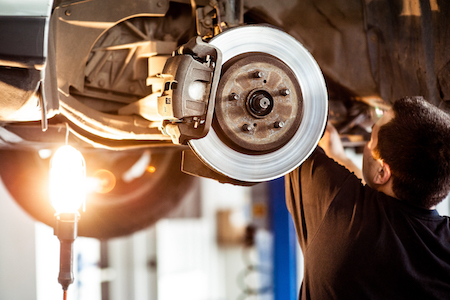
Have a question about how well your brakes work? It’s time for a complete brake inspection. It’s the easiest way to determine how safe your entire braking system really is. By bringing it in, we can tell you how much wear is left on your brake pads, and give you tips on better driving and maintenance. If you pinpoint issues early, you’ll stay safer in the long run.

When was the last time you had a full brake inspection?

Filed Under: Brake Repair, Brake Service Tagged With: Parking Brake

Is That a Radiator Leak?

April 7, 2021 by Denver Express Car Care

If you’re a careful driver, and do what you can to ensure your car has a long life, you may notice when liquid appears underneath your vehicle and wonder if everything is alright. Is it oil? Is it water? Is it something else?

It’s good to be aware every time you get into your car. Awareness can help you drive safely without having to worry about being stranded by the side of the road. But it still takes a careful eye to notice all the potential warning signs your car sends out.

What is a radiator?

A car’s engine produces a lot of heat during operation. To prevent the engine from overheating, your car pumps coolant through the engine to take in the heat and move it away from the engine block. Coolant takes heat into the radiator, which blows air across the liquid to cool it down, before exchanging the heat with the air outside your car. It’s like a mini air conditioner built exclusively to keep your engine cool and running at its best.

If the radiator doesn’t work at its best, it can cause your engine to overheat, impacting the drivability of your car.

If your vehicle overheats, a lot can go wrong internally. Various parts can be impacted, including the engine, thermostat, gaskets, and other components connected to the engine block. That’s why it’s important to recognize potential problems, and fix them before they allow bigger problems to occur.

Leading warning signs of radiator leaks

Radiator leaks rarely happen overnight. Instead, minor problems slowly develop as your car ages. Here’s what to watch for.

Is That a Radiator Leak?Drop in coolant levels, rise in temperature – do you keep an eye on your temperature gauge? You should. You’ll notice it remains relatively static as you drive. Coolant levels rise and fall based on engine temperature. It adjusts to keep your engine at a constant level. A quick drop in coolant levels can be a good indicator there is a leak somewhere in the system. If you think there may be a leak, fill the reservoir back up with coolant, and recheck it after a few days of normal driving. Watch the temperature gauge during this time. Does it lose fluid? If so, bring your car in for inspection as quickly as you can.
Visible fluid leaks – if you’ve ever experienced an engine misfire, it’s easily recognizable. When you turn the key or press the button, the engine fumbles for a bit as it struggles to catch and stay running. The more frequent this is, the bigger the problem. A spark plug misfiring releases a variety of problems into the overall process of starting and operating your vehicle. It can release too much raw fuel into the exhaust, which can cause internal temperatures to rise. This restriction can lead to problems throughout the system, including the converter substrate, which may further restrict the exhaust. Never ignore the warning sign of an engine that doesn’t turn over quickly every time you turn the key.

Visible damage to hoses and parts – when is the last time you popped the hood and took a look underneath? You don’t need a class in auto mechanics to notice when something is wrong. Rust or discoloration around your radiator or surrounding the engine block may be a sign of a coolant leak. Radiator hoses and clamps will also wear down over time. They should be washed and checked regularly to ensure they are running smoothly without leaks.

Regular inspections – when you work with an auto mechanic regularly, they can notice items that may otherwise go undetected until bigger problems arise. Think of an auto inspection as your vehicle’s yearly checkup. It’s a way to test each system, look at the major parts, and determine how much life is left in each system. A mechanic will notice what systems have potential problems, and what parts should be replaced to avoid problems on the road. They can also give you a clear indication of how much time you have left in different systems. This can allow you to plan for further repair work when you have the time. This is especially important if you’re planning a road trip in the near future.

Is a radiator flush necessary?

Coolant’s job is to push fluid through the system, keeping your engine cool and running properly. Over time, that coolant can begin to break down. That’s when it no longer can serve its purpose.

Over time, dirt and debris can build up inside. That’s when a coolant flush is necessary, to flush out any corrosive debris, rust, or other contaminants that have built up inside.

A technician will take several gallons of radiator cleaner and water, and flush it through the cooling system. This gets both old antifreeze and other contaminants out of the system. If this isn’t done the right way, it can break loose debris and leave it in the system, which can quickly damage major other components and lead to problems with the engine overheating.

How do you know it’s time for a radiator flush? A technician will usually look for several things.

  • Orange or green fluid is leaking
  • The radiator is corroded, dirty, or rusty
  • You’ve noticed steam coming from underneath the hood
  • Your car smells like hot maple syrup under the hood

If you’re considering this as a DIY project, keep in mind that you have to clean the surrounding area thoroughly. Antifreeze is a sweet smelling liquid that attracts both animals and children. Your space should be cleaned entirely of both old and new coolant to ensure you don’t put anyone around you in danger. That’s the upside of having a mechanic perform this task for you. They know how to complete the job efficiently, as well as dispose of all fluids properly after the job is done.

You have a choice. If you pay attention to the way your car operates, you’ll notice slight changes that can have a big impact. You’ll check coolant levels, and fix leaks before they grow. You’ll flush your radiator to keep it operating at its best. This will allow you to stop problems before they arise; a radiator flush is much less costly than replacing the entire radiator. Or worse, the entire engine block.

Have you noticed a radiator leak?

Filed Under: Car Maintenance, Engine Tagged With: Radiator Leak

What a Muffler Does and Why It May Be Rattling

April 3, 2021 by Denver Express Car Care

The purpose of a muffler is revealed in its name. To muffle means to cover or wrap up to quiet or hide the sound. A muffler, therefore, is designed to reduce sound, and it does it quite well. But what is a muffler and why is it attached to your vehicle? Is it a required auto part? Can you get by without one? Let’s dive in and find out.

What is a muffler?

A muffler is responsible for muffling the sound created by the engine inside a vehicle. The process of starting and running an engine takes a lot of power. The result is a series of pulses and vibrations that reverberate throughout the exhaust system. These pulses continue over and over again for as long as your car is operating. Without a muffler in place, you’re going to hear it inside and out of your vehicle. In fact, if you feel like your car is getting noisier the more you drive it, it could be a sign your muffler is no longer doing its job.

How does a muffler work?

As a car’s engine turns over and continues to run, it releases harmful emissions into the combustion chamber. These contain things like carbon dioxide, carbon monoxide, hydrocarbons, and nitrogen oxides.

As a safety factor, cars are built with exhaust systems to disperse these dangerous gases away from the vehicle. One of the key components of the exhaust system is the muffler.

A muffler contains various tubes, channels, and holes that direct gases and exhaust where it’s supposed to go.

As exhaust gases are created, they feed into an inlet area to capture both the gases and noise. It moves to a resonator that acts as an echo chamber to reduce the overall noise volume. This then feeds into a series of metal tubes, also known as the perforated tubes, which are responsible for the output noise. How loud or quiet your car is will be determined by these perforated tubes. Finally, the remaining exhaust gas and noise are released from the outlet.

What a Muffler Does and Why It May Be RattlingA muffler isn’t designed to reduce the noise. Instead, it combines the sound waves inside a closed chamber, and makes them cancel one another out.

It also has the task of releasing toxic gases a safe distance from the vehicle. Without a muffler, you risk these noxious gases moving easily into the passenger cabin where they could hurt anyone inside the car.

A muffler can also improve the overall performance of your vehicle. A car’s engine can generate more power if it can quickly move exhaust gases away from the system. The faster the process, the better your car will operate.

Does every car have a muffler? In short, yes. It’s designed for safety and performance, which creates a better performing car.

What happens if you remove the muffler?

Have you ever heard a car rumbling as it drives by? Have you sat at a stoplight near a car that was so loud, you wonder how it’s operating? The owner may have removed the muffler.

Car owners remove the muffler to give it a louder sound. Instead of a quiet drive, you’ll be noticed as you move into view. And for some drivers, that’s what they are looking for.

When you remove the muffler, you’re also taking away performance. Without the muffler, the exhaust system no longer has a place to reduce the vibrating sound waves. Instead of dissipating it within the system, it releases it out into the environment, along with some of the noxious gasses produced internally.

Is it illegal? In many cases, yes. It depends on your local community. Many cities, counties, and states have created noise laws. If caught, the driver might face a penalty.

Driving without a muffler won’t damage the engine or other internal parts. The exhaust system still works, it just doesn’t dissipate it out in a controlled way. But you will have to be careful. Depending on how your exhaust system works, it can leak exhaust fumes up and into the passenger cabin. Keeping your windows closed may put you at risk of inhaling the fumes.

Your muffler may need replacing

While a muffler isn’t a part that needs replacing regularly, there are still signs to watch for that may indicate yours is failing.

Noise is your first indicator of a potential problem. Is your car louder when you start it up? Does the engine seem to have more noise while operating? A loud rattle or rumbling sound is the most common sign of a muffler problem.

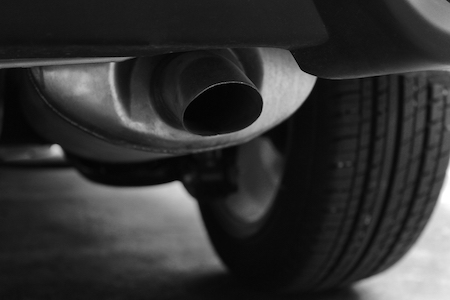
You should also check underneath your car periodically and inspect the exhaust system. Do you see any damage to the system itself? Is rust present? Pay particular attention to the muffler itself, as well as the heat shield.

Because of its location, the exhaust system will wear down over time. Heat, debris, chemicals from winter driving, moisture, and more will all impact how well the system handles. When you notice a problem, it could be an indicator to even more damage inside. What’s visible is almost always an indication of further damage within the system.

How well is your muffler working? 

While a muffler’s primary role is to reduce sound, it also plays an important part in the overall operation of your exhaust system. If it isn’t working at its best, you’ll notice a decrease in how well your car performs.

An engine generates maximum performance when all systems work well. It will go faster, be more efficient, and be a safer car to drive. If exhaust gases have no place to go, it can slow down your engine. It can make your car noisier, and make you the talk of your neighborhood.

While you may be more susceptible to ticketing from your local police force, an even bigger concern is safety. While a car technically doesn’t need a muffler, it depends on how well your exhaust system is operating. Where are those noxious gases going? If they are entering the inside of your vehicle in any way, you’re putting your passengers at risk.

How safe is your vehicle?

Filed Under: Car Maintenance Tagged With: Muffler

Growling that Grates

March 29, 2021 by Denver Express Car Care

A driver who uses his or her ears has a leg up on those who don’t.  Noises, in addition to helping us to be aware of traffic, can also give us clues to potential problems in our vehicles.  One noise to pay special attention to is growling.
Growling is a universally recognizable noise; you know it when you hear it.  In a vehicle, it’s usually the sound of metal contacting metal, and not in a good way.  So, what is your vehicle telling you if you hear growling when you are turning your steering wheel?

There are a few possibilities.  One is the mechanical linkage that helps your steering wheel turn your wheels and tires.  This system frequently has a hydraulic system that makes turning the steering wheel easier for you.  This can be one source of growling sounds you might hear.  An auto technician can check your power steering fluid to see if it’s at the correct level and still has a good consistency.

There are a few things that can go wrong with your power steering.  If your fluid is low, that might be a sign of a leak in the pump, hose, or somewhere else in the system.  It’s important to have your power steering working properly since losing the ability to turn precisely can sharply reduce the safety of your vehicle.

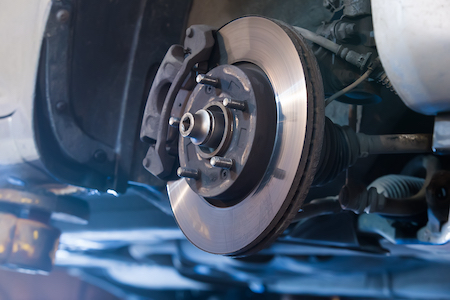
If that growling sound is coming from around the wheel area, it could be a suspension issue.  That growling is giving you a warning that a component such as a constant velocity (CV) joint or a wheel hub may be on the verge of failing, so it’s a good idea to get it checked right away.  Another reason you may be hearing growling when you turn your steering wheel is that your brakes are engaging when they shouldn’t.

Growling noises are trying to tell you something, and they can tell a trained technician a great deal.  Inform your service adviser about the symptoms you’re hearing or seeing.  Your Express Car Care service provider can put that growling to a an end.  Your ears will thank you.

Filed Under: Car Maintenance, Denver Auto Repair, Suspension Tagged With: Growling that Grates

Is It Time To Replace The Brake Fluid?

March 28, 2021 by Denver Express Car Care

As drivers, we put a lot of trust in our brakes. We assume they’ll work in every road condition. We trust in their abilities as we pull up to a stoplight, and think nothing about the process as we slow down for traffic.

But when you experience brake failure, fear runs through your veins. You apply pressure to the brake pedal and nothing is there. Ever had that happen when you hit a patch of ice?

As Coloradoans, we’ve learned to pay attention to driving conditions, especially in the winter. We slow down on icy roads, and become more cautious as the snowpack builds.

What about brake failure? Under the best of conditions, your brakes will only last so long. Over time, parts wear down, fluids leak, and defects become more prominent, until you reach a point where they aren’t performing the job as best as they can.

That’s when you face more risk, and potential failure.

What is brake fluid?

Brake fluid is a hydraulic fluid. Hydraulic fluids are designed to provide energy transmission, which permits work and motion throughout the system. Hydraulic fluid is responsible for lubrication as well as heat transfer, and will prevent contaminants from entering inside the system.

Today’s modern vehicles wouldn’t work without the use of hydraulic fluids. In the brake system, it transfers force into the system, and amplifies the braking force.

Brake fluid operates under high temperatures and high pressure. It’s what gives you ease when you press down on your brake pedal, yet adds power to the process and brings your vehicle to a stop. That makes brake fluid one of the most important fluids you’ll find inside your vehicle. Without the right amount, the right kinds, and in the right condition, your vehicle would cease to run.

How do you know if your brake fluid isn’t operating well?

Like every system inside your vehicle, the brake system is designed with safeguards to warn you of potential problems. Pay attention to these signs. They will tell you when it’s time to replace your brake fluid.

Is It Time To Replace The Brake Fluid?ABS icon lights up

Luckily, today’s vehicles come with a computerized system that senses when changes occur within. When a problem is detected, the sensor triggers a light to the icons on your dashboard.

ABS stands for Anti-lock Braking System. This light is designed to trigger when brake fluid is low or contaminated. When you see it, it’s a sign you need to bring your vehicle in for an inspection, and have a mechanic either top off your brake fluid, or replace it altogether.

Brake pedal operation

The brake system is designed to slow down and come to a complete stop with little pressure from you. As you tap the brake pedal, the action takes place quickly as hydraulic fluid transfers and adds power to the system.

When you press down and notice the action takes more effort, it’s a clear indication the brake fluid isn’t fully operational. It may be contaminated. It may be leaking somewhere in the system. That loss means you need to apply more pressure to get the job done.

If you notice a softer touch, you push down with little action at all, it’s essential to bring your car to a mechanic as soon as possible. This is a clear indication of a leak within the system.

Noises

When systems aren’t fully operational, you’ll find they make strange noises. They do so because parts don’t operate correctly, and action starts to shut down.

If contaminants are in the system, they can do a lot of damage to the system. Clogged lines, frozen caliper pistons, leaks in the seals, and master cylinder failure all create unique noises as they degrade due to lack of lubrication.

If your brakes make any noise at all, don’t take chances. Schedule an inspection as soon as possible to ensure they remain operational.

Problems with the brake pads

When was the last time you replaced your brake pads? Have you checked them and discovered they still have wear left on them, but your car is still making noises when you apply the brake pedal? It might be the brake fluid instead.

If the brake fluid is low, or if it’s contaminated with dirt and debris, it can impact the connection the brake pads make with the wheel, causing a squealing, grinding, or squeaking noise.

A burning smell

Have you ever slammed on the brakes and noticed a burning smell? Or if you ride your brakes coming down the mountain, is a chemical odor noticeable? It’s associated with hard braking, and is a sign of overheating with the brake system.

When you notice this, pull over immediately to allow your brakes to cool. If they continue operating at high temperature levels, you risk overheating the brake fluid. That’s one of the most common reasons for brake failure.

If you smell anything or see smoke, it’s a sign you might need new brake fluid. And there’s a potential for other damage in the braking system too.

How long does brake fluid last in a car?

When is the last time you read your owner’s manual? It’s not something most of us read on a regular basis. Yet it gives you guidelines for how best to operate your vehicle, including when to change your brake fluid.

There is no set time to change brake fluid. It doesn’t operate in the same manner as motor oil. It’s based on how the car was manufactured, as well as how you operate your vehicle.

A good rule of thumb is to check it regularly, even have it checked at the time you’re having your motor oil replaced. It often can last at least four to five years, or even longer. There is a benefit to using a local mechanic who gets to know you and your car well. You can establish a maintenance routine that both you and your car depend on to keep your vehicle in good operating condition.

When was the last time you had your brake fluid checked, topped off, or replaced?

Filed Under: Brake Repair, Brake Service Tagged With: Replace The Brake Fluid

What If A Car Repair Shop Doesn’t Fix The Problem?

March 24, 2021 by Denver Express Car Care

Car repair is one of those businesses where we’ve learned to be leery. We’ve all heard stories about a “friend of a friend” who took their vehicle in for service, only to find the car in worse shape than when they brought it in. The car wasn’t fixed. Poor quality parts were used. And the problems surmounted as they drove.

How do you know who to trust?

Do you trust the big names, the car repair shops with a station in every city? Or do you trust small businesses, car repair shops that are owned by individuals – families – who you regularly see as you drive to work each day?

Keep in mind that most mechanics are honest, hardworking people that try their best to point out potential problems, and give you information you can use to make an informed decision about the work that needs to be done to your car.

Yet occasionally, you may find one that is less than trustworthy. You can feel it in your gut just by the way they talk. What can you do?

Start with good communication

Remember playing the game telephone you played as a child? As you sat in a circle, the first person would come up with a phrase and whisper it into the ear of the person sitting next to them. You’d have one chance to hear it, before you’d pass it to the person next to you. It moved on from person to person, until the last person had to say it out loud. Rarely was that phrase anywhere near what the original phrase was.

That holds true in other areas of life. You might think one thing, but the person in front of you might hear something else.

If you brought your car in because it made a noise, could the mechanic recreate it? Did they truly understand where you experienced the noise? Were you hearing the same thing?

What If A Car Repair Shop Doesn’t Fix The Problem?This is just one of the many reasons why it’s important to develop a relationship with a local mechanic. If you bring your car in regularly, the people on staff get to know your vehicle. They make suggestions to keep it running well, they keep notes on items to watch for, and understand the history of a problem just by seeing it over time. You can also develop a rapport with the staff, learning ways to communicate potential problems, in a language you both understand.

This works in both directions. Let’s say you bring your car in for a potential problem with the braking system. You feel something at times when you apply pressure to the brake pedal. It might not be a problem with the brakes; it may be your ABS at work. But if a mechanic doesn’t relay this to you effectively, you may feel miscommunicated to, that there’s a problem with trust.

Listen to the way they speak to you

There’s more to good communication than just listening to what each other has to say. It also has to do with trust. Can you trust the car repair shop to tell the truth?

That’s why we suggest starting with simple tasks to get a feel for how the staff treats you.

Bring your car in for an oil change. It’s one of the simplest car maintenance items your vehicle needs. How does the staff treat you in this simple process? Do you hear things like:

  • You can use any kind of motor oil, it doesn’t matter.
  • We recommend you do these other things too while you’re here.
  • I’ve found a huge problem, I wouldn’t drive it very far.
  • You can’t fix it, you’ll need to replace the entire thing.
  • The part or repair cost more than we originally quoted.
  • It’s complicated.

All of these are warning signs the car repair shop may be holding something back.

If a repair shop tries to get you to do any other maintenance item upfront, before they even take a look under the hood, it may be an indication of unscrupulous behavior.

Every car manufacturer creates a product that requires certain parts, components, and fluids to run at its best. Using generic parts, components not specifically built for your vehicle, or “any kind of motor oil” isn’t someone that truly understands your vehicle. The reason there are different products on the market is that every vehicle has different needs. It’s about learning how you drive as well as the vehicle you do it in.

Sometimes the problem is difficult to find

Let’s say you have a check engine light that keeps turning on. You bring your vehicle in, they fix it, and the light is off when you pick it up.

A few days later, the check engine light returns. Why didn’t they fix the problem?

The answer might be more difficult than what it appears on the surface. Give the service manager a call back. Talk about what measures were used to solve the problem. Car repair shops thrive on good customer service skills – reviews are everything online. In most cases, the manager will jump in and help you, bringing your vehicle back in for further investigation. If not, this is your sign or a less than reputable place.

Problems seldom need to move beyond a service manager. When people at the top understand there is a problem, they usually work hard to solve it. They may also be more transparent about where the problem lies. It truly might be one small part that rarely goes bad – and only shows up as a “check engine light” once in a while.

Stop thinking about car repair shops as the bad guys

In truth, if you pass by an auto repair shop continually, they care about their business and reputation. They work hard to build up trust in the community.

Look beyond the one bad review. It’s most likely bad communication.

Instead, pay attention to the masses. Out of 500 reviews, if 496 are 5-star, you’ve found yourself a winner.

Take control over your car’s maintenance schedule. Don’t shop around for the best price on everything; develop a relationship with a car repair shop in your local community. When you have trust built between the two of you, you’ll know your vehicle is in the best shape possible. You’ll drive with confidence.

Filed Under: Car Maintenance Tagged With: Car Repair Shop

What Cheap Gas Does To Your Car

March 21, 2021 by Denver Express Car Care

Have you ever thought about what happens when you visit the gas station and fill up your car? Do you pay attention to where you get your gas? Do you know what’s inside?

The quality of the gasoline ultimately impacts the way your car handles and drives. Do you know what cheap gas does to your car? Does it really matter?

Let’s find out.

How gasoline works

Gasoline is used to power your vehicles and other things we use every day. You may have noticed that gasoline comes with numbers representing different classifications of gas. These are octane ratings, usually 87, 89, and 91.

Octane ratings tell you how resistant the fuel type is to the combustion process. Pressure creates heat. The more pressure you apply, the hotter something gets. For gasoline, this tells you how much pressure is needed to heat it up until it combusts.

The higher the octane rating, the more resistant it is to spontaneously combusting. This is for performance issues. You don’t want the gasoline to ignite prematurely, which impacts the way your engine runs.

What Cheap Gas Does To Your CarThe three most common types of gasoline are:

Basic – 87 octane

Plus – 89 octane

Premium – 91 and above

The higher the octane, the more resistant it is to combusting under pressure. With some high-performance engines, they require higher compression rates, which means they operate using higher octane levels. Premium may be more expensive, but it’s required to keep the engine running well and keeping it efficient as it operates.

Before you fill up at the gas station, know which type of fuel your car demands. You can find this in your owner’s manual. If it states basic, it won’t help your vehicle to move to a higher octane level gasoline. It won’t increase performance or gas mileage. It will continue to burn it at the rate needed for your vehicle.

However, if your vehicle requires premium and you put in a lower grade, you can have what is termed “engine knock.” This happens when gas combusts prematurely and throws the balance off in engine timing. Your vehicle may be equipped to handle some of this with a timing sensor, but it’s still a good idea to protect it by inserting the correct octane level gasoline. A lessor octane puts undue stress on the engine, and over time, can increase the need for repair.

What gasoline does

Americans use over 360 million gallons of gasoline every single day. It’s hard to imagine life without the fuel source we’ve come to rely on.

When you pull into a gas station, you select the gasoline recommended for your vehicle. As you pump the gas, it flows directly down into the gas tank where it waits for use. Inside your vehicle is a fuel pump that pumps the gasoline into the fuel line as needed. It also has a measuring system to alert you when the gasoline in reserve gets low.

The fuel moves through a fuel filter to filter out harmful contaminants before it’s released into the fuel injectors. This keeps harmful debris away from your engine.

The fuel injectors operate via a piston that sprays gasoline into the cylinder. Air also enters the cylinder where it mixes with the gas, compressing the two together. A spark plug ignites the mixture, which causes the combustion reaction and forces the piston back down. This opens up the exhaust valves and forces the exhaust back out of the system.

This exhaust passes through the catalytic converter, which provides emissions control. It changes the chemical composition of the pollutants as they are released and turns them into harmless substances such as carbon dioxide, nitrogen, and water, before being released out into the air via the muffler.

What cheaper gasoline does

The next time you drive down the street, pay attention to the different fueling stations around your home. You’ll find plenty of the Top Tier gasoline companies – Shell ExxonMobil, BP, Chevron, Phillips 66, Texaco, and Valero, among others.

https://www.toptiergas.com/retailers/

They will tell you that their brand name gas is better than lower quality independent gas companies because of the detergents and ingredients it mixes in with the fuel. In some cases, car manufacturers may even recommend going with these better brands because of the “secret sauce” it mixes into the fuel mixture. They state that because of the uptick in detergents, lower quality fuel may allow carbon deposits into the combustion changers, which will cause the knocking or pinging commonly associated with premature fuel ignition.

Keep in mind that this is a recommendation only. Even smaller independents – cheaper gas stations – will still post octane levels for their gasoline. The difference is in the detergents. If you’re on the road and your tank is empty, by all means, fill up, even it means a tank of lower quality fuel. It still has certain qualities in it, and it won’t impact your engine with only one fill.

Numerous studies have been done to find out the differences between gasoline products, all of which have been met with skeptical conclusions. A chief engineer for Toyota’s Avalon found that after ten years of being in charge of his division, he’s never seen an engine with a deposit issue.

What should you do? 

Still worried about what cheap gas will do to your vehicle? Pick the right station to suit your needs. Whether for convenience, cost, or preference, ensure you select the right octane rankings and your car should be just fine.

It’s much more important to schedule regular maintenance visits with your local mechanic, have the brakes tested, the oil changed, and monitor the health of your tires.

When is the last time your car was inspected? Schedule your maintenance visit today.

Filed Under: Engine, Tips & Tricks Tagged With: Cheap Gas

Should I Replace a Damaged Wheel?

March 18, 2021 by Denver Express Car Care

Every part on your vehicle is under pressure as you drive. Few parts, however, experience the daily bumps and grinds quite the way your wheels do.

Imagine the pressure placed on the wheels as you hit one of the infamous potholes that form over the long winter months here along the Front Range.

Or how about the way your wheels bounce and move when you take a dirt road?

Or even when your car touches the curb as you slide on ice buildup from the latest storm?

That bent wheel is telling you something. You may even feel it in the way your car drives.

Should you replace the damaged wheel? Should you repair it? Ignore it?

What are wheels made of?

The majority of wheels placed on vehicles today are made of cast aluminum alloy. They are created by pouring molten aluminum into a mold. This creates a lightweight yet strong product that, in general, works better than steel wheels used in the past. Because of how they are poured, they can take on many different looks and sizes, making them a popular choice for today’s vehicles.

Should I Replace a Damaged Wheel?The wheel is the structure surrounded and protected by the tire. The wheel has a center cap that sits in the middle, with a center bore in the back. They have lug holes where bolts are used to keep everything in place. You also have spokes, which connect the center of the wheel with the outer rim of the wheel. This is where the decorative part of your wheel exists. Finally, wheels also have an outer lip, a valve stem, and the barrel. Together, they create a wheel that holds up under all kinds of pressure.

Without a stable wheel, the tire can’t operate at peak performance. They work well when both are properly maintained. If any of the elements are damaged or not in optimal working condition, it’s important to get them repaired as quickly as possible, or replaced if they can’t be fixed.

What causes wheel damage 

Wouldn’t it be nice if you knew exactly what would cause damage to your wheels so you could avoid it? While there are a lot of variables in what can impact the wheels, there are a few guidelines that can help you become a more aware driver.

Driving on a flat tire – Have you ever watched a pilot walk around the plane before taking off doing a flight check? As a driver, you should have your own routine in place. As you walk up to your vehicle, glance at the tires – is one of them low on air, even flat? If your tire isn’t up for the job of protecting the wheel, it’s more likely the wheel will experience damage as you drive. Tires are designed to absorb the impact. They can’t do that if they aren’t in optimal condition. That means you should check tire pressure periodically and replace them before they further put your vehicle at risk.

Hitting a curb – how many times have you mistaken a driveway for a curb? You can tell when your car clunks and drops that the drop was larger than anticipated. Or maybe you turn a little too quickly and tap the curb as you’re turning a corner. We all do it. But that can also be a big problem for your wheels. The best course of action is to slow down and pay attention to where your car is moving.

Winter roads – sometimes bumps and dips in the road aren’t the only things to cause damage. Every winter, our roads are in constant flux with mag-chloride being sprayed on, sand and gravel laid into place, and ice and snow impacting our drive.  Driving through these chemicals and other pollutants can cause a buildup on the rims. Over time, depending on the metal alloy, these corrosive materials can eat away at the structure of the wheel until they break the seal with the tires. That’s a good reason to clean your vehicle frequently during the winter months to keep your car clean of these chemicals.

Be conscious of parking – if you frequently parallel park, how often do you touch the curb with your wheels? Do you bounce off the curb in front of you as you park in a lot? This constant scrape can wear down both your tires and your wheels until it causes serious damage.

Driving on rough pavement – sometimes there is no way to avoid rough pavement. And here in Colorado, the condition of the pavement changes all the time. Huge cracks sometimes seem to form overnight. Pop-up parking lots can have you traveling over gravel and stone. Have you ever followed Siri’s instructions and found yourself on rough, unknown roads? All of this can be hard on the rims, especially if your tires are weakened.

Hitting potholes – one of the biggest causes of wheel damage is potholes, something we get quite a lot of here, thanks to our winter conditions. You know the moment you hit one that your car has suffered from the impact. Even though you cringe when you hit one, it depends on the severity your wheels take the impact. Rough edges and the depth of the hole can all add into how much damage it sustains. If you suspect a problem, or notice a difference in the way your car drives, it’s time to schedule a check-up.

Replace or repair?

Wheels are built tough and should take quite a bit of impact as you drive. It all depends on the driving conditions, and how well your vehicle is maintained.

If you suspect an issue, don’t wait. Problems escalate quickly, and what started out as a simple repair suddenly turns into a major expense. A problem with your wheels could further jeopardize your tires, the brake system, or the suspension system. And as more repair work is needed, costs quickly follow.

Our team here at Express Car Care is ready to answer all of your questions, and get you back on the road as quickly as possible.

How can we help you?

Filed Under: Tires Tagged With: Damaged Wheel

Radiator Hoses

March 15, 2021 by Denver Express Car Care

Your radiator hoses carry coolant between your engine and radiator.  It’s an important job.  If a radiator hose fails, you could lose your engine coolant which might lead to overheating and very expensive engine damage, so you always want to make sure you have good hoses.

Radiator hoses are very resilient, but they are subjected to very harsh conditions.  Think about this,  the temperature might be below freezing when you start your engine and the coolant could be up over 100 degrees Fahrenheit within a mile.  These extreme internal temperature fluctuations contribute to the hose degrading from the inside.  Oil splashing on the outside of a radiator hose will cause the hose material to soften over time.  Ozone can also eat away at the hose.  The bottom line is that radiator hoses don’t last forever and will need to be replaced.

If you see steam coming from under your hood, you probably have a cooling system leak somewhere.  Other signs to look for are puddles of coolant under the vehicle, and bulges, cracks, or a spongy feel in the radiator hose.  If you are experiencing any of these symptoms, have your cooling system inspected by a professional as soon as possible.

If you have any cooling system repairs, like a water pump replacement, hose replacement or radiator repair, it is also a good idea to have your hoses replaced at the same time, along with the radiator pressure cap.  It is very important that the coolant be serviced when you replace a radiator or water pump so that there are plenty of anti-corrosion additives in the coolant to coat and protect the new parts that have been installed.  Simply reusing the old coolant can lead to rapid corrosion of the newly installed parts.

The most common reason for engine failure is a failed cooling system.  Ask your service adviser if it’s time for a cooling system inspection or service.  You can eliminate potentially disastrous damage with proper cooling system maintenance.

Give us a call and let us know how we can help.

Filed Under: Car Maintenance, Heating-Air Conditioning Tagged With: Radiator Hoses

Is a Manual Transmission Easier To Maintain Than an Automatic?

March 14, 2021 by Denver Express Car Care

Once upon a time, every car on the road operated with a manual transmission.

A manual transmission, or a standard transmission is a multi-speed vehicle where it requires the driver to manually perform the gear changes by operating a gear stick and a clutch.

Where manual transmissions were once the norm, as automation came into the industry, automation made the entire process easier for the driver. In 2020, only 41 out of the 327 – 13 percent – new car models sold in the US were manual transmission. Compare that to 2011 when 37 percent came with manual transmissions.

Manual transmission requires skill of the driver to create an effective driving environment. While diehards love the experience of being in control, many drivers, especially in urban areas, appreciate automation and not having to be as aware of the process as they are moving in and out of traffic.

With a manual transmission, they are usually cheaper to maintain than an automatic because they are far less complex in their innerworkings. Automatic transmissions have more parts, more technology built in, and more hydraulics and electronics to ensure the gear movement works smoothly as it’s supposed to.

Is a Manual Transmission Easier To Maintain Than an Automatic?A manual transmission relies on you to operate the clutch and shift as needed.

An automatic transmission relies on technology.

That gives the advantage to a manual transmission when comparing repair costs. Of course, there are other circumstances that impact longevity. Like everything in your vehicle, regular maintenance is everything.

Maintenance when driving a manual transmission

No matter what type of car you drive, regular maintenance is a part of your routine.

No matter what car you drive, it’s a good idea to refer to your owner’s manual to learn more about the maintenance process. The manufacturer created a guide to help you keep your car in good operating condition, making recommendations for repair work and replacement to add longevity.

While transmission fluid doesn’t need replacement as rapidly as motor oil, it’s still something that impacts the way your car moves and drives. Transmission fluid may need to be replaced every 15,000 miles or so – follow the guidelines for your make and model.

Scheduling transmission fluid changes will keep fresh transmission fluid in your vehicle, helping it run better. But don’t assume it stays fresh and without problems as you operate your vehicle. Transmission fluid can be checked similarly to motor oil. You’ll find a dipstick under the hood to perform periodic checks. Be sure levels remain constant, and look for any discoloration, which could mean there’s a leak and a seal needs replacing.

Be conscious of how you move through the gears. Be sure the clutch is all the way in before you move between gears. To prevent wear and tear, be sure you come to a complete stop before moving to reverse. If something feels like it’s sticking, don’t force the gears.

Maintenance when driving an automatic transmission

In many ways, properly maintaining an automatic transmission is similar to a manual.

Check the transmission fluid periodically to ensure it’s filled. If you notice it’s low, or a change in color has occurred, it’s time to bring it in for a mechanic to evaluate the system. Transmission fluid is naturally a clear, bright red color with a slightly sweet smell. If you notice the fluid is dark, murky, or loses its sweet smell, it’s time for replacement.

Don’t just throw any transmission fluid into your vehicle; every make and model comes with specific recommendations. This is also where it’s nice to have a trusted service station on your side, one you can trust to provide you with high quality fluids and parts.

Depending on your vehicle, you might also need occasional transmission fluid flush. This ensures fresh fluid stays within your vehicle, while older fluid is flushed from the system, no longer impacting your car.

While you might not have as much control over when the gears move as you’re driving, you should still pay attention to the shifting process.  Never throw your vehicle into park while your car is still rolling to a stop. Never move to reverse unless your vehicle is at a complete stop.

When you drive down steep grades, you should also move the gears manually into a lower gear to help control your speed without relying on the braking system. Too much heat from constant pressure on the brake pads can cause the system to overheat, putting you and your vehicle at greater risk.

Where costs change 

Whether you have a manual transmission or automatic, maintenance starts with transmission fluid. Over time, you may have to replace various parts, depending on your vehicle and the driving conditions.

How new is your vehicle? Some transmission parts may be covered by the manufacturer’s powertrain warranty. Depending on your vehicle, this might last 60,000, 80,000 miles, or more.

The clutch, however, for a manual transmission will not be a part of that warranty. It is considered a “wear” item, and will only fall under more generic warranty coverage, possibly with 12,000 miles or so of coverage.

If you drive your manual hard, you might go through clutches rapidly. This means more maintenance than you would experience with an automatic vehicle that handles shifting for you.

Automatic transmissions can also be abused. Hard drivers are always more susceptible to wear issues than drivers that learn to take things slow. Avoid quick stops and throwing your vehicle into gear. Never force movement when it’s not there. And pay attention to changes in the way your vehicle moves. Any sound, any smell, any difference could be a sign of failure. The sooner you bring it in for evaluation, the quicker the repair can be made, potentially saving you money in the process.

How can we help you keep your manual or automatic transmission in good working condition?

Filed Under: Transmission Tagged With: Automatic Transmission, Manual Transmission

  • « Previous Page
  • 1
  • …
  • 43
  • 44
  • 45
  • 46
  • 47
  • …
  • 102
  • Next Page »

Express Car Care
4200 E. Evans Ave. Denver, CO (map)
Phone: (303) 691-2760
Located just southeast of the Colorado Light Rail station

Follow Us Today!

  • Facebook
  • RSS

Shop Hours

Monday: 8:00AM – 5:00PM
Tuesday: 8:00AM – 5:o0PM
Wednesday: 8:00AM – 5:00PM
Thursday: 8:00AM – 5:00PM
Friday: 8:00AM – 5:00PM
Saturday: Closed – A note from the owner
Sunday: Closed

Last car oil change time  – 5:00PM

Click for the BBB Business Review of this Auto Repair & Service in Denver CO

Recent Articles

5 Reasons to Choose a Local Family-Owned Auto Shop Over a Big-Box Garage

5 Reasons to Choose a Local Family-Owned Auto Shop Over a Big-Box Garage

We get it—you see a big-chain auto repair shop with flashy signs, weekend hours, and a recognizable brand. It’s tempting. But bigger isn’t always better, especially when it comes to something as … [Read More...]

  • The Top Reasons Your Car Might Be Stalling and How We Fix It
  • How to Keep Your Brakes Quiet, Responsive, and Safe
  • Why Your Vehicle Deserves a Full Multi-Point Inspection This Season
  • Car Gifts For Road Trippers: Essential Take-Alongs To Make Your Road Trips Safer
  • How Denver’s Climate Affects Your Car Battery

Search Our Site

Brakes Service

How to Keep Your Brakes Quiet, Responsive, and Safe

Everything You Need To Know About Replacing Your Brake Pads

How to Know If It’s Time to Replace Your Brake Rotors

Oil Change

Top Benefits of Getting Regular Oil Changes in Denver

Oil Change Specials in Denver: Save Money and Keep Your Car Running Right

Why Regular Oil Changes Are Crucial for Denver Drivers

Suspension

How to Know If Your Car Needs Suspension Repair in Denver’s Bumpy Roads

A Guide To Understanding Bushings on a Car

Tips for Preventing Wear and Tear on Your Car’s Suspension

Transmision Service

How Often Should You Service Your Transmission in Denver?

Transmission Trouble? Common Signs and When to Visit Our Denver Shop

How to Prevent Common Issues with Automatic Transmissions

Engine Service

Everything You Should Know About Your Vehicle’s Timing Belt

Is Your Car Hesitating During Acceleration?

How to Troubleshoot a Rough Idling Engine

Auto Tips & Tricks

How to Deal With Car Noises That Only Happen When You Turn

Top 5 Maintenance Tips for High-Mileage Vehicles

Why Tire Pressure Matters More Than You Think

"Denvers Best Auto Repair and Quick Lube" - Copyright © 2025 - 4200 E. Evans Ave. Denver, CO 303-691-2760