Global warming. Climate change. Energy efficiency. Green technology.
Each of these concepts stirs up a lot of debate. But no matter how you feel about each subject, chances are you’re doing something to reduce your carbon footprint and make your world a better place.
Take car pollution, for example. According to the EPA, automobiles and other light vehicles are one of the leading causes of air pollution.
Think back to cars from the 40s, 60s, or 80s. What’s the one thing that continually changes over time? Efficiency. All you need to do is follow a car from the 60s for a few miles and you’ll realize just how much progress we’ve made with car pollution.
What causes air pollution?
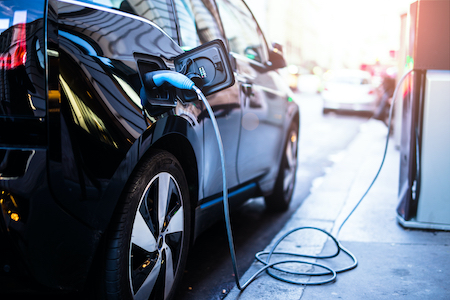
The main cause of car emissions is gasoline. When you start your car, it requires gasoline to operate. (Electric cars are changing this, but for now, we’re talking about gasoline operated vehicles.) As gasoline burns, pollutants such as carbon dioxide, nitrogen oxide, and other hydrocarbons escape through the tailpipe. They also escape as the gas flows throughout the vehicle, operating the various systems that make your car run.
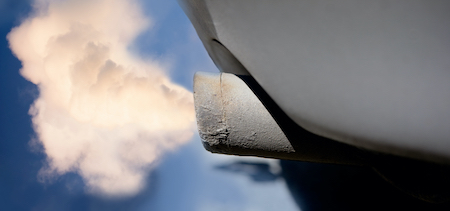 These pollutants escape and cause problems as they react with the environment. When exposed to sunlight, for example, hydrocarbons impact ozone. Nitrogen will linger in the atmosphere and add to acid rain. Carbon dioxide traps heat here in the earth’s atmosphere. And all of this has been building over time – for over a century as auto production has scaled over the years.
If you want to reduce car pollution, your first steps are to clean up your car and the way you drive.
Upgrading your vehicle is a step in the right direction – every new make and model adds more efficiency to the cause. But even models several years old can be maintained for maximum efficiency.
How do you reduce emissions, and reduce car pollution to the best of your ability?
These are the parts and systems that help reduce air pollution
Today’s vehicles come with an emission control system. Chances are you need an emissions test every so often in order to license your vehicle for the road. An emissions control system is specifically designed to reduce nitrogen oxides and volatile organic compounds that impact the environment.
Your vehicle also has an onboard diagnostic monitoring system to monitor the inner-workings of your car. If it finds a problem somewhere within the engine compartment, for example, it will trigger the “check engine” light to come on. This often is a problem related to the transmission system, or to emissions feeding through your tailpipe. Acting quickly can fix the problem and eliminate costly repairs down the road. The most common auto parts that play a part in reducing car pollution include:
The air injection pump – pushes air into the exhaust manifold to allow fuel to burn more completely.
The catalytic converter – it oxidizes the volatile organic compounds and reduces nitrogen oxides.
The exhaust gas recirculation system – also known as EGR, this system returns exhaust back into the combustion chamber to aid in lowering emissions.
The misfire monitor – this turns on the check engine light whenever a misfire occurs in the engine compartment.
The oxygen sensor – monitors the best possible mix of fuel and oxygen. If this sensor isn’t working right, it can cause your car to waste more gasoline.
The positive crankcase ventilation valve – also known as PCV valve, it redirects vapor into the intake manifold. This helps prevent engine corrosion, and reduces emissions by increasing efficiency.
How to reduce car pollution and emissions
Colorado has rules in place that require your vehicle to meet certain guidelines to car emissions. Counties that require emissions tests include Boulder, Broomfield, Denver, Douglas, Jefferson, and portions of Adams, Arapahoe, Larimer, and Weld. If you are unsure, you can contact your local county office for more information.
Your vehicle will need periodic testing in order to receive your updated vehicle registration and license. If your vehicle fails the test, you’ll need to repair your vehicle in order to gain a positive reading before you’ll be allowed to renew your registration.
To keep your car in good working condition and to avoid potential emissions related problems, a good maintenance schedule will benefit both your vehicle and the environment.
Get regular tuneups
If your car is running rough, it is more likely to be releasing higher emissions into the environment. It may be a clogged filter, poor oil quality, spark plugs that aren’t firing correctly, or a timing problem that’s preventing fas efficiency. Schedule regular tuneups to ensure your car is always working at its best.
Tire pressure
While many drivers associate efficiency with the engine, your tires play a big part as well. Proper tire pressure ensures your gas mileage is as high as possible, and that your vehicle is operating correctly. Every piece in your car plays an equal part to help in achieving efficiency.
Read your owner’s manual
We all lead busy lives, and have priorities weighing on us all the time. Sometimes it can be easier to push maintenance aside and focus on things that are more pressing. That creates a cycle of responding to emergencies rather than performing preventative maintenance. It also creates a pattern of paying more for repair work than is truly needed.
If you haven’t taken the time to become familiar with your vehicle’s owner’s manual, spend some time getting to know your car. Pay attention to service markers that can impact how your car operates:
- How often you should change brake pads
- How often you should replace the timing belt
- How often you should service the transmission
Of course, these are just a few of the systems your car needs serviced throughout its lifetime. By being proactive, paying attention to mileage markers, and knowing how long individual parts should last, you’ll be able to replace parts before they turn into bigger problems.
Looking for a mechanic that can help you reduce car pollution, and create a maintenance program that keeps your car in great shape twelve months of the year?
Stop by today and see just how easy it is to keep your car in great shape.
 Even with today’s technology and all the manufacturing upgrades we’ve made over the years, it’s still impossible to find a perfectly formed tire that will continue to be balanced all the way around as it ages. There will always be a part of the tire that ways a bit more, is a little thicker than other areas, or has imperfections that cause it to fall out of balance.
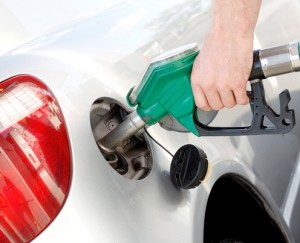 Nobody likes wasting money. Gasoline costs money, so using less gasoline saves money. One of the ways vehicle manufacturers are helping you save gasoline (and money) is with smaller, turbocharged engines.
 Did you know every make and model comes with a handy guide that provides guidelines for how to repair your car over the years? Who better to keep you on track for maintaining your vehicle than the people that built your car?
 When you head back in time, fixing a car was a very hands-on job. The vehicle servicing station was a busy place, with lots of mechanics needed to work several hours on each job. Every turn of a wrench, every twist of a bolt was done by hand, and it could take a mechanic hours to complete one simple job. While hundreds – thousands – of little pieces fit together to build complex systems, it was necessary for a mechanic to check and service them all by hand.
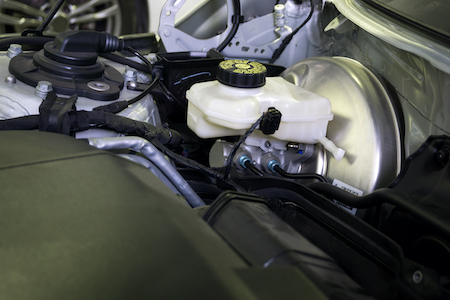 The brake system moves into action as you step on the brake pedal. Through hydraulics, the force of the brake pedal moves pressurized brake fluid through the line, down into the caliper. The caliper then squeezes the
 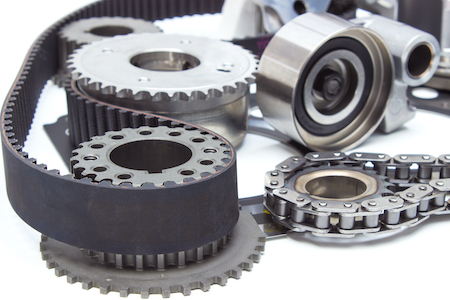 The timing chain and timing belt function in the same way. The difference between the two is the material they are created from, and their location in the engine compartment.
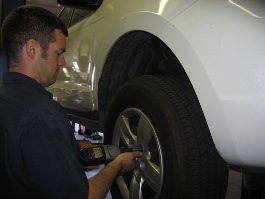 Most of us don’t worry about getting a flat tire. After all, it rarely happens, and if it does, we might think we can just call someone and have them put on the spare tire. That’s a perfect plan if your spare is in good shape. But how many of us even think twice about checking the condition of our spare tires?
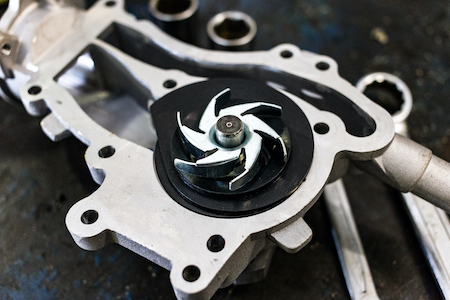 The water pump is a part of a series of systems that ensure your vehicle runs at optimal performance. When a car starts, the serpentine belt also begins to move. This belt allows the impeller blades inside the water pump to turn, pushing coolant to the various places in the system, including the cylinders built around the engine.