
Picture driving a luxury car. Your mind instantly thinks of words like “performance” and “efficiency.” How about “a smooth ride”? That’s important too, something an owner of a luxury vehicle demands.
Now picture yourself driving an old truck. You feel every turn, every bump in the road.
Big difference, right? Yet as drivers, we understand that different vehicles are designed for different needs. You’ll experience riding differently in an expensive sports car when compared to an old truck.
But we still have expectations of how the vehicle will perform. You wouldn’t want to take a corner and have your vehicle roll. You wouldn’t want to hit a bump in the road and feel like you’re bottoming out the car. No matter if you’re in the sports car or the old pickup.
Your steering and suspension system ensure balance, stability, and smoothness of the ride. These systems ensure a comfortable ride for you and your passengers. Steering and suspension are also responsible for keeping your wheels on the ground.
How the steering and suspension systems work
Before we get into the problems your car may face with steering and suspension, it’s important to understand how they work.
Vehicles are built with one of two steering systems: reciprocating ball steering and rack and pinion steering.
Reciprocating ball steering works through a series of links and arms to ensure all four wheels turn together and at the same time. It uses a steering box to control the movement of the steering wheel and steering column, and connects it to the functionality of the wheel movement.
 Rack and pinion steering connects the steering wheel and steering column to a rack, which moves a piston as the wheels turn.
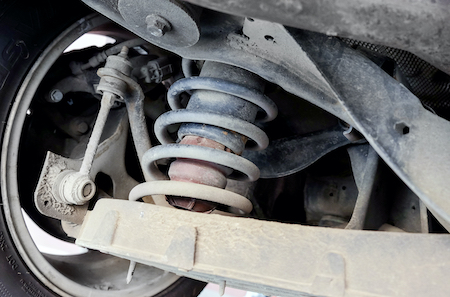
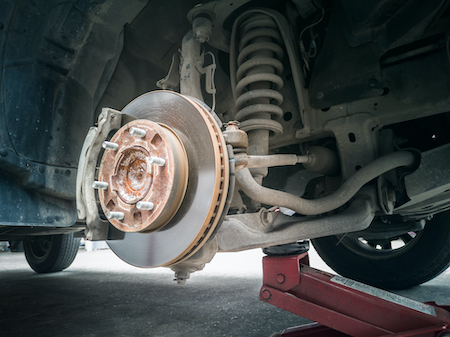
The suspension system uses a series of shocks that connect your car body to the wheels. The suspension system is in control of ensuring your wheels connect with the road and giving you a smooth ride while operating the vehicle. The suspension system utilizes a variety of components, including springs, shocks, and struts that absorb the impact of the road as you drive.
What are signs of steering problems?
While some components can wear down quickly with very little warning, your steering system isn’t one of them. It will almost always give you plenty of advanced warning that something is wrong.
Don’t ignore the warning signs. Ignoring them can result in a system fail, causing an accident that will impact you and the drivers around you. Steering problems include:
Difficulty when turning the wheel – especially if you have power steering, this is one of the first things you’ll notice. It may be a leak in the steering fluid, which helps give you easy control in how easily the wheel turns.
Vibration in the steering wheel – you’ll feel the wheel vibrate or pulse as you drive the car. It could be a steering wheel problem or an alignment issue, which is why it’s a good idea to let a trained mechanic inspect your vehicle.
Looseness in the steering wheel – this is usually caused by a worn steering rack that won’t hold its position.
Vehicle wanders or pulls to one side – worn equipment won’t keep your vehicle on track without extra help from you to hold it in place.
A screeching or grinding noise as you turn the steering wheel – if any noise continues every time you use your vehicle, it’s worth a trip into our service station to inspect it and find out where the problem lies.
What are signs of suspension problems?
Like other systems in your vehicle, the suspension system will have distinct issues as components start to wear and fail. The most common include:
Vehicle that pulls to one side – that’s a sign there are one or more issues with your suspension system. It could be uneven tire pressure, uneven tire wear, poor alignment, or a bad steering rack. This is often caused by driving on rough roads – have you hit speed bumps or potholes especially hard lately?
Feeling every bump in the road – when you start to notice a rough ride, it’s a clear indicator of a problem with your shocks and struts. It gives the distinct feeling of bouncing as you drive on the road. You can test by performing a bounce test – with your car parked, press down on the front end and release. If it bounces back and forth more than three times, the shocks and struts are worn.
One corner of your car sits low – a damaged spring may cause one corner of your car to sit lower than the others. You may also notice a clunking noise as you drive because of compromised equipment.
Braking or accelerating makes your car squat or nose dive – this is a very distinct feeling as you notice this extreme handling.
Difficulty in steering – if you find steering especially difficult, especially when first starting out and traveling slowly, it’s usually a sign of a suspension problem. You may also feel it slipping or difficult to hold onto the wheel. It can be a number of issues, including low power steering fluid or a leaking power steering rack.
Don’t ignore steering and suspension repair
One of the primary reasons why people put off regular maintenance is time and fear of the cost.
Time is always a factor – why pay attention to something that works well when you have a lot of little fires all around you? The best way to keep little fires at bay, avoiding them in some cases altogether, is to stay ahead of potential problems. Regular maintenance will ensure you fix items before they grow in size, often reducing the amount of money you have to invest in the repair.
That also impacts your final cost. Repairing a part limits your financial output. If you ignore a problem – a worn shock, for example – can quickly escalate and cause other major damage to your vehicle. That can increase your cost exponent, also increasing the likelihood of being without your vehicle for days rather than a few hours.
Stop by and visit with our staff today. You’ll love having a family operated service shop you can trust to give you the right information you need to make a well informed decision.
 Trucks are designed to carry, haul, and tow. They are designed in similar fashion, with a basic cab and some type of chassis attached to the rear. Pickup trucks are trucks with a separate frame and an open bed. They take a design from each category – cars and trucks – and combine them into one vehicle. Pickups are a smaller version of a truck, designed for multi-use. They are compact, perfect for family use as well as functional enough to use for smaller business.
 Oil changes are an important part of any car maintenance routine, but especially for a vehicle you hope to keep for years to come. While you may use your car simply to run around town running errands and bringing the kids to daily activities, your truck may do a variety of different things during the day. Drop the kids off at school, pick up a load of lumber, head out on dirt roads to camp for the night – it can experience a variety of road conditions all in the course of a few hours. Because of this variance, you should ensure the oil is changed frequently to keep all working parts operating correctly. Heavy hauling can deteriorate certain parts quicker than normal driving conditions. Error on the side of getting the oil changed on a frequent schedule.
 The thermostat is part of your cooling system. The thermostats in your vehicle perform a similar function to the thermostats in your home. At home, you set your thermostat to maintain a comfortable temperature range. Then when your home gets too hot, the air conditioning kicks on or when it gets too cool, the heater turns on.
 A small pickup will have gross weight of anywhere from 5,000 to 7,000 pounds. If you have a heavy duty pickup, gross weight can move up to 7,000 to 12,000 pounds. While manufacturer specs are needed to properly define actual weight, in any case you move a lot of mass around every time you sit behind the wheel.
 Motor oil isn’t the only thing your truck needs. While this is the one fluid you should monitor and replace regularly, other fluids need occasional work too. Engine coolant helps keep your engine cool and prevents it from overheating. You’ll find the cap identified by a warning label and illustration to ensure you never open it up while the engine is hot. It should also be checked and filled according to manufacturer’s guidelines. It’s also a good idea to fill up your windshield washer fluid reservoir regularly, and even keep a jug of the cleaner somewhere in your car. The more time you spend on dusty, off roads, the more you’ll need to add to help you drive. While there are other fluids – brake fluid, for example – letting one of our mechanics evaluate your systems will ensure the equipment isn’t compromised, preventing you from driving.
 That was the starting point for traction control. As engineers looked at how well ABS controlled skidding, they also played with sensors, actuators, and computer technology to detect and prevent tires from spinning.
 Question: My car failed its emissions test -what do I need to do?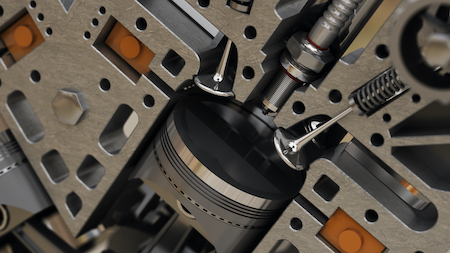
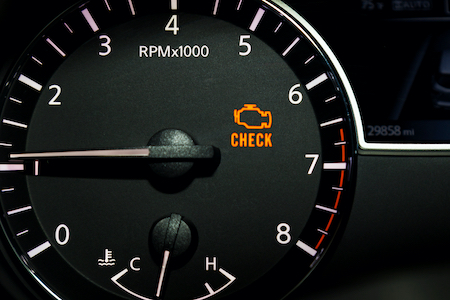 An EVAP leak is a problem somewhere in the evaporative emission control system (EVAP). The EVAPs purpose is to contain any fumes released from gasoline, and prevent them from seeping out and impacting the environment.